How fitting that April is the month I’ve determined to write one Six Word Story for each day of the month. Quelle challenge! It’s also National Poetry Month. So, my poet friends, this one’s for you.
She drank love, crafting barbed poetry.

How fitting that April is the month I’ve determined to write one Six Word Story for each day of the month. Quelle challenge! It’s also National Poetry Month. So, my poet friends, this one’s for you.
She drank love, crafting barbed poetry.
I always felt that I wouldn’t have anything to say as a writer until I had lived a little. Apparently, I’m not the only one. To that point, Persephone’s Step Sisters is pleased to share this post.
Source: Read the World

::REVIEW::
For anyone who has watched firestorms devour entire towns; who has watched farmland wither and die for want of water, who has wondered if our current lack of water is not just temporary, but indeed the Mother of All Droughts, Claire Vaye Watkins’ debut novel, Gold Fame Citrus is familiar territory.
In a hazy future, LA-born Luz lives in “Laurelless Canyon” with her boyfriend Ray. They are squatters in a once-famous starlet’s once-elegant house where Luz spends her days dressing up in discarded ball gowns. Ray makes lists, scavenges for gasoline, food, anything worth trading for something else.
“Your people came here looking for something better,” Ray tells Luz. “Gold, fame, citrus. Mirage. They were feckless, yeah? Schemers. That’s why no one wants them now. Mojavs.”
In Vaye Watkin’s future, California is a wasteland. The rivers are dry and the underground aquifers are dust. The sun blazes and when it does rain the air is so hot the water evaporates before it reaches the ground. The state is dry as death and anyone with any money at all has long since abandoned it.
Vaye Watkins’ prose is powerful, and her narrative true. The story is as real as it is terrifying, because in a place where water has become mythic, geography is all that’s left.
“They ate crackers and ration cola and told stories about the mountains, the valley, the canyon and the beach. The whole debris scene. Because they’d vowed to never talk about the gone water, they spoke instead of earth that moved like water.”
One night, Luz and Ray go down to the bonfires, a place where the climate refugees gather to drink, dance, forget. Down among the drifters and the druggies, the drinkers and the plain dangerous, Luz finds a strange toddler who whispers in her ear that her name is Ig, and she says “Don’t tell anyone. Don’t tell, okay?” The child appears to belong to a clutch of grifters, or to no one at all. Driven by instinct she doesn’t understand, Luz picks up the child and tells Ray they’re taking her home.
Luz and her family escape Los Angeles, heading east, seeking a place more hospitable, somewhere safer, somewhere with water. Their car breaks down in the midst of a borderless sand dune so vast it spreads and grows with all the desiccated bits of earth and stone and mountain that was once the Central Valley.
They join a band of misfits led by an enigmatic leader who is either a visionary or a madman, or both. The collective lives on the edges of the dune, surviving somehow as an outpost of civilization, moving their temporary desert city as the sand shifts and threatens to swallow them alive.
Gold Fame Citrus is a complex story of connection and belonging, of outcasts and survivors, of climate change to the extreme, and about the very small scrap of nature that humanity manages to cling to, in the most adverse conditions. Part science-fiction, part cautionary parable, it is a book worth reading if ecology means anything at all in the future of the West.
Cynthia Gregory is an award-winning author who lives and writes in the Bay Area with her rescue pup, Winston The Wonder Dog. Her new book, An Inspired Journal: the Art & Soul of Creative Nonfiction, on Green Tara Press, will be available in 2016.

I recently read some Christmas gift-giving advice: give something to wear, something to to play with, and something to read. What a fabulous idea! Years ago, when my first hubs and I were young and poor, we agreed that our entire Christmas budget would be an extravagant $100. We scurried off to get our creative best, and I headed down to Acres of Books in Long Beach, CA (a wonderful world of new/used books). I blew half of my $50 budget on fabulous used books that I bought at a fraction of the cost of new, and that I new my young husband would love. And he did. It is one of the best Christmas memories ever, filled with love and joy.
Now lo, these many years later, I’m still giving books for Christmas. Nothing is more rewarding, tantalizing, or generous than the gift of a book. These days, I do love my e-books, especially for travel, but my home is still filled with stacks and stacks of delicious books — and thanks to me, so are my friends’.
If you love books too, and if you’re looking to shop for books with meaning, you couldn’t do better than to check out our friends at Green Tara Press. A small press, Green Tara specializes in books with meaning and depth, lovely tombs filled with poetry and wisdom.
This holiday season, you can shop the big box stores, or you can shop online with the giant online retailers. Or, you can make a stand for the arts, and buy a book from the indies. We love that idea, and we love our readers. Support the Arts: Buy a Book!
Wishing you a merry and jingly gifting and receiving season.
The Girls @ Sephs Salon
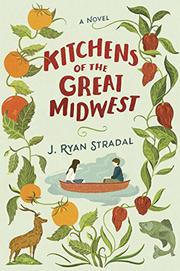
KITCHENS OF THE GREAT MIDWEST
::REVIEW::
What a delicious read in J. Ryan Stradal’s debut novel: Kitchens of the Great Midwest. His treatment of the subject of haute (and low) cuisine is both respectful and poetic, as is his attention to the detail of place. The Midwest has never appeared so endearing, nor possibly as strange.
The star of the story, Eva Thorvald, is born in the late 1980s to Lars Thorvald and Cynthia Hargreaves, the two most unlikely candidates for happy marriage that ever was. But when Cynthia gets knocked up, marry they do, and vigorous ten pound baby Eva follows.
“Cynthia was still twenty-five, and bounced back to her skinny frame with color in her cheeks and bigger boobs, while Lars just grew balder and fatter and slower. He had learned, before she was pregnant, that he had to hold her hand or touch her in some way while they walked places together, so that other men knew they were a couple. Now she was the mother of his daughter, he was even more wary, snarling at passing dudes with confident Tom Selleck mustaches and cool Bon Jovi hair.”
Lars is a foodie through and through, and Cynthia has a knack for food and wine pairings beyond reason. But gravely oppressed by motherhood from the start, Cynthia ditches husband and child as soon as reasonably possible, running off to California to learn the wine trade.
Lars devotes his life to his darling daughter, whose taste buds he teases with the finest ingredients her pediatrician will permit. He reads Beard on Bread to her. He takes her on excursions through Farmer’s Markets, searching for priceless potatoes and redolent rhubarb.
Lucky for her, Eva is born with a “once in a generation palate.” But is this because of her natural father? It’s hard to say. Not long after Cynthia goes MIA, Lars dies suddenly, leaving baby Eva to be raised by her Uncle Jarl and Aunt Fiona, who while loving her completely, don’t know a mung bean from mozzarella.
Part of the pleasure of this novel derives from Stradal’s juicy narrative. From the start, we know that Eva is a survivor and that she is destined for great things. We love how she loves her adopted parents, how she embraces strays of all kinds, and how even as a kid, she demonstrates great depths of compassion.
“[Jarl] suddenly looked sad and bewildered, like an elephant that had been fired from the circus and was wandering down the side of the highway with nowhere to go. The thought occurred to Eva that if her dad confronted those boys face-to-face, they would make fun of her weak, fat, kindhearted father as brutally as they made fun of her, and she needed to protect her dad from that; his ego was already so fragile.”
It’s not giving anything away to reveal that Eva becomes a celebrated, if mysterious and deeply private, chef. Her love for good food is not for show or for fame; it is real as rice and sweet as whipped marshmallow. In the end, her love of food is about what all great food is about: celebration and gratitude and sharing your bounty with those you love.
c. gregory
During this year’s extended vacation (HIGHLY recommended and thank you, Tim Ferriss), I adopted a puppy. Well, he adopted me. You know how that goes. At any rate, he’s spectacular and I’m getting to know more about his poop schedule than I would have imagined. Still, he’s worth it. I mean, look at this face:

Here’s a TGIF tribute to all the happy puppies and all their happy people.
IN A DARK, DARK WOOD
::REVIEW::
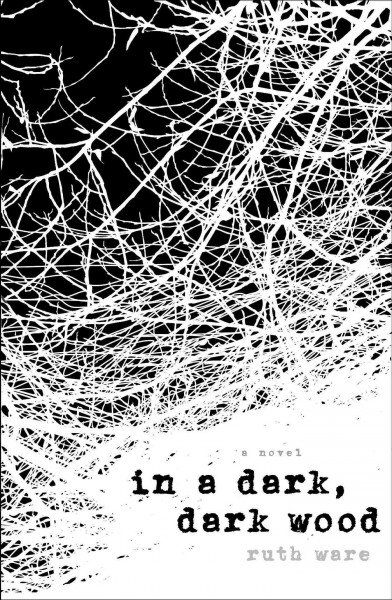
Ruth Ware’s debut novel, In a Dark, Dark Wood, possesses all the best elements of a thriller: a remote country estate, a bachelorette party, and a group of frenemies that really, really should have scrubbed their email lists and left each other well enough alone after those terrible school days. But then, where’s the pleasure in that?
The story is narrated by Nora, an author who specializes in crime thrillers. Back in school, she was called Lee, short for Leonora. Only one person ever called her Leo, and it was her first love, James. But then he broke up with her. . .via text. . .and she moved on. Ten years later, Nora is mostly okay, writing novels and living a fine, urban single life.
Then one day out of the blue, she receives an invitation to an old friend’s wedding. Surprised, she feels a little sorry for Clare, thinking that maybe she has no other girls to invite, having to dredge back ten years for her bachelorette do. Nora is undecided about whether or not to attend the hen, but her invite is followed quickly by an email from Nina, who is also wary of Clare’s motives. “If you go, I will,” she says. Nora agrees and they somehow wind up traveling to the remote English countryside together.
Nina hates the country and misses her girlfriend, and Nora is straightway filled with dread by their accommodations: a modern glass box dropped unceremoniously in a meadow at the edge of a dark and menacing wood. The house belongs to Flo’s aunt and feels to Nora like a dangerous cage, though it is only a country estate, complete with a shotgun hung over the living room fireplace.
Miles from anywhere, cell reception is sketchy and the revelers are coolly irritable. When Clare announces to Nora that the reason she was invited to the hen and not the wedding is because the groom-to-be is the infamous James, the weekend really takes a turn. It doesn’t help that Flo’s hen party games involve embarrassing details about the bride and groom, shaming and humiliating Nora repeatedly. And then it snows. And then the land lines go out and the hen fete devolves into a churlish clutch of drunken, paranoid hostages. Fun!
When the phones go down, Melanie decides to bail, a welcome excuse to return home to her infant son. Flo is alternately weepy and aggressive toward anyone who isn’t into the spirit of the weekend. Tom would rather be home with his husband but stays on, drinking gin and taking well-aimed shots at Nina and Nora. Clare plays referee, keeping anyone from coming to actual blows.
After two days of slowly escalating hell, Nora wakes up in a hospital confused, horribly bruised, and under police watch. She is suspected of murder, but she can’t remember what happened. The harder she tries to recall, the more the truth evades her.
Novelist Ware has created a deft and ominous page turner in this fabulous thriller, replete with plot twists, red herrings, and a truly scary villain. If you’re still looking for provocative poolside reading to finish the summer, this novel should do nicely.

I gave a talk about executive coaching this week to a group of nonprofit professionals and it was crazy cool! Nonprofit execs work too many hours with too few resources, and practically no strategic support. I want to change that. This means helping nonprofit leaders be more successful — and more fulfilled. Yum!
Important note: 1) transformative change is AMAZING, and, 2) success comes with a price. Stepping into your power can be a radical act, but it can also be a thrill-ride, so if you sign on with a coach, buckle up, baby! On the other hand, if you’re sort of meh about becoming a shinier, brighter version of you, do not, under any circumstances, engage a coach. You won’t like it, not one bit.
ONE SIZE FITS ALL
WARNING! Do Not hire a coach, if you are:
Now get out there and get on with your fabulous life!
So there I was, planning my big, fat fundraiser, and I knew what I had to do. I’ve been doing this long enough to know that all the planning, all the wheeling, dealing, and organizational faits accompli, take a toll on body and mind. And so, into every event strategy, I insert one very important task: the post-event treat. Sometimes its a spa treatment. Sometimes it’s a couple of days away. This time, it was both. I booked myself into a yoga retreat in the breathtakingly beautiful Sierra foothills. I meditated three times a day, walked, breathed, and did a little yoga. Now I’m all calm and ready to take on a whole new adventure. PS: the event was a huge success!

Not only is his book The Four Hour Workweek one of my personal favorites, this guy is wicked smart! Happy Movie Friday!
 persephone's step-sisters