I always felt that I wouldn’t have anything to say as a writer until I had lived a little. Apparently, I’m not the only one. To that point, Persephone’s Step Sisters is pleased to share this post.
Source: Read the World

I always felt that I wouldn’t have anything to say as a writer until I had lived a little. Apparently, I’m not the only one. To that point, Persephone’s Step Sisters is pleased to share this post.
Source: Read the World
This is too lovely to not share:
Source: The Egg Tally
Journaling as Sacred Practice is on the way!
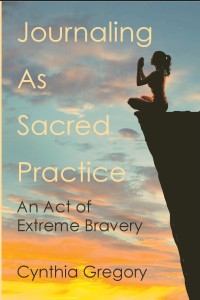
Last weekend, I co-faciliated a labyrinth, meditation, and journaling retreat with my partner in Yoga Retreats Napa Valley. We spent the day with 15 women–and it was fabulous! During one of our writing sessions, I urged my tribe to journal about “my dream.” It was so powerful. This is what I wrote:
My dream is the success of my book on journaling, Journaling as Sacred Practice: An Act of Extreme Bravery.
I see myself being interviewed by Terry Gross. “What a great book,” she says. I laugh. “I had a bad break-up,” I tell her. “Instead of getting sad or getting mad, I started to write. I wrote 48 chapters in 48 days. And then I put the book in a drawer. I moved to Portland, Oregon. I moved to Napa Valley, California. When it was ready, it hatched.
Oprah calls. I don’t do the interview.
Louise Hay calls. She says, “Come to I Can Do It!”
Elizabeth Gilbert calls. She says “You go, girl!” We become besties.
Dreams, dreams, dreams. A book is a dream put down on paper. A song is a dream you can listen to. Did Mozart dream in color and did his dreams come with a soundtrack? My dream is for 2016 to be like one long, rolling, lazy summer day; an impressionist painting of picnics and watercolors clouds; of bread and wine and honeybees. I dream of the sound of water, the touch of a lover. The year 2016 should be a dress floating on a breeze, the sound of a train in the distance, a piano recital, the smell of apple pie through a window.
In my dream I rise up. I lift my heart and swallow the turquoise sky, the emerald river, the comb’s teeth of a vineyard row. I will calibrate my breath on the hush of waves. Let me rest there.
My wish for my WordPress friends is that 2016 is BIG and BOLD! Decide who you are and do it on purpose.
::REVIEW::
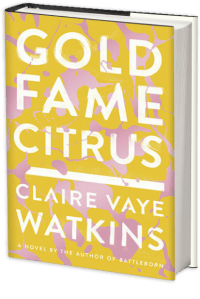
For anyone who has watched firestorms devour entire towns; who has watched farmland wither and die for want of water, who has wondered if our current lack of water is not just temporary, but indeed the Mother of All Droughts, Claire Vaye Watkins’ debut novel, Gold Fame Citrus is familiar territory.
In a hazy future, LA-born Luz lives in “Laurelless Canyon” with her boyfriend Ray. They are squatters in a once-famous starlet’s once-elegant house where Luz spends her days dressing up in discarded ball gowns. Ray makes lists, scavenges for gasoline, food, anything worth trading for something else.
“Your people came here looking for something better,” Ray tells Luz. “Gold, fame, citrus. Mirage. They were feckless, yeah? Schemers. That’s why no one wants them now. Mojavs.”
In Vaye Watkin’s future, California is a wasteland. The rivers are dry and the underground aquifers are dust. The sun blazes and when it does rain the air is so hot the water evaporates before it reaches the ground. The state is dry as death and anyone with any money at all has long since abandoned it.
Vaye Watkins’ prose is powerful, and her narrative true. The story is as real as it is terrifying, because in a place where water has become mythic, geography is all that’s left.
“They ate crackers and ration cola and told stories about the mountains, the valley, the canyon and the beach. The whole debris scene. Because they’d vowed to never talk about the gone water, they spoke instead of earth that moved like water.”
One night, Luz and Ray go down to the bonfires, a place where the climate refugees gather to drink, dance, forget. Down among the drifters and the druggies, the drinkers and the plain dangerous, Luz finds a strange toddler who whispers in her ear that her name is Ig, and she says “Don’t tell anyone. Don’t tell, okay?” The child appears to belong to a clutch of grifters, or to no one at all. Driven by instinct she doesn’t understand, Luz picks up the child and tells Ray they’re taking her home.
Luz and her family escape Los Angeles, heading east, seeking a place more hospitable, somewhere safer, somewhere with water. Their car breaks down in the midst of a borderless sand dune so vast it spreads and grows with all the desiccated bits of earth and stone and mountain that was once the Central Valley.
They join a band of misfits led by an enigmatic leader who is either a visionary or a madman, or both. The collective lives on the edges of the dune, surviving somehow as an outpost of civilization, moving their temporary desert city as the sand shifts and threatens to swallow them alive.
Gold Fame Citrus is a complex story of connection and belonging, of outcasts and survivors, of climate change to the extreme, and about the very small scrap of nature that humanity manages to cling to, in the most adverse conditions. Part science-fiction, part cautionary parable, it is a book worth reading if ecology means anything at all in the future of the West.
Cynthia Gregory is an award-winning author who lives and writes in the Bay Area with her rescue pup, Winston The Wonder Dog. Her new book, An Inspired Journal: the Art & Soul of Creative Nonfiction, on Green Tara Press, will be available in 2016.

I recently read some Christmas gift-giving advice: give something to wear, something to to play with, and something to read. What a fabulous idea! Years ago, when my first hubs and I were young and poor, we agreed that our entire Christmas budget would be an extravagant $100. We scurried off to get our creative best, and I headed down to Acres of Books in Long Beach, CA (a wonderful world of new/used books). I blew half of my $50 budget on fabulous used books that I bought at a fraction of the cost of new, and that I new my young husband would love. And he did. It is one of the best Christmas memories ever, filled with love and joy.
Now lo, these many years later, I’m still giving books for Christmas. Nothing is more rewarding, tantalizing, or generous than the gift of a book. These days, I do love my e-books, especially for travel, but my home is still filled with stacks and stacks of delicious books — and thanks to me, so are my friends’.
If you love books too, and if you’re looking to shop for books with meaning, you couldn’t do better than to check out our friends at Green Tara Press. A small press, Green Tara specializes in books with meaning and depth, lovely tombs filled with poetry and wisdom.
This holiday season, you can shop the big box stores, or you can shop online with the giant online retailers. Or, you can make a stand for the arts, and buy a book from the indies. We love that idea, and we love our readers. Support the Arts: Buy a Book!
Wishing you a merry and jingly gifting and receiving season.
The Girls @ Sephs Salon
::REVIEW::
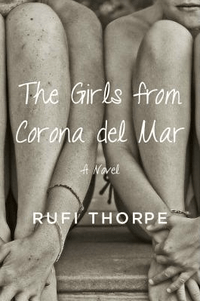
That you can never truly know another person is the central truth of Rufi Thorpe’s debut novel, The Girls of Corona Del Mar, but the book is so much more than that. It is also a coming of age saga, one where the narrative begins with two golden-skinned teens in sun-drenched Corona Del Mar, and it ends years later and universes away.
At the onset, best friends Mia and Lorrie Ann share lives as intertwined as any pair of young girls. So close are they, that they can’t see the stark difference between them as anything but symbiotic. Mia’s divorcee mom scrapes by in a second-rate apartment to make ends meet. Even after she remarries and Mia’s brothers come along, they remain planted in the same spot, as if by gravity. Lorrie Ann’s parents conversely, a divinely bohemian couple, sink roots steadfastly in love and music. To Mia, Lorrie Ann’s family represents the happy ideal of an intact family.
It turns out that Mia gets pregnant in high school, and naturally, it is to Lorrie Ann that she makes her confession. Seemingly chaste Lorrie Ann, the saint to Mia’s sinner, helps her through the subsequent abortion. At the end of high school, Mia is the one who goes to Yale to pursue a degree in the classics, while Lorrie Ann becomes pregnant herself, and chooses to give up on dreams of college to have the baby.
But Lorrie Ann’s baby is born horribly deformed and from then on, she can’t seem to catch a break. She marries her baby daddy, who when his restaurant job can’t cover the requirements of his special needs family, enlists in the army. Then he is deployed to Iraq and is killed. Poor and struggling, Lorrie Ann eventually loses custody of her son.
Alternately, Mia becomes a scholar. Fifteen years later, their two lives intersect in Istanbul, where Mia and her fiancé, Franklin, are transcribing ancient narratives about the Sumerian goddess Inanna. Lorrie Ann calls Mia out of the blue and Mia goes to the marketplace to meet her, only to find her old friend traveling with a clutch of jet-setters, and addicted to heroin.
The reunion is predictably strained. Mia is just beginning to realize that she may be pregnant. She confesses as much to Lorrie Ann, who promises to keep the secret until Mia comes to terms with which path she will ultimately choose. Mia is afraid to tell Franklin, who is the best thing that’s ever happened to her. She is afraid that he won’t be ready to be, much less want to be, a father. But Lorrie Ann betrays her confidence and reveals all. One could say that as her friend, Lorrie Ann does what she feels is in Mia’s best interest. She can clearly see how much Franklin loves Mia. One could also say that as friends go, it isn’t Lorrie Ann’s secret to reveal to the fiancé of a friend she hadn’t seen in a dozen years.
Friendship. Betrayal. The nature of love, and the powerful lure of ancient mythology. Thorpe’s novel is a deep and layered journey, and for anyone who has ever deeply loved a bestie, it is well worth the exploration.
–Cynthia Gregory
Watch for my upcoming book: An Inspired Journal; the Art and Soul of Creative Nonfiction. Available soon on Green Tara Press at Amazon.com
KITCHENS OF THE GREAT MIDWEST
::REVIEW::
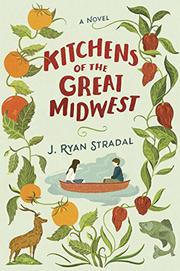
What a delicious read in J. Ryan Stradal’s debut novel: Kitchens of the Great Midwest. His treatment of the subject of haute (and low) cuisine is both respectful and poetic, as is his attention to the detail of place. The Midwest has never appeared so endearing, nor possibly as strange.
The star of the story, Eva Thorvald, is born in the late 1980s to Lars Thorvald and Cynthia Hargreaves, the two most unlikely candidates for happy marriage that ever was. But when Cynthia gets knocked up, marry they do, and vigorous ten pound baby Eva follows.
“Cynthia was still twenty-five, and bounced back to her skinny frame with color in her cheeks and bigger boobs, while Lars just grew balder and fatter and slower. He had learned, before she was pregnant, that he had to hold her hand or touch her in some way while they walked places together, so that other men knew they were a couple. Now she was the mother of his daughter, he was even more wary, snarling at passing dudes with confident Tom Selleck mustaches and cool Bon Jovi hair.”
Lars is a foodie through and through, and Cynthia has a knack for food and wine pairings beyond reason. But gravely oppressed by motherhood from the start, Cynthia ditches husband and child as soon as reasonably possible, running off to California to learn the wine trade.
Lars devotes his life to his darling daughter, whose taste buds he teases with the finest ingredients her pediatrician will permit. He reads Beard on Bread to her. He takes her on excursions through Farmer’s Markets, searching for priceless potatoes and redolent rhubarb.
Lucky for her, Eva is born with a “once in a generation palate.” But is this because of her natural father? It’s hard to say. Not long after Cynthia goes MIA, Lars dies suddenly, leaving baby Eva to be raised by her Uncle Jarl and Aunt Fiona, who while loving her completely, don’t know a mung bean from mozzarella.
Part of the pleasure of this novel derives from Stradal’s juicy narrative. From the start, we know that Eva is a survivor and that she is destined for great things. We love how she loves her adopted parents, how she embraces strays of all kinds, and how even as a kid, she demonstrates great depths of compassion.
“[Jarl] suddenly looked sad and bewildered, like an elephant that had been fired from the circus and was wandering down the side of the highway with nowhere to go. The thought occurred to Eva that if her dad confronted those boys face-to-face, they would make fun of her weak, fat, kindhearted father as brutally as they made fun of her, and she needed to protect her dad from that; his ego was already so fragile.”
It’s not giving anything away to reveal that Eva becomes a celebrated, if mysterious and deeply private, chef. Her love for good food is not for show or for fame; it is real as rice and sweet as whipped marshmallow. In the end, her love of food is about what all great food is about: celebration and gratitude and sharing your bounty with those you love.
c. gregory
During this year’s extended vacation (HIGHLY recommended and thank you, Tim Ferriss), I adopted a puppy. Well, he adopted me. You know how that goes. At any rate, he’s spectacular and I’m getting to know more about his poop schedule than I would have imagined. Still, he’s worth it. I mean, look at this face:

Here’s a TGIF tribute to all the happy puppies and all their happy people.
 When I meditate, the big things fall into perspective. When I sit and let my body relax, I can feel my bones and muscles, my blood and tissue, letting go of all the big ideas, the big worries, the Big Bad (as Buffy would say). My breath deepens, my shoulders drop. I would like to say that I let my worries go but it is really the other way around. When I fall into the sweet relaxation that mediation opens in me, worries let me go and my consciousness expands and rises up into the sky like a soap bubble. From that high-deep place the “big things” that occupy so much of my waking life seem as small as marbles in the dust and I wonder how they ever seemed important at all.
It took a couple of whole-day meditation retreats to reach this place. I like to think that I have meditated for years, but now I realize, I dabbled. I would do it when the timing was right or the moon was aligned or if I had not hit the snooze button and rose naturally, and meditation was a yummy doorway between dreaming and awake. But I never did it for more than 20 minutes. Tops.
I began attending a weekly Satsang in Napa and got to practice 30 minutes sessions. They were challenging, but I got the hang of it. Then, I did a couple of full day retreats at Spirit Rock Meditation Center in Woodacre. These took a little more concentration, a little more physical discipline. I struggled at first, but when I stopped efforting so much. . .and when I forgot to try, it happened. The world and everything in it (including me) simply expanded and I found my mind floating in a sparkling pool of iridescent blue. I call this feeling Suspended in the Blue and it is completely, utterly, and deeply delicious. I won’t pretend that I get there every time, but now that I know how, it has become an unfolding, and I appreciate the practice as much as the experience.
Big worries? Meh. I breathe in, I breathe out. Everything else is optional.

Sylvia Berek Rosenthal is a prolific writer. And it’s no wonder, as Rosenthal, a resident at Oakmont at Montecito in Concord, CA, who will turn 92 this August, has had plenty to write about. Her latest book, Marry Me With Marigolds, is a delicious collection of poems that reads like the spicy narrative of an interesting life. The genesis of Marry Me with Marigolds began when Rosenthal won First Prize in the 2010 Benicia Annual Love Poem contest.
The writer strongly resembles someone’s smart and jolly Nanna, with her shock of white hair, large black-framed glasses, bright floral silk jacket. She smiles gleefully. “It felt so nice for an old lady to win with a love poem,” she says about the contest.
Sylvia Rosenthal didn’t begin writing poetry until she was 75, an age when people tend to be outspoken with their truths. The poetry in this collection reflects a whole lot of truths, as it was written in the 15 years between 1997 and 2012. Many of her poems are funny and downright irreverent. Some are rich and tender. In all, her personal voice rings true. In the poem called “Maid in America,” she speaks of how her parents met.
My mother was born in Detroit.
You can’t get any more American than that
Can you?
When she turned seventeen she met my father.
He spoke Yiddish and Polish
She spoke only English.
They had no trouble.
Pillow talked worked just fine.
When she turned eighteen
They celebrated by getting married.
One year later
World War One
Began.
In the book’s namesake poem, Marry Me With Marigolds, Rosenthal uses language in a way that is both playful and evocative:
Marry me with marigolds
Tempt me with your tenderness
Covet me with coriander
Chocolate and
Cloves
Favor me with foxglove
Gather me with the garden’s garland
Circle me with summer squash
Sesame and
Sage
Woo me with water lilies
Nurture me with nutmeg
Pamper me with peppers
Red green and
Gold
And I will stroke
Your balding head
Bake you babkas
Cook you cabbage
Pat your pot belly
If you will only
Marry me with marigolds.
Rosenthal may live in Concord, CA, but to hear her speak, you know she is pure New York, where she was a grade school teacher and guidance counselor. Her husband, George, was a ceramicist and artist. For years they lived something of a bohemian lifestyle, sojourning back and forth between New York to San Miguel de Allende, Mexico. After a time, the Rosenthals moved to San Antonio, Texas, to shorten the commute between San Miguel and the states.
It was when the couple lived in Texas, that Sylvia discovered poetry. Her husband had broken his shoulder and was recovering from surgery and she had tired of being his nurse. “I decided to take a writing class at the San Antonio branch of Texas University and the only two courses available were poetry and a business writing course,” she explains. “I wasn’t going to write letters, so poetry it was.” In San Antonio, Sylvia became deeply involved with local writing and poetry communities. In San Miguel, she wrote columns for the Atencion and El Independiente newspapers.
Her first book, Mrs. Letsaveit, is the collected body of these columns, which are mainly food literature essays very much in the style of Sonoma County’s M.F.K. Fisher. The cover of Mrs. Letsaveit features a close up photograph of some of her late husband’s ceramics. The direct and humorous essays filed between the covers of the book are redolent of a happy home as Rosenthal describes her life in Mexico through a series of narratives about cooking and eating food. “Think of it as recipes through a filter of Like Water for Chocolate,” she says, referencing the 1989 best selling book by first-time novelist Laura Esquivel. In Mrs. Letsaveit, Rosenthal writes about making bagels, corned beef, Mandelbrot, and other family favorites in Mexico, far from New York – or Texas style grocery stores.
An avid reader and writer still, Rosenthal is a member of the San Miguel PEN and San Antonio Poets; she is now involved in writing and poetry groups in the Clayton/Concord Area. Is her work fact or fiction? She smiles mischievously and replies, “I like to think of poetry is a piece of the truth, but not all of it.”
 persephone's step-sisters