you’re getting warmer

detourIt isn’t so much that we fear rejection so much as that we fear the fear of rejection. As it turns out, rejection itself is not so bad. In 99.999% of the time it is not a judgment, it is not recrimination. We don’t need some “other” to do that to us, we do that to ourselves. When denied what we want we begin to stew, to internalize, berate ourselves for all of our imagined shortcomings. What if we changed the way we deal with NO? What if, instead of fearing it, we leaned in and actually embraced it?  Read more here.

new year, new you

baldy

There are a million ways to start a new year and we are pleased to say that a killer hike is one of our favorites. Especially the imperfect part. You know: the huffing and puffing to the top of the hill part. We even like the way they turn a painful, albeit beautiful, experience into an object lesson. Read all about it here.

love and time travel

Most of us have fallen in love with Jamie and Clare. In her own words, Diana Gabaldon talks about her process. It’s priceless. Enjoy . . .and let us know what you think!

bookly giving

There is no time for classics like the holiday season, and that includes books as well as music. We’ve noticed lately that the seasonal music is a little lighter, a little more fun. So herewith is a holiday classic book giving guide with a frothy little ditty to go with it. Happy shopping — and remember: used books need love too!

  1. One Hundred Years of Solitude, by Gabriel Garcia Marquez. Beginning with what is quite possibly one of the best first sentences in the history of literature, Garcia Marquez spins a yarn of love, redemption, war, and magic. “Many years later, as he faced the firing squad, Colonel Aureliano Buendia was to remember that distant afternoon when his father took him to discover ice.”
  2. The Sun Also Rises, by Ernest Hemingway. The poetic lilt of Hemingway’s dialogue is some of the best ever written and makes me fall in love with words every. Single. Time. “Everyone behaves badly – if given a chance.”
  3. The Diary of Adam and Eve, by Mark Twain. One of Twain’s lesser known works is nonetheless an enchanting lesson in love. “How I wish I could make him understand that a loving good heart is riches enough and that without it intellect is poverty.”
  4. Mrs. Dalloway, by Virginia Woolf. Not an easy read but a dazzlingly brilliant classic. Woolf delivers this Valentine of book in stream-of-consciousness prose and begins with another amazing first line: “Mrs. Dalloway said she would buy the flowers herself.”
  5. A Good Man is Hard to Find, by Flannery O’Connor. This is a collection of short stories that will scare the wits out of you as it nabs you by the collar and whips you around with a command of language that is both naked and forgiving. “She wouldn’t stay at home to be queen for a day.”
  6. The Bean Trees, by Barbara Kingsolver. It’s actually difficult to choose just one Kingsolver novel as a stand-alone but if you must choose, this is a good start: a story about love, friendship, abandonment, putting down roots, and a girl named Turtle. “I had decided early on that if I couldn’t dress elegant, I’d dress memorable.”
  7. Housekeeping, by Marilyn Robinson. There is a haunting quality in Robinson’s work as she writes about the small details of ordinary life. Her examination of the glue that holds our worlds together is at once pointed and astonishing. “You never know when you will see someone for the last time.”
  8. Last Report on the Miracles at Little No Horse, by Louise Erdrich. If you have any tender sensibilities at all, this writer will pierce your heart. Erdrich’s sense of irony, poetry, and social justice mingle in a tale that is at once outrageous and plain in about a million ways. “To love another human in all of her splendor and imperfect perfection, it is a magnificent task. . .tremendous and foolish and human.”
  9. Ragtime, by EL Doctrow. A literary classic in its own right, Ragtime reaches into the early 20th century to capture the hope and the optimism of immigrants and millionaires in America before the great wars changed everything. “And though the newspapers called the shooting the Crime of the Century, Goldman knew it was only 1906 and there were ninety four years to go.”
  10. Illusions, by Richard Bach. You can never go wrong with a book that contains both magic . . .and a barnstormer with a messiah complex. Deceptive in its simplicity, Bach’s story is an open door into a world beyond the ordinary. “Nothing good is a miracle, nothing lovely is a dream.”

There you have it: a short list of classics. Enjoy the season, and happy reading!

write like a tourist

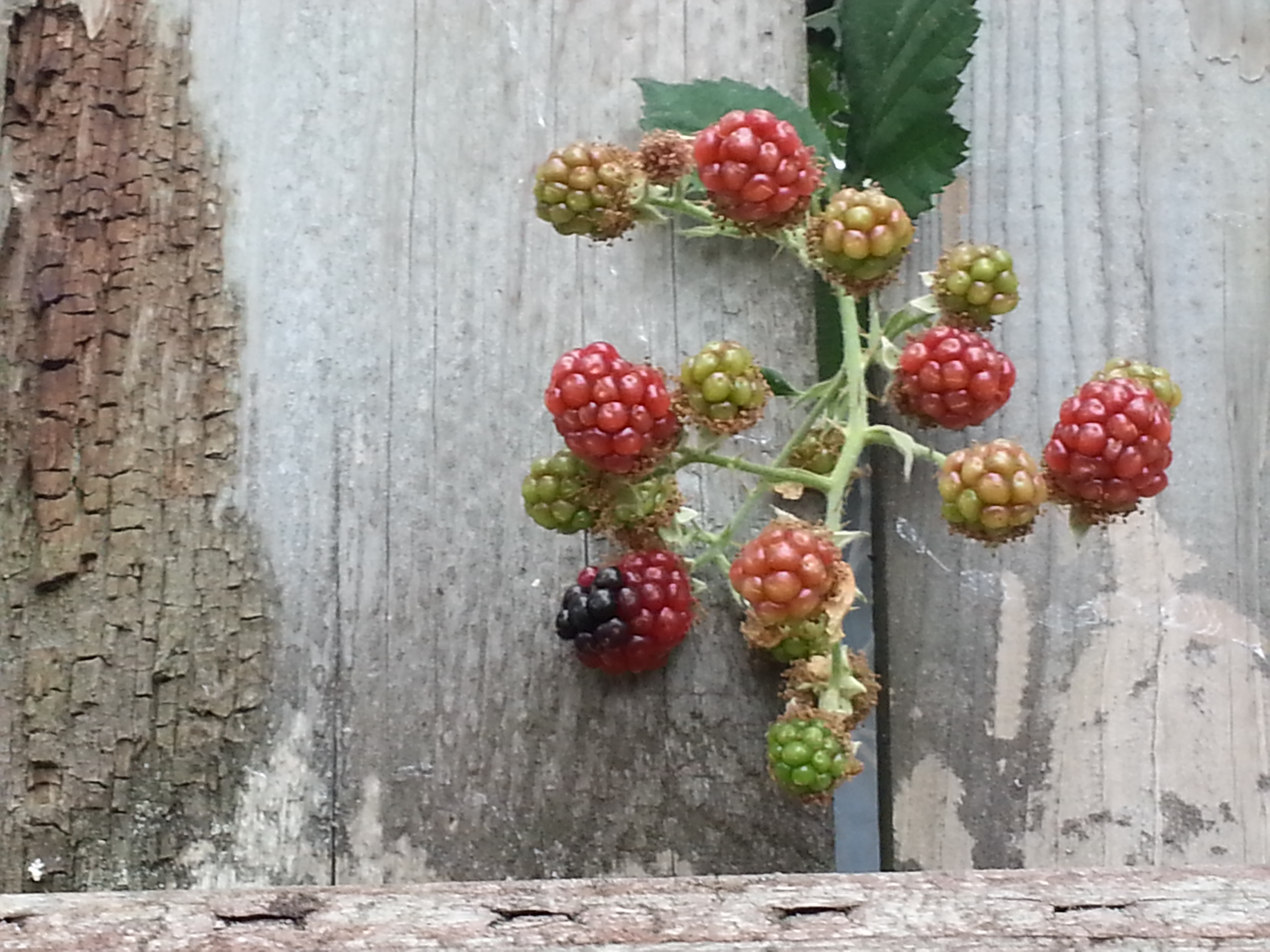
 bberriesOne way to journal is to forget everything you know about the place you live. You learn to look at the world as if you just popped through a worm hole from some other verdant, vividly lush and distant planet. Instead of going about your regular routines, I bet you would begin to really see the world you inhabit.

How many times do you go about your business and then suddenly realize that you can’t remember the last ten minutes? That you had been on autopilot, with your body operating the family car, stopping at lights and pausing for pedestrians while your mind had zipped off to distant canyons and \ gullies of memory and illusion? You’ve arrived safely and no one was hurt thank goodness, but what would happen if you were fully embodied, fully present, each day of your life? Would you see the world differently?

My vote is yes. It’s a fact that we do not cultivate the practice of notice very well. We are bombarded by television, radio, the Internet, literally thousands of messages a day (the gist of which are of the most dire nature by the way, and another reason to unplug) and so it’s natural that we begin to shut down. In many  cases, shutting down is a natural mechanism of survival. The trouble is, once you begin to shut out the ugly of the world, you inevitably begin to shut out the beautiful and remarkable and miraculous, too.

Almost no one I’ve ever talked to about it thought their story was interesting. But I’ll bet their story is remarkable. They just stopped noticing the details. They forgot that their life was miraculous in about a million ways. So here’s an idea: write about your life like you don’t own it. Write about last Christmas like you’re a staff writer at a big agency and you’re creating a storyboard for a movie that will be seen around the world and sent toward the great, central sun by powerful satellites and viewed by people who have no idea what Santa is about, and why people decorate trees with shiny glass orbs. Explain what your house looks like as if you were describing it to a blind person. Paint a picture with words to describe your dog to a boy who has never seen a dog in his life. Illustrate a journal entry about last night’s dinner with words so smoky and succulent that your nostrils twitch and your stomach howls. Visit your local grocery store like you’re a tourist from Hungary. Have you ever noticed, really noticed, now many different brands of bread there are? How many varieties of potato chips they sell? Go to your local Chamber of Commerce and ask for a directory of members and marvel that people do the kinds of jobs they do. Lick the inside of your wrist and then sniff it to see what your breath smells like. Stop living on auto-pilot! Cultivate an appreciation for each Now that shows up. Now, I reach for my water bottle and the cool liquid slides down my throat. Now, my fingers pull away the skin of an orange. Now, I call on inspiration, and she takes my hand and we walk.

practice, practice::repeat

This advice seems a simple truth. . .and it is. Reading is not just doing nothing!

Author Ian McEwan talks about the writing life.

dream of me

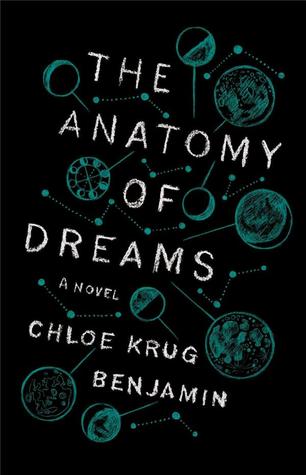
Some books are slightly disturbing and others are downright chilling. Here’s a book to take to bed with you when you’re sure you’re not being watched.

 Anatomy of dreams

novel::novelist

Sherman Alexie is one of the great literary voices of our generation. How lucky are we?


me write pretty

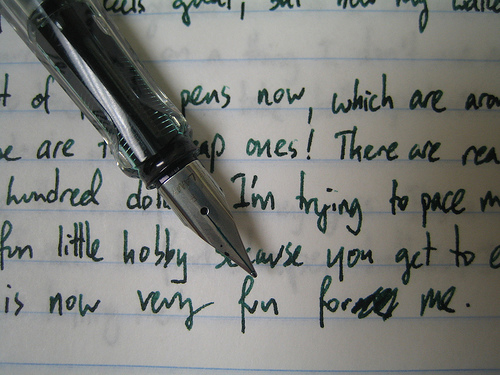
writing-sample2Once, I belonged to an amazing clutch of writers who met every week to explore writing through timed exercises. It was one of the best writing experiences I ever had, and it did more to develop my skills as a writer than almost anything I’ve done since. Twenty years later, I still miss meeting with that group of women. We shared a very important time, you might even say a sacred time, two hours each week, supporting one another and learning to develop our writing voices. Few things were allowed to interfere with our commitment to meet. We gathered faithfully each Friday at an outdoor table at the Bear Street Cafe in Orange County, California, and parked our individual cares at the door in order to be fully present and nakedly honest during our joumaling session. We wrote furiously, read aloud with quaking voices, listened respectfully, and grew as writers.

Now that I live in Northern California, I maintain virtual relationships with several of these fabulous women, and we see each other when we can. But the thing that remains one of the greatest gifts of my life is that even though whatwe mainly have in common is our passion for writing –no matter what, we support each other. We celebrate each others’ successes, and provide insightful comments to help make each other’s work the best it can be. Writing groups are an excellent way to develop as a writer -you can find or form a group by taking classes, getting to know other writers, and then meeting outside of the classroom setting to give yourself more honest writing time.

Back in the day when we met at Bear Street, we maintained a strict routine that went something like this:

  • write nouns or phrases on a slip of paper
  • drop the paper slips in a cup
  • draw a word and write like the devil

One by one, the words were selected from the cup, and we wrote timed exercises based on them. After the time was up, we went around the table and read our work. This wasn’t easy at first, but our group was a safe place to put it out there. One unbreakable rule was that under no circumstances, could we comment on what we wrote -neither the writer not the listeners were allowed to comment. But let me tell you something: our writing got stronger and better and more deeply creative by just listening to each other. I think we secretly tried to out-compose each other, but the result was that we pushed each other to spiraling heights of creativity without so much as one well-intended criticism. It was amazing and illuminating, and a huge lesson in the art of paying attention.

So, dear writer, waht are you paying precious attention to? Where lies your genius? Leave a comment with a single word. What is it you find to write about — in a completly original way? Ooh. Do tell.


art meets ocean

Sometimes we just want to watch a good movie. And a short movie is better than no movie at all. PS: No models were actually harmed in the making of this film. Cheers.