a book is a dream

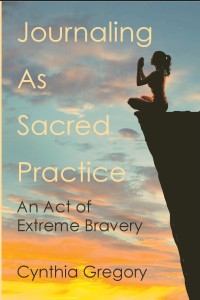
Journaling as Sacred Practice is on the way!  

journaling-sacred-cover (1)-page-001

Last weekend, I co-faciliated a labyrinth, meditation, and journaling retreat with my partner in Yoga Retreats Napa Valley. We spent the day with 15 women–and it was fabulous! During one of our writing sessions, I urged my tribe to journal about “my dream.” It was so powerful. This is what I wrote:

My dream is the success of my book on journaling, Journaling as Sacred Practice: An Act of Extreme Bravery.

I see myself being interviewed by Terry Gross. “What a great book,” she says. I laugh. “I had a bad break-up,” I tell her. “Instead of getting sad or getting mad, I started to write. I wrote 48 chapters in 48 days. And then I put the book in a drawer. I moved to Portland, Oregon. I moved to Napa Valley, California. When it was ready, it hatched.

Oprah calls. I don’t do the interview.

Louise Hay calls. She says, “Come to I Can Do It!”

Elizabeth Gilbert calls. She says “You go, girl!” We become besties.

Dreams, dreams, dreams. A book is a dream put down on paper. A song is a dream you can listen to. Did Mozart dream in color and did his dreams come with a soundtrack? My dream is for 2016  to be like one long, rolling, lazy summer day; an impressionist painting of picnics and watercolors clouds; of bread and wine and honeybees. I dream of the sound of water, the touch of a lover. The year 2016 should be a dress floating on a breeze, the sound of a train in the distance, a piano recital, the smell of apple pie through a window.

In my dream I rise up. I lift my heart and swallow the turquoise sky, the emerald river, the comb’s teeth of a vineyard row. I will calibrate my breath on the hush of waves. Let me rest there. 

My wish for my WordPress friends is that 2016 is BIG and BOLD! Decide who you are and do it on purpose.

so long 2015

Before setting intentions for what lies ahead, we always like to take a minute to reflect.

Santa’s Kitchen


gingerI got into the holiday spirit last weekend and whipped up a batch of the most amazing gingerbread ever. Seriously. You haven’t had gingerbread until you’ve had this gingerbread.   (Spoiler alert: the secret ingredient is a cuppa Guinness. Duh.) If you gotta have it: HERE’S THE RECIPE

aroma

But that didn’t satisfy the need to create, so I also stormed the kitchen to stir up some  organic sea salt scrub made with coconut oil, salt, and a generous helping of peppermint essential oil. After stirring up a batch, I scooped generous dollops into jelly jars, topped them with festive tissue and raffia, and voila! I had flagrant, healthy, soul-satisfying,  gifts to give to friends and colleagues. The beauty of these charming little hand-crafted gifts is a fait accompli. A short list of benefits includes:

  1. Cost – which is minimal. Salt and coconut are easy to come by. Don’t pinch pennies on the essential oil, however. It’s the magic ingredient.
  2. Aromatherapy. It’s good for you! And who doesn’t love the lovely, bright fragrance of peppermint?
  3. Moisturizing oil. In winter, skin takes a beating. Baby, it’s cold outside, hot indoors, and as the body’s first line of defense, skin gets dry, flakey, and cranky.

MAKE YOUR OWN DELICIOUS SCRUB:

  • Two cups coconut oil 
  • Two cups course sea salt
  • 30 drops peppermint essential oil

Bring the coconut oil to room temperature for ease of handling. Mix in sea salt and stir to evenly distribute. Add essential oil and stir, but don’t overmix. Scoop mixture into containers for sharing. If you double up the recipe, you’ll have a ready supply of festive hostess gifts at the ready for those last-minute invites.

USE: Treat knees, elbows, heels with combination exfolliating/moisturing scrub and sail through the winter months with smoother, happier surfaces. Don’t wait; raid the kitchen cupboards and whip up your own magic winter skin treat!


this drought is no joke

gold fame

::REVIEW::

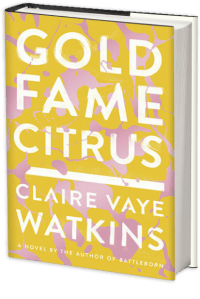
For anyone who has watched firestorms devour entire towns; who has watched farmland wither and die for want of water, who has wondered if our current lack of water is not just temporary, but indeed the Mother of All Droughts, Claire Vaye Watkins’ debut novel, Gold Fame Citrus is familiar territory.

In a hazy future, LA-born Luz lives in  “Laurelless Canyon” with her boyfriend Ray. They are squatters in a once-famous starlet’s once-elegant house where Luz spends her days dressing up in discarded ball gowns. Ray makes lists, scavenges for  gasoline, food, anything worth trading for something else.

“Your people came here looking for something better,” Ray tells Luz. “Gold, fame, citrus. Mirage. They were feckless, yeah? Schemers. That’s why no one wants them now. Mojavs.”

In Vaye Watkin’s future, California is a wasteland. The rivers are dry and the underground aquifers are dust. The sun blazes and when it does rain the air is so hot the water evaporates before it reaches the ground. The state is dry as death and anyone with any money at all has long since abandoned it.

Vaye Watkins’ prose is powerful, and her narrative true. The story is as real as it is terrifying, because in a place where water has become mythic, geography is all that’s left.

“They ate crackers and ration cola and told stories about the mountains, the valley, the canyon and the beach. The whole debris scene. Because they’d vowed to never talk about the gone water, they spoke instead of earth that moved like water.”

One night, Luz and Ray go down to the bonfires, a place where the climate refugees gather to drink, dance, forget. Down among the drifters and the druggies, the drinkers and the plain dangerous, Luz finds a strange toddler who whispers in her ear that her name is Ig, and she says “Don’t tell anyone. Don’t tell, okay?” The child appears to belong to a clutch of grifters, or to no one at all. Driven by instinct she doesn’t understand, Luz picks up the child and tells Ray they’re taking her home.

Luz and her family escape Los Angeles, heading east, seeking a place more hospitable, somewhere safer, somewhere with water. Their car breaks down in the midst of a borderless sand dune so vast it spreads and grows with all the desiccated bits of earth and stone and mountain that was once the Central Valley.

They join a band of misfits led by an enigmatic leader who is either a visionary or a madman, or both. The collective lives on the edges of the dune, surviving somehow as an outpost of civilization, moving their temporary desert city as the sand shifts and threatens to swallow them alive.

Gold Fame Citrus is a complex story of connection and belonging, of outcasts and survivors, of climate change to the extreme, and about the very small scrap of nature that humanity manages to cling to, in the most adverse conditions. Part science-fiction, part cautionary parable, it is a book worth reading if ecology means anything at all in the future of the West.

Cynthia Gregory is an award-winning author who lives and writes in the Bay Area with her rescue pup, Winston The Wonder Dog. Her new book, An Inspired Journal: the Art & Soul of Creative Nonfiction, on Green Tara Press, will be available in 2016.

a novel to die for

murder

::REVIEW::

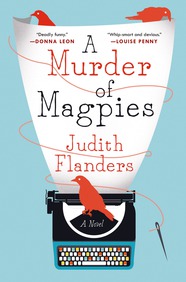
Who knew publishing was such a dangerous and glamorous profession? Though A Murder of Magpies is journalist Judith Flanders first novel, her whip smart bravura and droll sense of humor make this Murder a fun read.

          “Oh, just kill me now!”  I didn’t shriek that out loud, just clenched my teeth more tightly. It was eight thirty, and already the day couldn’t get much worse. I’m always at my desk by eight not because I’m so wonderful, although I am, but because it’s the only time of day when no one asks me anything, when I can actually get on with some work, instead of solving other people’s problems.”

Meet snarky book editor, Samantha (Sam) Clair. Sam has managed a fine career in the publishing business, working with a stable of writers, several of whom churn out predictably good best sellers. San is a sensible kind of gal. She’s the type of no-nonsense person who, when a meeting is disrupted by an unexpected visitor, will deal with it in her own sensible way.

“It was probably a friend of a friend, or someone who’d got my name somehow and was trying to flog a manuscript, no doubt about how his mother had abused him, or proving that his great-great-grandfather was Jack the Ripper. We don’t have to deal with real live members of the public often, but every now and again, one sneaks under the radar.”

One of Sam’s favorite writers, gorgeous Kit Lovell, is a reliably gorgeous writer. Kit covers fashion and can dish about the great design houses with the best of them. But this time, he’s written a potentially libelous biography of a fashion icon whose death appears to have been murder. While covering the human interest story about one of the largest and most respected fashion houses in Europe, Kit unintentionally uncovers an international money laundering ring. Big fashion is inextricably linked to big money and neither are pleased with Kit’s revelations.  

The manuscript proves incendiary. Before long, Sam finds herself embroiled in a hot mess. Kit vanishes, a copy of his manuscript is stolen, a courier is killed, and Sam’s flat is ransacked. This is quite a lot of excitement for a woman who spends her days reading books.

After the break in Sam begins to investigate her good friend and best author’s disappearance. Companions in her quest include her corporate lawyer mother, Helena–who is astonishingly adept at untangling the kinks of the criminal mind—and a hunky police detective, Jake Field.

As a single professional woman, Sam is aware of her options. She’s had relationships, and is currently satisfied with her quiet job, and her quiet flat, with its quiet upstairs neighbor, Mr. Ridigers. She tolerates her young coworkers with a thin layer of patience while plotting ways to get her authors placed on the best book club lists. A romantic entanglement with a cop isn’t exactly her cup of tea.

In the end, Sam and Helena and Jake solve the murder of Kit – and Helena uncovers hard evidence to corroborate Kit’s fashion house money laundering scheme. Sam takes Jake as a lover, much to Helena’s approval.

Murder of Magpies is a great, fun, smart read. Don’t miss it.

leaping dogs

OLYMPUS DIGITAL CAMERA

I have the best commute in the world. I travel nearly daily from Napa Valley through Sonoma County to Marin County, CA. There are spectacular views of the upper San Francisco Bay wetlands, across the lush Carneros region with vineyards for miles, the coastal Mayacamas Range, Mt. Tamalpias, and Mt. Diabo. As pretty goes, it’s off the charts.  The only other commute I’ve had to match it was 20 years ago along the Pacific Coast Highway from Long Beach to Newport Beach, with the blue Pacific practically at my fingertips.

I started a new commute three weeks ago. I had just come off a lovely, lazy summer vacation. I was about as Zen as I’ve been in years after spending four months meditating daily, taking long walks, adopting a puppy, and generally finding ways to revel in happy.  Weirdly, the day I suited back up and started commuting to work, I stepped right into the old habit of taking myself Very Seriously. I drove fast. I cursed red lights. I started driving like a maniac on the devil’s raceway. It’s embarrassing to admit, but every other driver on the road was either a) stupid, b) blind, c) ignorant of my supreme mission to arrive at my very important place in the world. I couldn’t get where I needed to fast enough, or efficiently enough.

And then, gratefully, before I got too out of control and gave myself an aneurism, I recieved a cosmic thump on the head. I was driving to work one morning last week, raging against every slow driver between me and the Golden Gate Bridge. The line of traffic was (finally!) moving swiftly along, we had gotten a green light through a three-way intersection near an abandoned dairy in Sonoma and were picking up speed for an uphill climb. Suddenly, out of the overgrown bushes of the ghost dairy on my right, a beautiful golden coyote darted toward the far side of the road and to my horror, leapt straight into the grill of the car in front of me. There was not time for the driver to even slow, much less react. Impact was a foregone conclusion. I watched, horrified, as time slowed and the scene played itself out.

The driver did not stop. Traffic did not stop. We swerved and eddied around the carnage, but we did not stop. I reached for my phone and made a lifeline call. I called B, my friend, crying and shuddering. “Pull over,” she said. As soon as I could, I did. I did not see anyone else pull over. Bless her, B helped me through those first few minutes, until I could breathe and continue driving.

Later that day, I called her and we talked. “Coyote is known as the trickster in Native American legend,” I told her. “It wasn’t funny.”

“There, there,” she said to me, “There, there.”

I know enough about stuff to know that seminal events like my catastrophic commute are never about what they seem to be about. They are always about something deeper.  That night, while on the phone with B, I sat at my computer and did a Google search for “coyote totem.”  The page I found said that the message from Coyote is “to not take things too seriously, to remember to have fun.”  I was stunned. I looked at my behavior leading up to the incident of the commuter coyote, and I was indeed taking the world waaaay to seriously. It was as if the spirit of Coyote had orchestrated the whole show just to get my attention, as if to say, “Really? REALLY?”

Since that awful day in Sonoma, something has shifted in me. I’ve decided that ten minutes one way or the other doesn’t matter. Slow cars don’t matter. Rude drivers don’t matter. What matters is how in-tune I am with my soul, and nothing is important enough get in the way of that.  Period. I show up for my commute, and whatever happens, happens. Sluggish cars, silly drivers, et al.

A side benefit of my tragedy/epiphany is that I have been dumbstruck by my travels. I am lucky enough to get to traverse some of the most beautiful natural scenery on the Pacific coast. It is lush and dreamy and fecund in a hundred ways. It is splashed by farm ponds that turn silver and reflect the rising winter sunrise. It is dotted with working barns that have withstood wind and rain and sun. My route is part of the original El Camino Real, the path driven by faith, one that Padre Junipero Serra took through Alta California more than two hundred years ago to bring God to a wild land. I didn’t see that before. In my rush to be important, I had ignored this amazingly beautiful place. Coyote, in his wily wisdom, knew that, and brought it to my attention in a way that was impossible to ignore.  

So now, I am reminded of Ram Das’ famous admonition: Be Here Now.  Thankfully, I am. Here. Now. And the view is amazing.

tasty fiction here

kitchens

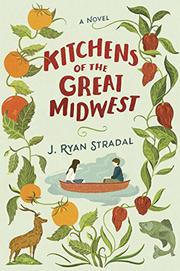
KITCHENS OF THE GREAT MIDWEST

::REVIEW::

What a delicious read in J. Ryan Stradal’s debut novel: Kitchens of the Great Midwest.  His treatment of the subject of haute (and low) cuisine is both respectful and poetic, as is his attention to the detail of place. The Midwest has never appeared so endearing, nor possibly as strange.

The star of the story, Eva Thorvald, is born in the late 1980s to Lars Thorvald and Cynthia Hargreaves, the two most unlikely candidates for happy marriage that ever was. But when Cynthia gets knocked up, marry they do, and vigorous ten pound baby Eva follows. 

“Cynthia was still twenty-five, and bounced back to her skinny frame with color in her cheeks and bigger boobs, while Lars just grew balder and fatter and slower. He had learned, before she was pregnant, that he had to hold her hand or touch her in some way while they walked places together, so that other men knew they were a couple. Now she was the mother of his daughter, he was even more wary, snarling at passing dudes with confident Tom Selleck mustaches and cool Bon Jovi hair.”

Lars is a foodie through and through, and Cynthia has a knack for food and wine pairings beyond reason. But gravely oppressed by motherhood from the start, Cynthia ditches husband and child as soon as reasonably possible, running off to California to learn the wine trade.

Lars devotes his life to his darling daughter, whose taste buds he teases with the finest ingredients her pediatrician will permit. He reads Beard on Bread to her. He takes her on excursions through Farmer’s Markets, searching for priceless potatoes and redolent rhubarb.

Lucky for her, Eva is born with a “once in a generation palate.” But is this because of her natural father? It’s hard to say. Not long after Cynthia goes MIA, Lars dies suddenly, leaving baby Eva to be raised by her Uncle Jarl and Aunt Fiona, who while loving her completely, don’t know a mung bean from mozzarella.

Part of the pleasure of this novel derives from Stradal’s juicy narrative. From the start, we know that Eva is a survivor and that she is destined for great things. We love how she loves her adopted parents, how she embraces strays of all kinds, and how even as a kid, she demonstrates great depths of compassion.

“[Jarl] suddenly looked sad and bewildered, like an elephant that had been fired from the circus and was wandering down the side of the highway with nowhere to go. The thought occurred to Eva that if her dad confronted those boys face-to-face, they would make fun of her weak, fat, kindhearted father as brutally as they made fun of her, and she needed to protect her dad from that; his ego was already so fragile.”

It’s not giving anything away to reveal that Eva becomes a celebrated, if mysterious and deeply private, chef. Her love for good food is not for show or for fame; it is real as rice and sweet as whipped marshmallow. In the end, her love of food is about what all great food is about: celebration and gratitude and sharing your bounty with those you love.

c. gregory

holidaze

I don’t know about you, but Christmas always catches me by surprise. How can that be? It always arrives every year on December 25, sandwiched between Thanksgiving and New Years. And yet, most years December 1 rolls around and I go into my annual holiday panic. Not this year.

santahat

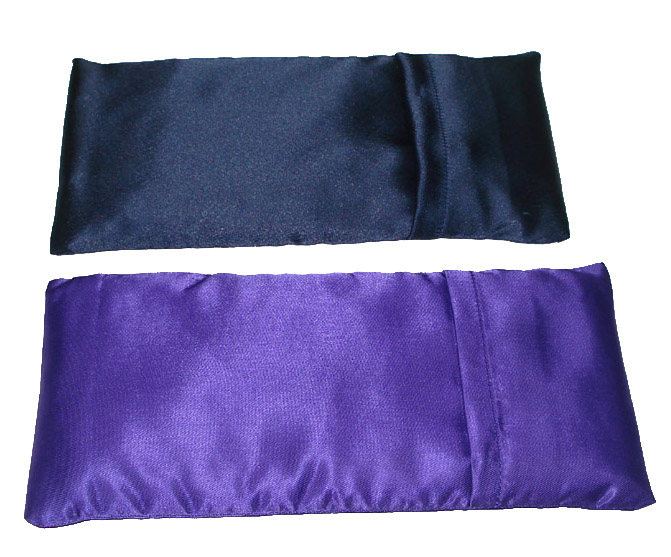
This year, I’m getting a jump on the whole gift giving scene, and you can too. Our friends at Oregon Plum organics are launching a gift-givers dream of aromatherapy eye-pillows. . .by offering  the product at a crazy discount. They’re offering 12 hand-crafted, organic silk, lavender and flax seed eye pillows just in time for holiday shopping with free shipping ($19.99 value) each. What’s the catch, you say? Because you know there is one.

round label

Um, no. These are hand-crafted aromatherapy eye pillows, luxurious silk, filled with organic lavender and flax seeds. Channel your inner Santa and think about everyone one your holiday gift list. Naughty? Nice? Doesn’t matter. This is one gift that truly fits all. This year, gift the gift of rest, relaxation, and aromatherapy. (Only 12 items available: offer good while supply lasts.)

19 - S EYE PILLOW

Be a Smart Santa and help launch a cottage business. Here is a link to the Oregon Plum eye-pillow purchase page. Do you shopping now, save time for toddies later.

That’s it. Easy-peasy.  Thank you for helping launch this amazing product!


dog daze

During this year’s extended vacation (HIGHLY recommended and thank you, Tim Ferriss), I adopted a puppy. Well, he adopted me. You know how that goes.  At any rate, he’s spectacular and I’m getting to know more about his poop schedule than I would have imagined. Still, he’s worth it. I mean, look at this face:

winston meditation

Here’s a TGIF tribute to all the happy puppies and all their happy people.

killer weekend

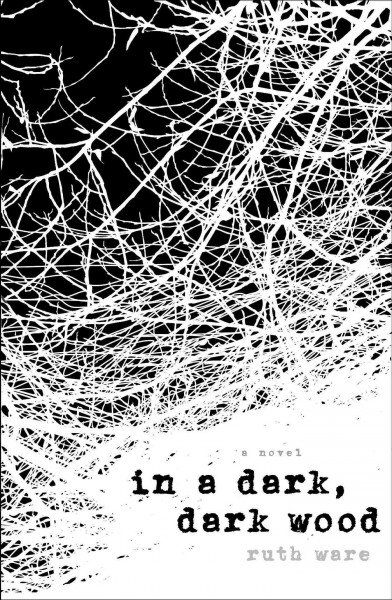
IN A DARK, DARK WOOD

::REVIEW::

dark dark

Ruth Ware’s debut novel, In a Dark, Dark Wood, possesses all the best elements of a thriller: a remote country estate, a bachelorette party, and a group of frenemies that really, really should have scrubbed their email lists and left each other well enough alone after those terrible school days. But then, where’s the pleasure in that?

The story is narrated by Nora, an author who specializes in crime thrillers. Back in school, she was called Lee, short for Leonora. Only one person ever called her Leo, and it was her first love, James.  But then he broke up with her. . .via text. . .and she moved on. Ten years later, Nora is mostly okay, writing novels and living a fine, urban single life.

Then one day out of the blue, she receives an invitation to an old friend’s wedding. Surprised, she feels a little sorry for Clare, thinking that maybe she has no other girls to invite, having to dredge back ten years for her bachelorette do. Nora is undecided about whether or not to attend the hen, but her invite is followed quickly by an email from Nina, who is also wary of Clare’s motives. “If you go, I will,” she says. Nora agrees and they somehow wind up traveling to the remote English countryside together.

Nina hates the country and misses her girlfriend, and Nora is straightway filled with dread by their accommodations: a modern glass box dropped unceremoniously in a meadow at the edge of a dark and menacing wood. The house belongs to Flo’s aunt and feels to Nora like a dangerous cage, though it is only a country estate, complete with a shotgun hung over the living room fireplace.

Miles from anywhere, cell reception is sketchy and the revelers are coolly irritable. When Clare announces to Nora that the reason she was invited to the hen and not the wedding is because the groom-to-be is the infamous James, the weekend really takes a turn. It doesn’t help that Flo’s hen party games involve embarrassing details about the bride and groom, shaming and humiliating Nora repeatedly. And then it snows. And then the land lines go out and the hen fete devolves into a churlish clutch of drunken, paranoid hostages. Fun!

When the phones go down, Melanie decides to bail, a welcome excuse to return home to her infant son. Flo is alternately weepy and aggressive toward anyone who isn’t into the spirit of the weekend. Tom would rather be home with his husband but stays on, drinking gin and taking well-aimed shots at Nina and Nora. Clare plays referee, keeping anyone from coming to actual blows.

After two days of slowly escalating hell, Nora wakes up in a hospital confused, horribly bruised, and under police watch. She is suspected of murder, but she can’t remember what happened. The harder she tries to recall, the more the truth evades her.

Novelist Ware has created a deft and ominous page turner in this fabulous thriller, replete with plot twists, red herrings, and a truly scary villain. If you’re still looking for provocative poolside reading to finish the summer, this novel should do nicely.