She poured Sunday peace and coffee.


She poured Sunday peace and coffee.
Spring brought cut grass and bones.
How fitting that April is the month I’ve determined to write one Six Word Story for each day of the month. Quelle challenge! It’s also National Poetry Month. So, my poet friends, this one’s for you.
She drank love, crafting barbed poetry.

Sylvia Berek Rosenthal is a prolific writer. And it’s no wonder, as Rosenthal, a resident at Oakmont at Montecito in Concord, CA, who will turn 92 this August, has had plenty to write about. Her latest book, Marry Me With Marigolds, is a delicious collection of poems that reads like the spicy narrative of an interesting life. The genesis of Marry Me with Marigolds began when Rosenthal won First Prize in the 2010 Benicia Annual Love Poem contest.
The writer strongly resembles someone’s smart and jolly Nanna, with her shock of white hair, large black-framed glasses, bright floral silk jacket. She smiles gleefully. “It felt so nice for an old lady to win with a love poem,” she says about the contest.
Sylvia Rosenthal didn’t begin writing poetry until she was 75, an age when people tend to be outspoken with their truths. The poetry in this collection reflects a whole lot of truths, as it was written in the 15 years between 1997 and 2012. Many of her poems are funny and downright irreverent. Some are rich and tender. In all, her personal voice rings true. In the poem called “Maid in America,” she speaks of how her parents met.
My mother was born in Detroit.
You can’t get any more American than that
Can you?
When she turned seventeen she met my father.
He spoke Yiddish and Polish
She spoke only English.
They had no trouble.
Pillow talked worked just fine.
When she turned eighteen
They celebrated by getting married.
One year later
World War One
Began.
In the book’s namesake poem, Marry Me With Marigolds, Rosenthal uses language in a way that is both playful and evocative:
Marry me with marigolds
Tempt me with your tenderness
Covet me with coriander
Chocolate and
Cloves
Favor me with foxglove
Gather me with the garden’s garland
Circle me with summer squash
Sesame and
Sage
Woo me with water lilies
Nurture me with nutmeg
Pamper me with peppers
Red green and
Gold
And I will stroke
Your balding head
Bake you babkas
Cook you cabbage
Pat your pot belly
If you will only
Marry me with marigolds.
Rosenthal may live in Concord, CA, but to hear her speak, you know she is pure New York, where she was a grade school teacher and guidance counselor. Her husband, George, was a ceramicist and artist. For years they lived something of a bohemian lifestyle, sojourning back and forth between New York to San Miguel de Allende, Mexico. After a time, the Rosenthals moved to San Antonio, Texas, to shorten the commute between San Miguel and the states.
It was when the couple lived in Texas, that Sylvia discovered poetry. Her husband had broken his shoulder and was recovering from surgery and she had tired of being his nurse. “I decided to take a writing class at the San Antonio branch of Texas University and the only two courses available were poetry and a business writing course,” she explains. “I wasn’t going to write letters, so poetry it was.” In San Antonio, Sylvia became deeply involved with local writing and poetry communities. In San Miguel, she wrote columns for the Atencion and El Independiente newspapers.
Her first book, Mrs. Letsaveit, is the collected body of these columns, which are mainly food literature essays very much in the style of Sonoma County’s M.F.K. Fisher. The cover of Mrs. Letsaveit features a close up photograph of some of her late husband’s ceramics. The direct and humorous essays filed between the covers of the book are redolent of a happy home as Rosenthal describes her life in Mexico through a series of narratives about cooking and eating food. “Think of it as recipes through a filter of Like Water for Chocolate,” she says, referencing the 1989 best selling book by first-time novelist Laura Esquivel. In Mrs. Letsaveit, Rosenthal writes about making bagels, corned beef, Mandelbrot, and other family favorites in Mexico, far from New York – or Texas style grocery stores.
An avid reader and writer still, Rosenthal is a member of the San Miguel PEN and San Antonio Poets; she is now involved in writing and poetry groups in the Clayton/Concord Area. Is her work fact or fiction? She smiles mischievously and replies, “I like to think of poetry is a piece of the truth, but not all of it.”
I can’t get enough of this book! Filled with images from the Ozarks to St. Louis, from Memphis to Venice Beach. Lush and bold, Sandra Giedeman’s prose takes the reader on unexpected journeys across emotional landscapes at once familiar and unexpected. In This Hour is filled with subtle reminders of the depth of small things. How can one who loves language not fall in love will lines like: Ten p.m. is when I think I could go mad in L.A. with a bird feeder and a barbecue outside my window. I wasn’t always like this. One thing I have learned. Everything in life is a metaphor for everything else.
SUPPORT THE ARTS::BUY THE BOOK
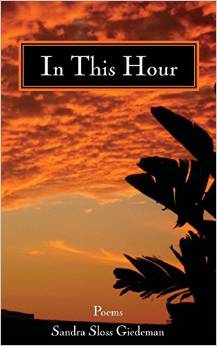
We are so proud of our dear friend, Sandra Sloss Giedeman, on the publication of her collected poems, In This Hour. Kudos also, to her publisher, Green Tara Press, for this demonstration of exceptional good taste!

Support the arts::BUY THE BOOK!
How many times do you go about your business and then suddenly realize that you can’t remember the last ten minutes? That you had been on autopilot, with your body operating the family car, stopping at lights and pausing for pedestrians while your mind had zipped off to distant canyons and \ gullies of memory and illusion? You’ve arrived safely and no one was hurt thank goodness, but what would happen if you were fully embodied, fully present, each day of your life? Would you see the world differently?
My vote is yes. It’s a fact that we do not cultivate the practice of notice very well. We are bombarded by television, radio, the Internet, literally thousands of messages a day (the gist of which are of the most dire nature by the way, and another reason to unplug) and so it’s natural that we begin to shut down. In many cases, shutting down is a natural mechanism of survival. The trouble is, once you begin to shut out the ugly of the world, you inevitably begin to shut out the beautiful and remarkable and miraculous, too.
Almost no one I’ve ever talked to about it thought their story was interesting. But I’ll bet their story is remarkable. They just stopped noticing the details. They forgot that their life was miraculous in about a million ways. So here’s an idea, write about your life like you don’t own it.
Cultivate an appreciation for each Now that shows up. Now, I reach for my water bottle and the cool liquid slides down my throat. Now, my fingers pull away the skin of an orange. Now, call on inspiration, and she takes my hand and we walk.
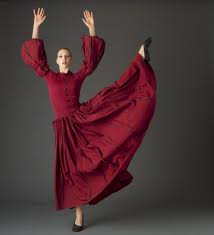 She’s here! Persephone has arrived in all her springtime finery. The dark nights are behind us, now: the celebration. Don’t be afraid, take my hand. Together, we’ll have an adventure watching the earth renew herself in joy and love. Namaste!
 Spring Equinox is on the way, and we’re dedicating a week our delicious deity.
The sap is rising and Persephone is itching to make her escape from the underworld. As a husband, Hades has his faults but he lives in style and there isn’t a reservation that can’t be had as Mrs. Hades. Still, spring beckons. The daffodils are rising, and the bleeding hearts. Asparagus is in season and ewes are lambing. Besides, Hades is hot, but he is no George Stephanopolis. In the end, she reminds the poor old dear that a weekend away at Spa Equinox was part of the deal. Goddess bless separate vacations.
 persephone's step-sisters