a book is a dream

Journaling as Sacred Practice is on the way!  

journaling-sacred-cover (1)-page-001

Last weekend, I co-faciliated a labyrinth, meditation, and journaling retreat with my partner in Yoga Retreats Napa Valley. We spent the day with 15 women–and it was fabulous! During one of our writing sessions, I urged my tribe to journal about “my dream.” It was so powerful. This is what I wrote:

My dream is the success of my book on journaling, Journaling as Sacred Practice: An Act of Extreme Bravery.

I see myself being interviewed by Terry Gross. “What a great book,” she says. I laugh. “I had a bad break-up,” I tell her. “Instead of getting sad or getting mad, I started to write. I wrote 48 chapters in 48 days. And then I put the book in a drawer. I moved to Portland, Oregon. I moved to Napa Valley, California. When it was ready, it hatched.

Oprah calls. I don’t do the interview.

Louise Hay calls. She says, “Come to I Can Do It!”

Elizabeth Gilbert calls. She says “You go, girl!” We become besties.

Dreams, dreams, dreams. A book is a dream put down on paper. A song is a dream you can listen to. Did Mozart dream in color and did his dreams come with a soundtrack? My dream is for 2016  to be like one long, rolling, lazy summer day; an impressionist painting of picnics and watercolors clouds; of bread and wine and honeybees. I dream of the sound of water, the touch of a lover. The year 2016 should be a dress floating on a breeze, the sound of a train in the distance, a piano recital, the smell of apple pie through a window.

In my dream I rise up. I lift my heart and swallow the turquoise sky, the emerald river, the comb’s teeth of a vineyard row. I will calibrate my breath on the hush of waves. Let me rest there. 

My wish for my WordPress friends is that 2016 is BIG and BOLD! Decide who you are and do it on purpose.

write now

journaling It was the most amazing, powerful, insightful, fabulous Yoga and Creative Journaling Workshop for Women, well, ever! We got your Crow, your Eagle, your Down Dog. Plus, we got your expository writing to not only knock off any proverbial socks, but to actually take you to that place you’ve always wanted to go but didn’t quite know the way. Yeah, it was like that.  And just to prove it, here is a little creative journaling sample:  I

n my tribe I am  loved, appreciated, and seen. There is no apology no room for shame, for what-ifs, if-onlys, no be seen not heards. This is a party palace, baby! This is where I am the celebrated and the celebration. I am the fireworks and the parade! But wait —  is this the same as hunkering down with syrupy sychophants? Oh, no my dear. My tribe both supports me and calls me on my philosophical slight of hand, my fancy emotional tap-dancy work. My tribe loves music and animals and sustainable living. It appreciates beauty, even the most imperfect beauty. This is a tribe of passion and compassion. This tribe has good taste and isn’t afraid to use it. Oh, Tribe of my dreams, I would climb into your mouth and sleep in the shadow of your teeth. I would brush your hair 100 strokes before tucking you in for the night. I would make you hot chocolate from scratch with baby marshmallows for breakfast and I would cut all the crusts off of every piece of toast in the world for you. My tribe speaks like a Windigo from Love Medicine. My tribe has eyes so deep you could drown in them. Namaste, peeps! — Cynthia G.

sweet sister shoutout

Happy International Women’s Day! Show the amazing women you know, including yourself, a little well-earned appreciation! 

 “She had the perpetual sense, as she watched the taxi cabs, of being out, out, far out to sea and alone; she always had the feeling that it was very, very, dangerous to live even one day.” Virginia Woolf, Mrs. Dalloway

RosieTheRiveter

read me

Miniaturist hc c

::REVIEW::

Set in 17th century Amsterdam, The Miniaturist is the story of young Nella, a country girl possessing an important name and no fortune, newly married to Johannes Brandt, a wealthy Amsterdam merchant. After a short introduction and even shorter courtship, Nella is quickly married to Brandt before he vanishes back to the city to conduct his important business, leaving his bride behind to follow him when she will.

With little beside an address to go by, Nella arrives in Amsterdam and finds Brandt’s grand manor in the best part of town, but she does not find her husband. Instead, she finds Brandt’s formidable sister, Marin, who is head of the household and manager of Brandt’s business affairs. There is the fiercely loyal household cook, maid, and chief snoop, Cornelia, who was rescued from an orphanage. There is also Brandt’s valet, Otto, a slave acquired on a trip to the East Indies, then freed and employed by Brandt himself. Nella takes her established place in her husband’s home and begins to discover the secrets that form the heartbeat of her new family.

Brandt is formidable and handsome, a respected member of Amsterdam’s merchant class and leader in the Dutch East Indian Company.  His business interests keep him far from home, and so do appetites that in Calvinist Amsterdam put the family squarely on a path of destruction. But he is generous and kind to Nella. As a wedding gift and to keep her occupied in her newly elevated role of married lady, Brandt presents Nella with a model replica of his house and instructs her to fill it as she will. Resourceful Nella discovers a miniaturist in the city who provides her with exquisitely detailed replicas to furnish her small house. Before long however, Nella discovers that the miniatures, which begin to arrive without having been commissioned, form premonitions of household events. Mysteries stack up. Increasingly, Nella feels herself being watched, and she herself begins to listen at keyholes. She feels as if she is working out a puzzle. No one will tell her the truth – or at least not all of it.

Austere Marin wears modest dresses of black wool. . .lined with ermine and silk. She is educated and vicious as a hawk, a grown woman who chooses spinsterhood over marriage for the freedom that it affords her. But surely there are lovers? No one seems to know for certain; or if they do, they are not talking.

In accordance with her very dignified position, Nella is introduced to Amsterdam society to great interest, the child-bride of the great Johannes Brandt. She is given an allowance and complete freedom to navigate the city at will. She learns the city’s sophisticated social customs of and grows into her position as a married lady.  In the end, Nella grows up quickly and manages to save herself, if not the Brandts.

The Miniaturist has all the appeal of an historical romance, except the romance is found in all the most unexpected places. As a pager-turner, The Miniaturist can’t be beat.

Cynthia G.

fiction valentine 1.1

20130627_085725

here is an except from a story I wrote called, “Not My Suicide.”  It’s about how       nothing is what it seems: not love, not time, not nature.

Some people, those who are either marginally motivated or marginally skilled, don’t manage to close the deal the first time and try again, compulsively. Psychologists say that some people go at it up to fifty times before actually making it. Strangely, you could say that one success in fifty is respectable. One hundred in-vitro attempts will statistically result in eleven babies. Edison, who was afraid of the dark, made three thousand attempts to create the light bulb before he succeeded. It’s a matter of perspective.

Finally, Viola had had enough. “Can we talk about something else?”

Marina straightened her spine, pointed toward the light fixtures overhead. “Global warming.”

Bibi choked on her biscotti. “Are you off your meds?”

Marina wagged her chin. “We’re murdering the planet.”

“Calm down.”

“Don’t mother me.”

Peace begins with me, I thought. Peace begins with me.Please, ladies.”

“She’s in denial,” Bibi insisted. “A victim of the liberal media.”

“Liberal — are you nuts?” Marina was not having it. “They’re saying that global warming is a myth, that alternative energies cost too much.”

“Geez Louise, don’t have kittens. You want an almond cookie?”

“I don’t want an effing almond cookie. I want rain forests and tree frogs and glaciers.”

“You’ve never even been to a glacier.”

Water pooled in Marina’s cerulean eyes. “Scientists in Norway are finding industrial flame retardant in whale blubber.”

“Stop.”

“It’s true. Poly-something –they use it to make furniture, clothing, computer chips.”

“How did it get in the whales?”

Marina folded Bibi’s hands in hers, squeezed lightly. “Through the water table, Beeb.”

“What? That doesn’t even make sense.”

In the ‘twelve simultaneous versions of Now’ world view, it is possible to be both dead and alive at the same time, both here and there. As if our so-called lives aren’t complicated enough.

(c)

Cynthia Gregory


genius love

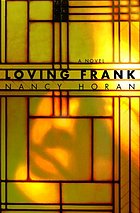
We love books, architecture, and love. Read all about it here.

lovingfrank

contaminated water

VOIL IN WATER

Pam Lazos

Chapter Fifty-Two

Twenty-five years ago, when Ruth and Marty Tirabi purchased a ten-acre plot in the middle of bucolic farmland, they thought they’d landed in heaven. Unfortunately, the realtor who sold them the property neglected to tell them that beyond the tranquil, bucolic edge of their horizon, a toxic stew was brewing. At that time, no one thought much about the environmental hazards associated with home buying. But then the intermittent smell wafted in, the one hundred and fifty-seven single family dwellings rose up like a tsunami, and carloads of benzene, toluene, and perchloroethane joined truckloads of mercury, lead, nickel, perchloroethate, and a whole host of other hazardous substances with equally unpronounceable names, forming car pools and organizing marches to the aquifer below. The caravan traveled slowly, inch by careful inch, undiscovered until a quarter century later.

And water being what it was – ubiquitous by any standard – the contamination did not confine itself to any legal borders, but spread throughout the entire aquifer, a massive thing that provided water to the Stahl’s, the Tirabi’s and their neighbors in the new Hickory Hills development. Hickory Hills attracted wealthy city dwellers who pined for pristine country air and didn’t know most farmers’ propensity not only to sell what they grew, but to rent what they owned to cover the spread. Jim Stahl, Sr. had covered his spread by renting a portion of his property to the County to be used as a landfill. And since there were few, if any, instances where one person’s actions failed to affect the lives of others, Jim’s contaminated water spread to his neighbors’ homes and discreetly took up residence there, finding permanent quarter in the kitchens and bathrooms of all one hundred and fifty-seven single family dwellings.

Lawyers advised clients in hushed, confidential tones to get a blood test and a wave of pandemonium spread through the development as test after test came back positive for cancer. Children with their developing immune systems were hit especially hard. The local newspapers did their part to raise the level of hysteria. Gossip spread rumors like a middle-aged waist-line, forcing the EPA to mount a public awareness campaign. EPA went door-to-door, offering all the neighbors of Hickory Hills bottled water until the in-house filtration systems could be installed. But in many instances, it was too late.

Jim Stahl Sr. had started landfilling in 1975, thirteen years after Rachel Carson wrote Silent Spring, one year before Congress passed the Clean Water Act, and eleven years before they would enact CERCLA, the Comprehensive Environmental Response Compensation and Liability Act, also known as the Superfund. Rivers were catching on fire, leaded gas was leaving a smoke screen out on U.S. highways, and Love Canal had exploded into public awareness. At that time, there was more to worry about than a few hundred thousand pounds of unprotected trash. But if the Senior Stahl had complied with even the most primitive dumping laws in effect at the time he started landfilling, the Hickory Hills development might not be on the National Priorities List today, and Jim Stahl, Jr. would not be mired in the muck that his father’s landfill had become. The National Priorities List or NPL was a list of the nation’s most contaminated Superfund Sites. Making that list was not something to write home about.

Over the years, corrective measures were put into place – a bit of cover here, some plastic to act as leachate collection there – but no one anticipated the rapid growth of the surrounding communities or looked at the scheme of the landfill in its entirety. Jim’s father retired, passing the whole problem on to his son – the sins of the father, as it were – and Jim took to greeting government inspectors at the door with a shotgun.

Several months and meetings later, EPA dispatched an OSC, On-Scene Coordinator, who directed two dozen people dressed in hazmat suits, moon suits as Vera, Jim’s wife, called them, to construct a temporary cap over the landfill. The cap was like a big Rubbermaid mat comprised of heavy-duty geosynthetic material. For three weeks, backhoes, trackhoes, bobcats, bulldozers and cranes dotted the landscape. When the temporary cap was complete, the contractors fenced the front half in, packed up and drove away, leaving the seething menace to percolate below and promising to send the culpable parties along to finish the job soon. Two years later, the temporary cap, held in place by used tires strung together with rope, had begun to show its age.

to be continued. . .

this is how we got here

copyright 2012

talk talk talk

we blush and we know it. you can know it too.

ridiculous and sublime

We blush, we blog, and we vote. Read all about it!