fiction valentine 1.1

20130627_085725

here is an except from a story I wrote called, “Not My Suicide.”  It’s about how       nothing is what it seems: not love, not time, not nature.

Some people, those who are either marginally motivated or marginally skilled, don’t manage to close the deal the first time and try again, compulsively. Psychologists say that some people go at it up to fifty times before actually making it. Strangely, you could say that one success in fifty is respectable. One hundred in-vitro attempts will statistically result in eleven babies. Edison, who was afraid of the dark, made three thousand attempts to create the light bulb before he succeeded. It’s a matter of perspective.

Finally, Viola had had enough. “Can we talk about something else?”

Marina straightened her spine, pointed toward the light fixtures overhead. “Global warming.”

Bibi choked on her biscotti. “Are you off your meds?”

Marina wagged her chin. “We’re murdering the planet.”

“Calm down.”

“Don’t mother me.”

Peace begins with me, I thought. Peace begins with me.Please, ladies.”

“She’s in denial,” Bibi insisted. “A victim of the liberal media.”

“Liberal — are you nuts?” Marina was not having it. “They’re saying that global warming is a myth, that alternative energies cost too much.”

“Geez Louise, don’t have kittens. You want an almond cookie?”

“I don’t want an effing almond cookie. I want rain forests and tree frogs and glaciers.”

“You’ve never even been to a glacier.”

Water pooled in Marina’s cerulean eyes. “Scientists in Norway are finding industrial flame retardant in whale blubber.”

“Stop.”

“It’s true. Poly-something –they use it to make furniture, clothing, computer chips.”

“How did it get in the whales?”

Marina folded Bibi’s hands in hers, squeezed lightly. “Through the water table, Beeb.”

“What? That doesn’t even make sense.”

In the ‘twelve simultaneous versions of Now’ world view, it is possible to be both dead and alive at the same time, both here and there. As if our so-called lives aren’t complicated enough.

(c)

Cynthia Gregory


what’s your number?

We like to promote ideas that heal and help. . .like figuring out what your personal number for 2014 is. . .and what it means to living a fulfilled, happy, and prosperous year. Is happiness as simple as a number? Could be. See for yourself.

figure out your personal number here

Digital Universe

she’s a heavy sleeper

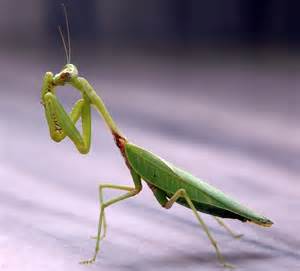
praying mantisOIL IN WATER

Pam Lazos

Chapter Seventy-Nine

Bicky moaned and squeezed his leg above the wound.

“But you said he killed her,” Gil said.

“He did,” Jerry replied. “He just wasn’t in the room at the time.

“He’s already lost a lot of blood, Jerry. If he dies…” Hart stood up. Jerry fired the gun into the floor near his feet. Hart started then froze in place.

“Sit down and don’t ask me again. Sit down and let me finish my story,” Jerry said, waving the gun at Hart. “Sit down!” Hart sat.

“I was about to cross the street to my own car. I wasn’t really comfortable spying on Sonia.” Bicky snorted and Jerry fixed him with a vaporizing glare. “I had to jump back behind the house when the other car came. This one belonged to your mother-in-law.”

“What? Did the whole world visit that night?” Hart said sarcastically.

Jerry’s impatience released itself in a huff. “May I continue – please?!” Hart snorted and looked away.

“Pay attention,” Jerry said. “Because you never get a second chance.”

Hart rubbed his face as if deciding something, and turned back to Jerry.

“I went back to the kitchen window. Good thing your neighbors aren’t close by, because the girls were screaming at each other. Seems Kitty also wanted that report.”

Hart chuckled once, then twice.

“Go ahead, laugh,” Jerry said. “It’s ridiculous, right? Everyone running around like chickens for a few inches of paper. But it’s true.”

Bicky moaned in pain and passed out, his head hitting the floor with a thud.

“Oh! Can’t have that.” Jerry walked over and kicked Bicky in the injured right leg.

Bicky roused, bellowing.

“This is the best part, Boss. Don’t fall asleep now.”

Tears streamed down Bicky’s cheeks. With great effort, he propped himself up on one elbow. His head lolled against the cool stainless steel siding of the TDU.

Jerry knelt down and patted Bicky on the cheek. He grabbed Bicky under the chin and rolled his face from side to side. “It’ll all be over soon, Boss. Don’t worry. I promise.” He gave Bicky another smug pat and returned to his seat.

“He’s fading,” Jerry said. “We better jump to the end.”

Bicky sputtered and began convulsing as if freezing.

“Jerry, please…” Hart said, watching his father-in-law.

“Hey kid, that machine throws off a lot of heat, right?” Jerry asked. Gil nodded.

“Go open the door. It’ll be better than a blanket.”

Gil grabbed his water bottle, walked over and held it to Bicky s lips. Bicky tried to drink, but with his shaking, spilled half a swallow out the sides of his mouth.

“Hey, Florence Nightingale, I didn’t say do that.”

Gil set the bottle down next to Bicky, pushed back the outside grate, and slid open the door of the TDU. A blast of heat burst up and out and Gil recoiled from it. He walked back to his seat and threw an impetuous glare at Jerry as he did so.

“Ah, whatever. I guess it’s good to show a little compassion to your enemies now and again. Keep ‘em close. That’s what I say. You’re a good kid.” Gil held Jerry’s eye, but said nothing.

“Okay, where was I? Oh yeah. Kitty wanted the report, too. To bargain with him,” Jerry nodded toward Bicky, “for her freedom. That night, she finally told Sonia the truth. It was a secret she’d kept for thirty-two years. Nobody knew. Not even me. I got it all after the fact these last few months,” he said to Hart, “or I probably would’ve told her.” Jerry nodded as if in agreement with himself. “She didn’t believe it. Called Kitty a liar. I gotta think it wasn’t because of me, per say, but just the shock of it.”

Jerry furrowed his brow and stared at the back wall of the barn, his voice taking on a somnambulistic quality: “I should have walked in then and stopped it… all that pent up emotion flying out like machine gun fire. Kitty hit her. She didn’t mean to. I just don’t think she realized the toll all those years had taken on her. On them. I mean, if she wouldn’t have had Sonia, she would’ve never stayed in the first place. I would’ve seen to that.”

Jerry cleared his throat as if to dislodge the memory. He shook his head. “Sonia went nuts. I never saw her like that. She threw her tea cup at her mother. Kitty put her arm up – it was still steaming – and it broke all over the floor. Tea and shards of glass everywhere.” Jerry snorted defiantly. “She got a couple nice second degree burns on her arm because of it. Next thing I know she’s running from the house and I’m running after her.”

“What about Sonia?” Hart’s voice was cracked and tinny.

“I didn’t see her fall. Cause if I did, I would’ve gone back. She was crazy with rage. I think she slipped on the wet floor, maybe banged her head on the counter. I heard a noise, but I thought she just threw something else.

“You didn’t go back to see if she was okay?” Hart was on his feet.

“I couldn’t. I had to go after Kitty.”

Hart lunged for Jerry who was unprepared for the attack. He toppled Jerry from the stool and the gun clattered to the floor. Gil reached to pick it up, but Jerry’s foot kicked it away along with Gil’s hand in the process. Gil winced and dropped to the floor holding one hand in another.

The two men struggled, punching, kicking, biting, clawing, rolling up, around and over each other. Bicky crawled toward the center of the floor toward the gun, a painful, slow propulsion. With each inch forward he risked being trampled by the fighters, first a finger, then an arm, and finally his leg, the last of which caused him to lose consciousness for half a minute, passing out where he lay. Gil watched the fight in relative safety from his position in the corner, holding his injured hand, his body following every punch and kick.

Hart’s pent up anger launched him like a heat-seeking missile and he pounded Jerry inexorably with the full fury of it, but anger is not a thrifty shopper and after spewing it all over the room, Hart spent himself, leaving Jerry with the edge. Several minutes later, Hart sat in a heap in front of the TDU, with a black eye, blood dripping from his nose, and a variety of scrapes and gashes that would be telling their story for days to come. Jerry emerged with a gash over his right eyebrow which bled profusely, a broken pinky finger, jutting out in an unnatural position, and the gun. Both men had given and received more than a few blows to the stomach and now prodded their tender mid-sections. Jerry spat out some blood, turned to Hart, and pulled the trigger. It grazed Hart’s elbow. Hart howled and cradled the injured arm.

“Now you sit,” Jerry said to Hart. Blood oozed from the cut above his eyebrow, dripping into his eye. He blinked it away, but it was pervasive.

“I am sitting,” Hart spat back. Jerry raised the gun again, but Gil grabbed a rag and shoved it in his free hand. The gesture grounded Jerry who retreated by lowering his gun. He wiped at the wound before nodding at Gil to take his seat on the hammock, then walked over and dropped the bloodstained rag in front of Hart.

Hart ignored it, ripped off a sleeve of his shirt, and bandaged his elbow. He was sweating, given his injury, and that the temperature in the barn had risen considerably since the door to the TDU had been opened.

Jerry walked over and peered inside to the wide, gaping mouth of the giant stainless steel tank below. “How far down’s that thing go?”

“About two stories,” Gil said.

“Probably what hell looks like.” Jerry took a step back and wiped at his brow. “You can’t build this machine. It’ll ruin the only good thing we got left to us.”       

“What are you talking about?” Hart said.

“It’ll kill the oil industry. Akanabi’s stock price’ll go way down and my money’ll be worthless.” Jerry whirled around to face Hart. “Kitty left me all her money, you know.” Jerry smiled sardonically at Bicky who was trying to stand up.

Bicky grabbed the stool for balance, but fell back down with a sickening “oaaaaw.”

“And you know what I’m doing with it, Boss? Huh? Turning a profit, you say? Noooo. I’m giving it all to the environment just like she wanted. And it’ll be in our names. Together on the same legal document. Like a marriage license. Together forever in history.”

“I didn’t care what she did with her money, Jerry. I never did.”

“Hhmph,” Jerry grunted.

“I just wanted…” Bicky’s voice splintered like wood . . .“her.” Bicky took a faltering step up, his weight bearing on one leg, his arm leaning on the stool for support. “And the baby.”

“My baby,” Jerry growled. “Did you know that, Boss? That Sonia was my baby?” Jerry wiped at the dripping blood now mixed with tears that cascaded down the side of his face. “We may not have always known it, but we belonged to each other,” Jerry gushed.

A strange gurgling noise arose from deep in Bicky’s throat. He doubled over, first coughing, then hacking, then vomiting. When he was finished he stood taller.

As the fire in the TDU diminished the available oxygen in the room, Bicky began a slow march toward Jerry, stopping intermittently to suck in a raspy, labored breath. He leaned against one of the barn’s dozen posts for support. “I don’t know…what I knew. I just wanted…” Bicky grabbed his stomach and started hacking again. His pant leg, now a dark, saturated red, was plastered against him, the pain drawing him down from the inside. Bicky leaned against a post while gravity, always one to side with a downward spiral, forced him to crumple.

“Kitty said she had always been petrified you’d find out who it was. That’s why she never told me.”

“This is a bunch of crap,” Hart barked in disgust. “Bicky, set him straight, please.”

“Doesn’t he wish. Tell him, Boss. Tell him how you tried and tried to get her pregnant.”

“Shut up.” Bicky said. He pulled himself up by inches. He grabbed the post with both hands and pushed off, a ship leaving port.

“Finally went and got checked out by a fertility doc a few years after Sonia was born. Check the records for Mason Coleman.”

“Shut up!” Bicky hollered.

“It was Bicky’s brother’s name. The one that died. He used it as an alias. Didn’t want the highbrow Houstonians finding out that the great Bicky Coleman’s sperm don’t swim too well. When d’you figure it out, boss? When she left me all the money?”

“Shut…Up!” Bicky roared. He collapsed in a spasm, clutching his leg.

Hart rolled to the side, ready to stand, but Jerry motioned him back with a wave of the gun. Hart ignored him, pulling himself up into a crouching position.

Jerry fired a bullet inches from Hart’s face. There was barely a sound, just the friction in the air as it passed, and Hart fell onto his haunches. With one big breath, Gil sucked in his fear and covered his mouth.

“She wanted you to believe it was yours, but after awhile you knew better, right. You just didn’t know who, huh? Well, me neither.” Jerry grunted and shined his gun on his pant leg.

Bicky crawled to the next post and laid his head against it, catching his breath.

“You coming after me, Boss?” Jerry said, humor mixed with malice. “Well come on then. I promise not to shoot you.”

Bicky rose and took a slow, halting step, and then another, his face contorting in pain with each one. “This machine…will….be…built. With or… without you,” he wheezed. “It’s time…has come. You won’t…stop it.” He cleared the debris from his throat and spit on the ground.

“Watch me.” Jerry’s face contorted and he raised the gun to Bicky’s chest; Bicky continued his funeral march.

Jerry growled and squeezed the trigger. The bullet lodged in Bicky’s forearm. A shot of blood squirted out. Bicky grunted, more than screamed – as if all the screams already had previous engagements – and stood, eyes closed, swaying in the middle of the room. He pitched forward, but latched onto a beam forestalling the crash. He panted like a dog, trying to steady himself before walking, slow and stiff toward his nemesis, a plane locked on auto pilot, unable to alter its course. Jerry may have had the gun, but Bicky had the upper hand.

“Why didn’t you let her go?” Jerry said, the years of anger and longing, bubbling up to the surface like a spring.

Bicky stood within inches of Jerry now. The two men glowered at each other, breathing in rage, breathing out hate.

“I did. She didn’t want to.”

“You lying sack of….” Jerry raised the gun to Bicky’s heart, but Bicky just smiled, unsteady on his feet, yet undeterred, his ragged breath flowing more easily as adrenaline started a quick trot through his body.

“She said you wouldn’t let her go. That you’d disown Sonia if she left you. She didn’t want her daughter to grow up with no father and no money.”

Bicky shook his head. “You were her father. You had money. Not as much as me, granted, but you could have provided for…”

“But I didn’t know!” Jerry screamed.

“Stop it. Just stop it!” Gil yelled, and covered his ears. Jerry whirled to face the boy, raised his gun and shot him. The bullet hit him in the shoulder and came out the other side. Gil hit the floor without uttering a sound; his eyes rolled back in his head and his lids fluttered.

“Noooo!” Bicky grabbed onto Jerry for balance and the two men began an awkward choreography. “Damn you,” Bicky yelled, a strangled curse. He tried striking Jerry with his fist, but Jerry deflected the hit. Each held fast to the other’s arm, pushing, pulling, a scant few feet from the miracle machine, as exhaustion and heat coaxed the sweat from their pores.

“You could have let us go?” Jerry sobbed. “Why didn’t you…?”

Bicky glanced over at Gil who was lying on the floor in a pool of his own blood. Hart crawled to him and checked his vital signs. Jerry and Bicky struggled, edging ever closer to the open door of the TDU. Inside, the fire raged without apology at thirteen hundred degrees Farenheit.

“Gil,” Hart said. “Gil. Can you hear me?”

“Maybe the time just wasn’t right, Jerry. Unlike now.”

Bicky broke free of Jerry’s grip, and with all the force remaining in his battered body, shoved him.

Gravity stepped in again, bolstered by its cousin, Entropy, and Jerry started to fall. But like a magnet, or a mirror that reflects what we truly are, Jerry pulled to him that which was most like him: Jerry and Bicky plunged over the small lip of the TDU together. Jerry only had time to scream once, falling as he was at a rate of thirty-two feet per second per second, an angst-ridden, shrilly noise that reverberated in the barn even after the men had bottomed out.

Hart shuddered. The flames danced, then roared, eating all the remaining sound in the room until there was nothing left but silence.

➣➣➣

“Gil? Are you alright?” Hart squeezed Gil’s hand. “Gil?”

Gil opened his eyes and blinked at Hart. “Am I dead?”

“No, but once the shock wears off, you’ll wish you were.” He knelt down at Gil’s side and wrapped his good arm around Gil’s boyish, angular shoulders.

Gil hid, rabbit-like in the crook of Hart’s arm, scanning the room, assessing the casualties. “One hundred and two,” he said, a muffled observation.

“One hundred and two what?” Hart asked.

“One hundred and two uses.”

Hart laughed once and squeezed Gil, crushing him to his chest. He tore off the remaining sleeve of his shirt and wrapped Gil’s shoulder.

Gil flinched. Sweat had plastered his hair to his scalp so that he looked like a preformed plastic Ken doll. His complexion was the color of ash. Tears fell in careless, random fashion down Gil’s cheeks and Hart felt the steel grip on his heart loosen. He squeezed Gil again and brushed back his hair. Hart staggered over to the TDU, slid the door closed, but didn’t look inside.

“Kori can take us to the hospital,” Gil said.

“I’m surprised she hasn’t been out her yet, with all the noise.” Hart said, helping Gil up.

“She’s a heavy sleeper,” Gil said.

Hart laughed for real this time and threw his good arm around Gil’s good shoulder.        “Can you walk?” Hart asked. They breathed in tandem, heavy and erratic. Gil nodded and they walked to the door, a pair of contestants in a three-legged race.

to be continued. . .

read this first

copyright 2013

2014 baby!

Thanks for sharing the love with us in 2013. It was amazing!

sister::sister

sometimes you love your sister. sometimes you don’t.

sometimes love and denial get all mixed up together.

support the arts::buy the bookAGo1 Cover Amzn ver large

razzle dazzle

We are passionate women who write, right?  So it’s only natural that we publish, too.

Download some amazing fiction by Pam Lazos here.

gathering one

the good life

books are what we love.

share the love. here.

living well

sweet like honeysuckle

OLYMPUS DIGITAL CAMERAThirteen Ways of Looking at Words

Arianna Rich


Words:

They’re sweet like

honeysuckle,

hiding in the bushes.

II

They’re the words

of mourning, when you get

a midnight phone call:  “There was a crash…”

III

Words can be soothing,

a gentle caress of your cheek

just when you need it the most.

IV

They’re lemon bitter, the hate words.

They jump down your throat and

Sit

like a lump,

no oxygen escaping and none slipping in,

threatening to bring tears to your eyes.

V

They’re Swift

like a shadow

in the night,

slipping through the darkness without a trace of light.

VI

They’re soft and swirly and light as a feather.

White cotton sheets,

rippling in the wind.

VII

They’re bright and bubbly,

popping, like drops of golden sunlight

into your sun-kissed hair.

VIII

They’re EVERGREEN.

Fresh and pure as young pine, hiding

behind the old ones in the mystical forest.

IX

Words are slick as a blade,

gliding across the ice.

X

tHey conjure and drEam and imagine

those siLly words.

They buiLd castles in the clOuds.

XI

There are words that rhyme,

but not all the time.

XII

Words are STIFF

hard

j-a-g-g-e-d

quick

sharp

Ridiculous. Illogical. Truthful.

Often impatient.

XIII

Words are the center of the Earth,

the glue that holds her inhabitants together.

Without words, there would be no poems to write

or stories to speak.


No Way To Communicate.

Yet sometimes — when words are needed most…

is the time no words are spoken at all.


love and other magic

All relationships begin with the Self. Given that the quest to find The One is a powerful lure, it’s also great incentive to get on with homework!

Naturally, we endorse the book.

honeymoon effect

skirted by vines

garden doorHOW AMOEBAE MOVE
Cynthia Gregory

Roxanne Ryan baked bread when the depression came down on her like a moonless night. Yeast called to her with its sour gas, startled her from her sleep.  She thrashed and rolled her bed sheets into a ball seeking comfort on the mattress, and then she switched on the bedside lamp. She woke with stomach cramps, spilled flour from her knotted fist onto the bedroom floor. Scruffy snorted from his pillow of MacGregor plaid flannel. She rubbed his nose and found a pair of cotton sweat socks to keep the cold out for when she stood on the kitchen linoleum, kneading whole wheat sourdough. When things got bad, even the Xanax didn’t work. Nothing worked except the smell of bread baking, the essence of a fine brown crust forming on a loaf.         

Roxanne cut butter into flour to form a sweet dough. She dribbled in sweet cream and yogurt. She dropped in soft currants soaked in orange brandy. A spongy mass formed and she turned it out onto a slab of marble she got as surplus at the old church renovation site. The county was gentrifying. Open fields close to town were being replaced with decorating studios. While some families still kept chickens that scratched in the dirt  between houses, the old Victorians on Main were finally getting fixed up. As towns went, Cold Water had allure for young professionals who got struck dumb at the beauty of the place while on vacation and who decided to move to paradise.

When Roxanne left Kenny, she gravitated back to that western familiarity. She copied bread recipes from Sunset magazine and poured over the San Francisco Chronicle in bed Sunday mornings with milky Costa Rican blend coffee. On Kenny’s transfer to Alexandria, she learned to live in a world roped by traditions and she became bound. It wasn’t until she cut through Denver on I-70 and across the Continental Divide, rolling back toward the Pacific, that Roxanne took a deep breath for the first time in what could have been years. In Cold Water, she surrendered to simplicity. On the western lip of North America, she yielded to the alchemy of bread.

Roxanne speed-dialed Virginia. At two in the morning in San Francisco, it was five in the east and Mercedes Lazarus was just waking, getting ready to take the train into D.C. to review legal briefs for the EPA.

“Hi, baby.” Mercedes caught calls on the first ring. She jogged onto her trampoline the minute the phone went off, working up endorphins.

Roxanne pressed her eyes shut. “Geniuses are supposed to be able to live on  two or three hours of sleep a night. By now I should be channeling Einstein.”

“How about. Anais Nin!”  Mercedes breathed hard into the handset. “So.  Baby, spill.”

Mercedes lived on pesto and call waiting and was a perpetual motion machine.  Her blood was equal parts Italian and Greek, separated from the homeland by a distance of two generations, requiring dinner with her parents every Sunday, after which she drank grappa with her father at the kitchen table;  shared Viceroys. She made tomato gravy and Greek salad with an essence of garlic that oozed from her pores. Mercedes was the only woman whose lips Roxanne had ever kissed besides her own mother’s.

“What are you doing up? It’s the middle. Of night there.”

“I’m baking. It’s my new therapy.”

“Ha.” Springs creaked in the beat between bounces.

“I’m rising to a higher power. One loaf at a time.”  Roxanne shook her head, felt the weight of silver earrings against her cheek. “Bread good as a psychic Rolf.”

“So what’s this I? Sense blueness?”

“Maybe lavenderness. Second guessingness.”

“Self awareness. About —”

“You know, leaving.”

“We’ve covered this ground. Your only crime was falling. Out of love.  You’re not. As screwed up. As you imagine. Actually, I think. You’re sane for the first. Time maybe in your life.”

“Yes, well.”

Roxanne rolled the dough into a ball. She covered it with a damp dish towel and greased the bowl before dropping it in, setting the timer. “Did I tell you? I had dinner  with my step-brother last week? He married two sisters.”

Mercedes’ voice garbled. There was the sound of rushing water, the scritch of bristles on tooth enamel.

“One couldn’t have babies, so she left. Lana says the other, the fertile one, is hell on wheels. She says Robert is a polygamist.”

“Is he?” Her voice dropped to her throat, a gathering to spit.

“Number one allegedly loved him so much, she gave him up.”

“Still water —”

“It makes me wonder —”

“More aggravation —”

“You think you know somebody —”

“Everyone sees things, people. Through the filter of their own perception, you know. It’s nothing new.”

“What will I say about Kenny in twenty years?”

“You’re very clear about Kenny’s shortcomings.”

“Still —”

“Trust me.”

“Anyway.”

“You loved him once, that’s enough. Hold on a minute.” The sound of toilet plumbing roared through the line. “I have to put my hair up. I’ve got five minutes before I have to run to make the bloody train.”

“Late again.”

“How?”

“What?”

“Never mind. I’ll call you from the car. Or the way in.”

“I miss you, baby.”

“I miss you back. Ciao.”

Roxanne Ryan tapped her fingers against the stove top. She dropped the cordless into a basket and wondered if she should color her hair blonde, wondered if she would ever date again. It was four o’clock in the morning of the ninth month of the year of her first divorce.  She had moved back west, rented a cottage in the vineyards north of San Francisco. She was skirted by vines and grapes, sweet-smelling dirt. Roxanne swam in a sea of leafy vines that rose up out of the valley floor and spread across the golden coastal hills. In a countryside swarming with weekend tourists, Roxanne scraped her knees praying for answers in a language that she understood, which, as it turned out, was the language of flour and water, the exchange of gasses, of leavening. Four brown loaves cooled on racks on the kitchen table. Four brown, smooth, perfect loaves that could soak up butter and jam and sudden, unexplainable melancholy. Bread that could fill empty places. Bread and chocolate and blues.  Roxanne dabbed her eye where it got moist and lit a cigarette. She called her lawyer. Five o’clock San Francisco made it eight in Chevy Chase.

“Michael Goldman.” Goldman answered the phone himself, his receptionist being late. Again. He was genial, a gentleman. Her therapist told her, available. His courtesy cost her roughly twenty bucks a minute. Each conversation  with him cost her half of a pair of Ferragamo’s.  A CD player. A standing rib roast at Raley’s. This conversation had the potential to become a new pair of Joan and David’s. Dinner at Don Giovanni’s.

“Maybe you should take on some work,” Goldman had said. “It wouldn’t hurt to establish at least the impression that you’re moving forward.”

“I did it,” she told him. “You know, as my attorney I thought you should be informed.”

On his advice, and for the first time in ten years, Roxanne took a writing assignment. She chronicled famous wine country spas for an artsy travel magazine. She called the first place on the list, checked in for a facial:  research in the form of a four-layer seaweed wrap.  The therapist patted thick cream onto her face and while it hardened to a therapeutic crust, she worked an emollient into Roxanne’s feet, wrapped them in plastic bags, tucked them into heated booties. She could do this every month of the year. She could wake up next to a stunt man named Paolo, whisper for a cappuccino, eat cucumber sandwiches. It was something to consider while the facialist worked a rosemary scented cream into her hand, pulling her fingers until she shot into a beta state, right past alpha, into dream land.

Now her unconscious wrestled angels, gathered fancy pigeons. Now rock stars haunted her bedroom, handsome ER doctors made consultations. Now she and Kenny struggled over control of the oars of a rowboat on an artificial lake. The reservoir was full; the turbines of the dam pulled at them.

“Give up,” Kenny shouted to her. “It’s futile.”

“Bite me,” she said, grabbed an oar and thrust it in the water. “It wasn’t me you wanted, it was that lady barber.”

Kenny paddled hard with the remaining oar, propelling the boat in circles. Loaves of Italian slipper bread floated in the sky. All the babies they did not have, would never have, floated like wafers in the water, swathed in organza layettes, trimmed in lace, dotted with raisins. This is why she did not sleep.

Last spring, during the year of their estrangement, she had suggested alimony. Kenny’s voice fell a decibel. “You could get a job,” he said. “You’re capable. F.Y.I.: these days its called spousal support, a contingency that can go either way.” It was the intimation of a tactic. That he could demand she pay to support him, retribution for working up the courage to leave.  The kitchen timer went off and the phone rang.

“To hell with. Work,” Mercedes told her.  “Enroll in school. You could get. Your master’s degree. If you wanted.”

“In what?”

“Jesus, who knows. Professional wrestling. Literature. Do what you love. Pursue the culinary sciences.”

“I feel as if I’m dancing on the edge of a cliff. It could go either way.”

“Take up yoga. Give up vices.”

Roxanne moaned. “But I’ve given up everything I know.”

“The Tao would say. Give up even that.”

 Mercedes was off caffeine, but still went to the coffee houses, for the ambiance, the magazines, the sense of literary importance. She was a lawyer with literary ambitions, with mommy ambitions, with ambitions even she could not yet define, so great was her reserve of energy. Roxanne suspected that the miscarriage and the ectopic pregnancy were the result of some weird vortex Mercedes Lazarus created in her moving-fastness.

Roxanne toasted a piece of bread, slathered it with plum jam, sniffed at it, pushed it away. “I met a man. A lawyer.” 

“Gosh. Well?”

“Wounded, God. I’m so over men. Give me someone who hasn’t cried publicly for a year.  A recovering sensitive. Jee-sus.”

“Harsh, baby.”

“No.” Roxanne opened a seltzer water, sprayed the front of her jammies. She reached for a towel. “Ahhh, shoot. Maybe.”

“You’ll rebound.”

“I don’t know.  The idea of dating, of dancing. Body contact with a virtual stranger.”

“Depends on the stranger.”

“Plus, you get close, there are smells.”

“Stop.”

“Soap. Shampoo. Laundry detergent. Belly to belly, ear to ear. And kissing. The idea of saliva is paralyzing.”

“Tongue.”

“Breathing in, out.”

“Anyway, the lawyer.”

“Ahhh. Beautiful smile, but so goddamned sad.”

The train whistle came tinny through the handset, the warning blast of an approaching station. “The grass isn’t any greener on the other side,” Mercedes said. A tapping of laptop keys floated between her words. “Truth is, tap-tap, on the other side, tap, there is no grass.” The shriek of brakes rose up through the phone.

Roxanne threw a pinch of salt over her shoulder. “You have to go.”

The air smelled of pine and bay laurel. A light rain fell before dawn, a sky full of waterbeads letting go, dropping into an ocean of air. The lawyer took her to dinner at the local bistro du jour. The place was austere to the nth. They took no reservations, the waiters were young, swarthy, tuxedo shirts, pony tails. The walls of the restaurant were painted terra cotta and the floor was stained saffron.  Candles flickered from wall sconces. When the food came, it was arranged artfully on wide brimmed plates. The lawyer ate oysters to begin, and after the entree he ordered flan. He smiled and said, viagra, vasectomy.

“Um,” she said, “Saw Palmetto. Zinc.”

I’ll look it up, he said. You do that.

There were judges, teachers, novelists waiting to get seats. Roxanne lifted her glass of pinot grigio and observed happy couples over the rim of the glass,  tinted gold by wine.  She felt the same twinge of envy that she had when she and Kenny were trying to have babies and passed young families on the street. After twenty-six weeks of Clomed and disappointment, they avoided city parks and shopping malls.

The how-to market was explosive with books on how to navigate divorce, not get screwed, look after your interests. But there were nuances that were not explored in the divorce manuals. They didn’t say that you would miss being married, double, if you did it well. If you happened to like turning junk store tables into decorator accents. If you thought selecting the correct wallpaper was tantamount to a feat of civic heroism. If your coq au vin was talked about in three states.

The books didn’t tell you that you might find yourself wandering into hardware stores shopping for kitchen tiles for your ex’s kitchen makeover. That you would become aroused by magazine ads for men’s underwear. That your intentions for independence would be subverted by well-meaning family members who said, what a shame, what a shame, as if you had killed someone. Poisoned someone. Admitted over the creamed peas and buttermilk biscuits that you wished his plane would jack-knife out of the sky into an Iowa cornfield.

Certain associations would bask in a florid superiority. They would offer woolly threads of advice. After a while you would learn to just smile and hold your breath when sentences began with that airy Well, you know. . . .

You wonder if you’re sane. You wonder if your shrink is sane. You wonder if the pharmacist who fills your prescription could have anything interesting to say after sex. You find that you are both a stereotype (statistic) and forging new territory.  You may flirt with a young woman at the Barnes & Noble coffee counter. You may wonder if love came at you like that, what you would do about it. You will discover that investment brokers are not your friends; they work on commission. You will remember that the box of Christmas ornaments you gave to your ex contained a collection of Santas and you will pay penance to get it back. You will perform a live enactment of the Last Supper superimposed over  the Seven Stages of Grief. Love stories will make you cry and war epics will raise your blood. You will discover that a dark theater and a sad movie are cathartic and meaningful in a way beyond therapy.

Roxanne braided ropy strands of Challah and set it aside to rise. She took a carton of eggshells out to the composter and startled a raccoon picking through the wilted lettuce she ritually bought for good health and then watched turn to green mush in the refrigerator. The night sky was brave. Jupiter sparked in the early dark, winking. The raccoon’s eyes glinted with ephemeral light and Roxanne felt herself lift off. It was midnight: too early in the east, too late in the west. This was what it was like in space, a vacuum.

Sleep was her panacea, coming in bits and snatches, between the rising of dough, the baking and cooling of loaves. The phone was shaped like a baguette, a comfort that fitted in the palm of her hand.

“I have something. To say, big news.  But don’t want to. Tip your canoe.”

“You can tell me anything.”

“I would love it. If you were happy. For me. Us.”

Roxanne pushed the blade of a knife into a rectangle of dough, cutting squares. “Did you put that milagro I sent you on the back of your bed like I told you?”

“Yes.”

“Baby! Hey! It worked.”

Mercedes blew air. “Totally.”

“Well.”  Roxanne stared into the still dark sky. In the east, a faint glimmer of yellow tinted the horizon.

“It was a fluke. Not even a command.  Performance, you know what. It’s like.”

“That’s the way it happens. So you better stop slogging around super fund sights.  No more chances.”

Mercedes’s voice was muffled. She was pulling off a sweatshirt, possibly pulling on a fresh tee.

“Will you?”

“No! More rivers dead with chemicals. No imperiled aviaries.”

“There are considerations now you didn’t have before, like maybe slowing down, letting someone else take up the slack. Putting your feet up. You don’t have to be a hotshot all the time. Imagine what it’s like inside there, inside you, that kind of magic. Witness that.”

Roxanne brushed melted butter across the top of her dough squares, sprinkled them with granulated sugar and lemon zest. Mercedes was quiet. There was no sound of trampoline, no hard breath. “So how far are we talking?”

“Just.”

“What does Marcus think?”

“My adorable chemical engineer says pseudo podia.”

“Super fund? What?”

Pseudo podia. False-foot.”

“No clue.”

“False foot. It’s how amoebae move. They create a false foot, a hologram. Then move their bodies with the imaginary foot. Then it dissolves.”

Roxanne spilled coffee into a filter, poured scalding water, brewed a pot of Costa Rican, inhaled the heady fragrance.

“Moving in new directions. Now we both are, you see? I signed up for school. The Culinary Institute actually, I registered.”

“Baby, that’s great.”

“Yeah, babies, it is.” The line spiraled vacant a moment, one of those empty spaces you could lose yourself in, sink into, an oven of very deep quiet.   

“Could you be godmother, you think?”

“Of course I will. You know I will. I’ll teach them to bake bread.”

“Yeah?”

“One at a time, naturally. Hey.”

“What.”

“This one is for good.”          

Mercedes laughed, a signature sound that ended on a rising note. “I love you, baby.”

“I love you back.”

Roxanne cupped her palm against her throat.  She poured a steaming stream of very dark roast, added a shot of hazelnut syrup. She could count on one hand the things that she knew for sure. There was Mercedes’ love, sovereignty, and bread. She loved bread and Mercedes and mornings in the dark just before the sparrows went wild with song. And yeast. Yeast was something to be trusted. Like an amoeba, a living organism, a teeming culture, a hologram. It grew phantom feet, stood on them in a universe that made allowances for miraculous appendages.       

# # #

this prize-winning story is previously published

all rights retained by author, 2013