sometimes love is a thought. sometimes its a sound.
hey. as long as it starts in the heart.

sometimes love is a thought. sometimes its a sound.
hey. as long as it starts in the heart.
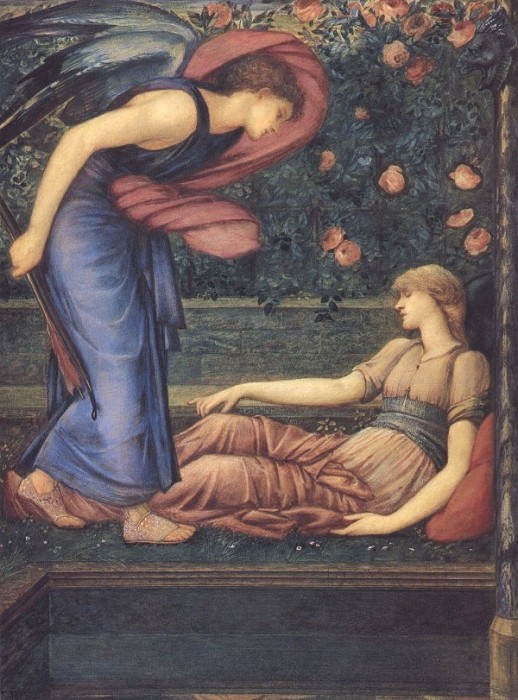 Love. It’s everywhere. Some would even venture to say that if you haven’t found it, you’re not looking.We don’t know if that’s true. We do know that sometimes fictional love is better than no love at all.
Excerpted from “Jesus, Mary, Buddha”
Over warm olives and crusty sourdough, Helen learns that Nick’s third wife parked her Range Rover at the edge of town on the banks of the Snohomish River and washed down a handful of pentobarbital with a bottle of flinty Oregon pinot gris.
It was his first year of mourning and he still hated her and loved her in ways he hadn’t yet explored. “I don’t know how I can do better than that,” he told Helen one night. “I mean fucking look at her.” He gestured toward a framed photo of them on his living room mantle. “She’s gorgeous.”
On Earth Day they up-cycle a pair of antique windows and build a table out of them. Later, they eat salmon with their fingers, straight out of his backyard smoker. After dark, they sit in deck chairs in the garden and watch shooting stars. Eight weeks into their affair, she drives home through the city streets late at night with the windows down, with air warm as a lover’s breath sliding up her arms, through her hair. The rhododendrons are in bloom. The azalea, lavender, chives, strawberries, raspberries, pear, five kinds of apple, chestnuts. Even at 11 pm, there are couples walking, cyclists peddling down the quiet evening streets in thin cotton dresses, short sleeves. It is evident that even in the dark, they are sucking the juice out of the first days of summer, taking shy steps toward the grilling season.Through the car windows, Helen Okabe breathes in the perfume of lilac.
For his birthday she gives Nick an anatomically correct chocolate heart spiced with habanero pepper. He makes his signature clams and beer. Afterward, he builds a fire in the backyard firepit and they recline on deck chairs, watching the sky. He talks about his men’s group, about getting in touch with his feelings.
“I’ve been wondering,” he begins. “What if I’ve been sabotaging relationships my whole life?” Unlike so many middle aged men, Nick is messed up on love and he knows it. To his credit, he is actually trying to unpack that baggage.
Helen sucks an ice cube and lets the water slide down her throat. “I was just wondering that myself,” she says. She has. She has been doing her spiritual inventory and counting up the number of times that, when the going got tough, she got gone. She was up to four. It wasn’t pretty.
“I think I have intimacy issues,” he says.
“Wait,” she replies. “You said you and Reina were simpatico. You were married ten years. You renewed your vows every spring for God sake. That sounds awfully intimate to me.”
“Nah,” Nick waves the idea away. “That was only appearances. I checked out after two years, if I’m honest about it.”
Appearances, her Zen master said, not only fool, you they aren’t even real. Helen still hasn’t wrapped her head around that one.
She offers the only solace she has, something from a piece of research she is working on. “The top five fears of most people are public speaking, followed by flying, heights, fear of the dark, and intimacy.” She counts them off on the fingers of her hand and refrains from adding that following this list, the fears continue with death, failure, rejection, spiders, commitment.
“That can’t be right,” Nick says.
“It’s from a university study,” she replies.
“I would say fear of intimacy is number one,” he continues.
“People are scared to death of intimacy. Just think what it means if you are right.”
“I am right.”
“If you are right, and I’m not saying you are, it means people would rather sleep with strangers than speak in front of a crowd of them.”
“It doesn’t mean that at all.”
“People are more afraid of emotional honesty than talking,” he says. “Look,” he says, pointing to a light moving across the night sky, “a satellite.”
It is a clear spring night and the sky is shy of clouds and the moon is new so they have space to shine. “Anyway. That’s my story, and I’m sticking with it.”
(c)
Cynthia Gregory
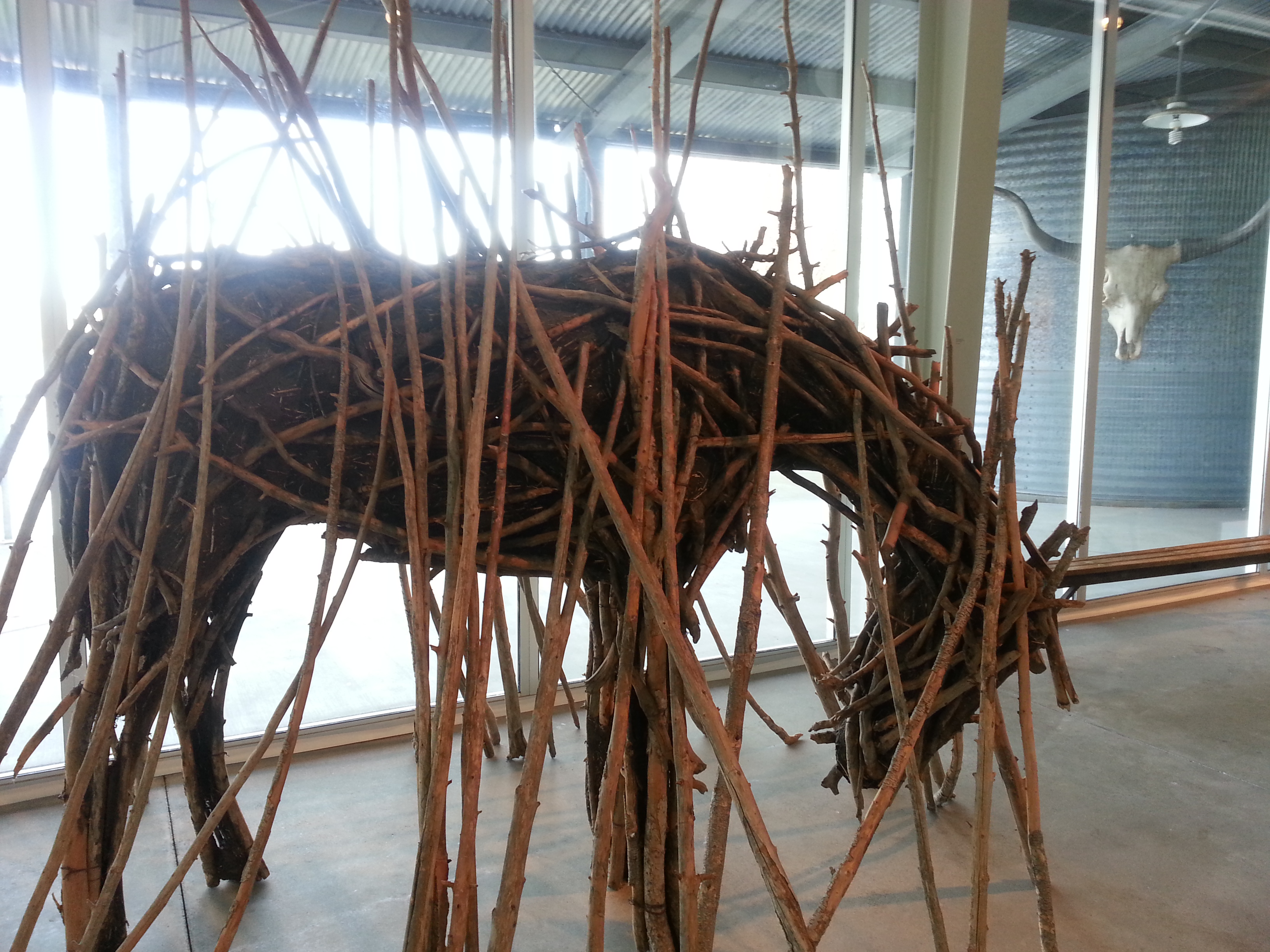 we’re sharing stories of love this week because love is so big and one day is so small. today we’re starting a little catalog here. sort of . decide for yourself.
excerpted from “ALMOST CANADA”
She moves up the aisle toward the dining car to pass the time until the train resumes its forward motion. At the narrow counter, she takes a stool beside to a dark haired man, orders a glass of ginger ale. The man is working on a burger. He shifts his eyes toward her, measuring. His hair is glossy, black as a raven feather and close-cropped above his collar. One long border of bristled hairs makes a ledge over his eyes, his nose hooking sharply over a pretty mouth.
“Gotta love ther rail, right?” he said. He hitches a smile in Antonia’s direction.
“Excuse me?”
“One goddam delay en anerther,” he explains. There is a mole on his neck, just behind his left ear that moves as he chews and talks. It is the size of a grain of rice.
The man tilts over the counter toward his food, hooks his arm around his plate forming a border between his fried potatoes and Antonia. He is not a small man, or bird-like, but his movements suggest the motions of the ravens that inhabit the tree outside of her office window. Antonia watches the bubbles rise in her glass of pop, thinks about what she knows about ravens, which begin to court at an early age, and then mate for life. In part of the mating process, a male raven will demonstrate intelligence and a willingness to procure food or shiny objects. Egg laying begins in February so courting must take place in early to mid-January.
Antonia is a vegetarian more by disposition than philosophy. This is to say, she will eat meat to avoid hurting her neighbor’s feelings if invited for dinner. In a restaurant, she will select venison if the side dishes or greens are inferior. The man makes the hamburger vanish, chunks at a time, washing it down with pale beer. When he finishes, he wipes the corner of his mouth with a large, square thumb. His eyes rake her face, drop to her sweater. “Wheer ya headed? Goina Canada?”
Antonia stares at the chip bisecting his incisor, wonders what it would feel like to run her tongue over that rough surface. Her mouth forms a watery smile. Common ravens are highly opportunistic. “Almost,” she says, leaving money for the pop and spinning away. “I’m going to Almost Canada.”
She is mutable, an object of desire. She is a screen upon which projections are made: a bold maiden, a volatile spinster, the girl with the long grey skirt and the blouse with pearl buttons.
The man swipes twin circles of pickle from his plate and drops them on this tongue like holy wafers. He watches the twin moons of her rump as she moves away.
Antonia returns to her seat to find that in her absence, the pair of facing seats across the aisle has been occupied by three girls, sisters, traveling on their own. The oldest, a teenager with sleek black hair, presses out text messages on her phone, while the two younger girls share a laptop computer and review the Facebook posts of friends. They are fundamentally beautiful in the way of youth and by heritage; their ancestors inhabited these coastal meadows centuries before Europeans arrived with their fur trades and their thirst for whale oil. Antonia peers beneath her own lashes at the contrast between their dark hair and their alabaster skin, the curve of their lips above the slow arcs of their chins.
She feels a rush of gratitude for such vigorous charm, such tender virtue. As the train begins to slow for the next station, the oldest, the managing sister, switches from texting to making a call to determine at which city the trio will depart the train. The girl says It’s me. We’re coming to the station. Do we get off here or the next one? Antonia wonders how there can be confusion about the care of beautiful dark-haired girls. Mom, the girl says. Mom, please don’t yell at me. I just need to know, which station? And like that, a picture develops; the first one, the responsible child, the good girl. Antonia’s heart breaks a little for these sylph.
(c)
Cynthia Gregory
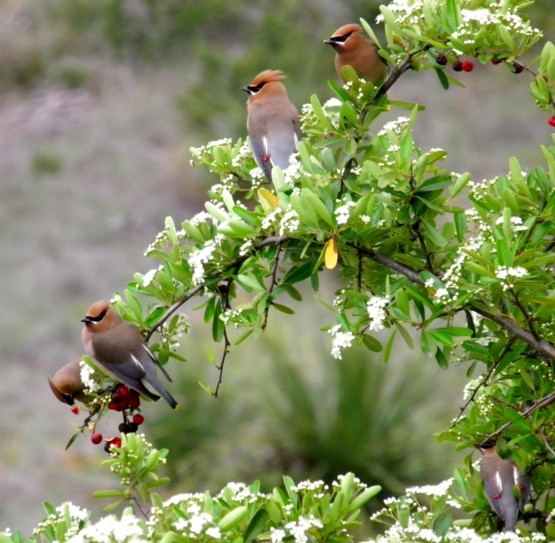 Thirteen Ways of Looking at Words
Arianna Rich
Words:
They’re sweet like
honeysuckle,
hiding in the bushes.
II
They’re the words
of mourning, when you get
a midnight phone call: “There was a crash…”
III
Words can be soothing,
a gentle caress of your cheek
just when you need it the most.
IV
They’re lemon bitter, the hate words.
They jump down your throat and
Sit
like a lump,
no oxygen escaping and none slipping in,
threatening to bring tears to your eyes.
V
They’re Swift
like a shadow
in the night,
slipping through the darkness without a trace of light.
VI
They’re soft and swirly and light as a feather.
White cotton sheets,
rippling in the wind.
VII
They’re bright and bubbly,
popping, like drops of golden sunlight
into your sun-kissed hair.
VIII
They’re EVERGREEN.
Fresh and pure as young pine, hiding
behind the old ones in the mystical forest.
IX
Words are slick as a blade,
gliding across the ice.
X
tHey conjure and drEam and imagine
those siLly words.
They buiLd castles in the clOuds.
XI
There are words that rhyme,
but not all the time.
XII
Words are STIFF
hard
j-a-g-g-e-d
quick
sharp
Ridiculous. Illogical. Truthful.
Often impatient.
XIII
Words are the center of the Earth,
the glue that holds her inhabitants together.
Without words, there would be no poems to write
or stories to speak.
No Way To Communicate.
Yet sometimes — when words are needed most…
is the time no words are spoken at all.
 Laws of Attraction
I understood then
the burden of gravity
parallel lines, parallel destinies
never meant to converge
in the space-time
continuum of love
gravity brought you to me
a collision of souls
ending in a single point
a beginning and
an ending
With you, I was
free-falling, weightless
lighter than air
zero gravity
unrestrained
but all objects fall
at the same rate
regardless of
their mass
what goes up
must come down
gravitational pull
surface tension
the unseen forces
of natural law
inevitable, predictable
a formula for pain
an apple dropped
my heart sank
you left and
I hit the ground hard
Kelly Mason
2012
 Zaca Lake
A white-bellied carp breaks the water’s
surface, crickets chirp a background chorus.
Bats fly a crazy trajectory, then
fold like origami, cling to the eaves.
A great horned owl swoops, glides
above an old man who fills mason jars
with what he calls sacred mud of the healing lake.
In the lobby of faded sun, I pass row after row
of pinned butterflies under glass.
Memento Mori of old hotel, long-gone guests;
of Anise Swallowtail
Mournful Duskywing
Cabbage White.
Days of green and summer’s
sulphurous heat that bursts cocoons.
Fragile speckled wings that someone felt
the need to pin down.
You’re awake as a child until they teach you
the names of things.
Sandra Giedeman
sharing the publishing success of our friends
is just one perk of having our own blog.
we blush, and for good reason.



 persephone's step-sisters