We are so proud of our dear friend, Sandra Sloss Giedeman, on the publication of her collected poems, In This Hour. Kudos also, to her publisher, Green Tara Press, for this demonstration of exceptional good taste!

Support the arts::BUY THE BOOK!

We are so proud of our dear friend, Sandra Sloss Giedeman, on the publication of her collected poems, In This Hour. Kudos also, to her publisher, Green Tara Press, for this demonstration of exceptional good taste!
Support the arts::BUY THE BOOK!
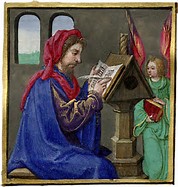 I recently started journaling. Again. I have always been a faithful journalista. In fact, I’ve filled literally dozens of journals, and every once in a while I actually go back and review them. I’ve even created some of my best work by throwing words at my journal. Somewhere along the way, journaling morphed into my writing process. I created the structure of my short stories through my journal. Strange, right?
I once had a mentor who said: “Just write. Don’t expect it to make sense consciously. Your subconscious knows what it’s doing.” Though I didn’t fully understand what she was saying, she was my mentor, so I did what she advised. And guess what? It worked and I created some amazing fiction as a faithful journalista.
Then I stopped journaling. I know! I took a hiatus, a rest, a break from the ritual of creation. I gave myself permission to not write, and guess what? The world didn’t come to an end. I did however, stop creating amazing stories. It was okay for a while, but now I’m back to journaling. Not everyday, mind you, but often. It’s like going back to yoga. I’m getting more agile, more flexy. I can feel a story starting to form, and it’s the most delicious feeling a writer can have.
So, I’m back to zero, which is exactly the right place to be.
We writers are strange ducks. We have an almost obsessive love of language. We dance with verbs and all in love with nouns. Sometimes we use made up words because language is fluid and zesty and delicious. We even love to talk about words because like pictures, worlds can have color and texture and depth and dazzlement.

::REVIEW::
Set in 17th century Amsterdam, The Miniaturist is the story of young Nella, a country girl possessing an important name and no fortune, newly married to Johannes Brandt, a wealthy Amsterdam merchant. After a short introduction and even shorter courtship, Nella is quickly married to Brandt before he vanishes back to the city to conduct his important business, leaving his bride behind to follow him when she will.
With little beside an address to go by, Nella arrives in Amsterdam and finds Brandt’s grand manor in the best part of town, but she does not find her husband. Instead, she finds Brandt’s formidable sister, Marin, who is head of the household and manager of Brandt’s business affairs. There is the fiercely loyal household cook, maid, and chief snoop, Cornelia, who was rescued from an orphanage. There is also Brandt’s valet, Otto, a slave acquired on a trip to the East Indies, then freed and employed by Brandt himself. Nella takes her established place in her husband’s home and begins to discover the secrets that form the heartbeat of her new family.
Brandt is formidable and handsome, a respected member of Amsterdam’s merchant class and leader in the Dutch East Indian Company. His business interests keep him far from home, and so do appetites that in Calvinist Amsterdam put the family squarely on a path of destruction. But he is generous and kind to Nella. As a wedding gift and to keep her occupied in her newly elevated role of married lady, Brandt presents Nella with a model replica of his house and instructs her to fill it as she will. Resourceful Nella discovers a miniaturist in the city who provides her with exquisitely detailed replicas to furnish her small house. Before long however, Nella discovers that the miniatures, which begin to arrive without having been commissioned, form premonitions of household events. Mysteries stack up. Increasingly, Nella feels herself being watched, and she herself begins to listen at keyholes. She feels as if she is working out a puzzle. No one will tell her the truth – or at least not all of it.
Austere Marin wears modest dresses of black wool. . .lined with ermine and silk. She is educated and vicious as a hawk, a grown woman who chooses spinsterhood over marriage for the freedom that it affords her. But surely there are lovers? No one seems to know for certain; or if they do, they are not talking.
In accordance with her very dignified position, Nella is introduced to Amsterdam society to great interest, the child-bride of the great Johannes Brandt. She is given an allowance and complete freedom to navigate the city at will. She learns the city’s sophisticated social customs of and grows into her position as a married lady. In the end, Nella grows up quickly and manages to save herself, if not the Brandts.
The Miniaturist has all the appeal of an historical romance, except the romance is found in all the most unexpected places. As a pager-turner, The Miniaturist can’t be beat.
Cynthia G.

Have you ever noticed that when you actually do that thing you don’t want to do and push through and do it anyway you arrive at a whole new place beyond what you expected? It’s like an scoop of sprinkles from the cosmos just for screwing up courage and pushing beyond limits. Not stopping at go. Not opting for the easy exit strategy. Yeah, I love it when that happens. READ MORE HERE.

I love California. Quirky, lovable, yoga-centric California has been very good to me. Still, just six years ago after a bad breakup, I left the state for what I thought was for good. I move to Portland and immediately experienced a “once-a-decade” blizzard that shut the city down and gave me near-pneumonia. Then, two years ago, I got recruited back. Not just to the general California Bay Area population, but to the super-special wine country, home of some of the most valuable vintages on the planet. Yay! It is delicious in about a million ways and I try not to let it go to my head. Sometimes I have to literally pinch myself when, in the rarefied company of people whose names I dare not drop, I find myself . . .
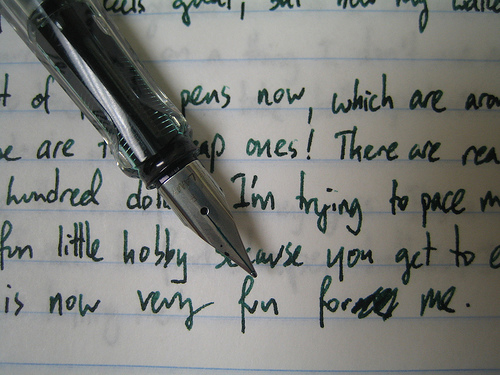 Once, I belonged to an amazing clutch of writers who met every week to explore writing through timed exercises. It was one of the best writing experiences I ever had, and it did more to develop my skills as a writer than almost anything I’ve done since. Twenty years later, I still miss meeting with that group of women. We shared a very important time, you might even say a sacred time, two hours each week, supporting one another and learning to develop our writing voices. Few things were allowed to interfere with our commitment to meet. We gathered faithfully each Friday at an outdoor table at the Bear Street Cafe in Orange County, California, and parked our individual cares at the door in order to be fully present and nakedly honest during our joumaling session. We wrote furiously, read aloud with quaking voices, listened respectfully, and grew as writers.
Now that I live in Northern California, I maintain virtual relationships with several of these fabulous women, and we see each other when we can. But the thing that remains one of the greatest gifts of my life is that even though whatwe mainly have in common is our passion for writing –no matter what, we support each other. We celebrate each others’ successes, and provide insightful comments to help make each other’s work the best it can be. Writing groups are an excellent way to develop as a writer -you can find or form a group by taking classes, getting to know other writers, and then meeting outside of the classroom setting to give yourself more honest writing time.
Back in the day when we met at Bear Street, we maintained a strict routine that went something like this:
One by one, the words were selected from the cup, and we wrote timed exercises based on them. After the time was up, we went around the table and read our work. This wasn’t easy at first, but our group was a safe place to put it out there. One unbreakable rule was that under no circumstances, could we comment on what we wrote -neither the writer not the listeners were allowed to comment. But let me tell you something: our writing got stronger and better and more deeply creative by just listening to each other. I think we secretly tried to out-compose each other, but the result was that we pushed each other to spiraling heights of creativity without so much as one well-intended criticism. It was amazing and illuminating, and a huge lesson in the art of paying attention.
So, dear writer, waht are you paying precious attention to? Where lies your genius? Leave a comment with a single word. What is it you find to write about — in a completly original way? Ooh. Do tell.
Living green can be an intensely personal decision. . .or it can gain such momentum socially that it actually moves into legislation. The state of California is considering oulawing plastic bags. It’s become a status symbol to be seen toting your own canvas or other upcycled bag into the store, and why not? As consumers we have the choice to affect not just our own small corner of the world, but the entire planet. Is that hubris? It is what it is.
It may be August but it’s still summer and there’s plenty of good vacation reading left to do. Start with Rosecrans Baldwin’s debut novel. It’s a bright shiny star in the firmament of new fiction.

We firmly believe that the for-profit world needs the nonprofit world. For all the right reasons. Read about our latest venture in nonprofit-land here!

 persephone's step-sisters