write now

journaling It was the most amazing, powerful, insightful, fabulous Yoga and Creative Journaling Workshop for Women, well, ever! We got your Crow, your Eagle, your Down Dog. Plus, we got your expository writing to not only knock off any proverbial socks, but to actually take you to that place you’ve always wanted to go but didn’t quite know the way. Yeah, it was like that.  And just to prove it, here is a little creative journaling sample:  I

n my tribe I am  loved, appreciated, and seen. There is no apology no room for shame, for what-ifs, if-onlys, no be seen not heards. This is a party palace, baby! This is where I am the celebrated and the celebration. I am the fireworks and the parade! But wait —  is this the same as hunkering down with syrupy sychophants? Oh, no my dear. My tribe both supports me and calls me on my philosophical slight of hand, my fancy emotional tap-dancy work. My tribe loves music and animals and sustainable living. It appreciates beauty, even the most imperfect beauty. This is a tribe of passion and compassion. This tribe has good taste and isn’t afraid to use it. Oh, Tribe of my dreams, I would climb into your mouth and sleep in the shadow of your teeth. I would brush your hair 100 strokes before tucking you in for the night. I would make you hot chocolate from scratch with baby marshmallows for breakfast and I would cut all the crusts off of every piece of toast in the world for you. My tribe speaks like a Windigo from Love Medicine. My tribe has eyes so deep you could drown in them. Namaste, peeps! — Cynthia G.

poem::poet::poetry

marigold

Sylvia Berek Rosenthal is a prolific writer. And it’s no wonder, as Rosenthal, a resident at Oakmont at Montecito in Concord, CA, who will turn 92 this August, has had plenty to write about. Her latest book, Marry Me With Marigolds, is a delicious collection of poems that reads like the spicy narrative of an interesting life. The genesis of Marry Me with Marigolds began when Rosenthal won First Prize in the  2010 Benicia Annual Love Poem contest.

The writer strongly resembles someone’s smart and jolly Nanna, with her shock of white hair, large black-framed glasses, bright floral silk jacket. She smiles gleefully. “It felt so nice for an old lady to win with a love poem,” she says about the contest.

Sylvia Rosenthal didn’t begin writing poetry until she was 75, an age when people tend to be outspoken with their truths. The poetry in this collection reflects a whole lot of truths, as it was written in the 15 years between 1997 and 2012. Many of her poems are funny and downright irreverent. Some are rich and tender. In all, her personal voice rings true. In the poem called “Maid in America,” she speaks of how her parents met.

My mother was born in Detroit.

You can’t get any more American than that

Can you?

When she turned seventeen she met my father.

He spoke Yiddish and Polish

She spoke only English.

They had no trouble.

Pillow talked worked just fine.

When she turned eighteen

They celebrated by getting married.

One year later

World War One

Began.


In the book’s namesake poem, Marry Me With Marigolds,  Rosenthal uses language in a way that is both playful and evocative:

Marry me with marigolds

Tempt me with your tenderness

Covet me with coriander

Chocolate and

Cloves

Favor me with foxglove

Gather me with the garden’s garland

Circle me with summer squash

Sesame and

Sage

Woo me with water lilies

Nurture me with nutmeg

Pamper me with peppers

Red green and

Gold

And I will stroke

Your balding head

Bake you babkas

Cook you cabbage

Pat your pot belly

If you will only

Marry me with marigolds.

Rosenthal may live in Concord, CA, but to hear her speak, you know she is pure New York, where she was a grade school teacher and guidance counselor. Her husband, George, was a ceramicist and artist. For years they lived something of a bohemian lifestyle, sojourning back and forth between New York to San Miguel de Allende, Mexico. After a time, the Rosenthals moved to San Antonio, Texas, to shorten the commute between San Miguel and the states. 

It was when the couple lived in Texas, that Sylvia discovered poetry.  Her husband had broken his shoulder and was recovering from surgery and she had tired of being his nurse. “I decided to take a writing class at the San Antonio branch of Texas University and the only two courses available were poetry and a business writing course,” she explains. “I wasn’t going to write letters, so poetry it was.”  In San Antonio, Sylvia became deeply involved with local writing and poetry communities. In San Miguel, she wrote columns for the Atencion and El Independiente newspapers. 

Her first book, Mrs. Letsaveit, is the collected body of these columns, which are mainly food literature essays very much in the style of Sonoma County’s M.F.K. Fisher.  The cover of Mrs. Letsaveit features a close up photograph of some of her late husband’s ceramics. The direct and humorous essays filed between the covers of the book are redolent of a happy home as Rosenthal describes her life in Mexico through a series of narratives about cooking and eating food. “Think of it as recipes through a  filter of Like Water for Chocolate,” she says, referencing the 1989 best selling book by first-time novelist Laura Esquivel. In Mrs. Letsaveit, Rosenthal writes about making bagels, corned beef, Mandelbrot, and other family favorites in Mexico, far from New York – or Texas style grocery stores.

An avid reader and writer still, Rosenthal is a member of the San Miguel PEN and San Antonio Poets; she is now involved in writing and poetry groups in the Clayton/Concord Area. Is her work fact or fiction? She smiles mischievously and replies, “I like to think of poetry is a piece of the truth, but not all of it.”

Sylvia Beren Rosenthal’s books are available on Amazon.

shipwrecked love

Quote

light between

::REVIEW::

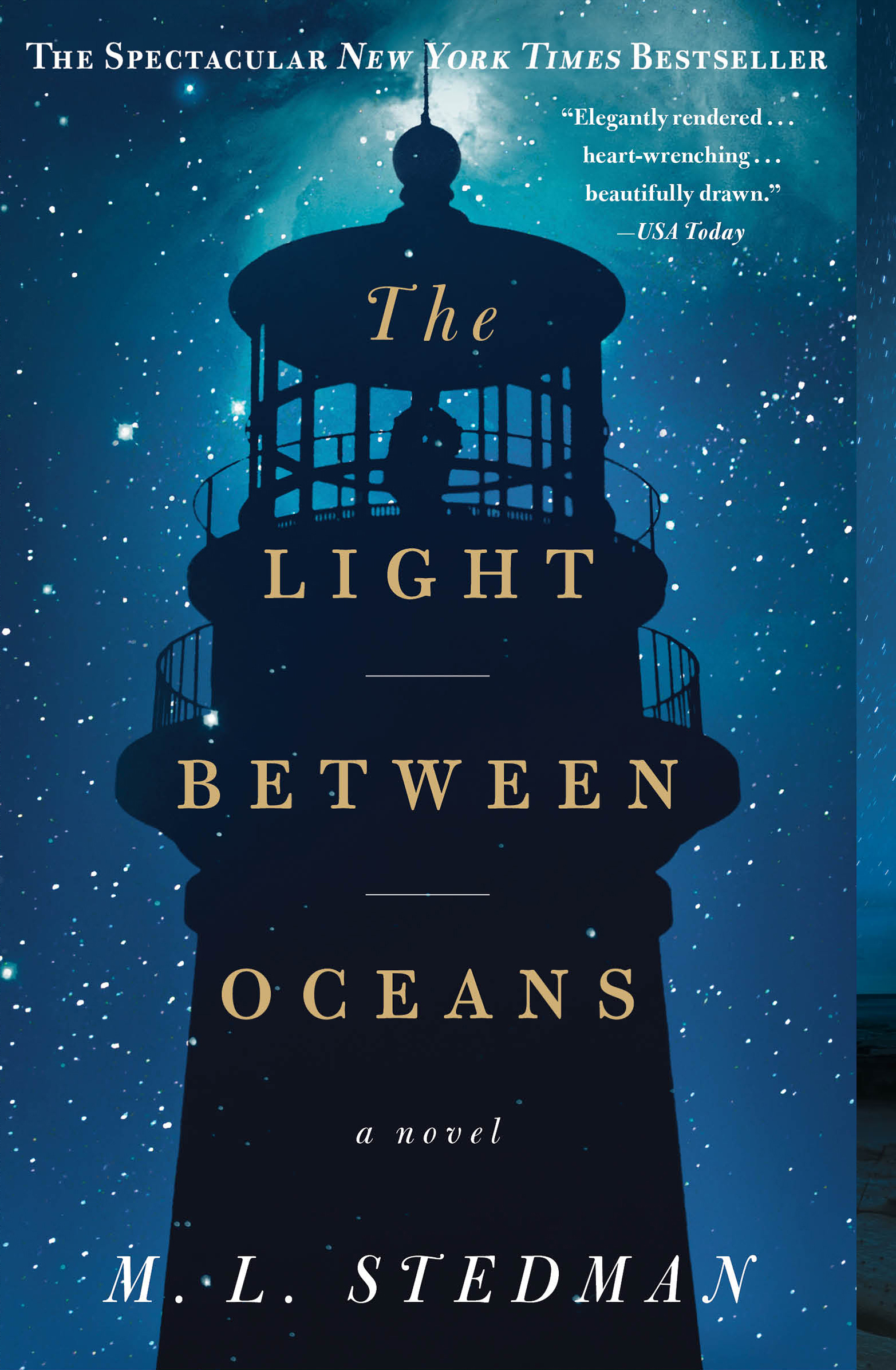
  It is just after World War II, and Tom Sherbourne returns to his native Australia seeking solace and normalcy after enduring the horrors experienced as a soldier on the Western Front. Kind, thoughtful, and meticulous Tom lands a job as lighthouse keeper on the island of Janus. It’s lonely work, but Tom enjoys the routine, and quiet accountability of helping to assure the safe passage of cargo and passengers off of Australia’s shoreline.  He sets about making repairs to the Light, and keeps strict and meticulous records of all activity on Janus, as is his responsibility.  Tom can be trusted to do a job well, and he takes great pride in being a man to be counted upon to do the right thing. To his great good fortune, if not his great surprise, Tom meets Isabel Graysmark while on leave from Janus.  Isabel is everything Tom is not: gregarious, creative, outgoing. Isabel doesn’t so much seduce Tom as declare that their match is right and inescapable.  An epistolary courtship follows and on his next leave from the island, Tom and Isabel are married. They return to Janus a couple, starting their life together in their own little island world. Isabel suffers a series of pitiful miscarriages, each one stealing a little more of her light. 

And then one day a rowboat washes up on the island carrying a dead man and a live baby. Of course, Tom is inclined to report the incident, as is his natural and assigned responsibility. But Isabel, having lost three babies and one only recently, has been delivered an infant in need of a mother. She convinces Tom to delay reporting the body and the baby. Eventually all lines blur and Isabel names the baby Lucy and insists she is their own.   As much as he loves her, Tom cannot totally reconcile baby Lucy as his; instead arguing that she belongs to someone, somewhere, who surely grieves her loss. Isabel has no such qualms.  She considers Lucy a gift from God, and being mother to the little girl in all ways feels as natural to her as breathing. Like all secrets, Tom and Isabel’s slowly unravels.

On a trip to the mainland Tom encounters a woman whose child was lost at the same time that Lucy was found. Tom is devoured by guilt. On the night before the Sherbourne family is to return from the mainland to Janus, an anonymous note is found in the grieving mother’s mail box. A cryptic hand-written message assures the woman that her daughter is loved. A second trip to the mainland, a second hand-written message, and the Sherbourne’s story dissolves like paper in water.  Baby Lucy is reunited with her birth mother,  while Tom claims all responsibility for the deceit to protect Isabel. Following her betrayal, Isabel suffers an emotional breakdown, rejecting  Tom. Lucy is torn from the loving embrace from the only mother she’s ever known, and is inconsolable, rebuffing this stranger who now possesses her, her birth mother.

The Light Between Oceans is about finding one’s way in uncertain waters. It is a book that deftly examines the choices we make, and living with the inevitable outcomes. It is about love and courage and doing the right thing.  It is a book not to be missed. Cynthia G.

poetic genius

We are so proud of our dear friend, Sandra Sloss Giedeman, on the publication of her collected poems, In This Hour. Kudos also, to her publisher, Green Tara Press,  for this demonstration of exceptional good taste!

sandy

Support the arts::BUY THE BOOK!

back to zero

scribeI recently started journaling. Again. I have always been a faithful journalista. In fact, I’ve filled literally dozens of journals, and every once in a while I actually go back and review them. I’ve even created some of my best work by throwing words at my journal. Somewhere along the way, journaling morphed into my writing process. I created the structure of my short stories through my journal. Strange, right?

I once had a mentor who said: “Just write. Don’t expect it to make sense consciously. Your subconscious knows what it’s doing.”  Though I didn’t fully understand what she was saying, she was my mentor, so I did what she advised. And guess what? It worked and I created some amazing fiction as a faithful journalista.

Then I stopped journaling. I know! I took a hiatus, a rest, a break from the ritual of creation. I gave myself permission to not write, and guess what? The world didn’t come to an end. I did however, stop creating amazing stories. It was okay for a while, but now I’m back to journaling. Not everyday, mind you, but often. It’s like going back to yoga. I’m getting more agile, more flexy. I can feel a story starting to form, and it’s the most delicious feeling a writer can have.

So, I’m back to zero, which is exactly the right place to be.

word nerds

We writers are strange ducks. We have an almost obsessive love of language. We dance with verbs and all in love with nouns. Sometimes we use made up words because language is fluid and zesty and delicious. We even love to talk about words because like pictures, worlds can have color and texture and depth and dazzlement. 

grace everywhere


Fireflies-in-a-Jar-59432The other night while eating Chinese and reading the winter issue of Ploughshares I discovered Lance Larson and his astonishing “Sad Jar of Atoms.”  I tumbled into a rabbit hole of language love that I haven’t felt since my first reading of Louise Erdrich’s Last Report of the Miracles from Little No Horse. This is true love. Deep love. Crush love.

“Life is a jar of maybe, of who knows, whereby we grow older and bones turn brittle as hope. Some jars live along time, like sea turtles, like Benjamin Franklin, a jar of genius filled with Poor Richard and flirting in French. . .”

Lance Larson, poet genius, poet laureate of Utah, I love you. I want to hold your prose babies in my prayerful hands. I am lost in cadence and find myself in a place where words are texture and all sound is a dazzle . . all because of your “Sad Jar of Atoms.”

Thank you for your Byronic reference. Thank you for “a jar made of sizzle and cordite.” Thank you for your “river and the eye of a bird.”


love and time travel

Most of us have fallen in love with Jamie and Clare. In her own words, Diana Gabaldon talks about her process. It’s priceless. Enjoy . . .and let us know what you think!

bookly giving

There is no time for classics like the holiday season, and that includes books as well as music. We’ve noticed lately that the seasonal music is a little lighter, a little more fun. So herewith is a holiday classic book giving guide with a frothy little ditty to go with it. Happy shopping — and remember: used books need love too!

  1. One Hundred Years of Solitude, by Gabriel Garcia Marquez. Beginning with what is quite possibly one of the best first sentences in the history of literature, Garcia Marquez spins a yarn of love, redemption, war, and magic. “Many years later, as he faced the firing squad, Colonel Aureliano Buendia was to remember that distant afternoon when his father took him to discover ice.”
  2. The Sun Also Rises, by Ernest Hemingway. The poetic lilt of Hemingway’s dialogue is some of the best ever written and makes me fall in love with words every. Single. Time. “Everyone behaves badly – if given a chance.”
  3. The Diary of Adam and Eve, by Mark Twain. One of Twain’s lesser known works is nonetheless an enchanting lesson in love. “How I wish I could make him understand that a loving good heart is riches enough and that without it intellect is poverty.”
  4. Mrs. Dalloway, by Virginia Woolf. Not an easy read but a dazzlingly brilliant classic. Woolf delivers this Valentine of book in stream-of-consciousness prose and begins with another amazing first line: “Mrs. Dalloway said she would buy the flowers herself.”
  5. A Good Man is Hard to Find, by Flannery O’Connor. This is a collection of short stories that will scare the wits out of you as it nabs you by the collar and whips you around with a command of language that is both naked and forgiving. “She wouldn’t stay at home to be queen for a day.”
  6. The Bean Trees, by Barbara Kingsolver. It’s actually difficult to choose just one Kingsolver novel as a stand-alone but if you must choose, this is a good start: a story about love, friendship, abandonment, putting down roots, and a girl named Turtle. “I had decided early on that if I couldn’t dress elegant, I’d dress memorable.”
  7. Housekeeping, by Marilyn Robinson. There is a haunting quality in Robinson’s work as she writes about the small details of ordinary life. Her examination of the glue that holds our worlds together is at once pointed and astonishing. “You never know when you will see someone for the last time.”
  8. Last Report on the Miracles at Little No Horse, by Louise Erdrich. If you have any tender sensibilities at all, this writer will pierce your heart. Erdrich’s sense of irony, poetry, and social justice mingle in a tale that is at once outrageous and plain in about a million ways. “To love another human in all of her splendor and imperfect perfection, it is a magnificent task. . .tremendous and foolish and human.”
  9. Ragtime, by EL Doctrow. A literary classic in its own right, Ragtime reaches into the early 20th century to capture the hope and the optimism of immigrants and millionaires in America before the great wars changed everything. “And though the newspapers called the shooting the Crime of the Century, Goldman knew it was only 1906 and there were ninety four years to go.”
  10. Illusions, by Richard Bach. You can never go wrong with a book that contains both magic . . .and a barnstormer with a messiah complex. Deceptive in its simplicity, Bach’s story is an open door into a world beyond the ordinary. “Nothing good is a miracle, nothing lovely is a dream.”

There you have it: a short list of classics. Enjoy the season, and happy reading!

telling stories

Author Louise Erdrich offers what may well be the best writing advice. Ever. Listen, then leave a comment for the rest of us to chew on. Then get back to that manuscript, baby.