a novel to die for

murder

::REVIEW::

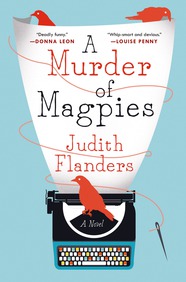
Who knew publishing was such a dangerous and glamorous profession? Though A Murder of Magpies is journalist Judith Flanders first novel, her whip smart bravura and droll sense of humor make this Murder a fun read.

          “Oh, just kill me now!”  I didn’t shriek that out loud, just clenched my teeth more tightly. It was eight thirty, and already the day couldn’t get much worse. I’m always at my desk by eight not because I’m so wonderful, although I am, but because it’s the only time of day when no one asks me anything, when I can actually get on with some work, instead of solving other people’s problems.”

Meet snarky book editor, Samantha (Sam) Clair. Sam has managed a fine career in the publishing business, working with a stable of writers, several of whom churn out predictably good best sellers. San is a sensible kind of gal. She’s the type of no-nonsense person who, when a meeting is disrupted by an unexpected visitor, will deal with it in her own sensible way.

“It was probably a friend of a friend, or someone who’d got my name somehow and was trying to flog a manuscript, no doubt about how his mother had abused him, or proving that his great-great-grandfather was Jack the Ripper. We don’t have to deal with real live members of the public often, but every now and again, one sneaks under the radar.”

One of Sam’s favorite writers, gorgeous Kit Lovell, is a reliably gorgeous writer. Kit covers fashion and can dish about the great design houses with the best of them. But this time, he’s written a potentially libelous biography of a fashion icon whose death appears to have been murder. While covering the human interest story about one of the largest and most respected fashion houses in Europe, Kit unintentionally uncovers an international money laundering ring. Big fashion is inextricably linked to big money and neither are pleased with Kit’s revelations.  

The manuscript proves incendiary. Before long, Sam finds herself embroiled in a hot mess. Kit vanishes, a copy of his manuscript is stolen, a courier is killed, and Sam’s flat is ransacked. This is quite a lot of excitement for a woman who spends her days reading books.

After the break in Sam begins to investigate her good friend and best author’s disappearance. Companions in her quest include her corporate lawyer mother, Helena–who is astonishingly adept at untangling the kinks of the criminal mind—and a hunky police detective, Jake Field.

As a single professional woman, Sam is aware of her options. She’s had relationships, and is currently satisfied with her quiet job, and her quiet flat, with its quiet upstairs neighbor, Mr. Ridigers. She tolerates her young coworkers with a thin layer of patience while plotting ways to get her authors placed on the best book club lists. A romantic entanglement with a cop isn’t exactly her cup of tea.

In the end, Sam and Helena and Jake solve the murder of Kit – and Helena uncovers hard evidence to corroborate Kit’s fashion house money laundering scheme. Sam takes Jake as a lover, much to Helena’s approval.

Murder of Magpies is a great, fun, smart read. Don’t miss it.
tasty fiction here

kitchens

KITCHENS OF THE GREAT MIDWEST

::REVIEW::

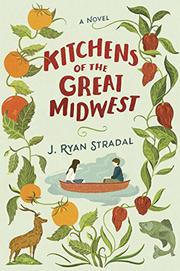
What a delicious read in J. Ryan Stradal’s debut novel: Kitchens of the Great Midwest.  His treatment of the subject of haute (and low) cuisine is both respectful and poetic, as is his attention to the detail of place. The Midwest has never appeared so endearing, nor possibly as strange.

The star of the story, Eva Thorvald, is born in the late 1980s to Lars Thorvald and Cynthia Hargreaves, the two most unlikely candidates for happy marriage that ever was. But when Cynthia gets knocked up, marry they do, and vigorous ten pound baby Eva follows. 

“Cynthia was still twenty-five, and bounced back to her skinny frame with color in her cheeks and bigger boobs, while Lars just grew balder and fatter and slower. He had learned, before she was pregnant, that he had to hold her hand or touch her in some way while they walked places together, so that other men knew they were a couple. Now she was the mother of his daughter, he was even more wary, snarling at passing dudes with confident Tom Selleck mustaches and cool Bon Jovi hair.”

Lars is a foodie through and through, and Cynthia has a knack for food and wine pairings beyond reason. But gravely oppressed by motherhood from the start, Cynthia ditches husband and child as soon as reasonably possible, running off to California to learn the wine trade.

Lars devotes his life to his darling daughter, whose taste buds he teases with the finest ingredients her pediatrician will permit. He reads Beard on Bread to her. He takes her on excursions through Farmer’s Markets, searching for priceless potatoes and redolent rhubarb.

Lucky for her, Eva is born with a “once in a generation palate.” But is this because of her natural father? It’s hard to say. Not long after Cynthia goes MIA, Lars dies suddenly, leaving baby Eva to be raised by her Uncle Jarl and Aunt Fiona, who while loving her completely, don’t know a mung bean from mozzarella.

Part of the pleasure of this novel derives from Stradal’s juicy narrative. From the start, we know that Eva is a survivor and that she is destined for great things. We love how she loves her adopted parents, how she embraces strays of all kinds, and how even as a kid, she demonstrates great depths of compassion.

“[Jarl] suddenly looked sad and bewildered, like an elephant that had been fired from the circus and was wandering down the side of the highway with nowhere to go. The thought occurred to Eva that if her dad confronted those boys face-to-face, they would make fun of her weak, fat, kindhearted father as brutally as they made fun of her, and she needed to protect her dad from that; his ego was already so fragile.”

It’s not giving anything away to reveal that Eva becomes a celebrated, if mysterious and deeply private, chef. Her love for good food is not for show or for fame; it is real as rice and sweet as whipped marshmallow. In the end, her love of food is about what all great food is about: celebration and gratitude and sharing your bounty with those you love.

c. gregory

killer weekend

IN A DARK, DARK WOOD

::REVIEW::

dark dark

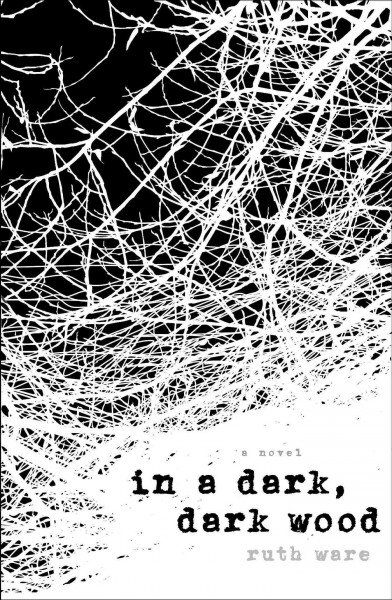
Ruth Ware’s debut novel, In a Dark, Dark Wood, possesses all the best elements of a thriller: a remote country estate, a bachelorette party, and a group of frenemies that really, really should have scrubbed their email lists and left each other well enough alone after those terrible school days. But then, where’s the pleasure in that?

The story is narrated by Nora, an author who specializes in crime thrillers. Back in school, she was called Lee, short for Leonora. Only one person ever called her Leo, and it was her first love, James.  But then he broke up with her. . .via text. . .and she moved on. Ten years later, Nora is mostly okay, writing novels and living a fine, urban single life.

Then one day out of the blue, she receives an invitation to an old friend’s wedding. Surprised, she feels a little sorry for Clare, thinking that maybe she has no other girls to invite, having to dredge back ten years for her bachelorette do. Nora is undecided about whether or not to attend the hen, but her invite is followed quickly by an email from Nina, who is also wary of Clare’s motives. “If you go, I will,” she says. Nora agrees and they somehow wind up traveling to the remote English countryside together.

Nina hates the country and misses her girlfriend, and Nora is straightway filled with dread by their accommodations: a modern glass box dropped unceremoniously in a meadow at the edge of a dark and menacing wood. The house belongs to Flo’s aunt and feels to Nora like a dangerous cage, though it is only a country estate, complete with a shotgun hung over the living room fireplace.

Miles from anywhere, cell reception is sketchy and the revelers are coolly irritable. When Clare announces to Nora that the reason she was invited to the hen and not the wedding is because the groom-to-be is the infamous James, the weekend really takes a turn. It doesn’t help that Flo’s hen party games involve embarrassing details about the bride and groom, shaming and humiliating Nora repeatedly. And then it snows. And then the land lines go out and the hen fete devolves into a churlish clutch of drunken, paranoid hostages. Fun!

When the phones go down, Melanie decides to bail, a welcome excuse to return home to her infant son. Flo is alternately weepy and aggressive toward anyone who isn’t into the spirit of the weekend. Tom would rather be home with his husband but stays on, drinking gin and taking well-aimed shots at Nina and Nora. Clare plays referee, keeping anyone from coming to actual blows.

After two days of slowly escalating hell, Nora wakes up in a hospital confused, horribly bruised, and under police watch. She is suspected of murder, but she can’t remember what happened. The harder she tries to recall, the more the truth evades her.

Novelist Ware has created a deft and ominous page turner in this fabulous thriller, replete with plot twists, red herrings, and a truly scary villain. If you’re still looking for provocative poolside reading to finish the summer, this novel should do nicely.

a gift for fiction

alice in wonderland

“Your story, that story that keeps replaying, the interaction of your expectations and what happens, the narrative, the disappoinments and the way you process it. . .it’s all invented.

“Ambien, the popular sleep aid, doesn’t actually help people sleep much more. No, the reason it works is that it’s an amnesiac. Ambien makes your forget that you didn’t get a good night’s sleep.

“. . .[our story] it’s all invented. It’s still real, the pain is real, the frustration is real, but the story that’s causing it all is something we made up, and something we can change. The pain is real, and so is a path to changing it.” 

–Seth Godin

The thing is, what is your story? What is the thing you repeat to everyone who will listen, about that thing that happened to you. The Course in Miracles says that we are all operating under a shared illusion and the fact that it’s shared, doesn’t make it any more real.

So what about it, cookie? What is your story? For goodness sake, make it a good one!

Zen Up, calm down

You know that tight feeling in your gut at the end of the day that begs for release? Or that tension that kicks in right after you wake up,  when something big is up and you don’t feel quite ready?  Or maybe there are bigger questions looming and you don’t have a handle on how to handle them.  As one bright person said to me once, “your best thinking has gotten you this far. Maybe you should try something else.” Yeah, this just might be it. My friend, Becca Pronchick, has published a handbook for meditation called: No Matter the Question, MEDITATION is the Answer. It’s a book for beginners, full of great guided meditations. It’s also a go-to for people who have been meditating a while and need some new tricks to still the mind.  Either way, this smart, pretty little book has the potential to calm your heart and mind. In case, you know, it matters.

BUY THE BOOK::CALM YOUR MIND

becca

poetic genius

We are so proud of our dear friend, Sandra Sloss Giedeman, on the publication of her collected poems, In This Hour. Kudos also, to her publisher, Green Tara Press,  for this demonstration of exceptional good taste!

sandy

Support the arts::BUY THE BOOK!

word nerds

We writers are strange ducks. We have an almost obsessive love of language. We dance with verbs and all in love with nouns. Sometimes we use made up words because language is fluid and zesty and delicious. We even love to talk about words because like pictures, worlds can have color and texture and depth and dazzlement. 

read me

Miniaturist hc c

::REVIEW::

Set in 17th century Amsterdam, The Miniaturist is the story of young Nella, a country girl possessing an important name and no fortune, newly married to Johannes Brandt, a wealthy Amsterdam merchant. After a short introduction and even shorter courtship, Nella is quickly married to Brandt before he vanishes back to the city to conduct his important business, leaving his bride behind to follow him when she will.

With little beside an address to go by, Nella arrives in Amsterdam and finds Brandt’s grand manor in the best part of town, but she does not find her husband. Instead, she finds Brandt’s formidable sister, Marin, who is head of the household and manager of Brandt’s business affairs. There is the fiercely loyal household cook, maid, and chief snoop, Cornelia, who was rescued from an orphanage. There is also Brandt’s valet, Otto, a slave acquired on a trip to the East Indies, then freed and employed by Brandt himself. Nella takes her established place in her husband’s home and begins to discover the secrets that form the heartbeat of her new family.

Brandt is formidable and handsome, a respected member of Amsterdam’s merchant class and leader in the Dutch East Indian Company.  His business interests keep him far from home, and so do appetites that in Calvinist Amsterdam put the family squarely on a path of destruction. But he is generous and kind to Nella. As a wedding gift and to keep her occupied in her newly elevated role of married lady, Brandt presents Nella with a model replica of his house and instructs her to fill it as she will. Resourceful Nella discovers a miniaturist in the city who provides her with exquisitely detailed replicas to furnish her small house. Before long however, Nella discovers that the miniatures, which begin to arrive without having been commissioned, form premonitions of household events. Mysteries stack up. Increasingly, Nella feels herself being watched, and she herself begins to listen at keyholes. She feels as if she is working out a puzzle. No one will tell her the truth – or at least not all of it.

Austere Marin wears modest dresses of black wool. . .lined with ermine and silk. She is educated and vicious as a hawk, a grown woman who chooses spinsterhood over marriage for the freedom that it affords her. But surely there are lovers? No one seems to know for certain; or if they do, they are not talking.

In accordance with her very dignified position, Nella is introduced to Amsterdam society to great interest, the child-bride of the great Johannes Brandt. She is given an allowance and complete freedom to navigate the city at will. She learns the city’s sophisticated social customs of and grows into her position as a married lady.  In the end, Nella grows up quickly and manages to save herself, if not the Brandts.

The Miniaturist has all the appeal of an historical romance, except the romance is found in all the most unexpected places. As a pager-turner, The Miniaturist can’t be beat.

Cynthia G.

graceful language

Inspiration comes in the most interesting places. Donna Tartt talks about hers, and what it took to write The Goldfinch. Watch  the interview here and leave a comment!

love and time travel

Most of us have fallen in love with Jamie and Clare. In her own words, Diana Gabaldon talks about her process. It’s priceless. Enjoy . . .and let us know what you think!