we’ve done it again. . .and now our food is blush-worthy, too!

 OIL IN WATER
Pam Lazos
Chapter Seventy-One
Gil was under attack. He dodged a plastic missile and huddled under a small bush a few feet from the house. A large, old man, older than his father by a lot, was laughing. His laugh echoed, like it started down deep in the earth, and bulged and grew and it clawed its way to the top where it became fearsome and overpowering. It made Gil’s insides shake even though it was the first day of spring and pretty warm out.
The man threw empty plastic water bottles at him: Perrier, Deer Park, Evian, Crystal Springs. The small bottles bounced off, harmless. He only ducked when the man launched the larger one-gallon bottles. He looked around for an escape route and his eyes landed on the small plane parked next to the house. Kori would be pissed that he forgot to park it in the garage again, and more, that he was going to drive it without a license, but so what? He invented it. It wasn’t a conventional plane, but looked more like a giant egg laid on its side. Little claw-like chicken’s feet descended from the main compartment and kept the body steady when the plane was grounded. The wings retracted into the body. Inside the egg were two seats, a cushion on the floor for Max, and a control panel. Avery wanted to sell these planes some day, for a fraction of the cost of a Hummer.
Gil pulled a gas pump hose from an outlet below the kitchen window and crawled on his belly over to the egg, kicking plastic bottles as he went. He lifted the hatch and inserted the nozzle into the egg’s fuel tank, dodging several bottles thrown in rapid succession. The hose connected to a small TDU in the basement and was fed by the garbage disposal and the trash bin, a complete in situ unit. After a few minutes, the filling stalled and the hose went limp in Gil’s hand. He shook it, but nothing happened. He crawled back over and kicked the wall of the house like a man kicking the tires of the car. “Oowww,” he yelled, but the mini TDU failed to restart. “Dammit,” he said, then covered his mouth and looked around to see if his sister was within hearing distance.
The large man started laughing again. Gil panicked and dropped the hose. He was crawling toward the egg when he heard Max at the kitchen door, barking like a crazy dog, so he crawled back to the house and let him out. Together they ran and jumped into the egg. Gil started the engine and the little chicken legs took off running at a fast clip. The wings fanned, the thrusters thrusted and the egg was airborne, the chicken legs still running, but with no ground beneath them. When he retracted the legs, the egg shot straight up into the air. The large man bellowed, something between a laugh and a moan, and Gil accelerated. He turned around to see the man remove his Armani suit jacket, fold it neatly over his arm, and bend down to turn on an automatic ball toss machine.
“Where the heck did that come from?” Gil yelled to Max who raised his head to investigate. The machine began firing the empty plastic water bottles, pelting the egg mercilessly. Singularly, the bottles posed no harm, but collectively the force resulted in an erratic trajectory, throwing them off course while jolt after jolt caused the egg first to zig and then to zag. The large man laughed like a maniac, sending shock waves that caused the egg to tumble with each successive and inexorable guffaw.
“Hold on!” Gil yelled to Max who crouched down at Gil’s feet, his paws over his eyes. Gil steered a hard right to avoid a fresh onslaught of plastic and came close enough to see the man’s large mouth. And like the Cheshire cat, as the man’s the smile grew larger, his face shrank away until all that remained were his hideous radiating teeth, each half the size of the egg. The man threw a switch, converting the machine to fast pitch and Gil was bombarded. The egg began to plummet. A bottle cracked the window. A hole emerged and grew. Air leaked out of the cabin. Gil flicked at the overhead switches.
“We’re losing pressure,” he screamed. He pushed a button and air masks dropped from the ceiling. He covered Max’s large snout with one and was attempting to put his own mask on when the egg took another hit and rolled over on itself. The mask flew out of Gil’s hand and he lost control. He began coughing, choking for air. . .
Gil’s eyes flew open and he coughed for a full minute before regaining his breath. Images of eggs and plastic swirled in the world behind his eyelids and he was cold and sweaty. He burrowed a hand under Max’s furriness and lay his head on the dog’s massive neck. Max yawned and put his head on the bed pillow. Gil closed his eyes, but the images still danced behind the lids, so he forced himself awake and sat up in bed. He yawned. His stomach growled rudely, and the noise threw his feet over the side of the bed. He put his slippers on and went downstairs to breakfast.
to be continued . . .
start reading here and work backwards
copyright 2013
 Thirteen Ways of Looking at Words
Arianna Rich
Words:
They’re sweet like
honeysuckle,
hiding in the bushes.
II
They’re the words
of mourning, when you get
a midnight phone call: “There was a crash…”
III
Words can be soothing,
a gentle caress of your cheek
just when you need it the most.
IV
They’re lemon bitter, the hate words.
They jump down your throat and
Sit
like a lump,
no oxygen escaping and none slipping in,
threatening to bring tears to your eyes.
V
They’re Swift
like a shadow
in the night,
slipping through the darkness without a trace of light.
VI
They’re soft and swirly and light as a feather.
White cotton sheets,
rippling in the wind.
VII
They’re bright and bubbly,
popping, like drops of golden sunlight
into your sun-kissed hair.
VIII
They’re EVERGREEN.
Fresh and pure as young pine, hiding
behind the old ones in the mystical forest.
IX
Words are slick as a blade,
gliding across the ice.
X
tHey conjure and drEam and imagine
those siLly words.
They buiLd castles in the clOuds.
XI
There are words that rhyme,
but not all the time.
XII
Words are STIFF
hard
j-a-g-g-e-d
quick
sharp
Ridiculous. Illogical. Truthful.
Often impatient.
XIII
Words are the center of the Earth,
the glue that holds her inhabitants together.
Without words, there would be no poems to write
or stories to speak.
No Way To Communicate.
Yet sometimes — when words are needed most…
is the time no words are spoken at all.
All relationships begin with the Self. Given that the quest to find The One is a powerful lure, it’s also great incentive to get on with homework!
Naturally, we endorse the book.

when not choosing is choosing we blush!
OIL IN WATER
Pam Lazos
Chapter Sixty-Nine
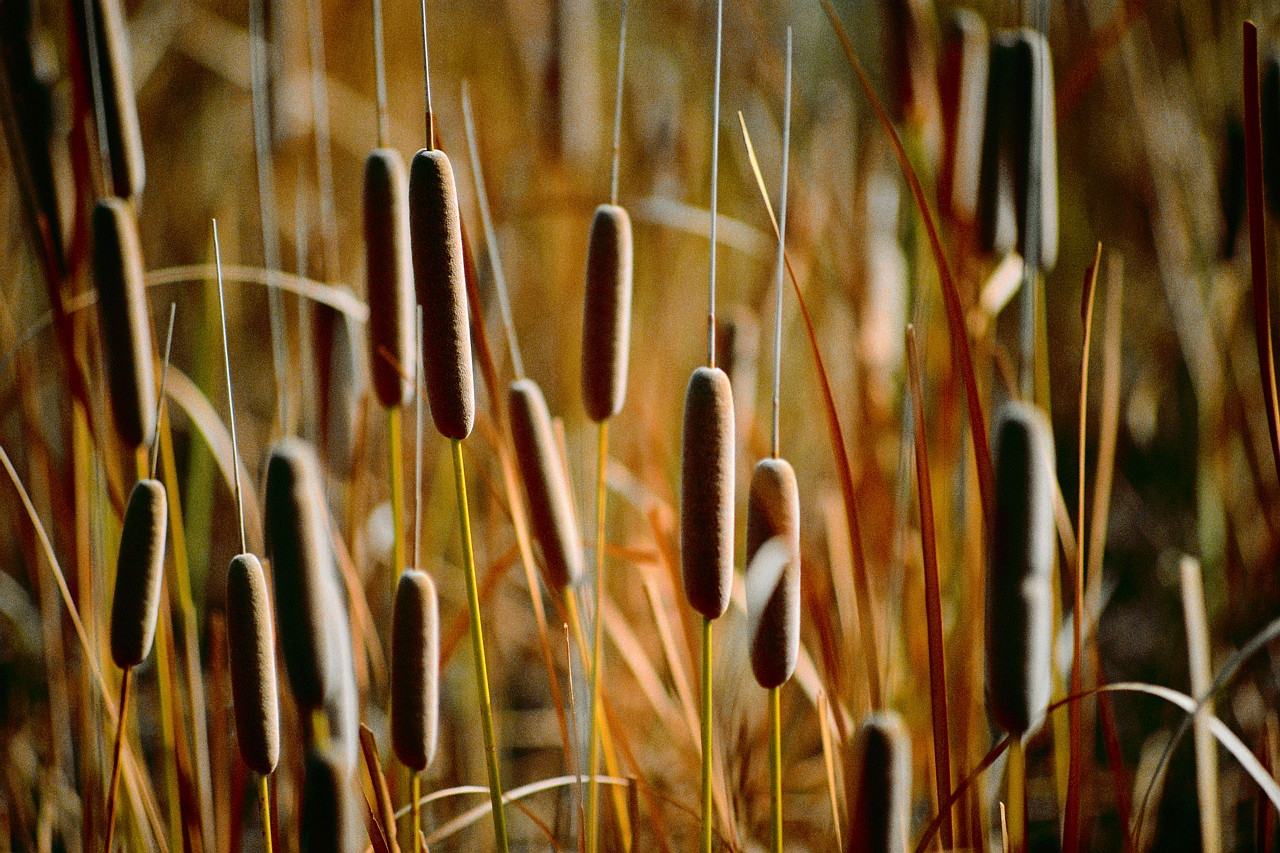
After a breakfast of rice with buttermilk, chicken soup, flat bread and strong, bitter coffee, Robbie and Amara boarded Sayyid’s flat boat and with Sayyid at the helm, set out on a journey to look at the recently refreshed marsh towns. Sayyid poled the boat through the water, skimming past huge clumps of papyrus and cattails.
Robbie watched the scenery change, enchanted by his surroundings. The fear that had sat in the pit of his stomach during their midnight exodus from Baghdad and which caused the bile to rise to his throat with every human encounter had hung an “out to lunch” sign on his esophagus, but given that the sun had barely crept above the giant forests of reeds, an “out to breakfast” sign would have been more apropos.
Robbie had cloaked himself in the customary robe and turban of the Iraqis and upon Amara’s urging, had remained silent the entire trip. Amara told the various drivers that she was taking her mute brother to Al Huwayr, a boat building town near the junction of the Tigris and Euphrates rivers where they intended to buy a mashuf and return to Zayad, their recently reflooded ancestral home. Already, Amara said, their uncle and aunt and three children had returned. The ruse had worked and here among the bulrushes and papyrus, Robbie rubbed elbows with the ghosts of the last five millennium along with a way of life he hoped wasn’t dead, but merely on life support, and like the reflooded marsh town of Zayad, could be resurrected and helped to thrive again.
“These are the biggest reeds I’ve ever seen,” Robbie said.
“It is called qasab. It is a phragmites, like you see at your American bays. But these plants have been allowed to grow undisturbed, and without pollution,” Amara said. “They can grow as large as twenty-five feet. We use them for many things, our mashufs, our huts. Too, we build our mudhifs from them. These are large building where many people can gather. Like your community center.”
“This portion of the Al Hawizeh marsh is all that’s really left of twenty thousand square kilometers of fresh water marshes,” Sayyid said. “You know this measurement? It is the maybe seven hundred miles. My people lived here for centuries,” Sayyid said. “We believed we were comfortable. We believed we were safe.”
“Here they raise cow and oxen and water buffalo and spend much time in prayer,” Amara said.
“Water buffalo?” Robbie said. “I don’t think I’ve ever seen a real one.”
“The water buffalo are very important to our way of life,” said Sayyid. “Early each morning the young boys take them to the feeding grounds. They do not return until the evening. All day they spend with the water buffalo.”
Amara laughed. “My grandfather told me a story that once he was up all night with a sick buffalo. He covered it with a blanket and nursed it back to health with a bottle and songs.”
“He sang to a buffalo?” Robbie asked.
“Yes. It is not uncommon. The Ma’adan depend greatly on the buffalo for their existence. He gives milk, among a great many other things and they thank God for this by treating the animals like family. It is not like America.”
“How do Americans treat their buffalo?” Sayyid asked
“I won’t tell you what happened to our buffalo,” Robbie said. “But I guess the modern-day equivalent would be the cow. We have two kinds, dairy and meat. The dairy cows have a cushy life compared to the meat cows, but nobody sings to them. At least not that I know of. Although I did hear once about a farmer who played music to his watermelons.”
Sayyid laughed, then grew quiet as he poled the boat through the water. “These marshes are all that is left. The Al Hammar and Central marshes are gone. Vanished. Like my people who inhabited them.”
“They will come back, Uncle. When the water returns, they will come back.”
“If God shall be willing,” Sayyid said. “You know this group? Assisting Marsh Arab Refugees? The AMAR Foundation they call themselves.”
“Yes. And I have read about another group,” Amara said, “called Eden Again. The head of this group is an American, born in Iraq. They seek to return the water, to bring back the fish to the marshes. It is this group we come to work with. To offer our assistance,” Amara turned to Robbie and squeezed his hand, “at great personal risk.”
“How do you plan to help?” Sayyid asked. “No doubt you will use your schooling that was so important to my brother.”
“Yes, uncle. I am sure they will need another biologist. And Robbie knows something about…” she turned to him for assistance.
“Environmental science. Back home I’m working on a degree,” Robbie said. “For the first time I have a good reason for it.”
“Uncle, may I?” Amara reached for the pole and Sayyid relinquished it with a smile, exchanging places with Amara in the boat.
“I know who you wish to find. Tomorrow I will take you to them. But today, we tour Al Hawizeh. It will be something for you to see,” Sayyid said, turning to Robbie. “This place is like nowhere else in the world. What Saddam has done is a crime against God and nature. He seeks to destroy the Ma’adan by destroying their way of life. But my people have inhabited these waters since the beginning. This is the Cradle of Civilization where the world began. Saddam thought to make history. And what has he done?” Sayyid spread his hands wide to emphasis his point.
“Not just genocide, but ecocide, uncle,” Amara said.
“Yes.” Sayyid turned to Robbie. “History will not be kind to him. But you have caught him. Now there is hope.” Sayyid returned his hands to his lap and gazed out over the water. “I am not a naive man. I do not dream that it all will be returned.” Sayyid gazed after the reeds and bulrushes as the boat glided past. Robbie noted the comely, proud profile.
“Do you find it strange that they should take your name?” Sayyid asked Amara.
“Who, Uncle?”
The AMAR Foundation. Do you find it strange?” The marsh narrowed and Amara directed the boat toward a dense forest of reeds. “They say a man’s name predicts his future.” Sayyid raised his eyebrows in speculation. “Perhaps this is your destiny, Amara. To save your ancestors. To restore their lands.” Sayyid stood and took the pole.
“I can do it,” Amara said, but he motioned for her to sit down so she did.
“So much like my brother,” he mused. Amara smiled, trailing her fingers in the water.
The flap of wings, the sounds of fish surfacing and retreating, the smell of dense, wet vegetation, and a million hues of green, fanning out across the landscape all formed a backdrop to the peace rising up in Robbie’s soul. He felt the adrenaline and terror ebbing away with each rhythmic pull of Sayyid’s pole and that, coupled with a full belly, conspired to put him in a state of calm, the likes of which he had not experienced since he came to Iraq. A turtle jumped off the marsh and into the water. Amara pointed and turned to see if Robbie had noticed it, but like the baby Moses adrift in a bed of papyrus, Robbie now lay hidden and in the safety of the marshes, he slept.
to be continued. . .
copyright 2013
Did you know that you can’t read in your dreams?
In that case, you will want to take this book to the beach.


 persephone's step-sisters