tasty fiction here

kitchens

KITCHENS OF THE GREAT MIDWEST

::REVIEW::

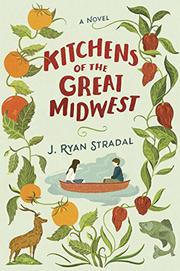
What a delicious read in J. Ryan Stradal’s debut novel: Kitchens of the Great Midwest.  His treatment of the subject of haute (and low) cuisine is both respectful and poetic, as is his attention to the detail of place. The Midwest has never appeared so endearing, nor possibly as strange.

The star of the story, Eva Thorvald, is born in the late 1980s to Lars Thorvald and Cynthia Hargreaves, the two most unlikely candidates for happy marriage that ever was. But when Cynthia gets knocked up, marry they do, and vigorous ten pound baby Eva follows. 

“Cynthia was still twenty-five, and bounced back to her skinny frame with color in her cheeks and bigger boobs, while Lars just grew balder and fatter and slower. He had learned, before she was pregnant, that he had to hold her hand or touch her in some way while they walked places together, so that other men knew they were a couple. Now she was the mother of his daughter, he was even more wary, snarling at passing dudes with confident Tom Selleck mustaches and cool Bon Jovi hair.”

Lars is a foodie through and through, and Cynthia has a knack for food and wine pairings beyond reason. But gravely oppressed by motherhood from the start, Cynthia ditches husband and child as soon as reasonably possible, running off to California to learn the wine trade.

Lars devotes his life to his darling daughter, whose taste buds he teases with the finest ingredients her pediatrician will permit. He reads Beard on Bread to her. He takes her on excursions through Farmer’s Markets, searching for priceless potatoes and redolent rhubarb.

Lucky for her, Eva is born with a “once in a generation palate.” But is this because of her natural father? It’s hard to say. Not long after Cynthia goes MIA, Lars dies suddenly, leaving baby Eva to be raised by her Uncle Jarl and Aunt Fiona, who while loving her completely, don’t know a mung bean from mozzarella.

Part of the pleasure of this novel derives from Stradal’s juicy narrative. From the start, we know that Eva is a survivor and that she is destined for great things. We love how she loves her adopted parents, how she embraces strays of all kinds, and how even as a kid, she demonstrates great depths of compassion.

“[Jarl] suddenly looked sad and bewildered, like an elephant that had been fired from the circus and was wandering down the side of the highway with nowhere to go. The thought occurred to Eva that if her dad confronted those boys face-to-face, they would make fun of her weak, fat, kindhearted father as brutally as they made fun of her, and she needed to protect her dad from that; his ego was already so fragile.”

It’s not giving anything away to reveal that Eva becomes a celebrated, if mysterious and deeply private, chef. Her love for good food is not for show or for fame; it is real as rice and sweet as whipped marshmallow. In the end, her love of food is about what all great food is about: celebration and gratitude and sharing your bounty with those you love.

c. gregory
killer weekend

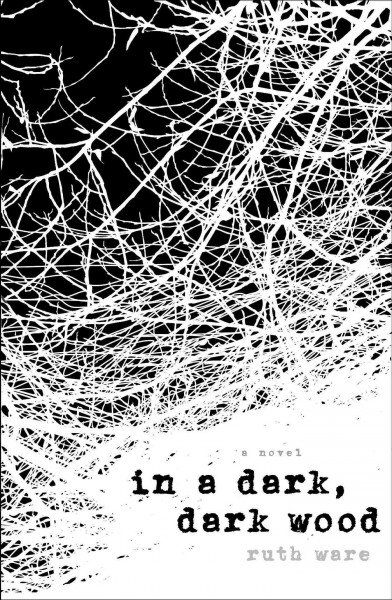
IN A DARK, DARK WOOD

::REVIEW::

dark dark

Ruth Ware’s debut novel, In a Dark, Dark Wood, possesses all the best elements of a thriller: a remote country estate, a bachelorette party, and a group of frenemies that really, really should have scrubbed their email lists and left each other well enough alone after those terrible school days. But then, where’s the pleasure in that?

The story is narrated by Nora, an author who specializes in crime thrillers. Back in school, she was called Lee, short for Leonora. Only one person ever called her Leo, and it was her first love, James.  But then he broke up with her. . .via text. . .and she moved on. Ten years later, Nora is mostly okay, writing novels and living a fine, urban single life.

Then one day out of the blue, she receives an invitation to an old friend’s wedding. Surprised, she feels a little sorry for Clare, thinking that maybe she has no other girls to invite, having to dredge back ten years for her bachelorette do. Nora is undecided about whether or not to attend the hen, but her invite is followed quickly by an email from Nina, who is also wary of Clare’s motives. “If you go, I will,” she says. Nora agrees and they somehow wind up traveling to the remote English countryside together.

Nina hates the country and misses her girlfriend, and Nora is straightway filled with dread by their accommodations: a modern glass box dropped unceremoniously in a meadow at the edge of a dark and menacing wood. The house belongs to Flo’s aunt and feels to Nora like a dangerous cage, though it is only a country estate, complete with a shotgun hung over the living room fireplace.

Miles from anywhere, cell reception is sketchy and the revelers are coolly irritable. When Clare announces to Nora that the reason she was invited to the hen and not the wedding is because the groom-to-be is the infamous James, the weekend really takes a turn. It doesn’t help that Flo’s hen party games involve embarrassing details about the bride and groom, shaming and humiliating Nora repeatedly. And then it snows. And then the land lines go out and the hen fete devolves into a churlish clutch of drunken, paranoid hostages. Fun!

When the phones go down, Melanie decides to bail, a welcome excuse to return home to her infant son. Flo is alternately weepy and aggressive toward anyone who isn’t into the spirit of the weekend. Tom would rather be home with his husband but stays on, drinking gin and taking well-aimed shots at Nina and Nora. Clare plays referee, keeping anyone from coming to actual blows.

After two days of slowly escalating hell, Nora wakes up in a hospital confused, horribly bruised, and under police watch. She is suspected of murder, but she can’t remember what happened. The harder she tries to recall, the more the truth evades her.

Novelist Ware has created a deft and ominous page turner in this fabulous thriller, replete with plot twists, red herrings, and a truly scary villain. If you’re still looking for provocative poolside reading to finish the summer, this novel should do nicely.

relax, baby!

peac of mind

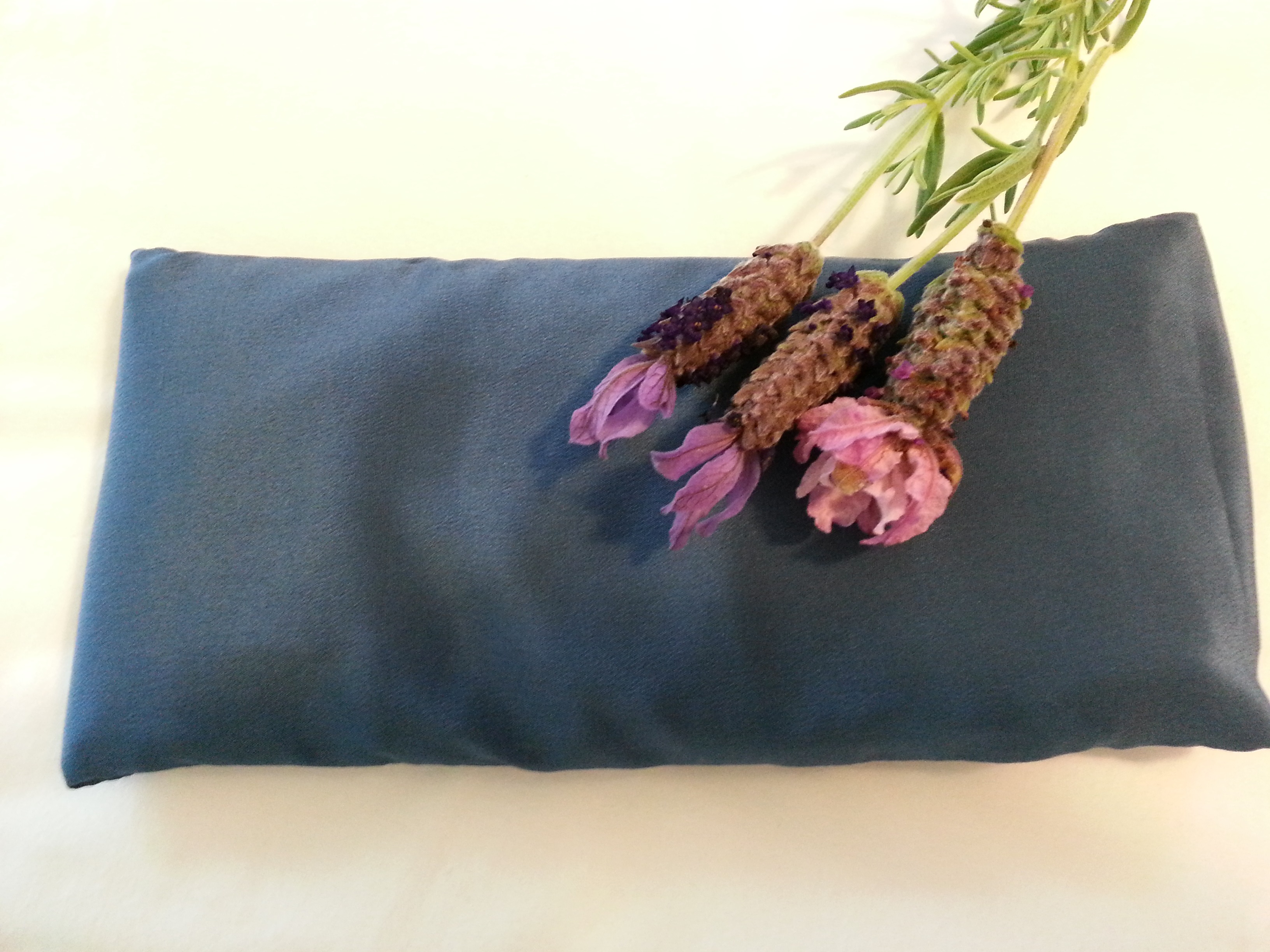
One of the greatest gifts you get from yoga is that it gives you permission to relax, to really really let everything go as you sink into a yummy pool of bliss. What’s not to love! At the gym where I practice yoga we end our sessions with a sweet period of savasna. Most times, I grab a towel to drape over my eyes because I can’t truly relax under florescent lights. What could be better than relaxing after a healthy workout. . .unless it’s being bathed in the sweet fragrance of lavender blossoms?

Our friends at Oregon Plum Brand have developed an aromatherapy eye pillow filled with a blend of lavender and flax seeds and are offering it for a limited time to our WordPress friends. Be one of the first 25 people to order an Oregon Plum all-natural lavender eye pillow, and get a deep discount on your purchase!  Bonus: these make a great gift — get a jump on your holiday shopping and give the gift of relaxation.  Click here to order.

Namaste!

2OPpillo


write now

journaling It was the most amazing, powerful, insightful, fabulous Yoga and Creative Journaling Workshop for Women, well, ever! We got your Crow, your Eagle, your Down Dog. Plus, we got your expository writing to not only knock off any proverbial socks, but to actually take you to that place you’ve always wanted to go but didn’t quite know the way. Yeah, it was like that.  And just to prove it, here is a little creative journaling sample:  I

n my tribe I am  loved, appreciated, and seen. There is no apology no room for shame, for what-ifs, if-onlys, no be seen not heards. This is a party palace, baby! This is where I am the celebrated and the celebration. I am the fireworks and the parade! But wait —  is this the same as hunkering down with syrupy sychophants? Oh, no my dear. My tribe both supports me and calls me on my philosophical slight of hand, my fancy emotional tap-dancy work. My tribe loves music and animals and sustainable living. It appreciates beauty, even the most imperfect beauty. This is a tribe of passion and compassion. This tribe has good taste and isn’t afraid to use it. Oh, Tribe of my dreams, I would climb into your mouth and sleep in the shadow of your teeth. I would brush your hair 100 strokes before tucking you in for the night. I would make you hot chocolate from scratch with baby marshmallows for breakfast and I would cut all the crusts off of every piece of toast in the world for you. My tribe speaks like a Windigo from Love Medicine. My tribe has eyes so deep you could drown in them. Namaste, peeps! — Cynthia G.

evolve or re-volve

We so love this video. Are you ready for a change in your life? Chances are this will resonate. Undo that block. . .and watch out what you wish for!  Cheers, love.

poem::poet::poetry

marigold

Sylvia Berek Rosenthal is a prolific writer. And it’s no wonder, as Rosenthal, a resident at Oakmont at Montecito in Concord, CA, who will turn 92 this August, has had plenty to write about. Her latest book, Marry Me With Marigolds, is a delicious collection of poems that reads like the spicy narrative of an interesting life. The genesis of Marry Me with Marigolds began when Rosenthal won First Prize in the  2010 Benicia Annual Love Poem contest.

The writer strongly resembles someone’s smart and jolly Nanna, with her shock of white hair, large black-framed glasses, bright floral silk jacket. She smiles gleefully. “It felt so nice for an old lady to win with a love poem,” she says about the contest.

Sylvia Rosenthal didn’t begin writing poetry until she was 75, an age when people tend to be outspoken with their truths. The poetry in this collection reflects a whole lot of truths, as it was written in the 15 years between 1997 and 2012. Many of her poems are funny and downright irreverent. Some are rich and tender. In all, her personal voice rings true. In the poem called “Maid in America,” she speaks of how her parents met.

My mother was born in Detroit.

You can’t get any more American than that

Can you?

When she turned seventeen she met my father.

He spoke Yiddish and Polish

She spoke only English.

They had no trouble.

Pillow talked worked just fine.

When she turned eighteen

They celebrated by getting married.

One year later

World War One

Began.


In the book’s namesake poem, Marry Me With Marigolds,  Rosenthal uses language in a way that is both playful and evocative:

Marry me with marigolds

Tempt me with your tenderness

Covet me with coriander

Chocolate and

Cloves

Favor me with foxglove

Gather me with the garden’s garland

Circle me with summer squash

Sesame and

Sage

Woo me with water lilies

Nurture me with nutmeg

Pamper me with peppers

Red green and

Gold

And I will stroke

Your balding head

Bake you babkas

Cook you cabbage

Pat your pot belly

If you will only

Marry me with marigolds.

Rosenthal may live in Concord, CA, but to hear her speak, you know she is pure New York, where she was a grade school teacher and guidance counselor. Her husband, George, was a ceramicist and artist. For years they lived something of a bohemian lifestyle, sojourning back and forth between New York to San Miguel de Allende, Mexico. After a time, the Rosenthals moved to San Antonio, Texas, to shorten the commute between San Miguel and the states. 

It was when the couple lived in Texas, that Sylvia discovered poetry.  Her husband had broken his shoulder and was recovering from surgery and she had tired of being his nurse. “I decided to take a writing class at the San Antonio branch of Texas University and the only two courses available were poetry and a business writing course,” she explains. “I wasn’t going to write letters, so poetry it was.”  In San Antonio, Sylvia became deeply involved with local writing and poetry communities. In San Miguel, she wrote columns for the Atencion and El Independiente newspapers. 

Her first book, Mrs. Letsaveit, is the collected body of these columns, which are mainly food literature essays very much in the style of Sonoma County’s M.F.K. Fisher.  The cover of Mrs. Letsaveit features a close up photograph of some of her late husband’s ceramics. The direct and humorous essays filed between the covers of the book are redolent of a happy home as Rosenthal describes her life in Mexico through a series of narratives about cooking and eating food. “Think of it as recipes through a  filter of Like Water for Chocolate,” she says, referencing the 1989 best selling book by first-time novelist Laura Esquivel. In Mrs. Letsaveit, Rosenthal writes about making bagels, corned beef, Mandelbrot, and other family favorites in Mexico, far from New York – or Texas style grocery stores.

An avid reader and writer still, Rosenthal is a member of the San Miguel PEN and San Antonio Poets; she is now involved in writing and poetry groups in the Clayton/Concord Area. Is her work fact or fiction? She smiles mischievously and replies, “I like to think of poetry is a piece of the truth, but not all of it.”

Sylvia Beren Rosenthal’s books are available on Amazon.

a gift for fiction

alice in wonderland

“Your story, that story that keeps replaying, the interaction of your expectations and what happens, the narrative, the disappoinments and the way you process it. . .it’s all invented.

“Ambien, the popular sleep aid, doesn’t actually help people sleep much more. No, the reason it works is that it’s an amnesiac. Ambien makes your forget that you didn’t get a good night’s sleep.

“. . .[our story] it’s all invented. It’s still real, the pain is real, the frustration is real, but the story that’s causing it all is something we made up, and something we can change. The pain is real, and so is a path to changing it.” 

–Seth Godin

The thing is, what is your story? What is the thing you repeat to everyone who will listen, about that thing that happened to you. The Course in Miracles says that we are all operating under a shared illusion and the fact that it’s shared, doesn’t make it any more real.

So what about it, cookie? What is your story? For goodness sake, make it a good one!

feet first

A good book is a thing of beauty. A good book that makes you laugh at a sweet, goofy, human’s folly, and you have a party wrapped in a book jacket.

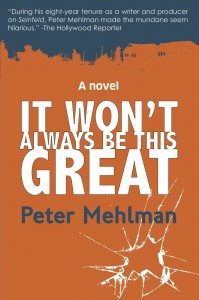
Peter Mehlman’s debut novel, It Won’t Always Be This Great, is quite possibly the sweetest, funniest novel orbiting the planet of mid-life crisis well, ever.  Though Mehlman is no writing novice, he wrote for the Jerry Seinfeld show and rose to executive producer at one point; this is his first work of full-length fiction.

In It Won’t Always Be This Great, we meet a 50 year-old Long Island podiatrist who throughout the book remains nameless, just as he is about to hit stride in messy patch of mid-life angst.  Dr. X is father to two amazing kids, lovely, precocious,  14 year old Esme, and son Charlie, who while hovering at the cusp of  tweenhood, makes adorably naïve pronouncements about how the world appears to work, and according to him, how it should work. CLICK HERE TO READ MORE 

Great

earth::mother

Happy Earth Day, my dears. We love our lovely little planet, and we love clean water, lush forests, wetlands, and wild habitats. What does our stewardship of the planet and each other say about us? It’s all about the love.


learn::smarter

Not only is his book The Four Hour Workweek one of my personal favorites, this guy is wicked smart! Happy Movie Friday!