She poured Sunday peace and coffee.


She poured Sunday peace and coffee.
How fitting that April is the month I’ve determined to write one Six Word Story for each day of the month. Quelle challenge! It’s also National Poetry Month. So, my poet friends, this one’s for you.
She drank love, crafting barbed poetry.
Tom Dury’s debut novel, The End of Vandalism, is a quiet book about ordinary people living in rural Minnesota. Not much happens in Grouse County, and that’s kind of reassuring in a time of climate change, uncertainty, and uncivil presidential elections.
Originally published in 1994, The End of Vandalism was compared to the works of William Faulkner and Sherwood Anderson. At the heart of this fine novel is love, a love triangle actually, between Grouse County sheriff Dan Norman, his sweet and somewhat remote wife Louise, and her former husband, Tiny Darling. Beautifully written and artfully crafted, Dury’s novel lures the reader in for a glimpse the human condition up close.
Dan Norman is a good man, an upright citizen. He manages the criminal element of Grouse County, which isn’t much. He mainly performs worthy acts, and discourages the criminal element from disturbing the pervading goodness of his town.
“One fall they held the blood drive in the fire barn at Grafton. Sheriff Dan Norman was there mainly as a gesture of good will, but one of the nurses didn’t make it , so Dan agreed to place the gauze in the crook of everyone’s arm. “And I thank you,” he would say.”
Louise is an enigma. She runs Keeborg’s Photo Studio, but doesn’t seem driven by her work. She enjoys photographing the local kids’ graduation photos and certain elected officials, but she seems to sleepwalk through it all.
These are people that you feel you somehow know, or are maybe related to. Mary, is Louise’s mother, is everyone’s mother. On the day she marries Dan, Louise is at Mary’s house, preparing for the ceremony. She negotiates with Mary’s neighbor, Heinz Miller, about whether he will attend her wedding. It’s a toss-up. Heinz is hiding out from his wife at Mary’s house, watching the Twins playing the Tigers. Heinz’s wife has discovered a bad bet he made and he isn’t anxious to be outed at Louise and Dan’s nuptials.
The lyric quality of Dury’s prose is at once calm, and compelling as he spills the secrets and trials of the citizens of Grouse County. All of the large and small moments are given equal weight, so that that the daily motions of life in rural Minnesota all become monumental, as when Louise dresses for her wedding:
“She brushed out her hair and put on her dress. It was yellow with white flowers and a low back. She tied a rose-colored ribbon in her hair, spread her arms, and turned toward the mirror. Her hair was long and brown, and the ribbon made it look coppery.
After she and Dan marry, Louise moves a small trailer onto the farm property where they live. She fixes up the trailer as a place for Dan to retreat to when he wants privacy, but instead, she occupies it. She sleeps in the trailer at night and during the day they live as any married couple, sharing meals, making love, discussing current events.
When Louise suffers an unsuccessful pregnancy, she becomes untethered. She travels with Mary to visit her aunt and uncle, Carol and Kenneth Kennedy, who run a campground on Seldom Lake, in Minnesota. They intend to stay just two weeks, but they extend their stay to four. At the end of a month, Mary returns to Grafton, and Louise stays at the lake. Eventually Louise’s heart heals for the loss of her stillborn daughter, and she returns to her husband.
“Dan like the colors of her hair and skin, the long smooth arc of her back, the sound of her breath. He thought that he would never know anyone like her. . .wrapped in each other’s arms and seeming to summon everything that had happened to them, good and bad. Their lives rushed in at them, and this is what they were holding on against.”
In the end, The End of Vandalism isn’t about vandalism at all. It’s about the gift we give to the people we love, every day. Whether we realize it at the time or not.
C. Gregory
I always felt that I wouldn’t have anything to say as a writer until I had lived a little. Apparently, I’m not the only one. To that point, Persephone’s Step Sisters is pleased to share this post.
Source: Read the World

::REVIEW::
For anyone who has watched firestorms devour entire towns; who has watched farmland wither and die for want of water, who has wondered if our current lack of water is not just temporary, but indeed the Mother of All Droughts, Claire Vaye Watkins’ debut novel, Gold Fame Citrus is familiar territory.
In a hazy future, LA-born Luz lives in “Laurelless Canyon” with her boyfriend Ray. They are squatters in a once-famous starlet’s once-elegant house where Luz spends her days dressing up in discarded ball gowns. Ray makes lists, scavenges for gasoline, food, anything worth trading for something else.
“Your people came here looking for something better,” Ray tells Luz. “Gold, fame, citrus. Mirage. They were feckless, yeah? Schemers. That’s why no one wants them now. Mojavs.”
In Vaye Watkin’s future, California is a wasteland. The rivers are dry and the underground aquifers are dust. The sun blazes and when it does rain the air is so hot the water evaporates before it reaches the ground. The state is dry as death and anyone with any money at all has long since abandoned it.
Vaye Watkins’ prose is powerful, and her narrative true. The story is as real as it is terrifying, because in a place where water has become mythic, geography is all that’s left.
“They ate crackers and ration cola and told stories about the mountains, the valley, the canyon and the beach. The whole debris scene. Because they’d vowed to never talk about the gone water, they spoke instead of earth that moved like water.”
One night, Luz and Ray go down to the bonfires, a place where the climate refugees gather to drink, dance, forget. Down among the drifters and the druggies, the drinkers and the plain dangerous, Luz finds a strange toddler who whispers in her ear that her name is Ig, and she says “Don’t tell anyone. Don’t tell, okay?” The child appears to belong to a clutch of grifters, or to no one at all. Driven by instinct she doesn’t understand, Luz picks up the child and tells Ray they’re taking her home.
Luz and her family escape Los Angeles, heading east, seeking a place more hospitable, somewhere safer, somewhere with water. Their car breaks down in the midst of a borderless sand dune so vast it spreads and grows with all the desiccated bits of earth and stone and mountain that was once the Central Valley.
They join a band of misfits led by an enigmatic leader who is either a visionary or a madman, or both. The collective lives on the edges of the dune, surviving somehow as an outpost of civilization, moving their temporary desert city as the sand shifts and threatens to swallow them alive.
Gold Fame Citrus is a complex story of connection and belonging, of outcasts and survivors, of climate change to the extreme, and about the very small scrap of nature that humanity manages to cling to, in the most adverse conditions. Part science-fiction, part cautionary parable, it is a book worth reading if ecology means anything at all in the future of the West.
Cynthia Gregory is an award-winning author who lives and writes in the Bay Area with her rescue pup, Winston The Wonder Dog. Her new book, An Inspired Journal: the Art & Soul of Creative Nonfiction, on Green Tara Press, will be available in 2016.

::REVIEW::
That you can never truly know another person is the central truth of Rufi Thorpe’s debut novel, The Girls of Corona Del Mar, but the book is so much more than that. It is also a coming of age saga, one where the narrative begins with two golden-skinned teens in sun-drenched Corona Del Mar, and it ends years later and universes away.
At the onset, best friends Mia and Lorrie Ann share lives as intertwined as any pair of young girls. So close are they, that they can’t see the stark difference between them as anything but symbiotic. Mia’s divorcee mom scrapes by in a second-rate apartment to make ends meet. Even after she remarries and Mia’s brothers come along, they remain planted in the same spot, as if by gravity. Lorrie Ann’s parents conversely, a divinely bohemian couple, sink roots steadfastly in love and music. To Mia, Lorrie Ann’s family represents the happy ideal of an intact family.
It turns out that Mia gets pregnant in high school, and naturally, it is to Lorrie Ann that she makes her confession. Seemingly chaste Lorrie Ann, the saint to Mia’s sinner, helps her through the subsequent abortion. At the end of high school, Mia is the one who goes to Yale to pursue a degree in the classics, while Lorrie Ann becomes pregnant herself, and chooses to give up on dreams of college to have the baby.
But Lorrie Ann’s baby is born horribly deformed and from then on, she can’t seem to catch a break. She marries her baby daddy, who when his restaurant job can’t cover the requirements of his special needs family, enlists in the army. Then he is deployed to Iraq and is killed. Poor and struggling, Lorrie Ann eventually loses custody of her son.
Alternately, Mia becomes a scholar. Fifteen years later, their two lives intersect in Istanbul, where Mia and her fiancé, Franklin, are transcribing ancient narratives about the Sumerian goddess Inanna. Lorrie Ann calls Mia out of the blue and Mia goes to the marketplace to meet her, only to find her old friend traveling with a clutch of jet-setters, and addicted to heroin.
The reunion is predictably strained. Mia is just beginning to realize that she may be pregnant. She confesses as much to Lorrie Ann, who promises to keep the secret until Mia comes to terms with which path she will ultimately choose. Mia is afraid to tell Franklin, who is the best thing that’s ever happened to her. She is afraid that he won’t be ready to be, much less want to be, a father. But Lorrie Ann betrays her confidence and reveals all. One could say that as her friend, Lorrie Ann does what she feels is in Mia’s best interest. She can clearly see how much Franklin loves Mia. One could also say that as friends go, it isn’t Lorrie Ann’s secret to reveal to the fiancé of a friend she hadn’t seen in a dozen years.
Friendship. Betrayal. The nature of love, and the powerful lure of ancient mythology. Thorpe’s novel is a deep and layered journey, and for anyone who has ever deeply loved a bestie, it is well worth the exploration.
–Cynthia Gregory
Watch for my upcoming book: An Inspired Journal; the Art and Soul of Creative Nonfiction. Available soon on Green Tara Press at Amazon.com
IN A DARK, DARK WOOD
::REVIEW::
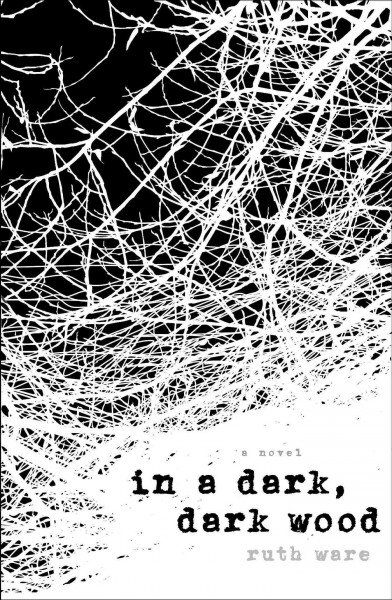
Ruth Ware’s debut novel, In a Dark, Dark Wood, possesses all the best elements of a thriller: a remote country estate, a bachelorette party, and a group of frenemies that really, really should have scrubbed their email lists and left each other well enough alone after those terrible school days. But then, where’s the pleasure in that?
The story is narrated by Nora, an author who specializes in crime thrillers. Back in school, she was called Lee, short for Leonora. Only one person ever called her Leo, and it was her first love, James. But then he broke up with her. . .via text. . .and she moved on. Ten years later, Nora is mostly okay, writing novels and living a fine, urban single life.
Then one day out of the blue, she receives an invitation to an old friend’s wedding. Surprised, she feels a little sorry for Clare, thinking that maybe she has no other girls to invite, having to dredge back ten years for her bachelorette do. Nora is undecided about whether or not to attend the hen, but her invite is followed quickly by an email from Nina, who is also wary of Clare’s motives. “If you go, I will,” she says. Nora agrees and they somehow wind up traveling to the remote English countryside together.
Nina hates the country and misses her girlfriend, and Nora is straightway filled with dread by their accommodations: a modern glass box dropped unceremoniously in a meadow at the edge of a dark and menacing wood. The house belongs to Flo’s aunt and feels to Nora like a dangerous cage, though it is only a country estate, complete with a shotgun hung over the living room fireplace.
Miles from anywhere, cell reception is sketchy and the revelers are coolly irritable. When Clare announces to Nora that the reason she was invited to the hen and not the wedding is because the groom-to-be is the infamous James, the weekend really takes a turn. It doesn’t help that Flo’s hen party games involve embarrassing details about the bride and groom, shaming and humiliating Nora repeatedly. And then it snows. And then the land lines go out and the hen fete devolves into a churlish clutch of drunken, paranoid hostages. Fun!
When the phones go down, Melanie decides to bail, a welcome excuse to return home to her infant son. Flo is alternately weepy and aggressive toward anyone who isn’t into the spirit of the weekend. Tom would rather be home with his husband but stays on, drinking gin and taking well-aimed shots at Nina and Nora. Clare plays referee, keeping anyone from coming to actual blows.
After two days of slowly escalating hell, Nora wakes up in a hospital confused, horribly bruised, and under police watch. She is suspected of murder, but she can’t remember what happened. The harder she tries to recall, the more the truth evades her.
Novelist Ware has created a deft and ominous page turner in this fabulous thriller, replete with plot twists, red herrings, and a truly scary villain. If you’re still looking for provocative poolside reading to finish the summer, this novel should do nicely.
A good book is a thing of beauty. A good book that makes you laugh at a sweet, goofy, human’s folly, and you have a party wrapped in a book jacket.
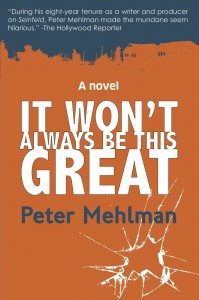
Peter Mehlman’s debut novel, It Won’t Always Be This Great, is quite possibly the sweetest, funniest novel orbiting the planet of mid-life crisis well, ever. Though Mehlman is no writing novice, he wrote for the Jerry Seinfeld show and rose to executive producer at one point; this is his first work of full-length fiction.
In It Won’t Always Be This Great, we meet a 50 year-old Long Island podiatrist who throughout the book remains nameless, just as he is about to hit stride in messy patch of mid-life angst. Dr. X is father to two amazing kids, lovely, precocious, 14 year old Esme, and son Charlie, who while hovering at the cusp of tweenhood, makes adorably naïve pronouncements about how the world appears to work, and according to him, how it should work. CLICK HERE TO READ MORE
Most of us have fallen in love with Jamie and Clare. In her own words, Diana Gabaldon talks about her process. It’s priceless. Enjoy . . .and let us know what you think!
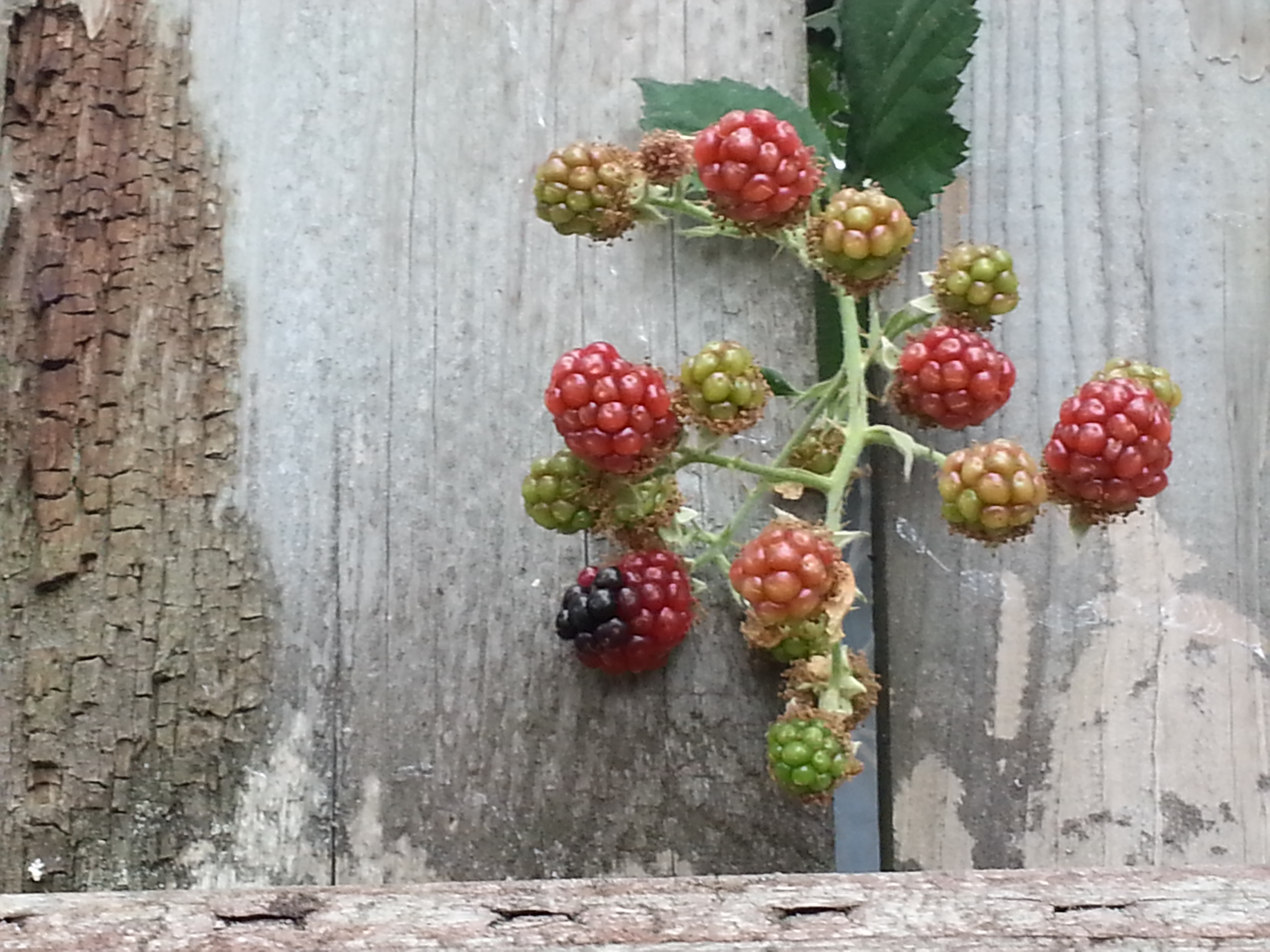 One way to journal is to forget everything you know about the place you live. You learn to look at the world as if you just popped through a worm hole from some other verdant, vividly lush and distant planet. Instead of going about your regular routines, I bet you would begin to really see the world you inhabit.
How many times do you go about your business and then suddenly realize that you can’t remember the last ten minutes? That you had been on autopilot, with your body operating the family car, stopping at lights and pausing for pedestrians while your mind had zipped off to distant canyons and \ gullies of memory and illusion? You’ve arrived safely and no one was hurt thank goodness, but what would happen if you were fully embodied, fully present, each day of your life? Would you see the world differently?
My vote is yes. It’s a fact that we do not cultivate the practice of notice very well. We are bombarded by television, radio, the Internet, literally thousands of messages a day (the gist of which are of the most dire nature by the way, and another reason to unplug) and so it’s natural that we begin to shut down. In many cases, shutting down is a natural mechanism of survival. The trouble is, once you begin to shut out the ugly of the world, you inevitably begin to shut out the beautiful and remarkable and miraculous, too.
Almost no one I’ve ever talked to about it thought their story was interesting. But I’ll bet their story is remarkable. They just stopped noticing the details. They forgot that their life was miraculous in about a million ways. So here’s an idea: write about your life like you don’t own it. Write about last Christmas like you’re a staff writer at a big agency and you’re creating a storyboard for a movie that will be seen around the world and sent toward the great, central sun by powerful satellites and viewed by people who have no idea what Santa is about, and why people decorate trees with shiny glass orbs. Explain what your house looks like as if you were describing it to a blind person. Paint a picture with words to describe your dog to a boy who has never seen a dog in his life. Illustrate a journal entry about last night’s dinner with words so smoky and succulent that your nostrils twitch and your stomach howls. Visit your local grocery store like you’re a tourist from Hungary. Have you ever noticed, really noticed, now many different brands of bread there are? How many varieties of potato chips they sell? Go to your local Chamber of Commerce and ask for a directory of members and marvel that people do the kinds of jobs they do. Lick the inside of your wrist and then sniff it to see what your breath smells like. Stop living on auto-pilot! Cultivate an appreciation for each Now that shows up. Now, I reach for my water bottle and the cool liquid slides down my throat. Now, my fingers pull away the skin of an orange. Now, I call on inspiration, and she takes my hand and we walk.
 persephone's step-sisters