first day

champion

Do you remember your first day of school?  I remember that I was excited, but I can’ recall more detail than that. I imagine now that when I got home that day, I drove my mom mad with details about amazingly cool! things like chalkboards, desks, coat hangers, paint boxes. No detail was too small, too mundane to be spectacular!

What would it be like if you found everything around you to be new and amazing, if the world was an exciting place to wake up to every day?

We’ve become so conditioned to our habitat, our customs, that we’ve simply stopped noticing anything that appears less than epic. But to a child, a Cheerio is an act of magic! A school bus is a marvel! An artichoke ­spectacular!  Do you sometimes wonder where the wonder went?

No, you are not too old, and unless you really insist, too stuck. You can retrieve it by tuning back in to your enormous and innate powers of observation. They’ve always been there, but over time you got busy, started to ignore them, and they went to sleep from lack of use. No worries, you can get them back by waking them up and putting them to work. Again, and again. Repeatedly.

Our brains have amazing aptitude for recording detail. We hear and see and smell things all the time. We are aware of temperature, texture, weight, balance, language, color, relative safety or danger, constantly. Your conscious brain may be focusing on having a conversation with your hair stylist, but your subconscious, the primitive part of the brain is calculating and recording every detail in a ten foot radius, from the height of the display shelves to the left and the colors of the bottles on them, to your proximity to the door, to the relative humidity of the cool air brushing your skin, to the inflection in your stylist’s voice and whether the smile on her mouth matches the smile in her eyes.

You must think like a reporter. Reporters are trained to see what’s going on, to put the evidence together like pieces of a puzzle, and draw conclusions. You need not come to any grand conclusion from your observations, but observe, you must. You must begin to see the world not in broad strokes; ‘oh, there’s a school,’ and ‘oh see, there’s a dog,’ but in very detailed specifics. Go overboard! Scrape as many details up as you can. You can never be too specific. While you’re looking at the world around you and may be tempted to get lazy and summarize the vista spread like a banquet before you, but don’t fall for that old game. You will surely regret it. You will regret it because you will forget it. You will not remember the exact butterfly pattern on the bobble-head girl’s dress who knocked into the boy at the park playground and made him cry. You will not remember that the scruffy grey dog that dropped a stick at your feet and smelled like week-old salmon and sported one blue eye and one brown. You will not remember that on that particular day, you savored a peach flavor popsicle and that the clouds marched like a row of cream puffs against a sky so blue it made your eyes ache. You will not remember these things and you will not develop a knack for populating your writing with a thousand details unless you begin to flex that muscle of observation and put it to work.

Journal keepers all agree; when you go back and read through the books stacked neatly on your bedroom shelf, when you randomly open a book to a page and scan, it completely brings you back to that day at that cafe in that town, and remember everything about it because on that sultry afternoon fifteen years ago, you sat over an iced coffee, threw crumbs to feed the sparrows, and you wrote in your journal. You took a snapshot of your life -not a fuzzy half-focused one, but an honest to God totally naked look at all the florid details that filled your life for just one miraculous day. You wrote it down as a gift to your future self, and oh my. The sensation of reliving a day you had completely lost track of While you were busy raising children, managing a career, writing a book, caring for parents, making lobster costumes for Halloween parties, baking cookies, loving a spouse, is pure; it is delicious.

 Each day is miraculous in about a million ways, but we humans have a short memory. Then another day comes, and the previous day gets tossed into the comer. And then we get another one! And another one! Pretty soon, there are thousands of such days and I don’t care how good your memory is, how many synapses you’ve got firing, how Leica-like your brainpan is, you can’t remember it all. That’s what a journal is for. Grab your journal and before you open it, open your ears and open your eyes. Learn to observe. Be an anthropologist. Be objective. Be brave. Walk into a coffee shop with nothing but a smile and a journal and sit yourself down at a comer table. Situate yourself with your coffee or your tea, and peer into the room around you. I mean, really look. See things like you had never seen them before and you were taking notes to retreat back to your home planet and report on the customs of the natives in your neighborhood. The man at the next table may be wearing glasses and reading a paper. Okay, good details. But what color are his glasses? What shape? Is the paper he’s reading an international journal or a gossip tabloid? The details tell a story. You can say the girl wore a dress. Okay, many girls wear a dress. But ‘the girl word a red dress’ tells us that maybe she’s a little fiery, a bit of a firecracker. When you fill your journal with details, you bring your images alive.

So get out of your comfort zone. Take a vacation from the familiar. Stop acting like you’ve seen and done it all, because cynicism is just boring. Train yourself to see your world like you’ve never seen it before. Begin to pay attention to the details, at least some of the time. Fill your journal pages with the flavors of your exotic life. You may not think your life is anything special, but I bet you dollars to donuts someone on the other side of the planet thinks it’s gosh-darned amazing. So act like it. Act like your life is a rich stew of tasty details, and write them down.

C. Gregory

earth day (h)

Unknown-1

WINTER [notes from montana]

        “It was early September and I was driving, literally, to the last road in the United States, a gravel-and-dirt road that paralleled the Canadian border, up in Montana’s Purcell Mountains. It was like going into battle, or falling in love, or walking from a wonderful dream, or falling into one: wading into cold water on a fall day.” –                    Rick Bass, Winter

      Can Rick Bass help it if his Soul’s been on a nature walkabout for all of his life? In Winter [notes from montana], Bass’s wandering spirit is alive and well and living in the Yaak Valley in Montana without electricity, without heat, other than the wood-fired variety, and without much contact with civilization… To read more of this post, go here

earth day (g)

QofL Cover Amzn ver1a

For thousands of years, we’ve used and reused the same water as the dinosaurs, Galileo, Genghis Kahn, and Jesus. Until now. Now the water is chock full of contaminants that the ancients didn’t even know how to pronounce. That’s because Mama Nature doesn’t know how to remove radionuclides, usually held safely within the earth’s crust, and other chemicals found in the fracking wastewater that’s slowly making its way into Her rivers, lakes, and streams. Until now, we’d been sipping the same stuff as Adam and Eve. Until now.

Enjoy an excerpt from THE QUALITY OF LIGHT:

          She died that night. Doc attended the funeral along with dozens and dozens of ranchers and their families all come to pay their respects to this great woman, one of the “stickers” whose family had come in the late-1800s during the first boom and bust era of timbering and mining and oil and construction and who had stayed on to make a living. They worked the land for what it would produce – cattle. So when the time came and they asked if anyone wanted to say anything on behalf of this fine woman, Doc’s hand raised itself, his body stood up, and he took over the funeral.

“Twila’s great-grandfather was thrilled when the first oil men knocked on his door with a check and a promise. They may not have tamed the harsh out of the land, but at least they made it more hospitable. They built roads and paid well, and the ranchers loved them. That was the heyday when oil flowed like free love out of those great big underground reservoirs. Sweet gas, they called it. Back then a whisper could’ve coaxed that oil out of the ground.”   To read more of this post, click here…

a reader’s room

readerwho doesn’t love a list? as a culture, lists are what we love. just take a look at the front of any magazine at the checkout counter and you will see lists of everything from the best vacation spots in the West . . .to the best way to drop ten pounds. personally, we love books, so here’s a short list of must-read books. just for you. how many have you read? how many can you read in the coming months? this is our challenge: read three. three is any easy list. we promise.

15 books must=read books


angelic assistance

handsoflightWe like to support like-minded writers everywhere.

Just like this blogger. And why not? If the universe is comprised of infinite possibilities, then why not angelic repairmen who get the job done?

everybody’s got a story

bird by birdthere’s nothing a writer loves more than reading. about writing.  we got your readin’ and writin’ right here.

buy the book::support the arts

out on a limb

redwoodWe love our stories, don’t we? It’s how our small brains are wired. We love stores around a campfire, we love stories before bed. It’s no coincidence that our stories at this time of year are about Nature. Gaia. The seeming return of life from the slumbering earth. As it turns out, we have quite a bit to say about our namesake, Queen of the Dead, Mrs. Hellfire, Persephone Herself. As a collective culture, we haven’t treated her very well, and there may be repercussions. Aretha said it best: give the girl a little    R-E-S-P-E-C-T.

THE WOOD FOR THE TREES

In 1995, while still a wide-eyed environmental attorney, I took a meandering road trip through the magnificence of the Pacific Northwest. One evening at a local bar in Forks, Washington (the filming locale of the Twilight series), I found myself embroiled in a discussion, regarding the vicissitudes of logging with one of the locals, a lumberman who was just as passionate about the need for harvesting timber as I was about the need for the preservation of forests, particularly old growth ones. He repeatedly asked me, as if therein lied the answer to the Gordian knot we were trying to unravel, whether I liked my toilet paper one-ply or two-ply.

“Until you’re ready to have that conversation,” he said, “there’s really nothing to say.”

I remember being incensed that I couldn’t get this guy to see that what he was defending could wipe out years, perhaps decades of potential human existence on this planet. He refused to consider the possibility that trees act as the planet’s lungs and their removal jeopardized our oxygen supply just for a few more rolls of toilet paper. So while I saw his point, I didn’t see the need to wipe out whole forests to make it.

There are few things that speak to you like the towering majesty of an old growth forest. The slant and dapple of the light through the leaves, the song of the birds as they alight and fly, the flash of movement caught in the periphery as nature rearranges Herself, the heady smell of peat moss, representing life and death rolled into one. The bottom of peat moss decays to form peat deposits even as the top continues to grow which is basically how Mama Nature rolls, using the nutrients of the dead and decaying to fuel Her rebirth and regeneration, resulting in, ta-da, Spring, or as a microcosm, every dawning day. Take Persephone, the newly crowned Queen of the Dead, sleeping this whole long, lonely winter underground with her uncle cum husband (gross), Hades. Hades stole Persephone from the earth topside on a technicality and Demeter, her sweet mama and the Goddess of Agriculture was so disconsolate, she refused to let another thing grow until Persephone was returned to her. Such is a mother’s love — fierce, unpretentious, unwavering — just like our collective Mother is with her children, that is until we disrespect her and she turns on us like the Titan Cronus, known to the Romans as Saturn, who ate each of his sons when they were born so none could fulfill the prophesy to overthrow him. Coincidence? I’ll leave you to draw your own conclusions.

Click here and continue reading

spring equinox (d)

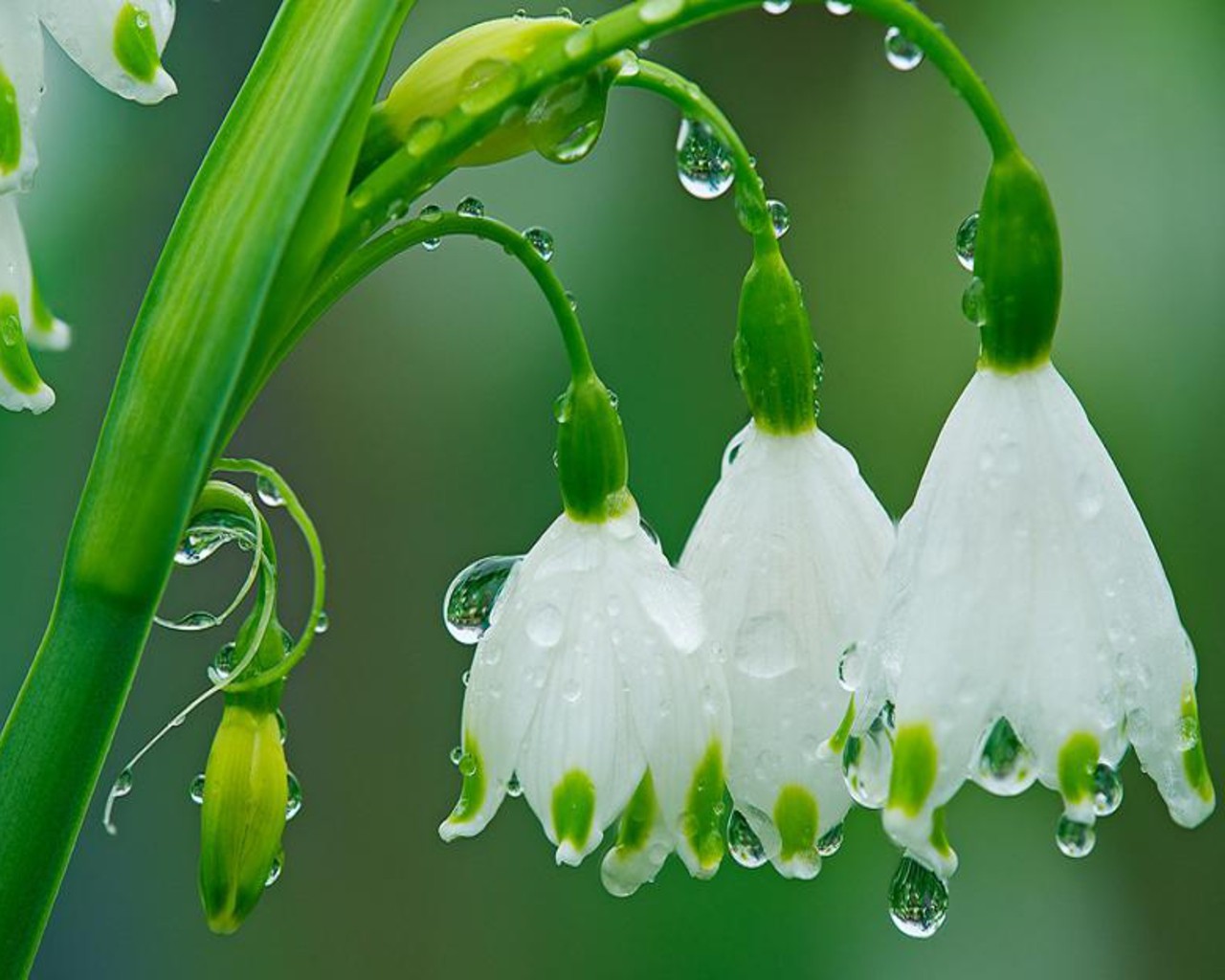
The world is changing. . .so are we, as the gods are busy working behind the scenes. A shift of consciousness is having a significant effect on all of us. Our local source of solar light is radiating ever more energy, changing the magnetics of the earth, and as inhabitants, we too.  We are made of minerals, and light, and water. We are the earth, and she is us. How amazing is that?  Maybe that’s why digging in the garden is so soothing, why the shushing of a spring shower, so calming.  Gentle spring is coaxing us to renew our vision of what is possible. What do you desire? Plant that seed now.

singing-in-the-rain-flowers-garden-spring-168513

spring equinox (b)

Spring is coming, Persephone is returning, and the equinox is a time of transformation. What are you willing to release? Clue: name something that’s no longer working, some place you feel stuck. Talk about your spring cleaning! Make a list of what you’re willing to release, take it out to the garden, and burn the paper, letting the ashes settle into the earth.  Open your heart, and imagine yourself in a state of expanded happiness.       The energy of spring will support you.

ashes picture

music valentine 1.2

sometimes love is a thought. sometimes its a sound.

hey. as long as it starts in the heart.