is it possible to excerpt from your own short story without blushing? This is
from a story in three parts, making something
of a mess of the traditional story arc. tsk.
this is for my pals in Portland.


is it possible to excerpt from your own short story without blushing? This is
from a story in three parts, making something
of a mess of the traditional story arc. tsk.
this is for my pals in Portland.
 OIL IN WATER
Pam Lazos
Chapter Forty-Nine
Snow blanketed the fields, barren, but for the odd bale of rolled hay. The wind whistled through the leafless branches, and left them creaking and moaning with its passing. With only a week until the winter solstice, the mornings rose dark and still and laden with the musings of Morpheus, still lost in the labyrinth of the dreamy night. Today, the lingering full moon cast just enough light on the earth for a trail to be visible. A lone cross-country skier glided across the top of the hill at the horizon, dipped down below on the opposite side, then resurfaced.
Avery stood at the back door watching Gil ski up and over the top, disappearing only to intermittently reappear, a small, barely distinguishable figure in the shadowy dawn. Gil wore Marty’s headlight and Avery watched the light shine and recede, shine and recede.
Avery wore his ski pants and an unzipped jacket. His gloves dangled at his side, his ski boots propped in the corner. His stockinged feet curled at the sudden gust of wind that shot through the door.
“Either in or out, huh?” Kori shuffled in, still crunchy from sleep, and clutched her robe tightly to her chest, an impenetrable shield against the wintry gust. She headed straight for the coffee pot. She had a long crease down her right cheek where the side of her face had lain, smashed into a rumpled pillow for too long. Avery closed the door and watched out the window.
“How’d you sleep,” Kori asked, her own eyes red and swollen.
“I don’t think I did.” He turned his haggard face to her. “Or if I did, I don’t remember.”
“How long’s he been out there?”
“Since about four this morning.”
“Are you going out?” she asked. Avery shrugged, but didn’t answer. Kori stood and grabbed a mug from the cabinet. “It’s pretty hard core to go out into below freezing weather at 6:30 in the morning just to get an hour of skiing in.”
“Gil’s out there.”
“If he’s been out since 4 o’clock, it’s not exactly like he needs you.” She sat down at the table and fiddled with a stray napkin, rolling it up and unwinding it again and again. “Why’d you let him go out so early? It’s so dark.”
Avery watched the horizon where his brother had just reappeared on the surface of the world. “It’s not like I have complete control over him, Kor. He went out before I got up. I heard him clanging around in the garage trying to get the skis down, is all.” He turned back to her. “He left mine on the deck.” Avery sighed, zipped up his jacket and grabbed his boots. “Did you know we were supposed to get snow?”
Kori yawned and covered her mouth, nodding her head. “School’s canceled. I saw it on the news.”
Avery laced up his boots and stood. “Bonus.” He drew a deep breath before asking his next question. “Do you think it’s true?” Concern had etched lines in his face that weren’t there the day before. He knew Kori didn’t know, that it was pointless to ask, but she was older, and therefore, wiser and Avery was looking for confirmation or consolation, anything but resignation.
Kori picked up the dog tags that were lying in the middle of the kitchen table, pulled the chain out to its full length and rested her fingers upon them. She closed her eyes as if divination could be had by mere touch. She shook her head, slowly at first, and then with more vehemence.
“Me either,” Avery said. “I just have this feeling. I hope I’m not making it up.” He put on his gloves, pulled his hat down over his ears and eyebrows, and opened the door.
Avery?” Kori walked over and stood behind her brother.
“Did Gil have any dreams?” She shrunk and inch into herself as if bracing for a blow.
Avery touched Kori’s shoulder and smiled. “I guess I’ll find out now,” he said, grabbed his skis and was gone.
Kori watched until he vanished over the hill.
➣➣➣
The moon, low in the sky and paling more with each creeping minute of dawn, looked like a magnificent deity bestowing blessings upon all who gazed at her. The last of her beneficence left a light touch, a shimmering wake across the snow-covered fields. Even the landfill looked beautiful: a white, proud mountain of refuse. Avery caught up to Gil as he approached the backside of it. They skied together in silence for the last hundred yards until Gil stopped at the foot of the landfill’s fence, flicked off his headlamp and jammed his poles into the ground. He stared at the mound of trash, deftly hidden beneath a cloud of white, and began to hum.
“Only you could hum while looking at garbage,” Avery said. He stuck his own poles in the ground and watched the trash pile intently, waiting for something to shatter the tranquility.
“I was thinking about Daddy.” Gil said.
“Really? About Dad? Not about Robbie?”
Gil shook his head, slow and deliberate, like a metronome.
“Well, what about Dad?” Gil turned Marty’s headlamp on again and focused it on a specific spot in the center of a frozen mound.
Avery followed the light and thought he could see a computer monitor, but he was only guessing. He looked at Gil’s nose, dripping profusely. Gil didn’t seem to notice. Avery grabbed a clean, but crumpled tissue from his coat pocket and pushed it toward his brother who ignored the gesture. Avery held the tissue up to Gil’s nose and Gil blew, releasing more than a single tissue full of his own goopy refuse. Avery fumbled for another tissue while still holding the first to Gil’s nose and brought it to the aid of the first. He wiped Gil’s nose and grimacing slightly, jammed the soggy remnants back into his own pocket “Anything else I can do for you?” he asked.
“He wouldn’t answer me when I asked about Robbie. I kept asking, ‘Daddy, where’s Robbie? Is he okay?’ and he just kept smiling at me. Then he took me into the barn and showed me the TDU. He fiddled around and made a few adjustments….” The trash pile still showed no signs of movement. “I think he wants me to finish it.”
Avery’s eyebrows shot up. “Did he say that?”
“He didn’t say anything. But I just thought that was what he wanted.” Gil pulled a single pole out of the snow and drove it back into the ground. “Do you think maybe Dad doesn’t know about Robbie? Like maybe, if Robbie’s alive that he can’t see him very well or something?” Gil looked at his brother. “Or maybe Robbie doesn’t want to be seen. Like maybe he’s hiding.”
Avery had contemplated this same theory, but had not voiced it. His brother was canny, knew how to live in the woods off of nuts and berries and roots and other queer stuff, knew how to build a fire from two tiny little sticks, a veritable boy scout geekazoid. He would be a great guy to have around in an apocalyptic, end-of-the-world kind of event. But disappearing without a trace from a crowded market in the middle of a suicide bombing attempt leaving nothing behind but a set of dog tags, well, things seemed a little convoluted, even for Robbie. Still it was a relief to hear Gil voice the opinion.
“I don’t know. If he is still alive, he’ll be in touch soon.”
Gil nodded. “Will you help me?”
“Absolutely. With what?”
“With the TDU?”
“I thought you didn’t want to work on that anymore?”
“Well, I don’t because of Dad, you know. But I think…” Gil’s words tumbled out in a jumbled, yet coherent flurry. “I really don’t, but what if that’s what he wants, Dad, I mean, and if I didn’t do it well then he might be mad at me and maybe he wouldn’t visit me anymore so I really should do it but it really gives me the creeps I mean what if those creepy bad guys come back so I need some back up which is why I’m asking if I did would you help me? I’d need, you know, to get the TDU up and running and help get the feedstock from the landfill and…. I guess, well maybe it’s okay, cause I think Dad wanted it….actually, I don’t know what he wanted, but he kept showing me the drawings, and some newer ones that he’d worked on for the refining part. I don’t know what he was saying since I never really looked at the refining drawings – I was more interested in the TDU – so we didn’t talk much about it, but….why do you think he just didn’t come out and say what he wanted?” Gil said finally, frustrated.
Gil’s nose was running again and this time he ran his gloved hand underneath it catching most of the watery mucus. Avery grimaced and made a mental note to wash Gil’s gloves. He stamped his ski-shod feet on the ground to tamp down the cold creeping up his legs, cold to which Gil seemed impervious.
“I don’t know. It’s near Christmas time. Maybe he was trying to be the ghost of Christmas future.”
“The one with George C. Scott?” Gil smiled. “That one was my favorite.”
“C’mon. Let’s get moving before my legs freeze off.”
“Let’s go this way,” Gil said, turning toward the woods, the long way home.
to be continued. . .
to read what came before jump here
copyright 2012
 OIL IN WATER
Pam Lazos
Chapter Forty-Eight
Hart and Sonia sat in the kitchen of a large, turn of the century farmhouse. Sonia had lost all the “baby weight,” those amorphous extra pounds that settle around the hips and lower abdomen and stayed on like an unwanted house guest. Hart hadn’t minded. On Sonia, everything looked good. Seeing her now though, in her tight, short-sleeved pullover and Levis, he felt the pull of desire and wanted to do something about it. He squeezed her hand and smiled, but she scowled at something across the room. He followed her gaze.
Bicky! What the hell’s he doing here? Bicky smiled complacently at his daughter. On the table was a small turtle, the kind children put inside a terrarium with a little pond, some dirt, gravel, and a few ferns. Hart watched the turtle walk back and forth between his open hands.
“You can’t let him do this, David. Don’t you see what he’s up to?”
Hart strained to listen, but didn’t understand and didn’t want to confess his ignorance. If she found out he didn’t know what the hell she was talking about, would she leave again? He searched her face for meaning and finding none, returned his attention to the turtle.
“David, he won’t stop here. Don’t you see? He doesn’t care. Not about anyone or anything. Do something. Please.”
Do something about what? Hart’s brain cast about, attempting to divine meaning, but the more he let loose the lure, the more tangled the lines became. So he just sat there while Sonia scowled and Bicky smiled like a Jesus wanna-be. He squeezed Sonia’s hand again, as if he could intuit her meaning through touch. Tears sprung to her eyes, but the scowl remained intact.
Without warning, Bicky reached across the table and plucked the turtle from Hart’s fingerless hold. He jumped up and headed toward the stove. A large pot bubbled away; a gas flame licked the underside of its metal belly and steam wafted up to the ceiling’s wooden beams.
“No!” Sonia shouted, pouncing on her father. He whirled away and held the turtle above her head, dangling it there like a bully would do to a smaller child.
“David, please. He kills everything. Stop him.” Before Hart could move, Sonia was on Bicky, pushing, kicking and punching. He shoved his daughter and she crashed into the kitchen door. The rickety latch gave easily; the door flew open and Sonia out with it.
“Nooo!” Hart screamed and jumped over the table reaching the door just as it banged shut. He flung it open and instead of finding his wife, lying prostrate on the front stoop, he found a large, fast-moving river. He stared after the river’s course dumbfounded, but there was no trace of Sonia.
Hart turned and leaped at Bicky, snatching the turtle from Bicky’s hand and replacing it on the table. He put his hands on either side to guard it and watched his father-in-law through narrowed eyes. Bicky pressed forward, but Hart deflected him, his arms forming a barricade. He was desperate to go after Sonia, but Bicky’s menacing presence loomed large and Hart knew that if he left, the turtle was soup. Bicky mocked him, trying to break him with derision, but Hart wouldn’t blink. Finally, he just stared at the turtle, wide-eyed, babbling something crazy. At first, Hart thought it was a trick, but curiosity beat him down. He looked. The turtle had tripled in size and was still growing.
Bicky ran a tongue over his lips. “Ah, it’s going to be even better now.”
Hart readied himself for another attack, shielding the turtle with his body. There was no assault, just the beep beep of numbers being punched into a cell phone. He looked up, expecting a trick, but Bicky was, in fact, calling someone.
“What are you doing?” Hart asked.
“What else,” Bicky said. “Calling my lawyer.”
The peal of the phone shot Hart right out of bed. He scanned the room, disoriented. Bicky was gone. So was the turtle. “Sonia.” A lament. The phone rang again, jarring him. He loosed it from its cradle.
“This is Hart.”
“It’s… Kitty.” Bicky’s voice was thick and choked sounding.
“Bicky?” Hart’s own voice sounded strangled; trepidation lingered in the ambient air.
“Kitty had an aneurysm. She’s dead.” Hart felt the sickening feeling return.
“Come back to Houston…please?”
“I’ll be there by late afternoon,” Hart said, and started packing.
to be continued. . .
to catch up, jump here
copyright 2012
 we blush and shop and fa la la la la
we know what we like and we really like this book.
read our review then buy the book in honor of a girl you love. gr.

 OIL IN WATER
Pam Lazos
Chapter Forty-Six
The day dawned bright and balmy in Houston. Bicky Coleman sat behind his antique mahogany desk, smoking a cigar and reading The Philadelphia Inquirer. Akanabi was taking less of a beating in the newspapers now that Hart was on the scene, commissioning overflights and vacuum boats, throwing all kinds of money at the situation. Maybe it would help them later when the feds and everyone else sued Akanabi out the wazoo for penalties the company didn’t deserve. After all, it had been an accident.
When Hart had called last night he babbled on and on about retiring all of Akanabi’s single-hulled ships. Bicky had humored him, but knew that suggestion would end up in the circular file.
“You want me to retire all the single-hulled ships?” Bicky had asked Hart.
“At least let’s phase them out. Fifteen to twenty percent a year.”
“Hart, my son, are you sure hypothermia hasn’t set in and affected that brain of yours?”
“It’s gonna hit you where it hurts, Bicky, but it’s the right thing to do. The river’s black like you’ve never seen. Just avoiding the devastation to wildlife should be cause enough.”
“Give me a memo. We’ll talk about it when you get back.”
Bicky had said that to shut Hart up; he had absolutely no intention of following through. Building new ships was an expensive proposition. More than half of Akanabi’s supertanker fleet were single-hulled ships, purchased in the heyday of oil drilling. To replace them all at once, even over a period of five years would cost hundreds of billions of dollars. And Bicky was loathe to spend that kind of money. Legislation would eventually force his hand, but why rush things?
The intercom buzzed and Phyllis’s voice jarred him to awareness.
“Jerry’s here.”
“Send him in.”
➣➣➣
Jerry Dixon walked in, looking grim, but impeccable. Bicky’s face was stuck in the paper so Jerry waited. Bicky had several personalities that didn’t always talk to each other, and Jerry thought it best to see which one was in residence.
Bicky looked up and smirked. “How many of those suits do you have?”
“I don’t know. How many do you have?” Jerry said, indicating Bicky’s Armani.
“You know what I mean. Do you spend the whole day ironing or change suits every ten minutes? Cause you know I’m paying you good money to keep things secure around here, so if you’re ironing….” Bicky’s smirk turned to a smile.
Jerry relaxed and sat down. “How’s Hart doing with the spill?”
Bicky studied his buffed fingernails. “Apparently something a little better than damage control. Seems he’s making friends.”
“What are the odds on the cleanup?”
“The river will survive. It’s rebounded before, as have countless of her brethren. It will do so again,” said Bicky, sounding like a Sunday morning TV evangelist.
Jerry scowled, a reflex. Akanabi could dump ten million gallons of oil in the river and Bicky would insist it was nothing.
“You have no faith, Jerry,” Bicky continued. “I’m not even sure if there’s a limit to how far you can go.”
Here we go, Jerry thought.
“Mother Nature is infinitely capable of rejuvenating herself.”
“Yeah, well, she’s not doing such a good job with the ozone layer,” Jerry replied. “I got a spot on my nose here that the doc says is pre-cancerous. Too many hours spent outside in an ozone-lite environment,” he said, rubbing his proboscis. “I’m getting it removed tomorrow.”
Bicky rubbed his own nose absently. His face bore a healthy, radiant glow that smacked of hours spent on a tanning bed. Jerry knew he kept one in an office down the hall. Some people used makeup. Bicky used processed UV light. Jerry wondered just how many of those “freckles” on Bicky’s face had their own story to tell and when they’d decide to start talking.
“Spare me the details,” Bicky said. He stood and stared out the window. “You don’t have any information yet, do you?”
Jerry shook his head, watched his boss, looking for clues.
“No. I’ve made discreet inquiries. No one saw anything.” Bicky flashed Jerry an angry look.
“The coroner says it was an accident, Bicky. Why don’t you believe that?”
“Graighton’s the only other one who knew Sonia had the report. He was at the Union Club that night. It’s only a couple miles to Sonia’s house….”
“You’re saying Graighton left the Union Club, killed Sonia and returned without the report?’ Jerry asked.
“Of course not. Graighton didn’t go himself. One of his lackeys did. You remember where we found the report? Whoever killed Sonia didn’t find what he was looking for. Maybe that’s what angered him in the first place.”
“But what would Graighton gain by killing Sonia and stealing a report he already had a copy of?”
“He was trying to get to me. Put me in my place.” Bicky sat down. “Even that doesn’t make sense.” His head fell against his chair. “Just keep looking.”
“Yeah, sure,” Jerry said.
“One more thing,” Bicky reached into the top drawer. “I want you in Philadelphia.”
“For….?”
“I got another tip.” He handed Jerry a piece of paper. “Recognize the address?” Jerry’s eyebrows shot up, but he said nothing.
“Don’t botch it this time. No commando missions. Nothing getting blown up. No one dying. Just bring me back the technology. You got it?”
Jerry nodded, a face set in stone.
“You’re sure you found out nothing else…about Sonia?” Bicky asked.
“You think I’m not doing my job, old man?” Jerry’s face remained cool and impassive.
“I think, that you’re too quick to accept the opinion of other’s. What’s that jackass coroner know?”
“She had an accident. She died. Accidents happen.”
“Accidents don’t just happen. Not to us. You should know that better than anyone, Mr. Chief of Security.”
“You’re wrong. They do. But what precipitated it? That’s the question. Perhaps she was depressed, worried about her husband, flustered. Or maybe something spooked her. Or someone.” Jerry placed his hands on the front of Bicky’s desk and leaned into it. “Came around hassling her for something she wasn’t inclined to give. She spills her drink. The floor’s wet. She takes a step. She slips. She falls. A body in motion stays in motion. She can’t stop herself from falling. She bangs her head and, is out like a light. And if the baby didn’t decide to come out at that moment, if he didn’t decide to come out upside down, what do they call it, breach? Maybe she’d be alive today. The fact is, unless you were there,” Jerry looked Bicky directly in the eye with malicious intent, “you’re never going to know.”
Bicky shuddered. After several seconds, Jerry stood up and backed away from the desk. He massaged his eyes and forehead with one hand, trying to squeeze the images out of them.
“I loved Sonia like she was my own kid. That she’s dead pains me – like you can’t even believe,” Jerry said. He turned and was gone, an exit as quick and silent as death.
Bicky let out the breath he’d been holding and pulled a silk handkerchief from his breast pocket. He wiped his face and dabbed at the moisture forming in the corner of his eyes.
So far, it had been a hell of an afternoon. He walked to the wet bar, poured himself a scotch and soda and stood at the window sipping it. The world below soothed him. He could control it simply by pulling the blind. When he finally turned away, he pulled out the bottom desk drawer. Below a stack of papers, tucked in the bottom drawer, lay the coffee-stained report. Satisfied, Bicky closed the drawer and thumbed through a stack of mail in his in-box. Phyllis had opened everything, laying it in a pile for his review except for one letter, marked personal and confidential. He ripped the envelope open and pulled out a small stack of papers.
It was a letter from Kitty’s lawyer, a Complaint for Divorce and a Postnuptial Agreement with which she proposed to divest herself of everything just to be rid of the marriage. Bicky sipped his scotch for five minutes before pulling a yellow sticky pad out of a side drawer. He placed one on top of the lawyer’s letter, wrote Forget It! in bold, black ink, and stuffed the papers back into the envelope. Then he buzzed Phyllis.
“Is Jerry still here?
“He just went down.”
“Catch him, will you, and tell him to come back up. I want him to deliver something for me. To my wife.”
to be continued. . .
to read how we got to this state of affairs jump here
copyright 2012
we have something to say and it’s no blushing matter.

we blush and we know it. you can know it too.

OIL IN WATER
Pam Lazos
Chapter Forty-Five
The Wildlife Rescue Center in northeastern Maryland, a one-stop emergency room for oiled birds and other mammals, was brimming to capacity. Trained staff and volunteers littered the aisles like road debris, working as quickly as possible to address the backlog. The temperature was set to a balmy eighty degrees to keep the birds warm, a temperature which worked quite well outside, especially with a nice crosswind, but not inside a building packed with so many CO2 breathing mammals. People were sweating profusely; a few of the workers looked like they just took a dip in the river.
The Wildlife Rescue Center was a coalition of the local SPCA, the Friends of Waterfowl, a local, well-known, bird conservancy, as well as federal, state and local government partners. The building itself was huge, about fourteen thousand square feet in the shape of an open rectangle, cordoned off with moveable walls to accommodate the varying resource needs. The largest area was set aside as the trauma center. The building sat, idle yet prepared, to be used only in the event of an oil spill. It was the coalition’s greatest hope that the money they’d invested in this building would go to waste and that the facility and its equipment would sit and collect dust. Unfortunately, today that hope was not realized as dozens of veterinarians and trained volunteers worked side-by-side, attempting to undue what might not be capable of being undone.
Doctor Alyssa Morgan, a veterinarian and Director of the Wildlife Rescue Center, was on the phone in a small walled office at the back of the room, gesticulating animatedly. Lapsley and Hart walked into the middle of the trauma center and looked around, lost children waiting for direction. Dr. Morgan caught sight of Lapsley through her office window and waved, the scowl on her face softening. Lapsley took that as a good sign.
By the time they reached the door, she hung up the phone and ushered them into the office. The office was a mere eight by twelve feet and harbored a desk with a phone, a couch which at present was a catch-all for a miscellaneous reports and papers, and a credenza with a coffee pot. Two more people could fit, but only if they took turns breathing. Realizing rather belatedly the ridiculousness of this arrangement, she hustled them out.
“Vic,” Dr. Morgan said, extending a hand. “Long time.”
“Hey, Alyssa.” Lapsley took her hand, holding it a few seconds longer than necessary. Dr. Morgan blushed.
“This is David Hartos. Chief of Engineering for Akanabi Oil.” Hart extended a hand which Dr. Morgan accepted, but the bloom faded from her face, replaced with a cold, hard stare.
“Lyss, he didn’t go out and dump the oil himself,” Lapsley said. One side of his mouth quirked in a wry smile. The joke worked.
“So what’s going on?” Lapsley said.
“You’re looking at it,” Dr. Morgan said, extending an arm in a wide arc.
“You look like hell,”Lapsley said, his gaze fixed on her face.
“Thanks. You look pretty lousy yourself.”
“You know what I mean,” Lapsley said.
Dr. Morgan nodded. “I was up most of the night cleaning oiled birds. They’re still coming in. And it’s not just the Rescue Team. Fishermen are bringing them in now. It doesn’t look like it’s going to slow down anytime soon.” She gazed around the room and back to Lapsley. “We need backup.”
A lock of hair fell into her eyes. Lapsley resisted the urge to brush it back.
“Why don’t you just put out a couple radio ads? Akanabi’ll pay for it.” Lapsley looked at Hart to make sure this was, in fact, true. Hart confirmed.
“I’m sure plenty of people would be willing to volunteer,” Hart said.
“First time at a Rescue Center, Mr. Hart?” Dr. Morgan asked. Lapsley detected the note of satisfaction in her voice and suppressed the urge to smile.
“Actually, I usually repair the leak before it gets to this stage so this is a bit out of my range, I’ll admit,” Hart said. “But I’d be happy to help.”
“You can’t. You’re not trained. All our volunteers have had a two-day intensive training. To allow you to work on these birds without the proper training would rise to the level of malpractice.”
“There’s got to be something we can do,” Lapsley said.
Dr. Morgan scanned the room. About fifteen de-oiling stations had been set up, all but one presently occupied.
“Check each of the stations and make sure they have sufficient quantities of Dawn dishwashing detergent, rags and trashbags.” Dr. Morgan said.
“I guess that means you want us to hang for awhile?” Lapsley asked.
“For awhile. You mind?”
Lapsley shook his head and smiled at her.
“When did you last take the training?” Dr. Morgan asked Lapsley.
“Probably ten years ago,” he replied. She sighed.
“Alright, you better stick close to me.” Lapsley looked at Hart and winked. He could think of nothing better he’d like to do this morning.
to be continued. . .
to read how this came to pass jump here
copyright 2012
 Journal THAT
a guide to writing
Cynthia Gregory
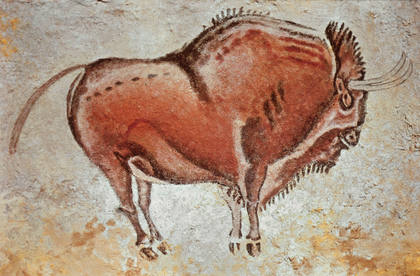
Like photographs, clichés are the shorthand of communication. If a picture truly is ‘worth a thousand words’ (a pretty cliché) it’s because its cash value rests on the fact that the ancient part of the brain, the primitive lizard brain, the dreaming brain, communicates with pictures. I mean seriously, think about it. Before written language, our ancestors drew pictures of actual horses to represent “animal” or “the hunt” or “wild and free” before there were actually spoken or written words to convey the ideas. Now, however, we are wildly sophisticated and have a language (or two) that we can manipulate to communicate otherwise free form ideas floating inside our cabezas.
Storytelling served as a history lesson before written language, and storytelling today is as popular around the campfire, board room table, or cafe four-top as ever. Stories are innately wired into us and as humans, we crave and respond to the story. The stories of our lives, our novels, movies, television and cable news, are a series of pictures – both visual and virtual. Actual photographs and pictures illustrate a narrative we may tell, as in “see? I was in Paris – here’s the Eiffel Tower,” or “here’s a photo of little Sophie Soo, ten years old.” In each case you may be telling a story, constructing a narrative and sharing information about your travels and your dog, backing your verbal story up with photographic evidence. So yes, pictures are worth thousands and thousands of words.
And if all those wonderful words at our fingertips were colors, original ideas are bright, clear fountains of rich hues, and clichés are dull as dirt.
The trouble with clichés is that they are so infused into our daily language, we hardly recognize them for their trite, frayed selves. Advertisers know this. They know that people are put off by formal language, fancy words, words that stand up straight and march with a snap in their step, so they dumb down marketing messages, intentionally inserting clichés so that their uber-sophisticated messages sound “down to earth” (cliché!) and “right as rain” (cliché!). Television programmer know this too, and make sure our televised stories don’t get too smarty pants, else run the risk of losing viewers –although because of the trance-like fog I fall into when I tune into a program I happen to enjoy, “viewing” isn’t exactly what I’d say I was doing. I’d bet a nickel that not one filter remains intact with all that bad, cliché loaded language comes washing over me. While some programs are brilliantly written, most programming I’ve observed seems to be no more than 30 minutes of tired ideas strung together. So when you think about all the hours of programming and bad language we’re exposed to, it’s no wonder we’re up to our eyeballs in clichés.
So, if everybody is guilty of crimes of language abuse, then it must be okay, right? In the words of mothers everywhere, “just because all the kids are doing something doesn’t’ make it right.” Clichés have their place, which is definitely not between the covers of your journal. You want your journal to be clear, concise, absolutely fecund with the rich details of your life, so absolutely pitch-perfect that with even a quick glance, you inspire yourself to write. Even. More.
So, once in a while work your language muscle a little harder. Avoid the flabby turns of phrase. Jettison the flaccid prose that comes so easily. Instead, read an amazingly genius writer and then journal. Turn the TV off, and journal. Instead of taking the easy way out and dropping in an over-worked and sad sad sad cliché and reach for something original. You may just surprise yourself with your own genius.
 persephone's step-sisters