sassy b*tches

high-priestessDon’t you just hate it when you spend the time looking for a yummy read, a book to fire your imagination and sooth your sense of adventure, only to find the heroine completely unlikeable in the end? We all know the pain of flirting with a book we think we will love only to break up with it half way between the covers because it’s a big fat dud.  What if the story is good, but the writing itself is dull or just one bald cliché after another?  Fear not, gentle reader. We have tools and search engines, and even clever strategies to make good book choices.

So how do you judge a book by its, er, cover? As in any endeavor, it’s important to know what you like. Just now, I pulled a Google search for “debut novels, 2013.” Many selections popped up. I clicked on the one entitled, “10 Dazzling Debut Novels to Pick Up Now” because I love to be dazzled, and it sounds like a promise. How do I choose? I know my limits. I know what I love and know what I won’t go near with a red hot poker.

Here is a small sampler of the “dazzlers,” a brief description of the storyline, and my reasons to adopt or reject them.   

  1. A Constellation of Vital Phenomena:   “A neighbor saves an 8-year-old Chechen girl from the Russian soldiers who have taken her father, and together they seek shelter in an abandoned hospital.” Reject: too sad.
  2. Crazy Rich Asians:   “Opulence and zaniness reign when one of Singapore’s richest bachelors invites his American-born girlfriend to travel from New York to vacation in his native country.” Reject: Zaniness aside, I’m not terribly interested in fictional adventures of rich bachelors.
  3. The Golem and the Jinni:  “Two supernatural creatures accidentally unleashed in 19th-century Manhattan forge an unlikely alliance in this fantastical work of historical fiction.”  Adopt: Magic + historical fiction. Yay!
  4. American Spirit:In this first novel from the outrageously funny host of The Moth podcast, a 40-something media exec goes rogue after losing his job in the recession, taking up drunken residence in his car before embarking on a vision quest to Bali by way of Los Angeles and Yellowstone.” Adopt: Vision quest + Yellowstone + Bali. Oh, yes!
  5. The Execution of Noa P. Singleton: “In this grippingly off-kilter thriller, a young woman sits on death row after being convicted of murder until a high-powered attorney—the victim’s mother—intervenes, leaving everyone to wonder why.”  Adopt: a young murderess saved at the 11th hour? Hells yes.
  6.  Golden Boy: “A good-looking, athletic British teenager’s seemingly idyllic life gets turned upside down when his oldest friend betrays him, revealing a closely held family secret just as the boy’s father is about to run for political office.” Reject: Politics + betrayal. Zzzz.

And there you have it. Are my selections biased? Yes, without a doubt. I know what I like and life is too short for bad fiction. 

Cynthia Gregory

B is for Book

A is for Artist. and Anomaly. and Ahhhhhh.

We review what we love. Read all about it here.snow mandalla

the good life

books are what we love.

share the love. here.

living well

skirted by vines

garden doorHOW AMOEBAE MOVE
Cynthia Gregory

Roxanne Ryan baked bread when the depression came down on her like a moonless night. Yeast called to her with its sour gas, startled her from her sleep.  She thrashed and rolled her bed sheets into a ball seeking comfort on the mattress, and then she switched on the bedside lamp. She woke with stomach cramps, spilled flour from her knotted fist onto the bedroom floor. Scruffy snorted from his pillow of MacGregor plaid flannel. She rubbed his nose and found a pair of cotton sweat socks to keep the cold out for when she stood on the kitchen linoleum, kneading whole wheat sourdough. When things got bad, even the Xanax didn’t work. Nothing worked except the smell of bread baking, the essence of a fine brown crust forming on a loaf.         

Roxanne cut butter into flour to form a sweet dough. She dribbled in sweet cream and yogurt. She dropped in soft currants soaked in orange brandy. A spongy mass formed and she turned it out onto a slab of marble she got as surplus at the old church renovation site. The county was gentrifying. Open fields close to town were being replaced with decorating studios. While some families still kept chickens that scratched in the dirt  between houses, the old Victorians on Main were finally getting fixed up. As towns went, Cold Water had allure for young professionals who got struck dumb at the beauty of the place while on vacation and who decided to move to paradise.

When Roxanne left Kenny, she gravitated back to that western familiarity. She copied bread recipes from Sunset magazine and poured over the San Francisco Chronicle in bed Sunday mornings with milky Costa Rican blend coffee. On Kenny’s transfer to Alexandria, she learned to live in a world roped by traditions and she became bound. It wasn’t until she cut through Denver on I-70 and across the Continental Divide, rolling back toward the Pacific, that Roxanne took a deep breath for the first time in what could have been years. In Cold Water, she surrendered to simplicity. On the western lip of North America, she yielded to the alchemy of bread.

Roxanne speed-dialed Virginia. At two in the morning in San Francisco, it was five in the east and Mercedes Lazarus was just waking, getting ready to take the train into D.C. to review legal briefs for the EPA.

“Hi, baby.” Mercedes caught calls on the first ring. She jogged onto her trampoline the minute the phone went off, working up endorphins.

Roxanne pressed her eyes shut. “Geniuses are supposed to be able to live on  two or three hours of sleep a night. By now I should be channeling Einstein.”

“How about. Anais Nin!”  Mercedes breathed hard into the handset. “So.  Baby, spill.”

Mercedes lived on pesto and call waiting and was a perpetual motion machine.  Her blood was equal parts Italian and Greek, separated from the homeland by a distance of two generations, requiring dinner with her parents every Sunday, after which she drank grappa with her father at the kitchen table;  shared Viceroys. She made tomato gravy and Greek salad with an essence of garlic that oozed from her pores. Mercedes was the only woman whose lips Roxanne had ever kissed besides her own mother’s.

“What are you doing up? It’s the middle. Of night there.”

“I’m baking. It’s my new therapy.”

“Ha.” Springs creaked in the beat between bounces.

“I’m rising to a higher power. One loaf at a time.”  Roxanne shook her head, felt the weight of silver earrings against her cheek. “Bread good as a psychic Rolf.”

“So what’s this I? Sense blueness?”

“Maybe lavenderness. Second guessingness.”

“Self awareness. About —”

“You know, leaving.”

“We’ve covered this ground. Your only crime was falling. Out of love.  You’re not. As screwed up. As you imagine. Actually, I think. You’re sane for the first. Time maybe in your life.”

“Yes, well.”

Roxanne rolled the dough into a ball. She covered it with a damp dish towel and greased the bowl before dropping it in, setting the timer. “Did I tell you? I had dinner  with my step-brother last week? He married two sisters.”

Mercedes’ voice garbled. There was the sound of rushing water, the scritch of bristles on tooth enamel.

“One couldn’t have babies, so she left. Lana says the other, the fertile one, is hell on wheels. She says Robert is a polygamist.”

“Is he?” Her voice dropped to her throat, a gathering to spit.

“Number one allegedly loved him so much, she gave him up.”

“Still water —”

“It makes me wonder —”

“More aggravation —”

“You think you know somebody —”

“Everyone sees things, people. Through the filter of their own perception, you know. It’s nothing new.”

“What will I say about Kenny in twenty years?”

“You’re very clear about Kenny’s shortcomings.”

“Still —”

“Trust me.”

“Anyway.”

“You loved him once, that’s enough. Hold on a minute.” The sound of toilet plumbing roared through the line. “I have to put my hair up. I’ve got five minutes before I have to run to make the bloody train.”

“Late again.”

“How?”

“What?”

“Never mind. I’ll call you from the car. Or the way in.”

“I miss you, baby.”

“I miss you back. Ciao.”

Roxanne Ryan tapped her fingers against the stove top. She dropped the cordless into a basket and wondered if she should color her hair blonde, wondered if she would ever date again. It was four o’clock in the morning of the ninth month of the year of her first divorce.  She had moved back west, rented a cottage in the vineyards north of San Francisco. She was skirted by vines and grapes, sweet-smelling dirt. Roxanne swam in a sea of leafy vines that rose up out of the valley floor and spread across the golden coastal hills. In a countryside swarming with weekend tourists, Roxanne scraped her knees praying for answers in a language that she understood, which, as it turned out, was the language of flour and water, the exchange of gasses, of leavening. Four brown loaves cooled on racks on the kitchen table. Four brown, smooth, perfect loaves that could soak up butter and jam and sudden, unexplainable melancholy. Bread that could fill empty places. Bread and chocolate and blues.  Roxanne dabbed her eye where it got moist and lit a cigarette. She called her lawyer. Five o’clock San Francisco made it eight in Chevy Chase.

“Michael Goldman.” Goldman answered the phone himself, his receptionist being late. Again. He was genial, a gentleman. Her therapist told her, available. His courtesy cost her roughly twenty bucks a minute. Each conversation  with him cost her half of a pair of Ferragamo’s.  A CD player. A standing rib roast at Raley’s. This conversation had the potential to become a new pair of Joan and David’s. Dinner at Don Giovanni’s.

“Maybe you should take on some work,” Goldman had said. “It wouldn’t hurt to establish at least the impression that you’re moving forward.”

“I did it,” she told him. “You know, as my attorney I thought you should be informed.”

On his advice, and for the first time in ten years, Roxanne took a writing assignment. She chronicled famous wine country spas for an artsy travel magazine. She called the first place on the list, checked in for a facial:  research in the form of a four-layer seaweed wrap.  The therapist patted thick cream onto her face and while it hardened to a therapeutic crust, she worked an emollient into Roxanne’s feet, wrapped them in plastic bags, tucked them into heated booties. She could do this every month of the year. She could wake up next to a stunt man named Paolo, whisper for a cappuccino, eat cucumber sandwiches. It was something to consider while the facialist worked a rosemary scented cream into her hand, pulling her fingers until she shot into a beta state, right past alpha, into dream land.

Now her unconscious wrestled angels, gathered fancy pigeons. Now rock stars haunted her bedroom, handsome ER doctors made consultations. Now she and Kenny struggled over control of the oars of a rowboat on an artificial lake. The reservoir was full; the turbines of the dam pulled at them.

“Give up,” Kenny shouted to her. “It’s futile.”

“Bite me,” she said, grabbed an oar and thrust it in the water. “It wasn’t me you wanted, it was that lady barber.”

Kenny paddled hard with the remaining oar, propelling the boat in circles. Loaves of Italian slipper bread floated in the sky. All the babies they did not have, would never have, floated like wafers in the water, swathed in organza layettes, trimmed in lace, dotted with raisins. This is why she did not sleep.

Last spring, during the year of their estrangement, she had suggested alimony. Kenny’s voice fell a decibel. “You could get a job,” he said. “You’re capable. F.Y.I.: these days its called spousal support, a contingency that can go either way.” It was the intimation of a tactic. That he could demand she pay to support him, retribution for working up the courage to leave.  The kitchen timer went off and the phone rang.

“To hell with. Work,” Mercedes told her.  “Enroll in school. You could get. Your master’s degree. If you wanted.”

“In what?”

“Jesus, who knows. Professional wrestling. Literature. Do what you love. Pursue the culinary sciences.”

“I feel as if I’m dancing on the edge of a cliff. It could go either way.”

“Take up yoga. Give up vices.”

Roxanne moaned. “But I’ve given up everything I know.”

“The Tao would say. Give up even that.”

 Mercedes was off caffeine, but still went to the coffee houses, for the ambiance, the magazines, the sense of literary importance. She was a lawyer with literary ambitions, with mommy ambitions, with ambitions even she could not yet define, so great was her reserve of energy. Roxanne suspected that the miscarriage and the ectopic pregnancy were the result of some weird vortex Mercedes Lazarus created in her moving-fastness.

Roxanne toasted a piece of bread, slathered it with plum jam, sniffed at it, pushed it away. “I met a man. A lawyer.” 

“Gosh. Well?”

“Wounded, God. I’m so over men. Give me someone who hasn’t cried publicly for a year.  A recovering sensitive. Jee-sus.”

“Harsh, baby.”

“No.” Roxanne opened a seltzer water, sprayed the front of her jammies. She reached for a towel. “Ahhh, shoot. Maybe.”

“You’ll rebound.”

“I don’t know.  The idea of dating, of dancing. Body contact with a virtual stranger.”

“Depends on the stranger.”

“Plus, you get close, there are smells.”

“Stop.”

“Soap. Shampoo. Laundry detergent. Belly to belly, ear to ear. And kissing. The idea of saliva is paralyzing.”

“Tongue.”

“Breathing in, out.”

“Anyway, the lawyer.”

“Ahhh. Beautiful smile, but so goddamned sad.”

The train whistle came tinny through the handset, the warning blast of an approaching station. “The grass isn’t any greener on the other side,” Mercedes said. A tapping of laptop keys floated between her words. “Truth is, tap-tap, on the other side, tap, there is no grass.” The shriek of brakes rose up through the phone.

Roxanne threw a pinch of salt over her shoulder. “You have to go.”

The air smelled of pine and bay laurel. A light rain fell before dawn, a sky full of waterbeads letting go, dropping into an ocean of air. The lawyer took her to dinner at the local bistro du jour. The place was austere to the nth. They took no reservations, the waiters were young, swarthy, tuxedo shirts, pony tails. The walls of the restaurant were painted terra cotta and the floor was stained saffron.  Candles flickered from wall sconces. When the food came, it was arranged artfully on wide brimmed plates. The lawyer ate oysters to begin, and after the entree he ordered flan. He smiled and said, viagra, vasectomy.

“Um,” she said, “Saw Palmetto. Zinc.”

I’ll look it up, he said. You do that.

There were judges, teachers, novelists waiting to get seats. Roxanne lifted her glass of pinot grigio and observed happy couples over the rim of the glass,  tinted gold by wine.  She felt the same twinge of envy that she had when she and Kenny were trying to have babies and passed young families on the street. After twenty-six weeks of Clomed and disappointment, they avoided city parks and shopping malls.

The how-to market was explosive with books on how to navigate divorce, not get screwed, look after your interests. But there were nuances that were not explored in the divorce manuals. They didn’t say that you would miss being married, double, if you did it well. If you happened to like turning junk store tables into decorator accents. If you thought selecting the correct wallpaper was tantamount to a feat of civic heroism. If your coq au vin was talked about in three states.

The books didn’t tell you that you might find yourself wandering into hardware stores shopping for kitchen tiles for your ex’s kitchen makeover. That you would become aroused by magazine ads for men’s underwear. That your intentions for independence would be subverted by well-meaning family members who said, what a shame, what a shame, as if you had killed someone. Poisoned someone. Admitted over the creamed peas and buttermilk biscuits that you wished his plane would jack-knife out of the sky into an Iowa cornfield.

Certain associations would bask in a florid superiority. They would offer woolly threads of advice. After a while you would learn to just smile and hold your breath when sentences began with that airy Well, you know. . . .

You wonder if you’re sane. You wonder if your shrink is sane. You wonder if the pharmacist who fills your prescription could have anything interesting to say after sex. You find that you are both a stereotype (statistic) and forging new territory.  You may flirt with a young woman at the Barnes & Noble coffee counter. You may wonder if love came at you like that, what you would do about it. You will discover that investment brokers are not your friends; they work on commission. You will remember that the box of Christmas ornaments you gave to your ex contained a collection of Santas and you will pay penance to get it back. You will perform a live enactment of the Last Supper superimposed over  the Seven Stages of Grief. Love stories will make you cry and war epics will raise your blood. You will discover that a dark theater and a sad movie are cathartic and meaningful in a way beyond therapy.

Roxanne braided ropy strands of Challah and set it aside to rise. She took a carton of eggshells out to the composter and startled a raccoon picking through the wilted lettuce she ritually bought for good health and then watched turn to green mush in the refrigerator. The night sky was brave. Jupiter sparked in the early dark, winking. The raccoon’s eyes glinted with ephemeral light and Roxanne felt herself lift off. It was midnight: too early in the east, too late in the west. This was what it was like in space, a vacuum.

Sleep was her panacea, coming in bits and snatches, between the rising of dough, the baking and cooling of loaves. The phone was shaped like a baguette, a comfort that fitted in the palm of her hand.

“I have something. To say, big news.  But don’t want to. Tip your canoe.”

“You can tell me anything.”

“I would love it. If you were happy. For me. Us.”

Roxanne pushed the blade of a knife into a rectangle of dough, cutting squares. “Did you put that milagro I sent you on the back of your bed like I told you?”

“Yes.”

“Baby! Hey! It worked.”

Mercedes blew air. “Totally.”

“Well.”  Roxanne stared into the still dark sky. In the east, a faint glimmer of yellow tinted the horizon.

“It was a fluke. Not even a command.  Performance, you know what. It’s like.”

“That’s the way it happens. So you better stop slogging around super fund sights.  No more chances.”

Mercedes’s voice was muffled. She was pulling off a sweatshirt, possibly pulling on a fresh tee.

“Will you?”

“No! More rivers dead with chemicals. No imperiled aviaries.”

“There are considerations now you didn’t have before, like maybe slowing down, letting someone else take up the slack. Putting your feet up. You don’t have to be a hotshot all the time. Imagine what it’s like inside there, inside you, that kind of magic. Witness that.”

Roxanne brushed melted butter across the top of her dough squares, sprinkled them with granulated sugar and lemon zest. Mercedes was quiet. There was no sound of trampoline, no hard breath. “So how far are we talking?”

“Just.”

“What does Marcus think?”

“My adorable chemical engineer says pseudo podia.”

“Super fund? What?”

Pseudo podia. False-foot.”

“No clue.”

“False foot. It’s how amoebae move. They create a false foot, a hologram. Then move their bodies with the imaginary foot. Then it dissolves.”

Roxanne spilled coffee into a filter, poured scalding water, brewed a pot of Costa Rican, inhaled the heady fragrance.

“Moving in new directions. Now we both are, you see? I signed up for school. The Culinary Institute actually, I registered.”

“Baby, that’s great.”

“Yeah, babies, it is.” The line spiraled vacant a moment, one of those empty spaces you could lose yourself in, sink into, an oven of very deep quiet.   

“Could you be godmother, you think?”

“Of course I will. You know I will. I’ll teach them to bake bread.”

“Yeah?”

“One at a time, naturally. Hey.”

“What.”

“This one is for good.”          

Mercedes laughed, a signature sound that ended on a rising note. “I love you, baby.”

“I love you back.”

Roxanne cupped her palm against her throat.  She poured a steaming stream of very dark roast, added a shot of hazelnut syrup. She could count on one hand the things that she knew for sure. There was Mercedes’ love, sovereignty, and bread. She loved bread and Mercedes and mornings in the dark just before the sparrows went wild with song. And yeast. Yeast was something to be trusted. Like an amoeba, a living organism, a teeming culture, a hologram. It grew phantom feet, stood on them in a universe that made allowances for miraculous appendages.       

# # #

this prize-winning story is previously published

all rights retained by author, 2013

support the arts::buy the book

We love this book so much, we ache. Now, that’s some literary grit.

Read all about it here.

orchardist

the name of things

zaca-lakeZaca Lake

A white-bellied carp breaks the water’s

surface, crickets chirp a background chorus.

Bats fly a crazy trajectory, then

fold like origami, cling to the eaves.

A great horned owl swoops, glides

above an old man who fills mason jars

with what he calls sacred mud of the healing lake. 

In the lobby of faded sun, I pass row after row

of pinned butterflies under glass.  

Memento Mori of old hotel, long-gone guests;

of Anise Swallowtail

Mournful Duskywing

Cabbage White.

Days of green and summer’s

sulphurous heat that bursts cocoons.

Fragile speckled wings that someone felt

the need to pin down.

You’re awake as a child until they teach you

the names of things.

Sandra Giedeman

the shadow side of dreams

volcanoOIL IN WATER

Pam Lazos

Chapter Sixty

The funeral had been a splendid affair as funerals go, and Bicky personally greeted each of the four hundred mourners that had been appearing at the house since mid-morning to pay their respects. Now, twelve hours later, with the mourners gone, the caterers packed up, and the musicians disbanded, the house took on an eerie quiet, punctuated by the occasional clanging dish Mrs. Banes loaded into the dishwasher. Only Bicky, Hart and Jerry Dixon remained.

“Was anyone there when it happened?” Hart asked. They were alone in his study.

Bicky sat brooding in the study where he’d come often during the day to escape the crush of people with their endless outpouring of sympathy. Now, he stared at the fire’s glowing embers, sipping a Chivas on the rocks, the distant look in his eye tipping Hart to the possibility that Bicky might not be home at present.

“When I was young, this was years before we discovered oil on our land, when we didn’t have two nickels to rub together, that is, my father used to take me and my brother, Mason, trout fishing in the back country. I don’t know if you’ve spent much time in West Virginia, but it had some of the most pristine and diverse ecocultures of all our fifty states, California and Florida notwithstanding. We’d fish for two or three days, eating to fill our bellies and stashing the rest in the mountain stream. That water came flowing down just like nectar from Mount Olympus and was colder and clearer than any spring water you’ll find on the market today. The fish stayed better there than in a fridge. We’d bring back what we caught and my Mom would cook it up with some potatoes and kale from her vegetable garden. You can’t buy fish like that today. Not even in the high end food markets. They just don’t exist anymore. So many things don’t exist anymore.” Bicky shuddered.

Hart grabbed a blanket off the couch and made to cover Bicky with it, but stopped short by embarrassment, left the blanket sitting on the arm of the chair and returned to his seat.

“Sonia used to do that all the time when she was a little girl,” Bicky said. “Cover me. But that was before she learned to hate me. Of course, she always liked my money.”

Hart had shot his emotional wad during the course of the day and didn’t want to talk about Sonia now. “Maybe you need to go back to West Virginia for a visit. Some trout fishing might help with the…with all this.” Hart waved his hand toward the study door where the sounds of dishes being stacked sliced through the silent hall.

“The West Virginia of my youth is gone. Just like everything else.” Bicky sighed and took a big swig of whiskey. “Did you know they blow the tops off of mountains there now, just to get at the seams of coal nestled underneath? They smother miles of streams with the rubble, pristine mountain streams, and call it progress. All together, in West Virginia, Tennessee, Kentucky, a couple others, the coal companies have buried over seven hundred miles of headwater streams with their little extraction business. Headwaters. That’s where the stream starts. And they say oil kills wildlife.”

Bicky gave a short, jagged laugh, drained his glass and threw it against the back wall of the fireplace where it exploded in a shower of sparks ignited by traces of whiskey. “Oopah,” he said, deadpan, turning to Hart for the first time since they’d be sitting there. “That’s what the Greeks say.”

“What the hell was that?” Jerry Dixon came running into the study, followed by Mrs. Banes. Jerry’s eyes were bloodshot. He was drunk.

“Are you alright, sir?”

“Yes, Mrs. Banes. I’m fine. I regret, however, that I’ve made a mess in the fireplace.”

“Glass is it?” She stepped forward and gazed into the fire. “Shall I clean it out now?”

Bicky shook his head. “Tomorrow’ll be fine. Why don’t you go home now.”

Mrs. Banes nodded in weary gratitude. “If you’re sure you won’t be needing me.”

Bicky nodded. Mrs. Banes had been in the Coleman’s employ for over thirty years and although Kitty had come to treat her like family, Bicky rarely said a word to her unless giving an order. Mrs. Banes was wary of his silences, and his temper, having seen both in action.

“Well then, I’ll take you up on the offer. Thank you, sir.”

“Is anyone else still here?”

“No, sir. Last ones left about half an hour ago.”

“I’ll walk you out then,” Bicky said. Mrs. Banes’ eyebrows shot up, but she covered it over nicely by scratching her forehead.

“Goodnight, Mr. Hart. Mr. Dixon.”

“Goodnight, Mrs. Banes,” Hart said. He watched her move stiffly out the door, a baffled look on her face. Jerry sat down opposite Hart.

“How you doing, Jerry?”

“I’ve been better.” Jerry pulled a much-used hankie out of his back pocket and gave a full-throttled blow. Deep circles hung like end-of-the-party streamers under Jerry’s eyes and the creases in his brow appeared etched in stone. Apparently, Bicky wasn’t the only one feeling the pain of Kitty’s sudden demise.

“Of all things to go. Her heart was bigger than anyone I knew.” Jerry blew his nose again, a resounding effort culminating in a silence broken only by the crackling of burning wood.

Hart felt the hollowness of his own muscular organ, its ineffectiveness. That his eyes were dry and his breathing passages open came as no surprise. Given the sheer volume of bodily fluids that had passed through his nasal and ophthalmic cavities in the months following Sonia’s death, he wondered whether he’d ever shed another tear.

There was something now, about Jerry’s body language, about the way he rubbed his eyes, so hard and rough they might pop out of his head, that seemed scary, familiar. They sat in silence, Hart circumspectly watching Jerry, puzzling it out until he was struck with an analogy more solid than any wood iron. He stared at Jerry in disbelief until Jerry wiped his nose, stifled a sob, and confirmed it for him.

“I loved her.” Jerry coughed, covering the words that had escaped. “Too long. And yet not long enough.”

The confession hung in the air like skunk spray, fetid and impossible to ignore. To Hart, Jerry appeared caricature-like, the undeniable look of guilt spread thin across his face. Jerry swallowed hard – Hart watched his Adam’s apple wobbling under the strain – before continuing.

“I’ve been in love with her for over thirty years. There was nothing I wouldn’t do for that woman.” His eyes trailed off after his voice and Hart could almost see time winding backwards to the point that even Jerry’s voice changed, losing the throatiness, the slightly harder edge that comes with years of use.

“We met at a party Akanabi had for all its customers. In those days, they really knew the meaning of customer service. It was this swanky affair and I was handling security. I was pretty new. Only been with the company six months. Kitty gave a little toast to honor all those customers that kept Akanabi in business and then one to honor all its faithful employees. Later we chatted over the hors d’oeuvres. She was just beautiful. I made it my personal goal to find out everything I could about her. Even without digging, you could already see the cracks forming in their relationship.” Jerry took a sip of whiskey and stared at the bottom of the glass straight through to the last few decades. “For over thirty years, I loved her. And I’ll keep on loving her long after that bastard has taken a new wife.”

“So that was when they were first married?” Hart asked. “Before she had Sonia?”

Jerry stiffened. “Go ahead. Ask me,” he said.

“Did you . . . did she love you back?”

“Yes,” Jerry said, his voice smaller than a minute. “But, I didn’t know until it was almost too late.” His face contorted. “God, it feels good to finally tell someone.”

Hart heard footsteps behind him and jerked around to see Bicky walk into the room.

“Tell someone what?”

Jerry stared, wide-eyed at Bicky, but said nothing.

“About his Golden Retriever,” Hart offered. “He was saying how he hasn’t felt this bad since his Golden Retriever died.” Jerry’s look said he would lick Hart’s boots clean with his tongue next opportunity he got.

“That’s just like you, Jerry. Likening my wife to a dog.” Bicky poured himself another Scotch before dissolving in his chair. Hart could almost see Bicky’s energy draining from him, running in rivulets across the hardwood floor.

“Come to think of it, you always did enact a certain aloofness around her. Something I could never quite decipher. Bordered on downright rude, I thought.” Bicky took a big slug of his whiskey without so much as a glance in Jerry’s direction. “You couldn’t say it was justified. Kitty might have been a lot of things, but rude was the least of them.”

“I was never rude to her,” Jerry replied. “I just…. Bicky, I want to tell you something.” Hart looked at Jerry whose face had become an expressionless mask. “I…. It’s just….”

Bicky shot Jerry a withering look. The confession died in Jerry’s throat, leaving a gaseous trail in its wake. He coughed again, emitting a puff of anxiety and guilt as obvious to the casual observer as a passing cloud. But Bicky was staring into the fire, dousing his own sorrow within the prescribed confines of his cerebral cortex and his whiskey glass. He had not a brain cell to spare for observation.

Jerry stood up, wavering. “I’m gonna head out.”

Hart sighed, relieved. The male need to be territorial was pronounced even when the grand prize was six feet underground. The last thing Hart wanted was to watch a pair of middle-aged men go at it on the floor of Bicky’s study.

“I’ll see ya’,” Jerry said. Bicky sat stone-faced without taking his eyes off the fire.

Hart walked with Jerry as he stumbled down the hall to the foyer.

“How about I call you a cab? You don’t look like you’re in any shape to drive.”

“Death might be a welcome change.” Jerry said, managing a weak smile.

Hart gave Jerry’s shoulder a squeeze. “It’s not you I’m worried about.”

“I know. Always the other guy.”

Hart punched numbers into his cell phone, but Jerry grabbed it and disconnected the call. He looked Hart dead in the eye for several moments before handing the phone back.

“You didn’t know, did you?”

“What?”

“The last time you saw Kitty she had just had a stroke.”

“Jesus. I thought something was strange, but…. Why didn’t anybody tell me?”

“You know, Kitty. Doesn’t want anybody knowing her business.”

Hart noted the usage of the present tense as if Kitty were still alive. Jerry wavered and Hart reached a hand out to steady him. Jerry grabbed the door frame.

“Her right leg was gimpy after that. Little bit of paralysis. Bicky wanted her to fly to Europe – bastard that he is, he still loved her – to see this neurosurgeon. Top guy in the field. She wouldn’t go. She didn’t leave the house much… after Sonia died.” Jerry croaked.

“I saw her everyday and he never knew. Probably the best months of my life.” Jerry pawed at his eyes and studied the toes of his cowboy boots. “Now she’s gone and I’m lost.”

Hart squeezed Jerry’s shoulder and was surprised when Jerry’s arms encircled him and held on for a long, fierce hug.

“I’m really sorry.” Jerry pushed Hart away and called over his shoulder: “For everything.”

He staggered to his car, leaving Hart standing in the open doorway, alone with his questions.

Hart returned to the study, heard Bicky’s stifled sobs and took a reverse step, intent on backing out quietly, but bumped into an end table instead. One of Sonia’s baby pictures rattled and crashed on the hardwood, shattering when it hit. Hart froze.

Bicky started, then rose as if the movement caused him pain. He dragged himself over to survey the damage while sixty years of promises broken and lies lived, of the shadow side of dreams, of futures never realized, now all congealed, weighing down the sleeves and the collar and lining the pockets of Bicky’s rumpled Armani suit. Grief, noticeably absent when his daughter died, now cloaked him in full regalia, aging him exponentially and adding decades to his countenance. In the months following Sonia’s death, Hart had often wondered how Bicky hid his grief so well when Hart himself had been rendered debilitated. Perhaps Bicky hadn’t cared about his daughter, as some had suggested, or perhaps he was just being brave for Kitty. But whatever threads had held him together, they’d all snapped now. Bicky was a wreck.

He stooped, picked up the picture and brushed away the broken glass cutting his finger. He flinched, but didn’t say anything. Instead he rubbed his finger across his baby’s face, caressing her over and over as if the repetitive motion might raise the dead. Hart saw the blood oozing onto the photograph and left the room.

He returned a minute later with a wet towel and a trash can. Bicky knelt, crouched over the blood-stained photograph.

“I just hope that by the time I find the bastard, life hasn’t wrung all the vengeance out of me. I’m getting old, you know.” As if to prove it, Bicky grabbed the table and hoisted himself up, ragged and slow. Hart took the photograph, so stained with blood you could no longer make out the subject, and wrapped his father-in-law’s finger in the wet towel. Bicky nodded once, acknowledging the gesture, and squeezed Hart’s arm before shuffling over to the wet bar.

Bicky picked up a tumbler and filled it. “It’s the least I can do for my favorite son-in-law.” He tried out his famous scowling smile. It still worked.

“Bicky.” Hart picked pieces of glass off the floor and threw them in the trash can. “I’d say vengeance is overrated.”

“Ah, but the momentary relief is as good as anything I’ve ever experienced.” Bicky laughed, a dry brittle cackle. “Besides. Don’t you want to know?”

“I do know,” Hart said. “It was an accident. You saw the body. She slipped and fell. Hard. Hard enough to knock herself out. If I would have been home…” Hart dumped a big piece of glass in the trash can and it shattered. He reached for a couple shards under the table.

“You said yourself you had the feeling that someone else had been there.”

“I said a lot of things. You can’t bank on anything I said then. If you remember, I wasn’t very lucid.” Hart was still smarting over Bicky’s decision to dope him up for the two days following Sonia’s death. The lost days. Hart dumped the last bits of the glass into the trash and stood.

“I’d tell Mrs. Banes to go over this with a vacuum in the morning.” He looked over at Bicky, but the man wasn’t even in the same stratosphere. A profound feeling of fatigue settled over Hart. “Hey, Bicky, unless you need me, I’m gonna get going. I’ve got a bunch of stuff to settle at the house before my flight back to Philadelphia tomorrow night.”

“You don’t think I knew she was having an affair?”

The question startled Hart. “Who?”

“My wife, that’s who.”

“Jesus, Bicky. Ease up, would you?” Hart was not inclined to share the information Jerry had imparted. It wouldn’t do any good. That Kitty chose to share the last months of her life with a man who obviously adored her over a man who rarely gave her the time of day did not come as a shock. What came as a shock was that she waited so long to do it. He was happy that Kitty had found a bit of happiness at the end.

Bicky shook his head in defeat. “I don’t know. But if I find the son-of-a-bitch I’ll kill him, too.”

“Well, that’s two people you’re gonna kill. But hey, the night’s young.”

Bicky grimaced. “That’s why she moved across to the other side of the house, you know. So I wouldn’t catch on to her shenanigans.”

Hart sighed, tired of arguing. “Enough. Kitty loved you, otherwise she would have left your flat ass a long time ago. Cause the way I see it, you had absolutely nothing to offer her.” He smiled with the last words, meaning it as a bit of sarcasm, but immediately wished he could retract them. He searched Bicky’s face to gauge a reaction, but there was none.

“I gotta go.” Hart squeezed Bicky’s shoulder. “Call me if you need me.”

to be continued

click here to read what came before

copyright 2012

a hundred years from Monday

budbreakOIL IN WATER

Pam Lazos

Chapter Fifty-Five

A few days later, Kori was pulling out in Ruth’s minivan when Jack cruised up the driveway, forcing her to slam on the breaks to avoid a head-on collision. He stepped out of his car, an impish smile on his face, and walked over to the driver’s side. She looked beautiful.

“Better watch where you’re going,” Jack said. “You could hit somebody.”

“Better you than me.”

“Nice to see you, too.” Kori stared straight ahead, ignoring him.

“How come you haven’t returned my calls?”

“You called?”

“Very funny, Kori. What the hell’s going on?”

“Nothing. Why do you ask?”

“I’ve been calling you all week, is why I ask, and I know you haven’t been home because I’ve driven by a dozen times. Then last night one of my buddies says he saw you and some flunky out having dinner.”

“We’re just friends.”

“Oh yeah? When was the last time you lip-locked a friend?”

Kori shrugged.

“Answer me, dammit.”

Kori stared at the woods to the side of the house. Jack yanked open the driver’s side door and pulled her out by the arm.

“Ow….”

“Oh, now I have your attention….”

Kori shook loose from his grip and stalked off across the lawn. Jack ran ahead, hampering further progress.

“What in God’s name has gotten into you? Why are you so angry?”

“Because you’re a self-centered bastard. You waste your time watching sports when you could read a book. You prefer a night of drinking with your friends to the movies with me. You have no interest in my work. But most of all, because you wouldn’t go to the Goddamn public meeting with me!” She said the last with such venom that Jack thought she was going to strike him to hammer the point home, but she just turned on her heel and walked back toward the car. He stared after her, dumbfounded, before running to catch up.

“I’m sorry. If I’d have known it meant so much I would’ve gone with you.”

“You did know.”

“I didn’t. I swear. Come here.” Jack pulled Kori in and hugged her to his chest. “I miss you. Please don’t do this.”

Kori raised her face to him.

“Besides. Robbie told me to take care of you.”

Kori grimaced and shoved Jack as hard as she could. He lost his balance and fell backwards.

“And Robbie told me to watch out for you,” she said, “but not the way you think. Anyway, Robbie’s dead. Gone. Just like you. Just like everybody.”

Jack jumped up and grabbed the back of her neck. He pushed her chin up and kissed her gruffly. “It would be a shame to lose what we have.” He wound his arms around her and whispered in her ear. “To walk away just so you can be the first to leave is a horrible waste of time. Sometimes there are things bigger and more satisfying than an indulgence of your pride.”

“Like what?

“Like happiness.”

“Oh, pull-ease”

Jack released his grip and took a step back, putting air between them. “Are you afraid to be happy with me?”

“I was happy with you until I saw what an egotistical prick you are.”

“C’mon, Kori. This is stupid.” He kissed her again and this time she responded with her mouth and her body. After a minute, she released him. He was electrified.

“Alright. You win.” She reached out and gave his dick a little squeeze. He shivered at the touch. “Call me, say, a hundred years from Monday. That should put us squarely in the next lifetime.” She strode to the van, slamming the door after her.

Jack watched as she put the transmission into all wheel drive and drove through the small forested grove to the side of the driveway, pulling out onto the road before he even registered what happened.

➣➣➣

Jack walked around to the back of the house and, hearing music, followed it to the barn. He banged on the door, but Gil didn’t hear him over the bass. He peeked in the window and saw Gil holding Max up by his front paws and dancing to the Bacon Brothers, Philadelphia Chickens. Jack knocked on the window and when Gil saw him, he screamed and dropped Max to the ground.

Gil lowered the volume on the stereo and opened the door. “You can’t sneak up on a person.”

Jack laughed. “It’s not like it was hard.”

“Where’ve you been?” Gil demanded.

“Home. At work. Out. You want a list?”

“Why not here?”

“Your sister’s not talking to me.”

“So what? I’m talking to you.”

Jack tilted his head, shrugged his shoulders and gave Gil a lopsided smile. “Gilly.”

Gil looked askance at Jack, set his lips in a grim straight line, and closed the door.

“Gil, come on,” Jack said, knocking again.

Gil locked the door and turned up the music.

to be continued. . .

to get caught up start here

copyright 2012

he kills everything

ophelia3OIL IN WATER

Pam Lazos

Chapter Forty-Eight

Hart and Sonia sat in the kitchen of a large, turn of the century farmhouse. Sonia had lost all the “baby weight,” those amorphous extra pounds that settle around the hips and lower abdomen and stayed on like an unwanted house guest. Hart hadn’t minded. On Sonia, everything looked good. Seeing her now though, in her tight, short-sleeved pullover and Levis, he felt the pull of desire and wanted to do something about it. He squeezed her hand and smiled, but she scowled at something across the room. He followed her gaze.

Bicky!  What the hell’s he doing here? Bicky smiled complacently at his daughter. On the table was a small turtle, the kind children put inside a terrarium with a little pond, some dirt, gravel, and a few ferns. Hart watched the turtle walk back and forth between his open hands.

“You can’t let him do this, David. Don’t you see what he’s up to?”

Hart strained to listen, but didn’t understand and didn’t want to confess his ignorance. If she found out he didn’t know what the hell she was talking about, would she leave again? He searched her face for meaning and finding none, returned his attention to the turtle.

“David, he won’t stop here. Don’t you see? He doesn’t care. Not about anyone or anything. Do something. Please.”

Do something about what? Hart’s brain cast about, attempting to divine meaning, but the more he let loose the lure, the more tangled the lines became. So he just sat there while Sonia scowled and Bicky smiled like a Jesus wanna-be. He squeezed Sonia’s hand again, as if he could intuit her meaning through touch. Tears sprung to her eyes, but the scowl remained intact.

Without warning, Bicky reached across the table and plucked the turtle from Hart’s fingerless hold. He jumped up and headed toward the stove. A large pot bubbled away; a gas flame licked the underside of its metal belly and steam wafted up to the ceiling’s wooden beams.

“No!” Sonia shouted, pouncing on her father. He whirled away and held the turtle above her head, dangling it there like a bully would do to a smaller child.

“David, please. He kills everything. Stop him.” Before Hart could move, Sonia was on Bicky, pushing, kicking and punching. He shoved his daughter and she crashed into the kitchen door. The rickety latch gave easily; the door flew open and Sonia out with it.

“Nooo!” Hart screamed and jumped over the table reaching the door just as it banged shut. He flung it open and instead of finding his wife, lying prostrate on the front stoop, he found a large, fast-moving river. He stared after the river’s course dumbfounded, but there was no trace of Sonia.

Hart turned and leaped at Bicky, snatching the turtle from Bicky’s hand and replacing it on the table. He put his hands on either side to guard it and watched his father-in-law through narrowed eyes. Bicky pressed forward, but Hart deflected him, his arms forming a barricade. He was desperate to go after Sonia, but Bicky’s menacing presence loomed large and Hart knew that if he left, the turtle was soup. Bicky mocked him, trying to break him with derision, but Hart wouldn’t blink. Finally, he just stared at the turtle, wide-eyed, babbling something crazy. At first, Hart thought it was a trick, but curiosity beat him down. He looked. The turtle had tripled in size and was still growing.

Bicky ran a tongue over his lips. “Ah, it’s going to be even better now.”

Hart readied himself for another attack, shielding the turtle with his body. There was no assault, just the beep beep of numbers being punched into a cell phone. He looked up, expecting a trick, but Bicky was, in fact, calling someone.

“What are you doing?” Hart asked.

“What else,” Bicky said. “Calling my lawyer.”

The peal of the phone shot Hart right out of bed.  He scanned the room, disoriented. Bicky was gone.  So was the turtle. “Sonia.” A lament. The phone rang again, jarring him. He loosed it from its cradle.

“This is Hart.”

“It’s… Kitty.” Bicky’s voice was thick and choked sounding.

“Bicky?” Hart’s own voice sounded strangled; trepidation lingered in the ambient air.

“Kitty had an aneurysm.  She’s dead.” Hart felt the sickening feeling return.

“Come back to Houston…please?”

“I’ll be there by late afternoon,” Hart said, and started packing.

 to be continued. . .

to catch up, jump here

copyright 2012

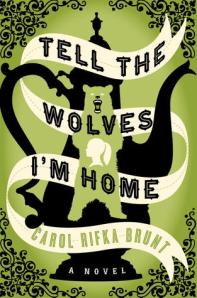
what writers are reading

we know what we like and we really like this book.

read our review then buy the book in honor of a girl you love. gr.

tell the wolves