fiction valentine 1.4

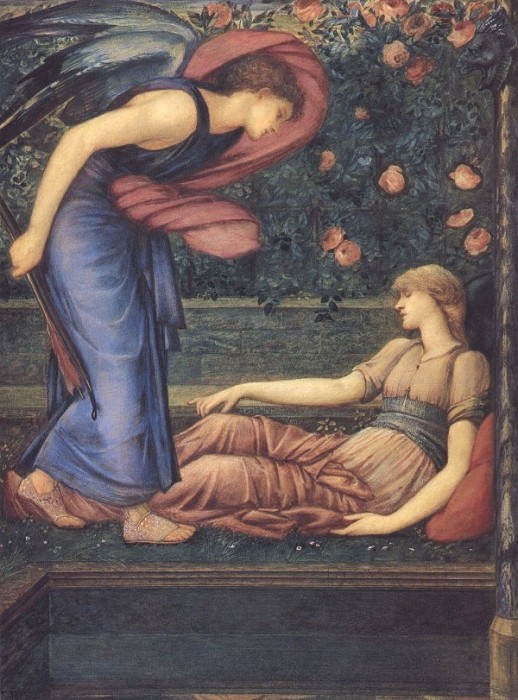
cupid-and-psyche-1867Love. It’s everywhere. Some would even venture to say that if you haven’t found it, you’re not looking.We don’t know if that’s true. We do know that sometimes fictional love is better than no love at all.

Excerpted from “Jesus, Mary, Buddha”

Over warm olives and crusty sourdough, Helen learns that Nick’s third wife parked her Range Rover at the edge of town on the banks of the Snohomish River and washed down a handful of pentobarbital with a bottle of flinty Oregon pinot gris

It was his first year of mourning and he still hated her and loved her in ways he hadn’t yet explored. “I don’t know how I can do better than that,” he told Helen one night. “I mean fucking look at her.” He gestured toward a framed photo of them on his living room mantle. “She’s gorgeous.”

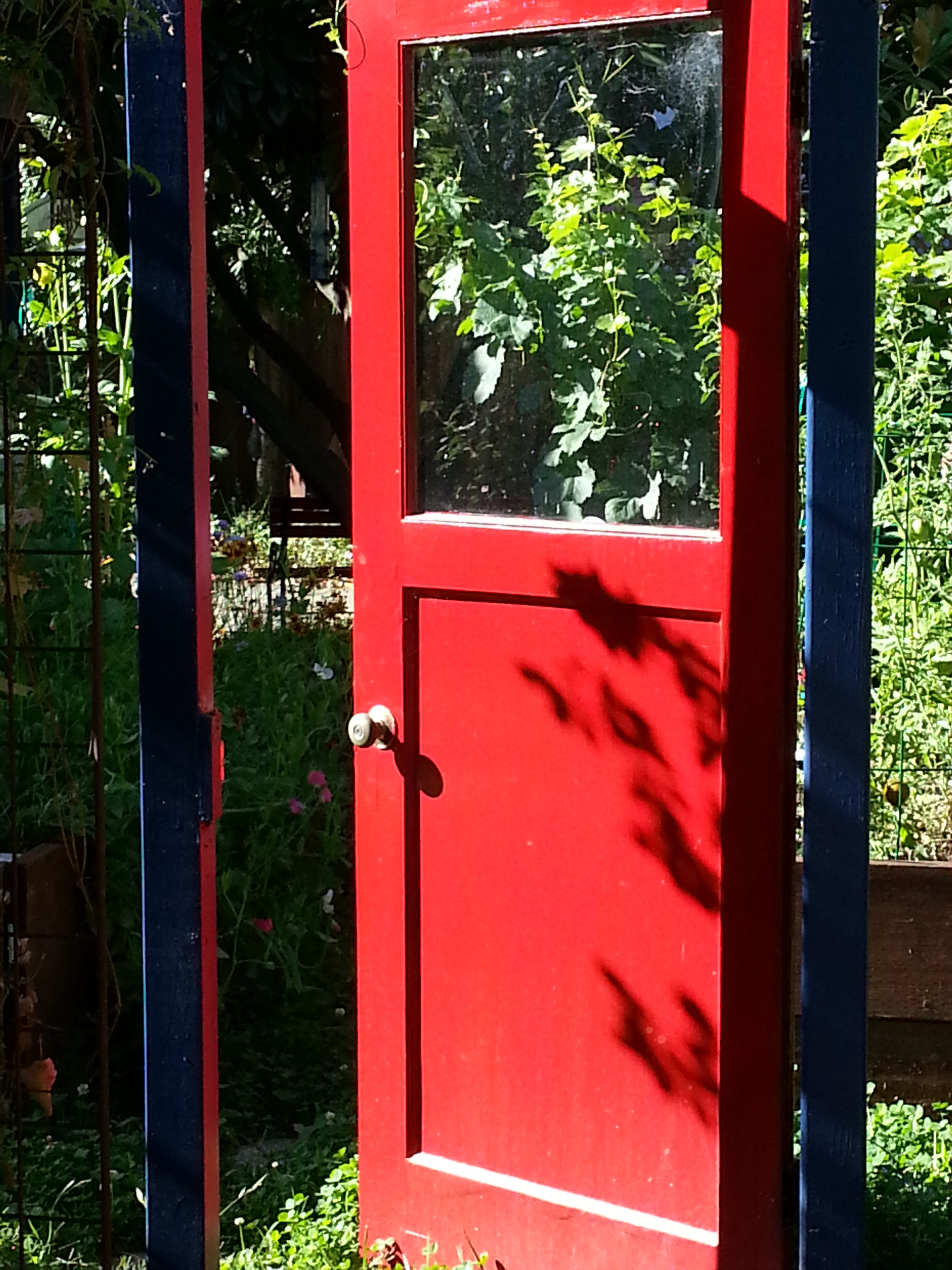
On Earth Day they up-cycle a pair of antique windows and build a table out of them. Later, they eat salmon with their fingers, straight out of his backyard smoker. After dark, they sit in deck chairs in the garden and watch shooting stars. Eight weeks into their affair, she drives home through the city streets late at night with the windows down, with air warm as a lover’s breath sliding up her arms, through her hair. The rhododendrons are in bloom. The azalea, lavender, chives, strawberries, raspberries,  pear, five kinds of apple, chestnuts. Even at 11 pm, there are couples walking, cyclists peddling down the quiet evening streets in thin cotton dresses, short sleeves. It is evident that even in the dark, they are sucking the juice out of the first days of summer, taking shy steps toward the grilling season.Through the car windows, Helen Okabe breathes in the perfume of lilac.

For his birthday she gives Nick an anatomically correct chocolate heart spiced with habanero pepper. He makes his signature clams and beer. Afterward, he builds a fire in the backyard firepit and they recline on deck chairs, watching the sky. He talks about his men’s group, about getting in touch with his feelings.

“I’ve been wondering,” he begins. “What if I’ve been sabotaging relationships my whole life?” Unlike so many middle aged men, Nick is messed up on love and he knows it. To his credit, he is actually trying to unpack that baggage.

Helen sucks an ice cube and lets the water slide down her throat. “I was just wondering that myself,” she says. She has. She has been doing her spiritual inventory and counting up the number of times that, when the going got tough, she got gone. She was up to four. It wasn’t pretty.

“I think I have intimacy issues,” he says.

“Wait,” she replies. “You said you and Reina were simpatico. You were married ten years. You renewed your vows every spring for God sake. That sounds awfully intimate to me.”

“Nah,” Nick waves the idea away. “That was only appearances. I checked out after two years, if I’m honest about it.”

Appearances, her Zen master said, not only fool, you they aren’t even real. Helen still hasn’t wrapped her head around that one.  

She offers the only solace she has, something from a piece of research she is working on. “The top five fears of most people are public speaking, followed by flying, heights, fear of the dark, and intimacy.” She counts them off on the fingers of her hand and refrains from adding that following this list, the fears continue with death, failure, rejection, spiders, commitment.

“That can’t be right,” Nick says.

“It’s from a university study,” she replies.

“I would say fear of intimacy is number one,” he continues.

“People are scared to death of intimacy. Just think what it means if you are right.”

“I am right.”

“If you are right, and I’m not saying you are, it means people would rather sleep with strangers than speak in front of a crowd of them.”

“It doesn’t mean that at all.”

“People are more afraid of emotional honesty than talking,” he says. “Look,” he says, pointing to a light moving across the night sky, “a satellite.”

It is a clear spring night and the sky is shy of clouds and the moon is new so they have space to shine. “Anyway. That’s my story, and I’m sticking with it.”

(c)

Cynthia Gregory
fiction valentine 1.1

20130627_085725

here is an except from a story I wrote called, “Not My Suicide.”  It’s about how       nothing is what it seems: not love, not time, not nature.

Some people, those who are either marginally motivated or marginally skilled, don’t manage to close the deal the first time and try again, compulsively. Psychologists say that some people go at it up to fifty times before actually making it. Strangely, you could say that one success in fifty is respectable. One hundred in-vitro attempts will statistically result in eleven babies. Edison, who was afraid of the dark, made three thousand attempts to create the light bulb before he succeeded. It’s a matter of perspective.

Finally, Viola had had enough. “Can we talk about something else?”

Marina straightened her spine, pointed toward the light fixtures overhead. “Global warming.”

Bibi choked on her biscotti. “Are you off your meds?”

Marina wagged her chin. “We’re murdering the planet.”

“Calm down.”

“Don’t mother me.”

Peace begins with me, I thought. Peace begins with me.Please, ladies.”

“She’s in denial,” Bibi insisted. “A victim of the liberal media.”

“Liberal — are you nuts?” Marina was not having it. “They’re saying that global warming is a myth, that alternative energies cost too much.”

“Geez Louise, don’t have kittens. You want an almond cookie?”

“I don’t want an effing almond cookie. I want rain forests and tree frogs and glaciers.”

“You’ve never even been to a glacier.”

Water pooled in Marina’s cerulean eyes. “Scientists in Norway are finding industrial flame retardant in whale blubber.”

“Stop.”

“It’s true. Poly-something –they use it to make furniture, clothing, computer chips.”

“How did it get in the whales?”

Marina folded Bibi’s hands in hers, squeezed lightly. “Through the water table, Beeb.”

“What? That doesn’t even make sense.”

In the ‘twelve simultaneous versions of Now’ world view, it is possible to be both dead and alive at the same time, both here and there. As if our so-called lives aren’t complicated enough.

(c)

Cynthia Gregory


what’s your number?

We like to promote ideas that heal and help. . .like figuring out what your personal number for 2014 is. . .and what it means to living a fulfilled, happy, and prosperous year. Is happiness as simple as a number? Could be. See for yourself.

figure out your personal number here

Digital Universe

the new normal

Having doubts about the whole global warming thing? Really?
It’s time to talk climate change, baby.

The conversation starts here.drought-texas

bookstore job

books. we love ’em.

get your book love on here.

Mr_Penumbras_24-Hour_Bookstore-199x300

high drama indie


THE SECRET LIFE OF WALTER MITTY

The Secret Life of Walter Mitty is the movie I longed for all year without even knowing it.  It may be my favorite movie of 2013, not because of the high drama, indie chic, nail-biting tension, or classic one-liners, but for unraveling that tight knot inside my heart that I’d been carrying so long I no longer noticed its existence.  Directed by Ben Stiller and based on a short story by James Thurber, the movie tells the story of Walter Mitty (Ben Stiller), an average guy doing a more than average job at Life Magazine, sadly on the verge of putting out its last issue.  Downsizing sucks, but that’s not Walter’s real problem.  His real problem is all those unrealized dreams that have been poking at him for years, adamant and demanding as they push to the surface, forcing him into a mini coma of a daydream.  Walter’s boss, Ted Hendricks (Adam Scott), a know-it-all nothing of a man laughs at him, not behind his back, but square in the face when this occurs.  Walter cares, but beyond daydreams of smashing Ted’s face in, does nothing.  It’s not that Walter’s a loser.  He’s any one of us who caught a bad break and once there, couldn’t make his way to a good one.

Walter’s bad break happened at 17 when his father died, forcing the former mohawk-wearing Walter had to stash his dreams to become the Man of the House for his mom and sister.  Years later, in his job as a “negative assets manager” Walter’s put out some of the greatest magazine covers the world has seen, thanks to the work of colleague and photographer Sean O’Connell (Sean Penn), without ever leaving the dark room.  O’Connell sends Walter what he calls possibly the best picture he’s ever taken for the final cover of Life as a gesture of their long productive working years together, along with a wallet engraved with Life’s motto: “To see the world, things dangerous to come to, to see behind walls, draw closer, to find each other and to feel. That is the purpose of life.” Walter is touched, but at a loss since the best picture ever, negative #25, is missing upon arrival.

When Walter’s mother, Edna (Shirley MacLaine) moves, and Walter’s sister, Odessa (Kathryn Hahn) finds Walter’s long-forgotten backpack along with a new travel journal, a long-lost present from Walter’s father, something infinitesimal shakes loose in Walter and he sets out in search of O’Connell to find what was lost — ostensibly negative #25, but we all know what Walter’s really looking for.  O’Connell proves a tough guy to find; he shoots photos of snow leopards in the Himalayas and straps himself to the tops of biplanes to get the volcano shot, all heady stuff for the risk averse Walter.  Thankfully, Walter is spurred in sideways fashion by co-worker and possible love interest, Cheryl Melhoff (Kristin Wiig), who gives Walter lift just being in the same room as he.  Soon, Walter is traversing some of the world’s most satisfyingly brilliant places while Life’s motto is displayed in snippets across the backdrop.  When Walter does find O’Connell, it’s worth the wait. “Beautiful things don’t seek attention,” O’Connell says as he watches the snow leopard.

In today’s world of reality T.V. and endless soundbites where everyone jockeys for attention, I need to believe O’Connell.  See this movie if you feel stuck.  See this movie if you have been toying with the idea of stepping outside preconceived notions of yourself.  See this movie if you want the world as your backdrop to expanding horizons, or if you just want to revel in the wonder of an ordinary person doing extraordinary things even if no one sees him doing them.  See this movie.

–Pam Lazos

orange you glad

orange rugJournal THAT

a guide to writing

Cynthia Gregory

The beauty of the journaling process is that it can be simple or it can be complex in a way that reveals itself as a personal, daily, moment-by-moment choice. What enriches the journaling experience (if you’re willing), is variety, is texture.

Imagine eating the same salad every day of your life. You can argue that rich, leafy greens provide minerals and nutrients essential to optimum health. You can also argue that periodically a bowl of thick, smooth, mocha fudge ripple ice cream has the capacity to transport you to your happy place, to a time when summer afternoons sprawled under the shade of a leafy maple counting squirrels in the branches above was the most important assignment of the day. Variety. Texture. Sometimes the best you can do is bolt down a protein bar on the run. Other times, you want to immerse yourself in the sensual, primitive pleasure of a feast of market fresh produce, a plate of pasta cooked perfectly al dente and smothered in an aromatic sauce of eggplant and basil and roasted peppers.

Sometimes your journal is where you lock in and unload your thoughts of the day, the dramas of your life, your hopes for your lover, your future, your Self. Sometimes your journal is a train and each entry is a station. Sometimes the station is the destination, sometimes it’s the jumping off place, the place where adventure begins. Neither place is superior to the other, it is enough that they are what they are. However, this journaling assignment is about the jumping off place, about getting to the end of everything you know, standing poised on the edge with your toes hanging over, a yawning expanse of never­ been-there-but-open-to-the-possibility. This is the station where you disembark the train and immediately jump into a waiting cab and vanish into the landscape.

This drill can be accomplished using any number of ordinary household items, a hammer, a clothes pin, a plum, or in this case; an orange. Choose any orange you like; choose a sweet as candy Clementine, sometime that rests in the palm of your hand like a tiny jeweled box. Or select a bouncy navel with its nubby button and thick peel. A secretive blood orange, interior cloaked in a plain wrapper. Don’t agonize over the choice; one is as good as the other. Remember, this isn’t about the orange. The orange is only the station platform, the way in.

Remember before, when I suggested that you enter a room and stay there until you’ve achieved the mission of full emotional disclosure? Of going to that place where you blink into the darkness, open your ears to the music of the silence, of letting the air move over the surface of your skin and registering the sensation with words on a page? This is more of that. It is probably easier to make this a timed writing, because the level of difficulty might otherwise persuade you to pitch in the towel long before you get to the juicy bits, the place where you discover something new. With a timed writing, you are not focused so much on the content of the writing, as in the endurance of the time.

A funny thing happens with the timed writing exercise. Generally, you take off with great alacrity, writing everything you know about a subject. Interestingly however, if the time is of a challenging length, the writer finds that she runs out of known material in a relatively short period of time. She finds she has a surplus of minutes, and a surfeit of words. How does this happen? It is a trick of the mind. No matter, this is where it gets interesting.

Find a quiet place to write, free of distraction. Set a timer and begin. First, pick up your orange, close your eyes and inhale its tart-sweet fragrance. Really smell it. Roll it over the skin of your throat, across your chest. Toss it from one hand to the other, examine the surface of the peel, each dimple, every blemish. Experience the orange with your senses as fully as possible, then set it down nearby and begin to write. You may begin with a literal description, and you may actually get a paragraph or two from the physical presence of the fruit, the weight of it. Then what? Then we meet the cousins of “reality” namely imagination, and memory, we are about to move beyond what is and approach what if.

Here are possible ways to go from here. Write about:

  • Your first memory of citrus fruit
  • The girl you knew who smelled like orange blossoms
  • The texture of the creamy white pith beneath your fingernails when you peel it
  • the camping trip you took where after three hours of steady hiking you stopped by a creek and tore the flesh of a tangerine and drank the pulpy juice with absolute gratitude for the miracle of orange-ness the way the skin split, revealing the color of a ripe sunset on a honeymoon cruise and dancing under a full moon and the feel of sin on skin, of succulent, sweet juice dripping down your chin at dawn

You see -it’s not really about the orange. At least, not necessarily so. The orange is a trigger; it is the beginning place that has the power to transport you to another time and place for the duration of whatever time you establish at the beginning of the writing.

It’s important in a timed writing to stick with the intended time. If you establish a fifteen or twenty minute limit, stick with it. If you find you run out of preconceived ideas of what you think you should be writing about, stick with it. Let go of the idea that you choose the words to commit to the page. Let the words choose you. Let the idea pick you up and shake you loose of everything you thought it should be. When you come to the place where your treasure chest of “good” ideas is empty, be patient. Be calm. Wait. Let the ideas float into your mind and don’t judge them, don’t try to shape them. Write them down. Let the ideas flow and allow the gentle waves of the stream of consciousness lap gently at the shores of your mind. This is the place where new ideas are birthed. This is the place where imagination and memory merge, form something new, and your job is to write it down. It sounds simple; it is. It sounds difficult; it is not. All you have to do is be willing to let your subject: the orange, the plum, the paper clip -reveal a story to you, and then your job is to introduce it to your journal.

enlightenment isn’t for sissies

We are bundles of juicy, ecstatic, razor-sharp, and potent feelings.

And we could stuff all that power behind a blush, but where’s the fun in that?

sirensRead all about it. Here.