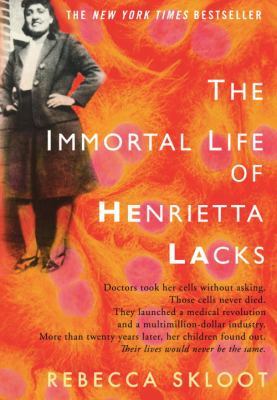
Fiction is a beautiful way to stick a finger in the eye of complacency, don’t you think? In a debut novel that is both funny and disturbing, Stephan Eirik Clark jumps feet first into a pool of what might be satire, taking a lingering look at how, as consumers of unnatural “food,” we might unintentionally be the makers of our own undoing. Is it possible? Is industrial food safe? Or is it just funny?
Category Archives: health
tote your own bag
Living green can be an intensely personal decision. . .or it can gain such momentum socially that it actually moves into legislation. The state of California is considering oulawing plastic bags. It’s become a status symbol to be seen toting your own canvas or other upcycled bag into the store, and why not? As consumers we have the choice to affect not just our own small corner of the world, but the entire planet. Is that hubris? It is what it is.
The Sedentaries
Get On Up
Something’s been happening and I couldn’t figure out whether it was systemic or localized until now. I call it weight creep, as if putting a label on it makes it easier to deal with, even when I know that ’s not the case. Rather, by putting a label on it, I’ve made an enemy, and the enemy is known as “desk butt”.
First it was baby fat, as in “she still hasn’t lost her baby fat.” Of course, chubby legs at 10-years old can no longer be considered baby fat, but I played along. When I joined the swim team, exercising hard three hours a days, that “baby fat” dropped away, replaced by smooth, supple muscles. Then came college and since I was no longer on the swim team, the “Freshman 15” was my reward. Nothing spurs on a midnight chip and dip run like attending a frat party with lots of beer and no food. It’s a perfect storm of bad carbs, and if the beer doesn’t give you a hangover, the double dose of fat from the chips and dip will. But I knew how to exercise this time around, knew the merits of an elevated heart rate, so I started running and playing squash and by Sophomore year, I self-corrected.
Fast forward to my first desk job. I lived in Philadelphia so I walked to work. I was a paralegal in a law office and I sat practically all day, but I walked the office a lot, too — the file room, the break room, the bathroom, various offices of lawyers with whom I needed to speak. Plus I swam a mile before I got to work and usually rode my bike for an hour after work unless it was too cold. Nothing but exercise at every available opportunity which meant no weight creep in my twenties. Sweet right?
Fast forward to marriage. I moved to Central PA in my thirties, but still worked in Philadelphia, a two-hour commute. Now I’m training it into work every day rather than training at the gym and struggling to get a work out in. Those were the hard times, but after a year, my workplace started a flexiplace program that allowed me to work at home a day a week and suddenly exercise was back on the menu. Then the baby came and the baby weight, but since I was exercising and nursing, it came off again. Ah, the miracle of the human body.
Except for now. Thirteen years later, I am still exercising, eating plenty of salads and walking from the train to work (a shorter walk, but still a walk), and guess what? The magic is gone. The weight doesn’t leave with an extra bike ride or a missed meal. It stays and stays, socking itself in for a perpetual winter, as if in preparation for the apocalypse. Rations will be low…. Not everyone will survive….
I’m part of a growing epidemic of office workers who are simply “Sedentaries” (not a noun or even a word, but it should be!) which is what I’ve taken to calling people who sit all day long and who are experiencing the same weight creep or desk butt that I am. We humans spend more time sitting these days than we do sleeping. I typically sleep 6 to 8 hours a night. My work day starts at 6:45 a.m. with a 10-minute drive to the train followed by a 1.5-hour train ride. I walk 15 minutes from the train to work, and sit for up to 8 or 9 hours once I get there with a 30-minute walk at lunch if I’m lucky. Most of the time at work is spent in front of a computer, about 7 hours in the sitting column minus the walk at lunch and the walking around the office. When I get home, I sit in front of the computer working on the project de jure for a couple hours, maybe watching a little T.V., and voila! I’m sitting way more than I’m walking, standing and sleeping combined. While most days I get an hour of cardio at the gym, experts say it’s not enough to right the wrongs of sustained sitting.
Here’s why. You’re sitting, you’re sitting, you’re sitting, and your glutes (gluteus maximus, gluteus medius and gluteus minimus) and hamstrings are being stretched like a rubber band while your hip flexors are shortened. Think of how a rubber band looses elasticity if it’s under a constant stretch and how inflexible your muscles become when you don’t stretch them. Your breathing becomes shallow, and overall, your muscles become weaker, softer, lesser. Health problems could include obesity, high blood pressure, high cholesterol, loss of flexibility, heart disease, etc. and as a result, you begin a slow, at first unnoticeable creep toward the next pants size while in a show of solidarity, the rest of your body takes on a jello-like appearance.
Do you want to avoid your muscles’ slow death march into uselessness? If your answer is “heck, yeah,” then moving around, rather than a trip to the gym is the key not only to a normal weight, but to a longer life, and obesity expert, Dr. James Levine has the research to prove it. Studies show that lean people move around more. They find and utilize walking opportunities; they stretch; they fidget. (Yes, fidgeting will keep your weight down!). So, like James Brown, you gotta Get On Up — from your chair, the couch, your desk, the car, whatever — and move around, get your heart rate going, and start the electrical conductivity that pulses through your body when you do. I’m not even advocating high-end exercise to beat this condition, although it certainly will help. Just to be clear, I am in no way advising you to ditch your gym membership. (I go almost every day.) I am simply iterating that the gym alone is not enough and advocating against sedentariness as a way of life.
Here are 10 ideas to get you moving that won’t require a radical life-style change:
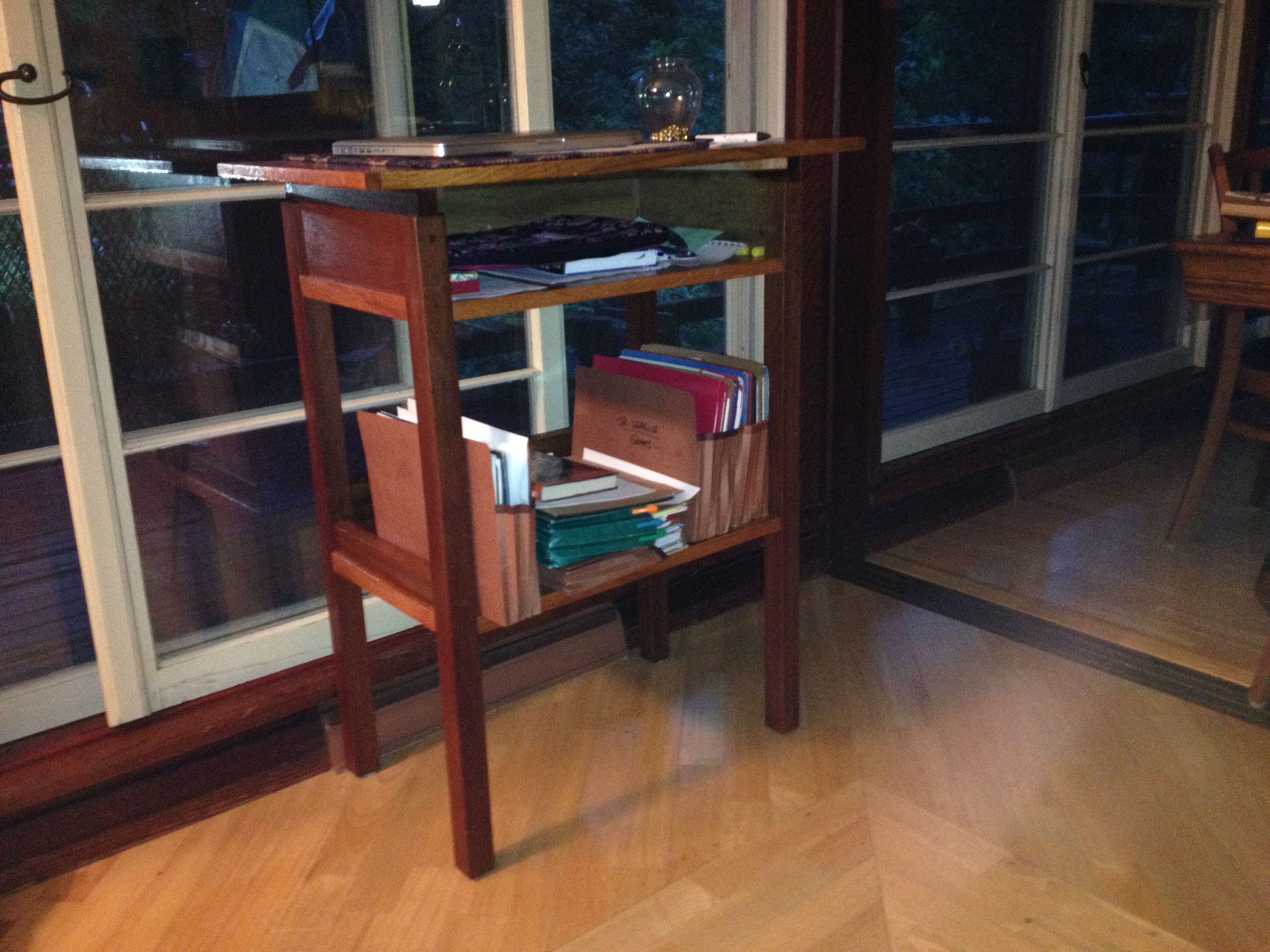
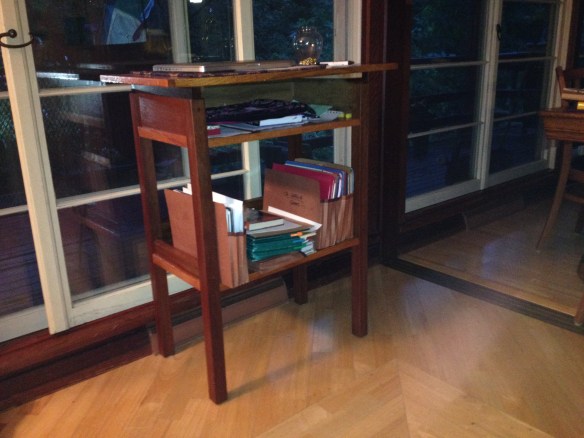
1. Make or build a standing desk or create some version of it. My father-in-law built me one. It’s fantastic. It has a little shelf to put paper and pens in, and another one below where I can stack my files. I put the desk in front of the window so I could look outside. Sometimes I do squats while I’m standing there. Or leg raises. Or yoga stretches. It’s awesome.
2. Take the stairs whenever possible — at home, at work, at the mall. There’s a reason the Stair Master was so popular. So get climbing.
3. Walk the floors every hour. Maybe practice the Ministry of the Silly Walk (you Monty Python fans know what I’m talking about). Use your phone or computer and set an alarm to get up regularly from your desk and do a loop around the office. Working from home? Even better. Loop the yard, go pick up the mail, take the dog out and circumnavigate the driveway.
4. Get up and stretch. After too much time, your butt conforms to the shape of your chair, and no matter how high end or ergonomically correct, it’s still a chair and your butt should not look like it. Go to yoga after work or practice in your home before you leave for work.
5. Get an ergonomically correct chair and adjust it to lean back slightly rather than forward. The forward hunch shortens all the muscles in your stomach and hip flexors while the backward lean works the abs, so work it baby!
6. Start a salsa (or whatever) club and meet during lunch. Where I work in Philadelphia, there is a dance party every day at noon in LOVE Park. They have a little stage, and an area dedicated to dancing, and a microphone and speakers, a little canopy area where the DJ or band stands, the whole shebang. A whole crowd of people get out there and line dance. It’s awesome, dozens of people, shaking their booty at lunch.
7. Chair dance. When I was a baby lawyer, I worked in an overcrowded, out-dated office with a view of Billy Penn at the top of City Hall in Philadelphia. Because we had more lawyers than offices, we had to double up, which means I had an office mate, and every afternoon, before the 3 o’clock slump set in, we stopped what we were doing, stood on our chairs and danced for a few minutes. Because the chairs had wheels, and rocked somewhat, it took a good deal of balance to stay up. Plus the bonus ab work we got from laughing so hard made it a win-win.
8. Flap. Want to know what the profession is with the longest shelf-life? Music conductors. Yep. The guys who stand in front of an orchestra. There’s something about all that arm-flapping that’s good for your heart. So even if you don’t have a 20-piece band in front of you, start flapping.
9. Drop and give me twenty. When was the last time you did 20 pushups? Not only is it good for your heart, abs and arm strength, you’re moving again.
10. Take a walk after dinner. Probably my all-time fav, the after dinner walk is like a digestif. Not only does it aid digestion, it puts closure on the meal and the day, allows you an opportunity to take in the sights and smells of the natural world, and gives you some extra time to talk to your family or friends. So grab your spouse, your kid, a friend, the dog, whoever, and take a walk!
Pam Lazos 7.28.14
Summer Solstice Reboot
Here Comes the Sun
For years, people prayed to the sun, thinking it was an actual God and the source of their abundance. Without the sun, earth was a dark and dismal place. Witness the endless winter caused by Demeter, the goddess of agriculture, who withdrew her gifts from the earth because her daughter, Persephone was imprisoned underground with Hades, god of the underworld. Clearly, winter wasn’t all Demeter’s doing. Apollo, the sun god of the Ancient Greeks, the bringer of light to the earth and the one who told Demeter about Hades’ kidnapping of Persephone, had to be involved. Without him, crops didn’t ripen and the earth didn’t warm. While Apollo still took to the skies every winter morning, his solar beneficence waned on those dark days as he streaked across in his gilded, horse-drawn chariot. Sometimes circumstantial evidence is all you have. READ MORE HERE…
bee mine
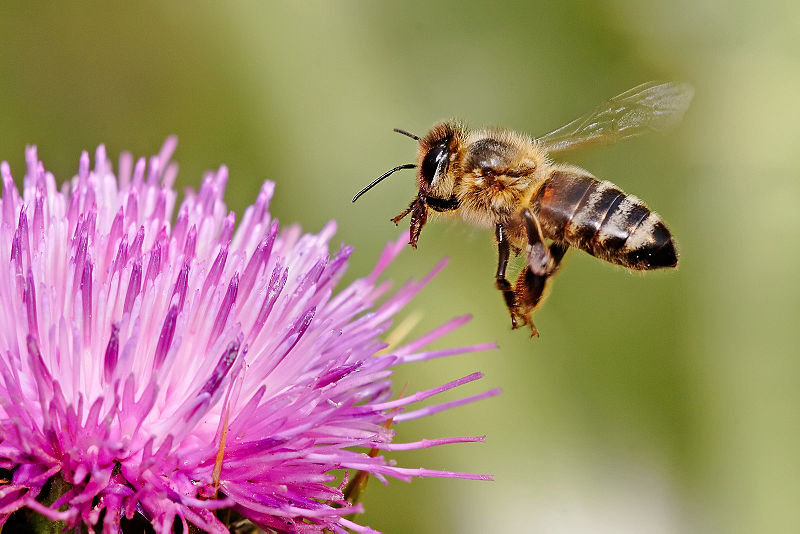
At the end of the day, we’re not powerless, we are powerful, but we have to do our individual and collective parts. Write your congressman, your local city council (hey, if San Francisco can ban the sale of plastic water bottles on public property, what can your city do?), anyone who will listen, and ask them to focus their resources on this VIP issue. When planting your garden, use bee-friendly vegetation. Plant native flowers, keep flowers blooming all spring and summer by planting a variety that work their way through the seasons, skip hybridized plants that don’t seed because they produce less pollen, and for Godsakes, skip the pesticides. Your grandchildren will thank you, and so will your friends, the bees. READ MORE HERE
lajfdljdsflajsdf;laksdjf
Bee Serious
And Then There Were None
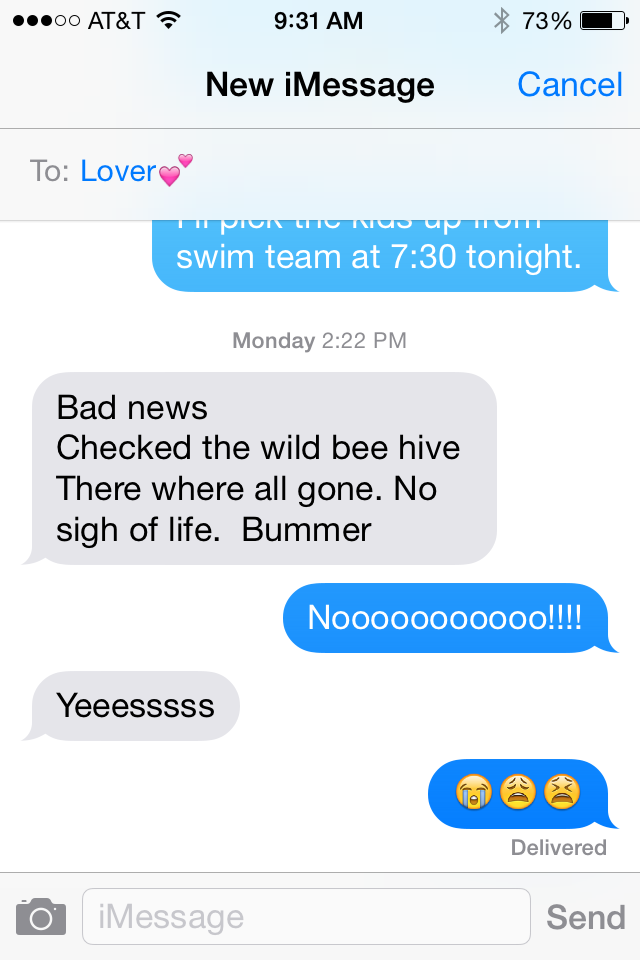
A recent text conversation between my husband and I went something like this:
First of all, ignore the typos. I blame the smartphone. It gets a little too involved. Second, there were not enough of those little crying emoticon thingees to portray the appropriate degree of sadness, despair, and outright terror I felt about the bee situation. The honey bees, our fuzzy four-winged friends responsible for pollination of about 70% of the foods we eat are dying by degrees and we, seemingly, are powerless to stop it. The story with the wild honeybees is this: READ MORE HERE…
earth day (e)
Ten Things to Help SAVE THE PLANET
It’s Earth Day, and you know what that means — Mom’s Birthday! Not your biological mother, but the Mother of Us All. Since it’s a holiday, we won’t dwell on all the intractable environmental problems that could potentially derail us as a species. We’ll save that discussion for another day. Instead, as a tribute to Mother Earth in all her, well, earthiness, here are ten things you can do to assure She makes it to Her next birthday and a few million after that.
1. Think globally. Act locally.
2. Eat organic.
3. Conserve water, and drink more water, too.
4. Walk more. Bike more. Drive less.
5. Plant a tree or a pesticide-free garden (but not a rose garden; too much fertilizer).
6. Sing. Yes, believe it or not. The planet is made up of sound so show your appreciation and join in Her song.
7. Become consciously aware. Every moment spent rooted in the present is one more you won’t miss. Enjoy it to the fullest.
8. Buy products that have a smaller environmental and carbon footprint, i.e. it’s okay if you can’t afford a Prius. Start small. Buying food sans excessive packaging that would end up in a landfill is perhaps just as important.
9. Reduce, reuse, recycle. Not just bottles and cans, but clothes, shoes, appliances, electronics, whatever you can.
10. Most importantly — vote with your wallet. As consumers, we hold tremendous sway over the products appearing on the shelves in our local markets. If you don’t like them, don’t buy them. And if you really don’t like them, vote with your feet and walk to another store!
Over the next few months we’ll talk more about these things individually, but for now, Happy Earth Day.
Pam Lazos
4.22.14
earth day (c)
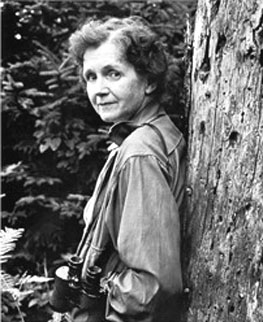
Throughout time, godparents have been an important, often undervalued resource in the raising of children, providing nurturing counsel and emotional sustenance to their charges. Maybe they didn’t grow us, but they provided strength, love, and an alternative point of view, the ally in our evolutionary corner, always ready to step in when needed. Even the Mother of us All could benefit from having one. Lucky for Her then that there was Rachel Carson, and lucky for us.
If Edward Abbey was the godfather of the modern environmental movement, then Rachel Carson was the godmother. When she penned Silent Spring, first published in 1962, Carson probably had no idea that it would be one of the most influential books of the modern environmental movement. Read More Here…
coming up for air
Close your eyes. Take a deep, slow breath. Feel your lungs swell with air. Notice how your chest expands gently and as you exhale, sense the relaxation of your body. Your lungs pump oxygen into the bloodstream, which flows faithfully throughout the body and when that sweet rush of oxygen reaches the brain, you are instantly calmer, more relaxed. Most days, we don’t think about the breath. And still, a breath, consciously observed, has the power to regulate the temperature of the body. It brings clarity of the mind. It releases tension, It quiets the ego. Some would even say that it is not you or me doing the breathing, but the act of taking in and releasing air, is God breathing Us.
THE WOOD FOR THE TREES (2)
Some of the oldest living organisms on earth are trees. Giant sequoias, for example, can live as long as 2,500 years while some bristlecone pines can live up to 5,000 years. The numbers vary, but let’s just say for simplicity’s sake that a mature tree, i.e., older than a mid-range teenager, consumes about 48 lbs of CO2/yr. (Some accounts are much higher for you skeptics.) The key to this is mature since a prepubescent tree simply doesn’t carry its weight. It’s simple math. CO2 in, oxygen out, but cut 18 million acres off the face of the earth and the numbers skew, the math gets wonky. Saplings start out perky enough, sucking in a bit of CO2, letting out a bit of oxygen, a tree’s waste product (who said it wasn’t a symbiotic world), but it’s not until the tree reaches 100 or 125 that it really hits its stride, exhaling wads of the life-giving stuff each year, chowing down on carbon dioxide like it was candy. The fact is, older trees outperform younger trees by an incredibly wide margin and the older the tree, the more CO2 it can take in because this is one instance where size does matter. So while it’s all cool and hip to plant a tree every time you cut one down, don’t expect the payoff to be that meaningful for awhile. (Please don’t read this and have your take away message be that we shouldn’t be planting trees. We absolutely should and must be, but keep in mind the delayed rate of return.)
Only about half of the world’s tropical forests are still standing. While trees as a whole give the world a great big oxygen boost, the destruction of the same trees to make way for crops — think slash and burn of swaths — doesn’t just deprive us of that oxygen, but contributes to greenhouse gasses because: a) we’re burning them, and b) they’re releasing the carbon they were holding. All tolled, it’s somewhere in the range of a 12-17% carbon increase. Something else trees do is hold water in their roots and then slowly release it into the atmosphere, contributing to the amount of water vapor in the air much like your houseplants release moisture into your home during the dry winter. Amazingly, in the Amazon Basin, about half of the water in the ecosystem is held within the plant life. Without trees, we have deserts.
The writer Aldous Huxley said facts don’t cease to exist simply because we ignore them. About 18 million acres of forest are lost each year to logging for firewood, or pulp and paper, for raising beef cattle, and for growing cash rich crops such as soy, palm oil, and coffee, the latter three of which leave behind poor soil conditions since none of their root systems holds the ground well. All of this results in increased erosion, flooding and a decline in local water quality due to runoff. It takes about 2,000 gallons of water to raise a single pound of beef plus acres of cleared forests to make way for pastureland. Beef is neither ecologically nor agriculturally efficient, and too much is bad for your heart, so why are we eating so much? (Notice I didn’t say “it”, but “much.”) Should we continue cutting down old growth forests to make amazingly beautiful furniture, continue to eat large quantities of beef, continue to grow crops such as soy or palm oil (not the good fat, BTW) to use in our unending supply of processed foods, shampoos (sodium laureth sulfate and stearic acid are derived from palm oil), and cleaning products, continue to log forests for paper, and sadly, firewood, or should we check ourselves and stop living in what is probably the most unsustainable manner since the ruling class of ancient Rome, unless you’re a Kardashian or had a hand in constructing just about anything in Dubai. Shall we ignore the facts?
Approximately 70% of the world’s species, plants and animals alike, live in forests. What happens to those species when the forests are all gone. I think it’s more than speculation to say they’ll go the way of the dinosaur and man as a species will be right behind them. Where I live in Central Pennsylvania, the richest unirrigated farmland in the country is being plowed under for brand new, upper-end housing developments. We all need a place to live, yes, but couldn’t it be a revitalized brownfield instead of the rich, fertile farmland that gave my part of the world its acclaim? I wonder about all the critters living in and around the edges of those farm fields, in the small patches of woods, in the little nooks and crannies and burrows. Where will those little guys go when the tractors arrive? It’s not like they can call a realtor and get a trade-in on read the rest here