we are pleased to announce that the third Six Sisters novella,
Quality of Light, is now available. So, what are you waiting for?
buy the book::support the arts!
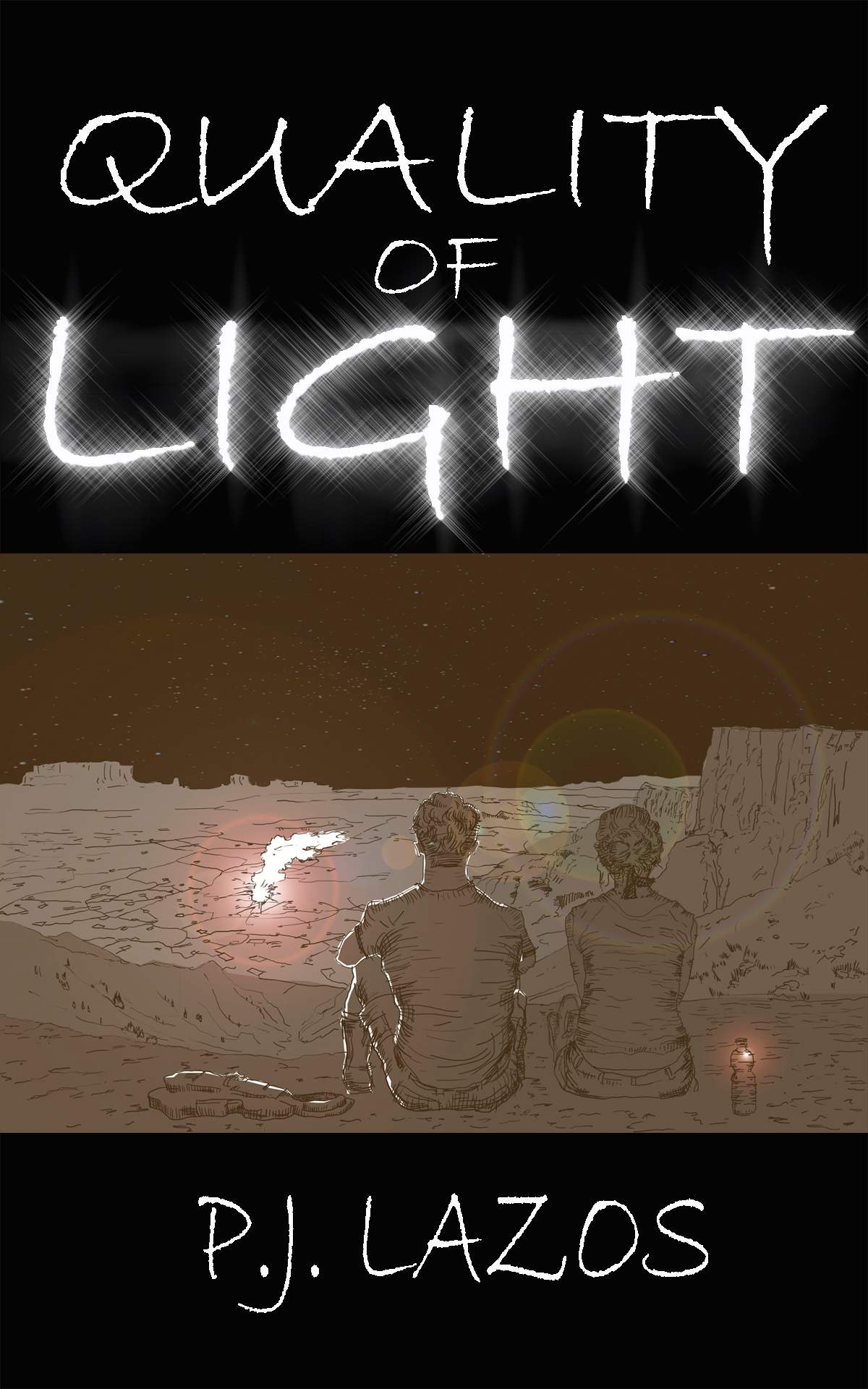

we are pleased to announce that the third Six Sisters novella,
Quality of Light, is now available. So, what are you waiting for?
buy the book::support the arts!
 OIL IN WATER
Pam Lazos
Chapter Eighty
Robbie sat on a small reed mat on the ground, his back propped against the base of a date palm tree. He ate a handful of dates and took small sips of water from a plastic Evian bottle. The sun scorched the earth almost everywhere else in this Godforsaken country, but right here in the Al Hawizeh Marshes life was lush and fecund, the river teeming with otter and minnows, and date palms lining the banks. An auger lay next to him and a cylindrical shaped mass of soil next to the auger.
Robbie analyzed the soil column against the Munsell Soil Color Chart and noted the lengths of the A, O and C horizons indicative of a hydric soil in his book. He squinted against the harsh sun and scanned the horizon.
Something small and swift approached, a mashuf with a single occupant, poling the boat through the marsh water: plant, pull, plant, pull, no struggle, no rush, just a sense of purpose with each movement. A light breeze blew across Robbie’s face and he raised his nose to sniff the air. The figure was closer now and he stood to get a better look. A woman. She didn’t wear the abayas, the traditional black head-to-toe coverings of the Iraqi women, but the garb of a western university student: jeans and a t-shirt. He hesitated a moment before sitting back down. The way the military came through this place, one could never be too careful. But the military wouldn’t send a civilian or even an officer out of uniform to arrest him. It was probably somebody from Eden Again coming to help him take soil samples.
He popped another date in his mouth and waited as the boat drew closer. If this country had taught him anything, it was patience. Out here, life had made peace with time. But the truth was, here, like everywhere else, time was running out.
The sun cast a glare on the water making it impossible to see the woman’s face as she alighted onto the shore. She towed the mashuf another two feet out of the water so it wouldn’t drift away and Robbie thought he should stand or call out, offer a greeting of some sort, but his arms and legs felt weighted to the ground and his voice a sorry deserter. The woman walked right over to Robbie as if she’d known him forever, as if she’d known he’d be sitting under a date palm tree in the middle of the Al Hawizeh Marshes, eating flat bread and hard cheese, waiting.
He held his hand up to shield his eyes from the sun. Within a foot of him, her silhouette eclipsed those rays and he was able to make out her features. The vision made him choke.
“What are you doing here?” Robbie asked. “I thought you were…”
Ruth raised her hand to silence him. “We don’t need to say the “D” word, Robbie. It’s so… inconsequential. I mean, compared to other things.” Confusion swept across Robbie’s face like a push broom, leaving ragged trails its wake. He started to wheeze. Ruth grabbed his bottle of Evian and handed it to him.
“Are you all right?” Robbie took a long drink from the bottle and rubbed his eyes.
“You look wonderful, baby,” Ruth said. “Could it be this work agrees with you?” She knelt down and touched his cheek. He flinched. She drew him in, wrapping one arm around his neck and patting his back with the other, just like she used to when he was little.
For the next few minutes, Robbie cried: tears of grief and joy, long lodged in his heart and big as dates; tears that carried the sum total of his collective heartache, and of the absolute terror he’d felt every day since his plane touched down in this dry wasteland that only the last few weeks in the marshes had helped to dissipate; tears that every child saves up, be it minutes or weeks or lifetimes, to drop in their mother’s lap because only she knows how to dry them. Had he channeled those tears, Robbie could have re-hydrated the entirety of the Central and Al Hammar Marshes. Instead he stopped, dried his eyes and look into his mother’s eyes.
“Better?” Ruth asked.
Robbie nodded, took a deep breath. Ruth pushed back his hair and cupped his cheek in her hand. A small splash indicated of a school of minnows nearby and Robbie turned toward the noise. The midday sun sat high in a cloudless sky, unblinking, unmerciful and most undervalued. Robbie pulled the turban down to his eyebrows and mopped the sweat on his brow before its saltiness stung his eyes.
“What a completely underused resource,” he said, looking up at the sun.
“With that kind of solar energy, Dad could have powered the world.” Robbie kicked the dirt with the toe of his sandal. “It’s not fair. None of it.”
“Mind if I ask . . .what happened?”
“You mean to me and Dad?” Ruth said. Robbie nodded.
Ruth searched his face before responding. “Does it matter? If you knew, you’d want to do something about it and there’s really nothing you can do. We think we’re in control. We strive and struggle and build our little empires to assure our safe passage. But life wrenches control from us every time.” Ruth stood up to face her son.
Robbie shrugged, picked up a spade and plunged it into the moist, fecund ground. Ruth watched as he dug a small hole.
“Six months ago, this dirt was dry as the Sahara. We did this. The Americans. By getting rid of Saddam, some of these people got their water back. A few anyway.” He dropped the spade and picked up the auger. “So it couldn’t have all been for nothing, right?” He twisted the auger back and forth, pushing it deeper and deeper into the ground.
Ruth shrugged. “On its face, nothing is good or bad. It just is.
“That’s not what you used to say.”
“I used to not be as smart as I am now,” Ruth said. “You can only do what feels right for you here.” She placed her hand over his heart. “And let the other guy do what feels right for him. Wouldn’t it be funny if at the end we discovered it wasn’t one religion or political ideology over another, but the simple acts of tolerance and forgiveness that were the most important?”
She pulled Robbie to her, wrapped him in a bear hug. “The only constant in life is change, Robbie. Have the wherewithal to go with the flow.” Ruth waved her hand over the flowing, abundant marshes. “I suspect you might learn a great deal about it here.” She smiled, then turned and walked to the mashuf.
“Amara’s pregnant!”
Ruth nodded. “I know.”
“Don’t leave, Mom.” Robbie dropped the auger and ran after her. “I don’t know what I’m doing.”
“Of course you do.”
“No. Honest.”
Ruth smiled and pulled him in for another hug, this one soft and gentle. She smoothed back his hair and wiped the tears that fell from clenched eyelids.
“Not all who hesitate are lost,” Ruth said.
“Tolkien?”
“Joseph Campbell.”
Robbie drew a deep breath. “That’s nice, Mom, but it doesn’t really help me. Just tell me what to do.”
“And deny you the opportunity of figuring it out?” Ruth said. “No way.” She kissed Robbie’s cheek. “You have lots to do. And your siblings need you. Especially Gil. His road will be difficult.” Ruth picked up the pole and pushed the mashuf back into the water. “He doesn’t even know yet what he’s being asked to bring forth into this world. But he’ll need your support and protection to do it.” Ruth climbed into the mashuf and held it steady on the shore with the pole. “There’s nothing else to tell.”
“What if I need to talk to you. How will I do that?”
“Robbie… my first born.” Ruth’s eyes locked with his; Robbie could have held the moment forever. “I’m as close as your next thought.” She blew him a kiss and pushed off the shore.
Robbie watched her turn the mashuf around and pole away. He waved until she melded into the horizon.
➣➣➣
Robbie returned to the auger, pulled it out of the ground and laid it down carefully. He released half a cylinder’s worth of soil, making sure to keep the column intact and went back to the hole for another half, sniffling all the while.
“What’s the matter?” Gil asked.
A startled Robbie jumped and held the auger forth as a weapon. “Jesus. First Mom, now you. What the hell’s going on today? You’re not dead, are you?”
Gil shrugged. “I don’t know. I don’t think so.”
Robbie looked at the water, but there was no canoe. “How d’you get here?”
Gil nodded in the opposite direction.
“But that’s the desert!” They both looked toward the desert as if waiting for some mode of transportation to materialize. When he turned back, Robbie noticed Gil’s sling. “What happened?”
Gil shrugged. “I came to tell you we’re okay. It was scary for awhile, but it’s over.”
“What are you talking about, Gil? Talk in English.”
“Maybe I shouldn’t go into it now.” Gil looked around, surveying the area. “I mean, you might have some problems of your own.”
“Thanks a lot.”
“You’ll be okay though. I know it. Call us when you get in trouble. You know. When they catch you. I’ve recruited some outside help. A trouble shooter…”
“Mom said…”
“You talked to Mom, too, huh? I’m not totally sure what she was saying. Something about choices…
“Do you need me to come home?”
“I want you to come home. But I don’t want it to be like a Frank Capra movie with you going Jimmy Stewart on us. I’m no Clarence, you know.”
Robbie couldn’t suppress the smile. “I don’t know if it’s the time I’ve been away, but it seems I may have lost the ability to interpret whatever the heck it is your saying.”
“I know.” Gil toed the marshy soil with his foot. “Can you come home when you’re done?”
Robbie took off his turban and stuck it on Gil’s head. “First thing. I promise.”
➣➣➣
Amara watched Robbie sleeping in the stern of the mashuf. In the time he’d been in Iraq his skin had turned a deep golden brown, weathered by sun and wind, a fact that probably saved his life on more than one occasion. That he looked like one of the Ma’adan when wearing the traditional robes and head scarf, and that he’d mastered the language in his short time here had helped him escape unnoticed from the various American and British troops that periodically patrolled the area. Amara knew his life was in danger. She had no doubt that he’d be subject to a court martial and forced to stand trial for going AWOL, or worse, letting the army think he was dead. And so she brought him here among her people, her father’s people, these people who governed by consensus, people who the Americans and Europeans considered lawless, people who desperately needed Amara’s and Robbie’s help before they were wiped off the face of the planet. Robbie murmured something in his sleep and Amara pushed at him with her toes. He mumbled again, opened his eyes and looked at her blankly.
“Huh?”
“Such the dreamer you are,” Amara said and tugged at Robbie’s head scarf. You were talking in your sleep.” She tossed a canteen to him. “Drink. For I think you must be stroked by the sun.” Robbie said nothing, just smiled and took a long drink from the canteen.
“Thank you,” he said, handing it back to her.
“What were you dreaming about?” Amara asked.
Robbie stared blankly at her for several seconds. “I honestly don’t remember. But somehow I feel…better.”
“Then it was a good dream.”
“God be praised,” said Sayyid. “Our dreams are how we navigate the course of our lives. A good dream signals that you are following God’s path for you, and He is pleased.”
Robbie smiled and raised his head to see where they were going. “How about I drive for awhile, Uncle?” Robbie said.
Sayyid nodded and handed off the pole. Robbie took his place at the stern.
to be continued. . .
read backwards starting here
(c) 2013
We love the offbeat and unusual. . .especially where it concerns first novels.
Read this book! Support the Arts!
 Love. It’s everywhere. Some would even venture to say that if you haven’t found it, you’re not looking.We don’t know if that’s true. We do know that sometimes fictional love is better than no love at all.
Excerpted from “Jesus, Mary, Buddha”
Over warm olives and crusty sourdough, Helen learns that Nick’s third wife parked her Range Rover at the edge of town on the banks of the Snohomish River and washed down a handful of pentobarbital with a bottle of flinty Oregon pinot gris.
It was his first year of mourning and he still hated her and loved her in ways he hadn’t yet explored. “I don’t know how I can do better than that,” he told Helen one night. “I mean fucking look at her.” He gestured toward a framed photo of them on his living room mantle. “She’s gorgeous.”
On Earth Day they up-cycle a pair of antique windows and build a table out of them. Later, they eat salmon with their fingers, straight out of his backyard smoker. After dark, they sit in deck chairs in the garden and watch shooting stars. Eight weeks into their affair, she drives home through the city streets late at night with the windows down, with air warm as a lover’s breath sliding up her arms, through her hair. The rhododendrons are in bloom. The azalea, lavender, chives, strawberries, raspberries, pear, five kinds of apple, chestnuts. Even at 11 pm, there are couples walking, cyclists peddling down the quiet evening streets in thin cotton dresses, short sleeves. It is evident that even in the dark, they are sucking the juice out of the first days of summer, taking shy steps toward the grilling season.Through the car windows, Helen Okabe breathes in the perfume of lilac.
For his birthday she gives Nick an anatomically correct chocolate heart spiced with habanero pepper. He makes his signature clams and beer. Afterward, he builds a fire in the backyard firepit and they recline on deck chairs, watching the sky. He talks about his men’s group, about getting in touch with his feelings.
“I’ve been wondering,” he begins. “What if I’ve been sabotaging relationships my whole life?” Unlike so many middle aged men, Nick is messed up on love and he knows it. To his credit, he is actually trying to unpack that baggage.
Helen sucks an ice cube and lets the water slide down her throat. “I was just wondering that myself,” she says. She has. She has been doing her spiritual inventory and counting up the number of times that, when the going got tough, she got gone. She was up to four. It wasn’t pretty.
“I think I have intimacy issues,” he says.
“Wait,” she replies. “You said you and Reina were simpatico. You were married ten years. You renewed your vows every spring for God sake. That sounds awfully intimate to me.”
“Nah,” Nick waves the idea away. “That was only appearances. I checked out after two years, if I’m honest about it.”
Appearances, her Zen master said, not only fool, you they aren’t even real. Helen still hasn’t wrapped her head around that one.
She offers the only solace she has, something from a piece of research she is working on. “The top five fears of most people are public speaking, followed by flying, heights, fear of the dark, and intimacy.” She counts them off on the fingers of her hand and refrains from adding that following this list, the fears continue with death, failure, rejection, spiders, commitment.
“That can’t be right,” Nick says.
“It’s from a university study,” she replies.
“I would say fear of intimacy is number one,” he continues.
“People are scared to death of intimacy. Just think what it means if you are right.”
“I am right.”
“If you are right, and I’m not saying you are, it means people would rather sleep with strangers than speak in front of a crowd of them.”
“It doesn’t mean that at all.”
“People are more afraid of emotional honesty than talking,” he says. “Look,” he says, pointing to a light moving across the night sky, “a satellite.”
It is a clear spring night and the sky is shy of clouds and the moon is new so they have space to shine. “Anyway. That’s my story, and I’m sticking with it.”
(c)
Cynthia Gregory
 we’re having fun sharing love stories this week. they come in all shapes and flavors. what’s yours?
It is not as you believe, my Angel. I am not a bad man. You may think it odd that we have never spoken. I stand within ten feet of you, my Love, and the words falter, trapped in my throat. I wait for you on the platform this morning and when I don’t see you I begin my search.
You are in the last car, walking to your seat. You prefer the solitude here in the “quiet car” over the chattering up front.
I juggle my briefcase and my coffee, taking up more than my allotted half of the aisle, but I see that you are nimble, my Love Light. I stop, and wait, and hope, but you have contorted yourself into a time-space continuum where anything is possible. You glide past me without so much as our arm hairs touching.
Now the interminable ticking of my watch is all that separates us. The train slows; the doors open. I walk from the platform to the street, jostled by the nameless, the faceless, carrying backpacks and briefcases. Their eyes do not shine like my Love’s.
And then you are there, barely yards from me, my Aphrodite, your white dress resplendent in the morning sun, your lush hair tousled by the gentle wind, surrounding a face that would make Venus jealous. Your long, sinewy legs stride with an athlete’s grace. I must hurry!
You sense me, but do not turn as I close the gap and we cross the street in tandem. What bliss! The sidewalk is deserted; just you, my Madonna, and me, our destinies intertwined, inevitable.
My footstep behind you, adoration at a glance. Did you notice? I run a hand through my thinning hair and smile. But what is this? What’s that look in your eye? Are you upset this morning, my Goddess? Perhaps tired? I walk on, exactly one half-step behind you, but your pace quickens. You are determined. The heat rises to my cheeks; the odd bead of sweat now joined by half a dozen others. I take several shallow breaths and plunge in; we walk side by side.
My ecstasy knows no bounds. How many times have you looked away? A hundred? A thousand? My Love, my Captive; now you cannot ignore me. We walk, not an arm’s length apart. I would encircle you with my own two, would you give me the slightest signal.
My eyes implore: LOOK AT ME; but your eyes look only ahead, my Angel, as you float along on winged feet. We cross the bridge in tandem. Your proximity is intoxicating. You smell like a breeze off the ocean. I open my mouth to speak, but you are looking away, to the river below, some distant prize on the horizon. Your feet belie their wings, my Love. Are you flying? My heart pounds the narrow walls of my chest seeking an audience. Another bead of sweat careens along my cheekbone before dive-bombing to the ground. I think I hear it plop. More stand ready. I steal a glance, but you do not notice.
Another breath, this one more shallow. Your pace is unwavering and I struggle to keep up. My lungs scream for a rest, a cigarette. Your pace is maddening. You pull away. Don’t leave me! Not now. Now that we are so close.
I glance at your face, a goddess carved by Michelangelo himself. Are you not tiring, my Love? My arms and legs pump wildly, valiantly, trying to match your stride. My love swells and my heart wrenches, threatening to burst its walls. You show no signs of slowing. Soon we will be at a cross street, the moment lost forever.
“It’s a lot easier walking than I thought it would be this morning. I thought it would be hotter.” Was that my voice? I do not recognize it.
You turn your head to face me, the Goddess in you saluting the God in me. But what is in your eyes? Hostility? Rebuke? Or maybe just the heat. Eternity passes. Did you hear me, my Queen?
“Just wait until midday.”
Your first words! But…now? Sarcasm? Vowels and consonants hang, suspended like greenhouse gasses. Your eyes lance my skin.
Beads of sweat form armies on my brow. Some disband, trekking out on reconnaissance missions. A millennium passes much too slowly. You walk faster still, if that is at all possible. Our thirty year age difference wears on me. I pray for rain that I might offer you my umbrella, but the cloudless sky just laughs. I am at a loss. We stop at a light and I squeeze all the words clawing their way up back down into my heart. I am reeling, all six acupuncture pulses echoing in my forehead. I suck in ambient air like a vacuum; it pummels my lungs like shrapnel.
The light turns green and I charge ahead, taking the first step, knowing you will match my pace. Half a block by I cast a cautious glance over my shoulder. But you are not there? I whirl around to see you buying fruit from a vendor. I retreat into the shelter of a doorway and from there watch you unnoticed. Your pace has slowed considerably. Are you tired, my Beguiling One?
You arrive and I am standing before you. You recoil, drop the fruit. Fruit salad sprays the sidewalk. Pineapple and orange and strawberry splatter your shoes. You mouth goes slack. The world tips on its axis. I stand there, silent, pleading. Your stare melts the glaciers.
“What?”
I swallow, but my throat burns like wildfire. I stoop, gather the fruit. Remnants of melon and cantaloupe and mango trip through my fingers. I offer them to you, my outstretched hands my reply. We could lie on the beach, my Sweet One, eat fruit until our bellies were full….
What’s this, my Beauty? Are you annoyed with me?
Juice slips through my fingers as a thousand needles pierce my arm. My vision diffuses, my chest seizes. I want to press my heart, but it’s my balls I grab. I leave a sweet, sticky hand print on my khaki trousers.
“I thought so,” you say, and turn to leave.
I open my mouth to speak, to cry, to confess, but the words splinter as my heart explodes. Oh, please, PLEASE, wait. Not this way, my Delicious One. I drop to one knee, then to the ground as my cheek buries itself in a slice of golden pineapple. The sharp, sweet aroma drifts into my sinuses. I watch your fruit-splattered shoes recede. I hear the distant wail of a siren. They come for me, I know. Will you ride with me, my Love?
(c)
Pam Lazos
 we’re sharing stories of love this week because love is so big and one day is so small. today we’re starting a little catalog here. sort of . decide for yourself.
excerpted from “ALMOST CANADA”
She moves up the aisle toward the dining car to pass the time until the train resumes its forward motion. At the narrow counter, she takes a stool beside to a dark haired man, orders a glass of ginger ale. The man is working on a burger. He shifts his eyes toward her, measuring. His hair is glossy, black as a raven feather and close-cropped above his collar. One long border of bristled hairs makes a ledge over his eyes, his nose hooking sharply over a pretty mouth.
“Gotta love ther rail, right?” he said. He hitches a smile in Antonia’s direction.
“Excuse me?”
“One goddam delay en anerther,” he explains. There is a mole on his neck, just behind his left ear that moves as he chews and talks. It is the size of a grain of rice.
The man tilts over the counter toward his food, hooks his arm around his plate forming a border between his fried potatoes and Antonia. He is not a small man, or bird-like, but his movements suggest the motions of the ravens that inhabit the tree outside of her office window. Antonia watches the bubbles rise in her glass of pop, thinks about what she knows about ravens, which begin to court at an early age, and then mate for life. In part of the mating process, a male raven will demonstrate intelligence and a willingness to procure food or shiny objects. Egg laying begins in February so courting must take place in early to mid-January.
Antonia is a vegetarian more by disposition than philosophy. This is to say, she will eat meat to avoid hurting her neighbor’s feelings if invited for dinner. In a restaurant, she will select venison if the side dishes or greens are inferior. The man makes the hamburger vanish, chunks at a time, washing it down with pale beer. When he finishes, he wipes the corner of his mouth with a large, square thumb. His eyes rake her face, drop to her sweater. “Wheer ya headed? Goina Canada?”
Antonia stares at the chip bisecting his incisor, wonders what it would feel like to run her tongue over that rough surface. Her mouth forms a watery smile. Common ravens are highly opportunistic. “Almost,” she says, leaving money for the pop and spinning away. “I’m going to Almost Canada.”
She is mutable, an object of desire. She is a screen upon which projections are made: a bold maiden, a volatile spinster, the girl with the long grey skirt and the blouse with pearl buttons.
The man swipes twin circles of pickle from his plate and drops them on this tongue like holy wafers. He watches the twin moons of her rump as she moves away.
Antonia returns to her seat to find that in her absence, the pair of facing seats across the aisle has been occupied by three girls, sisters, traveling on their own. The oldest, a teenager with sleek black hair, presses out text messages on her phone, while the two younger girls share a laptop computer and review the Facebook posts of friends. They are fundamentally beautiful in the way of youth and by heritage; their ancestors inhabited these coastal meadows centuries before Europeans arrived with their fur trades and their thirst for whale oil. Antonia peers beneath her own lashes at the contrast between their dark hair and their alabaster skin, the curve of their lips above the slow arcs of their chins.
She feels a rush of gratitude for such vigorous charm, such tender virtue. As the train begins to slow for the next station, the oldest, the managing sister, switches from texting to making a call to determine at which city the trio will depart the train. The girl says It’s me. We’re coming to the station. Do we get off here or the next one? Antonia wonders how there can be confusion about the care of beautiful dark-haired girls. Mom, the girl says. Mom, please don’t yell at me. I just need to know, which station? And like that, a picture develops; the first one, the responsible child, the good girl. Antonia’s heart breaks a little for these sylph.
(c)
Cynthia Gregory
here is an except from a story I wrote called, “Not My Suicide.” It’s about how nothing is what it seems: not love, not time, not nature.
Some people, those who are either marginally motivated or marginally skilled, don’t manage to close the deal the first time and try again, compulsively. Psychologists say that some people go at it up to fifty times before actually making it. Strangely, you could say that one success in fifty is respectable. One hundred in-vitro attempts will statistically result in eleven babies. Edison, who was afraid of the dark, made three thousand attempts to create the light bulb before he succeeded. It’s a matter of perspective.
Finally, Viola had had enough. “Can we talk about something else?”
Marina straightened her spine, pointed toward the light fixtures overhead. “Global warming.”
Bibi choked on her biscotti. “Are you off your meds?”
Marina wagged her chin. “We’re murdering the planet.”
“Calm down.”
“Don’t mother me.”
Peace begins with me, I thought. Peace begins with me. “Please, ladies.”
“She’s in denial,” Bibi insisted. “A victim of the liberal media.”
“Liberal — are you nuts?” Marina was not having it. “They’re saying that global warming is a myth, that alternative energies cost too much.”
“Geez Louise, don’t have kittens. You want an almond cookie?”
“I don’t want an effing almond cookie. I want rain forests and tree frogs and glaciers.”
“You’ve never even been to a glacier.”
Water pooled in Marina’s cerulean eyes. “Scientists in Norway are finding industrial flame retardant in whale blubber.”
“Stop.”
“It’s true. Poly-something –they use it to make furniture, clothing, computer chips.”
“How did it get in the whales?”
Marina folded Bibi’s hands in hers, squeezed lightly. “Through the water table, Beeb.”
“What? That doesn’t even make sense.”
In the ‘twelve simultaneous versions of Now’ world view, it is possible to be both dead and alive at the same time, both here and there. As if our so-called lives aren’t complicated enough.
(c)
Cynthia Gregory
 OIL IN WATER
Pam Lazos
Chapter Seventy-Nine
Bicky moaned and squeezed his leg above the wound.
“But you said he killed her,” Gil said.
“He did,” Jerry replied. “He just wasn’t in the room at the time.
“He’s already lost a lot of blood, Jerry. If he dies…” Hart stood up. Jerry fired the gun into the floor near his feet. Hart started then froze in place.
“Sit down and don’t ask me again. Sit down and let me finish my story,” Jerry said, waving the gun at Hart. “Sit down!” Hart sat.
“I was about to cross the street to my own car. I wasn’t really comfortable spying on Sonia.” Bicky snorted and Jerry fixed him with a vaporizing glare. “I had to jump back behind the house when the other car came. This one belonged to your mother-in-law.”
“What? Did the whole world visit that night?” Hart said sarcastically.
Jerry’s impatience released itself in a huff. “May I continue – please?!” Hart snorted and looked away.
“Pay attention,” Jerry said. “Because you never get a second chance.”
Hart rubbed his face as if deciding something, and turned back to Jerry.
“I went back to the kitchen window. Good thing your neighbors aren’t close by, because the girls were screaming at each other. Seems Kitty also wanted that report.”
Hart chuckled once, then twice.
“Go ahead, laugh,” Jerry said. “It’s ridiculous, right? Everyone running around like chickens for a few inches of paper. But it’s true.”
Bicky moaned in pain and passed out, his head hitting the floor with a thud.
“Oh! Can’t have that.” Jerry walked over and kicked Bicky in the injured right leg.
Bicky roused, bellowing.
“This is the best part, Boss. Don’t fall asleep now.”
Tears streamed down Bicky’s cheeks. With great effort, he propped himself up on one elbow. His head lolled against the cool stainless steel siding of the TDU.
Jerry knelt down and patted Bicky on the cheek. He grabbed Bicky under the chin and rolled his face from side to side. “It’ll all be over soon, Boss. Don’t worry. I promise.” He gave Bicky another smug pat and returned to his seat.
“He’s fading,” Jerry said. “We better jump to the end.”
Bicky sputtered and began convulsing as if freezing.
“Jerry, please…” Hart said, watching his father-in-law.
“Hey kid, that machine throws off a lot of heat, right?” Jerry asked. Gil nodded.
“Go open the door. It’ll be better than a blanket.”
Gil grabbed his water bottle, walked over and held it to Bicky s lips. Bicky tried to drink, but with his shaking, spilled half a swallow out the sides of his mouth.
“Hey, Florence Nightingale, I didn’t say do that.”
Gil set the bottle down next to Bicky, pushed back the outside grate, and slid open the door of the TDU. A blast of heat burst up and out and Gil recoiled from it. He walked back to his seat and threw an impetuous glare at Jerry as he did so.
“Ah, whatever. I guess it’s good to show a little compassion to your enemies now and again. Keep ‘em close. That’s what I say. You’re a good kid.” Gil held Jerry’s eye, but said nothing.
“Okay, where was I? Oh yeah. Kitty wanted the report, too. To bargain with him,” Jerry nodded toward Bicky, “for her freedom. That night, she finally told Sonia the truth. It was a secret she’d kept for thirty-two years. Nobody knew. Not even me. I got it all after the fact these last few months,” he said to Hart, “or I probably would’ve told her.” Jerry nodded as if in agreement with himself. “She didn’t believe it. Called Kitty a liar. I gotta think it wasn’t because of me, per say, but just the shock of it.”
Jerry furrowed his brow and stared at the back wall of the barn, his voice taking on a somnambulistic quality: “I should have walked in then and stopped it… all that pent up emotion flying out like machine gun fire. Kitty hit her. She didn’t mean to. I just don’t think she realized the toll all those years had taken on her. On them. I mean, if she wouldn’t have had Sonia, she would’ve never stayed in the first place. I would’ve seen to that.”
Jerry cleared his throat as if to dislodge the memory. He shook his head. “Sonia went nuts. I never saw her like that. She threw her tea cup at her mother. Kitty put her arm up – it was still steaming – and it broke all over the floor. Tea and shards of glass everywhere.” Jerry snorted defiantly. “She got a couple nice second degree burns on her arm because of it. Next thing I know she’s running from the house and I’m running after her.”
“What about Sonia?” Hart’s voice was cracked and tinny.
“I didn’t see her fall. Cause if I did, I would’ve gone back. She was crazy with rage. I think she slipped on the wet floor, maybe banged her head on the counter. I heard a noise, but I thought she just threw something else.
“You didn’t go back to see if she was okay?” Hart was on his feet.
“I couldn’t. I had to go after Kitty.”
Hart lunged for Jerry who was unprepared for the attack. He toppled Jerry from the stool and the gun clattered to the floor. Gil reached to pick it up, but Jerry’s foot kicked it away along with Gil’s hand in the process. Gil winced and dropped to the floor holding one hand in another.
The two men struggled, punching, kicking, biting, clawing, rolling up, around and over each other. Bicky crawled toward the center of the floor toward the gun, a painful, slow propulsion. With each inch forward he risked being trampled by the fighters, first a finger, then an arm, and finally his leg, the last of which caused him to lose consciousness for half a minute, passing out where he lay. Gil watched the fight in relative safety from his position in the corner, holding his injured hand, his body following every punch and kick.
Hart’s pent up anger launched him like a heat-seeking missile and he pounded Jerry inexorably with the full fury of it, but anger is not a thrifty shopper and after spewing it all over the room, Hart spent himself, leaving Jerry with the edge. Several minutes later, Hart sat in a heap in front of the TDU, with a black eye, blood dripping from his nose, and a variety of scrapes and gashes that would be telling their story for days to come. Jerry emerged with a gash over his right eyebrow which bled profusely, a broken pinky finger, jutting out in an unnatural position, and the gun. Both men had given and received more than a few blows to the stomach and now prodded their tender mid-sections. Jerry spat out some blood, turned to Hart, and pulled the trigger. It grazed Hart’s elbow. Hart howled and cradled the injured arm.
“Now you sit,” Jerry said to Hart. Blood oozed from the cut above his eyebrow, dripping into his eye. He blinked it away, but it was pervasive.
“I am sitting,” Hart spat back. Jerry raised the gun again, but Gil grabbed a rag and shoved it in his free hand. The gesture grounded Jerry who retreated by lowering his gun. He wiped at the wound before nodding at Gil to take his seat on the hammock, then walked over and dropped the bloodstained rag in front of Hart.
Hart ignored it, ripped off a sleeve of his shirt, and bandaged his elbow. He was sweating, given his injury, and that the temperature in the barn had risen considerably since the door to the TDU had been opened.
Jerry walked over and peered inside to the wide, gaping mouth of the giant stainless steel tank below. “How far down’s that thing go?”
“About two stories,” Gil said.
“Probably what hell looks like.” Jerry took a step back and wiped at his brow. “You can’t build this machine. It’ll ruin the only good thing we got left to us.”
“What are you talking about?” Hart said.
“It’ll kill the oil industry. Akanabi’s stock price’ll go way down and my money’ll be worthless.” Jerry whirled around to face Hart. “Kitty left me all her money, you know.” Jerry smiled sardonically at Bicky who was trying to stand up.
Bicky grabbed the stool for balance, but fell back down with a sickening “oaaaaw.”
“And you know what I’m doing with it, Boss? Huh? Turning a profit, you say? Noooo. I’m giving it all to the environment just like she wanted. And it’ll be in our names. Together on the same legal document. Like a marriage license. Together forever in history.”
“I didn’t care what she did with her money, Jerry. I never did.”
“Hhmph,” Jerry grunted.
“I just wanted…” Bicky’s voice splintered like wood . . .“her.” Bicky took a faltering step up, his weight bearing on one leg, his arm leaning on the stool for support. “And the baby.”
“My baby,” Jerry growled. “Did you know that, Boss? That Sonia was my baby?” Jerry wiped at the dripping blood now mixed with tears that cascaded down the side of his face. “We may not have always known it, but we belonged to each other,” Jerry gushed.
A strange gurgling noise arose from deep in Bicky’s throat. He doubled over, first coughing, then hacking, then vomiting. When he was finished he stood taller.
As the fire in the TDU diminished the available oxygen in the room, Bicky began a slow march toward Jerry, stopping intermittently to suck in a raspy, labored breath. He leaned against one of the barn’s dozen posts for support. “I don’t know…what I knew. I just wanted…” Bicky grabbed his stomach and started hacking again. His pant leg, now a dark, saturated red, was plastered against him, the pain drawing him down from the inside. Bicky leaned against a post while gravity, always one to side with a downward spiral, forced him to crumple.
“Kitty said she had always been petrified you’d find out who it was. That’s why she never told me.”
“This is a bunch of crap,” Hart barked in disgust. “Bicky, set him straight, please.”
“Doesn’t he wish. Tell him, Boss. Tell him how you tried and tried to get her pregnant.”
“Shut up.” Bicky said. He pulled himself up by inches. He grabbed the post with both hands and pushed off, a ship leaving port.
“Finally went and got checked out by a fertility doc a few years after Sonia was born. Check the records for Mason Coleman.”
“Shut up!” Bicky hollered.
“It was Bicky’s brother’s name. The one that died. He used it as an alias. Didn’t want the highbrow Houstonians finding out that the great Bicky Coleman’s sperm don’t swim too well. When d’you figure it out, boss? When she left me all the money?”
“Shut…Up!” Bicky roared. He collapsed in a spasm, clutching his leg.
Hart rolled to the side, ready to stand, but Jerry motioned him back with a wave of the gun. Hart ignored him, pulling himself up into a crouching position.
Jerry fired a bullet inches from Hart’s face. There was barely a sound, just the friction in the air as it passed, and Hart fell onto his haunches. With one big breath, Gil sucked in his fear and covered his mouth.
“She wanted you to believe it was yours, but after awhile you knew better, right. You just didn’t know who, huh? Well, me neither.” Jerry grunted and shined his gun on his pant leg.
Bicky crawled to the next post and laid his head against it, catching his breath.
“You coming after me, Boss?” Jerry said, humor mixed with malice. “Well come on then. I promise not to shoot you.”
Bicky rose and took a slow, halting step, and then another, his face contorting in pain with each one. “This machine…will….be…built. With or… without you,” he wheezed. “It’s time…has come. You won’t…stop it.” He cleared the debris from his throat and spit on the ground.
“Watch me.” Jerry’s face contorted and he raised the gun to Bicky’s chest; Bicky continued his funeral march.
Jerry growled and squeezed the trigger. The bullet lodged in Bicky’s forearm. A shot of blood squirted out. Bicky grunted, more than screamed – as if all the screams already had previous engagements – and stood, eyes closed, swaying in the middle of the room. He pitched forward, but latched onto a beam forestalling the crash. He panted like a dog, trying to steady himself before walking, slow and stiff toward his nemesis, a plane locked on auto pilot, unable to alter its course. Jerry may have had the gun, but Bicky had the upper hand.
“Why didn’t you let her go?” Jerry said, the years of anger and longing, bubbling up to the surface like a spring.
Bicky stood within inches of Jerry now. The two men glowered at each other, breathing in rage, breathing out hate.
“I did. She didn’t want to.”
“You lying sack of….” Jerry raised the gun to Bicky’s heart, but Bicky just smiled, unsteady on his feet, yet undeterred, his ragged breath flowing more easily as adrenaline started a quick trot through his body.
“She said you wouldn’t let her go. That you’d disown Sonia if she left you. She didn’t want her daughter to grow up with no father and no money.”
Bicky shook his head. “You were her father. You had money. Not as much as me, granted, but you could have provided for…”
“But I didn’t know!” Jerry screamed.
“Stop it. Just stop it!” Gil yelled, and covered his ears. Jerry whirled to face the boy, raised his gun and shot him. The bullet hit him in the shoulder and came out the other side. Gil hit the floor without uttering a sound; his eyes rolled back in his head and his lids fluttered.
“Noooo!” Bicky grabbed onto Jerry for balance and the two men began an awkward choreography. “Damn you,” Bicky yelled, a strangled curse. He tried striking Jerry with his fist, but Jerry deflected the hit. Each held fast to the other’s arm, pushing, pulling, a scant few feet from the miracle machine, as exhaustion and heat coaxed the sweat from their pores.
“You could have let us go?” Jerry sobbed. “Why didn’t you…?”
Bicky glanced over at Gil who was lying on the floor in a pool of his own blood. Hart crawled to him and checked his vital signs. Jerry and Bicky struggled, edging ever closer to the open door of the TDU. Inside, the fire raged without apology at thirteen hundred degrees Farenheit.
“Gil,” Hart said. “Gil. Can you hear me?”
“Maybe the time just wasn’t right, Jerry. Unlike now.”
Bicky broke free of Jerry’s grip, and with all the force remaining in his battered body, shoved him.
Gravity stepped in again, bolstered by its cousin, Entropy, and Jerry started to fall. But like a magnet, or a mirror that reflects what we truly are, Jerry pulled to him that which was most like him: Jerry and Bicky plunged over the small lip of the TDU together. Jerry only had time to scream once, falling as he was at a rate of thirty-two feet per second per second, an angst-ridden, shrilly noise that reverberated in the barn even after the men had bottomed out.
Hart shuddered. The flames danced, then roared, eating all the remaining sound in the room until there was nothing left but silence.
➣➣➣
“Gil? Are you alright?” Hart squeezed Gil’s hand. “Gil?”
Gil opened his eyes and blinked at Hart. “Am I dead?”
“No, but once the shock wears off, you’ll wish you were.” He knelt down at Gil’s side and wrapped his good arm around Gil’s boyish, angular shoulders.
Gil hid, rabbit-like in the crook of Hart’s arm, scanning the room, assessing the casualties. “One hundred and two,” he said, a muffled observation.
“One hundred and two what?” Hart asked.
“One hundred and two uses.”
Hart laughed once and squeezed Gil, crushing him to his chest. He tore off the remaining sleeve of his shirt and wrapped Gil’s shoulder.
Gil flinched. Sweat had plastered his hair to his scalp so that he looked like a preformed plastic Ken doll. His complexion was the color of ash. Tears fell in careless, random fashion down Gil’s cheeks and Hart felt the steel grip on his heart loosen. He squeezed Gil again and brushed back his hair. Hart staggered over to the TDU, slid the door closed, but didn’t look inside.
“Kori can take us to the hospital,” Gil said.
“I’m surprised she hasn’t been out her yet, with all the noise.” Hart said, helping Gil up.
“She’s a heavy sleeper,” Gil said.
Hart laughed for real this time and threw his good arm around Gil’s good shoulder. “Can you walk?” Hart asked. They breathed in tandem, heavy and erratic. Gil nodded and they walked to the door, a pair of contestants in a three-legged race.
to be continued. . .
copyright 2013
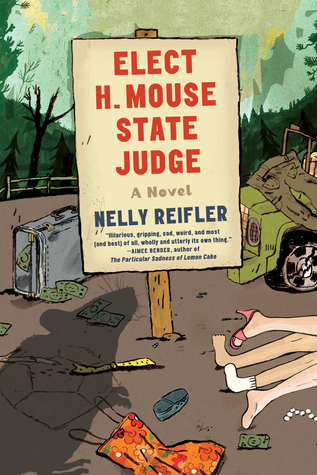
this novelette has it all: sex, scandal, satire. the lead character is a mouse,and Barbie and Ken have an edge. it doesn’t get better than this!
read the review. buy the book. support the arts.
 OIL IN WATER
Pam Lazos
Chapter Seventy-Eight
Fifteen minutes later due to Hart’s intercession, Bicky sat leaning against the wall of the TDU, his leg wrapped in a tourniquet that Hart was tying off. The tourniquet, made from pieces of an old ripped bed sheet turned rag, was streaked with dirt and motor oil; Jerry had refused to allow anyone in the house to get medical supplies. Bicky flinched as Hart secured the whole mess in place with a finishing nail.
“There are more civilized ways to get retribution, Jerry.” Hart snapped.
“Don’t tell me it’s not something you thought about yourself from time to time, Mr. Chief of Engineering.” Hart snorted.
“You know what surprises me, Hart? What surprises me is that a thousand freaking people a day don’t just get up out of bed, strap on a semiautomatic, and blow the crap out of something. That’s what surprises me.” Jerry’s voice cracked. He cleared his throat and scratched the barrel of the gun against his scalp. “And everywhere there’s death. People dying.”
“People are always dying, Jerry. It’s just the one that’s got you upset.”
“Actually, it’s two. And if you give me a minute, I’ll tell you about it. But first I want to clear some things up with your boss, here. Before he passes out, that is.” Jerry stooped down next to Bicky.
“You proved your point, man. You’re in control,” Hart said. “Now let me call an ambulance.”
“And then what? Have me arrested? I’m a rich man now. Rich men don’t go to jail.”
“Look, Jerry,” Hart said, watching Bicky. “Given the extenuating circumstances, I’m sure we can work things out,” Sweat poured from Bicky’s ashen face, but he managed a nod.
“I want to tell you a story first,” Jerry said. “Sit down,” he said to Hart. “Keep the kid over there on the hammock. Take the chair over next to him.”
Hart laid a hand on Gil’s shoulder and pushed him toward the hammock
“And get that beast outta’ here.”
Gil snarled at Jerry, but did as commanded. “Come on, Max,” Gil said. Max ran over and stood next to Gil, wagging his tail. Gil walked him to the door and ushered him out. “Stay,” Gil said. Max started barking as Gil shut the door on him.
“You better shut him up or I’ll shut him up for you,” Jerry said.
Gil’s eyes watered, but his voice didn’t waiver as he opened the door again. “Ssshhh! Sit, Max. Be quiet. Understand?” Gil raised his index finger to his lips and Max whimpered once, but sat down as instructed. Gil’s sad, brown eyes blinked, shutting the spigot on them as he closed the barn door. He took a seat on the hammock. A soft low growl rolled in like a wave through the crack under the door.
“You did the right thing,” Hart said, squeezing Gil’s hand. Gil returned a brave smile. Jerry’s face clouded with something akin to regret. He rubbed a rough hand over his eyes and it was gone.
“Story time, eh?” Jerry folded his arms across his chest, facing Hart and Gil, the gun poking out from under his arm.
“You see, one night, I’m sitting outside your house — ”
“My house?” Hart narrowed his eyes at Jerry.
“— and I’m watching, and I’m waiting, and I happen to see a familiar car pull into your driveway and lo and behold, who gets out, but your father-in-law. That means kin-by-law, you know, and brings with it a certain degree of responsibility which a lot of people don’t take seriously enough, I think. It’s not just about a seat at the holiday dinner table.” Jerry fixed Bicky with an accusatory glare and the two men could not let go the sight of each other.
“Anyway, he doesn’t knock, just goes right in like he owns the place. You know what I’m talking about, right?” Jerry tilted his face toward Hart for emphasis, but wouldn’t break eye contact with Bicky. “So I get out of my car and I walk around to the kitchen window to see what’s happening. Bicky’s in there and Sonia’s got the kettle on for tea and it’s steaming, but not whistling yet. She’s putting a tea bag in her cup and she’s got her back to him. The windows are open, which I don’t understand because it’s hot as hell out…”
“Sonia didn’t like air conditioning,” Hart said, his voice thick.
Jerry nodded. “And if not for that small fact, I wouldn’t be relaying this story to you now as I’ve witnessed it,” Jerry said to Hart, his eyes still glued to Bicky’s face. Anyway, I hear bits and pieces of things. Bicky says: ‘Sonia, enough,’…and then something something. And Sonia says: ‘Where’s what,’” and Bicky says, ‘You know what…’ and the tea kettle starts screaming and I can’t hear a thing for a minute, but this ear-splitting whistle and Sonia and Bicky stare at each other and words come out of their mouths, but I can’t make them out until finally, he yells at her to ‘shut the kettle’ and she very calmly walks over, grabs the kettle and pours herself a cup of tea.” Jerry smiled at Bicky as if he had just one-upped him.
Sweat continued its downward spiral, pouring from Bicky’s face and scalp while his face changed from pale grey to pale green. Bicky squeezed his right leg, but did not avert his eyes.
“You never could back her up, could you? That’s what always pissed you off about her,” Jerry said. “How did it make you feel, Boss, to finally have no control over something?”
Using his hands for balance, Bicky tried to stand, winced in pain and dropped to the floor, both hands wrapped around his thigh just above the entry wound.
“Kind of like now?” Jerry asked, the pleasure of the moment apparent on his face.
“Jesus Christ, Jerry. What the hell are you talking about?” Hart said.
Jerry sidled over to Bicky and put the gun to his face. “You want to tell them?” Bicky shoved the gun away, breaking eye contact.
“Uh oh,” Jerry smiled and patted Bicky’s face. “You lose.” Bicky said nothing.
Jerry sauntered over to Gil and Hart. “He’s quiet tonight,” Jerry said, a note of mock concern in his voice. He let out a long, labored sigh. “So – Bicky whirls on her, like this.” Jerry grabbed Gil by both arms and gave him a violent shake.
“Hey!” Hart said, jumping up. Jerry dropped Gil’s arms, stuck the barrel of his gun in Gil’s ribs and held up a single finger. Hart froze.
“Tsk, tsk, tsk,” Jerry said, shaking his head and motioning for Hart to sit down. He grabbed Gil again.
“He was in her face, squeezing her arms, saying a bunch of what, I’m not sure, and it must have hurt because Sonia finally let out a yelp. So what’s the son-of-a-bitch do? He loosens his grip, but still doesn’t let her go.” Jerry shot Bicky a murderous look.
Jerry dropped his voice, his face taut with recall, one hand tightening around Gil’s arm, the other still poking the gun in Gil’s ribs. “I wish now I had gone through the window after him.”
“Oooww!” Gil said. Jerry jerked on Gil’s arm as if to bring him back in line, but when he looked at Gil’s small, pinched face, he released his grip.
“Sorry,” Jerry said. Gil inspected his reddened forearm, already forming a bruise.
Jerry’s eyes misted over, but he continued: “‘I don’t have it,’ she said. ‘Don’t lie to me,’ he said. ‘What you sent wasn’t what you took,’ he said, and then a bunch of stuff I didn’t hear.” Jerry swiped at his watery eyes with his free hand, then rubbed his forehead with the barrel of the gun, leaving a bright, red welt. He pushed Gil toward Hart and motioned them back to their seats. He shook his head like a wet dog, before pointing the gun at Bicky. “Son-of-a-bitch,” he said, drawing back the trigger.
“Jerry!” Hart yelled, and pulled Gil behind him.
Bicky braced for the bullet, his face scrunched and tense, but his eyes were unwavering in their gaze. Jerry leaned back, inhaled slowly and fired, lifting his gun slightly before pulling the trigger. The bullet drove harmlessly into the wall above Bicky’s head. Bicky began shaking and sucked in a long, raspy, breath.
Jerry stood up and walked over to the drawing table where Gil had laid out a blueprint of the TDU. He thumbed through the drawings using his gun as a finger to turn the pages. He turned back to Bicky.
“What were you thinking that day, Boss? Did you understand? Were you resigned? I’ll never get why you so uncharacteristically backed up. Why’d you leave without it, huh? When you knew she had it? Cause you know, she’d be alive today if you would have just done what you always do which is not taken no for an answer.”
“I was with Bicky at the Union Club that night, Jerry,” Hart said. “I left before he did. So he couldn’t have been at my house.”
Bicky looked at his son-in-law; his lips forming into a slow, sad smile.
“Loyal to the end, aren’t you, Hart?” Jerry sat down on Gil’s stool, pointed the gun and spun around once. The moment he was in a direct line of fire with Bicky’s head, he planted his feet on the ground with authority.
“I tell you your wife would be alive today if not for him and you defend him. You’ve been duped. We all have.” Jerry spun around again and came to another abrupt stop in direct line with Bicky. This time he fired. The shot went into the wall just above Bicky’s right shoulder. Bicky heaved out a lung full of air, but refused to utter a sound.
“‘Just tell me you didn’t go to the newspapers,’ he said, and she shook her head. Just the way he looked at her, trying to see inside her, to see what she was up to. But he never could, never did understand her. Not like I did. Jerry swiped at his eyes and stared at the floor.
“What happened next?” Hart asked.
Jerry spun around a third time and once again pointed the gun at Bicky who was now sobbing quietly, the muscles in his face tight with pain. “I’ll tell you what happened next.” Jerry fired and the shot drove into the wall less than an inch above Bicky’s left shoulder.
“Bicky left.”
to be continued
copyright 2013
 persephone's step-sisters