a novel to die for

murder

::REVIEW::

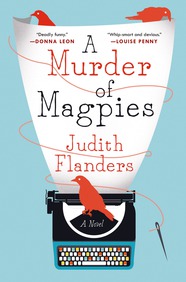
Who knew publishing was such a dangerous and glamorous profession? Though A Murder of Magpies is journalist Judith Flanders first novel, her whip smart bravura and droll sense of humor make this Murder a fun read.

          “Oh, just kill me now!”  I didn’t shriek that out loud, just clenched my teeth more tightly. It was eight thirty, and already the day couldn’t get much worse. I’m always at my desk by eight not because I’m so wonderful, although I am, but because it’s the only time of day when no one asks me anything, when I can actually get on with some work, instead of solving other people’s problems.”

Meet snarky book editor, Samantha (Sam) Clair. Sam has managed a fine career in the publishing business, working with a stable of writers, several of whom churn out predictably good best sellers. San is a sensible kind of gal. She’s the type of no-nonsense person who, when a meeting is disrupted by an unexpected visitor, will deal with it in her own sensible way.

“It was probably a friend of a friend, or someone who’d got my name somehow and was trying to flog a manuscript, no doubt about how his mother had abused him, or proving that his great-great-grandfather was Jack the Ripper. We don’t have to deal with real live members of the public often, but every now and again, one sneaks under the radar.”

One of Sam’s favorite writers, gorgeous Kit Lovell, is a reliably gorgeous writer. Kit covers fashion and can dish about the great design houses with the best of them. But this time, he’s written a potentially libelous biography of a fashion icon whose death appears to have been murder. While covering the human interest story about one of the largest and most respected fashion houses in Europe, Kit unintentionally uncovers an international money laundering ring. Big fashion is inextricably linked to big money and neither are pleased with Kit’s revelations.  

The manuscript proves incendiary. Before long, Sam finds herself embroiled in a hot mess. Kit vanishes, a copy of his manuscript is stolen, a courier is killed, and Sam’s flat is ransacked. This is quite a lot of excitement for a woman who spends her days reading books.

After the break in Sam begins to investigate her good friend and best author’s disappearance. Companions in her quest include her corporate lawyer mother, Helena–who is astonishingly adept at untangling the kinks of the criminal mind—and a hunky police detective, Jake Field.

As a single professional woman, Sam is aware of her options. She’s had relationships, and is currently satisfied with her quiet job, and her quiet flat, with its quiet upstairs neighbor, Mr. Ridigers. She tolerates her young coworkers with a thin layer of patience while plotting ways to get her authors placed on the best book club lists. A romantic entanglement with a cop isn’t exactly her cup of tea.

In the end, Sam and Helena and Jake solve the murder of Kit – and Helena uncovers hard evidence to corroborate Kit’s fashion house money laundering scheme. Sam takes Jake as a lover, much to Helena’s approval.

Murder of Magpies is a great, fun, smart read. Don’t miss it.
tasty fiction here

kitchens

KITCHENS OF THE GREAT MIDWEST

::REVIEW::

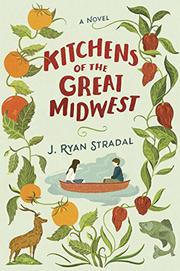
What a delicious read in J. Ryan Stradal’s debut novel: Kitchens of the Great Midwest.  His treatment of the subject of haute (and low) cuisine is both respectful and poetic, as is his attention to the detail of place. The Midwest has never appeared so endearing, nor possibly as strange.

The star of the story, Eva Thorvald, is born in the late 1980s to Lars Thorvald and Cynthia Hargreaves, the two most unlikely candidates for happy marriage that ever was. But when Cynthia gets knocked up, marry they do, and vigorous ten pound baby Eva follows. 

“Cynthia was still twenty-five, and bounced back to her skinny frame with color in her cheeks and bigger boobs, while Lars just grew balder and fatter and slower. He had learned, before she was pregnant, that he had to hold her hand or touch her in some way while they walked places together, so that other men knew they were a couple. Now she was the mother of his daughter, he was even more wary, snarling at passing dudes with confident Tom Selleck mustaches and cool Bon Jovi hair.”

Lars is a foodie through and through, and Cynthia has a knack for food and wine pairings beyond reason. But gravely oppressed by motherhood from the start, Cynthia ditches husband and child as soon as reasonably possible, running off to California to learn the wine trade.

Lars devotes his life to his darling daughter, whose taste buds he teases with the finest ingredients her pediatrician will permit. He reads Beard on Bread to her. He takes her on excursions through Farmer’s Markets, searching for priceless potatoes and redolent rhubarb.

Lucky for her, Eva is born with a “once in a generation palate.” But is this because of her natural father? It’s hard to say. Not long after Cynthia goes MIA, Lars dies suddenly, leaving baby Eva to be raised by her Uncle Jarl and Aunt Fiona, who while loving her completely, don’t know a mung bean from mozzarella.

Part of the pleasure of this novel derives from Stradal’s juicy narrative. From the start, we know that Eva is a survivor and that she is destined for great things. We love how she loves her adopted parents, how she embraces strays of all kinds, and how even as a kid, she demonstrates great depths of compassion.

“[Jarl] suddenly looked sad and bewildered, like an elephant that had been fired from the circus and was wandering down the side of the highway with nowhere to go. The thought occurred to Eva that if her dad confronted those boys face-to-face, they would make fun of her weak, fat, kindhearted father as brutally as they made fun of her, and she needed to protect her dad from that; his ego was already so fragile.”

It’s not giving anything away to reveal that Eva becomes a celebrated, if mysterious and deeply private, chef. Her love for good food is not for show or for fame; it is real as rice and sweet as whipped marshmallow. In the end, her love of food is about what all great food is about: celebration and gratitude and sharing your bounty with those you love.

c. gregory

poem::poet::poetry

marigold

Sylvia Berek Rosenthal is a prolific writer. And it’s no wonder, as Rosenthal, a resident at Oakmont at Montecito in Concord, CA, who will turn 92 this August, has had plenty to write about. Her latest book, Marry Me With Marigolds, is a delicious collection of poems that reads like the spicy narrative of an interesting life. The genesis of Marry Me with Marigolds began when Rosenthal won First Prize in the  2010 Benicia Annual Love Poem contest.

The writer strongly resembles someone’s smart and jolly Nanna, with her shock of white hair, large black-framed glasses, bright floral silk jacket. She smiles gleefully. “It felt so nice for an old lady to win with a love poem,” she says about the contest.

Sylvia Rosenthal didn’t begin writing poetry until she was 75, an age when people tend to be outspoken with their truths. The poetry in this collection reflects a whole lot of truths, as it was written in the 15 years between 1997 and 2012. Many of her poems are funny and downright irreverent. Some are rich and tender. In all, her personal voice rings true. In the poem called “Maid in America,” she speaks of how her parents met.

My mother was born in Detroit.

You can’t get any more American than that

Can you?

When she turned seventeen she met my father.

He spoke Yiddish and Polish

She spoke only English.

They had no trouble.

Pillow talked worked just fine.

When she turned eighteen

They celebrated by getting married.

One year later

World War One

Began.


In the book’s namesake poem, Marry Me With Marigolds,  Rosenthal uses language in a way that is both playful and evocative:

Marry me with marigolds

Tempt me with your tenderness

Covet me with coriander

Chocolate and

Cloves

Favor me with foxglove

Gather me with the garden’s garland

Circle me with summer squash

Sesame and

Sage

Woo me with water lilies

Nurture me with nutmeg

Pamper me with peppers

Red green and

Gold

And I will stroke

Your balding head

Bake you babkas

Cook you cabbage

Pat your pot belly

If you will only

Marry me with marigolds.

Rosenthal may live in Concord, CA, but to hear her speak, you know she is pure New York, where she was a grade school teacher and guidance counselor. Her husband, George, was a ceramicist and artist. For years they lived something of a bohemian lifestyle, sojourning back and forth between New York to San Miguel de Allende, Mexico. After a time, the Rosenthals moved to San Antonio, Texas, to shorten the commute between San Miguel and the states. 

It was when the couple lived in Texas, that Sylvia discovered poetry.  Her husband had broken his shoulder and was recovering from surgery and she had tired of being his nurse. “I decided to take a writing class at the San Antonio branch of Texas University and the only two courses available were poetry and a business writing course,” she explains. “I wasn’t going to write letters, so poetry it was.”  In San Antonio, Sylvia became deeply involved with local writing and poetry communities. In San Miguel, she wrote columns for the Atencion and El Independiente newspapers. 

Her first book, Mrs. Letsaveit, is the collected body of these columns, which are mainly food literature essays very much in the style of Sonoma County’s M.F.K. Fisher.  The cover of Mrs. Letsaveit features a close up photograph of some of her late husband’s ceramics. The direct and humorous essays filed between the covers of the book are redolent of a happy home as Rosenthal describes her life in Mexico through a series of narratives about cooking and eating food. “Think of it as recipes through a  filter of Like Water for Chocolate,” she says, referencing the 1989 best selling book by first-time novelist Laura Esquivel. In Mrs. Letsaveit, Rosenthal writes about making bagels, corned beef, Mandelbrot, and other family favorites in Mexico, far from New York – or Texas style grocery stores.

An avid reader and writer still, Rosenthal is a member of the San Miguel PEN and San Antonio Poets; she is now involved in writing and poetry groups in the Clayton/Concord Area. Is her work fact or fiction? She smiles mischievously and replies, “I like to think of poetry is a piece of the truth, but not all of it.”

Sylvia Beren Rosenthal’s books are available on Amazon.

a gift for fiction

alice in wonderland

“Your story, that story that keeps replaying, the interaction of your expectations and what happens, the narrative, the disappoinments and the way you process it. . .it’s all invented.

“Ambien, the popular sleep aid, doesn’t actually help people sleep much more. No, the reason it works is that it’s an amnesiac. Ambien makes your forget that you didn’t get a good night’s sleep.

“. . .[our story] it’s all invented. It’s still real, the pain is real, the frustration is real, but the story that’s causing it all is something we made up, and something we can change. The pain is real, and so is a path to changing it.” 

–Seth Godin

The thing is, what is your story? What is the thing you repeat to everyone who will listen, about that thing that happened to you. The Course in Miracles says that we are all operating under a shared illusion and the fact that it’s shared, doesn’t make it any more real.

So what about it, cookie? What is your story? For goodness sake, make it a good one!

feet first

A good book is a thing of beauty. A good book that makes you laugh at a sweet, goofy, human’s folly, and you have a party wrapped in a book jacket.

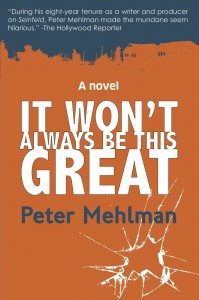
Peter Mehlman’s debut novel, It Won’t Always Be This Great, is quite possibly the sweetest, funniest novel orbiting the planet of mid-life crisis well, ever.  Though Mehlman is no writing novice, he wrote for the Jerry Seinfeld show and rose to executive producer at one point; this is his first work of full-length fiction.

In It Won’t Always Be This Great, we meet a 50 year-old Long Island podiatrist who throughout the book remains nameless, just as he is about to hit stride in messy patch of mid-life angst.  Dr. X is father to two amazing kids, lovely, precocious,  14 year old Esme, and son Charlie, who while hovering at the cusp of  tweenhood, makes adorably naïve pronouncements about how the world appears to work, and according to him, how it should work. CLICK HERE TO READ MORE 

Great

shipwrecked love

Quote

light between

::REVIEW::

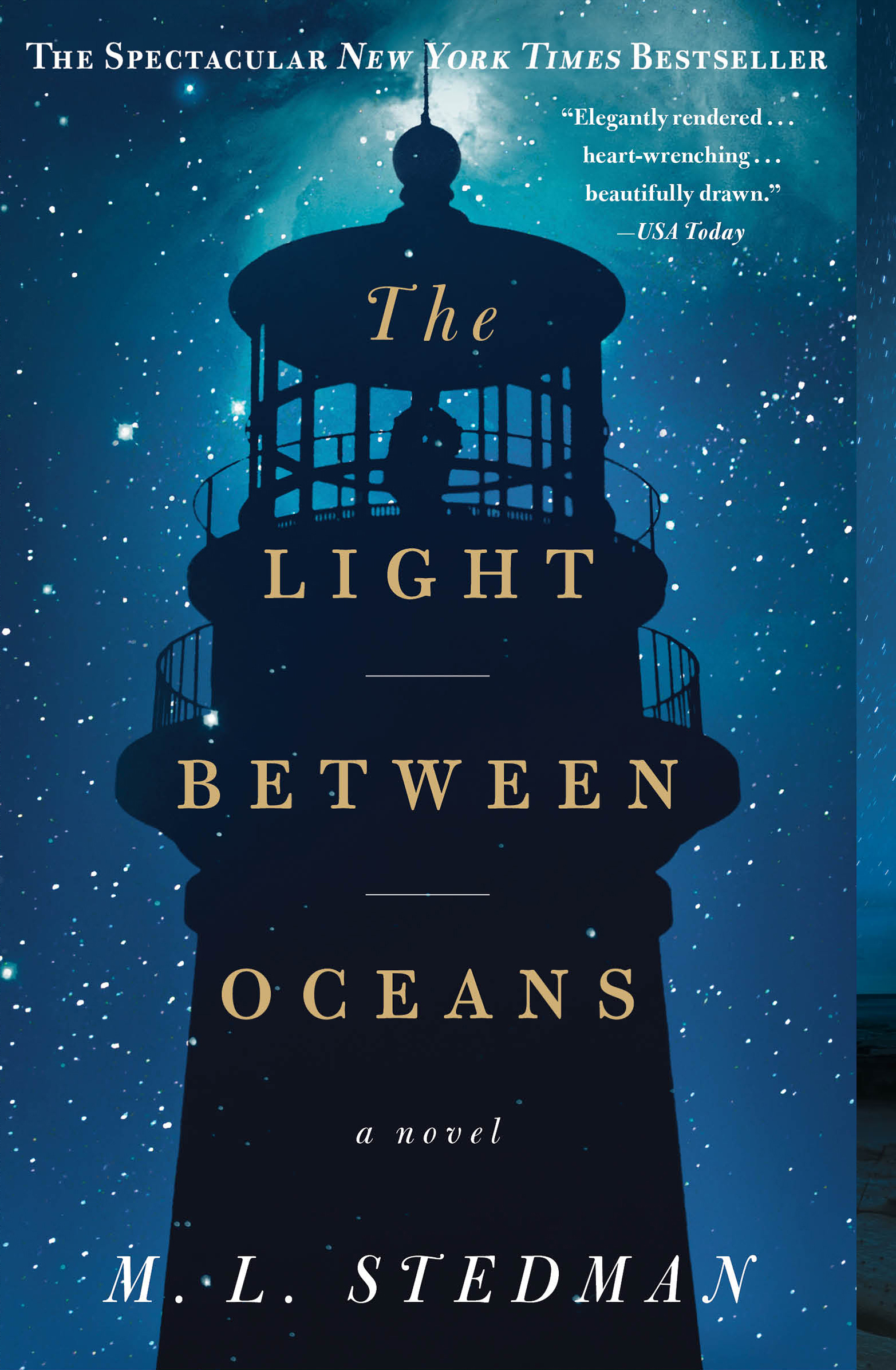
  It is just after World War II, and Tom Sherbourne returns to his native Australia seeking solace and normalcy after enduring the horrors experienced as a soldier on the Western Front. Kind, thoughtful, and meticulous Tom lands a job as lighthouse keeper on the island of Janus. It’s lonely work, but Tom enjoys the routine, and quiet accountability of helping to assure the safe passage of cargo and passengers off of Australia’s shoreline.  He sets about making repairs to the Light, and keeps strict and meticulous records of all activity on Janus, as is his responsibility.  Tom can be trusted to do a job well, and he takes great pride in being a man to be counted upon to do the right thing. To his great good fortune, if not his great surprise, Tom meets Isabel Graysmark while on leave from Janus.  Isabel is everything Tom is not: gregarious, creative, outgoing. Isabel doesn’t so much seduce Tom as declare that their match is right and inescapable.  An epistolary courtship follows and on his next leave from the island, Tom and Isabel are married. They return to Janus a couple, starting their life together in their own little island world. Isabel suffers a series of pitiful miscarriages, each one stealing a little more of her light. 

And then one day a rowboat washes up on the island carrying a dead man and a live baby. Of course, Tom is inclined to report the incident, as is his natural and assigned responsibility. But Isabel, having lost three babies and one only recently, has been delivered an infant in need of a mother. She convinces Tom to delay reporting the body and the baby. Eventually all lines blur and Isabel names the baby Lucy and insists she is their own.   As much as he loves her, Tom cannot totally reconcile baby Lucy as his; instead arguing that she belongs to someone, somewhere, who surely grieves her loss. Isabel has no such qualms.  She considers Lucy a gift from God, and being mother to the little girl in all ways feels as natural to her as breathing. Like all secrets, Tom and Isabel’s slowly unravels.

On a trip to the mainland Tom encounters a woman whose child was lost at the same time that Lucy was found. Tom is devoured by guilt. On the night before the Sherbourne family is to return from the mainland to Janus, an anonymous note is found in the grieving mother’s mail box. A cryptic hand-written message assures the woman that her daughter is loved. A second trip to the mainland, a second hand-written message, and the Sherbourne’s story dissolves like paper in water.  Baby Lucy is reunited with her birth mother,  while Tom claims all responsibility for the deceit to protect Isabel. Following her betrayal, Isabel suffers an emotional breakdown, rejecting  Tom. Lucy is torn from the loving embrace from the only mother she’s ever known, and is inconsolable, rebuffing this stranger who now possesses her, her birth mother.

The Light Between Oceans is about finding one’s way in uncertain waters. It is a book that deftly examines the choices we make, and living with the inevitable outcomes. It is about love and courage and doing the right thing.  It is a book not to be missed. Cynthia G.

back to zero

scribeI recently started journaling. Again. I have always been a faithful journalista. In fact, I’ve filled literally dozens of journals, and every once in a while I actually go back and review them. I’ve even created some of my best work by throwing words at my journal. Somewhere along the way, journaling morphed into my writing process. I created the structure of my short stories through my journal. Strange, right?

I once had a mentor who said: “Just write. Don’t expect it to make sense consciously. Your subconscious knows what it’s doing.”  Though I didn’t fully understand what she was saying, she was my mentor, so I did what she advised. And guess what? It worked and I created some amazing fiction as a faithful journalista.

Then I stopped journaling. I know! I took a hiatus, a rest, a break from the ritual of creation. I gave myself permission to not write, and guess what? The world didn’t come to an end. I did however, stop creating amazing stories. It was okay for a while, but now I’m back to journaling. Not everyday, mind you, but often. It’s like going back to yoga. I’m getting more agile, more flexy. I can feel a story starting to form, and it’s the most delicious feeling a writer can have.

So, I’m back to zero, which is exactly the right place to be.

word nerds

We writers are strange ducks. We have an almost obsessive love of language. We dance with verbs and all in love with nouns. Sometimes we use made up words because language is fluid and zesty and delicious. We even love to talk about words because like pictures, worlds can have color and texture and depth and dazzlement. 

read me

Miniaturist hc c

::REVIEW::

Set in 17th century Amsterdam, The Miniaturist is the story of young Nella, a country girl possessing an important name and no fortune, newly married to Johannes Brandt, a wealthy Amsterdam merchant. After a short introduction and even shorter courtship, Nella is quickly married to Brandt before he vanishes back to the city to conduct his important business, leaving his bride behind to follow him when she will.

With little beside an address to go by, Nella arrives in Amsterdam and finds Brandt’s grand manor in the best part of town, but she does not find her husband. Instead, she finds Brandt’s formidable sister, Marin, who is head of the household and manager of Brandt’s business affairs. There is the fiercely loyal household cook, maid, and chief snoop, Cornelia, who was rescued from an orphanage. There is also Brandt’s valet, Otto, a slave acquired on a trip to the East Indies, then freed and employed by Brandt himself. Nella takes her established place in her husband’s home and begins to discover the secrets that form the heartbeat of her new family.

Brandt is formidable and handsome, a respected member of Amsterdam’s merchant class and leader in the Dutch East Indian Company.  His business interests keep him far from home, and so do appetites that in Calvinist Amsterdam put the family squarely on a path of destruction. But he is generous and kind to Nella. As a wedding gift and to keep her occupied in her newly elevated role of married lady, Brandt presents Nella with a model replica of his house and instructs her to fill it as she will. Resourceful Nella discovers a miniaturist in the city who provides her with exquisitely detailed replicas to furnish her small house. Before long however, Nella discovers that the miniatures, which begin to arrive without having been commissioned, form premonitions of household events. Mysteries stack up. Increasingly, Nella feels herself being watched, and she herself begins to listen at keyholes. She feels as if she is working out a puzzle. No one will tell her the truth – or at least not all of it.

Austere Marin wears modest dresses of black wool. . .lined with ermine and silk. She is educated and vicious as a hawk, a grown woman who chooses spinsterhood over marriage for the freedom that it affords her. But surely there are lovers? No one seems to know for certain; or if they do, they are not talking.

In accordance with her very dignified position, Nella is introduced to Amsterdam society to great interest, the child-bride of the great Johannes Brandt. She is given an allowance and complete freedom to navigate the city at will. She learns the city’s sophisticated social customs of and grows into her position as a married lady.  In the end, Nella grows up quickly and manages to save herself, if not the Brandts.

The Miniaturist has all the appeal of an historical romance, except the romance is found in all the most unexpected places. As a pager-turner, The Miniaturist can’t be beat.

Cynthia G.

graceful language

Inspiration comes in the most interesting places. Donna Tartt talks about hers, and what it took to write The Goldfinch. Watch  the interview here and leave a comment!