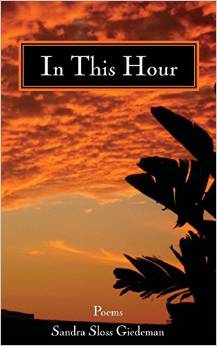
I can’t get enough of this book! Filled with images from the Ozarks to St. Louis, from Memphis to Venice Beach. Lush and bold, Sandra Giedeman’s prose takes the reader on unexpected journeys across emotional landscapes at once familiar and unexpected. In This Hour is filled with subtle reminders of the depth of small things. How can one who loves language not fall in love will lines like: Ten p.m. is when I think I could go mad in L.A. with a bird feeder and a barbecue outside my window. I wasn’t always like this. One thing I have learned. Everything in life is a metaphor for everything else.
Category Archives: book review
poetic genius
We are so proud of our dear friend, Sandra Sloss Giedeman, on the publication of her collected poems, In This Hour. Kudos also, to her publisher, Green Tara Press, for this demonstration of exceptional good taste!
Support the arts::BUY THE BOOK!
read me
::REVIEW::
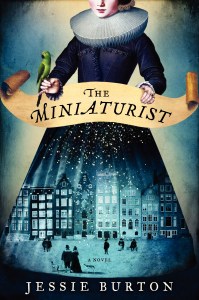
Set in 17th century Amsterdam, The Miniaturist is the story of young Nella, a country girl possessing an important name and no fortune, newly married to Johannes Brandt, a wealthy Amsterdam merchant. After a short introduction and even shorter courtship, Nella is quickly married to Brandt before he vanishes back to the city to conduct his important business, leaving his bride behind to follow him when she will.
With little beside an address to go by, Nella arrives in Amsterdam and finds Brandt’s grand manor in the best part of town, but she does not find her husband. Instead, she finds Brandt’s formidable sister, Marin, who is head of the household and manager of Brandt’s business affairs. There is the fiercely loyal household cook, maid, and chief snoop, Cornelia, who was rescued from an orphanage. There is also Brandt’s valet, Otto, a slave acquired on a trip to the East Indies, then freed and employed by Brandt himself. Nella takes her established place in her husband’s home and begins to discover the secrets that form the heartbeat of her new family.
Brandt is formidable and handsome, a respected member of Amsterdam’s merchant class and leader in the Dutch East Indian Company. His business interests keep him far from home, and so do appetites that in Calvinist Amsterdam put the family squarely on a path of destruction. But he is generous and kind to Nella. As a wedding gift and to keep her occupied in her newly elevated role of married lady, Brandt presents Nella with a model replica of his house and instructs her to fill it as she will. Resourceful Nella discovers a miniaturist in the city who provides her with exquisitely detailed replicas to furnish her small house. Before long however, Nella discovers that the miniatures, which begin to arrive without having been commissioned, form premonitions of household events. Mysteries stack up. Increasingly, Nella feels herself being watched, and she herself begins to listen at keyholes. She feels as if she is working out a puzzle. No one will tell her the truth – or at least not all of it.
Austere Marin wears modest dresses of black wool. . .lined with ermine and silk. She is educated and vicious as a hawk, a grown woman who chooses spinsterhood over marriage for the freedom that it affords her. But surely there are lovers? No one seems to know for certain; or if they do, they are not talking.
In accordance with her very dignified position, Nella is introduced to Amsterdam society to great interest, the child-bride of the great Johannes Brandt. She is given an allowance and complete freedom to navigate the city at will. She learns the city’s sophisticated social customs of and grows into her position as a married lady. In the end, Nella grows up quickly and manages to save herself, if not the Brandts.
The Miniaturist has all the appeal of an historical romance, except the romance is found in all the most unexpected places. As a pager-turner, The Miniaturist can’t be beat.
Cynthia G.
bookly giving
There is no time for classics like the holiday season, and that includes books as well as music. We’ve noticed lately that the seasonal music is a little lighter, a little more fun. So herewith is a holiday classic book giving guide with a frothy little ditty to go with it. Happy shopping — and remember: used books need love too!
- One Hundred Years of Solitude, by Gabriel Garcia Marquez. Beginning with what is quite possibly one of the best first sentences in the history of literature, Garcia Marquez spins a yarn of love, redemption, war, and magic. “Many years later, as he faced the firing squad, Colonel Aureliano Buendia was to remember that distant afternoon when his father took him to discover ice.”
- The Sun Also Rises, by Ernest Hemingway. The poetic lilt of Hemingway’s dialogue is some of the best ever written and makes me fall in love with words every. Single. Time. “Everyone behaves badly – if given a chance.”
- The Diary of Adam and Eve, by Mark Twain. One of Twain’s lesser known works is nonetheless an enchanting lesson in love. “How I wish I could make him understand that a loving good heart is riches enough and that without it intellect is poverty.”
- Mrs. Dalloway, by Virginia Woolf. Not an easy read but a dazzlingly brilliant classic. Woolf delivers this Valentine of book in stream-of-consciousness prose and begins with another amazing first line: “Mrs. Dalloway said she would buy the flowers herself.”
- A Good Man is Hard to Find, by Flannery O’Connor. This is a collection of short stories that will scare the wits out of you as it nabs you by the collar and whips you around with a command of language that is both naked and forgiving. “She wouldn’t stay at home to be queen for a day.”
- The Bean Trees, by Barbara Kingsolver. It’s actually difficult to choose just one Kingsolver novel as a stand-alone but if you must choose, this is a good start: a story about love, friendship, abandonment, putting down roots, and a girl named Turtle. “I had decided early on that if I couldn’t dress elegant, I’d dress memorable.”
- Housekeeping, by Marilyn Robinson. There is a haunting quality in Robinson’s work as she writes about the small details of ordinary life. Her examination of the glue that holds our worlds together is at once pointed and astonishing. “You never know when you will see someone for the last time.”
- Last Report on the Miracles at Little No Horse, by Louise Erdrich. If you have any tender sensibilities at all, this writer will pierce your heart. Erdrich’s sense of irony, poetry, and social justice mingle in a tale that is at once outrageous and plain in about a million ways. “To love another human in all of her splendor and imperfect perfection, it is a magnificent task. . .tremendous and foolish and human.”
- Ragtime, by EL Doctrow. A literary classic in its own right, Ragtime reaches into the early 20th century to capture the hope and the optimism of immigrants and millionaires in America before the great wars changed everything. “And though the newspapers called the shooting the Crime of the Century, Goldman knew it was only 1906 and there were ninety four years to go.”
- Illusions, by Richard Bach. You can never go wrong with a book that contains both magic . . .and a barnstormer with a messiah complex. Deceptive in its simplicity, Bach’s story is an open door into a world beyond the ordinary. “Nothing good is a miracle, nothing lovely is a dream.”
There you have it: a short list of classics. Enjoy the season, and happy reading!
telling stories
Author Louise Erdrich offers what may well be the best writing advice. Ever. Listen, then leave a comment for the rest of us to chew on. Then get back to that manuscript, baby.
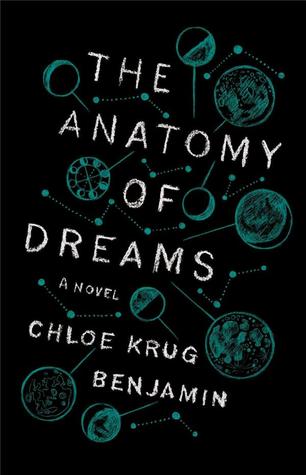
dream of me
Some books are slightly disturbing and others are downright chilling. Here’s a book to take to bed with you when you’re sure you’re not being watched.
agua, por favor
what’s on your plate?
Fiction is a beautiful way to stick a finger in the eye of complacency, don’t you think? In a debut novel that is both funny and disturbing, Stephan Eirik Clark jumps feet first into a pool of what might be satire, taking a lingering look at how, as consumers of unnatural “food,” we might unintentionally be the makers of our own undoing. Is it possible? Is industrial food safe? Or is it just funny?
time and time again
The time we’re most familiar with is a unit of measurement and the way in which we experience the advancement of our lives. Religious pundits have for centuries described time as a circle, ever evolving upward. Yet every year we experience a birthday, an anniversary, a holiday, making our perception of time both circular and linear. Confused yet? If so, then you need to read Fractal Time: The Secret of 2012 and a New World Ageby Gregg Braden. Braden’s perception of time is more like an ever-repeating, ever expanding circle that ripples out into infinity, both a wave and a spiral, like Fibonacci, where each rotation looks very much like the last, but more of it.

Fractal Time
If you look up the word “time” in Merriam Webster’s Collegiate Dictionary, you’ll see a list of fourteen definitions for time as a noun, eight as a colloquialism, five as a verb, eleven as an adjective, one as an adverb, and no less than forty-one words that start with the word time (time lapse, time-out, time immemorial, to name a few). Judging by the amount of “time” Webster’s devotes to the word, time appears to be as ubiquitous as air. No wonder we don’t understand it. Read more here…