As it turns out, the best way to get creative is to get out of your head. Simple? Yes. Easy? Maybe not so much . . .but totally worth it.

As it turns out, the best way to get creative is to get out of your head. Simple? Yes. Easy? Maybe not so much . . .but totally worth it.

Fancy me. I’m making progress in my personal green revolution. Not only am I growing lettuce, basil, cilantro, and tomatoes, but I just planted purple carrots. I wouldn’t go so far as to call myself Ida Skivenes, but well, you know. I’m doing what I can to green up my world.
I’ve been wanting to compost, but living solo, I just don’t generate enough green waste to reach practical critical mass. Even considering my habit of buying more produce than I can possibly eat in a week and throwing out an obscene amount of food, it’s still not enough to justify investing in a personal 100 gallon composting unit. Like my (brief) foray into READ MORE HERE
THE GRAND BUDAPEST HOTEL
The Grand Budapest Hotel, directed by Wes Anderson is chock full of Hollywood A-listers in both cameo and substantial roles and with Anderson at the helm, the result is a film so quirky and brilliant that you’ll want to see it more than once. The Grand Budapest Hotel is Anderson’s best film to date, a wry, exceptionally well-structured 5-act Shakespearean dramedy. If you liked any of Anderson’s prior movies, The Life Aquatic with Steve Zissou, The Royal Tenenbaums, or The Darjeeling Limited, to name a few, then The Grand Budapest Hotel will satisfy you in a way that these previous gems just narrowly missed.
First there’s the superb M. Gustave (Ralph Fiennes), impeccably dressed with such dizzying attention to detail that Coco Chanel would be jealous. Gustave runs the GBH, set amid a coniferous-lined mountainside, always gorgeously blanketed with a light dusting of snow, so breathtakingly beautiful it looks like CGI. Anderson used more than one locale for the filming to get just the right feel for the distinguished and sumptuous backdrop to the movie. At the GBH, Gustave not only runs a tight, elegantly appointed ship, he has a cadre of patrons, all older, almost all female, who return to the GBH to partake of the amenities that only M. Gustave can provide. The young Zero Moustafa (Tony Revolori), so called, he says, because after losing his family and home in the war — the movie is sandwiched between the first and second World Wars — he is nothing and has no one. Zero is hired by M. Gustave to maintain a specific role at the hotel, the actual description of which is unclear for while Gustave has a list of “don’ts”, it seems the lobby boy’s biggest “do” is to be Gustave’s personal assistant. Throughout the movie, we see Zero’s allegiance to Gustave unfold and grow in a variety of wry and often hilarious ways.
The entire story is told in flashback by the enigmatic owner of the hotel, a much older Zero (F. Murray Abraham), to the Young Writer (Jude Law), who is a patron of the current GBH. With it’s halcyon days behind it, a skeleton crew running it, and very few guests, the GBH is still going, maybe not strong, but going. Abraham invites Law to join him for dinner and over many courses, unravels the beguiling history behind the hotel. After one of Gustave’s favored patrons, Madame D. (a sublime Tilda Swinton) is murdered, Gustave travels to Madame D’s side because, “she needs me,” meaning, he needs to make sure 1) she looks good and 2) to find out whether she left him a little something in her will. At the reading, the lawyer, Deputy Kovacs (Jeff Goldblum) announces to the family that Madame D. has left Gustave the priceless painting, “Boy With Apple” which, according to Gustave, they had admired together many times. Chaos ensues as the heirs, led by Madame D’s son, Dmitri (Adrien Brody) along with his henchman, Jopling (Willem Dafoe), try to reclaim what they believe is rightfully the family’s. The film is full of fabulously quirky observations such as when Gustave views the dead body of Madame D, examines her nail polish and expresses approval for the new color because even in death, style and elegance are paramount.
My favorite line in the movie is Gustave’s, spoken during a moment when he and the Lobby Boy are trying to puzzle out the mystery behind the dilemma Gustave finds himself in:
“The plot thickens, as they say. Why, by the way? Is it a soup metaphor?”
I absolutely will not tell you what mess they are in as the film is all to methodical to spoil, but I will say that I frequently laughed out loud throughout the movie. Anderson’s usual themes of abandonment, trouble with authority, and overarching loyalty in the face of adversity are all present. The cast goes on and on: Harvey Keitel, Ed Norton, Jason Schwartzman, Owen Wilson, Bill Murray, and a host of others makes this film feel like summer camp for A-Listers The Grand Budapest Hotel is not for everyone. My mother thought it was weird, but she’s 80 and subtle, facetious humor is often lost on her. Me, I thought it was brilliant.
Pam Lazos 5.6.14
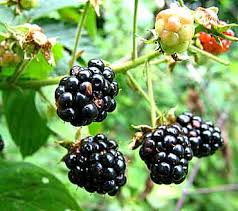 Persephone Walks
On a bright spring morning, she rises from a long sleep as if from the dead. She sighs, she turns. She slips into yoga pants, the sports bra that fits like wrapping. The smart phone with its Audible Pema Chodron lesson on compassion (because she needs this, she decides and as she listens, realizes that compassion is just the start, chica), and plugged in, walks to the edge of the property, to the edge of the seasonal river. She breathes the sweet, wet, morning air, the fragrance of loam and blackberry blossoms, begins her walk. It is the month of earth day; earth month, and the coincidental interval of her return. This year the timing seems off. The rains have come late. The storms rage larger, a swirl of unpredictability. It’s not her doing, she tells herself. Pema says to make it about herself, that to say it is the other is only illusion. It’s all Bardo, baby. It’s all Hades, honey. It’s all One. We are all Ophelia, we are all Hamlet.
Persephone remembers to breathe and in the rush of air she lets go of the border between her thin skin and the slow river, the rise of moist air warmed by yellow sun, the speckled quail darting for the shadows. This is compassion, she realizes. I am the earth. She is me. Separation is only willful delusion.
 there’s nothing a writer loves more than reading. about writing. we got your readin’ and writin’ right here.
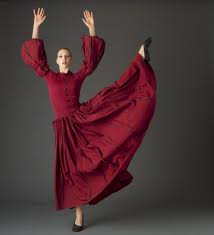 She’s here! Persephone has arrived in all her springtime finery. The dark nights are behind us, now: the celebration. Don’t be afraid, take my hand. Together, we’ll have an adventure watching the earth renew herself in joy and love. Namaste!
The days are growing longer, can you feel it? The air is warming, sunlight brushes bare skin like a kiss. The quality of light is changing. . .and we don’t just mean this month’s lush full moon. However, while the planet is bathed in lunar light, it’s a good time to think about your own potential, even as you consider the seeds you’re planting. . .and set your intentions for a bountiful harvest. This Full Crow Moon marks a time for new beginnings. . .and celebration!
sometimes love is a thought. sometimes its a sound.
hey. as long as it starts in the heart.
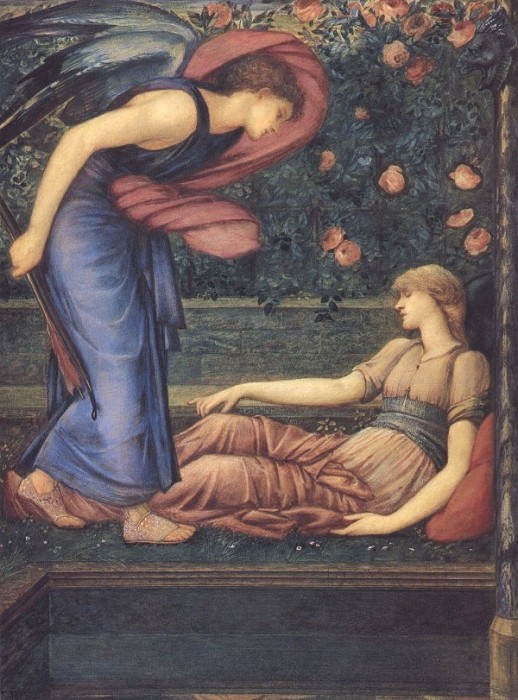 Love. It’s everywhere. Some would even venture to say that if you haven’t found it, you’re not looking.We don’t know if that’s true. We do know that sometimes fictional love is better than no love at all.
Excerpted from “Jesus, Mary, Buddha”
Over warm olives and crusty sourdough, Helen learns that Nick’s third wife parked her Range Rover at the edge of town on the banks of the Snohomish River and washed down a handful of pentobarbital with a bottle of flinty Oregon pinot gris.
It was his first year of mourning and he still hated her and loved her in ways he hadn’t yet explored. “I don’t know how I can do better than that,” he told Helen one night. “I mean fucking look at her.” He gestured toward a framed photo of them on his living room mantle. “She’s gorgeous.”
On Earth Day they up-cycle a pair of antique windows and build a table out of them. Later, they eat salmon with their fingers, straight out of his backyard smoker. After dark, they sit in deck chairs in the garden and watch shooting stars. Eight weeks into their affair, she drives home through the city streets late at night with the windows down, with air warm as a lover’s breath sliding up her arms, through her hair. The rhododendrons are in bloom. The azalea, lavender, chives, strawberries, raspberries, pear, five kinds of apple, chestnuts. Even at 11 pm, there are couples walking, cyclists peddling down the quiet evening streets in thin cotton dresses, short sleeves. It is evident that even in the dark, they are sucking the juice out of the first days of summer, taking shy steps toward the grilling season.Through the car windows, Helen Okabe breathes in the perfume of lilac.
For his birthday she gives Nick an anatomically correct chocolate heart spiced with habanero pepper. He makes his signature clams and beer. Afterward, he builds a fire in the backyard firepit and they recline on deck chairs, watching the sky. He talks about his men’s group, about getting in touch with his feelings.
“I’ve been wondering,” he begins. “What if I’ve been sabotaging relationships my whole life?” Unlike so many middle aged men, Nick is messed up on love and he knows it. To his credit, he is actually trying to unpack that baggage.
Helen sucks an ice cube and lets the water slide down her throat. “I was just wondering that myself,” she says. She has. She has been doing her spiritual inventory and counting up the number of times that, when the going got tough, she got gone. She was up to four. It wasn’t pretty.
“I think I have intimacy issues,” he says.
“Wait,” she replies. “You said you and Reina were simpatico. You were married ten years. You renewed your vows every spring for God sake. That sounds awfully intimate to me.”
“Nah,” Nick waves the idea away. “That was only appearances. I checked out after two years, if I’m honest about it.”
Appearances, her Zen master said, not only fool, you they aren’t even real. Helen still hasn’t wrapped her head around that one.
She offers the only solace she has, something from a piece of research she is working on. “The top five fears of most people are public speaking, followed by flying, heights, fear of the dark, and intimacy.” She counts them off on the fingers of her hand and refrains from adding that following this list, the fears continue with death, failure, rejection, spiders, commitment.
“That can’t be right,” Nick says.
“It’s from a university study,” she replies.
“I would say fear of intimacy is number one,” he continues.
“People are scared to death of intimacy. Just think what it means if you are right.”
“I am right.”
“If you are right, and I’m not saying you are, it means people would rather sleep with strangers than speak in front of a crowd of them.”
“It doesn’t mean that at all.”
“People are more afraid of emotional honesty than talking,” he says. “Look,” he says, pointing to a light moving across the night sky, “a satellite.”
It is a clear spring night and the sky is shy of clouds and the moon is new so they have space to shine. “Anyway. That’s my story, and I’m sticking with it.”
(c)
Cynthia Gregory

 persephone's step-sisters