Unknown's avatar

About Cynthia G.

Cynthia Gregory is an executive coach, nonprofit consultant, and creativity coach living with a menagerie of two among the vineyards and coastal hills of Northern California.

meet me at the bodega

Journal THAT

a guide to writing

Cynthia Gregory

Journal writing got you down? Does the pen weight fifteen pounds, the paper cut you to ribbons? Does the shifting light hurt your eyes? Are you feeling totally uninspired, pooky? I have good news for you.

This may be the best ever secret weapon nearly guaranteed to make your journaling a pleasurable and inspiring experience. This information is so good it could be considered cheating – except it isn’t. It’s so good it should almost be illegal or sold with a special license. Nevertheless, here it is for you, the solid gold journaling tip of the year: pick up your journal and walk. Directly to the busiest coffee shop you can find. The kind of coffee shop is entirely up to you.

The place itself can be a youthful hipster java cave where a black tee shirt is very nearly the required uniform and where you are soo out of touch with the music, the cultural references, the technology. It can be a very groovy in a retro kind of place where the waitresses wear those polyester pseudo nurse outfits, with crisp white aprons tied in bow in the back and where the donut case is always stocked with powdered sugar sprinkled old fashioneds.  Doesn’t matter.

Once you select your target, enter the writing zone with all the necessary tools and secure a table. So much is negotiable about this drill, but this part is not: you must order enough beverage and/or food to ensure a dependable cover. Your passage on this part of the journaler’s journey requires that you honor your host – the one who provides you with the context of all this rich material – with an offering that reflects appreciation for all the trouble he or she has gone to in order for you have a nice, clean, well-lit writing surface, a place to rest your iced tea, a den peopled with characters to sketch, a platform upon which to balance a snack while you go about your journaling duty.

Here is the question: how can you not find something to write about here? My goodness, there is so much material in this fabulous den it’s almost immoral to shrink from the duty to write. Did you know that in the archetypal studies of fiction, the coffee house, the bar, the watering hole is one of the most holy places in which a plots twist, where complications arise, transactions occur?  The Mos Eisley Cantina, the bar in Star Wars, the Whistle Stop Café in Fried Green Tomatoes, the Tropicana where Ricky Ricardo occasionally allowed Lucy to perform as an outlet for her outrageous talent?  The watering hole is where information is exchanged, a place that urges the hero to fulfill her next mission in the quest. In this context, the watering hole is wherever you choose it to be and the hero is you.

The bodega is like the telegraph office, where lessons are imparted, instructions delivered. By placing yourself squarely in the heart of your local cantina, you are putting yourself smack in the middle of the most strategically magnetic place in which to attract writing material. (I recommend against writing in an actual bar where alcohol is the beverage of choice, for the obvious reason that while it might make good fiction, it makes lousy writing practice).

So here you are in your café; look around. There are so many topics to bounce into and fill all those crisp empty pages. There is food. Check out that menu! There are customers you couldn’t make up on your best, most fecund day. The décor is an encyclopedia of material. The foot traffic going by outside the window is a screenplay waiting to happen. Maybe you’ve got a host of memories stirred up by the smell of grease, fantasies ignited by the sound of a steamer frothing up milk in a pitcher.  Did you waitress your way through college and learn how to balance eight plates on your arms? What is your favorite café experience? Your worst? What about that woman you saw that firm morning in Paris when you finally made it there after so many years of promises to yourself, and found that café in the St. Germain de Pres just blocks away from the Pont Neuf? There she was, sitting in that sidewalk café looking like something out of central casting, with her black sleeveless dress, black, wide-brimmed hat, sunglasses, perfect blond chignon, sipping a glass of chardonnay at nine o’clock in the morning, sharing a table with a man who was maybe her nephew, her grandson, her lover? You savored your own cappuccino and croissant with a fabulous mysterious cheese and felt as if in that moment, you were somehow bigger than life.

You see where you can go with this?

So on those days when you know you should be journaling but just can’t find it in you to examine your own life? Get thee to a coffee shop. Let that java jolt seep into your blood and see where it carries you. This may just be the best tip ever. Use it, and then use it again.
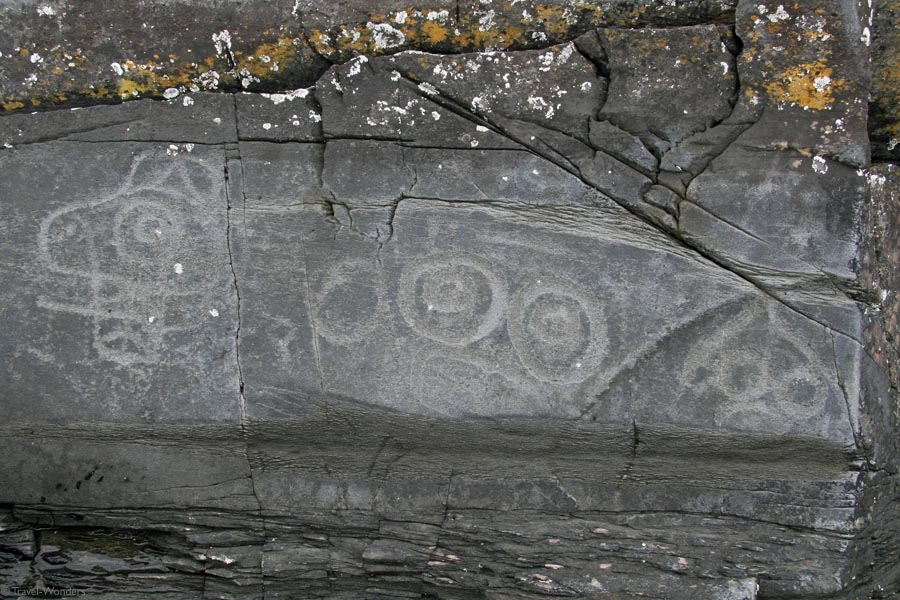
brave beauty and truth

We love and so endorse the brave beauty and truth of this. Or maybe it’s the full moon. We are not sure. In any case, we are amused. PSS

salmon with lime and wasabi

Oil in Water

Pam Lazos

Chapter Twenty-Two

Street lights struggled against a foggy, moonless night, their beams of light crashing to a halt against the first heavy water particles they met. Only intermittent porch lights remained aglow; the occupants of the homes on Willow Street were asleep for the night. A car crept down the road, pulled into the Tirabi driveway and killed the lights and the engine.

Upstairs, Gil flicked on the small light next to his bed, his own invention, a forearm and claw. The light emanated from the palm of the claw and down toward the base which held it in place. Kori had helped him with the design.

Gil held his breath to better hear the outside world. He threw the covers back and walked on silent feet to the window. Despite the chilly November air, Gil slept with the window cracked. He drew back the curtain a hair’s breath, allowing only enough space for one eye to peer down to the car parked in the driveway. A Pacifica, Gil thought, but his one eye couldn’t confirm it.

Muffled sounds emanated from the car and Gil could see the windows starting to fog a little bit. The door opened a smidgen and then swung wide. Gil drew a sharp intake of breath and pulled back from the curtain. He stood in silent contemplation, eyes rolling back and forth as if trying to deduce further information. After several seconds, he bolted out the bedroom door and ran down the corridor, taking the steps two at a time. He grasped the door knob with both hands and yanked the door open where it banged against the wall, sending a shiver through the spine of the house.

“What the heck are you doing?” a disembodied voice asked as it rounded the corner and came up the front steps. Gil let out a short whelp and jumped full on at the approaching figure, wrapping his arms around its neck and squeezing for all he was worth.

Robbie dropped his bags just in time to catch his brother, but not in time to get his balance. The pair went clattering to the ground in a confused tangle of limbs, their fall broken only by the bags at Robbie’s feet. “Gil,” he grunted, more of a guttural sound than a word. Gil released his death grip and Robbie wheezed, regaining his breath. He raised himself on one elbow and Gil did the same as if lying on duffel bags on the front stoop in the middle of the night was a normal thing.

“I knew you were coming back tonight,” Gil said. “Kori said not until tomorrow, but I knew it would be today.”

“Well, technically Kori’s right since it’s after midnight, but we’re not going to tell her that, right?” Robbie asked. Gil nodded and lunged for his brother again, toppling him back and onto the ground.

“It’s been three months and twenty-seven days,” Gil said into Robbie’s neck.  Robbie rubbed Gil’s back in a circular motion.

“I missed you, too, buddy,” Robbie said. “What do you say we get out of this fog.  It’s creepin’ me out a little.” Gil helped Robbie to his feet and grabbed his duffle bag, grunting with the strain of it. Robbie smiled watching him crash and bang his way into the foyer. A light crept out from under Kori’s door and spilled down the stairs.

“Hawk at twelve o’clock,” Robbie said and Gil looked up the stairs to see Kori’s slippered feet standing at the top.

Kori’s voice spilled down the steps: “Gil. It’s the middle of the night.”

Robbie’s voice was hoarse from lack of sleep. “He did the hospitable thing and came to greet me.”

“Robbie!” Kori ran down the stairs and jumped into Robbie’s arms, knocking him down for the second time in the last five minutes. He lay sprawled out on the floor with Kori straddled on top of him. She blushed, mumbled an apology and pulled him to his feet. She held his grip and stared at him intently for a moment, a specimen under a microscope. He folded her into his arms and in a heartbeat she returned the mantle of responsibility to her younger brother.

“That bad, huh?” She shook her head and stifled the urge to cry. He squeezed tighter.  “Hey, how about a drink?”

“Yeah, hot chocolate!” Gil yelled. A moment later the hall light clicked on and a crusty-eyed Avery stumbled out of his room and into the hallway.

“Gil?” he called downstairs. “Are you alright?”

“He is now,” Robbie called back.

“Robbie!” Avery said, taking the stairs two at a time.

“When did you get home? I mean…that’s a stupid question. Why didn’t you tell us you were coming?”

“The element of surprise, my brother.” Robbie and his lopsided grin were home. “C’mon. I’m starving. What’ve you got to eat in this place.

“A little salmon with lime and Wasabi sauce,” Avery said. “My own creation.” Robbie crinkled his nose.

“A little spanikopita from Aunt Stella,” Avery said. “And some baklava for dessert.”

Robbie’s eyebrows shot up in appreciation. “God, It’s good to be home.” He wrapped his arm around Gil’s shoulder and they headed for their midnight raid on the refrigerator.

copyright 2012

to be continued. . .

to read what came before click here

writers are reading

good reading is good fun. we have a new book to share

@ first novels::reviewed

lost in the details

Oil in Water

Pam Lazos

Chapter Twenty-One

Things happened fast after Sonia died. Hart had slept all night on top of his wife’s cold, dead body, holding the hand of the child he would never meet in life. Weaving in and out of consciousness, he recalled only fragments, dreams indistinguishable from reality. He landed in a dark, terrible place, blacker than the bottom of any ocean, a place that even the full light of day would be hard-pressed to illuminate. And there he saw Sonia and it terrified him, because she was dead, because an ocean of space and time now rippled between them.

But like most missives from the unconscious, unless you pull them to wakefulness, they languish in fallow ground, the seeds unplanted. If the key to Sonia’s death lay in Hart’s dreams, he’d be damned if he could piece together their meanings, and when the cold shock of morning came and the dream proved reality, Hart looked up to see the ashen face of his father-in-law standing above him while Hart lay prostrate, still strewn across two dead bodies.

For a moment he thought he might be accused. “I don’t know what happened.”

“It’s alright,” Bicky said, his voice surprising Hart with its tenderness. He pulled Hart to his feet, handed him a glass of water and a glass of scotch and sat him on the couch with both glasses and a tenuous hold on reality. Then Bicky attended to the details of clean up.

Hart was in an acute state of shock and asked precious few questions himself. By the time Bicky’s personal physician had administered Hart a healthy injection of morphine, “for the shock,” Hart was so confounded by pain and medication that he hadn’t the presence of mind to ask what in God’s name Bicky was doing there. He passed out just as the men in black from the funeral home carried the shroud-wrapped bodies from the house on a stretcher.

The physician’s face ebbed and flowed like the tide before Hart’s eyes. Hart wasn’t sure how long he lay between the worlds. Maybe hours, maybe days. He awoke from the sleep of the dead, ravenously hungry and with a headache that wouldn’t quit. Bicky’s physician offered him Valium, but Hart refused, choosing a blinding headache over just being blind. After a shower and a bit of lunch — apparently he’d been out for days and having eaten no food in that time, his stomach had shrunk – a car appeared driven by Bicky’s chauffeur, Manuel. The last thing Hart clearly remembered was Manuel driving him home that night.

“I’m sorry for you, Mr. Hart,” Manuel said into the rearview mirror, turning away before their eyes met. With over thirty years in, Manuel qualified for the list of people who spent most of their lifetime working for Bicky Coleman. Hart nodded, accepting the genuine grief Manuel offered, and turned to look out the window as his own tears gathered.

➣➣➣

Kitty insisted the wake be held at the Coleman estate in the rich suburbs of Houston. Overcome with grief, she lost herself in the details. It was a major undertaking, a wake of massive proportions, with over five hundred guests in attendance. Sonia was very active in the philanthropic community, a member of the Jr. League, and on several local boards, and everyone that worked for Bicky knew and loved Sonia in her own right. It seemed that all of Houston had turned out for her funeral and for that of the poor, unfortunate child.

As the day wound down, Hart sought refuge in Bicky’s study. Exhausted from a day of laughing, crying, and occasionally throwing up, he sat, hands clasped, staring at his feet. A fire had been lit against the fall chill and Hart breathed the subtle whiffs of wood smoke into his lungs. A murmured conversation was taking place in the hallway. He ignored the chatter at first, but something about the strangled urgency of the words made him perk up and listen as, through the doorway, the parties came into view. Bicky had Jerry Dixon by the lapel of his expertly tailored suit, the two men locked in a battle of wills, their voices low to maintain secrecy.

“You haven’t done a damn thing to figure this all out, have you?” Bicky asked. “I should have fired you a long time ago.”

“I should have quit a long time ago.” Jerry looked murderous. He grabbed Bicky’s wrist, forcing him to release the vice-grip he held on Jerry’s collar, and tossed the unwanted appendage aside like it were a slug.

Hart shifted and his chair creaked, calling their attention. Bicky noted Hart’s figure, silhouetted before the fire, and motioned to Jerry to leave.

He entered the room without saying a word, flopped into his overstuffed armchair and stared into the flame as if he were the only person on earth. After several minutes, he turned to Hart, eyes wet with tears. Hart narrowed his eyes at his father-in-law. He hadn’t formed words, or even the idea yet, but something in David’s heart knew. Bicky Coleman, practiced in the art of delusion, of bending people to his will, was hiding something. Hart involuntarily braced himself for Bicky’s onslaught which in his current state he knew he couldn’t defend. Bicky made a show of drying his eyes before speaking.

“I want you to go down to the Gulf of Mexico. There’s a rig that’s been waiting for repairs for a while now.”

Hart took a deep breath. Whatever he thought Bicky was going to say, it had nothing to do with work. He searched Bicky’s face, trying to divine his true motives, but as always, it was a blank sheet of paper.

“You’re telling me about work now?”

“Work’s the best thing for you right now,” Bicky said. He cleared his throat. “EPA inspected the rig while you were out.” There was a wryness in Bicky’s voice that made it sound as if Hart had been on vacation as opposed to mostly unconscious. “They say we’ve got some uncontrolled leakage. And we need a better SPCC Plan.”

Hart stared at the tongue in groove floor. Sonia had wanted him to lay a new one in their dining room – him, not a contractor, because of his skill with wood and intricate designs. A hexagon pattern. That’s what she’d wanted.

Hart looked up to find Bicky staring at him. “Spill Pollution Control and Countermeasures Plan,” he said, as if trying it remind himself. “It’s mandatory for anyone dealing with oil. And water.” He rubbed his hands together as if for warmth. “I’m just not sure that I’m going to go back. What with this…” he choked back the emotion and fell silent.

Bicky grunted. “Why? Because Sonia wanted you to quit?” He waved a hand in the air as if to sweep all of life’s little details away and wiped his eyes with the other. “Well, that hardly matters now.” He stood and walked over to the desk where a decanter and four glasses sat. Hart noted with satisfaction, Bicky’s hunched shoulders and slow, careful gate, a sure sign that his father-in-law was exhausted. The vivacious Bicky Coleman seemed to have aged overnight to reveal a chink in the armor of his unflappable demeanor. Bicky poured two glasses, measuring a couple jiggers in each, and tossed in some ice. The fire reflected off the dark amber liquid splashing and winking in the glass as Bicky crossed the room and handed a glass to Hart. “You have nothing left to you, my boy, but work. Join the club.” Bicky drained his glass and stood staring at his son-in-law.

“If you want to take some time off, you have plenty coming to you,” Bicky said.

Hart raised his glass to his lips and sniffed. He downed the whiskey in two gulps and handed it to Bicky. He swallowed the lump in his throat and swiped at his eyes.

Bicky poured two more glasses.

“The last time we talked about it I told her that by this time next year I’d be done with oil. I told her I needed to work it out with you, though. Didn’t want to leave you high and dry.”       Hart gripped the sides of the armchair as if at any minute it might take off. Bicky returned with another round, handed it to him, and sat down. The men sipped their drinks silently for several minutes.

“Now it really doesn’t really matter what I do. I just know I can’t stay in that house.” Hart hunched over his glass and stared at the fire.

“She sat right there, you know. The night she died. She came over for dinner. It was the best time we’d had in years.” Bicky rubbed his forehead and eyebrows; his drooping shoulders revealing his anguish, his tight, pinched face. A small moan emanated from his throat and he looked around as if startled by the noise.

“We didn’t get along that well, I know. But she was my daughter.” Bicky’s face was half in shadow, half illuminated by dancing fire light. Any doubts that Hart had as to Bicky’s true feelings were dispelled the instant he looked into Bicky’s eyes and saw the profundity of his sorrow.

Having shot his emotional wad over the course of the last few days, Hart’s initial impulse was to leave, but unseen forces had him rooted to the chair. He drained his glass, the alcohol working its magic on him, and stared at his shoes.

“Why don’t you stay here tonight?” Bicky asked. He grabbed the decanter and refilled both their glasses. Hart swished the whiskey around in his glass before draining it. He let his head loll against the high-backed leather chair, closed his eyes and waited for oblivion to find him.

 copyright 2012

to be continued. . .

to read what came before, click here

coup de grace

we have a new post @ first blush. join us here. or else.

this stuff’s not normal

Oil in Water

Pam Lazos

Chapter Twenty

When they arrived home four hours later, Kori was pacing the kitchen, mad as a wasp and she circled them just as succinctly.

“Where the hell’ve you been?” she demanded of Avery. “And what the hell do you think you’re doing driving Mom’s car? With Gil in it, for God sakes.”

Avery didn’t answer. He walked to the side of the van and slid the door open to reveal the prone body of the newest Tirabi. Gil ran to Kori’s side, grabbing her hand and pulling her over to the van for a closer look. Kori’s face contorted when she glimpsed what was in the back seat.

“Oh, no. No way! We’ve got enough to take care of. She shook her head, refusing to look at the animal.

“Kori, please! Max’s hurt and he’s got nowhere to go.” Gil begged.

“Max! You’ve named him already?” Kori demanded. Gil nodded. Avery looked the other away. “Who’s gonna walk him? Feed him? Pick up his poop?” Kori asked.

“I will,” Gil responded.

“You? You can’t even take care of yourself.”

“Hey, shut up! What’s the matter with you?” Avery said. His eyes smoldered in Kori’s direction, but she met his gaze with equal force.

“We don’t need another dog. I’ve got more than I can handle now.”

“But we do,” Gil protested. “For protection and stuff.”

“No. What we need is for you to get this… thing out of here. Now.”

Gil stomped his foot like an angry colt and stared at his sister. “I hate you, Kori!” He ran to the house and turned, hand on the doorknob, eyes alight with a vortex of unexpressed emotions. “You killed ZiZi, and now you’re going to kill Max, you, you…dog-killer!

He stormed into the house slamming the door so hard the glass rattled in its pane. Avery snorted and shot her a look of disgust before striding into the house after Gil.

Kori stood immobile in the driveway, her breath coming in short quick bursts. Overwhelmed with the weight of her decisions and the lives that depended on them, she dropped to the ground, hung her head in her hands and cried, letting the panic of the last few months gush out like water from an open hydrant. Spent, she stood and braced herself, then walked over to Max who was licking his wounded hip. She sniffed the air and retreated. Max hadn’t had a bath in a while. She reached out a tentative hand and touched the matted fur. He ceased his ministrations and raised a cold nose to her hand which she grabbed reflexively.

“I can’t take care of you.” She tugged his nose and gave it a pat. “I’m sorry.”

A low, piercing moan emitted from Max’s larynx followed by one of a deeper and more menacing pitch through the living room window. Kori looked up in fear. She’d heard that sound before and it could only mean one thing.

“Oh, no.” She ran inside to find Gil on the living room floor, kicking and thrashing at his invisible demons. Avery, responding to the same guttural sounds, ran down the stairs, and seeing Gil’s violent explosion, sprung over the bannister and into the living room with one movement. A flailing Gil threw himself into the leg of the coffee table, banging his head with a whack. Kori stood watching, open-mouthed and helpless.

“Don’t just stand there,” Avery shouted. “Help me hold him.” Avery straddled Gil, restraining his shoulders and turning him on his side. He talked in the soothing tones reserved for a skittish animal. “It’s alright, buddy. You’re alright. Just relax.”

Gil was unresponsive and unwittingly tried to break free of Avery’s grasp, rolling his shoulders and kicking his feet. His eyes fluttered open for a brief instant, then closed to half-mast. He rocked and bucked while Avery sat astride him like a rodeo cowboy. Kori dropped to the floor, entranced by the spectacle.

“Noooooooo,” Gil yelled to the room. “Nooooooo.”

“Kori, Goddamn it. Help me get him on his side,” Avery shouted as Gil wrenched from his grip. “What the heck’s the matter with you.” Kori snapped to life and crawled to them. Gil threw his arced arm into the air and it hit Kori square in the head, knocking her to the ground and taking her breath away. She lay there stunned. Avery wrestled with Gil and spoke to Kori without turning.

“Are you alright?” Kori did not respond. Gil was getting the upper hand in the struggle and Avery couldn’t afford to stop and look at her. “Kori! Are you alright?”

“Yeah, I’m alright,” she said, rising to her knees. She rubbed her head and winced.

Avery had Gil on his side with Gil’s arms locked on either side by the sheer force of Avery’s leg strength. At each attempt to move, Avery clamped tighter. He turned to see Kori kneeling at Gil’s feet.

“Bend his upper leg,” Avery said. She looked up at him with pale, unseeing eyes so he explained. “For circulation.” She nodded, her usually sanguine complexion gone white.

“Get me a pillow,” said Avery. “And a towel.”

Kori threw him a couch pillow and ran to the kitchen for a dish towel. Avery wrapped the pillow in the towel and put it under Gil’s head. Gil had fallen asleep and was snoring. He choked, then coughed, interrupting the sonorous rhythm. Spittle mixed with phlegm ran out of the side of his mouth onto the dishtowel. After a few more cacophonous moments of coughing and throat clearing, he lapsed back into a deep sleep, the snoring marking his passage.

“Go call the doctor,” Avery whispered to Kori.

She didn’t move, but watched Gil sleep, his breathing in rhythm with her own. Avery snapped his fingers in her face. She stood and wobbled to the kitchen holding her head as if she were the one that just had a seizure.

Avery relaxed his leg grip. Gil snored and shifted positions, but did not wake. Avery rubbed Gil’s back in long, slow strokes and spoke softly to him. “It’s alright, buddy. I’m here.”

Kori returned after several minutes, more composed. “The doctor said if he’s sleeping, just let him be and to move anything he could bang his head on in case he has another attack.” Kori moved the coffee table, one end at a time, out of harm’s reach. “He’s sending an ambulance.” She grabbed a blanket off the couch and draped it over Gil. “Maybe he’ll sleep it off.”

She slumped down next to Gil and rubbed his head. “Did he take his meds today?” Avery nodded and Kori ran her hands tenderly through Gil’s hair.

“I’m sorry I was so useless. I never did this before.”

“What?! How is that possible when you live with an epileptic?” Avery asked, staring.

“Mom or Dad was always there,” she said. “They always told me to go away.”

“They never did that to me,” he said. “I think I was eight or nine the first time I saw him do it,” Avery said, no trace of malice.  He released his leg hold on Gil whose snoring had reached epic proportions, and sat, cross-legged behind his brother.  He grabbed a pillow off the couch and propped it behind Gil’s back, then laid down behind him.

“You can go. I’ll stay with him,” Avery said.

Kori shook her head. The whole episode had rattled her more than she cared to admit, but she sat down anyway. “I’ll stay, too.” She tucked the blanket under Gil’s chin.

“Avery, what were you thinking taking Mom’s car? And that…. ” she nodded in the direction of Max outside.

“I took a look at the checkbook. I know it’s not like you said. We need money, Kori.”

Kori folded her hands to hide the fact that they were trembling.

“Hey. It’s not your fault,” Avery said. “Just bad luck. I mean, how many kids our age have gone through half the stuff we’ve been through in the last two months. This stuff’s not normal.” He said the last bit with an air of authority that made Kori burst into giggles.

“What’s so funny?”

“I don’t know. Nothing. Everything.” She sighed and turned her neck from side to side, working the kinks out. “You’re right. We do need money. But you can’t work for it. You need a scholarship…”

“Stop, already. You’re not telling me something I don’t know. It’s just that if we starve to death, I’m not going to be able to make much use of a scholarship, will I?”

“Don’t be ridiculous. We’re not going to starve to death.”

“I know that. But we could lose our house. And maybe get split up. What would that do to Gil?” They looked in unison at their brother.

“The house is paid for. They bought it outright with money from one of Dad’s inventions. We’ll always have a place to live.”

“Yeah, but we’ll soon have taxes to pay. And then there’s everything else.”

“I’ve got some new clients. Robbie said he’d send money. And we should be getting the insurance money soon. As soon as they finish the investigation…”

“I wish they would have planned better,” Avery said.

“They probably thought there was time.” Kori said. “All Dad needed was one big invention….” She ran a finger up and down the carpet pile, a sad, strange look on her face.

“There’s thousands of dollars sitting out back,” Avery said. “It could hold us over.”

Kori walked to the window. The landfill sat off in the distance shrouded by trees. Patches of corn, grown in rotation to keep the soil healthy, dotted the landscape. A dozen dairy cows walked single file along a fence playing a game of follow the leader. “We can’t be sure that it’s not all connected, Avery. The porch. The oil. And if it is, we’ll put ourselves in danger again.” She stared out the window. Choice had immobilized her.

“No we won’t. I’ll limit my sales to one customer.”

“No,” she whispered, kneeling down next to him. Gil snorted, but did not wake.

“We’ll figure something else out.” Kori smiled, hoping she appeared confident. “We’ll wait. Something’ll come along. You’ll see.” She smiled and squeezed his hand.

“Alright,” he said. “But in the meantime, can I drive?

copyright 2012

to be continued. . ..

to read what came before click here

100 things

Journal THAT

a guide to writing

Cynthia Gregory

Every once in a while I get the feeling that I’ll crawl right out of my skin unless I clean out a closet. Nothing makes me happier than to fill bags and bags of unused stuff to haul off to the Goodwill store, where they always ask me if I want a receipt and I always say no. I have a theory is that everything ends up where it needs to be and if I don’t need it, it doesn’t belong to me, and how could I possibly take  a receipt for someone else’s stuff?

Closet cleaning. It’s a useful skill. Some people like a clean stovetop or a clean floor; I like a tidy closet. This isn’t just me being obsessive – well maybe, but I like to think that I am not so much a collector as an experiencer. I am not so much interested in getting stuff as I am in having insights and impressions wash over me like high tide on a blue moon.

Once, when I lived in Pennsylvania, I tried to temp my Amish neighbor into letting me take photographs of her beautiful young sons with their straw hats and wide blue trusting eyes. “For later, when they grow up, to remember them by,” I said, and she turned me down flat. “It’s not our way,” was all she would say. And I got it. She didn’t need  to take measure of the moment to save it for later. She wasn’t keeping a piece of now to reminisce; she was fully present. I liked that. I wanted to emulate that.

So, I like to throw/give stuff away. Make no mistake, I don’t exactly shun materialism, indeed, I find that a certain measure of pretty things make me happy and content. However, truth to tell, I find that I can’t quite think as clearly or creatively when things all around me are jumbled up and drowning in clutter and I can’t find my car keys.

Writing is like that, which is why I think I’s so important to write. A lot. If not every day, then several times a week, at least. It’s not because all that practice makes you a better writer, even though it does. It’s not because all the best writers do it and you’ll become  a best seller by osmosis, because that’s just silly.  No, writing every day is important because it gets all the clutter out of your head so that when you have something really important or profound or dazzlingly brilliant to say, it will be seen as diamonds sparkling on the sand, instead of dull objects half obscured beneath a verb-dump.

Timed writing exercises or list making exercises are great ways to purge the shrunken tee shirts and torn jeans of your brain. Oh sure, you think you’ll wear them again, but you’re just kidding yourself. They’re hanging out reminder you that the time is passing you by and those jeans will still be waiting there for you. Some day.

I used to think that I need to save my creative stuff up, like there was a limited supply of juicy ideas. You laugh, but it’s true. I thought, “well, I’ll just save that good idea for later, because then I’ll really have time to develop it and it will so rock.” It seems strange to think that now, but why else would I want to withhold my creative spark? Because, I thought, maybe that creative sliver of divine creative spark might be too good or not good enough to share with the world.

Let me just make one thing perfectly clear: there is no shortage of good ideas. If you use up one good idea, three will appear in its place. It’s when you stuff a good idea or ignore a good idea, that they stop flowing in through the open window of your mind. So use them up! Fast! And then use them some more!

And you know what else?  When you use up all your good ideas, when you pour them onto the page like good maple syrup on homemade sourdough pancakes, you’ll get to a place much sweeter than the place you’re at now. I totally promise.

Do this: write a list of the 100 things you know for sure how to do. I bet you’ll dash off ten things you’re good at without breaking a sweat. You’ll push on to twenty and start to chug. Climbing up to thirty, a little voice inside your head will start to sound like The Little Train That Could. Forty? You may feel like giving up. But here’s what you get when you push past the point that you thought was the outer edge: the ideas dam has burst and they start to flow fast and frenetic and suddenly you see the wisdom in the 100. It’s not the first or second or even the fifth ten things, it’s the ones past where you thought you knew where you were going that are the really interesting ones.

You can do this for a year. Write about the 100 things you look for in a soulmate. The 100 things you learned in college. The 100 places you want to visit while you still inhabit the planet. This is important stuff. Not because of the things themselves, but  because of the process of learning to open up to the place in your heart that exists beyond everything you think you know. It’s the stuff beyond that, that gets really good. Use it up! Use it all up as it comes in.  You can never use it up completely. Unless you want to, and that’s an entirely different choice, baby.

is my blush on straight?

we have a new post @ first blush. read it here and rejoice.

unloading the booty

Oil in Water

Pam Lazos

Chapter Nineteen

Avery and Gil saddled up with baseball caps, and sunglasses, and sporting dog collars wrapped around their wrists and calves, rode off into the clear light of day in search of fortune.

Three hours later, they rode home, exuberant with the success of unloading the entire booty. Avery had pitched them to the owners of three different hardware stores and left with each believing that no self-respecting dog owner could be without one.

“This calls for a celebration, Gil,” Avery said. “There’s a Rita’s Water Ice just up the road. Gelati?” Gil nodded, irrepressible, and bobbed and weaved the whole way to Rita’s.

The boys rode home in the daze following a good sugar dose. Gil smiled, trails of chocolate gelati on his mouth smiling with him.

“You gotta wash your face and change your shirt before Kori sees you,” Avery said as they parked their bikes. Ignoring Avery, Gil ran inside to find his sister.

“Kori? Where are you?” He checked the basement, but it was dark. He ran to the hallway stairs and yelled into the air above them, “Kori.”

Avery joined him at the base of the hallway stairs. Gil looked perplexed.

“Robbie’s car’s gone. She probably finished those wedding invitations and went to deliver them. Which means…” Avery smiled wide and stared at Gil, arms folded.

“What?” Gil said, eyes wide with anticipation.

“Which means she won’t be home for a couple hours going over the changes.” Avery rubbed his hairless chin in contemplation. “I got an idea,” Avery said. “But first you need to get cleaned up.”

➣➣➣

Half an hour later, Avery climbed in behind the wheel of Ruth’s minivan. Wearing his father’s lightweight overcoat and hat, Gil slipped into the front passenger seat and onto the phone books Avery had stacked, enabling Gil to be higher than the dash board. He struggled with the seat belt until Avery snapped it into place. Three fifty-five gallon drums, one oil, two gas, were loaded in the back. It had taken a makeshift ramp and their combined strength to roll the drums in and now there was no time left for second thoughts.

“You ready?” Avery asked, hands gripping the wheel.

“Kori’s going to be pissed,” Gil said, rocking.

“Not if she doesn’t know, she won’t,” Avery replied. Gil shook his head and wrung his hands together, moaning softly.

“Easy, Gil. It’s no big deal. I can drive, but I need an adult with me. So sit there and try to look old. No cop’s going to stop me with my dad in the car.” He cocked his head and looked at Gil for emphasis. Gil nodded and stared straight ahead. Avery crawled out of the driveway and onto the street.

“Oh, no!” Gil shouted. Avery looked in the direction Gil was pointing.

“Jesus, it’s Aunt Stella,” Avery said, ducking down in his seat. Stella was walking back to her house, sorting through the mail, her back to the street. Gil moaned and Avery put the window up. He crawled past Aunt Stella’s house then gunned the engine, disappearing over the hill before she looked up. Avery glanced in the rearview mirror long after they were out of sight; Gil turned around to see if they were being followed.

“She’s not going to run after the car,” Avery said. “I don’t even think she saw us.”

Gil mulled this over a moment then broke into laughter so contagious that Avery started laughing so hard that he violated the first rule of driving:  keep your eyes on the road.

“Look out!” Gil shouted.

Avery’s head snapped back so fast he could feel the air around him swirl. He cut the wheel and zigzagged right, grazing the hip of a mangy-looking dog now limping to the side of the road.

“Stop,” Gil screamed. “Avery, stop!”

“Shut up!” Avery said. He cut the wheel hard to the left, and the combined weight of the drums sprang to life, bolting in the opposite direction and wreaking havoc on a suspension system already under duress. The van bucked and moaned and after much screeching of tires, Avery skidded to a halt.

Gil bolted toward the injured animal now lying on a soft patch of grass under a tree. He knelt down, shed his father’s coat and pillowed it under the dog’s head. He scratched its ears, hummed softly, and placed a hand on the dog’s hip. The dog licked Gil’s hand in return.

“Gil!” Avery parked at the curb, got out and ran to check the back hatch for damage. The walls of the van had been scuffed in the pandemonium, the drums dented, but the lids remained secure. Avery breathed a sigh of relief then turned to Gil and the stray.

“Gil, we can’t keep him.”

“We have to. He doesn’t have a collar and he needs a vet. And you have to take him because you almost killed him.” Gil eyes grew wide, his face resolute. Avery leaned over and scratched the dog behind the ears. He tried to examine the dog’s hip, but the animal winced and pulled away so Avery withdrew his hand. He looked at Gil’s pleading eyes and his own softened.

“Alright. Let’s take him to the vet and get him checked out. He probably needs shots, too,” Avery said, wondering how he was going to pay for it. Gil smiled so big that Avery could feel the force of it.

“I guess that ramp’s going to come in handy for the second time today,” Avery said and trotted off to the car to retrieve it.

 copyright 2012

to be continued. . .

to read what came before, click here