The only way the books we review could be better is if they were ours.
We’re working on that.
In the meantime: Read this review. Buy this book. Support the arts!
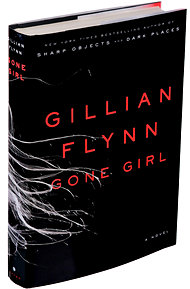


In the meantime: Read this review. Buy this book. Support the arts!
 Journal THAT
Cynthia Gregory
Resistance is a funny thing. You may have heard the adage: what you resist persists. In the same way you know that if you resist writing in your journal for maybe one of a million reasons -it doesn’t simply go away. Oh, no. It sits on your desk all poised and proper, waiting patiently for your return. It sits there all quiet and nonjudgmental, not saying anything but oh what it is not saying. Its cover is so beautiful, its pages so crisp. It haunts you. It mocks you. It’s no use, the journal cannot be ignored. The journal will have its way. You may avoid it for a day or two, or even a week. Sometimes a month will go by, but if you are attuned to your inner journalista, you will return to the journal, you will write. As the Borg insist, “Resistance is futile.” So go ahead, surrender.
Resistance is the gatekeeper in your mind, the lonely id, the unpopular kid in kickball, who doesn’t want you to enter into the place where all the creative ideas, fond memories, and vivid dreams are stored. Because if you did that, then what would happen? Contentment? Bliss? What on earth would you do with all that? On that side: big ideas, big dreams, gumdrop and fudge ripple pleasure domes. This side: a steady diet of leafy greens. That side: Ferris wheels of ingenuity, zipper rides of imagination. This side: a rope swing. The gatekeeper lives between this side and that side. The gatekeeper occupies the margins of can’t do and done. The only thing wedged between you and your untamed imagination is the gatekeeper. You must devise ways to slip past the gatekeeper and get to the fecund spaces of your vast interior.
There are so many ways to give in to journaling if the inspiration is temporarily MIA. The simplest way is to make it jolly and fun. You infuse your journal time with a sense of whimsy, of literary whipped cream and frosting. Write each entry with a different color of pen. Doodle. Treat yourself to a cupcake for each ten pages you complete. This is the easy way to slip past the gatekeeper. Essentially, its bribery, but we’re not above enticements, and besides: yum.
Another way to get past the gatekeeper is by accident. Say for instance that in order to fulfill your journaling goals, you need to write four journal entries per week, but on the third day you meet up with resistance, and don’t feel like spilling your guts. You have the sniffles or had trouble sleeping last night or your favorite song hasn’t played on the radio all day, whatever. So you pick up your journal and sigh. You look out the window. You tap the pen against your teeth, make up snappy little rhythms.
So just when you’re ready to give in, cajole yourself by telling yourself something like this: Okay, just one page. Write one dumb page and get it over with. Write about the funny thing the dog did with your slipper. Or write about how when the neighbor went out to retrieve the morning paper, he leaned over to pick it up and unintentionally mooned you. Start with something small and maybe it will lead to something bigger, and before you know it, you will have written a full blown journal entry by accident. You didn’t mean for it to be so big and so interesting and so conversationally spellbinding, but you did it. You started out with mediocre intentions and wound up at the intersection of Genius Ideas and Good for You. You can now give yourself permission to feel superior.
Then of course, the most aggressive way to get by the gatekeeper is to straight-out push your way through. I personally endorse this method because it is energizing, and empowering. It’s also the most fun, in case that matters, because it yields the most surprising results.
To establishing ‘the push’ for your journaling exercise, you need to set up a goal that is challenging enough, but that somewhere in the back of your mind you don’t think you can accomplish. Maybe it’s something you haven’t done before; something you suspect may be beyond your skill level. Give yourself a goal of: write ten pages on why I like blue cheese. Or list seventy five things to do with popcorn. Or: the one hundred qualities I most appreciate in my mate. You see where I’m going with this. It’s easy to make a short list of just about anything. But a little longer list is tougher, and this is where the magic comes in. Maybe you’re rolling merrily along and just when you get to the point where the gatekeeper steps in and says, ‘oh, I think you’re done here. That’s quite enough out of you, madam.’ And you begin to think that maybe you’ve run out of gas, that maybe that’s all the ideas you’re capable of.
Hint: this is the exact place where you should not give up. This is place where you’ve almost reached what I call the stage of the absurd. This is where you just start writing any old bald idea down, just slap it down to fulfill your goal. You stop trying to be clever, you stop trying to be brilliant, you’re just dropping ideas on the page like hot rocks one after another after another. You stop trying.
At this point in the process, you blow out all the carbon residue in your creative engine and enter into a whole new creative zone. And then you’re off like a hotrod. It’s an exhilarating, thrilling, goose-pimple-y ride, because you’ve just shot past the point where you suspected you might stop, where you feared you’d fail, where you couldn’t see your way out of that fix, and then the ideas just bubbled up into your head and flowed out through your pen like a pure stream of imagination, and it is better than good; it is delish.
You slipped past the gatekeeper like a superstar. And you know what? You’re dazzling, darling. You’re a journalista.
THE SECRET LIFE OF WALTER MITTY
The Secret Life of Walter Mitty is the movie I longed for all year without even knowing it. It may be my favorite movie of 2013, not because of the high drama, indie chic, nail-biting tension, or classic one-liners, but for unraveling that tight knot inside my heart that I’d been carrying so long I no longer noticed its existence. Directed by Ben Stiller and based on a short story by James Thurber, the movie tells the story of Walter Mitty (Ben Stiller), an average guy doing a more than average job at Life Magazine, sadly on the verge of putting out its last issue. Downsizing sucks, but that’s not Walter’s real problem. His real problem is all those unrealized dreams that have been poking at him for years, adamant and demanding as they push to the surface, forcing him into a mini coma of a daydream. Walter’s boss, Ted Hendricks (Adam Scott), a know-it-all nothing of a man laughs at him, not behind his back, but square in the face when this occurs. Walter cares, but beyond daydreams of smashing Ted’s face in, does nothing. It’s not that Walter’s a loser. He’s any one of us who caught a bad break and once there, couldn’t make his way to a good one.
Walter’s bad break happened at 17 when his father died, forcing the former mohawk-wearing Walter had to stash his dreams to become the Man of the House for his mom and sister. Years later, in his job as a “negative assets manager” Walter’s put out some of the greatest magazine covers the world has seen, thanks to the work of colleague and photographer Sean O’Connell (Sean Penn), without ever leaving the dark room. O’Connell sends Walter what he calls possibly the best picture he’s ever taken for the final cover of Life as a gesture of their long productive working years together, along with a wallet engraved with Life’s motto: “To see the world, things dangerous to come to, to see behind walls, draw closer, to find each other and to feel. That is the purpose of life.” Walter is touched, but at a loss since the best picture ever, negative #25, is missing upon arrival.
When Walter’s mother, Edna (Shirley MacLaine) moves, and Walter’s sister, Odessa (Kathryn Hahn) finds Walter’s long-forgotten backpack along with a new travel journal, a long-lost present from Walter’s father, something infinitesimal shakes loose in Walter and he sets out in search of O’Connell to find what was lost — ostensibly negative #25, but we all know what Walter’s really looking for. O’Connell proves a tough guy to find; he shoots photos of snow leopards in the Himalayas and straps himself to the tops of biplanes to get the volcano shot, all heady stuff for the risk averse Walter. Thankfully, Walter is spurred in sideways fashion by co-worker and possible love interest, Cheryl Melhoff (Kristin Wiig), who gives Walter lift just being in the same room as he. Soon, Walter is traversing some of the world’s most satisfyingly brilliant places while Life’s motto is displayed in snippets across the backdrop. When Walter does find O’Connell, it’s worth the wait. “Beautiful things don’t seek attention,” O’Connell says as he watches the snow leopard.
In today’s world of reality T.V. and endless soundbites where everyone jockeys for attention, I need to believe O’Connell. See this movie if you feel stuck. See this movie if you have been toying with the idea of stepping outside preconceived notions of yourself. See this movie if you want the world as your backdrop to expanding horizons, or if you just want to revel in the wonder of an ordinary person doing extraordinary things even if no one sees him doing them. See this movie.
–Pam Lazos
Thanks for sharing the love with us in 2013. It was amazing!
 OIL IN WATER
Pam Lazos
Chapter Seventy-Seven
At exactly 10:00 a.m. the next morning, Bicky arrived at the Tirabi residence uncharacteristically dressed in a pair of khaki pants and a polo shirt. Kori and Jack were sitting at the kitchen table when he knocked at the front door. Kori jumped.
“You expecting company?” Jack asked.
“No.” She had called Jack the minute Bicky pulled out of the driveway the previous night and Jack had picked up on the first ring as if waiting for her call. They’d talked into the small hours where night blurs into day and the grandest ideas are born. After a marathon phone session, Jack showed up on the front step looking hanged-dogged and hopeful. Kori invited him up to her room where they’d continued their conversation, among other things, and now they were pleasantly exhausted. Maybe it was the sleep deprivation, the fact that they hadn’t seen each other in a while, or that Jack had made sufficient reparations along with all the right promises, but whatever it was, when Jack proposed that they get back together, Kori acquiesced. And she hadn’t again thought, until this precise moment, about Chris Kane. So while she sat, still as garden statuary, wondering about the odds of him being on the other side of the door, and if so, how to explain it away, Jack got up and answered it.
“Kori’s in the kitchen,” she heard Jack say as he and Bicky entered the kitchen. Kori let out every cubic inch of breath she’d been holding and smiled.
“Good night, I see,” Bicky said. Kori introduced the men.
“I heard all about you yesterday,” Bicky said, extending his hand.
Jack shot Kori a quizzical look and she blushed. “I was dreaming,” Kori said. “I’ll tell you about it later.”
“And I’ll keep all further comments to myself except to say that’s a very special lady,” Bicky said. “Should you have the good fortune for her to turn her unwavering gaze upon you, I suggest you rise to meet it.”
Kori popped up, planting a wet one on Bicky’s cheek. “I take back all the bad thoughts I had about you yesterday” Kori said. She gave Bicky a squeeze which he accepted stiffly, clearing his throat.
“It’s like hugging Gil,” Kori said to Jack. Bicky blushed at his own ineptness.
“They’re out in the barn,” Kori said. “Just Gil and Hart. Avery’s at the library working on the patent.”
Bicky nodded and whispered into Kori’s ear, loud enough for Jack to hear, “I think, my dear, that a mid-morning nap might do you wonders,” and he closed the door behind him.
“I think it’s an excellent idea,” Jack said, pulling Kori close. “No time like the present.”
➣➣➣
The strains of Yo-Yo Ma’s cello on the soundtrack to Crouching Tiger, Hidden Dragon filled every crevice, corner and cobweb in the barn. Gil practiced the martial arts techniques he learned from the movie using a broomstick and Max as his opponent. Hart reclined on the hammock, reading a backdated version of Omni magazine, one that waxed prophetically about the brilliance of an as then little known scientist by the name of Marty Tirabi who harbored radical theories and an insatiable appetite for breaking down paradigms. The article, written in 1983, donned Marty the proverbial new messiah of the scientific world, said his star was quick and rising, and that it was just a matter of time before he stood, not only the scientific community, but the world at large on its ear with some scintillating new breakthrough.
Hart stopped to watch Gil who executed first a side and then a roundhouse kick, both flawless. He poked the air with the broom handle while Max chased the other end. Waves of tenderness flooded Hart’s chest and rippled outward to his arms and legs, his fingers and toes, and kept on rippling until he felt the room go electric with it. God had given him back something that he’d been horribly denied, something minute yet infinite, small yet limitless. He breathed in the smell, like the air after a lightning storm, both burnt and wet at the same time, and gratitude filled him up so much that he got vertigo. He tossed the magazine aside and planted his feet on the floor. He felt like he’d received a divine download, a specific, yet wordless instruction from a source higher than himself. With guidance, this child could pick up the mantle his father was so unexpectedly forced to set down. And you’ll guide him…
The knock at the door made Hart jump and set Max to barking, but both relaxed when Bicky walked in. Hart walked over to greet his father-in-law, but Gil bumped past, throwing his arms around Bicky’s neck and his legs around his waist. Bicky reeled, then caught his balance, holding firmly to Gil with one arm and a support beam with the other. It was a light gesture, yet it landed in Hart’s stomach like an unexploded grenade, threatening to detonate with the import of it. The grandson Bicky would never have.
“What took you so long?” Gil yipped right in Bicky’s ear.
Bicky grimaced, patted Gil clumsily on the back, and set him down, slow and deliberate.
“You guys had a good day yesterday, I see,” Hart said. He lowered the volume on the stereo.
“Thank you.” Bicky said, rubbing his ears. Gil’s smile effloresced, a flower in full bloom.
“He’s got all kinds of ideas for marketing the TDU,” Gil said to Hart, “and he said that we can build a special wing in Akanabi and dedicate it to my Dad. Maybe even rename part of the company. But whatever we do, people are going to know all about him. By the time Bicky’s done, he’ll be as big as Thomas Edison.”
“Bigger,” Bicky said.
“Who do you think made the bigger contribution?” Gil said. “Edison or Bell?”
“Those are just the common names.” Hart said. “What about all those physicists, toiling away in anonymity. The ones who come up with the big theories that advance our understanding of the universe. Somebody needs to thank them. It can’t all be about the light bulb.”
Gil sat down on his stool, set his lips in a tight line and moved them back and forth across his teeth, apparently in deep concentration. “I think it’s got to be about the light bulb. Without that invention, everyone else is in the dark. Eating in the dark, swimming in the dark, making phone calls in the dark, even inventing in the dark.” He looked to Bicky for confirmation.
“Then we won’t stop until his name is synonymous with Edison. How’s that?”
“Excellent.” Gil smiled and jumped off his seat. “Let’s get started then. C’mon over.”
Bicky followed Gil to the TDU and stood in front of it. “So this is the machine with a hundred and one uses,” Bicky said. He pulled open the metal door and was met with a full blast of hot air. “Whoa,” he said and took a step back.
Gil nodded and raised his eyebrows. “Should have warned you. It gets pretty hot in there. Let me show you how everything works and then we can sit down with the drawings.”
“You joining us?” Bicky asked Hart.
“Go ahead,” Hart said. “Gil and I have already talked this through a bunch of times. I would like a fresh pair of eyes, though, in case there’s something we’ve missed.” Bicky nodded.
“Okay, Mr. Bicky.” Gil said. “This machine is small for what we want to do with it. In a real facility, the scale could be increased as much as you want. Twenty to one. Fifty to one – whatever.” Gil said. “In here,” Gil opened the TDU’s door and another blast of heat escaped, “is where we feed the beast. My dad excavated it twenty feet down to a fully-lined pit. Those side doors over there slide open,” he said, pointing to the wall. “We back the ATV into the barn. It’s got this little hydraulic cylinder that raises the front of the trailer bed – just like a dump truck – so the trash slides off the trailer right into the machine.“
“By the way, I called the bank and told them I no longer needed the financing,” Hart said, returning to the hammock.
“Thanks,” Bicky said, flashing a lopsided grimace.
Gil went over every square inch of the TDU. For his part, Bicky was unwavering in his focus and seemed enthralled, both in the presence of genius and in that which genius had wrought.
➣➣➣
Half an hour later, Gil finished his tutorial and sat down on the swivel stool. “So. What do you think?” he asked. He pushed off and began spinning.
“I think,” Bicky said, “that this may be the most important, money-making invention I’ll see in my lifetime. It’ll reshape the world. Maybe even put us in Bill Gates’ league.”
Gil’s stopped spinning to scrunch his nose at Bicky, clearly not the answer he wanted.
Bicky let out a long, breathy sigh: “I’m sorry… that I never met your father. What vision. And now his dream — ”
“More like his nightmare, you mean.”
Gil jumped. Everyone turned around to see Jerry Dixon emerging from the shadows in the corner of the barn. “Because if you had the opportunity to shake his hand, well then that would mean he’d be alive and you wouldn’t be taking his product to market for him.”
“What the hell are you doing here?” Bicky hissed.
“Where did you come from?” Hart asked.
“How’d you get in?” Gil said.
“Through the door, buddy,” Jerry said. He walked over to Gil and tousled his hair as if he were a toddler. Gil grimaced and leaned away.
“I’ve been hanging out listening to all this lovey dovey crap. It is indeed heartwarming.” He glanced over at Hart. “No pun intended.”
Gil smoothed his straight hair over to the side- and scowled at Jerry.
“Just came by to see how it all turns out now that everyone’s become such fast friends.”
“Hart, get him out of here,” Bicky said.
“Bicky, what’s going on?” Hart asked.
“I fired him a few days ago.”
“Fired?”
“Fired. Just like that,” Jerry said. “Can you believe it, Hart? After thirty-three years of loyal service. And for what?”
“I’m going to give you five seconds and then I’ll remove you myself.”
“I’ll tell you for what. Because Bicky Coleman, our Commander-in-Chief, the man we’d follow blindly into battle without a care for consequence, was disappointed in me. Who knew disappointment carried such a huge price tag?” Jerry huffed, walked over to the wall phone and pulled the receiver from it’s cradle.
“Hello, Operator? What’s the number for disappointment?” He smiled at Bicky, a sardonic, dripping thing, and yanked the phone off the wall, tossing it to the ground. “She doesn’t know,” he said. He shrugged, walked over to Gil and shooed him off the stool.
At first nonplussed, Gil’s confusion over what was happening changed to obstinance. He stalwartly refused to give up his stool until Jerry gave him a shove which sent him spiraling to the floor. Max lunged at Jerry, nipping the fleshy part of his hand, before Jerry managed to put Max in a choke hold and press him to his chest. Max stood with two paws off the floor, alternating between sucking air and baring his teeth.
“I’ll break his neck.”
“No!” Gil yelled.
Hart grabbed Max’s collar and Jerry released his grip. Max collapsed on the floor, panting for air. Hart picked him up, all seventy pounds, and deposited him in the hammock.
“Jerry, what the hell is your problem?” Hart was at Gil’s side, pulling him to his feet, dusting him off. He scooped Gil up and placed him in the hammock next to Max. “Stay,” he said to both of them. Bicky stood in the corner, eyeing the bulge in Jerry’s trouser leg.
Jerry rubbed his temples with both hands as if he had a headache. “Because I had a little dalliance with a woman that he cared nothing for, other than to control her,” Jerry said, responding to a question that no one had asked.
“Dalliance, my ass,” Bicky quipped. “She left you billions of dollars. Billion does not equal a dalliance. Just how long were you screwing her?”
“It really doesn’t matter, does it, Bicky? What matters is money. It’s all that matters.”
“You son-of-a-bitch,” Bicky said. He lunged for Jerry, swung and caught him with a glancing blow to the side of the jaw. It was like hitting granite.
Jerry neither reeled, nor blinked, but caught Bicky squarely with a sucker punch to the mid-section. “Oh, does that feel good,” Jerry said on contact.
Bicky groaned and doubled over, but pulled up and swung again. Jerry blocked Bicky’s fist and returned it with his own while Max barked in time with the punches. Gil watched in fascination as if these were the recorded antics of daytime television. Jerry’s military training gave him the upper hand, but Bicky’s years spent working out with a personal trainer made him a worthy opponent. Hart stared at them, momentarily stupefied, before his brain roused his body to action. The men were locked in an angry embrace, each fueled by years of swallowing their own bitter disappointments. Hart broke up the fight and held them at arms length, a referee between two boxers.
“Knock it off, dammit. There’s nothing to be done,” Hart said.
Bicky and Jerry stood glaring at one another, less than a few feet between them, inhaling each other’s fury, fueling their own. The ambient air, dank and fetid with the ghost of so much lost love, reeked of hopelessness.
“She’s dead. You both lost.”
“Why’d you come here, Jerry?” Hart snapped. “You have a hefty inheritance. Take it and go buy an island somewhere. Have some respect and leave the man to his grief.”
“Grief? The only thing Bicky Coleman grieves for is a bad investment,” Jerry said. He spit at Bicky’s feet, splattering the warm Italian leather. “Nothing else matters to him.”
“Why don’t you say something back” Gil said to Bicky, a note of pleading in his voice. He walked over from the hammock, Max in tow. Both fear and loss were reflected in Bicky’s crystal blue eyes. “Don’t let him say those mean things.”
“It’s you he needs to say something to,” Jerry replied. “Isn’t it, Boss?” Jerry smiled grimly, a gargoyle at the palace gate. “Something he’s going to have a hard time telling.” Jerry shook Hart off and sat back down on Gil’s stool.
Hart turned to Bicky. “What’s he talking about?”
“Still didn’t tell him?” Jerry asked. “Why am I not shocked.” Gil stared wide-eyed, alternating between Bicky and Jerry. Hart moved Gil and Max back to the hammock.
“Get out,” Bicky said.
“You know, son, here’s a lesson for you. Before you go into business with someone, make sure you have a good idea of their character. And barring that, make sure you get yourself a damn good attorney,” Jerry said. “At least do a background check.”
Jerry picked at his nails as if he had all the time in the world before looking Gil straight in the eye. “Do you know if it wasn’t for this guy, you’d still have parents?” He reached down to the leg of his trousers.
“What does that mean?” Gil asked. He turned to Bicky. “What does he mean?”
“Get Out!” Bicky yelled, his rage sputtering up, threatening to blow its sides. He took a step toward Jerry just as the former head of security for Akanabi Oil stood and pointed a 9 mm. at Bicky’s mid-section. Bicky halted in mid-stride.
“I mean, Bicky ordered me to have someone tail your parents the night they were killed. He really wanted those papers over there,” Jerry said, motioning toward the desk. “Told me to use all means, which, of course, I paid extra for.” Jerry cleared his throat. “It was me, by the way, torched your porch. I’m real sorry about that. In hindsight, it was sloppy and uncalled for.”
“You’re lying!” Gil screamed. He jumped down and grabbed the closest thing he could find, a snow globe. It was a clear plastic hemisphere sitting on a pink base and filled with water and faux snow. Plastic tropical fish swam inside and stirred up snow whenever someone shook it. The globe had been purchased during a family trip to Florida and for two months after, Gil slept with it every night. Now he heaved it across the room as hard as he could. It glanced off Jerry’s shoulder, hit the floor and landed with a distinct thud . Water leaked from the newly formed crack in the plastic and spread into a small, round puddle.
Bicky grunted and lunged for Jerry’s gun. Jerry fired and for an instant the room went quiet: the only sounds a whoosh of air as the bullet hurtled through time and space to its target, the sickening sploosh as it made contact. Hart pulled Gil and Max back. Bicky screamed in pain and collapsed in a heap on the ground. Gil’s head poked out from behind Hart’s back, his face a mixture of horror and awe.
Jerry smiled at Bicky, heaped on the floor like discarded packaging, clinging with both hands to his oozing thigh. Blood spread out, covering the distance in phases as it soaked into the fine cotton twill of Bicky’s pants, the smell of it acrid and strong. Jerry raised the gun to Bicky’s head and started to laugh, a maniacal, full-bodied thing that, like the whirling dervishes of Islam, showed no signs of relenting.
to be continued. . .
copyright 2013
 OIL IN WATER
Pam Lazos
Chapter Seventy-Six
Hart sat on the bed in his hotel room reading the newspaper behind closed eyelids. Two sharp raps on the door startled him awake.
“Hold on,” Hart called. He rubbed his entire face with one hand before rising to look through the peephole.
“What the — ?” Hart said, throwing the door open.
Bicky held up a hand to silence him. “May I come in?”
Hart stepped aside to allow Bicky ingress. Bicky headed straight to the window.
“I’ve been calling you all day,” Hart said. “What the hell are you doing here?” Hart grabbed two beers out of the mini-fridge, popped the tops and set one down on the window sill next to Bicky. “And what happened to your hand?”
Bicky appraised the appendage as if it were an alien species, but said nothing so Hart switched topics.
“I’ve secured financing. But it means I have to sell out. Completely sell out. Every last stock certificate.” Hart gave this information some time to sink in, but Bicky didn’t answer, just stared out the window, his face glued to the view. “Look, I know what that could do to you…to the company. And I’m not trying to undermine you, Bicky, so if you can get the money together….”
“I spent the whole day with the kids.” Bicky stood as still as Billy Penn atop City Hall Tower, staring out over the Delaware, watching the ships come in. “She came back nicely, didn’t she?” he said, nodding toward the river. “Not even a trace of the spill is visible to the naked eye. And it’s only been what? Two months? He picked up his beer and raised the neck to tap Hart’s own. “To the healing power of nature.” Bicky took a seat on the window sill and turned to Hart, his entire body engaged.
It was the atypical nature of the gesture that made Hart uneasy. “I’m guessing you didn’t come here to talk about nature.”
Bicky shook his head. “I was wrong. Too many times over these years I’ve treated you with less than the respect you deserved.” Bicky picked up the beer, but did not drink. “You’re a fine engineer, and a fine son-in-law. Probably the best I’ve ever seen in both categories.” He set his beer down and stood up. “I just wanted to tell you that.”
Hart stared at Bicky, mouth agape. In the ten years he’d known his father-in-law, Hart had received more than his share of the booty for a job well done: new cars, six-figure bonuses, vacations in exotic settings, even a boat once, but this one small comment, mixed with confession, was the most profound and heartfelt gesture Bicky had ever made. Perplexed and more out of sorts than when Bicky first walked in, Hart stood up, too.
“Thanks,” he said. He looked at Bicky queerly for a moment until Bicky’s words sunk in. “The kids? I guess you’re talking about my kids?”
“Very fascinating family. I’ve been thinking about this all day and I’m prepared to make a deal that benefits everyone. Truly benefits everyone.”
“I’m listening.”
“Tomorrow. Let’s meet at the Tirabis’ in the morning. Say ten?”
“You want to give me a glimpse into the future?”
“The thought struck me that you could benefit from an existing facility, not just for refining purposes, but for transport. We have pipelines all over the country bringing raw crude into our refineries. What if we reversed the process? Instead of pumping to us, we send the finished product, the stuff you distill from trash, away from us to be either sold or further refined around the country. We can run this without the additional capital and I predict….”
Hart’s smile was so wide, Bicky stopped in mid-sentence.
“What?” Bicky asked.
“Had you given me the chance on the phone that night…”
“Oh. You already thought of that, is it?” Bicky smiled, his trademark half-smile. “Thanks for humoring an old man.” Bicky patted Hart on the back and walked to the door. “Tomorrow.”
“The Tirabi kids know we’re coming?”
“Yes.” Bicky stood face-to-face with his son-in-law, his hand on the doorknob. “They are one loyal group. They wouldn’t deal with me at all until you were at the table. You should be proud of that. The ability to engender loyalty is a lost art.”
Hart smiled, but couldn’t formulate a response because of the large boulder in his throat. Bicky squeezed Hart’s shoulder and shook his hand at the same time.
“See you tomorrow, son.”
to be continued. . . .
copyright 2013
 Journal THAT
Here is a writing challenge that is completely over the top: write with your non-dominant hand for one page. No more. More than one page is just torture.
The reasoning behind this exercise is similar to the logic behind writing by hand and not relying on the computer keyboard for one hundred percent of your writing output. Writing with your dominant hand allows your thoughts to flow unimpeded from your dazzling brain, down your graceful arm and onto the page in a liquid script. You learned to do this type of writing so long ago that the muscular memory is well established and you no longer need to think about how to grip the pencil, focus like a mountain lion, rear back, and assault the page. This type of writing is automatic, never requiring a second thought to secure a type of fluency, and elegance of process. You pick up the pen, you write.
When you write with a computer, you access both parts of your brain and manage a fairly linear process of calculating thought, interpreting electronic impulses, dashing off messages with lightning speed. You are capable of producing great amounts of written material quickly; if you are an accomplished enough typist, your fingers can almost keep pace with your thoughts. Likely however, you are able to dash off great tracts of prose produced at a formidable rate, interspersed with small interludes of calm while the thinking apparatus generates more material, whereupon the typing commences at high speed.
Alternately, writing by hand slows you down by a least half. The statelier pace of recording thoughts on the page also slows your mind down, and everything relaxes. Your brain has time to linger over thoughts, to meander down lanes of memory and drowse in the dapple shade of summer trees. You can write quickly, but you are still operating at about half-throttle, and there is a more reflective quality to your thoughts and ideas. You can immerse yourself into an idea, you may actually visualize it, take it in with your senses, spend some time with it, date it, get to know it’s quirks, understand the sweetness of it, savor each nuance of meaning before moving on to the next idea. Writing by hand is a tactile and timely experience. You feel the gravity of each word, pushing your pen around the paper. You smell memories; you taste nouns. The idea in your mind merges with your heart and produces lines on a page that more or less mean something. Writing by hand actually means writing by body. It’s not as if your hand is a separate unit from your shoulder, elbow, neck, or heart. You write with it all; because it’s all connected.
If writing by hand is a physical experience, writing with your non-dominant hand is meta-physical. It requires a concurrent focus just to grasp the pen, to align yourself with the paper, figure out at what slant to approach a line of dictation, how firmly or lightly to squeeze the pen. Suddenly, words with billboard-sized letters loom in your mind, waiting, while you work out the downward loop in your cursive f and move on. What an accomplishment!
Don’t try to be perfect –you’ll frustrate yourself– unless you were born a leftie and a well-intended but completely disconnected nun forced you to be normal by learning how to write and color and cut paper chains with your right hand. If this is the case, allow me to apologize on behalf of teachers everywhere. You were perfect the way you were, and no one had the slightest right to alter your natural impulses.
Write with your weaker hand –and as you do, you will notice that you have to loosen up. At first you’ll be all stiff and stilted, which will be of no discernible help at all. Struggle less, write more. It’s almost as if with less effort your writing becomes more legible, and the mess of spaghetti on the page begins to resemble actual letters connected to convey meaning. Start by practicing writing your name, then the names of the ones you love. Then gradually, work your way up to words and sentences. A paragraph becomes a grand achievement. Once you master the paragraph, work your way up to a page. Don’t worry about speed, it takes as long as it takes, and it isn’t a competition.
As you write with your weaker hand, you may begin to notice simplicity of thought emerging in your writing. As your neural pathways struggle to fire and connect, you may find your writing taking an intuitive leap, a creative catapult toward new meaning. While writing with your non-dominant hand is awkward, difficult, unseemly, unruly, undignified, it is also as unimaginably liberating as a good walk in the summer rain, as a slice of pizza for breakfast.
We all walk around with a virtual circus playing in our heads and hearts. We carry a lifetime of memories, and a universe of potential. We are at once a young child, and a wise mentor. We are co-workers, and doting grandparents. We are friends and dog-trainers. Vegetarians and comparison shoppers. We are none of us completely and one hundred percent just one thing or even the face we show the world. This is maybe just one of the things that make us such interesting and complex individuals. When we write with our dominant hand, our worlds remain intact, there is no color outside of the lines; all personalities more or less behave as expected. When you write with your non-dominant hand, buried thoughts may rise up to the conscious level, may veer outside the lines in splashes of magenta and vermilion. It becomes messy and a trifle chaotic, but it becomes something beautiful, too.
Writing with your non-dominant hand is a bit of a magic trick; now you see it, now you don’t. While you focus on your inelegant claw struggling to grasp a pen, hidden thoughts may trickle in; tiny hairline fractures may appear in the wall you’ve built around the creative juices; the wall itself may start to crumble just a little, and ideas you’d forgotten you had may just trickle in. Et voila! A dove materializes from a handkerchief.
I believe in magic. I believe in illusion. I believe that coloring outside the box is not just fun; it’s an innate responsibility of the creative heart. So get out there and write with your less popular, ugly step-sister, non-dominant hand. You won’t like it at first. In the beginning it will be as difficult and awkward as a poodle in a tutu. But once you relax and flow with the process, you’ll learn to know yourself in a whole new way, chances are pretty good you’ll like the other, less dominant you.
and there we were: sisters, sisters, all around.
celebrate winter solstice with a story of the magic of sisters
 persephone's step-sisters