Cynthia Gregory is an executive coach, nonprofit consultant, and creativity coach living with a menagerie of two among the vineyards and coastal hills of Northern California.
Fancy me. I’m making progress in my personal green revolution. Not only am I growing lettuce, basil, cilantro, and tomatoes, but I just planted purple carrots. I wouldn’t go so far as to call myself Ida Skivenes, but well, you know. I’m doing what I can to green up my world.
I’ve been wanting to compost, but living solo, I just don’t generate enough green waste to reach practical critical mass. Even considering my habit of buying more produce than I can possibly eat in a week and throwing out an obscene amount of food, it’s still not enough to justify investing in a personal 100 gallon composting unit. Like my (brief) foray into READ MORE HERE
“It’s a closed system, baby,” I wrote in a story. “We’re breathing the dust of the pharaohs.” And still? It’s so easy to ignore that our little planet, spinning in the darkness of space recycles and redistributes every bit of stuff we throw at her. For now. Remember the tsunami that hit Tohoku, Japan, in 2011? It’s been three years and even though network news ignores it, the harrowing story continues as cleanup stalls and a poisoned food supply is “approved” for human consumption.
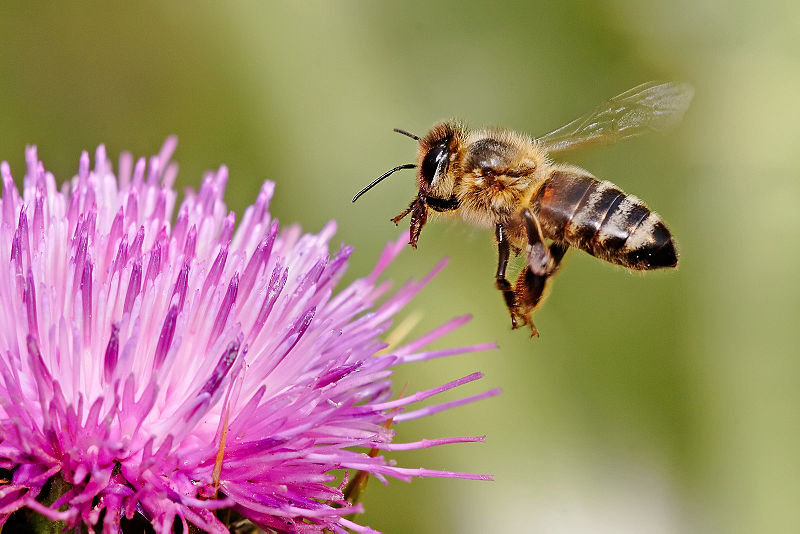
At the end of the day, we’re not powerless, we are powerful, but we have to do our individual and collective parts. Write your congressman, your local city council (hey, if San Francisco can ban the sale of plastic water bottles on public property, what can your city do?), anyone who will listen, and ask them to focus their resources on this VIP issue. When planting your garden, use bee-friendly vegetation. Plant native flowers, keep flowers blooming all spring and summer by planting a variety that work their way through the seasons, skip hybridized plants that don’t seed because they produce less pollen, and for Godsakes, skip the pesticides. Your grandchildren will thank you, and so will your friends, the bees. READ MORE HERE
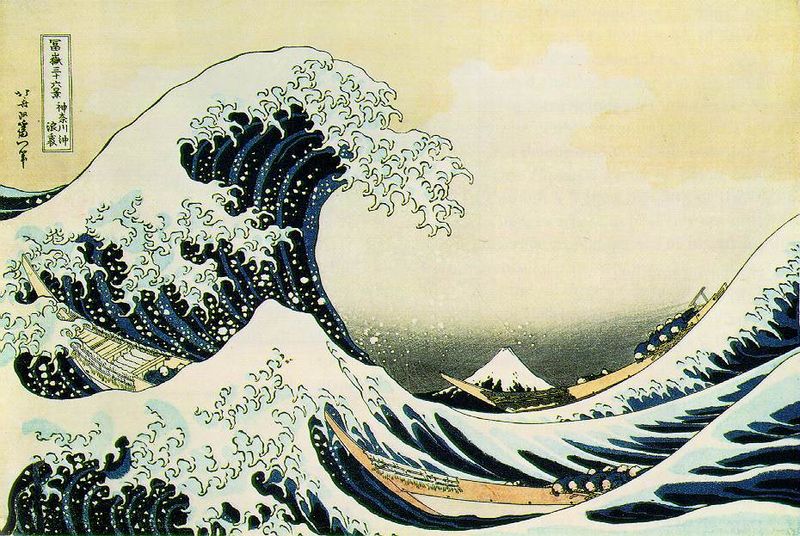
Did you know? Up to 80 percent of all life on our little blue planet is found in the oceans. . . and oceans contain 99 percent of the living space on the planet. More than half of the oxygen needed to maintain life on Earth comes from marine plant life.
This is such a fun writing assignment it hardly seems like work at all. Well, that’s not entirely true; it is challenging. I love this exercise because it opens all the doors and windows in my mind to let the cool breeze of appreciation blow through. This exercise will make you happy –after it makes you a little nuts. It will grow your sense of appreciation, right after it seemingly shrinks your capacity to grow creatively. It will teach you how to count not only your blessings, but your mother’s blessings, your dry cleaner’s blessings, and that guy’s on the corner, too. It will challenge you in ways you didn’t know were possible, but by the end of it, you will have developed a new-found appreciation for your writing prowess.
This exercise is a process of developing awareness for the details that comprise your life. It is about learning to look beyond the surface of things, to become like Superman, able to see in and through the ordinary facets of your life. It’s about tapping in and turning on, which is about 181 degrees from what we do on an ordinary basis. We work our daily lives into routines because it simplifies things. You take the same route to work every day because you don’t have to think about which street go down, the speed of the flow of traffic, what detour to take because the road has been torn up by the city crews. By following the same route to work each day, it frees your mind up to traipse after other thought balloons, work out other puzzles like what you want for dinner tonight, whether you’ll get the roses trimmed this weekend, the tattoo your darling daughter wants to get on the small of her back, your dream vacation to Galapagos.
Routine driving patterns are just one example of how we engage in activity, and disengage our attention. Personally, I like to devise new routes to get to the same old destinations for the adventure of it…but that’s just me. The trouble with routine is that we stop noticing the details of the world when we go on auto-pilot. Life goes by in a blur while we’re busy thinking about yesterday, dreaming about tomorrow. Right Now gets pushed off to the side as. uninteresting or unimportant. This couldn’t be further from the truth.
Some sages assert that Now is the only thing we know for sure. We can touch Now, we can taste Now. Where is the future physically located? Where is the past? Can you touch it? Can you slide it over your skin like a fine silk scarf? Now is the only tangible thing that matters and we’re busy pushing it away in our rush to be somewhere else. It’s sad. We spend so much of our time anticipating the future and replaying the past that the present slips by unnoticed. The Amish have it down. They don’t keep photographs of their beautiful, clear-eyed children because it’s against their conservative religious tenants. But as a side benefit, it anchors them firmly in the right now. Right now their girls are lovely. Right now their boys are strong. There’s something liberating about that kind of limitation. For this exercise you must anchor yourself firmly in your Now. No escaping to yesterday, no slipping off to next week. Take a deep breath and let it out slowly. Look around you, study your surroundings. If you’re in a cafe, count the people who occupy the tables around you. If you’re on the deck at home, notice the temperature of the air on your skin. Be present. It’s Now baby! Embrace it, shake it around, drink it up.
Take out your journal and put this heading at the top of a nice, clean page with the date on it; 100 Things I’m Grateful For. And there you go, that’s it. Now before you start scratching around the idea that this is too simple and too trifling, let me I can assure you, it is neither. A list of one hundred things may seem like an easy task, a task for a fool; and maybe it is. If you get to one hundred without breaking a literary sweat, bump it up to two hundred just to make it interesting.
The big stuff is easy: love, family, a comfortable life. What about the small matters? Lentils. Air conditioning. Sandals. The list really is endless, so get creative. How about guppies and bright green parrots? Make a list of 100 things –I guarantee you that the interesting stuff doesn’t even begin to show up until somewhere after 25. Generally, this is what you can expect. You’ll start at one, and streak blithely along, passing ten things you really appreciate without so much as lifting your pen from the page. Twenty will come and go. Shooting round the bend of forty may slow you down a little, scratching for ideas and then you see fifty up ahead. The incline before you has become swiftly steeper, slightly more hazardous. You’re not taking the corners as rapidly as before, maybe you’re having trouble catching your breath. Maybe this isn’t as easy as you thought it was. Panic might get you in its grip: What? Can’t think of 100 things? Approaching the summit, the forest thins and the air is vaporous and you passed all the obvious details of gratitude ages ago. Just when you think of giving up this stupid useless quest, something happens. Your minds slows its spinning, the sharp edge of your cunning softens, and what slips in, is a quiet knowing. There is so much more, more than you could ever fit into the list of 100. The thoughts pick up speed now. Suddenly the ideas rush at you and you smile knowingly. You found those things; all of them. And you found them not yesterday, not tomorrow; you got them all.
Do you remember your first day of school? I remember that I was excited, but I can’ recall more detail than that. I imagine now that when I got home that day, I drove my mom mad with details about amazingly cool! things like chalkboards, desks, coat hangers, paint boxes. No detail was too small, too mundane to be spectacular!
What would it be like if you found everything around you to be new and amazing, if the world was an exciting place to wake up to every day?
We’ve become so conditioned to our habitat, our customs, that we’ve simply stopped noticing anything that appears less than epic. But to a child, a Cheerio is an act of magic! A school bus is a marvel! An artichoke spectacular! Do you sometimes wonder where the wonder went?
No, you are not too old, and unless you really insist, too stuck. You can retrieve it by tuning back in to your enormous and innate powers of observation. They’ve always been there, but over time you got busy, started to ignore them, and they went to sleep from lack of use. No worries, you can get them back by waking them up and putting them to work. Again, and again. Repeatedly.
Our brains have amazing aptitude for recording detail. We hear and see and smell things all the time. We are aware of temperature, texture, weight, balance, language, color, relative safety or danger, constantly. Your conscious brain may be focusing on having a conversation with your hair stylist, but your subconscious, the primitive part of the brain is calculating and recording every detail in a ten foot radius, from the height of the display shelves to the left and the colors of the bottles on them, to your proximity to the door, to the relative humidity of the cool air brushing your skin, to the inflection in your stylist’s voice and whether the smile on her mouth matches the smile in her eyes.
You must think like a reporter. Reporters are trained to see what’s going on, to put the evidence together like pieces of a puzzle, and draw conclusions. You need not come to any grand conclusion from your observations, but observe, you must. You must begin to see the world not in broad strokes; ‘oh, there’s a school,’ and ‘oh see, there’s a dog,’ but in very detailed specifics. Go overboard! Scrape as many details up as you can. You can never be too specific. While you’re looking at the world around you and may be tempted to get lazy and summarize the vista spread like a banquet before you, but don’t fall for that old game. You will surely regret it. You will regret it because you will forget it. You will not remember the exact butterfly pattern on the bobble-head girl’s dress who knocked into the boy at the park playground and made him cry. You will not remember that the scruffy grey dog that dropped a stick at your feet and smelled like week-old salmon and sported one blue eye and one brown. You will not remember that on that particular day, you savored a peach flavor popsicle and that the clouds marched like a row of cream puffs against a sky so blue it made your eyes ache. You will not remember these things and you will not develop a knack for populating your writing with a thousand details unless you begin to flex that muscle of observation and put it to work.
Journal keepers all agree; when you go back and read through the books stacked neatly on your bedroom shelf, when you randomly open a book to a page and scan, it completely brings you back to that day at that cafe in that town, and remember everything about it because on that sultry afternoon fifteen years ago, you sat over an iced coffee, threw crumbs to feed the sparrows, and you wrote in your journal. You took a snapshot of your life -not a fuzzy half-focused one, but an honest to God totally naked look at all the florid details that filled your life for just one miraculous day. You wrote it down as a gift to your future self, and oh my. The sensation of reliving a day you had completely lost track of While you were busy raising children, managing a career, writing a book, caring for parents, making lobster costumes for Halloween parties, baking cookies, loving a spouse, is pure; it is delicious.
Each day is miraculous in about a million ways, but we humans have a short memory. Then another day comes, and the previous day gets tossed into the comer. And then we get another one! And another one! Pretty soon, there are thousands of such days and I don’t care how good your memory is, how many synapses you’ve got firing, how Leica-like your brainpan is, you can’t remember it all. That’s what a journal is for. Grab your journal and before you open it, open your ears and open your eyes. Learn to observe. Be an anthropologist. Be objective. Be brave. Walk into a coffee shop with nothing but a smile and a journal and sit yourself down at a comer table. Situate yourself with your coffee or your tea, and peer into the room around you. I mean, really look. See things like you had never seen them before and you were taking notes to retreat back to your home planet and report on the customs of the natives in your neighborhood. The man at the next table may be wearing glasses and reading a paper. Okay, good details. But what color are his glasses? What shape? Is the paper he’s reading an international journal or a gossip tabloid? The details tell a story. You can say the girl wore a dress. Okay, many girls wear a dress. But ‘the girl word a red dress’ tells us that maybe she’s a little fiery, a bit of a firecracker. When you fill your journal with details, you bring your images alive.
So get out of your comfort zone. Take a vacation from the familiar. Stop acting like you’ve seen and done it all, because cynicism is just boring. Train yourself to see your world like you’ve never seen it before. Begin to pay attention to the details, at least some of the time. Fill your journal pages with the flavors of your exotic life. You may not think your life is anything special, but I bet you dollars to donuts someone on the other side of the planet thinks it’s gosh-darned amazing. So act like it. Act like your life is a rich stew of tasty details, and write them down.
I’m on vacation and and have been exposed to more television than one would think possible but then there is the time factor (lots of it) and the the guilty pleasure factor (also lots of it). During the usual course of work and life it hardly makes sense to squander precious time sitting in front of the hypnotic eye. But here I am on vacation, and find myself triggered into watching one of the dozens of food based productions so readily available on TV. Back in the protozoan era of television programming, of say, the GallopingGourmet or The FrenchChef, with Julia Child, the subject was cooking. Or good food. Or discovering what the French did with food that made it so freaking amazing (spoiler alert: it’s the sauce, cherie). Now, however, it seems that it is a competition about which nasty character can win the prize for the least disgusting dish whichincidentallylookstheprettiest. A show in particular caught my eye because it was all about pork. Pork belly, pork shoulder, pork haunch, bacon. Pig, pig, pig! It made me wonder: what is it about our love affaire with all that is porcine?
So okay, full disclosure, I’m a theoretical vegetarian. This means I mostly don’t eat meat which, by the way, isn’t easy. And I don’t ever want to be that person…you know, the one who will force the entire office to redesign the annual picnic to accommodate their very special diet restrictions because goddess forbid they should just shut the hell up and eat macaroni salad and be grateful to be included. But I digress. Back to the issue of pork. Honestly, I prefer fish but will indulge in duck or lamb if it’s locally sourced and not the product of a factory farm.
DOYOUKNOW HOWYOUROINKER MET ITS FATE?
I am pro-food. You’ll have to trust me on this. However, and increasingly, I am also pro-sustainability. Which factory farming is not. Just one hog produces 17.5 pounds of poo and pee per day. A theoretical farm of 1,000 theoretical hogs will produce 6 million theoretical pounds of waste per year. Most factory farms have more like 35,000 hogs…and honey, that’s a lot of poop to process. Factory farms keep pig waste in “lagoons” which sounds lovely, unless you live downwind or factor in oceans of antibiotics or gazillions of gallons of growth hormones swimming around in there. Or course, this chemical stew leaks and leeches into the local soil and eventually into the ground water, creating a bio-hazzard so so toxic on so many levels my heart spasms just to ponder it.
As animals go, pigs are clean, social, curious, and work collaboratively to solve problems, which makes them more intellectually advanced than many producers of reality television and some members of congress. I’m not suggesting that we give up our BLT or prosciutto-wrapped melon, I’m just saying that the price we collectively pay for our food should factor in what it takes to bring it to market.
Funny you should ask. You see, the federal government recognizes the beauty, the raw power, and the undeniable necessity of wetlands, not because of the commercial development value, but because of their intrinsic and strategic value in maintaining a healthy ecosystem.
Wetlands have three distinct parameters that earn them the title. First, they are water-saturated and can always be wet, like swamps, marshes, bogs and coastal wetlands, or seasonally wet, resulting from winter snow melt, and occurring in forested or wooded or open areas that collect standing water, and sometimes dry like ephemeral pools or streams which reemerge after a rain event and dry out with the sun until the next rain event. Second, their soils are hydric meaning that at least for some part of the year the soils will be immersed in water. Thirdly, they have more than less hydrophytic vegetation which simply means that this type of plant thrives in a water environment. Unless it’s an obvious wetland like a marsh or bog or coastal plain, a bit of scientific investigation is necessary to make a wetlands determination as it’s not always apparent to the naked eye. Permits are required to build in wetlands as well as avoidance and minimization of the planned disturbance and mitigation for whatever amount of wetlands are converted to uplands. It’s a bit of a complicated process, but with the federal government’s “no net loss”of wetlands policy, a crucial one.
Why, gosh darn it, are these mosquito-infested swamps so important? Well, wetlands act like a sponge. They control flooding, filter pollutants, and buffer storm surges like nobody’s business. The Mississippi Delta which is practically one huge wetland has over 40% of the wetlands in the lower 48 states and has lost over 1,900 square miles since the 1930’s. About two football fields worth of wetlands are lost every hour. It used to be that 50 miles of wetlands separated New Orleans from the next hurricane, but no more. Now storm surges and big winds have their way with her.
Philadelphia, was also a big wetland when the colonists first settled, but they ditched and drained their way to what is now known as Center City Philadelphia. The problem is not necessarily the conversion of wetlands. Many port towns around the coasts of our country were once inundated with wetlands and are now bustling metropolises rather than said mosquito-filled swamps, but overdevelopment, such as in the Florida Keyes and surrounding environs, has resulted in life out of balance. As coastal cities continue to build out, or develop their barrier islands beyond holding capacity, the 100-year storm which now seems to happen every five or ten years will continue to pound what used to be only shoreline, but is now littered with million dollar homes.
How many wetlands do we need to control flooding, keep pollutants out of our rivers and streams, and help blunt the surge of rising winds and tides? It’s a fact specific, case-by-case analysis, but as climate change forces sea levels to rise, I’d hazard a guess that we’re reaching critical mass in some of the more densely populated coastal areas, for example, the Jersey Shore. Maybe a few more acres of wetlands wouldn’t have stopped Hurricane Sandy, but they would have cut down way down on the property damage. As the sea levels rise, wetlands have become more important than ever. Insurance companies are keenly aware of this —pun intended —sea change, and have started charging more for policies on climate-threatened properties. Some are even suing municipalities to pay for the cost of global warming such as Farmers Insurance Co. did with some Chicago-area governments in a landmark class action suit filed on May 2, 2014 (Illinois Farmers Insurance Co. v. The Metropolitan Water Reclamation District of Greater Chicago District, et al., Case No. 14CH06608, in the Circuit Court of Cook County, Illinois).
By the way, about the frog: they are extremely important to the balance of the ecosystem since they eat bugs, filter our drinking water (tadpoles), and are themselves a source of food for other species, as well as the source of many medical advances for humans. Plus they make the most rockin’music! Unfortunately, they’ve been on the decline for the last 50 years with fewer numbers and more mutations because of a variety of things, but degrading water quality, habitat loss and overuse of pesticides are a few of the major ones. Frogs are to the ecosystem like the canary is to the coal mine. Their death is the first indication that there’s a problem and where frogs go, humans will follow.
We can’t all have beach front property, not at great public and personal cost, but we can all enjoy the beach. What is it the Buddha said? Everything in moderation? So for National Wetlands Month, go ahead and build that dream vacation home, but build it on a upland so tomorrow our kids will still have a frog or two left to kiss.






 persephone's step-sisters