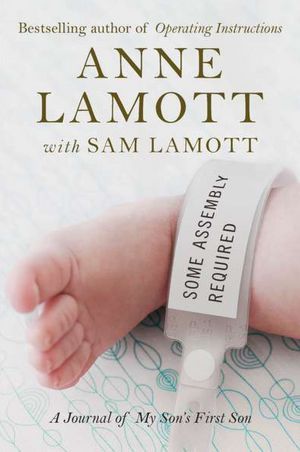
sharing the publishing success of our friends
is just one perk of having our own blog.


sharing the publishing success of our friends
is just one perk of having our own blog.
we blush, and for good reason.

 Journal THAT
a guide to writing
Cynthia Gregory
Like photographs, clichés are the shorthand of communication. If a picture truly is ‘worth a thousand words’ (a pretty cliché) it’s because its cash value rests on the fact that the ancient part of the brain, the primitive lizard brain, the dreaming brain, communicates with pictures. I mean seriously, think about it. Before written language, our ancestors drew pictures of actual horses to represent “animal” or “the hunt” or “wild and free” before there were actually spoken or written words to convey the ideas. Now, however, we are wildly sophisticated and have a language (or two) that we can manipulate to communicate otherwise free form ideas floating inside our cabezas.
Storytelling served as a history lesson before written language, and storytelling today is as popular around the campfire, board room table, or cafe four-top as ever. Stories are innately wired into us and as humans, we crave and respond to the story. The stories of our lives, our novels, movies, television and cable news, are a series of pictures – both visual and virtual. Actual photographs and pictures illustrate a narrative we may tell, as in “see? I was in Paris – here’s the Eiffel Tower,” or “here’s a photo of little Sophie Soo, ten years old.” In each case you may be telling a story, constructing a narrative and sharing information about your travels and your dog, backing your verbal story up with photographic evidence. So yes, pictures are worth thousands and thousands of words.
And if all those wonderful words at our fingertips were colors, original ideas are bright, clear fountains of rich hues, and clichés are dull as dirt.
The trouble with clichés is that they are so infused into our daily language, we hardly recognize them for their trite, frayed selves. Advertisers know this. They know that people are put off by formal language, fancy words, words that stand up straight and march with a snap in their step, so they dumb down marketing messages, intentionally inserting clichés so that their uber-sophisticated messages sound “down to earth” (cliché!) and “right as rain” (cliché!). Television programmer know this too, and make sure our televised stories don’t get too smarty pants, else run the risk of losing viewers –although because of the trance-like fog I fall into when I tune into a program I happen to enjoy, “viewing” isn’t exactly what I’d say I was doing. I’d bet a nickel that not one filter remains intact with all that bad, cliché loaded language comes washing over me. While some programs are brilliantly written, most programming I’ve observed seems to be no more than 30 minutes of tired ideas strung together. So when you think about all the hours of programming and bad language we’re exposed to, it’s no wonder we’re up to our eyeballs in clichés.
So, if everybody is guilty of crimes of language abuse, then it must be okay, right? In the words of mothers everywhere, “just because all the kids are doing something doesn’t’ make it right.” Clichés have their place, which is definitely not between the covers of your journal. You want your journal to be clear, concise, absolutely fecund with the rich details of your life, so absolutely pitch-perfect that with even a quick glance, you inspire yourself to write. Even. More.
So, once in a while work your language muscle a little harder. Avoid the flabby turns of phrase. Jettison the flaccid prose that comes so easily. Instead, read an amazingly genius writer and then journal. Turn the TV off, and journal. Instead of taking the easy way out and dropping in an over-worked and sad sad sad cliché and reach for something original. You may just surprise yourself with your own genius.
Journal THAT
a guide to writing
Cynthia Gregory
There are good adjectives and bad adjectives. There are the regular, hard-working-show-up-in-the-middle-of-the-night-but-go-unnoticed adjectives and then there are what I call the 25 cent adjectives. You know the kind, all flashy and shiny and bright, the kind you notice more than the noun that they’re describing. They’re like fast food; they temporarily distract you from the fact that there is nothing of substance behind them, they are the literary equivalent of a plate of whipped cream.
I know a lot about these razzle-dazzle kinds of describers, these peacocks of poetry. I used to scatter them around liberally, clever as I was. But what happened when I really got rolling, is that the point I was trying to make got totally buried under my ponderous prose. My meaning sagged under the weight of all that reckless description. My language got so pearly and polished that everything I wrote began to sound like a steaming, verdant jungle, packed with all the lush pomegranates, mangoes and papayas of meaning I could wedge in. I mean seriously, an old pair of scruffed sneakers with one broken lace is a perfectly respectable sort of description. But when I got done with it, those Keds sounded like Ritz Carlton glass slippers.
What happened when I began to excavate the core of my message, the humble meaning of my narrative began to emerge as I sliced away one fabulous phrase after another. Everyone knows by now the famous story of what Michaelango said when someone asked how he knew how to carve the statue of David – he said, “oh, I just got rid of what didn’t belong.” You need to do the same with your descriptive language. Pare it down, pare it the hell down. Make it lean and mean and dense. Never use a twenty-five cent word when a nickel will do.
Many people mistakenly think that a short story is easier to write than a novel, because it’s more compact. They think that a poem is even easier, because there are fewer words yet. But the exact opposite is true. Did you know that? The shorter the piece, the harder it is to write. This is because with fewer words, every one has to count. There is no room for extra padding, no place to hide. There are no long stretches of narrative, expeditions into expostulation. You have to say exactly what you mean. Every word, every verb, has to carry the weight of the sentence on its meager back, so it must be strong, and it must be absolutely true. The shorter the writing, the denser it becomes. Not dese heavy, just dense: full of meaning; ripe as a summer peach, juicy and succulent.
It’s easy to see why people fall in love with a flush of flabby, fatuous descriptions; because they mean nothing. We’re a TV culture after all, we’re used to that. Flamboyant descriptors are like a magician’s trick, a sleight of hand. Honest writing, writing from the heart, strips you naked. It’s much easier to hide your fragile heart behind a veil of words. But that takes no courage. If you want to journal, you must be brave. You must go into the room you’re afraid to enter and stay there until you have emptied yourself out. And the next day, you must go in there again. You can never completely empty yourself through journaling. There is always something more, something deeper, something rich and rare and precious because it comes from within you. It comes from a place beyond the glittery surface. It comes slick and dark and wet and you must love it. You must stay with it until your heart stops quaking in your chest and you must put it on the page, make it authentic. This is real courage. This is what true love is made of: entering into that place that terrifies you and staying there, listening, writing, watching, recording it all, until the quiet enters and the writing is complete.
Sometimes you will flow with a million thoughts, like droplets of water over Niagara Falls, and there is nothing wrong with that. I would like to suggest however, that there is a balance. If you can practice both ends of this particular writing scale, you will become a better writer. When you sit down to write, think simply. Don’t think you have to impress anyone, to show off. You have an audience of one, and its you.
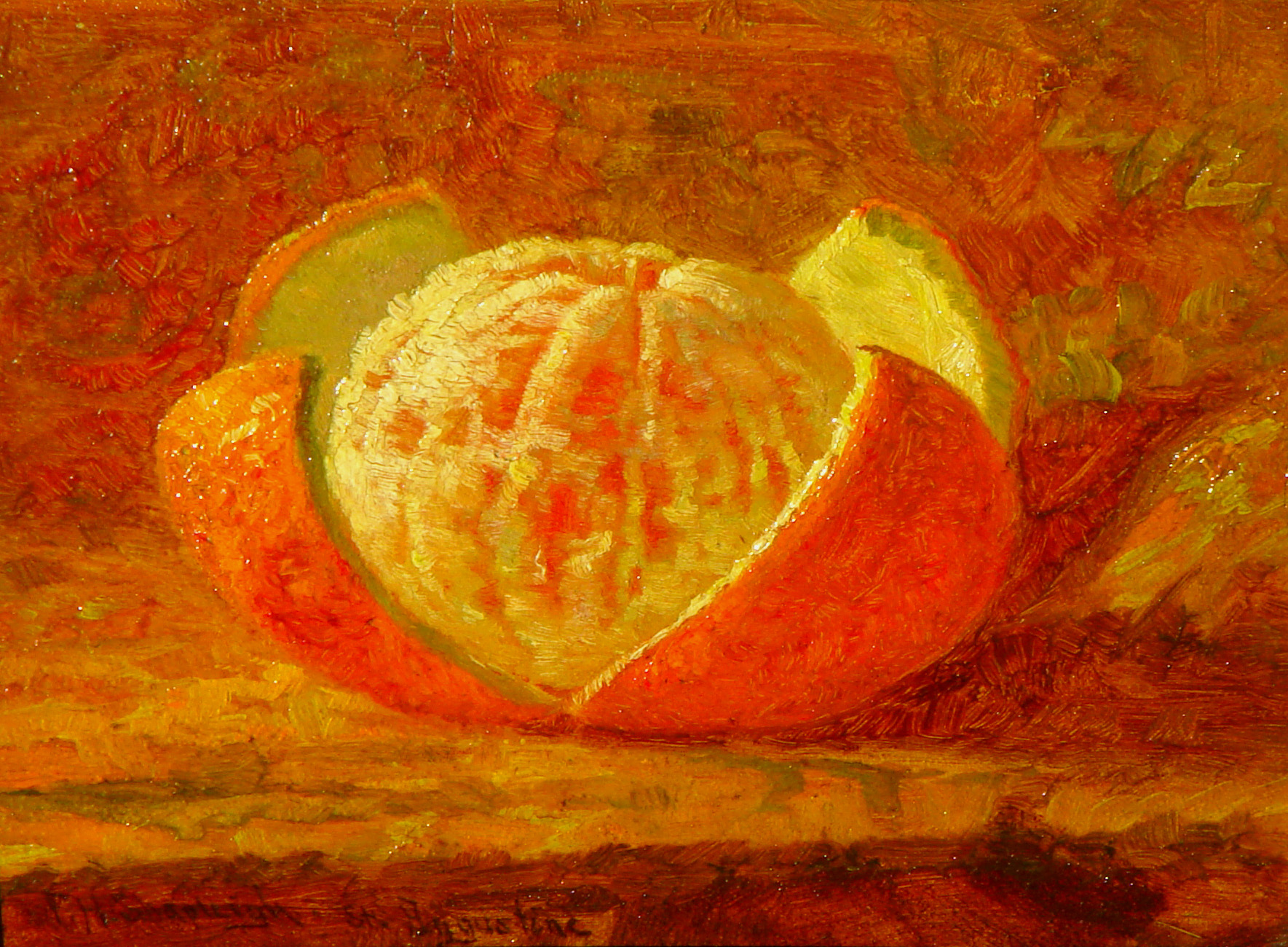
Here is an exercise that will illustrate what I’m getting at. Sit with your journal and an orange, in a quiet place. Write for fifteen minutes describing the dimpled orb of fruit without using the word orange more than once. Go into that room and stay there. You can riff on the orange if you want, start with the fruit, talk about the blossom or the orchard, or the hands that harvested the one you hold in your hand, but Don’t use the word orange more than once in your description. You can use another fruit if you wish, but the same rules apply. So chose a plum, but don’t use purple. Or choose an apple, but don’t use red or green. You get the point. Hold yourself apart from using the descriptor that is most obvious, and what you get in return is a whole new way to relate to description in general.
Be objective, be a journalist. Pick up the newspaper and read an article about an event. Journalists use the fewest adjectives than just about any writer, and most of those are worth a nickel. They don’t say “it was a stunningly sunny day with chalky clouds dotting the horizon.” No, they say, “the day was warm, with scattered clouds.” Period. There is an elegance in that kind of simplicity. Practice being a journal-ist. Practice simplicity with your journal. And be patient with yourself. This stuff takes practice.

Journal THAT
a guide to writing
Cynthia Gregory
Dialogue is some of the most difficult stuff to write. Well, difficult if you want to do it really well and for it to sound both natural and powerful. It may seem like a paradox, but when dialogue sounds natural, it’s usually anything but. Good dialogue is a mix of craft, study, and a whole lot of understanding that some of the most important stuff is what you leave out. In other words, the back story; but I’m getting ahead of myself.
Have you ever walked away from an argument then hours later came up with the perfect rejoinder? Good dialogue is like that. Good dialogue contains all the spiffy, swift, snarky words you’d say the first time around if you had the chance to work it all out first. Good luck with that.
Developing a skill for dialogue is something that requires patience. . .and practice. How do you practice? Listen. Read. Write. Ernest Hemingway wrote some of the best dialogue in the history of the planet. His characters spoke with grit, pathos, and with bone crunching honesty, and yours should, too. Read his stories and novels with an eye toward dialogue and see what you find.
Papa was also brilliant at character, plot, and conflict. For the purposes of this conversation, I urge you to carefully study how his characters speak to one another. My particular favorite Hemingway story is “Hills Like White Elephants” which as a piece consists almost entirely of dialogue so brilliant I want to cry when I read it. The other wonderful story by E. Hemingway is “The Short, Happy Life of Francis Macomber.” Ee-yikes, that man could write dialogue.
Part of his strength in dialogue comes from the fact that he didn’t feel the need to connect every dot in the storyline; he assumed that the reader was reasonably intelligent, and could piece it together.
You don’t need to worry about connecting everything. Your amazingly powerful subconscious does it for you. To test the theory for yourself, rent a movie like Sliding Doors or The Golden Compass and watch it. If you’ve never see these movies before, enjoy the story the first time through, let it wash over you as pure entertainment. Then, watch them a second time, listening for dialogue. Notice how the characters speak the way real people do, but better. On the third time through, you should know the story well enough by now to take a step back, and look at how the scenes are woven together. Perhaps you notice that your own brain provided some of the connective tissue between scenes, that significant pieces of information were not actually there, that your own subconscious provided those bridges between scene, dialogue, and plot. It’s interesting how the brain works to make sense of what it sees and hears, providing those little leaps of logic between one frame and the next.
You can do this as a writer, too. Begin to notice how people speak to one another. Very often, they do not follow threads of conversation in a smooth and linear way. One person speaks, and maybe the other listens, maybe they just say what’s on their mind, like the following example:
Devon walked into the clubhouse and gravitated toward Elise. “How are you,” he asked. “I’ve been looking for you everywhere.”
Elise swept a fringe of bangs from her eyes. “It’s so hot today.”
“Did you see the Connollys won the golf tournaments? Figures.”
“I’d give anything for a lemonade.”
This may sound like an ersatz example, but I challenge you to prove me wrong. This will involve eavesdropping, so prepare to have some fun. Now, the first thing you do is take your journal down to the local café, burger joint, or java hut. Find yourself a table, place an order, then open your journal. Try to be subtle about it so your neighbors don’t realize you’re recording their conversation, but you’re going to do just that. Write down what they say. You don’t have to be looking at them, in fact it’s probably better if you don’t. Listen to the way they speak. Listen to the cadence, the word choices, idioms, the patterns of speech.
At the risk of sounding like a linguistics geek (yeah, yeah, whatev), I adore the way regional and cultural influences affect the way we speak to one another. When you realize that only 10 percent of our total communication is the words we use, and then you look at how the words we use influence meaning and nuance, you can see how important dialogue is. Forget about trying to write accents, that’s just annoying. But focus on the types of words that are used.
Words are worlds. Anyone with a teenager knows what it is to learn a new language, weekly, just to communicate with the people with whom you share groceries and a living space. Talk to anyone older than sixty, and you’ll be introduced to wonderful idioms that you may never have heard before. My personal favorite from a recent conversation is, “he couldn’t tell his butt from a hot rock.” I still chuckle when I think of that one.
Word choices contain emotional and cultural weight. Think about it. When you use the word “grenade” do you think, ‘oh, good’? Probably not. But if you use the word ‘bride’ it probably generates feelings of love and romance. Words carry weight.
Some idioms reflect a time in history, such as “Give me a ring.” This used to mean “Give me a call,” but since telephones now come equipped with ring tones and all kinds of sound effects, the term “ring” is just a piece of jewelry.
As a word geek, I am constantly amazed when nouns are used as verbs, as in “Jeff texted me last night We’re breaking up.” Once, ‘text’ was a noun meaning a compilation of words. Now, ‘to text’ means to send a clever message via any number of electronic devices. Our language is a living organism, changing all the time, as evidenced by how we speak to one another.
The best dialogue has the primary purpose of moving the plot or story, forward. Period. It isn’t used to describe what someone is wearing, it isn’t to provide a blow-by-blow description of last night’s fight. It’s a way to show your reader where they’re going next, but in, you know, shorthand.
So, pay attention. Listen. Eavesdrop. Hey – it’s for the sake of your journal! All I ask is that you be discrete.
we’re seriously blushing. you can read all about it here.
We love this so much we wanted to share. Please read and comment. Do you agree or disagree? Love it or hate it? We honestly want to know what you have to say. Sincerely yours, PSS
“A recent study has shown many people benefit from rereading familiar stories as the encounter “reignites” their emotions and increases their knowledge.
In broad terms the research found that people were generally keen to return to a well-thumbed book or to listen again to a favourite piece of music so they could gain a “richer and deeper insight” of the experience and increase their understanding.
The study concluded: “Consumers gain richer and deeper insights into the reconsumption object itself but also an enhanced awareness of their own growth in understanding and appreciation through the lens of the reconsumption object.
“Given the immense benefits for growth and self-reflexivity, re-consuming actually appears to offer many mental health benefits.”
“Vladimir Nabokov maintained that you couldn’t say you had really read a novel till you have re-read it. On the first reading you may be gripped by the story, and so you read fast…
View original post 177 more words

 persephone's step-sisters