Did you know? Up to 80 percent of all life on our little blue planet is found in the oceans. . . and oceans contain 99 percent of the living space on the planet. More than half of the oxygen needed to maintain life on Earth comes from marine plant life.
“It was early September and I was driving, literally, to the last road in the United States, a gravel-and-dirt road that paralleled the Canadian border, up in Montana’s Purcell Mountains. It was like going into battle, or falling in love, or walking from a wonderful dream, or falling into one: wading into cold water on a fall day.” – Rick Bass, Winter
Can Rick Bass help it if his Soul’s been on a nature walkabout for all of his life? In Winter [notes from montana], Bass’s wandering spirit is alive and well and living in the Yaak Valley in Montana without electricity, without heat, other than the wood-fired variety, and without much contact with civilization… To read more of this post, go here…
For thousands of years, we’ve used and reused the same water as the dinosaurs, Galileo, Genghis Kahn, and Jesus. Until now. Now the water is chock full of contaminants that the ancients didn’t even know how to pronounce. That’s because Mama Nature doesn’t know how to remove radionuclides, usually held safely within the earth’s crust, and other chemicals found in the fracking wastewater that’s slowly making its way into Her rivers, lakes, and streams. Until now, we’d been sipping the same stuff as Adam and Eve. Until now.
She died that night. Doc attended the funeral along with dozens and dozens of ranchers and their families all come to pay their respects to this great woman, one of the “stickers” whose family had come in the late-1800s during the first boom and bust era of timbering and mining and oil and construction and who had stayed on to make a living. They worked the land for what it would produce – cattle. So when the time came and they asked if anyone wanted to say anything on behalf of this fine woman, Doc’s hand raised itself, his body stood up, and he took over the funeral.
“Twila’s great-grandfather was thrilled when the first oil men knocked on his door with a check and a promise. They may not have tamed the harsh out of the land, but at least they made it more hospitable. They built roads and paid well, and the ranchers loved them. That was the heyday when oil flowed like free love out of those great big underground reservoirs. Sweet gas, they called it. Back then a whisper could’ve coaxed that oil out of the ground.” To read more of this post, click here…
It’s Earth Day, and you know what that means — Mom’s Birthday! Not your biological mother, but the Mother of Us All. Since it’s a holiday, we won’t dwell on all the intractable environmental problems that could potentially derail us as a species. We’ll save that discussion for another day. Instead, as a tribute to Mother Earth in all her, well, earthiness, here are ten things you can do to assure She makes it to Her next birthday and a few million after that.
1. Think globally. Act locally.
2. Eat organic.
3. Conserve water, and drink more water, too.
4. Walk more. Bike more. Drive less.
5. Plant a tree or a pesticide-free garden (but not a rose garden; too much fertilizer).
6. Sing. Yes, believe it or not. The planet is made up of sound so show your appreciation and join in Her song.
7. Become consciously aware. Every moment spent rooted in the present is one more you won’t miss. Enjoy it to the fullest.
8. Buy products that have a smaller environmental and carbon footprint, i.e. it’s okay if you can’t afford a Prius. Start small. Buying food sans excessive packaging that would end up in a landfill is perhaps just as important.
9. Reduce, reuse, recycle. Not just bottles and cans, but clothes, shoes, appliances, electronics, whatever you can.
10. Most importantly — vote with your wallet. As consumers, we hold tremendous sway over the products appearing on the shelves in our local markets. If you don’t like them, don’t buy them. And if you really don’t like them, vote with your feet and walk to another store!
Over the next few months we’ll talk more about these things individually, but for now, Happy Earth Day.
Throughout time, godparents have been an important, often undervalued resource in the raising of children, providing nurturing counsel and emotional sustenance to their charges. Maybe they didn’t grow us, but they provided strength, love, and an alternative point of view, the ally in our evolutionary corner, always ready to step in when needed. Even the Mother of us All could benefit from having one. Lucky for Her then that there was Rachel Carson, and lucky for us.
If Edward Abbey was the godfather of the modern environmental movement, then Rachel Carson was the godmother. When she penned Silent Spring, first published in 1962, Carson probably had no idea that it would be one of the most influential books of the modern environmental movement. Read More Here…
Close your eyes. Take a deep, slow breath. Feel your lungs swell with air. Notice how your chest expands gently and as you exhale, sense the relaxation of your body. Your lungs pump oxygen into the bloodstream, which flows faithfully throughout the body and when that sweet rush of oxygen reaches the brain, you are instantly calmer, more relaxed. Most days, we don’t think about the breath. And still, a breath, consciously observed, has the power to regulate the temperature of the body. It brings clarity of the mind. It releases tension, It quiets the ego. Some would even say that it is not you or me doing the breathing, but the act of taking in and releasing air, is God breathing Us.
THE WOOD FOR THE TREES (2)
Some of the oldest living organisms on earth are trees. Giant sequoias, for example, can live as long as 2,500 years while some bristlecone pines can live up to 5,000 years. The numbers vary, but let’s just say for simplicity’s sake that a mature tree, i.e., older than a mid-range teenager, consumes about 48 lbs of CO2/yr. (Some accounts are much higher for you skeptics.) The key to this is mature since a prepubescent tree simply doesn’t carry its weight. It’s simple math. CO2 in, oxygen out, but cut 18 million acres off the face of the earth and the numbers skew, the math gets wonky. Saplings start out perky enough, sucking in a bit of CO2, letting out a bit of oxygen, a tree’s waste product (who said it wasn’t a symbiotic world), but it’s not until the tree reaches 100 or 125 that it really hits its stride, exhaling wads of the life-giving stuff each year, chowing down on carbon dioxide like it was candy. The fact is, older trees outperform younger trees by an incredibly wide margin and the older the tree, the more CO2 it can take in because this is one instance where size does matter. So while it’s all cool and hip to plant a tree every time you cut one down, don’t expect the payoff to be that meaningful for awhile. (Please don’t read this and have your take away message be that we shouldn’t be planting trees. We absolutely should and must be, but keep in mind the delayed rate of return.)
Only about half of the world’s tropical forests are still standing. While trees as a whole give the world a great big oxygen boost, the destruction of the same trees to make way for crops — think slash and burn of swaths — doesn’t just deprive us of that oxygen, but contributes to greenhouse gasses because: a) we’re burning them, and b) they’re releasing the carbon they were holding. All tolled, it’s somewhere in the range of a 12-17% carbon increase. Something else trees do is hold water in their roots and then slowly release it into the atmosphere, contributing to the amount of water vapor in the air much like your houseplants release moisture into your home during the dry winter. Amazingly, in the Amazon Basin, about half of the water in the ecosystem is held within the plant life. Without trees, we have deserts.
The writer Aldous Huxley said facts don’t cease to exist simply because we ignore them. About 18 million acres of forest are lost each year to logging for firewood, or pulp and paper, for raising beef cattle, and for growing cash rich crops such as soy, palm oil, and coffee, the latter three of which leave behind poor soil conditions since none of their root systems holds the ground well. All of this results in increased erosion, flooding and a decline in local water quality due to runoff. It takes about 2,000 gallons of water to raise a single pound of beef plus acres of cleared forests to make way for pastureland. Beef is neither ecologically nor agriculturally efficient, and too much is bad for your heart, so why are we eating so much? (Notice I didn’t say “it”, but “much.”) Should we continue cutting down old growth forests to make amazingly beautiful furniture, continue to eat large quantities of beef, continue to grow crops such as soy or palm oil (not the good fat, BTW) to use in our unending supply of processed foods, shampoos (sodium laureth sulfate and stearic acid are derived from palm oil), and cleaning products, continue to log forests for paper, and sadly, firewood, or should we check ourselves and stop living in what is probably the most unsustainable manner since the ruling class of ancient Rome, unless you’re a Kardashian or had a hand in constructing just about anything in Dubai. Shall we ignore the facts?
Approximately 70% of the world’s species, plants and animals alike, live in forests. What happens to those species when the forests are all gone. I think it’s more than speculation to say they’ll go the way of the dinosaur and man as a species will be right behind them. Where I live in Central Pennsylvania, the richest unirrigated farmland in the country is being plowed under for brand new, upper-end housing developments. We all need a place to live, yes, but couldn’t it be a revitalized brownfield instead of the rich, fertile farmland that gave my part of the world its acclaim? I wonder about all the critters living in and around the edges of those farm fields, in the small patches of woods, in the little nooks and crannies and burrows. Where will those little guys go when the tractors arrive? It’s not like they can call a realtor and get a trade-in on read the rest here
We love our stories, don’t we? It’s how our small brains are wired. We love stores around a campfire, we love stories before bed. It’s no coincidence that our stories at this time of year are about Nature. Gaia. The seeming return of life from the slumbering earth. As it turns out, we have quite a bit to say about our namesake, Queen of the Dead, Mrs. Hellfire, Persephone Herself. As a collective culture, we haven’t treated her very well, and there may be repercussions. Aretha said it best: give the girl a little R-E-S-P-E-C-T.
THE WOOD FOR THE TREES
In 1995, while still a wide-eyed environmental attorney, I took a meandering road trip through the magnificence of the Pacific Northwest. One evening at a local bar in Forks, Washington (the filming locale of the Twilight series), I found myself embroiled in a discussion, regarding the vicissitudes of logging with one of the locals, a lumberman who was just as passionate about the need for harvesting timber as I was about the need for the preservation of forests, particularly old growth ones. He repeatedly asked me, as if therein lied the answer to the Gordian knot we were trying to unravel, whether I liked my toilet paper one-ply or two-ply.
“Until you’re ready to have that conversation,” he said, “there’s really nothing to say.”
I remember being incensed that I couldn’t get this guy to see that what he was defending could wipe out years, perhaps decades of potential human existence on this planet. He refused to consider the possibility that trees act as the planet’s lungs and their removal jeopardized our oxygen supply just for a few more rolls of toilet paper. So while I saw his point, I didn’t see the need to wipe out whole forests to make it.
There are few things that speak to you like the towering majesty of an old growth forest. The slant and dapple of the light through the leaves, the song of the birds as they alight and fly, the flash of movement caught in the periphery as nature rearranges Herself, the heady smell of peat moss, representing life and death rolled into one. The bottom of peat moss decays to form peat deposits even as the top continues to grow which is basically how Mama Nature rolls, using the nutrients of the dead and decaying to fuel Her rebirth and regeneration, resulting in, ta-da, Spring, or as a microcosm, every dawning day. Take Persephone, the newly crowned Queen of the Dead, sleeping this whole long, lonely winter underground with her uncle cum husband (gross), Hades. Hades stole Persephone from the earth topside on a technicality and Demeter, her sweet mama and the Goddess of Agriculture was so disconsolate, she refused to let another thing grow until Persephone was returned to her. Such is a mother’s love — fierce, unpretentious, unwavering — just like our collective Mother is with her children, that is until we disrespect her and she turns on us like the Titan Cronus, known to the Romans as Saturn, who ate each of his sons when they were born so none could fulfill the prophesy to overthrow him. Coincidence? I’ll leave you to draw your own conclusions.
The days are growing longer, can you feel it? The air is warming, sunlight brushes bare skin like a kiss. The quality of light is changing. . .and we don’t just mean this month’s lush full moon. However, while the planet is bathed in lunar light, it’s a good time to think about your own potential, even as you consider the seeds you’re planting. . .and set your intentions for a bountiful harvest. This Full Crow Moon marks a time for new beginnings. . .and celebration!
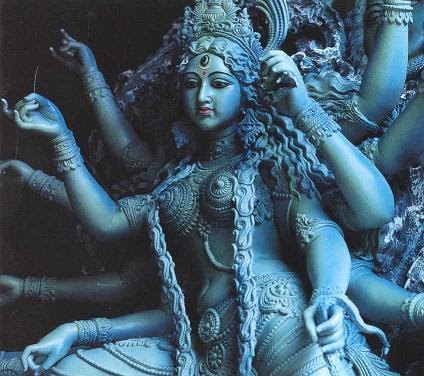
Let’s do a time check. Persephone is trapped underground with Hades, thanks to her bad dad, Zeus. It could be that Seph is throwing Skadi around like she means it because she’s had enough. Meanwhile, Kali is getting her party started; making chaos and burning down crops. Athena’s itching for a fight. . .and guess what? It’s ladies’ night, and we have a front row seat.
Are we having climate change fun yet? here’s what we know for sure:
The instability of the climate means rapid changes unlike anything history has demonstrated. Wildfires, heat waves, polar vortexes, flash floods, and droughts are just some of the lovely surprises that climate change has in store for us. It’s all about balance, sustainability, inconsistent consistency, the latter which is what normal weather is like — fickle, but not spiteful. Here in PA, just the extra snow days alone have drained local snow removal coffers. Imagine getting hit with monster, successive storms. Think Katrina and Hurricane Sandy, back-to-back. Who’s going to clean up the mess, rebuild, pay for the damage?
It will take a firm commitment. If we threw more than a few bucks at green infrastructure and got some big thinkers and visionaries working on long-range solutions, maybe we could gain some ground. Instead we’re shrinking funds for alternative technologies – the fusion budget has been cut so the U.S. is no longer the world leader in that regard – even as we continue to provide corporate welfare to Big Oil and Gas. Do the oil companies really need that extra money when they are already turning record profits? I wonder, could I get a tax break if I drilled a hole in my back yard and said I was looking to strike oil?
We can’t win this one, kids. Really. After all the damage, hurricanes, typhoons, tsunamis, and 50 degree evenings in July, we’ve still got people saying screaming that climate change is bad science. The Earth was here before and she’ll be here long after we’re gone. We all know the truth. It’s time for an intervention. We can help Mother Nature deal with her issues, by dealing with ourselves. We are her issues. The government is not going to save us. Neither are the aliens, in case you were holding out hope, or even just wondering. The only ones who can save us are us, but not until most of us get our collective heads out of our b… I mean, the sand. It’s time to do what we do best as a country — solve problems, innovate, lead so others might follow. The payoff, as if saving the planet and ourselves wasn’t enough, is that there’s a heck of a lot of money to be made in green technology, but first we need to cure our CCD.
Kali called; she wants her Gaia back. She’ll do what it takes, so strap on your Teflon pantyhose honey. Even if we stop abusing the planet now, she’s already warmed up and the punch she’s packing is gonna be a gobsmacker. Here are a few fun facts about changing weather patterns that might just be relevant:
Fact: While global temperature has increased about 1.4% over the last millennium, we are currently heading toward an unthinkable rise of between 2 and 12 degrees by the year 2100.
Fact: An increase of 2 degrees F will result in a 5-15% crop reduction; 3-10% increase in rainfall during heavy rainfall events (increasing flooding risk); a 5-10% decrease in stream flow in some river basins; and a 200-400% increase in wildfires.
Fact: Experiencing extra snowy winters doesn’t mean climate change isn’t real. Rather, the increased water vapor in the atmosphere results in increased precipitation, a Catch 22.
Fact: In the last millennium and a half, global sea level has risen about 9 inches and is expected to rise 1.5 to 3 feet by 2100. The increase in sea level will force coastal dwellers from their homes, maybe permanently, and if that happens, what the heck will it do to Manhattan?





 persephone's step-sisters