you can blush if you want. we do it all the time.


is it possible to excerpt from your own short story without blushing? This is
from a story in three parts, making something
of a mess of the traditional story arc. tsk.
this is for my pals in Portland.

 OIL IN WATER
Pam Lazos
Chapter Forty-Eight
Hart and Sonia sat in the kitchen of a large, turn of the century farmhouse. Sonia had lost all the “baby weight,” those amorphous extra pounds that settle around the hips and lower abdomen and stayed on like an unwanted house guest. Hart hadn’t minded. On Sonia, everything looked good. Seeing her now though, in her tight, short-sleeved pullover and Levis, he felt the pull of desire and wanted to do something about it. He squeezed her hand and smiled, but she scowled at something across the room. He followed her gaze.
Bicky! What the hell’s he doing here? Bicky smiled complacently at his daughter. On the table was a small turtle, the kind children put inside a terrarium with a little pond, some dirt, gravel, and a few ferns. Hart watched the turtle walk back and forth between his open hands.
“You can’t let him do this, David. Don’t you see what he’s up to?”
Hart strained to listen, but didn’t understand and didn’t want to confess his ignorance. If she found out he didn’t know what the hell she was talking about, would she leave again? He searched her face for meaning and finding none, returned his attention to the turtle.
“David, he won’t stop here. Don’t you see? He doesn’t care. Not about anyone or anything. Do something. Please.”
Do something about what? Hart’s brain cast about, attempting to divine meaning, but the more he let loose the lure, the more tangled the lines became. So he just sat there while Sonia scowled and Bicky smiled like a Jesus wanna-be. He squeezed Sonia’s hand again, as if he could intuit her meaning through touch. Tears sprung to her eyes, but the scowl remained intact.
Without warning, Bicky reached across the table and plucked the turtle from Hart’s fingerless hold. He jumped up and headed toward the stove. A large pot bubbled away; a gas flame licked the underside of its metal belly and steam wafted up to the ceiling’s wooden beams.
“No!” Sonia shouted, pouncing on her father. He whirled away and held the turtle above her head, dangling it there like a bully would do to a smaller child.
“David, please. He kills everything. Stop him.” Before Hart could move, Sonia was on Bicky, pushing, kicking and punching. He shoved his daughter and she crashed into the kitchen door. The rickety latch gave easily; the door flew open and Sonia out with it.
“Nooo!” Hart screamed and jumped over the table reaching the door just as it banged shut. He flung it open and instead of finding his wife, lying prostrate on the front stoop, he found a large, fast-moving river. He stared after the river’s course dumbfounded, but there was no trace of Sonia.
Hart turned and leaped at Bicky, snatching the turtle from Bicky’s hand and replacing it on the table. He put his hands on either side to guard it and watched his father-in-law through narrowed eyes. Bicky pressed forward, but Hart deflected him, his arms forming a barricade. He was desperate to go after Sonia, but Bicky’s menacing presence loomed large and Hart knew that if he left, the turtle was soup. Bicky mocked him, trying to break him with derision, but Hart wouldn’t blink. Finally, he just stared at the turtle, wide-eyed, babbling something crazy. At first, Hart thought it was a trick, but curiosity beat him down. He looked. The turtle had tripled in size and was still growing.
Bicky ran a tongue over his lips. “Ah, it’s going to be even better now.”
Hart readied himself for another attack, shielding the turtle with his body. There was no assault, just the beep beep of numbers being punched into a cell phone. He looked up, expecting a trick, but Bicky was, in fact, calling someone.
“What are you doing?” Hart asked.
“What else,” Bicky said. “Calling my lawyer.”
The peal of the phone shot Hart right out of bed. He scanned the room, disoriented. Bicky was gone. So was the turtle. “Sonia.” A lament. The phone rang again, jarring him. He loosed it from its cradle.
“This is Hart.”
“It’s… Kitty.” Bicky’s voice was thick and choked sounding.
“Bicky?” Hart’s own voice sounded strangled; trepidation lingered in the ambient air.
“Kitty had an aneurysm. She’s dead.” Hart felt the sickening feeling return.
“Come back to Houston…please?”
“I’ll be there by late afternoon,” Hart said, and started packing.
to be continued. . .
to catch up, jump here
copyright 2012
 Journal THAT
a guide to writing
Cynthia Gregory
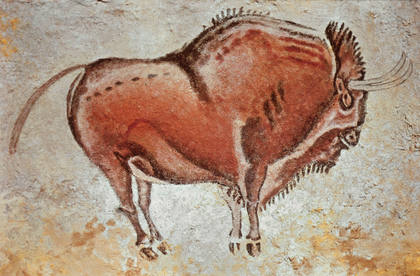
Like photographs, clichés are the shorthand of communication. If a picture truly is ‘worth a thousand words’ (a pretty cliché) it’s because its cash value rests on the fact that the ancient part of the brain, the primitive lizard brain, the dreaming brain, communicates with pictures. I mean seriously, think about it. Before written language, our ancestors drew pictures of actual horses to represent “animal” or “the hunt” or “wild and free” before there were actually spoken or written words to convey the ideas. Now, however, we are wildly sophisticated and have a language (or two) that we can manipulate to communicate otherwise free form ideas floating inside our cabezas.
Storytelling served as a history lesson before written language, and storytelling today is as popular around the campfire, board room table, or cafe four-top as ever. Stories are innately wired into us and as humans, we crave and respond to the story. The stories of our lives, our novels, movies, television and cable news, are a series of pictures – both visual and virtual. Actual photographs and pictures illustrate a narrative we may tell, as in “see? I was in Paris – here’s the Eiffel Tower,” or “here’s a photo of little Sophie Soo, ten years old.” In each case you may be telling a story, constructing a narrative and sharing information about your travels and your dog, backing your verbal story up with photographic evidence. So yes, pictures are worth thousands and thousands of words.
And if all those wonderful words at our fingertips were colors, original ideas are bright, clear fountains of rich hues, and clichés are dull as dirt.
The trouble with clichés is that they are so infused into our daily language, we hardly recognize them for their trite, frayed selves. Advertisers know this. They know that people are put off by formal language, fancy words, words that stand up straight and march with a snap in their step, so they dumb down marketing messages, intentionally inserting clichés so that their uber-sophisticated messages sound “down to earth” (cliché!) and “right as rain” (cliché!). Television programmer know this too, and make sure our televised stories don’t get too smarty pants, else run the risk of losing viewers –although because of the trance-like fog I fall into when I tune into a program I happen to enjoy, “viewing” isn’t exactly what I’d say I was doing. I’d bet a nickel that not one filter remains intact with all that bad, cliché loaded language comes washing over me. While some programs are brilliantly written, most programming I’ve observed seems to be no more than 30 minutes of tired ideas strung together. So when you think about all the hours of programming and bad language we’re exposed to, it’s no wonder we’re up to our eyeballs in clichés.
So, if everybody is guilty of crimes of language abuse, then it must be okay, right? In the words of mothers everywhere, “just because all the kids are doing something doesn’t’ make it right.” Clichés have their place, which is definitely not between the covers of your journal. You want your journal to be clear, concise, absolutely fecund with the rich details of your life, so absolutely pitch-perfect that with even a quick glance, you inspire yourself to write. Even. More.
So, once in a while work your language muscle a little harder. Avoid the flabby turns of phrase. Jettison the flaccid prose that comes so easily. Instead, read an amazingly genius writer and then journal. Turn the TV off, and journal. Instead of taking the easy way out and dropping in an over-worked and sad sad sad cliché and reach for something original. You may just surprise yourself with your own genius.
 OIL IN WATER
Pam Lazos
Chapter Fourty-Four
It was a wind like only January could send down, brutal and unforgiving. Zenone cursed under his breath and stumbled back inside the command post trailer, the wind slamming the door shut for him. It continued to beat against the trailers sides, rocking it inexorably, and he wondered if he and the command post might not end up in Kansas with Dorothy and Toto. In sharp contrast to the chaos, whipping white caps across the river, the snow clouds cast a calm, eerie light across the sky, beautiful and surreal like the color of Mars. By mid-afternoon, the increasing pain in his wrist told him the weather had all but arrived. With that ample warning, he had the foresight to shut down all beach cleanup operations for the day and radio in all seafaring vessels allowing them sufficient time to dock. So far, nine out of ten of the boats had radioed in, safely ensconced at various locations up and down the Delaware.
Zenone felt it his duty to stay put until the last boat was in and all personnel were present and accounted for, but what he really wanted was a beer. It had been a long day, eighteen hours if you counted the two hours he put in before he arrived at the command post. He knew if he drank a beer right now he’d be sleeping in the trailer, but he checked the small fridge anyway, hoping for a bit of a miracle. It was empty but for a pint of half-drunk chocolate milk and a jug of orange juice. He turned his nose up at the juice. The acid would rake his stomach and he didn’t need a full blown case of heartburn. He grabbed the chocolate milk, opened the carton and sniffed the contents, recoiling at the smell emanating from within.
“Aachhh.”
He set the milk down on the desk and made a mental note to stop at a store on his way home, that is, if he didn’t fall asleep at the wheel. He was bone weary from lack of sleep and his stomach rumbled, adding to the mix. A cheesesteak would be good right now.
The wind howled and the trailer throbbed, driving all thoughts of food from Zenone’s head. He took a stool at the drafting table, ran his hands through his hair. Outside, snow started to fall. Zenone stared at the phone, willing it to ring. The silence crept into his inner ear, as pervasive as the oil on the Delaware, making its bunk up for the night. The storm would go a ways toward breaking up the oil, but there was still too much in the water. If it could have just waited until tomorrow when they had recovered more. Then Mother Nature could get to work. He scanned the computer generated simulation Lapsley had brought him. The Coast Guard had sent a helicopter up on an overflight mission to map the extent of contamination – an aerial view of the spill was immensely helpful in these circumstances – but it was only partially successful due to the weather. The heavy cloud cover made it hard to distinguish the slick, while the clouds’ shadows cast what looked like dark stains, easily mistaken for oil, upon the water. After ascertaining the imperfection of purely visual analysis, the overflight team notified Akanabi who sent up their environmental consultant. He snapped a bunch of photos with infrared light cameras which produced a much clearer picture of the spill, then fed the reconnaissance data into a computer. The program crunched the spill data, mixed in environmental conditions such as wind and weather, and simulated the spill’s course and dispersion rate. The conclusion was that the oil was heading toward the Delaware Bay where it would likely be contained and, as a result, wouldn’t reach the Atlantic Ocean. Duh. Although in open ocean waters computer modeling could be extremely helpful in determining the direction of a spill, in this case, the Delaware only went two ways and the odds were staggering that the oil would return to the Bay with the outgoing tide.
“I’d say they got ripped off,” Zenone said. He tossed the aerial map aside and rested his head on his closed fist.
Zenone’s guys had managed to sufficiently confine the oil just short of the Bay before having to abort the mission. At that time, and by some good will of the gods, only the Pennsylvania side of the shoreline had been affected. But the way the wind was bandying the oil about now, the shores on both sides of the Delaware and likely the Bay would be gummed up by morning.
He grabbed the shoreline cleanup manual off the desk and thumbed through the various clean up methods looking for something he might have missed: removal; steam cleaning; high-pressure washing; chemical and hydraulic dispersion. Chemical and hydraulic dispersion . The eight-foot waves would take care of the hydraulic part. He would have preferred a good surface washing, lying down some rip rap and hosing off the beaches. Then they could collect the oil off the rip rap and dispose of it properly. But now the waves were going to wash the oil back into the river where it would sink to the bottom. Chemical dispersants would break it up, but…
Zenone removed his hat and scratched his head, then ran his fingers through his hair. He hadn’t thought about chemical dispersants because the Delaware was a fresh water body and chemicals had a certain degree of toxicity. What if the dispersants could be placed before the storm came, an emulsifier that would break the oil down into smaller pieces and drive it into the water column where it would more easily biodegrade. That and the oncoming wind and large waves would break it up fast. But the chemicals . The heavy oils were less toxic; they tended to sit on the surface of things rather than penetrate them, but they were tough to remove – like picking up gravel with tweezers – and smothered the smaller organisms that lived on the shore. He flipped through the manual looking for guidance. The Coast Guard had some pre-approved areas where emulsifiers could be used – he wasn’t sure without looking where they were – but how the hell were they going to get the stuff in the river before the storm, especially now since he’d recalled all seafaring vessels. He could go out himself maybe…
“Oh my God, I’m losing it.” He closed the book and pushed it aside, wishing again that he had a beer. He checked the cell phone. No new calls. He grabbed the trailer phone and laid down on the small couch. Just until I get the call . He closed his eyes and because of his exhaustion, rapid eye movement began almost at the outset.
Zenone stood on the shore watching large waves crash against it and taking with them, back to the river, the blackness that covered the land. He smiled. The oil was dissipating. Once again, Mother Nature prevailed. The snow clouds cast an eerie orange light, enough for him to see. It was all going great until the waves started dropping things on the beach; a loud thump, followed by a scattering of black, rounded clumps of solid mass.
He walked over to investigate. A large, oiled bird lay on the ground, half-dead and shivering from hypothermia. Zenone touched the animal as it opened its eyes, blinking back the oil, trying to clear its vision. He felt his own eyes sting with tears. Zenone wiped the bird’s eyes with his fingers, then his hands, removing what oil he could, but the task was impossible, like removing water from a well with a slotted spoon. He was so engrossed, he didn’t notice the wall of water behind him. The wave crashed on the shoreline, knocking Zenone to the ground and taking the bird with it. He climbed to his feet and staggered down the beach. Another crashing wave, another thump , followed by another, and another. Zenone looked up to see birds lying everywhere, landing on the beach with each successive wave. He dropped to his knees and crawled to the nearest bird. A glob of oil was stuck in the bird’s esophagus. He reached in and tried to dislodge it. The bird fought him, flapping against both the intrusion and the lack of oxygen. It clamped down hard on Zenone’s fingers and he yelped in surprise and pain.
➣➣➣
“Rise and shine,” Lapsley said, squeezing the fingers of Zenone’s hand. Zenone shrieked and Lapsley jumped back, almost dropping the pair of coffees he carried. He set the carrier down, removed his gloves and handed Zenone a cup of the steaming brew.
“What time is it?” Zenone croaked.
“Five forty-five. That would be a.m.,” Lapsley said. “You look like hell.” Lapsley noted the dark, foreboding circles under Zenone’s eyes, but said nothing more
“You’re no prince charming, yourself,” Zenone grumbled. He accepted the coffee and took a big swig. “Goddamn, that’s good.” He took another swig, walked to the table and pulled at the bag Lapsley brought, extracting a whole wheat bagel with cream cheese.
“Hungry?” Lapsley asked.
Zenone nodded and consumed half the bagel in a bite. “Never got dinner.”
Outside, the water looked choppy, but calmer than the night before.
“Chocolate mousse,” Lapsley said.
There was a loud bang at the door and Zenone jumped again spilling coffee on the table. “Damn,” he said and grabbed the bag for some napkins. He spoke through a mouth full of bagel. “Come.”
Hart entered carrying several cups of coffee and a box of donuts which he set on the table. Zenone smiled at the offering.
“If you bring food, you’re always welcome,” Zenone said, shoving bagel in his mouth. He nodded to a seat which Hart took.
“Lap and I were just talking about chocolate mousse.”
Hart raised an eyebrow. “All I brought were Munchkins.”
“And that’ll do.” Zenone routed through the box and popped one in his mouth. “You know, when oil becomes aerated, generally after the second or third day, it starts to look like chocolate mousse.”
“He’s head of engineering for Akanabi Oil. He probably knows that,” Lapsley said.
“You never know,” Zenone replied. “It’s a hell of a state. All whipped.”
“Like you before you got divorced.” Lapsley said. Zenone ignored the slur.
“In the summer, the oil turns into tarry clumps and ends up on the beach,” Hart said.
“Asphaltine,” Lapsley added. Hart nodded and Lapsley smiled. “Sorry. We’re used to dealing with the public.”
“Do you know if any of it has sunk yet?” Hart asked. “The Arabian crude is pretty heavy. It’s probably just a matter of time.”
“We’ll find out today,” Lapsley replied. “Once the water has a chance to settle.”
“I got a helicopter on standby equipped with sonar. If there are globules on the bottom, large or small, we can track it,” Hart said.
“Hey, remember that one spill?” Lapsley asked Zenone. “These big globs of oil were up and down the river like bouncy balls, back and forth with the tide.”
Zenone’s cell phone rang. The command post phone was also blinking. “Damn.”
“It came in around eleven,” Lapsley said, intuiting the source of Zenone’s concern.
“How do you know?”
“Because they called me when you didn’t answer your phone.”
Zenone nodded and sat down, visibly relieved.
“You don’t need me this morning, do you?” Lapsley asked.
“Whaddya got goin’ on?”
“We’re going to take a ride to Chesapeake to the wildlife sanctuary. Want to go?”
A shiver ran down Zenone’s spine and he stared off into space for a moment, looking at something Hart and Lapsley couldn’t see. “Nah. Go ahead.” He waived a hand to dismiss them.
“I’ll check in at Tinicum Marsh on my way back. I haven’t heard from anybody yet. Hopefully the booms held.”
Zenone drew a deep breath let it out slowly. “With a little luck….”
to be continued. . .
read how we got here, here
copyright 2012
OIL IN WATER
Pam Lazos
Chapter Forty-Three
Hart descended into the murky realms of the Delaware River, enjoying the cocoon-like warmth of his wet suit. He had opted for it over the dry suit even though the water was on its way to below freezing. The dry suit would keep him dry, but not warm enough, not in these arctic-like conditions. Ah, but the wet suit, that was a suit of a different color. It sported an insulated neoprene hose which tied onto the outside of the umbilical, ran down the side of his body and attached at the spider, a three-way valve at the waist of his suit. The hose was fed by a hot water machine that had an oil-fired burner and a digital thermostat to control the temperature. Under usual circumstances, water to feed the hose would be drawn from the water body the diver found himself in, but given the petrol load the Delaware was carrying, Hart directed the hot water machine be fed with water from a local fire hydrant and transported via garden hose. The hose was threaded around the interior of Hart’s wet suit and one hundred degree water escaped through the little holes poked in it, entering in myriad locations and keeping his whole body warm. The hose could even blow warm water through the cuff and into Hart’s smaller gloves making the large, bulky, but warmer three-finger gloves unnecessary. Hart closed his eyes, allowing himself to bask for a few moments in the warmth before proceeding down the ladder into the water.
The Delaware river, a murky water with low visibility on a good day, was even worse today because of the impending storm. Hart reached a level that he assumed would be the bottom of the ship’s hull, but without touching it he couldn’t distinguish metal from water. He dropped another few feet, holding fast to the traveling line, but the scenery didn’t change.
“Great. Now what?”
“What’s up, Boss?” Smith’s voice crackled through Hart’s umbilical flooding the inner chamber of his helmet with sound.
“I can’t see a damn thing. What are they puttin’ in this water anyway?”
“Lots of industry around here. Ships going up and down the channel churnin’ up the bottom. The Army Corps always dredging it to keep the depth right. Then there’s the farming,” Smith mused. “I’d say you got some sediment, some debris…”
“It was a rhetorical question, Smithy.”
“…and, I’d leave it at that. You don’t want to be thinking too hard about what you’re swimming in unless you want to puke in your helmet.” Smith cracked up at that, and Hart joined him, his body quivering with silent laughter.
“Smithy. Help me here. I can’t see the ship. It’s no where in sight, far as I can tell.” Hart flicked his headlamp on and off, looking to bounce the light off of something. He wrapped the tow rope around his leg before reaching his hands out in front of him, groping vainly in the darkness. “I got nothin’.”
“The traveling rope should be about three feet in front of the Ryujin . So if you’re facing in the right direction, you could jump…”
Before Smith could finish his sentence Hart jumped, using the traveling rope for leverage, and after a forward propulsion in slow motion, his helmet came to rest against the hull of the Ryujin with a resounding thump.
“What was that?” Smith asked.
“My brains getting rattled.” Hart moved his hands along, feeling for the bilge keel, the fin-like projections from either side of the hull that helped stabilize a ship in rough seas. He cast his light directly on the hull and found he could see somewhat better. Hart’s thin gloves allowed for greater movement, but also meant he’d be more prone to cuts and scraps against jagged metal. He proceeded with caution moving down and around the bottom of the hull, alert for sharp metallic pieces of the ship’s frame.
After several dim minutes, Hart’s glove snagged on a sharp object. He trained the light in its direction and found a hole, about fifteen inches wide and half as long. He reached his hand in, feeling the emptiness of the space where the oil used to be and shuddered. The boulder, or whatever it was, had ripped a hole right on a seam of the hull, a faulty one at that. Hart’s eye followed the rip in the hull until it dissolved into blackness. He pulled out an underwater tape measure and after ascertaining the width, proceeded down the length of the hull looking for the end of the rainbow. Eight and a half feet later, the gaping stopped. Now it made sense. Hart had been wondering how in the hell so much oil had come out of what he was thinking probably looked like a small gash in the bottom, given both the pilot and captain’s descriptions of impact. With a small hole and entrainment, most of the oil would have stayed put while the ship was moving. But this was no small hole. The impact had given way to a split seam on the hull. With a hole this size, no matter how fast the ship had been going, the oil was coming out. Zenone was right: time to retire the single-hulled vessels. The expense to the company was nothing compared to what it was doing to this river. He’d talk to Bicky about it as soon as he got back. Bicky would have other ideas, but he’d never been on Site for a major oil spill either….
“Hey, Boss.” Smith’s voice interrupted his thoughts. “Time to come home. Coast Guard just issued a squall warning. They want all ships and other non-necessary personnel out of the water, pronto.”
“I can’t see a damn thing anyway, got so much oil on my face-plate,” Hart said. “I’m on my way up.”
to be continued. . .
click here to see what led to this state of affairs
copyright 2012
we couldn’t make it any easier for you so please just read it now.


 persephone's step-sisters