the egg was airborne

grass_by_transfiguratedOIL IN WATER

Pam Lazos

Chapter Seventy-One

Gil was under attack.  He dodged a plastic missile and huddled under a small bush a few feet from the house. A large, old man, older than his father by a lot, was laughing. His laugh echoed, like it started down deep in the earth, and bulged and grew and it clawed its way to the top where it became fearsome and overpowering. It made Gil’s insides shake even though it was the first day of spring and pretty warm out.

The man threw empty plastic water bottles at him: Perrier, Deer Park, Evian, Crystal Springs. The small bottles bounced off, harmless. He only ducked when the man launched the larger one-gallon bottles. He looked around for an escape route and his eyes landed on the small plane parked next to the house. Kori would be pissed that he forgot to park it in the garage again, and more, that he was going to drive it without a license, but so what?  He invented it. It wasn’t a conventional plane, but looked more like a giant egg laid on its side. Little claw-like chicken’s feet descended from the main compartment and kept the body steady when the plane was grounded. The wings retracted into the body. Inside the egg were two seats, a cushion on the floor for Max, and a control panel. Avery wanted to sell these planes some day, for a fraction of the cost of a Hummer.

Gil pulled a gas pump hose from an outlet below the kitchen window and crawled on his belly over to the egg, kicking plastic bottles as he went. He lifted the hatch and inserted the nozzle into the egg’s fuel tank, dodging several bottles thrown in rapid succession. The hose connected to a small TDU in the basement and was fed by the garbage disposal and the trash bin, a complete in situ unit. After a few minutes, the filling stalled and the hose went limp in Gil’s hand. He shook it, but nothing happened. He crawled back over and kicked the wall of the house like a man kicking the tires of the car. “Oowww,” he yelled, but the mini TDU failed to restart. “Dammit,” he said, then covered his mouth and looked around to see if his sister was within hearing distance.

The large man started laughing again. Gil panicked and dropped the hose. He was crawling toward the egg when he heard Max at the kitchen door, barking like a crazy dog, so he crawled back to the house and let him out. Together they ran and jumped into the egg. Gil started the engine and the little chicken legs took off running at a fast clip. The wings fanned, the thrusters thrusted and the egg was airborne, the chicken legs still running, but with no ground beneath them. When he retracted the legs, the egg shot straight up into the air. The large man bellowed, something between a laugh and a moan, and Gil accelerated. He turned around to see the man remove his Armani suit jacket, fold it neatly over his arm, and bend down to turn on an automatic ball toss machine.

“Where the heck did that come from?” Gil yelled to Max who raised his head to investigate. The machine began firing the empty plastic water bottles, pelting the egg mercilessly. Singularly, the bottles posed no harm, but collectively the force resulted in an erratic trajectory, throwing them off course while jolt after jolt caused the egg first to zig and then to zag. The large man laughed like a maniac, sending shock waves that caused the egg to tumble with each successive and inexorable guffaw.

“Hold on!” Gil yelled to Max who crouched down at Gil’s feet, his paws over his eyes. Gil steered a hard right to avoid a fresh onslaught of plastic and came close enough to see the man’s large mouth. And like the Cheshire cat, as the man’s the smile grew larger, his face shrank away until all that remained were his hideous radiating teeth, each half the size of the egg. The man threw a switch, converting the machine to fast pitch and Gil was bombarded. The egg began to plummet. A bottle cracked the window. A hole emerged and grew. Air leaked out of the cabin. Gil flicked at the overhead switches.

“We’re losing pressure,” he screamed. He pushed a button and air masks dropped from the ceiling. He covered Max’s large snout with one and was attempting to put his own mask on when the egg took another hit and rolled over on itself. The mask flew out of Gil’s hand and he lost control. He began coughing, choking for air. . .

Gil’s eyes flew open and he coughed for a full minute before regaining his breath. Images of eggs and plastic swirled in the world behind his eyelids and he was cold and sweaty. He burrowed a hand under Max’s furriness and lay his head on the dog’s massive neck. Max yawned and put his head on the bed pillow. Gil closed his eyes, but the images still danced behind the lids, so he forced himself awake and sat up in bed. He yawned. His stomach growled rudely, and the noise threw his feet over the side of the bed. He put his slippers on and went downstairs to breakfast.

 to be continued . . .

start reading here and work backwards

copyright 2013

tidal pool wisdom

we have big hearts and big ideas and big blushes.

read all about our adventures here.

oregon coast 2013

pop culture is us

we hum, we sing, we blush. oh, yes we do!

tix


love and other magic

All relationships begin with the Self. Given that the quest to find The One is a powerful lure, it’s also great incentive to get on with homework!

Naturally, we endorse the book.

honeymoon effect

i dream of ice cream

when not choosing is choosing we blush!

decide

safety of the marshes

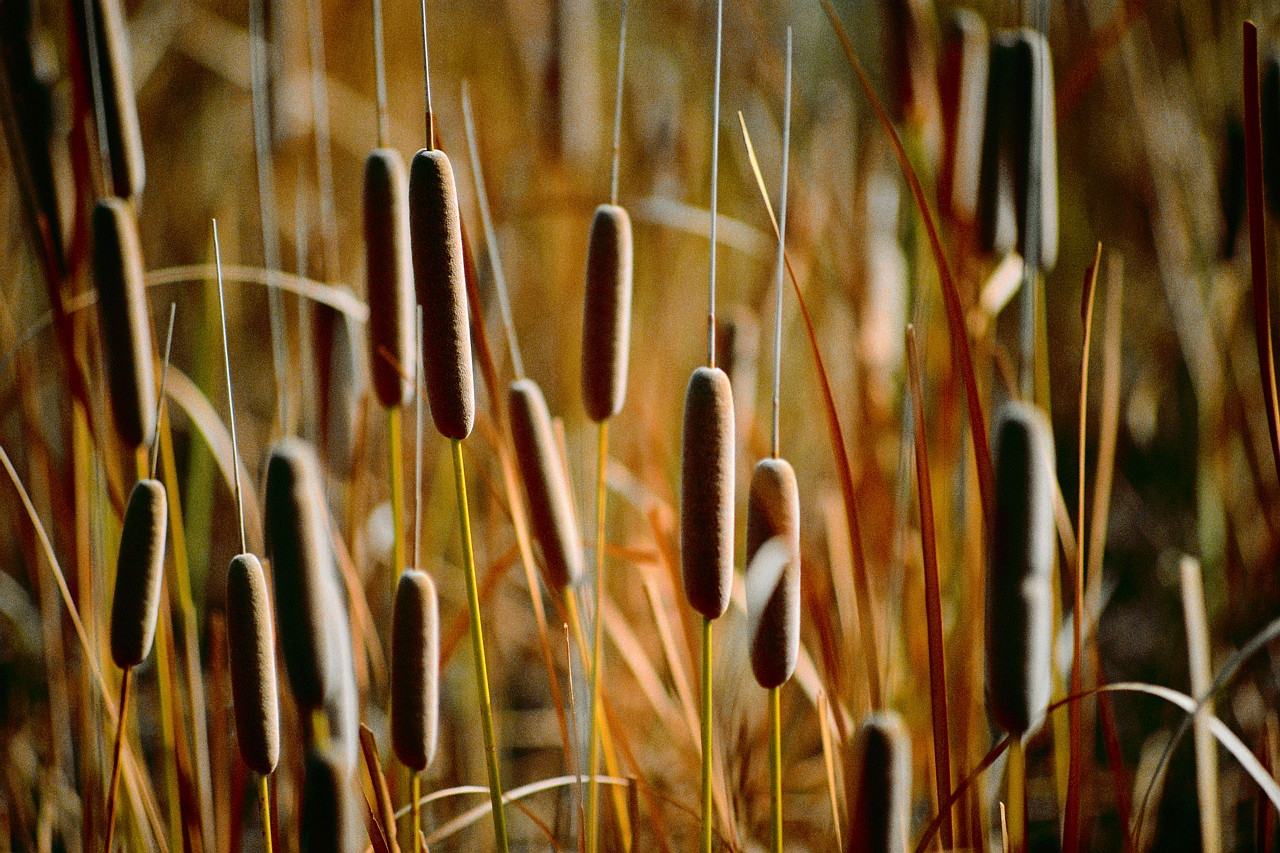
Cattails

OIL IN WATER

Pam Lazos

Chapter Sixty-Nine

After a breakfast of rice with buttermilk, chicken soup, flat bread and strong, bitter coffee, Robbie and Amara boarded Sayyid’s flat boat and with Sayyid at the helm, set out on a journey to look at the recently refreshed marsh towns. Sayyid poled the boat through the water, skimming past huge clumps of papyrus and cattails.

Robbie watched the scenery change, enchanted by his surroundings. The fear that had sat in the pit of his stomach during their midnight exodus from Baghdad and which caused the bile to rise to his throat with every human encounter had hung an “out to lunch” sign on his esophagus, but given that the sun had barely crept above the giant forests of reeds, an “out to breakfast” sign would have been more apropos.

Robbie had cloaked himself in the customary robe and turban of the Iraqis and upon Amara’s urging, had remained silent the entire trip. Amara told the various drivers that she was taking her mute brother to Al Huwayr, a boat building town near the junction of the Tigris and Euphrates rivers where they intended to buy a mashuf and return to Zayad, their recently reflooded ancestral home. Already, Amara said, their uncle and aunt and three children had returned. The ruse had worked and here among the bulrushes and papyrus, Robbie rubbed elbows with the ghosts of the last five millennium along with a way of life he hoped wasn’t dead, but merely on life support, and like the reflooded marsh town of Zayad, could be resurrected and helped to thrive again.

“These are the biggest reeds I’ve ever seen,” Robbie said.

“It is called qasab. It is a phragmites, like you see at your American bays. But these plants have been allowed to grow undisturbed, and without pollution,” Amara said. “They can grow as large as twenty-five feet. We use them for many things, our mashufs, our huts. Too, we build our mudhifs from them. These are large building where many people can gather. Like your community center.”

“This portion of the Al Hawizeh marsh is all that’s really left of twenty thousand square kilometers of fresh water marshes,” Sayyid said. “You know this measurement? It is the maybe seven hundred miles. My people lived here for centuries,” Sayyid said. “We believed we were comfortable. We believed we were safe.”

“Here they raise cow and oxen and water buffalo and spend much time in prayer,” Amara said.

“Water buffalo?” Robbie said. “I don’t think I’ve ever seen a real one.”

“The water buffalo are very important to our way of life,” said Sayyid. “Early each morning the young boys take them to the feeding grounds. They do not return until the evening. All day they spend with the water buffalo.”

Amara laughed. “My grandfather told me a story that once he was up all night with a sick buffalo. He covered it with a blanket and nursed it back to health with a bottle and songs.”

“He sang to a buffalo?” Robbie asked.

“Yes. It is not uncommon. The Ma’adan depend greatly on the buffalo for their existence. He gives milk, among a great many other things and they thank God for this by treating the animals like family. It is not like America.”

“How do Americans treat their buffalo?” Sayyid asked

“I won’t tell you what happened to our buffalo,” Robbie said. “But I guess the modern-day equivalent would be the cow. We have two kinds, dairy and meat. The dairy cows have a cushy life compared to the meat cows, but nobody sings to them. At least not that I know of. Although I did hear once about a farmer who played music to his watermelons.”

Sayyid laughed, then grew quiet as he poled the boat through the water. “These marshes are all that is left. The Al Hammar and Central marshes are gone. Vanished. Like my people who inhabited them.”

“They will come back, Uncle. When the water returns, they will come back.”

“If God shall be willing,” Sayyid said. “You know this group? Assisting Marsh Arab Refugees? The AMAR Foundation they call themselves.”

“Yes. And I have read about another group,” Amara said, “called Eden Again. The head of this group is an American, born in Iraq. They seek to return the water, to bring back the fish to the marshes. It is this group we come to work with. To offer our assistance,” Amara turned to Robbie and squeezed his hand, “at great personal risk.”

“How do you plan to help?” Sayyid asked. “No doubt you will use your schooling that was so important to my brother.”

“Yes, uncle. I am sure they will need another biologist. And Robbie knows something about…” she turned to him for assistance.

“Environmental science. Back home I’m working on a degree,” Robbie said. “For the first time I have a good reason for it.”

“Uncle, may I?” Amara reached for the pole and Sayyid relinquished it with a smile, exchanging places with Amara in the boat.

“I know who you wish to find. Tomorrow I will take you to them. But today, we tour Al Hawizeh. It will be something for you to see,” Sayyid said, turning to Robbie. “This place is like nowhere else in the world. What Saddam has done is a crime against God and nature. He seeks to destroy the Ma’adan by destroying their way of life. But my people have inhabited these waters since the beginning. This is the Cradle of Civilization where the world began. Saddam thought to make history. And what has he done?” Sayyid spread his hands wide to emphasis his point.

“Not just genocide, but ecocide, uncle,” Amara said.

“Yes.” Sayyid turned to Robbie. “History will not be kind to him. But you have caught him. Now there is hope.” Sayyid returned his hands to his lap and gazed out over the water. “I am not a naive man. I do not dream that it all will be returned.” Sayyid gazed after the reeds and bulrushes as the boat glided past. Robbie noted the comely, proud profile.

“Do you find it strange that they should take your name?” Sayyid asked Amara.

“Who, Uncle?”

The AMAR Foundation. Do you find it strange?” The marsh narrowed and Amara directed the boat toward a dense forest of reeds. “They say a man’s name predicts his future.” Sayyid raised his eyebrows in speculation. “Perhaps this is your destiny, Amara. To save your ancestors. To restore their lands.” Sayyid stood and took the pole.

“I can do it,” Amara said, but he motioned for her to sit down so she did.

“So much like my brother,” he mused. Amara smiled, trailing her fingers in the water.

The flap of wings, the sounds of fish surfacing and retreating, the smell of dense, wet vegetation, and a million hues of green, fanning out across the landscape all formed a backdrop to the peace rising up in Robbie’s soul. He felt the adrenaline and terror ebbing away with each rhythmic pull of Sayyid’s pole and that, coupled with a full belly, conspired to put him in a state of calm, the likes of which he had not experienced since he came to Iraq. A turtle jumped off the marsh and into the water. Amara pointed and turned to see if Robbie had noticed it, but like the baby Moses adrift in a bed of papyrus, Robbie now lay hidden and in the safety of the marshes, he slept.

to be continued. . .

read what came before here

copyright 2013

beach reading

Did you know that you can’t read in your dreams?

In that case, you will want to take this book to the beach.dancers-in-pink-1885


a way out

gateOIL IN WATER

Pam Lazos

Chapter Sixty-Seven

Robbie and Amara lay on a tightly woven reed mat beneath an open window, the spare light of the crescent moon casting the faintest of shadows. His arm rested protectively on her belly. The thin blanket that had covered them lay crumpled on the floor, thrown off in the dead of night and heat. A cool, light breeze blew off the water through the open window, washing over their sleeping bodies in an undulating rhythm that kept time with the passing centuries. Waves lapped against the quonset hut’s foundation.

Robbie drew a deep, choking breath as one coming up for air after too long underwater. He coughed and it woke him. He bolted upright in bed and Amara woke, too.

“What is it?” Amara put a hand on his back and felt through the well-toned muscle and bone the panic that lay buried inside. “Your heart is beating very fast.”

Robbie took several breaths in rapid succession then pulled her to him.

“You’re cold,” Robbie said.

“So are you.” Amara grabbed the blanket and pulled it up over them. Robbie relaxed and they both lay down on the reed mat again. A rustle just below the hut refocused Robbie’s attention and he was out of bed in an instant.

“It’s only a mouse,” Amara said.

“We’re surrounded by water.”

“Not everywhere is water. Much is just mud. The water is high now because of the spring rains.”

“Well, how will he get out?”

“There’s always a way out,” Amara said. “Besides, mice are excellent swimmers. Please.” She held the blanket up, an invitation for him to join her.

Robbie lay down next to her. “Sorry. Just a little jumpy.”

“It is because no one has been here for so long. You do not see this well because we come in the middle of the night. I’m sure it is very dirty in here.”

“I thought you said it was a little fishing hut.”

“Yes. It belonged to my grandfather’s father. Of course, when he left he had no more use for it, but my uncles still came here.” Amara’s voice stumbled. “Now there is no one to use it.” Robbie hugged her closed and smoothed her hair.

She nestled in. “Tell me about your dream.”

“I dreamt that American troops were driving their jeeps through the marshes. They were coming from Baghdad on their way to Basra and the most direct route was straight through the middle. The jeeps had these pontoons on them that kept them afloat when the water got deep. There was a place in the water where it rose about six inches like it was going over something massive below. The lead jeep got stuck on it. It turned out to be a remnant of one of Saddam’s dams. Everyone had to get out and figure another way across. They unloaded their mashufs and troops started fanning out across the marshes in their canoes. I was watching from the reeds. Somebody came up behind me and grabbed me by the throat. I started choking.  That”s when I woke up.” Robbie rubbed Amara’s arm and gazed into her penetrating eyes.

Amara placed her hand over his heart. “You are safe now. They will not find you until you are ready to be found.”

Robbie kissed the top of her head. She kissed his lips.

“Dawn will soon come,” Amara said. “Let us sleep until it does.”

“Then you can show me where we are.”

➣➣➣

At dawn, Robbie and Amara climbed into the mashuf they had borrowed from her uncle, a boat builder whose shop sat at the tip of what remained of the Al Hariz marsh. A mullet, small and bony by any standard, rose to the surface in search of breakfast. Robbie jumped at the splash that signaled its return to safe water.

“It is just a fish,” Amara said, handing Robbie a paddle. “And a small one at that. They are returning now that the dam has been destroyed.”

“Well, that’s good, isn’t it? I mean, about the dam.” Robbie started to paddle in time with Amara.

“Yes, it is very good. But it is not enough. The Minister of Irrigation estimates that when the dam was breached over one hundred and fifty quadrillion gallons of water flooded back into the channels. This was only enough to return the water to the two closest villages. At one time, there were hundreds of these villages. At this rate it will take a thousand years.”

“Well, can’t they just open another dam?”

“They have opened all the dams. The water is no longer here.”

“Where is it?”

“Still in Syria, and Turkey, being diverted for many types of projects. Agricultural, hydroelectric. Who knows what else? Saddam gave them this water. He stole it from his own people.”

“We’ll get it back.”

“It is much more complicated than that. Here people fight over the right to use the water. It is not so in your country. But still you see the beginnings of it in your American west. I think that one day, people in America will fight over water just as we do.”

The marshes were silent but for the lapping of the water on the shore and the slight rustle of the bulrushes. A fog had settled over the marshes and Robbie wiped at the drops of water that collected on his face. A bullfrog croaked. Robbie jumped, then relaxed.

Amara smiled and turned briefly to look at him. “You never fully get used to the noises that the marshes make. To live here is to constantly be on alert. So my grandfather has told me.”

They rowed together in silence until Amara directed the mashuf through vegetation so dense and intertwined that Robbie felt they were inside a tunnel. When they emerged on the other side, the first rays of the day had filtered through the reeds, creating a mosaic pattern across the surface of the water. A blue heron caught breakfast and retreated to safer ground, flying directly overhead.

“A most beneficent sign,” Amara said, bunching her fingers together and touching them first to her heart, then her lips and finally her forehead. She stopped paddling momentarily and squeezed Robbie’s leg. “There it is. The house of my uncle, Sayyid. We will be safe here.”

➣➣➣

Robbie and Amara docked their boat on the small island where another hut stood.

“Who’s there?” said a voice groggy with sleep. Inside the occupants of the house stirred, the first rustling of the day. Amara tied the canoe and grabbed Robbie’s arm just as Sayyid Sahain appeared in the doorway wearing the conventional robe and turban, but no sandals. In the misty morning light, Amara couldn’t clearly see the face of her uncle, still pressed with sleep, his hastily donned turban slightly askew, but she recognized the proud and encompassing stance of her father, and for a moment she believed he walked among them again. The sound of her uncle’s voice, so like her own father’s, did nothing to lessen her joy.

“Who is there?”

“It is me, uncle. Amara.”

“Amara! Is it you? I had word, but I did not dare hope…. God be praised.” Amara’s uncle scrambled down to the dock and grabbed Amara by both elbows before crushing her to his chest in a warm embrace. “God has blessed me once again,” Sayyid said. He held her at arm’s length. “To look at you is to look again upon my brother’s face.” He wrapped an avuncular arm around her and patted her back before releasing her, then turned to Robbie, a question in his eyes.       “And who is it that assures your safe travel?” he asked, sizing Robbie up.

“This is my friend, Robbie, Uncle. He is an American. He wishes to help our people. But first, Uncle, we must assure his safety. He has left his captain without permission.” Sayyid raised his eyebrows in disapproval.

Amara continued. “The Americans believe he is dead. There was a car bombing and…. they did not find him.” Amara bowed her head and clasped her hands together. “I’m sorry, Uncle. I do not mean to bring you trouble.” Sayyid studied Robbie’s face then looked to his niece’s bowed head.

“Amara. You could not bring more trouble than that devil, Saddam, has brought to his own people. Every day I ask God why he has allowed this. But God has turned his face away from us.” He lifted Amara’s chin that she might look him directly in the eyes. “You were always the impetuous one. By the grace of Mohammed, had you been born a boy I believe you would have stopped the devil himself.”

Amara smiled at her uncle and he stroked her cheek.

“Time has taught me many things,” Sayyid continued. “For the memory of your father, but more important, for you, I swear I will keep your friend safe among us until the time he chooses to leave.”

Sayyid turned to Robbie. “Welcome, sahib.” He took Robbie’s hand in one of his and with the other clapped him on the back. “You are safe here.”

“Thank you. . .”

“Call me Uncle as my niece does,” Sayyid said.

“Uncle,” Robbie repeated. Following Amara’s lead, he bowed his head slightly to indicate his respect.

“Come, come,” Sayyid said. “Let us go inside. You will be hungry, yes? We will take a meal together and you will tell me of your plans.”

➣➣➣

Inside Sayyid’s wife, Fawzia, was already grinding coffee. Sayyid made the introductions and Amara embraced her uncle’s new wife before the woman retreated to the hearth to prepare a meal worthy of visitors.

“Fawzia is a good woman,” Sayyid said. He directed them to several cushions scattered around a small round table barely a foot off the floor.

“I am sorry for you, Uncle. For my aunt. We had heard, but were unable to make the trip.”

“Thank you, niece.” Sayyid bowed his head and touched his bunched fingers to his heart, mouth and forehead. “She was a very good woman, dead now these five years.”

“How did she die?” Robbie asked.

“From Saddam’s poison water.”

“Saddam poisoned the water? But why is everything not dead?”

“He is the devil,” Sayyid said.

“I thought it was because of the dams,” Robbie said. “I didn’t know he used poison, too.

“He did not poison it with chemicals, but with ideas,” Sayyid said. “And revenge. Revenge for the part my people played in the Shiite uprising in Iran. We are Shiite Muslims. Saddam is Sunni. So he tries to kill us by taking away our water. When the water is not fresh, it dies.”

“You mean it becomes stagnant?” Robbie asked.

“Yes. Stagnant. This water breeds cholera. We have no cure for this disease.” Sayyid’s voice assumed a distant quality.

“When I see the problem, I take her by tarrada.” Sayyid turned to Robbie. “This is my large canoe, much bigger than my mashuf. It is more than thirty-feet. I have six people paddling while I hold her head in my lap. But it is not enough. By the time I see the doctor, he can do nothing. I am too late.” Sayyid wiped at his eyes as if he had an itch. Robbie looked at Amara who put her hands in her lap and bowed her head.

“Saddam made this. He killed my beloved wife when he stops the water with his dams. With his evilness. If he is not the devil himself then he has made a deal with him. This I know.” Sayyid adjusted his turban and straightened his robe. “My people lived here from the beginning of time. Now they live in refugee camps on the borders in Iran.”

“That’s why we’ve come, uncle,” Amara said.

Fawzia appeared with a tray containing three demitasse cups, sugar, spoons, and an ebriki, a small brass pot with a long handle, used to cook the coffee directly over the stove. Steam wafted from the narrow opening of the pot. Fawzia set the tray down and smiled at Amara and Robbie.

“You are hungry?” She brought her fingers to her lips to indicate eating with one’s hands. “You eat now?”

Amara nodded and smiled. Fawzia squeezed Amara’s hand and left.

“She speaks only a little bit English, my wife,” Sayyid explained to Robbie.

Robbie nodded. “I’m sure we’ll manage.”

 to be continued. . .

start with this and we how we got here

copyright 2012

she might catch fire

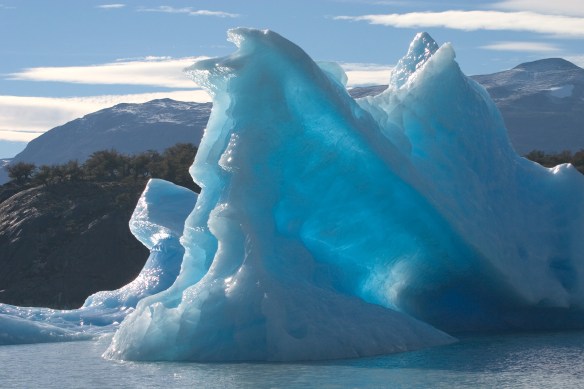
icebergOIL IN WATER

Pam Lazos

Chapter Sixty-Six

The will had been on file in Kitty’s attorney’s office for years and Bicky had full knowledge of it. He was well aware of the provisions it contained and had pestered Kitty relentlessly after Sonia’s death for her to update the document. Otherwise, he’d argued, the disposition of more than a fortune would be left to the vagaries of Sonia’s will. Bicky was reasonably sure that Sonia’s will left everything to Hart, but he saw no reason to take the chance. Besides, Hart wasn’t blood, and the events of the last few weeks had born that out in crystalline form. Unfortunately for Bicky, Kitty had ignored him, or so he thought, and soon after became sick and since his suggestions angered her so, he ultimately let the whole matter drop. At the time Bicky reasoned that with a little finagling he could fund a buyout of PGWI’s stock using his own assets as collateral and thereby retain ultimate control of Akanabi. But now? The stakes were a good deal higher and though he hated to admit it, there may not be a way to do this deal.

Bicky’s father, that bastard, had set it up so Sonia and Kitty, operating together, could overrule Bicky’s business decisions. Knowing Bicky’s relationship with his wife and what the senior Coleman perceived to be Bicky’s indifference toward his daughter, Bicky’s father made it impossible for him to leave his wife and child without risking the loss of everything. For some reason, Sonia and Kitty never took advantage of their monopoly. Even more amazing, they stayed with him all those years when, had the tables been turned, Bicky would have taken his fifty-one percent and left.

Bicky ran a hand over his stubbled chin and rubbed his bloodshot eyes. The codicil was executed three months after Sonia died. Since Kitty possessed all her faculties up until the end, it would be difficult to argue that Jerry had put her up to it.

“Christ, there’s got to be a way around this mess,” he said out loud. He punched the intercom for Phyllis.

“Yes?”

“Can you come here, please?”

“Certainly.” Phyllis was in the door in moments. “What’s up?”

“I don’t know.” He eyed Phyllis for a moment. “I think I need help.” Bicky slumped back in his seat looking older than Methuselah.

“Do you want me to call your doctor.”

“No. Not that kind of help.” Bicky dropped his head to his hands and rubbed his face. His voice cracked. “I just need a friend, is all.”

“Do you have any friends?” Phyllis asked, smiling. Bicky didn’t return the gesture.

“Do you know anything about Kitty and Jerry?”

“You mean, for instance, Kitty was your wife and Jerry has worked for you for about as long as I’ve worked for you, but now he doesn’t?”

“How did you know?” Bicky asked. His face had assumed its mask-like qualities.

Phyllis’s eyes grew wide, but if she had a quip, she kept it to herself, limiting her retort to the obvious. “With so much cabling in this place word travels fast.”

Bicky tossed a copy of Kitty’s will across the desk. “Did you already read this?”

Phyllis stepped forward, reviewed it quickly, and nodded. It was her turn to put on the mask.

“Did you know?” Bicky asked.

“Know what?”

“That they were having an affair?”

“Well, if the question is have I ever see them hiding behind the water cooler, locked in an embrace, then no, I didn’t.”

“C’mon, Phyllis. Cut the sarcasm,” Bicky replied.

“What’s it matter now, Bicky? Kitty’s gone. What would you do with the information?” Phyllis picked at a loose thread on her suit jacket.

“I just want to know, is all.”

“Well, you’re going to have to draw your own conclusions.” She looked at him with an expression that relayed it to be her final word on the matter and stood to go.

“I just want your opinion.” There was a remote quality to his voice, as if he were speaking into a fierce wind that blew all around him,  sending his words to far off places. “Do you know you are the only person in my entire life that’s never judged me,” Bicky said. “Or at least if you did, you kept it to yourself. If I’ve never thanked you before, I’m doing so now.” The words had the desired effect. Phyllis sat down.

“Why did you torture her so much?”

Bicky responded in a voice that belied years of unrequited love. “Because she didn’t love me. And I was too proud to show her why she should. And now, well, all that crap about it being too late would be appropriate here.” Bicky coughed and rubbed his eyes dry. When he spoke again, his voice was level.

“This could ruin me, you know. A hostile take-over. I’ve not made many friends in this industry. I’d be out on my ass faster than stink. And if Jerry and Hart got together….”

“Ah, the truth comes out,” Phyllis said. “Maybe it’s time to take early retirement.” The sarcasm was notably absent.

“Maybe. Just let go of it all.” He traced his finger over the beautiful mahogany desktop. “That’s been my problem all along, you know. Ever since my mother died, I spent my life with my arms wrapped tight around everything I owned, squeezing the air out of it. Even my own wife.”

Phyllis reached across the desk and patted Bicky’s hand.

“I know I wasted a lot of time. Time I can’t get back.” He pulled his hand free and walked to the window. He stared out across Houston’s skyline for several minutes before continuing. “But what am I supposed to do? Roll over and die? Do you really think anyone will remember me?” Bicky slumped back in his chair looking frail and pathetic. Phyllis spoke softly, with tenderness.

“You have resources. Plenty of friends. People with fat checkbooks.”

“Is that supposed to make me feel better?” Bicky snapped. Phyllis recoiled as if stung, all the goodwill of the last moments evaporating with a word.

Phyllis stood up and said in ice blue tones: “It’s just an observation.”

“Yeah, well keep your observations to yourself.” Phyllis focused on the back of Bicky’s head.

“I could fight this for years, but he’s still going to win. He’ll bring on witness after witness that says my wife was of sound mind and body when she executed that codicil. Witnesses that will say I was a lousy husband. Hundreds of pages of briefs will be filed and they’ll have life expectancy charts and police testimony and psychological exams. My life will be on complete display for the gossip columnist and at the end of the day, he still wins.”

Bicky rested his forehead against the cool glass and stood as if cast in bronze.

“Well if you have nothing else to say, I have something,” Phyllis said. Bicky didn’t bother to turn around. “I’m tendering my resignation. As of today. I’m giving you two weeks notice.”

Bicky was stricken, a look Phyllis couldn’t see. “Why?” he croaked.

The standard line.  “I want to spend more time with my family.”

He wanted to say to say something to change her mind, tell a joke, rehash the past, anything, but words had abandoned him. He felt the weight of Phyllis’ stare, but the profundity of his misfortunes rooted him to the spot: he couldn’t even turn around. Finally, Phyllis left.

And for the first time in over thirty years, Bicky Coleman was suddenly and completely alone.

 ➣➣➣

Phyllis sat in front of the computer reading her email when Jerry walked into the office, looking drawn. She smiled, stood and walked around to the front of her desk. They hugged, a bit stiff, like old friends who had served in the same war, but hadn’t seen each other since experiencing all the pain and suffering they had learned to forget. When they pulled away, they both looked sad. Jerry nodded toward “the big door,” but Phyllis shook her head.

Jerry walked back out into the hall and returned with a cardboard box filled with keys. “My instructions were to leave these with you.” He set the box on the desk and backed away as if it were something extremely fragile. “Guess that’s it. Thirty years of loyal service,” Jerry said in a voice redolent with sarcasm. He laughed, a dry mirthless sound emanating from his throat, and stared at the box to see if some part of those years would replay before him.

Phyllis touched him on the shoulder and he stared at her so intently she thought she might catch fire. She bristled and looked away, breaking the connection. Jerry laughed, at first a small chuckle which grew into a giggle and then a full-fledged belly laugh, ultimately careening into complete hysteria. Phyllis stared at him in mute horror, then turned and walked to the other side of her desk, her hand on the hidden button underneath. Jerry’s laughter died down until he, too, became silent. If he noticed Phyllis’ hand on the button, he didn’t say.

“I guess you heard about Kitty’s will,” he asked.

Phyllis nodded.

“I didn’t ask her to do that, you know. I never asked her for anything. Except to just leave with me.” Jerry stared at his well-manicured nails, his tone flat and even. “She couldn’t do it. Never could bring herself to leave that son-of-a-bitch. Now she’s gone and left us both.” He looked up at Phyllis without emotion.

“I’m sorry for you.”

“You think I was wrong, don’t you? To love her like that.”

“It’s not for me to say, Jerry. Everybody has to live by the dictates of their own conscience. Otherwise you’re not living, just going through the motions. But since you asked, no, I don’t think you were wrong. Love is never wrong.”

“Maybe if I would have tried harder to convince her.” Jerry shook his head. “It was always because of Sonia, you know. That she would never leave. She didn’t want Sonia to lose out on what Kitty thought was rightfully hers and if the truth came out that…” Jerry stopped, his mouth still open, the unspoken words still on his lips.

“What?”

“Nothing.” Jerry dropped into a chair as if he were suddenly very tired. “Right now it feels as if my whole life’s been one giant lie.”

“So make it right.”

Jerry nodded, leaving Phyllis with the impression that the words were reaching him only after covering a great distance.

“How do I do that?” he finally said.

Phyllis shrugged. She’d said her peace.

After a minute, Jerry turned to stare at Bicky’s door. “You’re right.” He sighed and heaved himself up. The young, virile man was gone. An old, regretful man had taken his place.

“Thanks.”

“For?”

“Always being an ally in the war against tyranny.”

“You’re welcome.”

 ➣➣➣

Hours later, Bicky sat in front of the fire, stone-drunk. He paced the room like a caged animal, wringing his hands in despair. He wailed, a deep, mournful, bellowing sound that started in the pit of his stomach and ascended, higher and higher, until it reached a screeching pitch that even he couldn’t abide. He fell to the floor, covering his own ears, thrashing and hissing at the unseen demons that surrounded him, a man possessed. He banged his head on the floor, a rapid succession of syncopated rhythm. He pulled his body in close and fell over on his side into the fetal position, wrapped his arms around his knees and began to rock like a baby. He cried, using the tears he’d stockpiled for the last thirty years, until he’d drained enough of the agony from his body that he no longer felt like throwing up. Hopelessness was quick to fill the void, however, and he succumbed to the fresh onslaught.

When his body grew tired, he sat up, dried his eyes and cast an appraising glance around a room that for years had been shrouded in egotism and greed. He walked over to the side table and picked up a framed photograph of himself and Kitty on their honeymoon. The tears were back and he was about to scratch them out with his own fingers, but rubbed his eyes sharply instead, and with so much pressure that he experienced a stab of pain, causing him to stumble backwards. He shook his head to clear his vision and Hatred, Anger’s nimble first cousin, flew in, replacing the light. He screamed, raised the photo above his head and threw the picture into the fire. The glass in the metal frame shattered when it landed. Bicky stared after it, momentarily stunned, ready to accuse the perpetrator.

“Aaaaahhhhh,” he yelled, and ran to the fire. The edges of the photograph had begun to singe and without thinking, Bicky reached into the fire with his bare hand, his skin melding with the hot metal. He screamed again, this time from the burns, but he wouldn’t let go of her, never let go . The skin on his fingers began to melt so he dropped the frame. It clattered as it landed on the hardwood floor. He grabbed a pillow from the couch and blotted at the photo. His raw hand had already started to blister. He looked at the appendage as if it belonged to someone else, shook it twice then knelt down, hovering over the photo. He pushed aside the remaining pieces of broken glass with a pen from his pocket and pried the picture free, shoving the ruined frame away with his good hand. He knelt down on the floor, his chest to his legs and leaned in to kiss Kitty’s face. He traced her body with his good fingers, the lovely creme taffeta dress flowing around her like a breeze, and kissed her now browned visage before starting to cry again.

 ➣➣➣

At his apartment, Jerry packed one suitcase with winter clothes and a second one with shorts, T-shirts, suntan lotion and other summer weather sundries. He walked over to the bookshelf and took down a dozen of his favorite titles along with a few he hadn’t read yet and tossed them in the “warm” suitcase. He glanced around the room. Other than the floor-to-ceiling book case that lined one entire wall of his bedroom, there was nothing in this room he wanted.

He sat down on the bed and called Kitty’s lawyer giving him instructions to sell half the Akanabi stock Kitty had left him once the will was probated and to put that money in trust that named PGWI as the recipient. The fund was to be placed under the direction of David C. Hartos with specific instructions to invest the money in either a private or publicly traded company as long as Hart had an affiliation with it. Each year, the dividends earned on such a phenomenal amount of money were to be turned over to PGWI, used to drill wells and build wastewater treatment plants in developing countries all in memory of Kitty Coleman and Jerry Dixon. Should the principal devalue in any given year, the dividend was to be reinvested, thus assuring the principal remained intact.

What to do with the rest of the Akanabi stock was the more difficult question and one he’d have to deal with Bicky directly on. For now he’d instructed the lawyer to hold the stock certificates and gave him power of attorney so Jerry could access the revenue, should it be necessary, from anywhere in the world. Jerry himself had no use for the money. He’d lived a Spartan existence all these years and saved a ton of his own money, because if nothing else, Bicky paid well. And other than the gobs of money he spent on books, Jerry had no real hobbies. For him to get this kind of money now in his life meant nothing. Had he had it when she was alive, well, it may have made a difference. He shook his head. It didn’t help to think about it.

He placed two firearms in the “cool” suitcase. He’d have to notify airport security and show them his permit. Likely it would be no problem as long as the guns were stowed in the cargo hold. He snapped the suitcases shut. Leather bound and heavy, they once belonged to his father. He knew today’s models didn’t take much in the way of coordination to carry and many came on wheels, but he like the weight of them, the feel of the strength in his arms as he hefted them off the bed. He set one down, took a last look around the room, shut the light and headed out to put things right.

 to be continued. . .

start with this and move on

copyright 2012

very far away

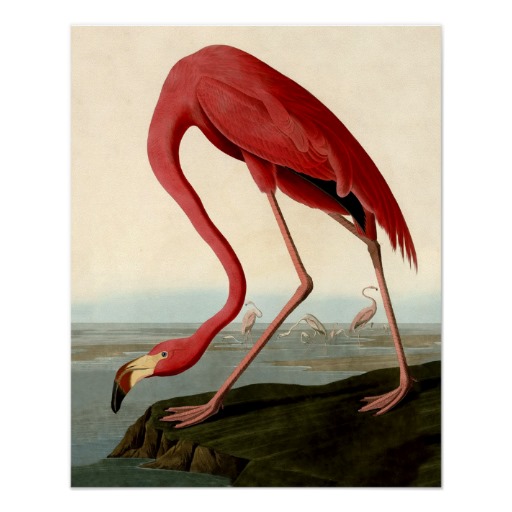
flamingoOIL IN WATER

Pam Lazos

Chapter Sixty-Five

Back in Houston, Bicky pulled the article off the fax machine and skimmed it. He huffed and sighed and stared out the bedroom window. He rubbed his head to stave off the headache that seemed inevitable.

“Dammit,” he said to no one in particular. “God dammit.” He dialed Jerry’s number and waited. The phone rang half a dozen times before Jerry picked up.

“I thought I told you to get back east and get those Goddamn kids under control,” Bicky barked into the phone.

“What?”

“The inventor’s kids! Did you check it out? No. You were too busy dicking around here doing God-knows-what.” Bicky was so angry he was sputtering.

“Kitty died. Remember? You know. Kitty. Your wife, of thirty-seven years. I was here for the funeral,” Jerry said.

“Don’t screw with me, Jerry.”

“I’m not screwing with you, Bicky. I’m telling you that some things are more important than others, which is something you haven’t learned in the last sixty years.”

“I didn’t call you for a psych session. I got a shrink for that. I called you about the kids.”

“I sent somebody. He said there was nothin’ going on.”

“Who the hell’d you send?”

“Guy that used to drive for us.”

“What guy?”

“The guy I fired a few months ago. You know. High strung.”

“You are freaking kidding me. You sent someone who didn’t work for us?”

“He was a good guy. And he had first hand knowledge, and if he got caught, he wasn’t one of us,” Jerry said. “Jesus, I’ll go check it out tomorrow.”

“Forget it. I’ll do it myself.” Bicky slammed down the receiver. He ran his hands through his hair and stared out into the darkness.

 ➣➣➣

Across town, Jerry hung up the phone and rubbed his eyes. An open book lay on the bed next to him and the light was still on. He roused himself and walked to the window. The night spread before him in varying shades of black like a Hollywood wardrobe.

“Damn psychotic son-of-a-bitch,” Jerry murmured.

He scanned the sparse room. A book shelf, filled to overflowing, a night stand and lamp, a single chair, behind him the silhouette of leafless trees. “What the hell am I doing?” He closed the curtain, shut the light and crawled back into bed.

 ➣➣➣

Jerry’s office, located in the basement of Akanabi Oil, was a tech-geek’s delight of an environment, encompassing ten thousand square feet and housing Akanabi’s main frame and various and sundry computer gadgetry. The whir and buzz of computer equipment was so intense that many of the technicians wore earplugs.

At the far end of the room, walled off from the rest of the equipment, was the closed circuitry monitoring station, Jerry’s own personal feifdom. The room had no windows and if not for the door at the far end, would appear to be a wall. Hundreds of cameras graced the offices, hallways, elevators and common areas at Akanabi Oil. Some were in plain view, some were circumspectly installed, all of them were monitored from this room. The cameras were such a ubiquitous part of the decor at Akanabi that after awhile people forgot they were being watched, an important plus from Jerry Dixon’s standpoint. These cameras in the offices of mid-management had originally been installed as a training mechanism.  Surreptitious monitoring allowed suggestions as to tact and style that could be made later without embarrassing the manager in front of the customer.  These had been “disabled” or so the managers thought, and could be brought back online with a few adjustments prior to a meeting should the manager request it.

The managers didn’t know what Jerry knew. The company’s fascination, it’s complete fixation with safety had morphed into something more sinister.  Cameras and listening devices as small as buttons and earplugs graced every office, corridor and waiting area of Akanabi.  The registered number of monitoring devices, about 1341, was more likely twice that many. Jerry kept the real list locked in a vault for which only he and Bicky had the combination.

Some days Jerry would come down to this room simply to watch.  His voyeuristic desire had grown from his abject loneliness. Had you asked him, point blank, whether he was lonely he would have vehemently denied it, but the signs were there, the fastidiousness, the borderline obsessive compulsive behavior traits, the need to control his environment and to have things “just so”.

Kitty had the ability to curtail in him some of his more destructive tendencies simply by being in the room. Yet in the days since her death, he’d felt a welling up of those emotions and was at a loss as to how to channel the energy. He sat, staring at a computer screen, contemplating this very issue when Bicky burst through the door.

Jerry catapulted from his chair, rolled to the floor, drew his gun, released the safety and pointed it directly at Bicky’s head.

“Are you crazy?” he shouted from a crouching position on the floor.

Bicky said nothing, but jumped on Jerry like a feral cat, punching and clawing at his face. Jerry put up his hands to deflect the onslaught, but not before a right hook caught him in the temple. That was the last contact Bicky made. In moments, Jerry reversed positions and had Bicky pinned with a knee on one elbow, his hand holding down the other, the gun pointed at Bicky’s forehead. Jerry hovered above Bicky, relishing the role reversal. He stepped back so Bicky could stand, but offered no hand to help.

“Was that some kind of test?” Jerry laid the gun aside, but did not turn his back to his boss.  Bicky brushed himself off and straightened his suit and tie. He stared at Jerry so ferociously that Jerry’s hand instinctively found his gun. Bicky threw a stack of papers at the ground.

“You’re fired. Collect your stuff. Leave your keys, your combinations, your camera equipment, and all your other stuff with Phyllis. I want you gone by the end of the day. And if I catch you anywhere near here, ever, I’ll rip your balls off with my bare hands.” He stared at Jerry for a few seconds working his jaw as if to get the tension out before speaking again.

“You were like my brother, you little prick.” Bicky spat at the ground, turned on his heel and left.

Jerry stared at the papers on the floor until his vision went soft and he leaned over to pick them up. The top paper was a codicil to the Last Will and Testament of Kitty McCain Coleman. The original will lay underneath. Jerry sat down to read.

The original will gave the portion of Kitty’s estate that she brought with her into the marriage, substantial in its own right, to Sonia. In addition, half the shares of Akanabi left to Kitty by her father-in-law went to Sonia to do with as she pleased. The other half went to The Nature Conservancy with instructions that the stocks be sold and PGWI given the fair market value of them. There were additional provisions on what PGWI should do with the money. Jerry skipped over them and continued, flipping through the document until a specific provision caught his eye. First Bicky, and then Sonia had a guaranteed thirty-day right of first refusal on the PGWI stocks. In this manner, Kitty assured that control of the company stayed within the family should the family still want it. Probably why Bicky agreed to this will in the first place. The mansion, in Kitty’s family for generations, went to Bicky. “Straight forward enough,” Jerry said to himself. He turned to the codicil and what he read made the hair on his arms stand up and his body shudder.

The codicil changed everything. Kitty had left her personal estate — everything that would have gone to Sonia which included a good deal of jewelry and other family heirlooms as well as shares of various stocks and bonds – to Hart. The mansion she left to Bicky. The remainder which consisted solely of Akanabi stock and which should have gone to Sonia and PGWI, now went solely to Jerry with instructions to sell it all and give half the proceeds to PGWI, but only if he was so inclined. Notably absent from the codicil was the provision giving Bicky a thirty-day right of first refusal. The codicil was executed three months after Sonia died. Kitty had never said a word to him.

Jerry looked up from the papers and saw, as if for the first time, the drab, windowless office. Hundreds of images blurred, a thousand sounds merged into an incessant buzzing that seemed bearable only minutes ago, and for the last thirty odd years before that. His eyes followed the bundled cabling, sitting in silence while billions of bytes of information cruised through its wires every hour and he was suddenly very tired.  He inhaled deep and full, his first real breath in decades, but his nostrils were met with the dustiness of a room that never saw daylight and he coughed the breath out, his body repelling it like poison. Jerry thought he could see the rejected breath, little dust clouds riding an imaginary wave of sunlight. The stack of papers in his lap looked very far away, like something on the horizon that you knew was there, but couldn’t quite make out. A giant tear drop fell from each eye and landed neatly on the page, spreading slowly, like a virus.

to be continued. . .

go back and read this

copyright 2012