we play well with others. really. we do.


If you love Mozart and you love a good romance, you must read Vivien Shotwell’s Vienna Nocturne. Wait. What – romance? Yes. It’s summer –when thoughts turn to light, frothy literature, something to be consumed with lemonade poolside, or near the thundering shore. If you’re looking for a sweet, well-crafted historical romance and Mozart is your guy, this is the book for you. READ MORE HERE
We firmly believe that the for-profit world needs the nonprofit world. For all the right reasons. Read about our latest venture in nonprofit-land here!


This is such a fun writing assignment it hardly seems like work at all. Well, that’s not entirely true; it is challenging. I love this exercise because it opens all the doors and windows in my mind to let the cool breeze of appreciation blow through. This exercise will make you happy –after it makes you a little nuts. It will grow your sense of appreciation, right after it seemingly shrinks your capacity to grow creatively. It will teach you how to count not only your blessings, but your mother’s blessings, your dry cleaner’s blessings, and that guy’s on the corner, too. It will challenge you in ways you didn’t know were possible, but by the end of it, you will have developed a new-found appreciation for your writing prowess.
This exercise is a process of developing awareness for the details that comprise your life. It is about learning to look beyond the surface of things, to become like Superman, able to see in and through the ordinary facets of your life. It’s about tapping in and turning on, which is about 181 degrees from what we do on an ordinary basis. We work our daily lives into routines because it simplifies things. You take the same route to work every day because you don’t have to think about which street go down, the speed of the flow of traffic, what detour to take because the road has been torn up by the city crews. By following the same route to work each day, it frees your mind up to traipse after other thought balloons, work out other puzzles like what you want for dinner tonight, whether you’ll get the roses trimmed this weekend, the tattoo your darling daughter wants to get on the small of her back, your dream vacation to Galapagos.
Routine driving patterns are just one example of how we engage in activity, and disengage our attention. Personally, I like to devise new routes to get to the same old destinations for the adventure of it…but that’s just me. The trouble with routine is that we stop noticing the details of the world when we go on auto-pilot. Life goes by in a blur while we’re busy thinking about yesterday, dreaming about tomorrow. Right Now gets pushed off to the side as. uninteresting or unimportant. This couldn’t be further from the truth.
Some sages assert that Now is the only thing we know for sure. We can touch Now, we can taste Now. Where is the future physically located? Where is the past? Can you touch it? Can you slide it over your skin like a fine silk scarf? Now is the only tangible thing that matters and we’re busy pushing it away in our rush to be somewhere else. It’s sad. We spend so much of our time anticipating the future and replaying the past that the present slips by unnoticed. The Amish have it down. They don’t keep photographs of their beautiful, clear-eyed children because it’s against their conservative religious tenants. But as a side benefit, it anchors them firmly in the right now. Right now their girls are lovely. Right now their boys are strong. There’s something liberating about that kind of limitation. For this exercise you must anchor yourself firmly in your Now. No escaping to yesterday, no slipping off to next week. Take a deep breath and let it out slowly. Look around you, study your surroundings. If you’re in a cafe, count the people who occupy the tables around you. If you’re on the deck at home, notice the temperature of the air on your skin. Be present. It’s Now baby! Embrace it, shake it around, drink it up.
Take out your journal and put this heading at the top of a nice, clean page with the date on it; 100 Things I’m Grateful For. And there you go, that’s it. Now before you start scratching around the idea that this is too simple and too trifling, let me I can assure you, it is neither. A list of one hundred things may seem like an easy task, a task for a fool; and maybe it is. If you get to one hundred without breaking a literary sweat, bump it up to two hundred just to make it interesting.
The big stuff is easy: love, family, a comfortable life. What about the small matters? Lentils. Air conditioning. Sandals. The list really is endless, so get creative. How about guppies and bright green parrots? Make a list of 100 things –I guarantee you that the interesting stuff doesn’t even begin to show up until somewhere after 25. Generally, this is what you can expect. You’ll start at one, and streak blithely along, passing ten things you really appreciate without so much as lifting your pen from the page. Twenty will come and go. Shooting round the bend of forty may slow you down a little, scratching for ideas and then you see fifty up ahead. The incline before you has become swiftly steeper, slightly more hazardous. You’re not taking the corners as rapidly as before, maybe you’re having trouble catching your breath. Maybe this isn’t as easy as you thought it was. Panic might get you in its grip: What? Can’t think of 100 things? Approaching the summit, the forest thins and the air is vaporous and you passed all the obvious details of gratitude ages ago. Just when you think of giving up this stupid useless quest, something happens. Your minds slows its spinning, the sharp edge of your cunning softens, and what slips in, is a quiet knowing. There is so much more, more than you could ever fit into the list of 100. The thoughts pick up speed now. Suddenly the ideas rush at you and you smile knowingly. You found those things; all of them. And you found them not yesterday, not tomorrow; you got them all.
You’re welcome.
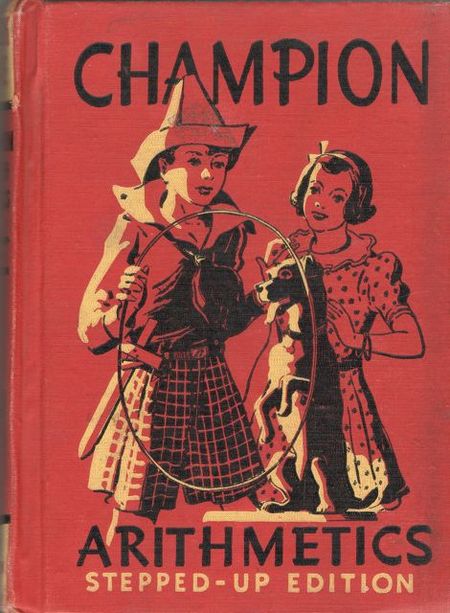
Do you remember your first day of school? I remember that I was excited, but I can’ recall more detail than that. I imagine now that when I got home that day, I drove my mom mad with details about amazingly cool! things like chalkboards, desks, coat hangers, paint boxes. No detail was too small, too mundane to be spectacular!
What would it be like if you found everything around you to be new and amazing, if the world was an exciting place to wake up to every day?
We’ve become so conditioned to our habitat, our customs, that we’ve simply stopped noticing anything that appears less than epic. But to a child, a Cheerio is an act of magic! A school bus is a marvel! An artichoke spectacular! Do you sometimes wonder where the wonder went?
No, you are not too old, and unless you really insist, too stuck. You can retrieve it by tuning back in to your enormous and innate powers of observation. They’ve always been there, but over time you got busy, started to ignore them, and they went to sleep from lack of use. No worries, you can get them back by waking them up and putting them to work. Again, and again. Repeatedly.
Our brains have amazing aptitude for recording detail. We hear and see and smell things all the time. We are aware of temperature, texture, weight, balance, language, color, relative safety or danger, constantly. Your conscious brain may be focusing on having a conversation with your hair stylist, but your subconscious, the primitive part of the brain is calculating and recording every detail in a ten foot radius, from the height of the display shelves to the left and the colors of the bottles on them, to your proximity to the door, to the relative humidity of the cool air brushing your skin, to the inflection in your stylist’s voice and whether the smile on her mouth matches the smile in her eyes.
You must think like a reporter. Reporters are trained to see what’s going on, to put the evidence together like pieces of a puzzle, and draw conclusions. You need not come to any grand conclusion from your observations, but observe, you must. You must begin to see the world not in broad strokes; ‘oh, there’s a school,’ and ‘oh see, there’s a dog,’ but in very detailed specifics. Go overboard! Scrape as many details up as you can. You can never be too specific. While you’re looking at the world around you and may be tempted to get lazy and summarize the vista spread like a banquet before you, but don’t fall for that old game. You will surely regret it. You will regret it because you will forget it. You will not remember the exact butterfly pattern on the bobble-head girl’s dress who knocked into the boy at the park playground and made him cry. You will not remember that the scruffy grey dog that dropped a stick at your feet and smelled like week-old salmon and sported one blue eye and one brown. You will not remember that on that particular day, you savored a peach flavor popsicle and that the clouds marched like a row of cream puffs against a sky so blue it made your eyes ache. You will not remember these things and you will not develop a knack for populating your writing with a thousand details unless you begin to flex that muscle of observation and put it to work.
Journal keepers all agree; when you go back and read through the books stacked neatly on your bedroom shelf, when you randomly open a book to a page and scan, it completely brings you back to that day at that cafe in that town, and remember everything about it because on that sultry afternoon fifteen years ago, you sat over an iced coffee, threw crumbs to feed the sparrows, and you wrote in your journal. You took a snapshot of your life -not a fuzzy half-focused one, but an honest to God totally naked look at all the florid details that filled your life for just one miraculous day. You wrote it down as a gift to your future self, and oh my. The sensation of reliving a day you had completely lost track of While you were busy raising children, managing a career, writing a book, caring for parents, making lobster costumes for Halloween parties, baking cookies, loving a spouse, is pure; it is delicious.
Each day is miraculous in about a million ways, but we humans have a short memory. Then another day comes, and the previous day gets tossed into the comer. And then we get another one! And another one! Pretty soon, there are thousands of such days and I don’t care how good your memory is, how many synapses you’ve got firing, how Leica-like your brainpan is, you can’t remember it all. That’s what a journal is for. Grab your journal and before you open it, open your ears and open your eyes. Learn to observe. Be an anthropologist. Be objective. Be brave. Walk into a coffee shop with nothing but a smile and a journal and sit yourself down at a comer table. Situate yourself with your coffee or your tea, and peer into the room around you. I mean, really look. See things like you had never seen them before and you were taking notes to retreat back to your home planet and report on the customs of the natives in your neighborhood. The man at the next table may be wearing glasses and reading a paper. Okay, good details. But what color are his glasses? What shape? Is the paper he’s reading an international journal or a gossip tabloid? The details tell a story. You can say the girl wore a dress. Okay, many girls wear a dress. But ‘the girl word a red dress’ tells us that maybe she’s a little fiery, a bit of a firecracker. When you fill your journal with details, you bring your images alive.
So get out of your comfort zone. Take a vacation from the familiar. Stop acting like you’ve seen and done it all, because cynicism is just boring. Train yourself to see your world like you’ve never seen it before. Begin to pay attention to the details, at least some of the time. Fill your journal pages with the flavors of your exotic life. You may not think your life is anything special, but I bet you dollars to donuts someone on the other side of the planet thinks it’s gosh-darned amazing. So act like it. Act like your life is a rich stew of tasty details, and write them down.
C. Gregory
 Persephone Walks
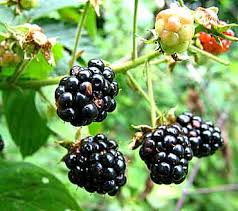
On a bright spring morning, she rises from a long sleep as if from the dead. She sighs, she turns. She slips into yoga pants, the sports bra that fits like wrapping. The smart phone with its Audible Pema Chodron lesson on compassion (because she needs this, she decides and as she listens, realizes that compassion is just the start, chica), and plugged in, walks to the edge of the property, to the edge of the seasonal river. She breathes the sweet, wet, morning air, the fragrance of loam and blackberry blossoms, begins her walk. It is the month of earth day; earth month, and the coincidental interval of her return. This year the timing seems off. The rains have come late. The storms rage larger, a swirl of unpredictability. It’s not her doing, she tells herself. Pema says to make it about herself, that to say it is the other is only illusion. It’s all Bardo, baby. It’s all Hades, honey. It’s all One. We are all Ophelia, we are all Hamlet.
Persephone remembers to breathe and in the rush of air she lets go of the border between her thin skin and the slow river, the rise of moist air warmed by yellow sun, the speckled quail darting for the shadows. This is compassion, she realizes. I am the earth. She is me. Separation is only willful delusion.
 “Brightest New Mexico. In the vivid light each rock and tree and cloud and mountain existed with a kind of force and clarity that seemed not natural but supernatural.”
So does Fire on the Mountain begin with Billy’s view of this rugged land, this “country of dreams.” Billy’s mother has no love for the ranch, but for Billy, like his grandfather, the place is in his DNA. Billy’s barely accustomed to the rhythms of his long awaited vacation when the summer turns sour. One of Vogelin’s horses has gone missing. They later find him dead under mysterious conditions high up along the mountain trail. Vogelin’s suspicions about the identity of the perpetrator are confirmed when the Air Force lawyer arrives soon after. The U.S. government wants Vogelin’s land since it sits . . .READ MORE HERE
 In his infinite wisdom, Chinese philosopher Lau Tzu coined the phrase “a journey of a thousand miles begins with a single step,” and it is a hard one with which to argue. However never being content to leave a great sage alone, I would add: “all the pages of a genius novel begin with a single compelling sentence.” The usual list of literary greats contains the (mostly) names dead white guys, but this is one for the girls. Herewith, a list of 15 brilliant first sentences and the novels from which they arise. By women.
 who doesn’t love a list? as a culture, lists are what we love. just take a look at the front of any magazine at the checkout counter and you will see lists of everything from the best vacation spots in the West . . .to the best way to drop ten pounds. personally, we love books, so here’s a short list of must-read books. just for you. how many have you read? how many can you read in the coming months? this is our challenge: read three. three is any easy list. we promise.
 We like to support like-minded writers everywhere.
Just like this blogger. And why not? If the universe is comprised of infinite possibilities, then why not angelic repairmen who get the job done?

 persephone's step-sisters