when spring arrives

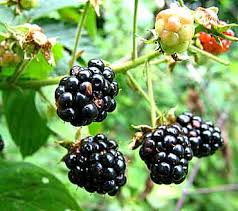
blackberryPersephone Walks

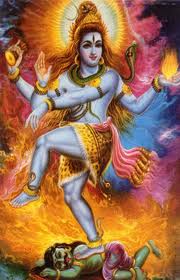
On a bright spring morning, she rises from a long sleep as if from the dead. She sighs, she turns. She slips into yoga pants, the sports bra that fits like wrapping. The smart phone with its Audible Pema Chodron lesson on compassion (because she needs this, she decides and as she listens, realizes that compassion is just the start, chica), and plugged in, walks to the edge of the property, to the edge of the seasonal river. She breathes the sweet, wet, morning air, the fragrance of loam and blackberry blossoms, begins her walk. It is the month of earth day; earth month, and the coincidental interval of her return. This year the timing seems off. The rains have come late. The storms rage larger, a swirl of unpredictability. It’s not her doing, she tells herself. Pema says to make it about herself, that to say it is the other is only illusion. It’s all Bardo, baby. It’s all Hades, honey. It’s all One. We are all Ophelia, we are all Hamlet.

Persephone remembers to breathe and in the rush of air she lets go of the border between her thin skin and the slow river, the rise of moist air warmed by yellow sun, the speckled quail darting for the shadows. This is compassion, she realizes. I am the earth. She is me. Separation is only willful delusion.

Link

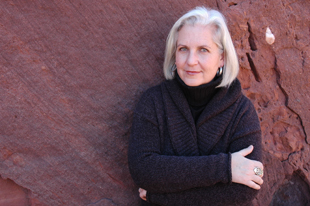
TerryTempestWilliam2_Credit_Debra_Anderson310

“I pray to the birds. I pray to the birds because I believe they will carry the messages of my heart upward. I pray to them because I believe in their existence, the way their songs begin and end each day—the invocations and benedictions of Earth. I pray to the birds because they remind me of what I love rather than what I fear. And at the end of my prayers, they teach me how to listen.”
― Terry Tempest Williams, Refuge: An Unnatural History of Family and Place Read more

earth day (c)

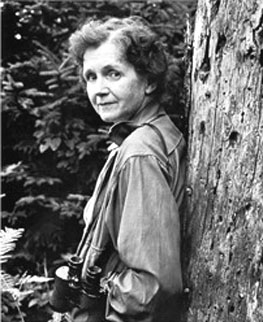
rachel-carson-3-sized

     Throughout time, godparents have been an important, often undervalued resource in the raising of children, providing nurturing counsel and emotional sustenance to their charges. Maybe they didn’t grow us, but they provided strength, love, and an alternative point of view, the ally in our evolutionary corner, always ready to step in when needed. Even the Mother of us All could benefit from having one.  Lucky for Her then that there was Rachel Carson, and lucky for us.

If Edward Abbey was the godfather of the modern environmental movement, then Rachel Carson was the godmother. When she penned Silent Spring, first published in 1962, Carson probably had no idea that it would be one of the most influential books of the modern environmental movement.  Read More Here…

four stars

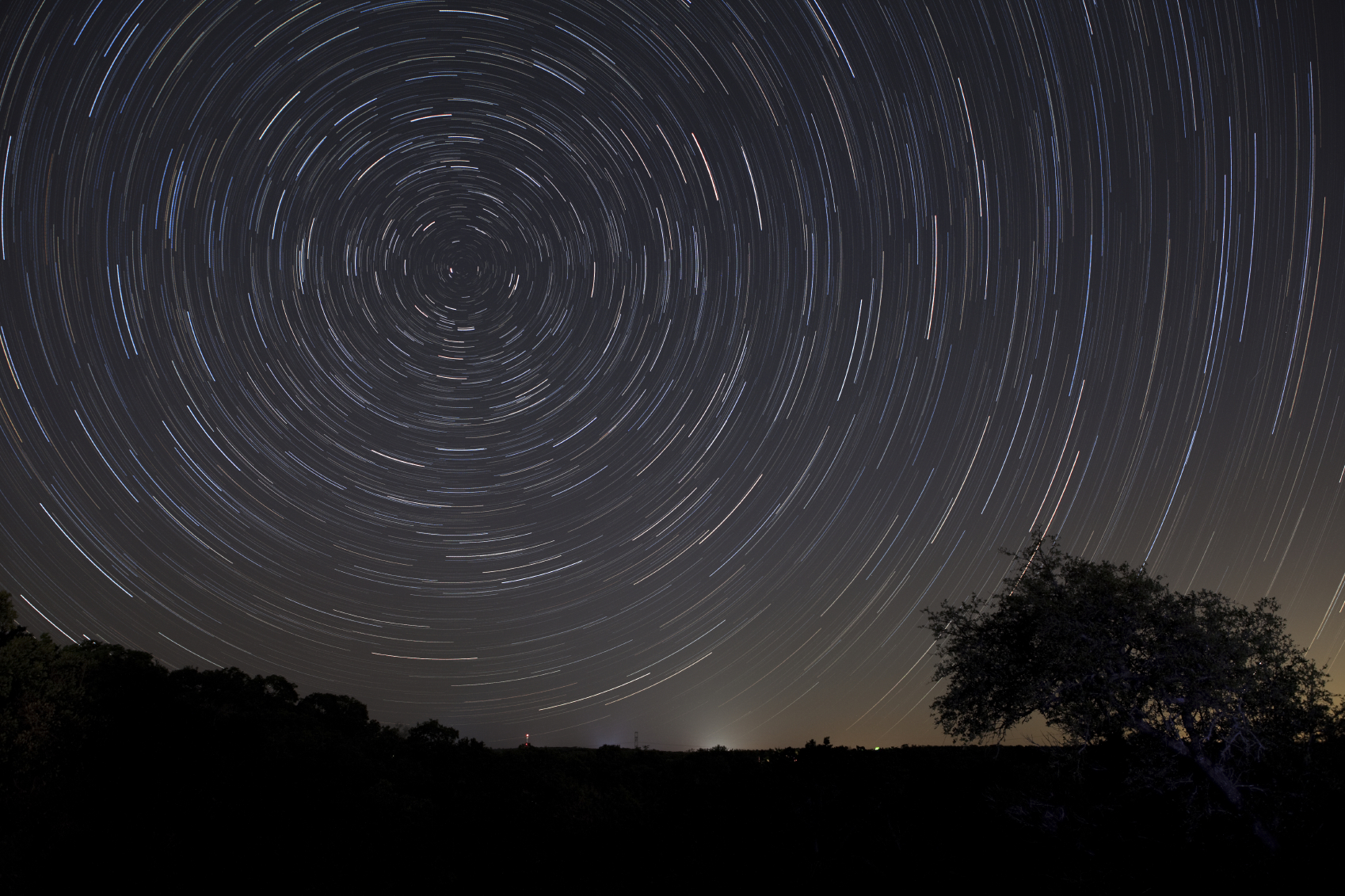
Aligning-Stars

OIL IN WATER

Pam Lazos

Chapter Eighty-One

Gil coughed and opened his mouth, pushing with his tongue. His eyes flew open and he found his face pressed against Max’s coat, a mouthful of the course bristly stuff, dry as cotton, poking at the insides of his cheeks. He coughed and spit the hair out, whacking at it with his unencumbered hand. The bushy mane turned, like a giant rock rolling away from the cave’s opening, and yawned. Max lay on his back, paws in the air, and whined, waiting for Gil to rub his belly. Gil grabbed his water bottle from the night stand, took a big swig and swished it around in his mouth.

“Yuck.” He sat cross-legged next to Max, adjusted his sling, then began to rub in slow, deliberate circles with his good hand, putting them both in a trance. Max moaned in ecstacy, scratching the air one front paw at a time until Gil stopped in mid-stroke.

“Oh my God.” Gil looked at Max. “I had a dream, Max. I had a dream.” Gil got up on his knees and bounced. “I had a dream, Maxie. A dream!” Gil stood up on the bed and began jumping up and down, then dancing in a strange, cohesive rhythm, singing all the while. “I had a dream. I had a dream.” He danced and sang and twirled, “I had a dream. I had a dream,” until his foot accidentally landed on the discarded water bottle and he toppled to the floor. He stuck the landing. Max stared over the side of the bed after him. For a moment Gil looked at him with wide-eyes before bursting into peals of laughter.

“I gotta tell Kori and Avery.” He leaped up and in two giant, awkward strides, he was at the door. “C’‘mon, Max. Let’s go.”

➣➣➣

Hart sat on the couch with his laptop and a cup of coffee. Avery sat at the other end reading the Sunday Inquirer . Kori and Jack snuggled together on the recliner. They could hear Aunt Stella, whistling in the kitchen while she made breakfast.

“I still can’t believe it’s a week already,” Avery said.

“Can we not talk about it please?” Hart asked. “I’m better if I just don’t think about it.” Hart sighed. Had Bicky, in a single and unlikely courageous act, not saved Gil from probable extinction at the hand of a man whom Hart had at one time considered to be his close friend and ally, things would be vastly different right now. For the past week, Hart had struggled to redefine his relationships with both men, but the matter was too close, the parameters too large, so he filed it under the category of Life’s Mysteries and Conundrums, the kind that need time and space for disentanglement. Kori’s yelp roused Hart from his reverie.

“Aaaah, your feet are cold,” she said. Jack rubbed his bare feet against Kori’s calf. After a few seconds of squirming, she wrapped both her legs around them.

“God, I love you,” Jack said, nuzzling Kori’s neck. “I come to you with cold feet and you embrace them.” He hugged her to him and whispered in her ear, “I really love you.”

“I love you, too,” Kori whispered back.

“No, I mean I really love you,” Jack said. “Really, really love you.”

Kori poked Jack in the ribs and he grabbed both her hands. She squirmed free just as Gil came running down the stairs, Max barking in his wake.

“I had a dream,” he said, jumping up and down. “I had a dream.” He stopped in the center of the room and did a little jig. Max jumped around Gil’s feet, barking until Gil picked him up by the front paws and danced with him.

Hart stared at Gil and Max, a smile gracing his lips. Drawn by the commotion, Aunt Stella waddled into the room.

“What was it?” Kori asked, sidling up next to Gil. Used to the last week’s worth of uber-mothering, Gil stopped his little dance and raised his face to Kori so she could feel his forehead with her chin. “No fever,” she said and shrugged.

“He’s alive,” Gil said. Robbie’s alive.”

Aunt Stella covered her mouth and folded into an armchair. Kori yelped as if she’d been poked and dropped to her knees. “Tell me.”

Avery joined Kori on the floor and Gil sat down next to them, wrapping his good arm around Max’s neck to keep him still.

“He’s someplace with a lot of water.”

“Water? Iraq’s a desert,” Jack said.

Gil shrugged and ran his closed lips back and forth over his teeth. He looked at Jack.

“Ssshhhh,” Kori said to Jack. “More,” she said to Gil.

“Well, there was a desert in the background, but there was so much water everywhere that I’m just not sure.” He scratched at Max’s ears and drifted off, back toward the dream.

“More,” said Kori.

“Robbie was wearing a robe and one of those head thingees,” Gil said, rubbing Max’s wide side. “And the people traveled by boat. Well, really by these little canoes. And they used poles instead of paddles to move the canoe through the water.”

“Interesting,” Hart said. He assessed Gil with his brilliant hazel eyes before typing something into the computer.

“More,” Kori said. Her eyes didn’t leave Gil’s face.

Gil thought for a moment, his mouth animated, his eyes and nose scrunched in concentration. “Oh yeah. He was digging a hole. He was using a little shovel and this long cylindrical thingee that was open at the top and bottom and some of the sides.”

“An auger?” Jack asked. Gil shrugged. Aunt Stella sat, fanning herself with a dishtowel.

“Got it,” Hart said. “Is this what you saw?” He turned the laptop’s screen toward Gil who jumped up and ran over to look at it.

“That’s it! That’s it!” Gil said.

“Where is that?” Avery asked. Everyone leaned in to peer at the screen.

“That, is the Fertile Crescent,” Hart said. “It’s in southern Iraq. And if you believe the bible, this is where civilization got its first leg up.”

“Wow,” Gil said.

“Are you sure that’s where he is?” Kori asked.

Gil nodded. “Looks exactly like it.”

“So how do we find him?” Kori asked.

“Depends. He might not want to be found,” Jack said. “He’s supposed to be dead, remember?”

“Which means…” Kori said.

“…that he faked his own death,” Avery finished.

“He doesn’t want to see us anymore,” Kori said, a crack in her voice.

“No. It’s not like that. He’ll come back,” Gil said. “When he’s done.” Gil nodded his head with enthusiasm.

Kori gave Hart a look which he interpreted as a need for deliverance.

“I’ll put feelers out,” Hart said. “See what I can come up with. I do have some contacts in Iraq….”

“Is that safe?” Jack asked.

“I’ll be discreet,” Hart said. He looked to Kori. “Okay?”

“Okay,” she said, hugging him so hard he yelped. She ran over to Aunt Stella whose eyes appeared to be leaking then floated back to her spot on the recliner.

Avery grabbed Gil by the shoulders and looked into his eyes. “You sure?” Gil nodded assent. Avery pulled Gil to his chest and let out a long, haggard breath.

“Of course he’s sure. He’s a visionary,” Hart said, smiling. “Okay,” Hart said. “Now — Gil. You feeling up to a little work?” He patted the seat next to him.

“Sure,” Gil said, and flopped down on the couch.

Hart smiled and gave Gil a brief hug, avoiding the sling. Gil, startled by the gesture, sat very still for a moment before awkwardly patting Hart on the back.

“I give you four stars,” Gil said, looking pleased with himself.

“Who? Hart?” Jack asked. “Why does he get four stars?”

Gil looked at Hart with complete admiration in his eyes. “He just does. And if he moves in with us for good, I’ll give him four and a half.”

Hart cleared his throat, blinked his eyes and stared at the screen, suddenly at a loss for words. Gil leaned against him on the pretense of following Hart’s gaze.

“Okay,” Gil said, “show me what you got.”

(c)2013

coming up for air

old growth

Close your eyes. Take a deep, slow breath. Feel your lungs swell with air. Notice how your chest expands gently and as you exhale, sense the relaxation of your body. Your lungs pump oxygen into the bloodstream, which flows faithfully throughout the body and when that sweet rush of oxygen reaches the brain, you are instantly calmer, more relaxed. Most days, we don’t think about the breath. And still, a breath, consciously observed, has the power to regulate the temperature of the body. It brings clarity of the mind. It releases tension, It quiets the ego.  Some would even say that it is not you or me doing the breathing, but the act of taking in and releasing air, is God breathing Us.

THE WOOD FOR THE TREES (2)

Some of the oldest living organisms on earth are trees. Giant sequoias, for example, can live as long as 2,500 years while some bristlecone pines can live up to 5,000 years. The numbers vary, but let’s just say for simplicity’s sake that a mature tree, i.e., older than a mid-range teenager, consumes about 48 lbs of CO2/yr. (Some accounts are much higher for you skeptics.) The key to this is mature since a prepubescent tree simply doesn’t carry its weight. It’s simple math. CO2 in, oxygen out, but cut 18 million acres off the face of the earth and the numbers skew, the math gets wonky. Saplings start out perky enough, sucking in a bit of CO2, letting out a bit of oxygen, a tree’s waste product (who said it wasn’t a symbiotic world), but it’s not until the tree reaches 100 or 125 that it really hits its stride, exhaling wads of the life-giving stuff each year, chowing down on carbon dioxide like it was candy. The fact is, older trees outperform younger trees by an incredibly wide margin and the older the tree, the more CO2 it can take in because this is one instance where size does matter. So while it’s all cool and hip to plant a tree every time you cut one down, don’t expect the payoff to be that meaningful for awhile. (Please don’t read this and have your take away message be that we shouldn’t be planting trees. We absolutely should and must be, but keep in mind the delayed rate of return.)

Only about half of the world’s tropical forests are still standing. While trees as a whole give the world a great big oxygen boost, the destruction of the same trees to make way for crops — think slash and burn of swaths — doesn’t just deprive us of that oxygen, but contributes to greenhouse gasses because: a) we’re burning them, and b) they’re releasing the carbon they were holding. All tolled, it’s somewhere in the range of a 12-17% carbon increase. Something else trees do is hold water in their roots and then slowly release it into the atmosphere, contributing to the amount of water vapor in the air much like your houseplants release moisture into your home during the dry winter. Amazingly, in the Amazon Basin, about half of the water in the ecosystem is held within the plant life. Without trees, we have deserts.

The writer Aldous Huxley said facts don’t cease to exist simply because we ignore them. About 18 million acres of forest are lost each year to logging for firewood, or pulp and paper, for raising beef cattle, and for growing cash rich crops such as soy, palm oil, and coffee, the latter three of which leave behind poor soil conditions since none of their root systems holds the ground well. All of this results in increased erosion, flooding and a decline in local water quality due to runoff. It takes about 2,000 gallons of water to raise a single pound of beef plus acres of cleared forests to make way for pastureland. Beef is neither ecologically nor agriculturally efficient, and too much is bad for your heart, so why are we eating so much? (Notice I didn’t say “it”, but “much.”) Should we continue cutting down old growth forests to make amazingly beautiful furniture, continue to eat large quantities of beef, continue to grow crops such as soy or palm oil (not the good fat, BTW) to use in our unending supply of processed foods, shampoos (sodium laureth sulfate and stearic acid are derived from palm oil), and cleaning products, continue to log forests for paper, and sadly, firewood, or should we check ourselves and stop living in what is probably the most unsustainable manner since the ruling class of ancient Rome, unless you’re a Kardashian or had a hand in constructing just about anything in Dubai. Shall we ignore the facts?

Approximately 70% of the world’s species, plants and animals alike, live in forests. What happens to those species when the forests are all gone. I think it’s more than speculation to say they’ll go the way of the dinosaur and man as a species will be right behind them. Where I live in Central Pennsylvania, the richest unirrigated farmland in the country is being plowed under for brand new, upper-end housing developments. We all need a place to live, yes, but couldn’t it be a revitalized brownfield instead of the rich, fertile farmland that gave my part of the world its acclaim? I wonder about all the critters living in and around the edges of those farm fields, in the small patches of woods, in the little nooks and crannies and burrows. Where will those little guys go when the tractors arrive? It’s not like they can call a realtor and get a trade-in on read the rest here

kali calling

kaliKali called; she wants her Gaia back. She’ll do what it takes, so strap on your Teflon pantyhose honey. Even if we stop abusing the planet now, she’s already warmed up and the punch she’s packing is gonna be a gobsmacker. Here are a few fun facts about changing weather patterns that might just be relevant:

Fact:  While global temperature has increased about 1.4% over the last millennium, we are currently heading toward an unthinkable rise of between 2 and 12 degrees by the year 2100.

Fact:  An increase of 2 degrees F will result in a 5-15% crop reduction; 3-10% increase in rainfall during heavy rainfall events (increasing flooding risk); a 5-10% decrease in stream flow in some river basins; and a 200-400% increase in wildfires.

Fact:  Experiencing extra snowy winters doesn’t mean climate change isn’t real.  Rather, the increased water vapor in the atmosphere results in increased precipitation, a Catch 22.

Fact:  In the last millennium and a half, global sea level has risen about 9 inches and is expected to rise 1.5 to 3 feet by 2100.  The increase in sea level will force coastal dwellers from their homes, maybe permanently, and if that happens, what the heck will it do to Manhattan?      

Like this? Read more.

earth + sky

Climate change a myth? Oh, honey.

You’ll want to read this.

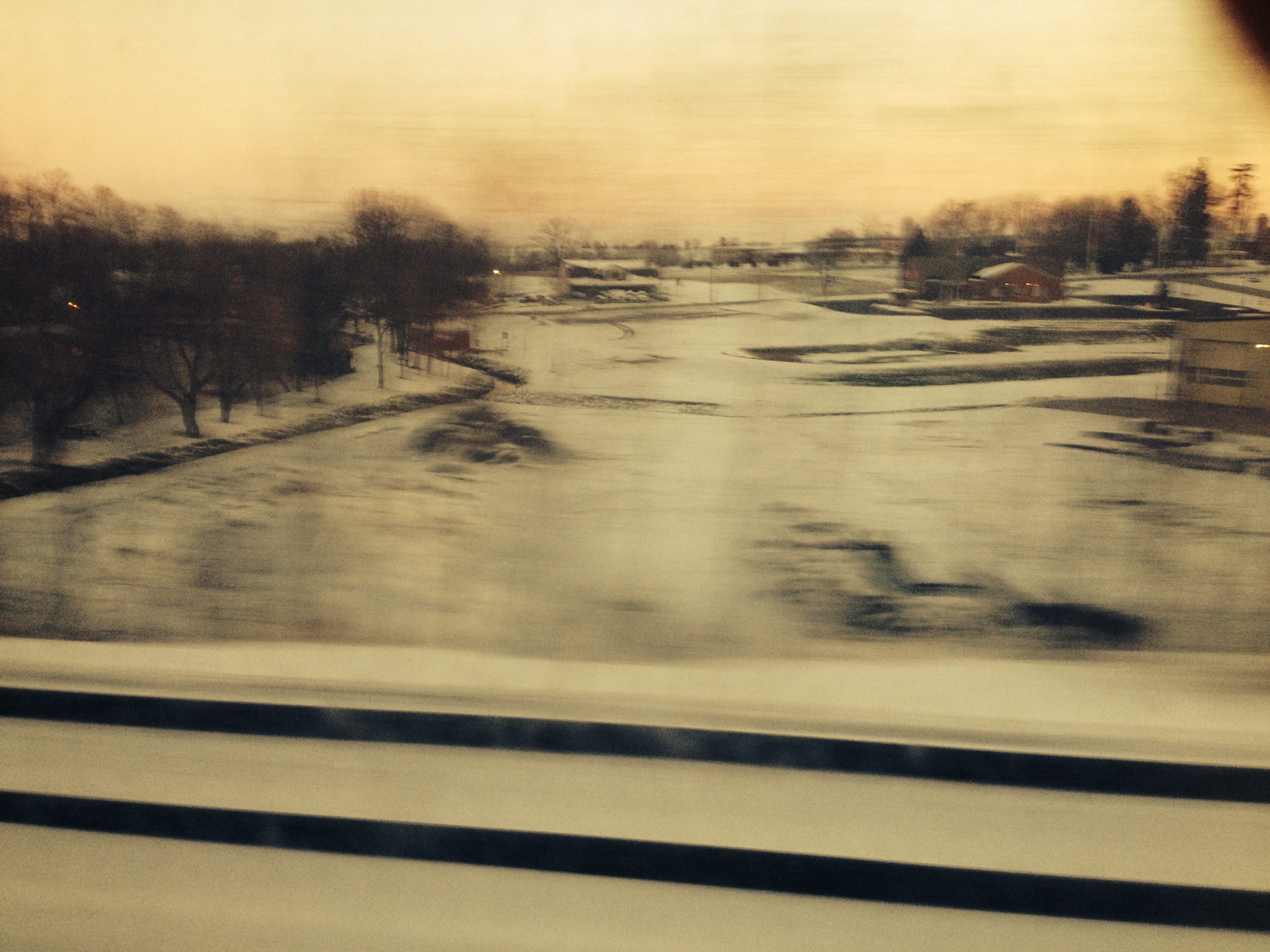
PA from the train

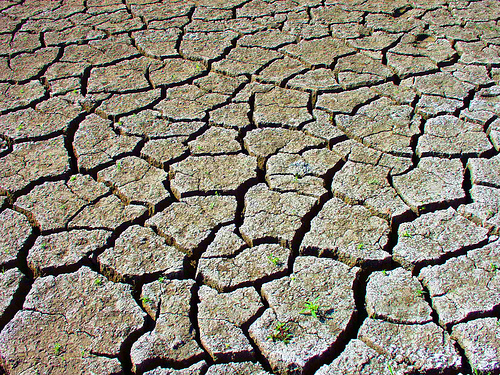
water::please

we’re parched here on the west coast. . .and regardless of rhetoric and resource politics, one thing seems clear: extreme weather is the new normal.

That’s our story and we’re sticking with it. Read more here.

nvmuseum

the new normal

Having doubts about the whole global warming thing? Really?
It’s time to talk climate change, baby.

The conversation starts here.drought-texas

you’re in control

Comet_P1_McNaught02_-_23-01-07OIL IN WATER

Pam Lazos

Chapter Seventy-Eight

Fifteen minutes later due to Hart’s intercession, Bicky sat leaning against the wall of the TDU, his leg wrapped in a tourniquet that Hart was tying off. The tourniquet, made from pieces of an old ripped bed sheet turned rag, was streaked with dirt and motor oil; Jerry had refused to allow anyone in the house to get medical supplies. Bicky flinched as Hart secured the whole mess in place with a finishing nail.

“There are more civilized ways to get retribution, Jerry.” Hart snapped.

“Don’t tell me it’s not something you thought about yourself from time to time, Mr. Chief of Engineering.”  Hart snorted.

“You know what surprises me, Hart? What surprises me is that a thousand freaking people a day don’t just get up out of bed, strap on a semiautomatic, and blow the crap out of something. That’s what surprises me.” Jerry’s voice cracked. He cleared his throat and scratched the barrel of the gun against his scalp. “And everywhere there’s death. People dying.”

“People are always dying, Jerry. It’s just the one that’s got you upset.”

“Actually, it’s two. And if you give me a minute, I’ll tell you about it. But first I want to clear some things up with your boss, here. Before he passes out, that is.” Jerry stooped down next to Bicky.

“You proved your point, man. You’re in control,” Hart said. “Now let me call an ambulance.”

“And then what? Have me arrested? I’m a rich man now. Rich men don’t go to jail.”

“Look, Jerry,” Hart said, watching Bicky. “Given the extenuating circumstances, I’m sure we can work things out,” Sweat poured from Bicky’s ashen face, but he managed a nod.

“I want to tell you a story first,” Jerry said. “Sit down,” he said to Hart. “Keep the kid over there on the hammock. Take the chair over next to him.”

Hart laid a hand on Gil’s shoulder and pushed him toward the hammock

“And get that beast outta’ here.”

Gil snarled at Jerry, but did as commanded. “Come on, Max,” Gil said. Max ran over and stood next to Gil, wagging his tail. Gil walked him to the door and ushered him out. “Stay,” Gil said. Max started barking as Gil shut the door on him.

“You better shut him up or I’ll shut him up for you,” Jerry said.

Gil’s eyes watered, but his voice didn’t waiver as he opened the door again. “Ssshhh! Sit, Max. Be quiet. Understand?” Gil raised his index finger to his lips and Max whimpered once, but sat down as instructed. Gil’s sad, brown eyes blinked, shutting the spigot on them as he closed the barn door. He took a seat on the hammock. A soft low growl rolled in like a wave through the crack under the door.

“You did the right thing,” Hart said, squeezing Gil’s hand. Gil returned a brave smile. Jerry’s face clouded with something akin to regret. He rubbed a rough hand over his eyes and it was gone.

“Story time, eh?” Jerry folded his arms across his chest, facing Hart and Gil, the gun poking out from under his arm.

“You see, one night, I’m sitting outside your house — ”

“My house?” Hart narrowed his eyes at Jerry.

“— and I’m watching, and I’m waiting, and I happen to see a familiar car pull into your driveway and lo and behold, who gets out, but your father-in-law. That means kin-by-law, you know, and brings with it a certain degree of responsibility which a lot of people don’t take seriously enough, I think. It’s not just about a seat at the holiday dinner table.” Jerry fixed Bicky with an accusatory glare and the two men could not let go the sight of each other.

“Anyway, he doesn’t knock, just goes right in like he owns the place. You know what I’m talking about, right?” Jerry tilted his face toward Hart for emphasis, but wouldn’t break eye contact with Bicky. “So I get out of my car and I walk around to the kitchen window to see what’s happening. Bicky’s in there and Sonia’s got the kettle on for tea and it’s steaming, but not whistling yet. She’s putting a tea bag in her cup and she’s got her back to him. The windows are open, which I don’t understand because it’s hot as hell out…”

“Sonia didn’t like air conditioning,” Hart said, his voice thick.

Jerry nodded. “And if not for that small fact, I wouldn’t be relaying this story to you now as I’ve witnessed it,” Jerry said to Hart, his eyes still glued to Bicky’s face. Anyway, I hear bits and pieces of things. Bicky says: ‘Sonia, enough,’…and then something something. And Sonia says: ‘Where’s what,’” and Bicky says, ‘You know what…’ and the tea kettle starts screaming and I can’t hear a thing for a minute, but this ear-splitting whistle and Sonia and Bicky stare at each other and words come out of their mouths, but I can’t make them out until finally, he yells at her to ‘shut the kettle’ and she very calmly walks over, grabs the kettle and pours herself a cup of tea.” Jerry smiled at Bicky as if he had just one-upped him.

Sweat continued its downward spiral, pouring from Bicky’s face and scalp while his face changed from pale grey to pale green. Bicky squeezed his right leg, but did not avert his eyes.

“You never could back her up, could you? That’s what always pissed you off about her,” Jerry said. “How did it make you feel, Boss, to finally have no control over something?”

Using his hands for balance, Bicky tried to stand, winced in pain and dropped to the floor, both hands wrapped around his thigh just above the entry wound.

“Kind of like now?” Jerry asked, the pleasure of the moment apparent on his face.

“Jesus Christ, Jerry. What the hell are you talking about?” Hart said.

Jerry sidled over to Bicky and put the gun to his face. “You want to tell them?” Bicky shoved the gun away, breaking eye contact.

“Uh oh,” Jerry smiled and patted Bicky’s face. “You lose.” Bicky said nothing.

Jerry sauntered over to Gil and Hart. “He’s quiet tonight,” Jerry said, a note of mock concern in his voice. He let out a long, labored sigh. “So – Bicky whirls on her, like this.” Jerry grabbed Gil by both arms and gave him a violent shake.

“Hey!” Hart said, jumping up. Jerry dropped Gil’s arms, stuck the barrel of his gun in Gil’s ribs and held up a single finger. Hart froze.

“Tsk, tsk, tsk,” Jerry said, shaking his head and motioning for Hart to sit down. He grabbed Gil again.

“He was in her face, squeezing her arms, saying a bunch of what, I’m not sure, and it must have hurt because Sonia finally let out a yelp. So what’s the son-of-a-bitch do? He loosens his grip, but still doesn’t let her go.” Jerry shot Bicky a murderous look.

Jerry dropped his voice, his face taut with recall, one hand tightening around Gil’s arm, the other still poking the gun in Gil’s ribs. “I wish now I had gone through the window after him.”

“Oooww!” Gil said. Jerry jerked on Gil’s arm as if to bring him back in line, but when he looked at Gil’s small, pinched face, he released his grip.

“Sorry,” Jerry said. Gil inspected his reddened forearm, already forming a bruise.

Jerry’s eyes misted over, but he continued: “‘I don’t have it,’ she said. ‘Don’t lie to me,’ he said. ‘What you sent wasn’t what you took,’ he said, and then a bunch of stuff I didn’t hear.”       Jerry swiped at his watery eyes with his free hand, then rubbed his forehead with the barrel of the gun, leaving a bright, red welt. He pushed Gil toward Hart and motioned them back to their seats. He shook his head like a wet dog, before pointing the gun at Bicky. “Son-of-a-bitch,” he said, drawing back the trigger.

“Jerry!” Hart yelled, and pulled Gil behind him.

Bicky braced for the bullet, his face scrunched and tense, but his eyes were unwavering in their gaze. Jerry leaned back, inhaled slowly and fired, lifting his gun slightly before pulling the trigger. The bullet drove harmlessly into the wall above Bicky’s head. Bicky began shaking and sucked in a long, raspy, breath.

Jerry stood up and walked over to the drawing table where Gil had laid out a blueprint of the TDU. He thumbed through the drawings using his gun as a finger to turn the pages. He turned back to Bicky.

“What were you thinking that day, Boss? Did you understand? Were you resigned? I’ll never get why you so uncharacteristically backed up. Why’d you leave without it, huh? When you knew she had it? Cause you know, she’d be alive today if you would have just done what you always do which is not taken no for an answer.”

“I was with Bicky at the Union Club that night, Jerry,” Hart said. “I left before he did. So he couldn’t have been at my house.”

Bicky looked at his son-in-law; his lips forming into a slow, sad smile.

“Loyal to the end, aren’t you, Hart?” Jerry sat down on Gil’s stool, pointed the gun and spun around once. The moment he was in a direct line of fire with Bicky’s head, he planted his feet on the ground with authority.

“I tell you your wife would be alive today if not for him and you defend him. You’ve been duped. We all have.” Jerry spun around again and came to another abrupt stop in direct line with Bicky. This time he fired. The shot went into the wall just above Bicky’s right shoulder. Bicky heaved out a lung full of air, but refused to utter a sound.      

“‘Just tell me you didn’t go to the newspapers,’ he said, and she shook her head. Just the way he looked at her, trying to see inside her, to see what she was up to. But he never could, never did understand her. Not like I did. Jerry swiped at his eyes and stared at the floor.      

“What happened next?” Hart asked.

Jerry spun around a third time and once again pointed the gun at Bicky who was now sobbing quietly, the muscles in his face tight with pain. “I’ll tell you what happened next.” Jerry fired and the shot drove into the wall less than an inch above Bicky’s left shoulder.

“Bicky left.”

 to be continued

there is more before

copyright 2013