When the world you know spins out of control and you’re the adult in the house and therefore supposed to know what to do and nothing makes sense anymore and by the way love is never easy; then the wife you so love dies before the marriage counseling ends? Yeah, she might have wanted to opt out. But other than that? It’s your ordinary midlife crisis. Dearest literary friend you will want to read this one.
Category Archives: writing
write like a tourist
Quote
One way to journal is to forget everything you know about the place you live. You learn to look at the world as if you just popped through a worm hole from some other verdant, vividly lush and distant planet. Instead of going about your regular routines, I bet you would begin to really see the world you inhabit.
How many times do you go about your business and then suddenly realize that you can’t remember the last ten minutes? That you had been on autopilot, with your body operating the family car, stopping at lights and pausing for pedestrians while your mind had zipped off to distant canyons and \ gullies of memory and illusion? You’ve arrived safely and no one was hurt thank goodness, but what would happen if you were fully embodied, fully present, each day of your life? Would you see the world differently?
My vote is yes. It’s a fact that we do not cultivate the practice of notice very well. We are bombarded by television, radio, the Internet, literally thousands of messages a day (the gist of which are of the most dire nature by the way, and another reason to unplug) and so it’s natural that we begin to shut down. In many cases, shutting down is a natural mechanism of survival. The trouble is, once you begin to shut out the ugly of the world, you inevitably begin to shut out the beautiful and remarkable and miraculous, too.
Almost no one I’ve ever talked to about it thought their story was interesting. But I’ll bet their story is remarkable. They just stopped noticing the details. They forgot that their life was miraculous in about a million ways. So here’s an idea, write about your life like you don’t own it.
- Write about last Christmas like you’re a staff writer at a big agency and you’re creating a storyboard for a movie that will be seen around the world and sent into space by powerful satellites and viewed by people who have no idea what Santa is about, and why people decorate trees with shiny glass orbs.
- Explain what your house looks like as if you were describing it to a blind person.
- Paint a picture with words to describe your dog to a boy who has never seen a dog in his life.
- Illustrate a journal entry about last night’s dinner with words so smoky and succulent that your nostrils twitch and your stomach howls.
- Visit your local grocery store like you’re a tourist from Hungary. Have you ever noticed, really noticed, now many different brands of bread there are? How many varieties of potato chip they sell?
- Go to your local Chamber of Commerce and ask for a directory of its members and marvel that people do the kinds of jobs they do.
- Lick the inside of your wrist and then sniff it to see what your breath smells like.
- Stop. living on auto-pilot!
Cultivate an appreciation for each Now that shows up. Now, I reach for my water bottle and the cool liquid slides down my throat. Now, my fingers pull away the skin of an orange. Now, call on inspiration, and she takes my hand and we walk.
the well-socialized nonprofit
You wouldn’t bake a souffle without a recipe, what makes you think you can raise the capital to support your pet project without a fundraising strategy? It’s easy as ABC, baby, and our friend the strategist will the tell you how.
stalking Mozart
If you love Mozart and you love a good romance, you must read Vivien Shotwell’s Vienna Nocturne. Wait. What – romance? Yes. It’s summer –when thoughts turn to light, frothy literature, something to be consumed with lemonade poolside, or near the thundering shore. If you’re looking for a sweet, well-crafted historical romance and Mozart is your guy, this is the book for you. READ MORE HERE
thanks, man
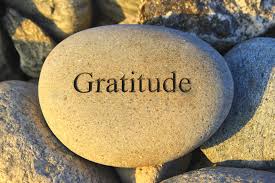
This is such a fun writing assignment it hardly seems like work at all. Well, that’s not entirely true; it is challenging. I love this exercise because it opens all the doors and windows in my mind to let the cool breeze of appreciation blow through. This exercise will make you happy –after it makes you a little nuts. It will grow your sense of appreciation, right after it seemingly shrinks your capacity to grow creatively. It will teach you how to count not only your blessings, but your mother’s blessings, your dry cleaner’s blessings, and that guy’s on the corner, too. It will challenge you in ways you didn’t know were possible, but by the end of it, you will have developed a new-found appreciation for your writing prowess.
This exercise is a process of developing awareness for the details that comprise your life. It is about learning to look beyond the surface of things, to become like Superman, able to see in and through the ordinary facets of your life. It’s about tapping in and turning on, which is about 181 degrees from what we do on an ordinary basis. We work our daily lives into routines because it simplifies things. You take the same route to work every day because you don’t have to think about which street go down, the speed of the flow of traffic, what detour to take because the road has been torn up by the city crews. By following the same route to work each day, it frees your mind up to traipse after other thought balloons, work out other puzzles like what you want for dinner tonight, whether you’ll get the roses trimmed this weekend, the tattoo your darling daughter wants to get on the small of her back, your dream vacation to Galapagos.
Routine driving patterns are just one example of how we engage in activity, and disengage our attention. Personally, I like to devise new routes to get to the same old destinations for the adventure of it…but that’s just me. The trouble with routine is that we stop noticing the details of the world when we go on auto-pilot. Life goes by in a blur while we’re busy thinking about yesterday, dreaming about tomorrow. Right Now gets pushed off to the side as. uninteresting or unimportant. This couldn’t be further from the truth.
Some sages assert that Now is the only thing we know for sure. We can touch Now, we can taste Now. Where is the future physically located? Where is the past? Can you touch it? Can you slide it over your skin like a fine silk scarf? Now is the only tangible thing that matters and we’re busy pushing it away in our rush to be somewhere else. It’s sad. We spend so much of our time anticipating the future and replaying the past that the present slips by unnoticed. The Amish have it down. They don’t keep photographs of their beautiful, clear-eyed children because it’s against their conservative religious tenants. But as a side benefit, it anchors them firmly in the right now. Right now their girls are lovely. Right now their boys are strong. There’s something liberating about that kind of limitation. For this exercise you must anchor yourself firmly in your Now. No escaping to yesterday, no slipping off to next week. Take a deep breath and let it out slowly. Look around you, study your surroundings. If you’re in a cafe, count the people who occupy the tables around you. If you’re on the deck at home, notice the temperature of the air on your skin. Be present. It’s Now baby! Embrace it, shake it around, drink it up.
Take out your journal and put this heading at the top of a nice, clean page with the date on it; 100 Things I’m Grateful For. And there you go, that’s it. Now before you start scratching around the idea that this is too simple and too trifling, let me I can assure you, it is neither. A list of one hundred things may seem like an easy task, a task for a fool; and maybe it is. If you get to one hundred without breaking a literary sweat, bump it up to two hundred just to make it interesting.
The big stuff is easy: love, family, a comfortable life. What about the small matters? Lentils. Air conditioning. Sandals. The list really is endless, so get creative. How about guppies and bright green parrots? Make a list of 100 things –I guarantee you that the interesting stuff doesn’t even begin to show up until somewhere after 25. Generally, this is what you can expect. You’ll start at one, and streak blithely along, passing ten things you really appreciate without so much as lifting your pen from the page. Twenty will come and go. Shooting round the bend of forty may slow you down a little, scratching for ideas and then you see fifty up ahead. The incline before you has become swiftly steeper, slightly more hazardous. You’re not taking the corners as rapidly as before, maybe you’re having trouble catching your breath. Maybe this isn’t as easy as you thought it was. Panic might get you in its grip: What? Can’t think of 100 things? Approaching the summit, the forest thins and the air is vaporous and you passed all the obvious details of gratitude ages ago. Just when you think of giving up this stupid useless quest, something happens. Your minds slows its spinning, the sharp edge of your cunning softens, and what slips in, is a quiet knowing. There is so much more, more than you could ever fit into the list of 100. The thoughts pick up speed now. Suddenly the ideas rush at you and you smile knowingly. You found those things; all of them. And you found them not yesterday, not tomorrow; you got them all.
You’re welcome.
earth day (h)
WINTER [notes from montana]
“It was early September and I was driving, literally, to the last road in the United States, a gravel-and-dirt road that paralleled the Canadian border, up in Montana’s Purcell Mountains. It was like going into battle, or falling in love, or walking from a wonderful dream, or falling into one: wading into cold water on a fall day.” – Rick Bass, Winter
Can Rick Bass help it if his Soul’s been on a nature walkabout for all of his life? In Winter [notes from montana], Bass’s wandering spirit is alive and well and living in the Yaak Valley in Montana without electricity, without heat, other than the wood-fired variety, and without much contact with civilization… To read more of this post, go here…
earth day (g)
For thousands of years, we’ve used and reused the same water as the dinosaurs, Galileo, Genghis Kahn, and Jesus. Until now. Now the water is chock full of contaminants that the ancients didn’t even know how to pronounce. That’s because Mama Nature doesn’t know how to remove radionuclides, usually held safely within the earth’s crust, and other chemicals found in the fracking wastewater that’s slowly making its way into Her rivers, lakes, and streams. Until now, we’d been sipping the same stuff as Adam and Eve. Until now.
Enjoy an excerpt from THE QUALITY OF LIGHT:
She died that night. Doc attended the funeral along with dozens and dozens of ranchers and their families all come to pay their respects to this great woman, one of the “stickers” whose family had come in the late-1800s during the first boom and bust era of timbering and mining and oil and construction and who had stayed on to make a living. They worked the land for what it would produce – cattle. So when the time came and they asked if anyone wanted to say anything on behalf of this fine woman, Doc’s hand raised itself, his body stood up, and he took over the funeral.
“Twila’s great-grandfather was thrilled when the first oil men knocked on his door with a check and a promise. They may not have tamed the harsh out of the land, but at least they made it more hospitable. They built roads and paid well, and the ranchers loved them. That was the heyday when oil flowed like free love out of those great big underground reservoirs. Sweet gas, they called it. Back then a whisper could’ve coaxed that oil out of the ground.” To read more of this post, click here…
earth day (f)
Just because Earth Day is done, doesn’t mean we are. Here, then, is another environmental warrior, pen poised in furtherance of the cause. If you haven’t read any of Carl Hiaasen’s environmental crime thrillers, you’ve been denying yourself. Read on…
Link
“I pray to the birds. I pray to the birds because I believe they will carry the messages of my heart upward. I pray to them because I believe in their existence, the way their songs begin and end each day—the invocations and benedictions of Earth. I pray to the birds because they remind me of what I love rather than what I fear. And at the end of my prayers, they teach me how to listen.”
― Terry Tempest Williams, Refuge: An Unnatural History of Family and Place Read more
earth day (b)
“Brightest New Mexico. In the vivid light each rock and tree and cloud and mountain existed with a kind of force and clarity that seemed not natural but supernatural.”
So does Fire on the Mountain begin with Billy’s view of this rugged land, this “country of dreams.” Billy’s mother has no love for the ranch, but for Billy, like his grandfather, the place is in his DNA. Billy’s barely accustomed to the rhythms of his long awaited vacation when the summer turns sour. One of Vogelin’s horses has gone missing. They later find him dead under mysterious conditions high up along the mountain trail. Vogelin’s suspicions about the identity of the perpetrator are confirmed when the Air Force lawyer arrives soon after. The U.S. government wants Vogelin’s land since it sits . . .READ MORE HERE