Author Louise Erdrich offers what may well be the best writing advice. Ever. Listen, then leave a comment for the rest of us to chew on. Then get back to that manuscript, baby.

Author Louise Erdrich offers what may well be the best writing advice. Ever. Listen, then leave a comment for the rest of us to chew on. Then get back to that manuscript, baby.
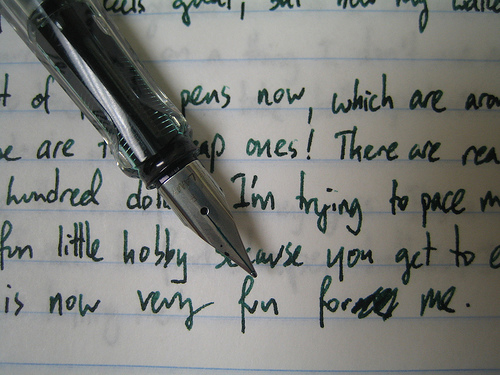 Once, I belonged to an amazing clutch of writers who met every week to explore writing through timed exercises. It was one of the best writing experiences I ever had, and it did more to develop my skills as a writer than almost anything I’ve done since. Twenty years later, I still miss meeting with that group of women. We shared a very important time, you might even say a sacred time, two hours each week, supporting one another and learning to develop our writing voices. Few things were allowed to interfere with our commitment to meet. We gathered faithfully each Friday at an outdoor table at the Bear Street Cafe in Orange County, California, and parked our individual cares at the door in order to be fully present and nakedly honest during our joumaling session. We wrote furiously, read aloud with quaking voices, listened respectfully, and grew as writers.
Now that I live in Northern California, I maintain virtual relationships with several of these fabulous women, and we see each other when we can. But the thing that remains one of the greatest gifts of my life is that even though whatwe mainly have in common is our passion for writing –no matter what, we support each other. We celebrate each others’ successes, and provide insightful comments to help make each other’s work the best it can be. Writing groups are an excellent way to develop as a writer -you can find or form a group by taking classes, getting to know other writers, and then meeting outside of the classroom setting to give yourself more honest writing time.
Back in the day when we met at Bear Street, we maintained a strict routine that went something like this:
One by one, the words were selected from the cup, and we wrote timed exercises based on them. After the time was up, we went around the table and read our work. This wasn’t easy at first, but our group was a safe place to put it out there. One unbreakable rule was that under no circumstances, could we comment on what we wrote -neither the writer not the listeners were allowed to comment. But let me tell you something: our writing got stronger and better and more deeply creative by just listening to each other. I think we secretly tried to out-compose each other, but the result was that we pushed each other to spiraling heights of creativity without so much as one well-intended criticism. It was amazing and illuminating, and a huge lesson in the art of paying attention.
So, dear writer, waht are you paying precious attention to? Where lies your genius? Leave a comment with a single word. What is it you find to write about — in a completly original way? Ooh. Do tell.
How many times do you go about your business and then suddenly realize that you can’t remember the last ten minutes? That you had been on autopilot, with your body operating the family car, stopping at lights and pausing for pedestrians while your mind had zipped off to distant canyons and \ gullies of memory and illusion? You’ve arrived safely and no one was hurt thank goodness, but what would happen if you were fully embodied, fully present, each day of your life? Would you see the world differently?
My vote is yes. It’s a fact that we do not cultivate the practice of notice very well. We are bombarded by television, radio, the Internet, literally thousands of messages a day (the gist of which are of the most dire nature by the way, and another reason to unplug) and so it’s natural that we begin to shut down. In many cases, shutting down is a natural mechanism of survival. The trouble is, once you begin to shut out the ugly of the world, you inevitably begin to shut out the beautiful and remarkable and miraculous, too.
Almost no one I’ve ever talked to about it thought their story was interesting. But I’ll bet their story is remarkable. They just stopped noticing the details. They forgot that their life was miraculous in about a million ways. So here’s an idea, write about your life like you don’t own it.
Cultivate an appreciation for each Now that shows up. Now, I reach for my water bottle and the cool liquid slides down my throat. Now, my fingers pull away the skin of an orange. Now, call on inspiration, and she takes my hand and we walk.

This is such a fun writing assignment it hardly seems like work at all. Well, that’s not entirely true; it is challenging. I love this exercise because it opens all the doors and windows in my mind to let the cool breeze of appreciation blow through. This exercise will make you happy –after it makes you a little nuts. It will grow your sense of appreciation, right after it seemingly shrinks your capacity to grow creatively. It will teach you how to count not only your blessings, but your mother’s blessings, your dry cleaner’s blessings, and that guy’s on the corner, too. It will challenge you in ways you didn’t know were possible, but by the end of it, you will have developed a new-found appreciation for your writing prowess.
This exercise is a process of developing awareness for the details that comprise your life. It is about learning to look beyond the surface of things, to become like Superman, able to see in and through the ordinary facets of your life. It’s about tapping in and turning on, which is about 181 degrees from what we do on an ordinary basis. We work our daily lives into routines because it simplifies things. You take the same route to work every day because you don’t have to think about which street go down, the speed of the flow of traffic, what detour to take because the road has been torn up by the city crews. By following the same route to work each day, it frees your mind up to traipse after other thought balloons, work out other puzzles like what you want for dinner tonight, whether you’ll get the roses trimmed this weekend, the tattoo your darling daughter wants to get on the small of her back, your dream vacation to Galapagos.
Routine driving patterns are just one example of how we engage in activity, and disengage our attention. Personally, I like to devise new routes to get to the same old destinations for the adventure of it…but that’s just me. The trouble with routine is that we stop noticing the details of the world when we go on auto-pilot. Life goes by in a blur while we’re busy thinking about yesterday, dreaming about tomorrow. Right Now gets pushed off to the side as. uninteresting or unimportant. This couldn’t be further from the truth.
Some sages assert that Now is the only thing we know for sure. We can touch Now, we can taste Now. Where is the future physically located? Where is the past? Can you touch it? Can you slide it over your skin like a fine silk scarf? Now is the only tangible thing that matters and we’re busy pushing it away in our rush to be somewhere else. It’s sad. We spend so much of our time anticipating the future and replaying the past that the present slips by unnoticed. The Amish have it down. They don’t keep photographs of their beautiful, clear-eyed children because it’s against their conservative religious tenants. But as a side benefit, it anchors them firmly in the right now. Right now their girls are lovely. Right now their boys are strong. There’s something liberating about that kind of limitation. For this exercise you must anchor yourself firmly in your Now. No escaping to yesterday, no slipping off to next week. Take a deep breath and let it out slowly. Look around you, study your surroundings. If you’re in a cafe, count the people who occupy the tables around you. If you’re on the deck at home, notice the temperature of the air on your skin. Be present. It’s Now baby! Embrace it, shake it around, drink it up.
Take out your journal and put this heading at the top of a nice, clean page with the date on it; 100 Things I’m Grateful For. And there you go, that’s it. Now before you start scratching around the idea that this is too simple and too trifling, let me I can assure you, it is neither. A list of one hundred things may seem like an easy task, a task for a fool; and maybe it is. If you get to one hundred without breaking a literary sweat, bump it up to two hundred just to make it interesting.
The big stuff is easy: love, family, a comfortable life. What about the small matters? Lentils. Air conditioning. Sandals. The list really is endless, so get creative. How about guppies and bright green parrots? Make a list of 100 things –I guarantee you that the interesting stuff doesn’t even begin to show up until somewhere after 25. Generally, this is what you can expect. You’ll start at one, and streak blithely along, passing ten things you really appreciate without so much as lifting your pen from the page. Twenty will come and go. Shooting round the bend of forty may slow you down a little, scratching for ideas and then you see fifty up ahead. The incline before you has become swiftly steeper, slightly more hazardous. You’re not taking the corners as rapidly as before, maybe you’re having trouble catching your breath. Maybe this isn’t as easy as you thought it was. Panic might get you in its grip: What? Can’t think of 100 things? Approaching the summit, the forest thins and the air is vaporous and you passed all the obvious details of gratitude ages ago. Just when you think of giving up this stupid useless quest, something happens. Your minds slows its spinning, the sharp edge of your cunning softens, and what slips in, is a quiet knowing. There is so much more, more than you could ever fit into the list of 100. The thoughts pick up speed now. Suddenly the ideas rush at you and you smile knowingly. You found those things; all of them. And you found them not yesterday, not tomorrow; you got them all.
You’re welcome.
Do you remember your first day of school? I remember that I was excited, but I can’ recall more detail than that. I imagine now that when I got home that day, I drove my mom mad with details about amazingly cool! things like chalkboards, desks, coat hangers, paint boxes. No detail was too small, too mundane to be spectacular!
What would it be like if you found everything around you to be new and amazing, if the world was an exciting place to wake up to every day?
We’ve become so conditioned to our habitat, our customs, that we’ve simply stopped noticing anything that appears less than epic. But to a child, a Cheerio is an act of magic! A school bus is a marvel! An artichoke spectacular! Do you sometimes wonder where the wonder went?
No, you are not too old, and unless you really insist, too stuck. You can retrieve it by tuning back in to your enormous and innate powers of observation. They’ve always been there, but over time you got busy, started to ignore them, and they went to sleep from lack of use. No worries, you can get them back by waking them up and putting them to work. Again, and again. Repeatedly.
Our brains have amazing aptitude for recording detail. We hear and see and smell things all the time. We are aware of temperature, texture, weight, balance, language, color, relative safety or danger, constantly. Your conscious brain may be focusing on having a conversation with your hair stylist, but your subconscious, the primitive part of the brain is calculating and recording every detail in a ten foot radius, from the height of the display shelves to the left and the colors of the bottles on them, to your proximity to the door, to the relative humidity of the cool air brushing your skin, to the inflection in your stylist’s voice and whether the smile on her mouth matches the smile in her eyes.
You must think like a reporter. Reporters are trained to see what’s going on, to put the evidence together like pieces of a puzzle, and draw conclusions. You need not come to any grand conclusion from your observations, but observe, you must. You must begin to see the world not in broad strokes; ‘oh, there’s a school,’ and ‘oh see, there’s a dog,’ but in very detailed specifics. Go overboard! Scrape as many details up as you can. You can never be too specific. While you’re looking at the world around you and may be tempted to get lazy and summarize the vista spread like a banquet before you, but don’t fall for that old game. You will surely regret it. You will regret it because you will forget it. You will not remember the exact butterfly pattern on the bobble-head girl’s dress who knocked into the boy at the park playground and made him cry. You will not remember that the scruffy grey dog that dropped a stick at your feet and smelled like week-old salmon and sported one blue eye and one brown. You will not remember that on that particular day, you savored a peach flavor popsicle and that the clouds marched like a row of cream puffs against a sky so blue it made your eyes ache. You will not remember these things and you will not develop a knack for populating your writing with a thousand details unless you begin to flex that muscle of observation and put it to work.
Journal keepers all agree; when you go back and read through the books stacked neatly on your bedroom shelf, when you randomly open a book to a page and scan, it completely brings you back to that day at that cafe in that town, and remember everything about it because on that sultry afternoon fifteen years ago, you sat over an iced coffee, threw crumbs to feed the sparrows, and you wrote in your journal. You took a snapshot of your life -not a fuzzy half-focused one, but an honest to God totally naked look at all the florid details that filled your life for just one miraculous day. You wrote it down as a gift to your future self, and oh my. The sensation of reliving a day you had completely lost track of While you were busy raising children, managing a career, writing a book, caring for parents, making lobster costumes for Halloween parties, baking cookies, loving a spouse, is pure; it is delicious.
Each day is miraculous in about a million ways, but we humans have a short memory. Then another day comes, and the previous day gets tossed into the comer. And then we get another one! And another one! Pretty soon, there are thousands of such days and I don’t care how good your memory is, how many synapses you’ve got firing, how Leica-like your brainpan is, you can’t remember it all. That’s what a journal is for. Grab your journal and before you open it, open your ears and open your eyes. Learn to observe. Be an anthropologist. Be objective. Be brave. Walk into a coffee shop with nothing but a smile and a journal and sit yourself down at a comer table. Situate yourself with your coffee or your tea, and peer into the room around you. I mean, really look. See things like you had never seen them before and you were taking notes to retreat back to your home planet and report on the customs of the natives in your neighborhood. The man at the next table may be wearing glasses and reading a paper. Okay, good details. But what color are his glasses? What shape? Is the paper he’s reading an international journal or a gossip tabloid? The details tell a story. You can say the girl wore a dress. Okay, many girls wear a dress. But ‘the girl word a red dress’ tells us that maybe she’s a little fiery, a bit of a firecracker. When you fill your journal with details, you bring your images alive.
So get out of your comfort zone. Take a vacation from the familiar. Stop acting like you’ve seen and done it all, because cynicism is just boring. Train yourself to see your world like you’ve never seen it before. Begin to pay attention to the details, at least some of the time. Fill your journal pages with the flavors of your exotic life. You may not think your life is anything special, but I bet you dollars to donuts someone on the other side of the planet thinks it’s gosh-darned amazing. So act like it. Act like your life is a rich stew of tasty details, and write them down.
C. Gregory
 Journal THAT
Cynthia Gregory
Resistance is a funny thing. You may have heard the adage: what you resist persists. In the same way you know that if you resist writing in your journal for maybe one of a million reasons -it doesn’t simply go away. Oh, no. It sits on your desk all poised and proper, waiting patiently for your return. It sits there all quiet and nonjudgmental, not saying anything but oh what it is not saying. Its cover is so beautiful, its pages so crisp. It haunts you. It mocks you. It’s no use, the journal cannot be ignored. The journal will have its way. You may avoid it for a day or two, or even a week. Sometimes a month will go by, but if you are attuned to your inner journalista, you will return to the journal, you will write. As the Borg insist, “Resistance is futile.” So go ahead, surrender.
Resistance is the gatekeeper in your mind, the lonely id, the unpopular kid in kickball, who doesn’t want you to enter into the place where all the creative ideas, fond memories, and vivid dreams are stored. Because if you did that, then what would happen? Contentment? Bliss? What on earth would you do with all that? On that side: big ideas, big dreams, gumdrop and fudge ripple pleasure domes. This side: a steady diet of leafy greens. That side: Ferris wheels of ingenuity, zipper rides of imagination. This side: a rope swing. The gatekeeper lives between this side and that side. The gatekeeper occupies the margins of can’t do and done. The only thing wedged between you and your untamed imagination is the gatekeeper. You must devise ways to slip past the gatekeeper and get to the fecund spaces of your vast interior.
There are so many ways to give in to journaling if the inspiration is temporarily MIA. The simplest way is to make it jolly and fun. You infuse your journal time with a sense of whimsy, of literary whipped cream and frosting. Write each entry with a different color of pen. Doodle. Treat yourself to a cupcake for each ten pages you complete. This is the easy way to slip past the gatekeeper. Essentially, its bribery, but we’re not above enticements, and besides: yum.
Another way to get past the gatekeeper is by accident. Say for instance that in order to fulfill your journaling goals, you need to write four journal entries per week, but on the third day you meet up with resistance, and don’t feel like spilling your guts. You have the sniffles or had trouble sleeping last night or your favorite song hasn’t played on the radio all day, whatever. So you pick up your journal and sigh. You look out the window. You tap the pen against your teeth, make up snappy little rhythms.
So just when you’re ready to give in, cajole yourself by telling yourself something like this: Okay, just one page. Write one dumb page and get it over with. Write about the funny thing the dog did with your slipper. Or write about how when the neighbor went out to retrieve the morning paper, he leaned over to pick it up and unintentionally mooned you. Start with something small and maybe it will lead to something bigger, and before you know it, you will have written a full blown journal entry by accident. You didn’t mean for it to be so big and so interesting and so conversationally spellbinding, but you did it. You started out with mediocre intentions and wound up at the intersection of Genius Ideas and Good for You. You can now give yourself permission to feel superior.
Then of course, the most aggressive way to get by the gatekeeper is to straight-out push your way through. I personally endorse this method because it is energizing, and empowering. It’s also the most fun, in case that matters, because it yields the most surprising results.
To establishing ‘the push’ for your journaling exercise, you need to set up a goal that is challenging enough, but that somewhere in the back of your mind you don’t think you can accomplish. Maybe it’s something you haven’t done before; something you suspect may be beyond your skill level. Give yourself a goal of: write ten pages on why I like blue cheese. Or list seventy five things to do with popcorn. Or: the one hundred qualities I most appreciate in my mate. You see where I’m going with this. It’s easy to make a short list of just about anything. But a little longer list is tougher, and this is where the magic comes in. Maybe you’re rolling merrily along and just when you get to the point where the gatekeeper steps in and says, ‘oh, I think you’re done here. That’s quite enough out of you, madam.’ And you begin to think that maybe you’ve run out of gas, that maybe that’s all the ideas you’re capable of.
Hint: this is the exact place where you should not give up. This is place where you’ve almost reached what I call the stage of the absurd. This is where you just start writing any old bald idea down, just slap it down to fulfill your goal. You stop trying to be clever, you stop trying to be brilliant, you’re just dropping ideas on the page like hot rocks one after another after another. You stop trying.
At this point in the process, you blow out all the carbon residue in your creative engine and enter into a whole new creative zone. And then you’re off like a hotrod. It’s an exhilarating, thrilling, goose-pimple-y ride, because you’ve just shot past the point where you suspected you might stop, where you feared you’d fail, where you couldn’t see your way out of that fix, and then the ideas just bubbled up into your head and flowed out through your pen like a pure stream of imagination, and it is better than good; it is delish.
You slipped past the gatekeeper like a superstar. And you know what? You’re dazzling, darling. You’re a journalista.
 HOW AMOEBAE MOVE
Roxanne Ryan baked bread when the depression came down on her like a moonless night. Yeast called to her with its sour gas, startled her from her sleep. She thrashed and rolled her bed sheets into a ball seeking comfort on the mattress, and then she switched on the bedside lamp. She woke with stomach cramps, spilled flour from her knotted fist onto the bedroom floor. Scruffy snorted from his pillow of MacGregor plaid flannel. She rubbed his nose and found a pair of cotton sweat socks to keep the cold out for when she stood on the kitchen linoleum, kneading whole wheat sourdough. When things got bad, even the Xanax didn’t work. Nothing worked except the smell of bread baking, the essence of a fine brown crust forming on a loaf.
Roxanne cut butter into flour to form a sweet dough. She dribbled in sweet cream and yogurt. She dropped in soft currants soaked in orange brandy. A spongy mass formed and she turned it out onto a slab of marble she got as surplus at the old church renovation site. The county was gentrifying. Open fields close to town were being replaced with decorating studios. While some families still kept chickens that scratched in the dirt between houses, the old Victorians on Main were finally getting fixed up. As towns went, Cold Water had allure for young professionals who got struck dumb at the beauty of the place while on vacation and who decided to move to paradise.
When Roxanne left Kenny, she gravitated back to that western familiarity. She copied bread recipes from Sunset magazine and poured over the San Francisco Chronicle in bed Sunday mornings with milky Costa Rican blend coffee. On Kenny’s transfer to Alexandria, she learned to live in a world roped by traditions and she became bound. It wasn’t until she cut through Denver on I-70 and across the Continental Divide, rolling back toward the Pacific, that Roxanne took a deep breath for the first time in what could have been years. In Cold Water, she surrendered to simplicity. On the western lip of North America, she yielded to the alchemy of bread.
Roxanne speed-dialed Virginia. At two in the morning in San Francisco, it was five in the east and Mercedes Lazarus was just waking, getting ready to take the train into D.C. to review legal briefs for the EPA.
“Hi, baby.” Mercedes caught calls on the first ring. She jogged onto her trampoline the minute the phone went off, working up endorphins.
Roxanne pressed her eyes shut. “Geniuses are supposed to be able to live on two or three hours of sleep a night. By now I should be channeling Einstein.”
“How about. Anais Nin!” Mercedes breathed hard into the handset. “So. Baby, spill.”
Mercedes lived on pesto and call waiting and was a perpetual motion machine. Her blood was equal parts Italian and Greek, separated from the homeland by a distance of two generations, requiring dinner with her parents every Sunday, after which she drank grappa with her father at the kitchen table; shared Viceroys. She made tomato gravy and Greek salad with an essence of garlic that oozed from her pores. Mercedes was the only woman whose lips Roxanne had ever kissed besides her own mother’s.
“What are you doing up? It’s the middle. Of night there.”
“I’m baking. It’s my new therapy.”
“Ha.” Springs creaked in the beat between bounces.
“I’m rising to a higher power. One loaf at a time.” Roxanne shook her head, felt the weight of silver earrings against her cheek. “Bread good as a psychic Rolf.”
“So what’s this I? Sense blueness?”
“Maybe lavenderness. Second guessingness.”
“Self awareness. About —”
“You know, leaving.”
“We’ve covered this ground. Your only crime was falling. Out of love. You’re not. As screwed up. As you imagine. Actually, I think. You’re sane for the first. Time maybe in your life.”
“Yes, well.”
Roxanne rolled the dough into a ball. She covered it with a damp dish towel and greased the bowl before dropping it in, setting the timer. “Did I tell you? I had dinner with my step-brother last week? He married two sisters.”
Mercedes’ voice garbled. There was the sound of rushing water, the scritch of bristles on tooth enamel.
“One couldn’t have babies, so she left. Lana says the other, the fertile one, is hell on wheels. She says Robert is a polygamist.”
“Is he?” Her voice dropped to her throat, a gathering to spit.
“Number one allegedly loved him so much, she gave him up.”
“Still water —”
“It makes me wonder —”
“More aggravation —”
“You think you know somebody —”
“Everyone sees things, people. Through the filter of their own perception, you know. It’s nothing new.”
“What will I say about Kenny in twenty years?”
“You’re very clear about Kenny’s shortcomings.”
“Still —”
“Trust me.”
“Anyway.”
“You loved him once, that’s enough. Hold on a minute.” The sound of toilet plumbing roared through the line. “I have to put my hair up. I’ve got five minutes before I have to run to make the bloody train.”
“Late again.”
“How?”
“What?”
“Never mind. I’ll call you from the car. Or the way in.”
“I miss you, baby.”
“I miss you back. Ciao.”
Roxanne Ryan tapped her fingers against the stove top. She dropped the cordless into a basket and wondered if she should color her hair blonde, wondered if she would ever date again. It was four o’clock in the morning of the ninth month of the year of her first divorce. She had moved back west, rented a cottage in the vineyards north of San Francisco. She was skirted by vines and grapes, sweet-smelling dirt. Roxanne swam in a sea of leafy vines that rose up out of the valley floor and spread across the golden coastal hills. In a countryside swarming with weekend tourists, Roxanne scraped her knees praying for answers in a language that she understood, which, as it turned out, was the language of flour and water, the exchange of gasses, of leavening. Four brown loaves cooled on racks on the kitchen table. Four brown, smooth, perfect loaves that could soak up butter and jam and sudden, unexplainable melancholy. Bread that could fill empty places. Bread and chocolate and blues. Roxanne dabbed her eye where it got moist and lit a cigarette. She called her lawyer. Five o’clock San Francisco made it eight in Chevy Chase.
“Michael Goldman.” Goldman answered the phone himself, his receptionist being late. Again. He was genial, a gentleman. Her therapist told her, available. His courtesy cost her roughly twenty bucks a minute. Each conversation with him cost her half of a pair of Ferragamo’s. A CD player. A standing rib roast at Raley’s. This conversation had the potential to become a new pair of Joan and David’s. Dinner at Don Giovanni’s.
“Maybe you should take on some work,” Goldman had said. “It wouldn’t hurt to establish at least the impression that you’re moving forward.”
“I did it,” she told him. “You know, as my attorney I thought you should be informed.”
On his advice, and for the first time in ten years, Roxanne took a writing assignment. She chronicled famous wine country spas for an artsy travel magazine. She called the first place on the list, checked in for a facial: research in the form of a four-layer seaweed wrap. The therapist patted thick cream onto her face and while it hardened to a therapeutic crust, she worked an emollient into Roxanne’s feet, wrapped them in plastic bags, tucked them into heated booties. She could do this every month of the year. She could wake up next to a stunt man named Paolo, whisper for a cappuccino, eat cucumber sandwiches. It was something to consider while the facialist worked a rosemary scented cream into her hand, pulling her fingers until she shot into a beta state, right past alpha, into dream land.
Now her unconscious wrestled angels, gathered fancy pigeons. Now rock stars haunted her bedroom, handsome ER doctors made consultations. Now she and Kenny struggled over control of the oars of a rowboat on an artificial lake. The reservoir was full; the turbines of the dam pulled at them.
“Give up,” Kenny shouted to her. “It’s futile.”
“Bite me,” she said, grabbed an oar and thrust it in the water. “It wasn’t me you wanted, it was that lady barber.”
Kenny paddled hard with the remaining oar, propelling the boat in circles. Loaves of Italian slipper bread floated in the sky. All the babies they did not have, would never have, floated like wafers in the water, swathed in organza layettes, trimmed in lace, dotted with raisins. This is why she did not sleep.
Last spring, during the year of their estrangement, she had suggested alimony. Kenny’s voice fell a decibel. “You could get a job,” he said. “You’re capable. F.Y.I.: these days its called spousal support, a contingency that can go either way.” It was the intimation of a tactic. That he could demand she pay to support him, retribution for working up the courage to leave. The kitchen timer went off and the phone rang.
“To hell with. Work,” Mercedes told her. “Enroll in school. You could get. Your master’s degree. If you wanted.”
“In what?”
“Jesus, who knows. Professional wrestling. Literature. Do what you love. Pursue the culinary sciences.”
“I feel as if I’m dancing on the edge of a cliff. It could go either way.”
“Take up yoga. Give up vices.”
Roxanne moaned. “But I’ve given up everything I know.”
“The Tao would say. Give up even that.”
Mercedes was off caffeine, but still went to the coffee houses, for the ambiance, the magazines, the sense of literary importance. She was a lawyer with literary ambitions, with mommy ambitions, with ambitions even she could not yet define, so great was her reserve of energy. Roxanne suspected that the miscarriage and the ectopic pregnancy were the result of some weird vortex Mercedes Lazarus created in her moving-fastness.
Roxanne toasted a piece of bread, slathered it with plum jam, sniffed at it, pushed it away. “I met a man. A lawyer.”
“Gosh. Well?”
“Wounded, God. I’m so over men. Give me someone who hasn’t cried publicly for a year. A recovering sensitive. Jee-sus.”
“Harsh, baby.”
“No.” Roxanne opened a seltzer water, sprayed the front of her jammies. She reached for a towel. “Ahhh, shoot. Maybe.”
“You’ll rebound.”
“I don’t know. The idea of dating, of dancing. Body contact with a virtual stranger.”
“Depends on the stranger.”
“Plus, you get close, there are smells.”
“Stop.”
“Soap. Shampoo. Laundry detergent. Belly to belly, ear to ear. And kissing. The idea of saliva is paralyzing.”
“Tongue.”
“Breathing in, out.”
“Anyway, the lawyer.”
“Ahhh. Beautiful smile, but so goddamned sad.”
The train whistle came tinny through the handset, the warning blast of an approaching station. “The grass isn’t any greener on the other side,” Mercedes said. A tapping of laptop keys floated between her words. “Truth is, tap-tap, on the other side, tap, there is no grass.” The shriek of brakes rose up through the phone.
Roxanne threw a pinch of salt over her shoulder. “You have to go.”
The air smelled of pine and bay laurel. A light rain fell before dawn, a sky full of waterbeads letting go, dropping into an ocean of air. The lawyer took her to dinner at the local bistro du jour. The place was austere to the nth. They took no reservations, the waiters were young, swarthy, tuxedo shirts, pony tails. The walls of the restaurant were painted terra cotta and the floor was stained saffron. Candles flickered from wall sconces. When the food came, it was arranged artfully on wide brimmed plates. The lawyer ate oysters to begin, and after the entree he ordered flan. He smiled and said, viagra, vasectomy.
“Um,” she said, “Saw Palmetto. Zinc.”
I’ll look it up, he said. You do that.
There were judges, teachers, novelists waiting to get seats. Roxanne lifted her glass of pinot grigio and observed happy couples over the rim of the glass, tinted gold by wine. She felt the same twinge of envy that she had when she and Kenny were trying to have babies and passed young families on the street. After twenty-six weeks of Clomed and disappointment, they avoided city parks and shopping malls.
The how-to market was explosive with books on how to navigate divorce, not get screwed, look after your interests. But there were nuances that were not explored in the divorce manuals. They didn’t say that you would miss being married, double, if you did it well. If you happened to like turning junk store tables into decorator accents. If you thought selecting the correct wallpaper was tantamount to a feat of civic heroism. If your coq au vin was talked about in three states.
The books didn’t tell you that you might find yourself wandering into hardware stores shopping for kitchen tiles for your ex’s kitchen makeover. That you would become aroused by magazine ads for men’s underwear. That your intentions for independence would be subverted by well-meaning family members who said, what a shame, what a shame, as if you had killed someone. Poisoned someone. Admitted over the creamed peas and buttermilk biscuits that you wished his plane would jack-knife out of the sky into an Iowa cornfield.
Certain associations would bask in a florid superiority. They would offer woolly threads of advice. After a while you would learn to just smile and hold your breath when sentences began with that airy Well, you know. . . .
You wonder if you’re sane. You wonder if your shrink is sane. You wonder if the pharmacist who fills your prescription could have anything interesting to say after sex. You find that you are both a stereotype (statistic) and forging new territory. You may flirt with a young woman at the Barnes & Noble coffee counter. You may wonder if love came at you like that, what you would do about it. You will discover that investment brokers are not your friends; they work on commission. You will remember that the box of Christmas ornaments you gave to your ex contained a collection of Santas and you will pay penance to get it back. You will perform a live enactment of the Last Supper superimposed over the Seven Stages of Grief. Love stories will make you cry and war epics will raise your blood. You will discover that a dark theater and a sad movie are cathartic and meaningful in a way beyond therapy.
Roxanne braided ropy strands of Challah and set it aside to rise. She took a carton of eggshells out to the composter and startled a raccoon picking through the wilted lettuce she ritually bought for good health and then watched turn to green mush in the refrigerator. The night sky was brave. Jupiter sparked in the early dark, winking. The raccoon’s eyes glinted with ephemeral light and Roxanne felt herself lift off. It was midnight: too early in the east, too late in the west. This was what it was like in space, a vacuum.
Sleep was her panacea, coming in bits and snatches, between the rising of dough, the baking and cooling of loaves. The phone was shaped like a baguette, a comfort that fitted in the palm of her hand.
“I have something. To say, big news. But don’t want to. Tip your canoe.”
“You can tell me anything.”
“I would love it. If you were happy. For me. Us.”
Roxanne pushed the blade of a knife into a rectangle of dough, cutting squares. “Did you put that milagro I sent you on the back of your bed like I told you?”
“Yes.”
“Baby! Hey! It worked.”
Mercedes blew air. “Totally.”
“Well.” Roxanne stared into the still dark sky. In the east, a faint glimmer of yellow tinted the horizon.
“It was a fluke. Not even a command. Performance, you know what. It’s like.”
“That’s the way it happens. So you better stop slogging around super fund sights. No more chances.”
Mercedes’s voice was muffled. She was pulling off a sweatshirt, possibly pulling on a fresh tee.
“Will you?”
“No! More rivers dead with chemicals. No imperiled aviaries.”
“There are considerations now you didn’t have before, like maybe slowing down, letting someone else take up the slack. Putting your feet up. You don’t have to be a hotshot all the time. Imagine what it’s like inside there, inside you, that kind of magic. Witness that.”
Roxanne brushed melted butter across the top of her dough squares, sprinkled them with granulated sugar and lemon zest. Mercedes was quiet. There was no sound of trampoline, no hard breath. “So how far are we talking?”
“Just.”
“What does Marcus think?”
“My adorable chemical engineer says pseudo podia.”
“Super fund? What?”
“Pseudo podia. False-foot.”
“No clue.”
“False foot. It’s how amoebae move. They create a false foot, a hologram. Then move their bodies with the imaginary foot. Then it dissolves.”
Roxanne spilled coffee into a filter, poured scalding water, brewed a pot of Costa Rican, inhaled the heady fragrance.
“Moving in new directions. Now we both are, you see? I signed up for school. The Culinary Institute actually, I registered.”
“Baby, that’s great.”
“Yeah, babies, it is.” The line spiraled vacant a moment, one of those empty spaces you could lose yourself in, sink into, an oven of very deep quiet.
“Could you be godmother, you think?”
“Of course I will. You know I will. I’ll teach them to bake bread.”
“Yeah?”
“One at a time, naturally. Hey.”
“What.”
“This one is for good.”
Mercedes laughed, a signature sound that ended on a rising note. “I love you, baby.”
“I love you back.”
Roxanne cupped her palm against her throat. She poured a steaming stream of very dark roast, added a shot of hazelnut syrup. She could count on one hand the things that she knew for sure. There was Mercedes’ love, sovereignty, and bread. She loved bread and Mercedes and mornings in the dark just before the sparrows went wild with song. And yeast. Yeast was something to be trusted. Like an amoeba, a living organism, a teeming culture, a hologram. It grew phantom feet, stood on them in a universe that made allowances for miraculous appendages.
# # #
this prize-winning story is previously published
all rights retained by author, 2013
we don’t apologize. we don’t stammer. we blush.

a guide to writing
cynthia gregory
Have you ever noticed that something you love to do takes very little effort and time seems to evaporate before you like mirage waves on the desert? Meanwhile, tasks that you’re not so eager about drag on and on and eternally on, like the distance between your body scraping across the desert and that oasis on the horizon?
But when it’s good, it’s hypnotic. Its almost like falling in love; and who doesn’t love love, for goodness sake? It feels good, it lowers your blood pressure, makes you feel lithe and alive, and boosts your endorphin levels. You love your writing, and oh, my stars and garters, your writing loves you back! It’s a total adoration fest. The words flow. Your descriptions sing. Your hand is a conduit for a genius stream of words as they spill and tumble through your mind, down your arm, to the very tips of the fingers that push your pen across the page. Each brilliant thought is a nebulous cloud of interstellar dust from which dozens of giant, dazzling stars are born. There has never been a journaler in the history of this whole watery planet who has managed to capture the essence of your subject the way you have, just now, and forever more, amen.
But when you don’t feel ‘on’ and there are pages to fill? That, mon amie, is the desert of the soul. Some might call it writer’s block, but I don’t believe in writer’s block. The only time you have said affliction is when you’re not writing.
Conversely, if you’re writing, you’re not blocked. Period. You just do it. You may not do it with enthusiasm, but just try going through the motions and before you know it, you’re not minding it so much, in fact you find that you’re actually enjoying yourself and if you let yourself be totally honest, you’re glad you forced yourself in to the fulfilling the journaling promise: just write. That’s all that’s I ask of you: just put a little effort into it.
I’ve had a painting project hanging over me for awhile now. The majority of the project is completed; now it’s just the detail work. Most people hate the painting chore; I don’t mind it. I actually find it to be a very relaxing activity that occupies my body and allows my wind to wander. At any rate, I had been putting off putting the finishing touches on my project, and finally decided to do it. I gave myself an hour to paint, “even if I don’t finish the job entirely.” I gave myself into it. I taped off the edges, stirred the paint, picked up the brush, and surrendered to the project. Before long, the hour was up, I was humming a happy little tune, and I continued to paint for a little while longer. I wrapped the project up for the day, put my tools away, and can I just tell you about the sense of satisfaction that I get each time I pass by the newly painted hall? It’s not a masterpiece, but it pleasures me to know that I create a little piece of beauty by not letting my resistance get the better of me, talk me out of doing something I promised myself that I’d do.
What do you do when you are obligated to journal and don’t much feel like it? Well, you can adjust your journaling goals and motivations, or you can break the project into bite size pieces. You don’t feel like writing? Write for ten minutes. Just write one page (I double-dog-dare you). Write about anything meaningless; what you ate, who was on the commuter train, the ten musical instruments that can make the sound of rain. If you can’t write about the big things, write about the small ones.
Write until you remember why you wanted to write in the first place and fall in love with the process. Because you never really get to that place you’re going. There is no absolute there, there – at least, no destination you can find on a map. Allow yourself to get lost in writing and let the writing remind you of who you are. Just give in to it, immerse yourself in it, let go of all the edges that you know, that you cling to, just let yourself get lost in it. I offer a double your genius back guarantee: you’ll fall in love with the place it takes you.
cg

JOURNAL THAT
a guide to writing
cynthia gregory
Have you ever been to the inner sanctum of a beauty salon? I mean, seriously in? The beauty salon is the modern equivalent of the Acropolis, a center of culture in ancient Greece. A symbol of the formerly glorious apex that still stands is the temple dedicated to Athena, warrior goddess, who is said to have been born fully formed from her daddy’s head. That would be Zeus, propagating some kind of mad magic, birthing an idea like that femme fatale.
Beauty is its own wisdom, and to enter the beauty salon is to enter as a clean vessel and to leave equipped with what a warrior goddess needs: beauty and a dose of attitude. What goes on in there, you wonder? Here’s a clue: it isn’t about hair. A salon is where women share their magic. It is the adult version of the Saturday night sleepover, where we braided each others’ locks and dreamed of traveling to exotic places. It is a church where wisdom is currency, and where every woman is a goddess.
My friend Sedona is a hair styling genius. She’s also a princess, as in “I don’t do windows, and I don’t do floors” kind of girl. She is exceptional at the art of alchemical science, and she allows other people to be good at what they do, too, especially if those things hold no appeal for her. Sedona is a big believer in the service trade. “Just let them in,” she advises. “You contract with a helper, and then when you need them, they have permission to enter.” Just let them in, she says, and they fix what needs fixin’.
The idea of ‘permission to enter’ also lives behind the idea of setting up a special place in your home to write. It is also behind the discipline of setting aside a certain amount of time each day, ideally at the same hour, to do nothing but write. By doing this, you give your subconscious ‘permission to enter’ – and then you stand back and let the gods whisper in your ear, give you enough luscious lexicon to fill pages and pages.
You can go so far as to set aside an entire room, decorate it with art that you love, art that inspires you to write. Fill it with flowers and music and artifacts like an ancient Remington typewriter, and fountain pens, and framed manuscripts, first edition books. And then when you enter that room, that sacred space, that temple of contextual creation, you have given yourself permission to enter. It’s just a logical next step to open your journal, gaze out the window, allow your thoughts to unfocus for a minute, fire up your unconscious, give your creative self permission to enter.
Or not. Not everyone has a whole room that has no other purpose than to provide a gorgeous backdrop for journaling. An entire room isn’t necessary. Sit on the bed or an old wooden bench at on the back porch. Write with pencil, write with crayon, an old eyeliner stick. It doesn’t matter. What is significant is that you make an appointment with yourself, and you do your best to show up. Reliability doesn’t guarantee genius, but it doesn’t diminish it, either. It isn’t your job to judge your work to be genius or whatev. Your job is to show up and write. Really, it’s that simple. You just show up and write and let the gods take care of the rest.
This is the best advice I can offer: show up, pay attention, and give your highest creative self permission to enter. See what kinds of ideas your head can give birth to. Find out how many kinds of love your heart knows how to express. Write with your body, write from your soul. Make a date with your highest, deepest self, and see what kinds of genies spring fully formed from your godhead. Give genius permission to enter and then sit down and get ready to write. You may not get thunder bolts and crashing seas, but you might get shopping lists, thank you notes, rampages of appreciation. It’s a good start.
The creative gods are unpredictable, but one thing is for sure. If you show up, they will too. Give them permission to enter.
to be continued. . .

 persephone's step-sisters