safety of the marshes

Cattails

OIL IN WATER

Pam Lazos

Chapter Sixty-Nine

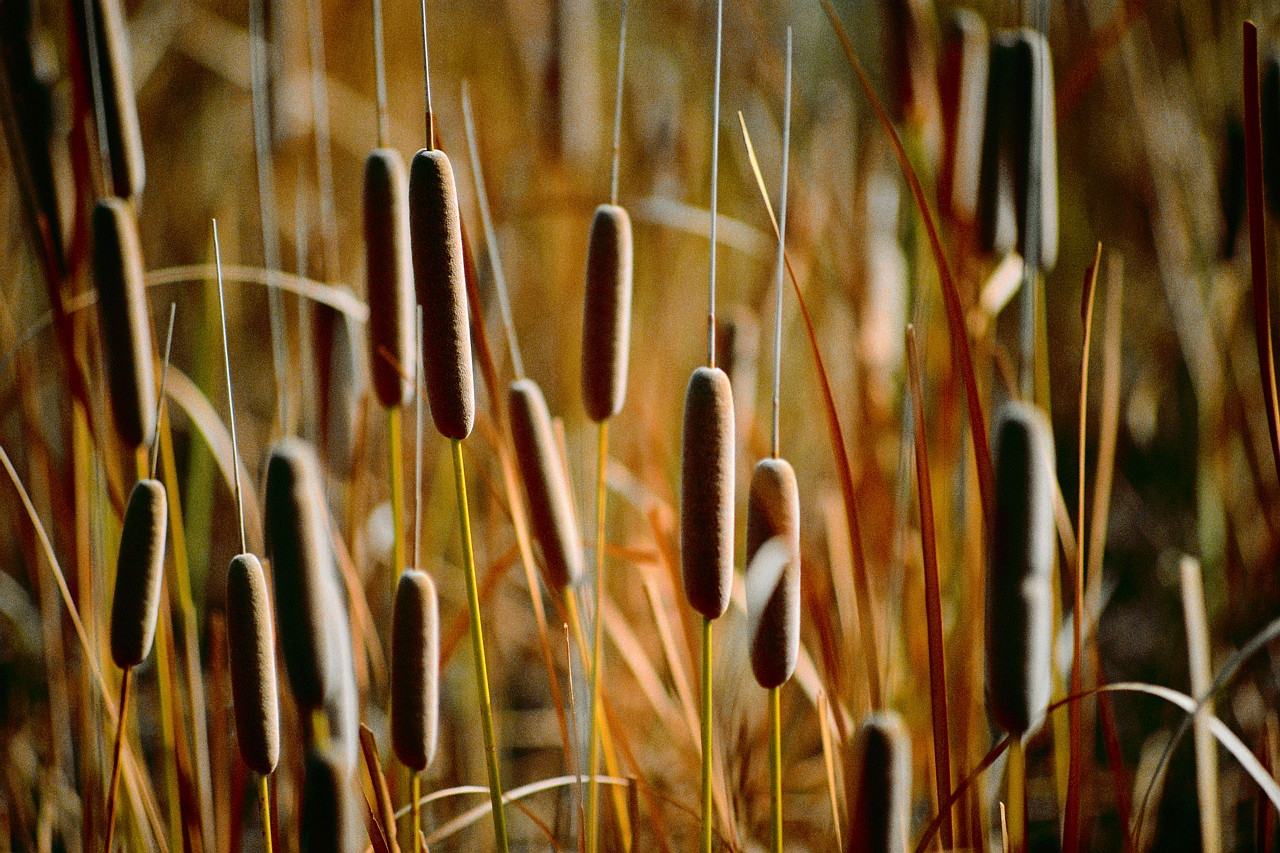
After a breakfast of rice with buttermilk, chicken soup, flat bread and strong, bitter coffee, Robbie and Amara boarded Sayyid’s flat boat and with Sayyid at the helm, set out on a journey to look at the recently refreshed marsh towns. Sayyid poled the boat through the water, skimming past huge clumps of papyrus and cattails.

Robbie watched the scenery change, enchanted by his surroundings. The fear that had sat in the pit of his stomach during their midnight exodus from Baghdad and which caused the bile to rise to his throat with every human encounter had hung an “out to lunch” sign on his esophagus, but given that the sun had barely crept above the giant forests of reeds, an “out to breakfast” sign would have been more apropos.

Robbie had cloaked himself in the customary robe and turban of the Iraqis and upon Amara’s urging, had remained silent the entire trip. Amara told the various drivers that she was taking her mute brother to Al Huwayr, a boat building town near the junction of the Tigris and Euphrates rivers where they intended to buy a mashuf and return to Zayad, their recently reflooded ancestral home. Already, Amara said, their uncle and aunt and three children had returned. The ruse had worked and here among the bulrushes and papyrus, Robbie rubbed elbows with the ghosts of the last five millennium along with a way of life he hoped wasn’t dead, but merely on life support, and like the reflooded marsh town of Zayad, could be resurrected and helped to thrive again.

“These are the biggest reeds I’ve ever seen,” Robbie said.

“It is called qasab. It is a phragmites, like you see at your American bays. But these plants have been allowed to grow undisturbed, and without pollution,” Amara said. “They can grow as large as twenty-five feet. We use them for many things, our mashufs, our huts. Too, we build our mudhifs from them. These are large building where many people can gather. Like your community center.”

“This portion of the Al Hawizeh marsh is all that’s really left of twenty thousand square kilometers of fresh water marshes,” Sayyid said. “You know this measurement? It is the maybe seven hundred miles. My people lived here for centuries,” Sayyid said. “We believed we were comfortable. We believed we were safe.”

“Here they raise cow and oxen and water buffalo and spend much time in prayer,” Amara said.

“Water buffalo?” Robbie said. “I don’t think I’ve ever seen a real one.”

“The water buffalo are very important to our way of life,” said Sayyid. “Early each morning the young boys take them to the feeding grounds. They do not return until the evening. All day they spend with the water buffalo.”

Amara laughed. “My grandfather told me a story that once he was up all night with a sick buffalo. He covered it with a blanket and nursed it back to health with a bottle and songs.”

“He sang to a buffalo?” Robbie asked.

“Yes. It is not uncommon. The Ma’adan depend greatly on the buffalo for their existence. He gives milk, among a great many other things and they thank God for this by treating the animals like family. It is not like America.”

“How do Americans treat their buffalo?” Sayyid asked

“I won’t tell you what happened to our buffalo,” Robbie said. “But I guess the modern-day equivalent would be the cow. We have two kinds, dairy and meat. The dairy cows have a cushy life compared to the meat cows, but nobody sings to them. At least not that I know of. Although I did hear once about a farmer who played music to his watermelons.”

Sayyid laughed, then grew quiet as he poled the boat through the water. “These marshes are all that is left. The Al Hammar and Central marshes are gone. Vanished. Like my people who inhabited them.”

“They will come back, Uncle. When the water returns, they will come back.”

“If God shall be willing,” Sayyid said. “You know this group? Assisting Marsh Arab Refugees? The AMAR Foundation they call themselves.”

“Yes. And I have read about another group,” Amara said, “called Eden Again. The head of this group is an American, born in Iraq. They seek to return the water, to bring back the fish to the marshes. It is this group we come to work with. To offer our assistance,” Amara turned to Robbie and squeezed his hand, “at great personal risk.”

“How do you plan to help?” Sayyid asked. “No doubt you will use your schooling that was so important to my brother.”

“Yes, uncle. I am sure they will need another biologist. And Robbie knows something about…” she turned to him for assistance.

“Environmental science. Back home I’m working on a degree,” Robbie said. “For the first time I have a good reason for it.”

“Uncle, may I?” Amara reached for the pole and Sayyid relinquished it with a smile, exchanging places with Amara in the boat.

“I know who you wish to find. Tomorrow I will take you to them. But today, we tour Al Hawizeh. It will be something for you to see,” Sayyid said, turning to Robbie. “This place is like nowhere else in the world. What Saddam has done is a crime against God and nature. He seeks to destroy the Ma’adan by destroying their way of life. But my people have inhabited these waters since the beginning. This is the Cradle of Civilization where the world began. Saddam thought to make history. And what has he done?” Sayyid spread his hands wide to emphasis his point.

“Not just genocide, but ecocide, uncle,” Amara said.

“Yes.” Sayyid turned to Robbie. “History will not be kind to him. But you have caught him. Now there is hope.” Sayyid returned his hands to his lap and gazed out over the water. “I am not a naive man. I do not dream that it all will be returned.” Sayyid gazed after the reeds and bulrushes as the boat glided past. Robbie noted the comely, proud profile.

“Do you find it strange that they should take your name?” Sayyid asked Amara.

“Who, Uncle?”

The AMAR Foundation. Do you find it strange?” The marsh narrowed and Amara directed the boat toward a dense forest of reeds. “They say a man’s name predicts his future.” Sayyid raised his eyebrows in speculation. “Perhaps this is your destiny, Amara. To save your ancestors. To restore their lands.” Sayyid stood and took the pole.

“I can do it,” Amara said, but he motioned for her to sit down so she did.

“So much like my brother,” he mused. Amara smiled, trailing her fingers in the water.

The flap of wings, the sounds of fish surfacing and retreating, the smell of dense, wet vegetation, and a million hues of green, fanning out across the landscape all formed a backdrop to the peace rising up in Robbie’s soul. He felt the adrenaline and terror ebbing away with each rhythmic pull of Sayyid’s pole and that, coupled with a full belly, conspired to put him in a state of calm, the likes of which he had not experienced since he came to Iraq. A turtle jumped off the marsh and into the water. Amara pointed and turned to see if Robbie had noticed it, but like the baby Moses adrift in a bed of papyrus, Robbie now lay hidden and in the safety of the marshes, he slept.

to be continued. . .

read what came before here

copyright 2013

zero gravity

?????????????????????????Laws of Attraction

I understood then
the burden of gravity
parallel lines, parallel destinies
never meant to converge
in the space-time
continuum of love

gravity brought you to me
a collision of souls
ending in a single point
a beginning and
an ending

With you, I was
free-falling, weightless
lighter than air
zero gravity
unrestrained

but all objects fall
at the same rate
regardless of
their mass

what goes up
must come down
gravitational pull
surface tension
the unseen forces
of natural law

inevitable, predictable
a formula for pain
an apple dropped
my heart sank
you left and
I hit the ground hard

Kelly Mason
2012

a way out

gateOIL IN WATER

Pam Lazos

Chapter Sixty-Seven

Robbie and Amara lay on a tightly woven reed mat beneath an open window, the spare light of the crescent moon casting the faintest of shadows. His arm rested protectively on her belly. The thin blanket that had covered them lay crumpled on the floor, thrown off in the dead of night and heat. A cool, light breeze blew off the water through the open window, washing over their sleeping bodies in an undulating rhythm that kept time with the passing centuries. Waves lapped against the quonset hut’s foundation.

Robbie drew a deep, choking breath as one coming up for air after too long underwater. He coughed and it woke him. He bolted upright in bed and Amara woke, too.

“What is it?” Amara put a hand on his back and felt through the well-toned muscle and bone the panic that lay buried inside. “Your heart is beating very fast.”

Robbie took several breaths in rapid succession then pulled her to him.

“You’re cold,” Robbie said.

“So are you.” Amara grabbed the blanket and pulled it up over them. Robbie relaxed and they both lay down on the reed mat again. A rustle just below the hut refocused Robbie’s attention and he was out of bed in an instant.

“It’s only a mouse,” Amara said.

“We’re surrounded by water.”

“Not everywhere is water. Much is just mud. The water is high now because of the spring rains.”

“Well, how will he get out?”

“There’s always a way out,” Amara said. “Besides, mice are excellent swimmers. Please.” She held the blanket up, an invitation for him to join her.

Robbie lay down next to her. “Sorry. Just a little jumpy.”

“It is because no one has been here for so long. You do not see this well because we come in the middle of the night. I’m sure it is very dirty in here.”

“I thought you said it was a little fishing hut.”

“Yes. It belonged to my grandfather’s father. Of course, when he left he had no more use for it, but my uncles still came here.” Amara’s voice stumbled. “Now there is no one to use it.” Robbie hugged her closed and smoothed her hair.

She nestled in. “Tell me about your dream.”

“I dreamt that American troops were driving their jeeps through the marshes. They were coming from Baghdad on their way to Basra and the most direct route was straight through the middle. The jeeps had these pontoons on them that kept them afloat when the water got deep. There was a place in the water where it rose about six inches like it was going over something massive below. The lead jeep got stuck on it. It turned out to be a remnant of one of Saddam’s dams. Everyone had to get out and figure another way across. They unloaded their mashufs and troops started fanning out across the marshes in their canoes. I was watching from the reeds. Somebody came up behind me and grabbed me by the throat. I started choking.  That”s when I woke up.” Robbie rubbed Amara’s arm and gazed into her penetrating eyes.

Amara placed her hand over his heart. “You are safe now. They will not find you until you are ready to be found.”

Robbie kissed the top of her head. She kissed his lips.

“Dawn will soon come,” Amara said. “Let us sleep until it does.”

“Then you can show me where we are.”

➣➣➣

At dawn, Robbie and Amara climbed into the mashuf they had borrowed from her uncle, a boat builder whose shop sat at the tip of what remained of the Al Hariz marsh. A mullet, small and bony by any standard, rose to the surface in search of breakfast. Robbie jumped at the splash that signaled its return to safe water.

“It is just a fish,” Amara said, handing Robbie a paddle. “And a small one at that. They are returning now that the dam has been destroyed.”

“Well, that’s good, isn’t it? I mean, about the dam.” Robbie started to paddle in time with Amara.

“Yes, it is very good. But it is not enough. The Minister of Irrigation estimates that when the dam was breached over one hundred and fifty quadrillion gallons of water flooded back into the channels. This was only enough to return the water to the two closest villages. At one time, there were hundreds of these villages. At this rate it will take a thousand years.”

“Well, can’t they just open another dam?”

“They have opened all the dams. The water is no longer here.”

“Where is it?”

“Still in Syria, and Turkey, being diverted for many types of projects. Agricultural, hydroelectric. Who knows what else? Saddam gave them this water. He stole it from his own people.”

“We’ll get it back.”

“It is much more complicated than that. Here people fight over the right to use the water. It is not so in your country. But still you see the beginnings of it in your American west. I think that one day, people in America will fight over water just as we do.”

The marshes were silent but for the lapping of the water on the shore and the slight rustle of the bulrushes. A fog had settled over the marshes and Robbie wiped at the drops of water that collected on his face. A bullfrog croaked. Robbie jumped, then relaxed.

Amara smiled and turned briefly to look at him. “You never fully get used to the noises that the marshes make. To live here is to constantly be on alert. So my grandfather has told me.”

They rowed together in silence until Amara directed the mashuf through vegetation so dense and intertwined that Robbie felt they were inside a tunnel. When they emerged on the other side, the first rays of the day had filtered through the reeds, creating a mosaic pattern across the surface of the water. A blue heron caught breakfast and retreated to safer ground, flying directly overhead.

“A most beneficent sign,” Amara said, bunching her fingers together and touching them first to her heart, then her lips and finally her forehead. She stopped paddling momentarily and squeezed Robbie’s leg. “There it is. The house of my uncle, Sayyid. We will be safe here.”

➣➣➣

Robbie and Amara docked their boat on the small island where another hut stood.

“Who’s there?” said a voice groggy with sleep. Inside the occupants of the house stirred, the first rustling of the day. Amara tied the canoe and grabbed Robbie’s arm just as Sayyid Sahain appeared in the doorway wearing the conventional robe and turban, but no sandals. In the misty morning light, Amara couldn’t clearly see the face of her uncle, still pressed with sleep, his hastily donned turban slightly askew, but she recognized the proud and encompassing stance of her father, and for a moment she believed he walked among them again. The sound of her uncle’s voice, so like her own father’s, did nothing to lessen her joy.

“Who is there?”

“It is me, uncle. Amara.”

“Amara! Is it you? I had word, but I did not dare hope…. God be praised.” Amara’s uncle scrambled down to the dock and grabbed Amara by both elbows before crushing her to his chest in a warm embrace. “God has blessed me once again,” Sayyid said. He held her at arm’s length. “To look at you is to look again upon my brother’s face.” He wrapped an avuncular arm around her and patted her back before releasing her, then turned to Robbie, a question in his eyes.       “And who is it that assures your safe travel?” he asked, sizing Robbie up.

“This is my friend, Robbie, Uncle. He is an American. He wishes to help our people. But first, Uncle, we must assure his safety. He has left his captain without permission.” Sayyid raised his eyebrows in disapproval.

Amara continued. “The Americans believe he is dead. There was a car bombing and…. they did not find him.” Amara bowed her head and clasped her hands together. “I’m sorry, Uncle. I do not mean to bring you trouble.” Sayyid studied Robbie’s face then looked to his niece’s bowed head.

“Amara. You could not bring more trouble than that devil, Saddam, has brought to his own people. Every day I ask God why he has allowed this. But God has turned his face away from us.” He lifted Amara’s chin that she might look him directly in the eyes. “You were always the impetuous one. By the grace of Mohammed, had you been born a boy I believe you would have stopped the devil himself.”

Amara smiled at her uncle and he stroked her cheek.

“Time has taught me many things,” Sayyid continued. “For the memory of your father, but more important, for you, I swear I will keep your friend safe among us until the time he chooses to leave.”

Sayyid turned to Robbie. “Welcome, sahib.” He took Robbie’s hand in one of his and with the other clapped him on the back. “You are safe here.”

“Thank you. . .”

“Call me Uncle as my niece does,” Sayyid said.

“Uncle,” Robbie repeated. Following Amara’s lead, he bowed his head slightly to indicate his respect.

“Come, come,” Sayyid said. “Let us go inside. You will be hungry, yes? We will take a meal together and you will tell me of your plans.”

➣➣➣

Inside Sayyid’s wife, Fawzia, was already grinding coffee. Sayyid made the introductions and Amara embraced her uncle’s new wife before the woman retreated to the hearth to prepare a meal worthy of visitors.

“Fawzia is a good woman,” Sayyid said. He directed them to several cushions scattered around a small round table barely a foot off the floor.

“I am sorry for you, Uncle. For my aunt. We had heard, but were unable to make the trip.”

“Thank you, niece.” Sayyid bowed his head and touched his bunched fingers to his heart, mouth and forehead. “She was a very good woman, dead now these five years.”

“How did she die?” Robbie asked.

“From Saddam’s poison water.”

“Saddam poisoned the water? But why is everything not dead?”

“He is the devil,” Sayyid said.

“I thought it was because of the dams,” Robbie said. “I didn’t know he used poison, too.

“He did not poison it with chemicals, but with ideas,” Sayyid said. “And revenge. Revenge for the part my people played in the Shiite uprising in Iran. We are Shiite Muslims. Saddam is Sunni. So he tries to kill us by taking away our water. When the water is not fresh, it dies.”

“You mean it becomes stagnant?” Robbie asked.

“Yes. Stagnant. This water breeds cholera. We have no cure for this disease.” Sayyid’s voice assumed a distant quality.

“When I see the problem, I take her by tarrada.” Sayyid turned to Robbie. “This is my large canoe, much bigger than my mashuf. It is more than thirty-feet. I have six people paddling while I hold her head in my lap. But it is not enough. By the time I see the doctor, he can do nothing. I am too late.” Sayyid wiped at his eyes as if he had an itch. Robbie looked at Amara who put her hands in her lap and bowed her head.

“Saddam made this. He killed my beloved wife when he stops the water with his dams. With his evilness. If he is not the devil himself then he has made a deal with him. This I know.” Sayyid adjusted his turban and straightened his robe. “My people lived here from the beginning of time. Now they live in refugee camps on the borders in Iran.”

“That’s why we’ve come, uncle,” Amara said.

Fawzia appeared with a tray containing three demitasse cups, sugar, spoons, and an ebriki, a small brass pot with a long handle, used to cook the coffee directly over the stove. Steam wafted from the narrow opening of the pot. Fawzia set the tray down and smiled at Amara and Robbie.

“You are hungry?” She brought her fingers to her lips to indicate eating with one’s hands. “You eat now?”

Amara nodded and smiled. Fawzia squeezed Amara’s hand and left.

“She speaks only a little bit English, my wife,” Sayyid explained to Robbie.

Robbie nodded. “I’m sure we’ll manage.”

 to be continued. . .

start with this and we how we got here

copyright 2012

not for long

honeycombOIL IN WATER

Pam Lazos

Chapter Sixty-Three

Gil sat cross-legged on the floor watching The Jerry Springer Show . Today’s episode centered around mothers who dated their daughter’s boyfriends.

“Maybe we could get on the show,” Gil said.

“For what?” Avery asked from his position on the couch.

Gil shrugged. “I don’t know.”

“Well they’re not going to pay you to just sit there. They want something sensational.”

“Well maybe we could just sit in the audience.”

“Kori would bust a gut if we told her we wanted to see Springer. And she’d bust me for sure if she knew I let you watch this.” Avery jerked his head toward the doorway, suddenly afraid Kori might be standing in it.

“How much do you think they pay them to fight like that?” Avery asked. One of the daughters on the show swung a fist at her mother’s head, making contact. The mother went down. A younger daughter, also on the show, went for the older sister’s face and prime time fisticuffs ensued. Gil’s eyes opened wide and he covered his mouth in shock.

“What do you mean?” Gil asked, his hand still over his mouth.

“I mean to keep the act going.”

“It’s not an act, Avery. It’s real. Those people are really upset.” Gil turned to look at Avery, but didn’t remove his hand.

“Gil. This crap is not for real. It’s made up for television.”

“Why would they make something like that up?”

“Makes everybody else feel like they’re not as bad off as they thought, maybe.”

Gil stood up and flicked off the television, then walked to the door and threw it open, still holding the remote.

“Hey, you little turd. Why’d you shut off the T.V.?”

“He’s almost here.”

“Who?”

“The man who’s going to help us.”

Avery walked over to Gil and looked down the street. All quiet. A cold gust of February wind blustered in, overpowering the warmer vapors lingering there. Avery shuddered and moved to close the door.

“No,” Gil said and put a hand up to stop him. “Just wait.”

Avery rolled his eyes, turned the T.V. on manually and returned to his reclining position on the couch. Gil stood at the door, refusing to move. After a minute, Avery covered himself with a blanket. After several minutes, he yelled.

“Gil! Close the door!”

In response, a car door slammed.

Hart was halfway up the drive before he noticed Gil standing in the open doorway. He stopped several steps away.

“Are you waiting for someone?” Hart asked.

“You,” Gil said.

“Me?! How’d you know I was coming?”

Gil shrugged. “Aunt Stella told me.”

“Who’s Aunt Stella?”

Avery appeared in the doorway wrapped like a pig in a blanket. Gil held out his hand and Hart stepped forward to shake it.

“Gil,” Avery said, pulling him back.

Hart introduced himself. “David Hartos. Akanabi Oil.” He held a hand out to Avery who ignored it.

“The oil spill in the Delaware?” Avery asked. “So what are you doing here?”

“I saw your picture in the paper,” Gil said.

“And I saw yours.”

“I give your performance of the last month two and a half stars,” Gil said.

“What’s that mean?”

“He’s got a rating system,” Avery said. “Like the movies. Only he’s much tougher.”

“Actually, on the performance itself I’d go as high as three and a half, but you did spill the oil in the first place and so you get an immediate deduction for error.”

Hart stared at the old creature in front of him until another gust of wind blew by and he shuddered. “Hey, do you mind if I come in? I’m from Houston and not really used to this East Coast cold.”

Gil stepped back, but Avery blocked Hart’s entry. They eyed each other a moment until Avery moved, just enough for Hart to squeeze by him. The three stood in a tight circle in the foyer, Hart waiting while the boys stared at him, Avery still wrapped in a blanket, Gil still holding the remote.

“So what do you want?” Avery asked.

“I read where you discovered a way to change trash into oil.”

Avery narrowed his eyes and bit his lip. Hart raised his eyebrows and gave Avery a tentative smile.

“Did you know that even a quarter-sized spot of oil on a bird’s feathers is enough to kill it over time?” Gil asked Hart.

“Actually, I did know that. I spent a long morning at a de-oiling station.”

“Yep. It breaks down their insulation and they can die from hypothermia. And it doesn’t just happen in the winter. But you know what? I think it’s cause they can’t stand that one oily spot. It makes them crazy. They keep trying to get it off and it won’t come off. It’s like Ophelia in Hamlet . You know the one with Mel Gibson? ‘Out, out, damn spot.’”

Hart stared at Gil, both incredulous and wary. The kid was serious and Hart wasn’t sure whether to run away or hug the crap out of him. Hands at his sides and feet rooted to the floor, he did neither. Instead, he said to Avery: “You’ve got a smart brother.”

Avery ignored the remark. “Do you have any credentials?”

Hart pulled out his Akanabi ID and handed it to Avery who looked it over cooly.

“Do you want some milk?” Gil asked.

“Love some,” Hart replied. “If it’s all right with your brother.”

Avery gave Hart the hairy eyeball. “So you’re the Chief of Engineering? What’s that about?”

“It’s about taking a lot of flak,” Hart said, accepting his credentials back.

“How’d you know about the TDU? I mean, the Thermo Depolymerization Unit? Did somebody from Cooper’s tell you? Or maybe it was your driver…”

Hart shook his head and reached into his back pocket. Avery took a step back and pulled Gil with him. Hart handed Avery the Inquirer article. In addition to the head shot, there was a photo of Gil, standing in front of the TDU.

“No way,” Avery said.

“Let me see,” Gil said, peering over the top to see his own face smiling back at him. “I hate that picture.”

“Did you know about this?” Avery asked Gil.

Gil nodded. “But I didn’t know when it was coming out. It doesn’t matter though, right? Since he’s here?”

“Who’s he ?” Avery asked. “Don’t you understand, Gil? This was in the business section of the Philadelphia Inquirer . The Sunday paper. Not Monday, not Tuesday, freaking Sunday. The whole world’s got our number now. He is just the first of many.” Avery sighed and rubbed his brow. The blanket fell to the ground. “What was she thinking?”

“Look, if this is a problem, I can come back another time.” Hart said.

“Good idea,” Avery said, grabbing Gil’s arm.

“No!” Gil grabbed Hart’s arm and held fast. “It’s okay, Avery,” Gil said. “He’s going to help us build it.”

“Gil. You can’t know that.”

“It’s him, Avery. I can feel it.”

“Build it?” Hart asked. Now it was his turn to raise his brows.

“You’re a trouble-shooter, right?” Gil asked. “Isn’t that part of your job description?”

“Yeah, but…”

“Well, we need some trouble shot. So you can do that. Plus you can help us build a bigger machine, something really big that will save the world from being buried under a gigantic trash pile. Plus, if we make our own oil, people won’t blow each other up for what’s left.”

Gil took a step forward and looked Hart directly in the eye. “My brother may be dead because of oil, but we’re not sure because my father says we can’t believe everything the government tells us. Plus, I don’t think my brother would leave us yet because we really need him.”

“Gil. Enough.” Avery wrapped the fallen blanket around Gil’s shoulders and knelt down to eye level with Gil. “How did you know he was coming?”

Gil shrugged. “I just knew.”

“Knew who was coming? Me?” Hart asked.

Gil just stared at him.

“Christ, I’m going to kill Kori.”

“Who’s Kori?”

“Our sister. She likes this guy from the newspaper and she told him all about the TDU even though Avery told her not to tell. So he’s mad at her.”

“Gil!”

“But this is a fantastic discovery. It should be made public. I mean, what if Alexander Graham Bell kept the telephone idea to himself? What you need is someone to buy the technology from you…”

“Somebody already tried to steal it from us. Twice. Once they blew up our porch and the other time they almost killed our dog. And our parents…” Gil stopped abruptly and looked at his brother.

Avery sighed and rubbed his temples as if he’d just developed a headache. He rose slowly, aging a hundred years in an instant, and, still holding Gil’s arm, turned to Hart.

“You have to leave. We can’t talk about this anymore. Not to you or anybody else.” He started shoving Hart to the door, but Gil intercepted, still holding Hart’s arm.

“No, Avery. He’s the good guys.”

“Gil. His company just spilled three hundred and fifty thousand gallons of crude in the Delaware River because they were using a forty-year old ship that, were it not for some medieval grandfather clause, would not pass half the safety requirements being imposed on today’s vessels. He is most definitely not one of the good guys. He works for Akanabi.”

“Not for long,” Gil said, certain.

Hart felt an electric jolt shoot through him at this proclamation, but shook it off, still pondering something Gil had said.

“Wait a minute. You said someone blew up your porch looking for this machine?” Something about Gil’s proclamation jarred his memory, but he wasn’t sure why.

“Yeah. They took the drawings, but they got the wrong ones,” Avery said. “Gil saw to that.” Avery smiled at his brother.

“C’mon,” Gil said. He led Hart out of the foyer while dragging Avery who was still holding fast to Gil’s arm.

“What are you doing?” Avery asked.

“He wants some milk. We’re going to the kitchen.”

“Gil…”

“We have some cookies, too,” Gil said. “Aunt Stella made them. She’s an excellent baker.” Avery shook his head and sighed, but protested no more as he followed them into the kitchen.


➣➣➣

Gil bustled about readying their snack. He served Hart himself – the first time he ever served anyone – and his pride and satisfaction wafted through the room like the aroma of breads baking, so much so, that even Avery’s heart warmed. After much probing and prodding from both Gil and Avery, Hart recounted his own unfortunate events. By the time he’d finished, the trio felt as if they’d known each other forever, or, at least, for half of this lifetime.

That’s when a profound silence seeped in like radon gas and settled over the kitchen. Gil’s discomfort with it prompted him to action. “Let’s go,” he said, and pushed them out the back door.

Gil gave Hart the tour of the barn where he explained the TDU in depth and encouraged Hart’s examination of it. By the time Gil had finished, Hart was convinced that Marty Tirabi was a genius and that Gil was no slacker either. According to Avery, the actual breakthrough on the machine’s salability came as a result of Gil’s dream about oil and water. From the start, Hart sensed something otherworldly about Gil and that information solidified his conceptions. It wasn’t just the machine either: Gil himself stretched the boundaries of the human imagination.

After the barn, they drove Hart across the fields to Trash Mountain, as they’d taken to calling it, the primary feedstock for the TDU. It was a monstrous pile, even by landfill standards, but what impressed Hart even more was the means by which they arrived there: an ATV that pulled a series of connected trailers coupled like railroad cars and built by none other than Gil Tirabi. Was there no end to this child’s inventiveness?

In the beginning of the day, if someone would have told him, as Gil tried, that Hart would be the one to help these boys raise the money to build the TDU on a grand scale, he would have laughed. Hart knew nothing about fund raising, that was more Bicky’s bailiwick, and had his doubts about a partnership with anyone. But by the end of the day, the little genius had sold him the farm, as it were, lock, stock and two technological barrels. Maybe he was going crazy, or maybe his alter ego, his “hero” persona as Sonia called it, was kicking in, but he really wanted to help these kids.

He was astonished with the ease at which Gil had taken to him and of Gil’s certainty that Hart was their man.  Avery was older and more measured than Gil and Hart could sense his reticence. Whereas Gil was a full on green light, Avery was a blinking yellow.  Hart felt Avery was right. It could be that they were a perfect match, but what they needed was a little time to get to know each other.  It was early evening when Hart finally left with a promise to return the following afternoon for more discussion.

to be continued. . .

read this next

copyright 2012

a flicker of time

widow

Wilfred 

He was proud of his blue tick hounds, his

sixty acres of hills, hollows, creeks filled

with copperheads and cottonmouths;

nights utterly still except when a smell or sound

riled the hounds from their sleep

to bay like old mourners.

My uncle read aloud Sunday mornings

from the Book of Job in a nasal voice, 

about hating the night and waiting for day

only to find in the day that one wished for night,

about how we are here for a flicker of time

then reflected in no one’s eye.

My aunt had the custom of hill people of keeping

framed photographs of dead relatives in their coffins.

When my uncle died she got rid of his hounds, his

jew’s harp, said she was through with men

and their ways, but she kept his death photo displayed

on a lace doily in her living room.

Sandra Giedeman


the name of things

zaca-lakeZaca Lake

A white-bellied carp breaks the water’s

surface, crickets chirp a background chorus.

Bats fly a crazy trajectory, then

fold like origami, cling to the eaves.

A great horned owl swoops, glides

above an old man who fills mason jars

with what he calls sacred mud of the healing lake. 

In the lobby of faded sun, I pass row after row

of pinned butterflies under glass.  

Memento Mori of old hotel, long-gone guests;

of Anise Swallowtail

Mournful Duskywing

Cabbage White.

Days of green and summer’s

sulphurous heat that bursts cocoons.

Fragile speckled wings that someone felt

the need to pin down.

You’re awake as a child until they teach you

the names of things.

Sandra Giedeman

lost memories, lost mind

If you commit a crime but don’t remember, did it really happen?

Read all about it here.

turn

pick your poison

We like to think of our bodies as amazingly sophisticated eco-systems.

It’s enough to make a rational person blush.

microbes-homeschool-curriculum

stinkin’ rich

strange-types-ice-sundog_63630_600x450OIL IN WATER

Pam Lazos

Chapter Sixty-One

Hart spent the night at his house and woke before dawn after a fitful rest. He’d slept in his and Sonia’s bed for the first time since her death and his sleep had been plagued by eerie, disconnected dreams. Now he puttered around the house, coffee in hand, walking from room to room with no apparent direction, a wide-eyed somnambulist. He looked at each room as if seeing it for the first time. After about an hour, he took a nap on the couch.

He awoke in the still early morning with a start, a vivid image of a pregnant Sonia emblazoned in his mind’s eye. He drank two full glasses of water from the kitchen tap then stood exactly over the spot where he had found her. He lay down there, hoping to embrace what remnants of her spirit were still caught in the tiles, but felt no trace of her, only the cold floor, more unsettling than a ghost. He turned over, folded his hands across his stomach and stared at the ceiling. He didn’t move for an hour.

“That’s it.” He stood up and blew his nose. He dialed the number for a cleaning service and asked to speak to the manager. For an exorbitant sum, he arranged for a cleaning team to come that day to scrub and shrink wrap the house. Then he called his father-in-law.

Bicky showed up a few hours later and scanned the place like a realtor performing an appraisal. The cleaning crew was well into it and some of the rooms had already been “sealed off,” vacuumed and dusted from floor to ceiling with the furniture draped as if the occupant would be absent for the season.

“What the hell’s going on?”

“I’m catchin’ a red-eye back to Philly tonight. I got an oil cleanup to close down.”

“I know that. What’s all this?” Bicky’s arm arced out elaborately, a gesture that reminded Hart of float riders during the Thanksgiving Day Parade. “It’s only going to take a couple more weeks, right?”

“It is.”

Half a dozen cleaning people scurried around, dusting and draping. Hart had promised them double pay if they finished in four hours.

“Then what are they doing?”

“Come.” Bicky followed Hart into the kitchen. Hart closed the door behind him.

“Do you want something to drink?” Hart asked. Bicky shook his head and sat down, but a second later changed his mind. He pulled a bottle of Dewar’s out of the cabinet and poured himself two fingers. He made a face, but took another swig.

“How do you drink this stuff?” Bicky walked to the fridge, tossed a couple ice cubes in his drink and poured a swig from the bottle to freshen it. Then he sat down on one of the bar stools around the island. “I’m all ears.”

“I’m not coming back.”

“What do you mean?”

“What word in the sentence didn’t you understand?”

“You have to come back. You have two more years on your contract.”

“So sue me.”

“Now how would that look if I sued you?”

“Is it always about appearances?”

Bicky shook him off and turned to look at the window. “What did you do last night? Catch a ghost or something? You sound like Sonia talking.”

“She’s been talking for a long time. It’s only now that I’ve stopped to listen.” Hart pulled up a stool. “I’ll finish the job and I’ll leave that river clean as technology can get it. But after that, I’m done.”

“Hey, you listen to me. You can’t just…”

Hart raised his hand to silence his father-in-law. “Don’t give me any grief about this, Bicky, and maybe I’ll come back as a consultant. But it’s a six-month sabbatical, at least, or no deal.”

Bicky rolled his head around, stretching the tension out of his neck. “Fine,” he said. He rubbed his temples. “I guess you finally figured out you’re rich. If you sold all the Akanabi stock Sonia left you on the open market, you’d be very rich. Stinkin’ rich.”

“You think that’s why I’m doing this? Because I suddenly have money?”

“Why else? You’re not much of the power-broker type, although you have your moments. You’re more of the ‘how can I serve you?’ mentality. It doesn’t do much for me personally, but I can see the necessity of it. We can’t all be boss, right?”

Hart scoffed: “Your single-mindedness never ceases to amaze me.”

“You’re not going to find whatever it is you’re looking for, you know. Not if you searched for a hundred years.” Bicky drained his glass and rose to go.

“Where can I reach you if I need you?”

“Cell phone,” Hart said.

Bicky sighed and stared at the spotless tile floor. “I still see her there, much as I try not to. I guess you do, too.”

Hart thought he saw Bicky’s eyes begin to water, but the old man turned before he could be certain. “You’re trying to save a world that has no interest in being saved,” Bicky called over his shoulder. “You’ll call me when you realize it.”

Hart watched him walk, stiff but proud, to the front door, an elegant man, even on the verge of defeat. Hart poured himself three fingers. The day was already turning out to be much longer than anticipated.

to be continued. . .

click here to see what came before

copyright 2012

the shadow side of dreams

volcanoOIL IN WATER

Pam Lazos

Chapter Sixty

The funeral had been a splendid affair as funerals go, and Bicky personally greeted each of the four hundred mourners that had been appearing at the house since mid-morning to pay their respects. Now, twelve hours later, with the mourners gone, the caterers packed up, and the musicians disbanded, the house took on an eerie quiet, punctuated by the occasional clanging dish Mrs. Banes loaded into the dishwasher. Only Bicky, Hart and Jerry Dixon remained.

“Was anyone there when it happened?” Hart asked. They were alone in his study.

Bicky sat brooding in the study where he’d come often during the day to escape the crush of people with their endless outpouring of sympathy. Now, he stared at the fire’s glowing embers, sipping a Chivas on the rocks, the distant look in his eye tipping Hart to the possibility that Bicky might not be home at present.

“When I was young, this was years before we discovered oil on our land, when we didn’t have two nickels to rub together, that is, my father used to take me and my brother, Mason, trout fishing in the back country. I don’t know if you’ve spent much time in West Virginia, but it had some of the most pristine and diverse ecocultures of all our fifty states, California and Florida notwithstanding. We’d fish for two or three days, eating to fill our bellies and stashing the rest in the mountain stream. That water came flowing down just like nectar from Mount Olympus and was colder and clearer than any spring water you’ll find on the market today. The fish stayed better there than in a fridge. We’d bring back what we caught and my Mom would cook it up with some potatoes and kale from her vegetable garden. You can’t buy fish like that today. Not even in the high end food markets. They just don’t exist anymore. So many things don’t exist anymore.” Bicky shuddered.

Hart grabbed a blanket off the couch and made to cover Bicky with it, but stopped short by embarrassment, left the blanket sitting on the arm of the chair and returned to his seat.

“Sonia used to do that all the time when she was a little girl,” Bicky said. “Cover me. But that was before she learned to hate me. Of course, she always liked my money.”

Hart had shot his emotional wad during the course of the day and didn’t want to talk about Sonia now. “Maybe you need to go back to West Virginia for a visit. Some trout fishing might help with the…with all this.” Hart waved his hand toward the study door where the sounds of dishes being stacked sliced through the silent hall.

“The West Virginia of my youth is gone. Just like everything else.” Bicky sighed and took a big swig of whiskey. “Did you know they blow the tops off of mountains there now, just to get at the seams of coal nestled underneath? They smother miles of streams with the rubble, pristine mountain streams, and call it progress. All together, in West Virginia, Tennessee, Kentucky, a couple others, the coal companies have buried over seven hundred miles of headwater streams with their little extraction business. Headwaters. That’s where the stream starts. And they say oil kills wildlife.”

Bicky gave a short, jagged laugh, drained his glass and threw it against the back wall of the fireplace where it exploded in a shower of sparks ignited by traces of whiskey. “Oopah,” he said, deadpan, turning to Hart for the first time since they’d be sitting there. “That’s what the Greeks say.”

“What the hell was that?” Jerry Dixon came running into the study, followed by Mrs. Banes. Jerry’s eyes were bloodshot. He was drunk.

“Are you alright, sir?”

“Yes, Mrs. Banes. I’m fine. I regret, however, that I’ve made a mess in the fireplace.”

“Glass is it?” She stepped forward and gazed into the fire. “Shall I clean it out now?”

Bicky shook his head. “Tomorrow’ll be fine. Why don’t you go home now.”

Mrs. Banes nodded in weary gratitude. “If you’re sure you won’t be needing me.”

Bicky nodded. Mrs. Banes had been in the Coleman’s employ for over thirty years and although Kitty had come to treat her like family, Bicky rarely said a word to her unless giving an order. Mrs. Banes was wary of his silences, and his temper, having seen both in action.

“Well then, I’ll take you up on the offer. Thank you, sir.”

“Is anyone else still here?”

“No, sir. Last ones left about half an hour ago.”

“I’ll walk you out then,” Bicky said. Mrs. Banes’ eyebrows shot up, but she covered it over nicely by scratching her forehead.

“Goodnight, Mr. Hart. Mr. Dixon.”

“Goodnight, Mrs. Banes,” Hart said. He watched her move stiffly out the door, a baffled look on her face. Jerry sat down opposite Hart.

“How you doing, Jerry?”

“I’ve been better.” Jerry pulled a much-used hankie out of his back pocket and gave a full-throttled blow. Deep circles hung like end-of-the-party streamers under Jerry’s eyes and the creases in his brow appeared etched in stone. Apparently, Bicky wasn’t the only one feeling the pain of Kitty’s sudden demise.

“Of all things to go. Her heart was bigger than anyone I knew.” Jerry blew his nose again, a resounding effort culminating in a silence broken only by the crackling of burning wood.

Hart felt the hollowness of his own muscular organ, its ineffectiveness. That his eyes were dry and his breathing passages open came as no surprise. Given the sheer volume of bodily fluids that had passed through his nasal and ophthalmic cavities in the months following Sonia’s death, he wondered whether he’d ever shed another tear.

There was something now, about Jerry’s body language, about the way he rubbed his eyes, so hard and rough they might pop out of his head, that seemed scary, familiar. They sat in silence, Hart circumspectly watching Jerry, puzzling it out until he was struck with an analogy more solid than any wood iron. He stared at Jerry in disbelief until Jerry wiped his nose, stifled a sob, and confirmed it for him.

“I loved her.” Jerry coughed, covering the words that had escaped. “Too long. And yet not long enough.”

The confession hung in the air like skunk spray, fetid and impossible to ignore. To Hart, Jerry appeared caricature-like, the undeniable look of guilt spread thin across his face. Jerry swallowed hard – Hart watched his Adam’s apple wobbling under the strain – before continuing.

“I’ve been in love with her for over thirty years. There was nothing I wouldn’t do for that woman.” His eyes trailed off after his voice and Hart could almost see time winding backwards to the point that even Jerry’s voice changed, losing the throatiness, the slightly harder edge that comes with years of use.

“We met at a party Akanabi had for all its customers. In those days, they really knew the meaning of customer service. It was this swanky affair and I was handling security. I was pretty new. Only been with the company six months. Kitty gave a little toast to honor all those customers that kept Akanabi in business and then one to honor all its faithful employees. Later we chatted over the hors d’oeuvres. She was just beautiful. I made it my personal goal to find out everything I could about her. Even without digging, you could already see the cracks forming in their relationship.” Jerry took a sip of whiskey and stared at the bottom of the glass straight through to the last few decades. “For over thirty years, I loved her. And I’ll keep on loving her long after that bastard has taken a new wife.”

“So that was when they were first married?” Hart asked. “Before she had Sonia?”

Jerry stiffened. “Go ahead. Ask me,” he said.

“Did you . . . did she love you back?”

“Yes,” Jerry said, his voice smaller than a minute. “But, I didn’t know until it was almost too late.” His face contorted. “God, it feels good to finally tell someone.”

Hart heard footsteps behind him and jerked around to see Bicky walk into the room.

“Tell someone what?”

Jerry stared, wide-eyed at Bicky, but said nothing.

“About his Golden Retriever,” Hart offered. “He was saying how he hasn’t felt this bad since his Golden Retriever died.” Jerry’s look said he would lick Hart’s boots clean with his tongue next opportunity he got.

“That’s just like you, Jerry. Likening my wife to a dog.” Bicky poured himself another Scotch before dissolving in his chair. Hart could almost see Bicky’s energy draining from him, running in rivulets across the hardwood floor.

“Come to think of it, you always did enact a certain aloofness around her. Something I could never quite decipher. Bordered on downright rude, I thought.” Bicky took a big slug of his whiskey without so much as a glance in Jerry’s direction. “You couldn’t say it was justified. Kitty might have been a lot of things, but rude was the least of them.”

“I was never rude to her,” Jerry replied. “I just…. Bicky, I want to tell you something.” Hart looked at Jerry whose face had become an expressionless mask. “I…. It’s just….”

Bicky shot Jerry a withering look. The confession died in Jerry’s throat, leaving a gaseous trail in its wake. He coughed again, emitting a puff of anxiety and guilt as obvious to the casual observer as a passing cloud. But Bicky was staring into the fire, dousing his own sorrow within the prescribed confines of his cerebral cortex and his whiskey glass. He had not a brain cell to spare for observation.

Jerry stood up, wavering. “I’m gonna head out.”

Hart sighed, relieved. The male need to be territorial was pronounced even when the grand prize was six feet underground. The last thing Hart wanted was to watch a pair of middle-aged men go at it on the floor of Bicky’s study.

“I’ll see ya’,” Jerry said. Bicky sat stone-faced without taking his eyes off the fire.

Hart walked with Jerry as he stumbled down the hall to the foyer.

“How about I call you a cab? You don’t look like you’re in any shape to drive.”

“Death might be a welcome change.” Jerry said, managing a weak smile.

Hart gave Jerry’s shoulder a squeeze. “It’s not you I’m worried about.”

“I know. Always the other guy.”

Hart punched numbers into his cell phone, but Jerry grabbed it and disconnected the call. He looked Hart dead in the eye for several moments before handing the phone back.

“You didn’t know, did you?”

“What?”

“The last time you saw Kitty she had just had a stroke.”

“Jesus. I thought something was strange, but…. Why didn’t anybody tell me?”

“You know, Kitty. Doesn’t want anybody knowing her business.”

Hart noted the usage of the present tense as if Kitty were still alive. Jerry wavered and Hart reached a hand out to steady him. Jerry grabbed the door frame.

“Her right leg was gimpy after that. Little bit of paralysis. Bicky wanted her to fly to Europe – bastard that he is, he still loved her – to see this neurosurgeon. Top guy in the field. She wouldn’t go. She didn’t leave the house much… after Sonia died.” Jerry croaked.

“I saw her everyday and he never knew. Probably the best months of my life.” Jerry pawed at his eyes and studied the toes of his cowboy boots. “Now she’s gone and I’m lost.”

Hart squeezed Jerry’s shoulder and was surprised when Jerry’s arms encircled him and held on for a long, fierce hug.

“I’m really sorry.” Jerry pushed Hart away and called over his shoulder: “For everything.”

He staggered to his car, leaving Hart standing in the open doorway, alone with his questions.

Hart returned to the study, heard Bicky’s stifled sobs and took a reverse step, intent on backing out quietly, but bumped into an end table instead. One of Sonia’s baby pictures rattled and crashed on the hardwood, shattering when it hit. Hart froze.

Bicky started, then rose as if the movement caused him pain. He dragged himself over to survey the damage while sixty years of promises broken and lies lived, of the shadow side of dreams, of futures never realized, now all congealed, weighing down the sleeves and the collar and lining the pockets of Bicky’s rumpled Armani suit. Grief, noticeably absent when his daughter died, now cloaked him in full regalia, aging him exponentially and adding decades to his countenance. In the months following Sonia’s death, Hart had often wondered how Bicky hid his grief so well when Hart himself had been rendered debilitated. Perhaps Bicky hadn’t cared about his daughter, as some had suggested, or perhaps he was just being brave for Kitty. But whatever threads had held him together, they’d all snapped now. Bicky was a wreck.

He stooped, picked up the picture and brushed away the broken glass cutting his finger. He flinched, but didn’t say anything. Instead he rubbed his finger across his baby’s face, caressing her over and over as if the repetitive motion might raise the dead. Hart saw the blood oozing onto the photograph and left the room.

He returned a minute later with a wet towel and a trash can. Bicky knelt, crouched over the blood-stained photograph.

“I just hope that by the time I find the bastard, life hasn’t wrung all the vengeance out of me. I’m getting old, you know.” As if to prove it, Bicky grabbed the table and hoisted himself up, ragged and slow. Hart took the photograph, so stained with blood you could no longer make out the subject, and wrapped his father-in-law’s finger in the wet towel. Bicky nodded once, acknowledging the gesture, and squeezed Hart’s arm before shuffling over to the wet bar.

Bicky picked up a tumbler and filled it. “It’s the least I can do for my favorite son-in-law.” He tried out his famous scowling smile. It still worked.

“Bicky.” Hart picked pieces of glass off the floor and threw them in the trash can. “I’d say vengeance is overrated.”

“Ah, but the momentary relief is as good as anything I’ve ever experienced.” Bicky laughed, a dry brittle cackle. “Besides. Don’t you want to know?”

“I do know,” Hart said. “It was an accident. You saw the body. She slipped and fell. Hard. Hard enough to knock herself out. If I would have been home…” Hart dumped a big piece of glass in the trash can and it shattered. He reached for a couple shards under the table.

“You said yourself you had the feeling that someone else had been there.”

“I said a lot of things. You can’t bank on anything I said then. If you remember, I wasn’t very lucid.” Hart was still smarting over Bicky’s decision to dope him up for the two days following Sonia’s death. The lost days. Hart dumped the last bits of the glass into the trash and stood.

“I’d tell Mrs. Banes to go over this with a vacuum in the morning.” He looked over at Bicky, but the man wasn’t even in the same stratosphere. A profound feeling of fatigue settled over Hart. “Hey, Bicky, unless you need me, I’m gonna get going. I’ve got a bunch of stuff to settle at the house before my flight back to Philadelphia tomorrow night.”

“You don’t think I knew she was having an affair?”

The question startled Hart. “Who?”

“My wife, that’s who.”

“Jesus, Bicky. Ease up, would you?” Hart was not inclined to share the information Jerry had imparted. It wouldn’t do any good. That Kitty chose to share the last months of her life with a man who obviously adored her over a man who rarely gave her the time of day did not come as a shock. What came as a shock was that she waited so long to do it. He was happy that Kitty had found a bit of happiness at the end.

Bicky shook his head in defeat. “I don’t know. But if I find the son-of-a-bitch I’ll kill him, too.”

“Well, that’s two people you’re gonna kill. But hey, the night’s young.”

Bicky grimaced. “That’s why she moved across to the other side of the house, you know. So I wouldn’t catch on to her shenanigans.”

Hart sighed, tired of arguing. “Enough. Kitty loved you, otherwise she would have left your flat ass a long time ago. Cause the way I see it, you had absolutely nothing to offer her.” He smiled with the last words, meaning it as a bit of sarcasm, but immediately wished he could retract them. He searched Bicky’s face to gauge a reaction, but there was none.

“I gotta go.” Hart squeezed Bicky’s shoulder. “Call me if you need me.”

to be continued

click here to read what came before

copyright 2012