 OIL IN WATER
Pam Lazos
Chapter Seventy-Four
Gil, Max and Kori sat in the back seat of Bicky’s Lexis so Avery could sit up front and “talk business.” Bicky set the cruise control and the car glided north on I-95 at seventy-two miles per hour.
“Why seventy-two if the speed limit is sixty-five?” Avery asked.
“The police don’t stop you for a five-mile transgression,” Bicky said. “I like to push it the extra mile or two.”
“Guess you get a lot of tickets.”
“I haven’t had a ticket since I was twenty-five.”
“Guess you’re lucky, then.”
Bicky raised an eyebrow and smiled wryly.
“So. Have you figured out the parameters of the deal you’re offering or are you waiting to see how sophisticated we are? The ‘Louisiana Purchase’ comes to mind.”
“I’m not trying to bilk you with a handful of beads, I assure you. My money’s as good as the next guy’s. I just have more of it.”
Avery checked off a note made on a small legal pad. “If we made a deal, we wouldn’t be interested in a lump sum payment. We’d want royalties. And if the stock goes public, we’d want dividends. We’d also want to retain a large portion of the interest. The controlling interest.”
“I’m confident I can meet all your needs,” Bicky’s eyes didn’t leave the road.
“Max, knock it off,” Kori snipped from the back seat. Max flipped his giant fluff of a tail in Kori’s face, his hair snaking its way into her mouth and nose. She pushed his tail aside and rubbed the itch from her nose.
“What about the requirement that Hart still be involved?” Avery asked.
“I told you, Hart works for me. He’s my Chief Engineer right now. Perhaps I could move him up to Chief of Operations for this project. Let him work solely on this.”
“You ever going to give this dog a bath?” Kori asked Gil.
“Let’s see how it sounds to Hart before we make any decisions,” Avery said.
“Because he stinks,” Kori said.
“He doesn’t stink,” Gil said. “He just needs a biscuit for his breath. He had garlic last night.”
Kori shoved Max’s tail out of her face again. “Get that dog’s tail out of my face, before I cut it off,” she snapped. As if in response, Max wacked her in the face again. She sneezed. “Gil, I swear to God…”
“Your sister sounds annoyed,” Bicky said.
“She broke up with her boyfriend this morning,” Avery said.
Bicky nodded slowly as if all had been revealed. “I know a little about that.”
“Come here, Max,” Gil said, pulling Max down to him with one hand. The other hand gripped an open package of Pop Tarts which Gil bit into two at a time. He broke off a piece and handed it to Max who inhaled it, swallowing without even chewing. Gil then stuffed Max’s tail underneath his body. Thus, both chastised and sated, Max put his head on Gil’s lap and went to sleep. Gil took another pass at the twin pop tarts. “I’m thirsty,” he said with a mouth full of wild berry.
“You should have brought a bottle of water with you,” Avery said.
“But I didn’t.”
“We’re on I-95,” Kori said. “Not a Wa-Wa for miles. Guess you’re just going to have to suffer.” Kori flashed a smug smile and turned to the window to watch the industrialized landscape glide serenely by. Gil flashed his food-laden tongue at her, but she didn’t see it.
“I can’t wait, Avery,” Gil said. Avery turned around and gave Gil a sympathetic shrug. Bicky watched Gil in the rear view mirror, clutching his pop tarts and looking retched. He grabbed his own bottle of Perrier, sitting in between the console, and handed it back to Gil.
“Thanks,” Gil said with a full mouth. He took a swig and handed it back to Bicky. Bicky took one look at the minute traces of Pop Tart, swirling around in the bottle, suspended in crystal plastic and shook his head.
“You keep it,” Bicky said.
Gil nodded and smiled. When he finished the last bite, he said to Bicky, “Do you know that bottled water is responsible for an increase in tooth decay?”
“Well it’s a good thing you didn’t bring any more with you. We wouldn’t want your teeth rotting on the way,” Bicky said.
Avery chortled. Even Kori smiled at Bicky’s quick retort.
“Did you know that in 1990, a little over two billion gallons of bottled water were sold in the U.S and that it’s going to hit over seven billion gallons by the end of 2005?” Gil asked. “And that retailers sell more bottled water than coffee or milk or even soda?”
“That’s a lot of water,” Bicky said.
“Yeah, and you know where it comes from?”
“From natural springs?”
“Yep. From natural springs fed by groundwater that belongs to everybody,” Gil said. “Did you know you were paying for water that already belongs to you?”
“How’s that make you feel?” Avery asked.
“Cheated,” Bicky replied.
“That ground water that used to be going somewhere else, like to somebody’s well, or to feed a wetland is now being diverted to a little plastic bottle that sells for $1.19 in WaWa.” Gil held up the bottle by way of demonstration. Pieces of pop tart floated in silence.
“Who ever came up with that name anyway? WaWa?” Bicky asked.
“I think it’s the name of a type of Canadian Goose,” Avery said.
“Still, what’s that have to do with a convenience store?” Bicky said.
“Don’t you even care that you’re paying $1.19 for somebody else’s groundwater, and that that somebody isn’t even getting the money?” Gil asked. “Instead some multinational corporation is.”
Bicky turned to Avery. “Is he always like this?”
“He’s just getting warmed up,” Avery said.
“Fascinating,” Bicky said. “Maybe there’s a way we can bottle him.”
“What kind of water do you prefer, Mr. Bicky?” Gil asked. “This?” Gil held up the Perrier bottle.
“It’s true. I confess. I’m a Perrier man.”
“Did you know that Perrier has been sued by citizens of several different states? People are mad because they say Perrier’s using up all their groundwater. Perrier says that doesn’t make good business sense – to use up all of the resource that they’re selling – isn’t that what the oil people do?” Gil mused. “They sell fifteen different brands of water, you know, and pump it from like seventy-five different spring-fed locations. They sell more bottled water than anyone else in the country which means they pump more water, in some cases as much as five hundred gallons per minute from their sources – taxpayer owned sources.”
“Do you know who owns Perrier?” Avery asked.
Bicky shook his head.
“Nestle. The largest food company in the world. A multinational megacompany.”
Bicky looked at Avery as if he’d just thrown up a hair ball. “What is wrong with you people? You’re children for Godsakes. Children don’t behave like this. They talk about things like baseball and the latest creature feature at the cineplex.”
“You don’t have to dry up the entire aquifer in order to dry up your neighbor’s well,” Avery added.
“Did you know that after a certain point an aquifer loses the ability to recharge itself?” Gil said. “Do you think it’s possible Nestle knows what that point is?”
Bicky glanced in the mirror to find Gil looking at him with large owl eyes, unblinking and full of certainty, the way Bicky envisioned owl’s must look before they’re about to pounce on a tasty bit of prey. For the first time in years, Bicky thought, he might be out of his league.
“The thing is, if you watch a water commercial, they’re selling health. Health, health, health,” Avery said. “Pure, crystal-clear, uncorrupted health.”
“Did you know one company pulled water from a well in a parking lot adjacent to an industrial facility that had traces of hazardous chemicals in it?” Gil asked.
“Oh, come on. Now, you’re making this up,” Bicky said.
“Am not,” Gil replied.
“I’m sure there are water quality standards,” Bicky said.
“Huh! You wish,” Avery said. “The EPA regulates tap water which, except for a very few places, is really safe. But it doesn’t regulate bottled water. The companies regulate themselves. “Get it?” Gil said.
Bicky saw Gil wink at him in the rearview mirror, an action so exaggerated it looked like his whole face was winking.
“The FDA’s supposed to regulate bottled water, but they don’t interpret the regs the same way and even worse, they don’t even have a full-time staffer dedicated to overseeing the whole bottled water craze,” Avery said. “EPA employs hundreds of people whose job it is to regulate tap water. Do you see a dichotomy there?” Avery pointed a finger at Bicky. “On any given day a water authority has to give you a list of what’s in the tap water you’re tied into. It’s required by law. Not so for the bottlers. They don’t even have to answer your letters. And tap water isn’t allowed to contain even traces of e. coli, where bottled water has a limit.”
“Oh, this is ridiculous. You’re telling me that bottled water contains e. coli,” Bicky said.
“I’m telling you it may contain traces, and it wouldn’t be prohibited by law,” Avery said. “The National Resources Defense Counsel, that’s the NRDC, they tested a hundred and four brands of bottled water over a four-year period and found about a third of them contained things like arsenic and other carcinogenic compounds. Odds are, tap water is safer than bottled, but people don’t find it as appealing.”
“It’s because the water authorities don’t advertise,” Kori said.
“Another country heard from,” Bicky replied, glancing in the rearview mirror at Kori who didn’t take her eyes from the window.
“She’s sort of in advertising,” Avery said. Bicky shook his head and huffed.
“They say that if bottled water sits on your shelf for more than a year, it might go bad. Whoever heard of water going bad?” Avery asked. “I think it’s the plastic leaching.”
“Do you know the worst part?” Gil asked.
“No, but somehow I think you’re going to tell me,” Bicky answered.
“The worse part is that thirty million bottles a day go to landfill. Only one out of ten bottles is recycled. Did you know that it takes a thousand years for plastic to break down?”
“Enough. I get it. You’ve managed to depress me sufficiently to last for the rest of the millennium. So can we talk about something else?”
“Sure,” Gil said. Name a topic.”
➣➣➣
By the time they arrived at the Akanabi refinery, Bicky was more thoroughly drained than a kitchen sink after a visit from the Roto-Rooter man. The car ride with an adolescent, a teenager, and, from what he could tell, a scorned and scornful young woman had left him jittery and out of sorts. Hart was right. These weren’t normal kids. Perhaps he’d need to turn to contingency plan B before the sister – the putative leader of the group got bored and called the whole thing off. Bicky felt his blood quicken as he stepped out of the car. His mouth was dry, his tongue felt thick and spongy, and he wished for about the third time in the last half hour that he hadn’t given his bottle of Perrier away even if the little Einstein was right and the bottle, because of its very existence, would smother the earth’s surface. Who the hell cared? We may be unearthing and chopping down our collective resources at unprecedented rates, but he’d be dead by the time we managed to pave over the entirety of the Eden we called the United States.
Bicky parked and checked the rearview mirror. Kori was asleep, her head resting against the window, her eyebrows furrowed in concentration. On the opposite side, Gil stared wide-eyed at the tank farm directly across from the parking lot. Bicky cut the engine, but made no move to get out, just continued watching the sleeping Kori and insatiable Gil.
“We ready?” Avery asked.
Bicky turned to the third of the triumvirate. “You know what? Since your sister’s asleep, let’s drive the tour route. You can stop me whenever you see something you might want to investigate further.”
“Okay,” Avery said. “Vamanos.”
to be continued
read what came before here
copyright 2013

 Kali called; she wants her Gaia back. She’ll do what it takes, so strap on your Teflon pantyhose honey. Even if we stop abusing the planet now, she’s already warmed up and the punch she’s packing is gonna be a gobsmacker. Here are a few fun facts about changing weather patterns that might just be relevant: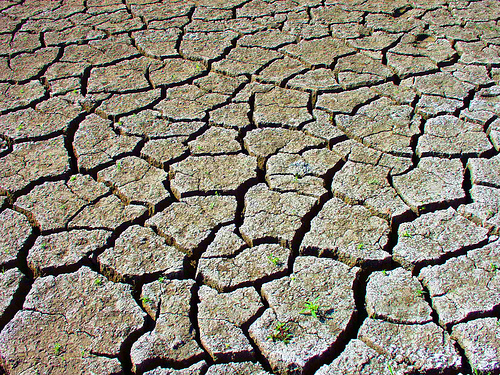



 persephone's step-sisters