this novelette has it all: sex, scandal, satire. the lead character is a mouse,and Barbie and Ken have an edge. it doesn’t get better than this!
read the review. buy the book. support the arts.
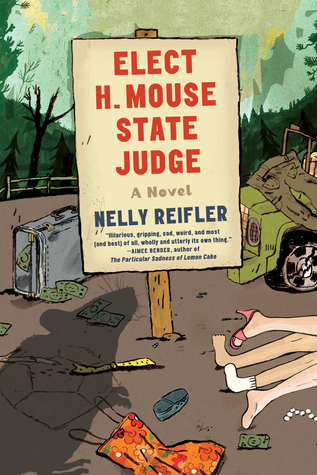

this novelette has it all: sex, scandal, satire. the lead character is a mouse,and Barbie and Ken have an edge. it doesn’t get better than this!
read the review. buy the book. support the arts.
 Journal THAT
Cynthia Gregory
Resistance is a funny thing. You may have heard the adage: what you resist persists. In the same way you know that if you resist writing in your journal for maybe one of a million reasons -it doesn’t simply go away. Oh, no. It sits on your desk all poised and proper, waiting patiently for your return. It sits there all quiet and nonjudgmental, not saying anything but oh what it is not saying. Its cover is so beautiful, its pages so crisp. It haunts you. It mocks you. It’s no use, the journal cannot be ignored. The journal will have its way. You may avoid it for a day or two, or even a week. Sometimes a month will go by, but if you are attuned to your inner journalista, you will return to the journal, you will write. As the Borg insist, “Resistance is futile.” So go ahead, surrender.
Resistance is the gatekeeper in your mind, the lonely id, the unpopular kid in kickball, who doesn’t want you to enter into the place where all the creative ideas, fond memories, and vivid dreams are stored. Because if you did that, then what would happen? Contentment? Bliss? What on earth would you do with all that? On that side: big ideas, big dreams, gumdrop and fudge ripple pleasure domes. This side: a steady diet of leafy greens. That side: Ferris wheels of ingenuity, zipper rides of imagination. This side: a rope swing. The gatekeeper lives between this side and that side. The gatekeeper occupies the margins of can’t do and done. The only thing wedged between you and your untamed imagination is the gatekeeper. You must devise ways to slip past the gatekeeper and get to the fecund spaces of your vast interior.
There are so many ways to give in to journaling if the inspiration is temporarily MIA. The simplest way is to make it jolly and fun. You infuse your journal time with a sense of whimsy, of literary whipped cream and frosting. Write each entry with a different color of pen. Doodle. Treat yourself to a cupcake for each ten pages you complete. This is the easy way to slip past the gatekeeper. Essentially, its bribery, but we’re not above enticements, and besides: yum.
Another way to get past the gatekeeper is by accident. Say for instance that in order to fulfill your journaling goals, you need to write four journal entries per week, but on the third day you meet up with resistance, and don’t feel like spilling your guts. You have the sniffles or had trouble sleeping last night or your favorite song hasn’t played on the radio all day, whatever. So you pick up your journal and sigh. You look out the window. You tap the pen against your teeth, make up snappy little rhythms.
So just when you’re ready to give in, cajole yourself by telling yourself something like this: Okay, just one page. Write one dumb page and get it over with. Write about the funny thing the dog did with your slipper. Or write about how when the neighbor went out to retrieve the morning paper, he leaned over to pick it up and unintentionally mooned you. Start with something small and maybe it will lead to something bigger, and before you know it, you will have written a full blown journal entry by accident. You didn’t mean for it to be so big and so interesting and so conversationally spellbinding, but you did it. You started out with mediocre intentions and wound up at the intersection of Genius Ideas and Good for You. You can now give yourself permission to feel superior.
Then of course, the most aggressive way to get by the gatekeeper is to straight-out push your way through. I personally endorse this method because it is energizing, and empowering. It’s also the most fun, in case that matters, because it yields the most surprising results.
To establishing ‘the push’ for your journaling exercise, you need to set up a goal that is challenging enough, but that somewhere in the back of your mind you don’t think you can accomplish. Maybe it’s something you haven’t done before; something you suspect may be beyond your skill level. Give yourself a goal of: write ten pages on why I like blue cheese. Or list seventy five things to do with popcorn. Or: the one hundred qualities I most appreciate in my mate. You see where I’m going with this. It’s easy to make a short list of just about anything. But a little longer list is tougher, and this is where the magic comes in. Maybe you’re rolling merrily along and just when you get to the point where the gatekeeper steps in and says, ‘oh, I think you’re done here. That’s quite enough out of you, madam.’ And you begin to think that maybe you’ve run out of gas, that maybe that’s all the ideas you’re capable of.
Hint: this is the exact place where you should not give up. This is place where you’ve almost reached what I call the stage of the absurd. This is where you just start writing any old bald idea down, just slap it down to fulfill your goal. You stop trying to be clever, you stop trying to be brilliant, you’re just dropping ideas on the page like hot rocks one after another after another. You stop trying.
At this point in the process, you blow out all the carbon residue in your creative engine and enter into a whole new creative zone. And then you’re off like a hotrod. It’s an exhilarating, thrilling, goose-pimple-y ride, because you’ve just shot past the point where you suspected you might stop, where you feared you’d fail, where you couldn’t see your way out of that fix, and then the ideas just bubbled up into your head and flowed out through your pen like a pure stream of imagination, and it is better than good; it is delish.
You slipped past the gatekeeper like a superstar. And you know what? You’re dazzling, darling. You’re a journalista.
THE SECRET LIFE OF WALTER MITTY
The Secret Life of Walter Mitty is the movie I longed for all year without even knowing it. It may be my favorite movie of 2013, not because of the high drama, indie chic, nail-biting tension, or classic one-liners, but for unraveling that tight knot inside my heart that I’d been carrying so long I no longer noticed its existence. Directed by Ben Stiller and based on a short story by James Thurber, the movie tells the story of Walter Mitty (Ben Stiller), an average guy doing a more than average job at Life Magazine, sadly on the verge of putting out its last issue. Downsizing sucks, but that’s not Walter’s real problem. His real problem is all those unrealized dreams that have been poking at him for years, adamant and demanding as they push to the surface, forcing him into a mini coma of a daydream. Walter’s boss, Ted Hendricks (Adam Scott), a know-it-all nothing of a man laughs at him, not behind his back, but square in the face when this occurs. Walter cares, but beyond daydreams of smashing Ted’s face in, does nothing. It’s not that Walter’s a loser. He’s any one of us who caught a bad break and once there, couldn’t make his way to a good one.
Walter’s bad break happened at 17 when his father died, forcing the former mohawk-wearing Walter had to stash his dreams to become the Man of the House for his mom and sister. Years later, in his job as a “negative assets manager” Walter’s put out some of the greatest magazine covers the world has seen, thanks to the work of colleague and photographer Sean O’Connell (Sean Penn), without ever leaving the dark room. O’Connell sends Walter what he calls possibly the best picture he’s ever taken for the final cover of Life as a gesture of their long productive working years together, along with a wallet engraved with Life’s motto: “To see the world, things dangerous to come to, to see behind walls, draw closer, to find each other and to feel. That is the purpose of life.” Walter is touched, but at a loss since the best picture ever, negative #25, is missing upon arrival.
When Walter’s mother, Edna (Shirley MacLaine) moves, and Walter’s sister, Odessa (Kathryn Hahn) finds Walter’s long-forgotten backpack along with a new travel journal, a long-lost present from Walter’s father, something infinitesimal shakes loose in Walter and he sets out in search of O’Connell to find what was lost — ostensibly negative #25, but we all know what Walter’s really looking for. O’Connell proves a tough guy to find; he shoots photos of snow leopards in the Himalayas and straps himself to the tops of biplanes to get the volcano shot, all heady stuff for the risk averse Walter. Thankfully, Walter is spurred in sideways fashion by co-worker and possible love interest, Cheryl Melhoff (Kristin Wiig), who gives Walter lift just being in the same room as he. Soon, Walter is traversing some of the world’s most satisfyingly brilliant places while Life’s motto is displayed in snippets across the backdrop. When Walter does find O’Connell, it’s worth the wait. “Beautiful things don’t seek attention,” O’Connell says as he watches the snow leopard.
In today’s world of reality T.V. and endless soundbites where everyone jockeys for attention, I need to believe O’Connell. See this movie if you feel stuck. See this movie if you have been toying with the idea of stepping outside preconceived notions of yourself. See this movie if you want the world as your backdrop to expanding horizons, or if you just want to revel in the wonder of an ordinary person doing extraordinary things even if no one sees him doing them. See this movie.
–Pam Lazos
 Journal THAT
Here is a writing challenge that is completely over the top: write with your non-dominant hand for one page. No more. More than one page is just torture.
The reasoning behind this exercise is similar to the logic behind writing by hand and not relying on the computer keyboard for one hundred percent of your writing output. Writing with your dominant hand allows your thoughts to flow unimpeded from your dazzling brain, down your graceful arm and onto the page in a liquid script. You learned to do this type of writing so long ago that the muscular memory is well established and you no longer need to think about how to grip the pencil, focus like a mountain lion, rear back, and assault the page. This type of writing is automatic, never requiring a second thought to secure a type of fluency, and elegance of process. You pick up the pen, you write.
When you write with a computer, you access both parts of your brain and manage a fairly linear process of calculating thought, interpreting electronic impulses, dashing off messages with lightning speed. You are capable of producing great amounts of written material quickly; if you are an accomplished enough typist, your fingers can almost keep pace with your thoughts. Likely however, you are able to dash off great tracts of prose produced at a formidable rate, interspersed with small interludes of calm while the thinking apparatus generates more material, whereupon the typing commences at high speed.
Alternately, writing by hand slows you down by a least half. The statelier pace of recording thoughts on the page also slows your mind down, and everything relaxes. Your brain has time to linger over thoughts, to meander down lanes of memory and drowse in the dapple shade of summer trees. You can write quickly, but you are still operating at about half-throttle, and there is a more reflective quality to your thoughts and ideas. You can immerse yourself into an idea, you may actually visualize it, take it in with your senses, spend some time with it, date it, get to know it’s quirks, understand the sweetness of it, savor each nuance of meaning before moving on to the next idea. Writing by hand is a tactile and timely experience. You feel the gravity of each word, pushing your pen around the paper. You smell memories; you taste nouns. The idea in your mind merges with your heart and produces lines on a page that more or less mean something. Writing by hand actually means writing by body. It’s not as if your hand is a separate unit from your shoulder, elbow, neck, or heart. You write with it all; because it’s all connected.
If writing by hand is a physical experience, writing with your non-dominant hand is meta-physical. It requires a concurrent focus just to grasp the pen, to align yourself with the paper, figure out at what slant to approach a line of dictation, how firmly or lightly to squeeze the pen. Suddenly, words with billboard-sized letters loom in your mind, waiting, while you work out the downward loop in your cursive f and move on. What an accomplishment!
Don’t try to be perfect –you’ll frustrate yourself– unless you were born a leftie and a well-intended but completely disconnected nun forced you to be normal by learning how to write and color and cut paper chains with your right hand. If this is the case, allow me to apologize on behalf of teachers everywhere. You were perfect the way you were, and no one had the slightest right to alter your natural impulses.
Write with your weaker hand –and as you do, you will notice that you have to loosen up. At first you’ll be all stiff and stilted, which will be of no discernible help at all. Struggle less, write more. It’s almost as if with less effort your writing becomes more legible, and the mess of spaghetti on the page begins to resemble actual letters connected to convey meaning. Start by practicing writing your name, then the names of the ones you love. Then gradually, work your way up to words and sentences. A paragraph becomes a grand achievement. Once you master the paragraph, work your way up to a page. Don’t worry about speed, it takes as long as it takes, and it isn’t a competition.
As you write with your weaker hand, you may begin to notice simplicity of thought emerging in your writing. As your neural pathways struggle to fire and connect, you may find your writing taking an intuitive leap, a creative catapult toward new meaning. While writing with your non-dominant hand is awkward, difficult, unseemly, unruly, undignified, it is also as unimaginably liberating as a good walk in the summer rain, as a slice of pizza for breakfast.
We all walk around with a virtual circus playing in our heads and hearts. We carry a lifetime of memories, and a universe of potential. We are at once a young child, and a wise mentor. We are co-workers, and doting grandparents. We are friends and dog-trainers. Vegetarians and comparison shoppers. We are none of us completely and one hundred percent just one thing or even the face we show the world. This is maybe just one of the things that make us such interesting and complex individuals. When we write with our dominant hand, our worlds remain intact, there is no color outside of the lines; all personalities more or less behave as expected. When you write with your non-dominant hand, buried thoughts may rise up to the conscious level, may veer outside the lines in splashes of magenta and vermilion. It becomes messy and a trifle chaotic, but it becomes something beautiful, too.
Writing with your non-dominant hand is a bit of a magic trick; now you see it, now you don’t. While you focus on your inelegant claw struggling to grasp a pen, hidden thoughts may trickle in; tiny hairline fractures may appear in the wall you’ve built around the creative juices; the wall itself may start to crumble just a little, and ideas you’d forgotten you had may just trickle in. Et voila! A dove materializes from a handkerchief.
I believe in magic. I believe in illusion. I believe that coloring outside the box is not just fun; it’s an innate responsibility of the creative heart. So get out there and write with your less popular, ugly step-sister, non-dominant hand. You won’t like it at first. In the beginning it will be as difficult and awkward as a poodle in a tutu. But once you relax and flow with the process, you’ll learn to know yourself in a whole new way, chances are pretty good you’ll like the other, less dominant you.
 Journal THAT
a guide to writing
Cynthia Gregory
The beauty of the journaling process is that it can be simple or it can be complex in a way that reveals itself as a personal, daily, moment-by-moment choice. What enriches the journaling experience (if you’re willing), is variety, is texture.
Imagine eating the same salad every day of your life. You can argue that rich, leafy greens provide minerals and nutrients essential to optimum health. You can also argue that periodically a bowl of thick, smooth, mocha fudge ripple ice cream has the capacity to transport you to your happy place, to a time when summer afternoons sprawled under the shade of a leafy maple counting squirrels in the branches above was the most important assignment of the day. Variety. Texture. Sometimes the best you can do is bolt down a protein bar on the run. Other times, you want to immerse yourself in the sensual, primitive pleasure of a feast of market fresh produce, a plate of pasta cooked perfectly al dente and smothered in an aromatic sauce of eggplant and basil and roasted peppers.
Sometimes your journal is where you lock in and unload your thoughts of the day, the dramas of your life, your hopes for your lover, your future, your Self. Sometimes your journal is a train and each entry is a station. Sometimes the station is the destination, sometimes it’s the jumping off place, the place where adventure begins. Neither place is superior to the other, it is enough that they are what they are. However, this journaling assignment is about the jumping off place, about getting to the end of everything you know, standing poised on the edge with your toes hanging over, a yawning expanse of never been-there-but-open-to-the-possibility. This is the station where you disembark the train and immediately jump into a waiting cab and vanish into the landscape.
This drill can be accomplished using any number of ordinary household items, a hammer, a clothes pin, a plum, or in this case; an orange. Choose any orange you like; choose a sweet as candy Clementine, sometime that rests in the palm of your hand like a tiny jeweled box. Or select a bouncy navel with its nubby button and thick peel. A secretive blood orange, interior cloaked in a plain wrapper. Don’t agonize over the choice; one is as good as the other. Remember, this isn’t about the orange. The orange is only the station platform, the way in.
Remember before, when I suggested that you enter a room and stay there until you’ve achieved the mission of full emotional disclosure? Of going to that place where you blink into the darkness, open your ears to the music of the silence, of letting the air move over the surface of your skin and registering the sensation with words on a page? This is more of that. It is probably easier to make this a timed writing, because the level of difficulty might otherwise persuade you to pitch in the towel long before you get to the juicy bits, the place where you discover something new. With a timed writing, you are not focused so much on the content of the writing, as in the endurance of the time.
A funny thing happens with the timed writing exercise. Generally, you take off with great alacrity, writing everything you know about a subject. Interestingly however, if the time is of a challenging length, the writer finds that she runs out of known material in a relatively short period of time. She finds she has a surplus of minutes, and a surfeit of words. How does this happen? It is a trick of the mind. No matter, this is where it gets interesting.
Find a quiet place to write, free of distraction. Set a timer and begin. First, pick up your orange, close your eyes and inhale its tart-sweet fragrance. Really smell it. Roll it over the skin of your throat, across your chest. Toss it from one hand to the other, examine the surface of the peel, each dimple, every blemish. Experience the orange with your senses as fully as possible, then set it down nearby and begin to write. You may begin with a literal description, and you may actually get a paragraph or two from the physical presence of the fruit, the weight of it. Then what? Then we meet the cousins of “reality” namely imagination, and memory, we are about to move beyond what is and approach what if.
Here are possible ways to go from here. Write about:
You see -it’s not really about the orange. At least, not necessarily so. The orange is a trigger; it is the beginning place that has the power to transport you to another time and place for the duration of whatever time you establish at the beginning of the writing.
It’s important in a timed writing to stick with the intended time. If you establish a fifteen or twenty minute limit, stick with it. If you find you run out of preconceived ideas of what you think you should be writing about, stick with it. Let go of the idea that you choose the words to commit to the page. Let the words choose you. Let the idea pick you up and shake you loose of everything you thought it should be. When you come to the place where your treasure chest of “good” ideas is empty, be patient. Be calm. Wait. Let the ideas float into your mind and don’t judge them, don’t try to shape them. Write them down. Let the ideas flow and allow the gentle waves of the stream of consciousness lap gently at the shores of your mind. This is the place where new ideas are birthed. This is the place where imagination and memory merge, form something new, and your job is to write it down. It sounds simple; it is. It sounds difficult; it is not. All you have to do is be willing to let your subject: the orange, the plum, the paper clip -reveal a story to you, and then your job is to introduce it to your journal.
We are bundles of juicy, ecstatic, razor-sharp, and potent feelings.
And we could stuff all that power behind a blush, but where’s the fun in that?
 Read all about it. Here.
as blushing guardians of Gaia we could do better. . .and that’s a hard pill to swallow.
pass a glass of water, would you?

 persephone's step-sisters