we are collectively approaching a very important election and we can’t help wanting to jump into the conversation. you don’t mind, do you?
Women Are Women, But Men Are People
Reply

we are collectively approaching a very important election and we can’t help wanting to jump into the conversation. you don’t mind, do you?
 who doesn’t love a list? as a culture, lists are what we love. just take a look at the front of any magazine at the checkout counter and you will see lists of everything from the best vacation spots in the West . . .to the best way to drop ten pounds. personally, we love books, so here’s a short list of must-read books. just for you. how many have you read? how many can you read in the coming months? this is our challenge: read three. three is any easy list. we promise.
 As a writer, I don’t just like paper, I adore it. Yet, what if I had to pay the real cost for paper? It takes 3 gallons of water to make a sheet of paper. Then there’s the cost of the land and logs, the cost of the fuel to run the equipment to cut the tree down, the cost of getting the tree to the paper mill, of packaging and distributing the paper, of labor, and other costs I’m not thinking of, and the most hidden cost, the increased CO2 emissions because of the loss of the tree. If I had to pay, say $3 for a piece of paper, would I squander it or use every precious inch? (Hint: pay and conserve.) We have oversimplified many an environmental argument by hiding the true cost of bringing the product to market.
Perhaps if we stopped, took a breath and a pay check, i.e., tally our resources. We live in a time where denial has become de rigueur. It’s not effecting me today, so let tomorrow’s people deal with it. Yet our children are tomorrow’s people and what are we leaving them except a set of problems that have become near impossible to unravel, like the Gordian knot. If we have to whack it off and start fresh — given the intractability of some of these issues — it’s not likely that fresh is going to comport with easy-peasy. Somewhere in the muck of logging and deforestation is a solution, probably a more expensive one, yes, but one where people get to keep a job and the planet. It may not be the same job so flexibility is a bonus. However, without flexibility and thoughtful discussion, as opposed to the high octane verbal sparring you see on talk shows, there can be no consensus, and without consensus, how will the riddle of supplying ourselves with sufficient resources to fuel our modern lifestyle without overtaxing our very generous Mother ever be solved, but badly? Often it’s only in the absence of something that people finally recognize its brilliance. Unfortunately for us, there may be no one left to see the light.
There are healthy ways to harvest the planet’s resources while allowing Her to thrive. In the Pacific Northwest in the early1990s, clear-cutting was slowly being replaced with more sustainable harvesting techniques. That was because residents got a clear picture of what the future looked like with erosion and sedimentation runoff from the naked hillsides, extinction of both plant and animal species, and the degradation of watersheds and reduced water quality, to name a few, so they started speaking up, and more importantly, they voted — with their wallets. You think you are just one person, but you are wrong. You are a global force and what you think and say and intend matters. More than anything, it is the consumer that drives the marketplace and if consumers are clamoring for sustainably harvested forests, then that’s what they shall have. It takes a forest to house a complex community of macro and microorganisms sufficient to support not just life, but growth and it takes READ THE REST HERE.

Close your eyes. Take a deep, slow breath. Feel your lungs swell with air. Notice how your chest expands gently and as you exhale, sense the relaxation of your body. Your lungs pump oxygen into the bloodstream, which flows faithfully throughout the body and when that sweet rush of oxygen reaches the brain, you are instantly calmer, more relaxed. Most days, we don’t think about the breath. And still, a breath, consciously observed, has the power to regulate the temperature of the body. It brings clarity of the mind. It releases tension, It quiets the ego. Some would even say that it is not you or me doing the breathing, but the act of taking in and releasing air, is God breathing Us.
THE WOOD FOR THE TREES (2)
Some of the oldest living organisms on earth are trees. Giant sequoias, for example, can live as long as 2,500 years while some bristlecone pines can live up to 5,000 years. The numbers vary, but let’s just say for simplicity’s sake that a mature tree, i.e., older than a mid-range teenager, consumes about 48 lbs of CO2/yr. (Some accounts are much higher for you skeptics.) The key to this is mature since a prepubescent tree simply doesn’t carry its weight. It’s simple math. CO2 in, oxygen out, but cut 18 million acres off the face of the earth and the numbers skew, the math gets wonky. Saplings start out perky enough, sucking in a bit of CO2, letting out a bit of oxygen, a tree’s waste product (who said it wasn’t a symbiotic world), but it’s not until the tree reaches 100 or 125 that it really hits its stride, exhaling wads of the life-giving stuff each year, chowing down on carbon dioxide like it was candy. The fact is, older trees outperform younger trees by an incredibly wide margin and the older the tree, the more CO2 it can take in because this is one instance where size does matter. So while it’s all cool and hip to plant a tree every time you cut one down, don’t expect the payoff to be that meaningful for awhile. (Please don’t read this and have your take away message be that we shouldn’t be planting trees. We absolutely should and must be, but keep in mind the delayed rate of return.)
Only about half of the world’s tropical forests are still standing. While trees as a whole give the world a great big oxygen boost, the destruction of the same trees to make way for crops — think slash and burn of swaths — doesn’t just deprive us of that oxygen, but contributes to greenhouse gasses because: a) we’re burning them, and b) they’re releasing the carbon they were holding. All tolled, it’s somewhere in the range of a 12-17% carbon increase. Something else trees do is hold water in their roots and then slowly release it into the atmosphere, contributing to the amount of water vapor in the air much like your houseplants release moisture into your home during the dry winter. Amazingly, in the Amazon Basin, about half of the water in the ecosystem is held within the plant life. Without trees, we have deserts.
The writer Aldous Huxley said facts don’t cease to exist simply because we ignore them. About 18 million acres of forest are lost each year to logging for firewood, or pulp and paper, for raising beef cattle, and for growing cash rich crops such as soy, palm oil, and coffee, the latter three of which leave behind poor soil conditions since none of their root systems holds the ground well. All of this results in increased erosion, flooding and a decline in local water quality due to runoff. It takes about 2,000 gallons of water to raise a single pound of beef plus acres of cleared forests to make way for pastureland. Beef is neither ecologically nor agriculturally efficient, and too much is bad for your heart, so why are we eating so much? (Notice I didn’t say “it”, but “much.”) Should we continue cutting down old growth forests to make amazingly beautiful furniture, continue to eat large quantities of beef, continue to grow crops such as soy or palm oil (not the good fat, BTW) to use in our unending supply of processed foods, shampoos (sodium laureth sulfate and stearic acid are derived from palm oil), and cleaning products, continue to log forests for paper, and sadly, firewood, or should we check ourselves and stop living in what is probably the most unsustainable manner since the ruling class of ancient Rome, unless you’re a Kardashian or had a hand in constructing just about anything in Dubai. Shall we ignore the facts?
Approximately 70% of the world’s species, plants and animals alike, live in forests. What happens to those species when the forests are all gone. I think it’s more than speculation to say they’ll go the way of the dinosaur and man as a species will be right behind them. Where I live in Central Pennsylvania, the richest unirrigated farmland in the country is being plowed under for brand new, upper-end housing developments. We all need a place to live, yes, but couldn’t it be a revitalized brownfield instead of the rich, fertile farmland that gave my part of the world its acclaim? I wonder about all the critters living in and around the edges of those farm fields, in the small patches of woods, in the little nooks and crannies and burrows. Where will those little guys go when the tractors arrive? It’s not like they can call a realtor and get a trade-in on read the rest here
 She’s here! Persephone has arrived in all her springtime finery. The dark nights are behind us, now: the celebration. Don’t be afraid, take my hand. Together, we’ll have an adventure watching the earth renew herself in joy and love. Namaste!
It’s spring, so let’s get playful. Why not? Hard work is so last winter. It’s been a long season; we’ve fed the fires, shoveled the drive. We’ve shivered and shimmied through the darkest nights of the year. Now, the robins are reappearing, the waxwings are making their annual debut. It’s time to lighten up; literally. It’s time to shed layers of clothing, time to shed winter weight. Daylight savings has moved the clocks forward, rewarding us an extra hour of pliable evening. After a winter of rest and hibernation, we’re waking up and the world is new. Be intentional.Now is the time to walk more, move more, weed the garden, clean the closet, walk to work, color eggs. How are you going to play today?
The days are growing longer, can you feel it? The air is warming, sunlight brushes bare skin like a kiss. The quality of light is changing. . .and we don’t just mean this month’s lush full moon. However, while the planet is bathed in lunar light, it’s a good time to think about your own potential, even as you consider the seeds you’re planting. . .and set your intentions for a bountiful harvest. This Full Crow Moon marks a time for new beginnings. . .and celebration!
we’re parched here on the west coast. . .and regardless of rhetoric and resource politics, one thing seems clear: extreme weather is the new normal.
That’s our story and we’re sticking with it. Read more here.
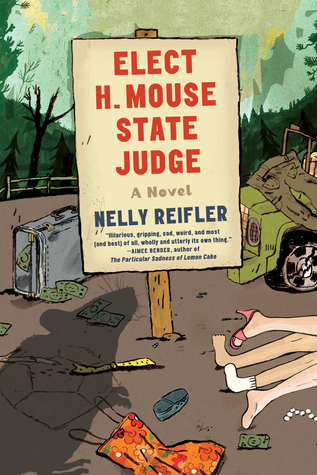
We love the offbeat and unusual. . .especially where it concerns first novels.
Read this book! Support the Arts!
 persephone's step-sisters