For years, people prayed to the sun, thinking it was an actual God and the source of their abundance. Without the sun, earth was a dark and dismal place. Witness the endless winter caused by Demeter, the goddess of agriculture, who withdrew her gifts from the earth because her daughter, Persephone was imprisoned underground with Hades, god of the underworld. Clearly, winter wasn’t all Demeter’s doing. Apollo, the sun god of the Ancient Greeks, the bringer of light to the earth and the one who told Demeter about Hades’ kidnapping of Persephone, had to be involved. Without him, crops didn’t ripen and the earth didn’t warm. While Apollo still took to the skies every winter morning, his solar beneficence waned on those dark days as he streaked across in his gilded, horse-drawn chariot. Sometimes circumstantial evidence is all you have. READ MORE HERE…
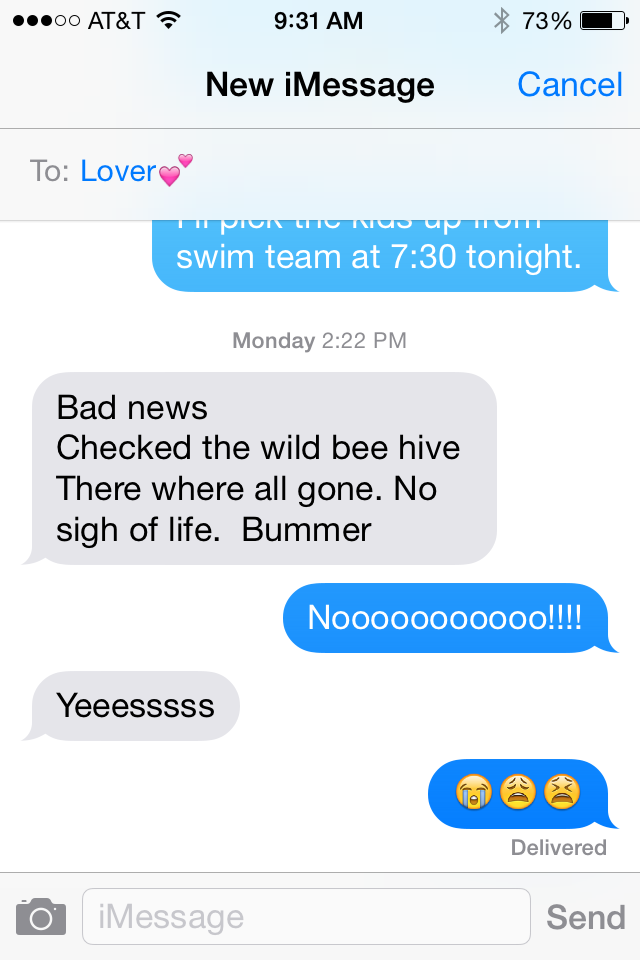
A recent text conversation between my husband and I went something like this:
First of all, ignore the typos. I blame the smartphone. It gets a little too involved. Second, there were not enough of those little crying emoticon thingees to portray the appropriate degree of sadness, despair, and outright terror I felt about the bee situation. The honey bees, our fuzzy four-winged friends responsible for pollination of about 70% of the foods we eat are dying by degrees and we, seemingly, are powerless to stop it. The story with the wild honeybees is this: READ MORE HERE…
Did you know? Up to 80 percent of all life on our little blue planet is found in the oceans. . . and oceans contain 99 percent of the living space on the planet. More than half of the oxygen needed to maintain life on Earth comes from marine plant life.
The Grand Budapest Hotel, directed by Wes Anderson is chock full of Hollywood A-listers in both cameo and substantial roles and with Anderson at the helm, the result is a film so quirky and brilliant that you’ll want to see it more than once. The Grand Budapest Hotel is Anderson’s best film to date, a wry, exceptionally well-structured 5-act Shakespearean dramedy. If you liked any of Anderson’s prior movies, The Life Aquatic with Steve Zissou, The Royal Tenenbaums, or The Darjeeling Limited, to name a few, then The Grand Budapest Hotel will satisfy you in a way that these previous gems just narrowly missed.
First there’s the superb M. Gustave (Ralph Fiennes), impeccably dressed with such dizzying attention to detail that Coco Chanel would be jealous. Gustave runs the GBH, set amid a coniferous-lined mountainside, always gorgeously blanketed with a light dusting of snow, so breathtakingly beautiful it looks like CGI. Anderson used more than one locale for the filming to get just the right feel for the distinguished and sumptuous backdrop to the movie. At the GBH, Gustave not only runs a tight, elegantly appointed ship, he has a cadre of patrons, all older, almost all female, who return to the GBH to partake of the amenities that only M. Gustave can provide. The young Zero Moustafa (Tony Revolori), so called, he says, because after losing his family and home in the war — the movie is sandwiched between the first and second World Wars — he is nothing and has no one. Zero is hired by M. Gustave to maintain a specific role at the hotel, the actual description of which is unclear for while Gustave has a list of “don’ts”, it seems the lobby boy’s biggest “do” is to be Gustave’s personal assistant. Throughout the movie, we see Zero’s allegiance to Gustave unfold and grow in a variety of wry and often hilarious ways.
The entire story is told in flashback by the enigmatic owner of the hotel, a much older Zero (F. Murray Abraham), to the Young Writer (Jude Law), who is a patron of the current GBH. With it’s halcyon days behind it, a skeleton crew running it, and very few guests, the GBH is still going, maybe not strong, but going. Abraham invites Law to join him for dinner and over many courses, unravels the beguiling history behind the hotel. After one of Gustave’s favored patrons, Madame D. (a sublime Tilda Swinton) is murdered, Gustave travels to Madame D’s side because, “she needs me,” meaning, he needs to make sure 1) she looks good and 2) to find out whether she left him a little something in her will. At the reading, the lawyer, Deputy Kovacs (Jeff Goldblum) announces to the family that Madame D. has left Gustave the priceless painting, “Boy With Apple” which, according to Gustave, they had admired together many times. Chaos ensues as the heirs, led by Madame D’s son, Dmitri (Adrien Brody) along with his henchman, Jopling (Willem Dafoe), try to reclaim what they believe is rightfully the family’s. The film is full of fabulously quirky observations such as when Gustave views the dead body of Madame D, examines her nail polish and expresses approval for the new color because even in death, style and elegance are paramount.
My favorite line in the movie is Gustave’s, spoken during a moment when he and the Lobby Boy are trying to puzzle out the mystery behind the dilemma Gustave finds himself in:
“The plot thickens, as they say. Why, by the way? Is it a soup metaphor?”
I absolutely will not tell you what mess they are in as the film is all to methodical to spoil, but I will say that I frequently laughed out loud throughout the movie. Anderson’s usual themes of abandonment, trouble with authority, and overarching loyalty in the face of adversity are all present. The cast goes on and on: Harvey Keitel, Ed Norton, Jason Schwartzman, Owen Wilson, Bill Murray, and a host of others makes this film feel like summer camp for A-Listers The Grand Budapest Hotel is not for everyone. My mother thought it was weird, but she’s 80 and subtle, facetious humor is often lost on her. Me, I thought it was brilliant.
For thousands of years, we’ve used and reused the same water as the dinosaurs, Galileo, Genghis Kahn, and Jesus. Until now. Now the water is chock full of contaminants that the ancients didn’t even know how to pronounce. That’s because Mama Nature doesn’t know how to remove radionuclides, usually held safely within the earth’s crust, and other chemicals found in the fracking wastewater that’s slowly making its way into Her rivers, lakes, and streams. Until now, we’d been sipping the same stuff as Adam and Eve. Until now.
She died that night. Doc attended the funeral along with dozens and dozens of ranchers and their families all come to pay their respects to this great woman, one of the “stickers” whose family had come in the late-1800s during the first boom and bust era of timbering and mining and oil and construction and who had stayed on to make a living. They worked the land for what it would produce – cattle. So when the time came and they asked if anyone wanted to say anything on behalf of this fine woman, Doc’s hand raised itself, his body stood up, and he took over the funeral.
“Twila’s great-grandfather was thrilled when the first oil men knocked on his door with a check and a promise. They may not have tamed the harsh out of the land, but at least they made it more hospitable. They built roads and paid well, and the ranchers loved them. That was the heyday when oil flowed like free love out of those great big underground reservoirs. Sweet gas, they called it. Back then a whisper could’ve coaxed that oil out of the ground.” To read more of this post, click here…
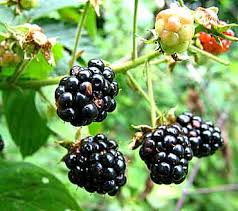
On a bright spring morning, she rises from a long sleep as if from the dead. She sighs, she turns. She slips into yoga pants, the sports bra that fits like wrapping. The smart phone with its Audible Pema Chodron lesson on compassion (because she needs this, she decides and as she listens, realizes that compassion is just the start, chica), and plugged in, walks to the edge of the property, to the edge of the seasonal river. She breathes the sweet, wet, morning air, the fragrance of loam and blackberry blossoms, begins her walk. It is the month of earth day; earth month, and the coincidental interval of her return. This year the timing seems off. The rains have come late. The storms rage larger, a swirl of unpredictability. It’s not her doing, she tells herself. Pema says to make it about herself, that to say it is the other is only illusion. It’s all Bardo, baby. It’s all Hades, honey. It’s all One. We are all Ophelia, we are all Hamlet.
Persephone remembers to breathe and in the rush of air she lets go of the border between her thin skin and the slow river, the rise of moist air warmed by yellow sun, the speckled quail darting for the shadows. This is compassion, she realizes. I am the earth. She is me. Separation is only willful delusion.
It’s Earth Day, and you know what that means — Mom’s Birthday! Not your biological mother, but the Mother of Us All. Since it’s a holiday, we won’t dwell on all the intractable environmental problems that could potentially derail us as a species. We’ll save that discussion for another day. Instead, as a tribute to Mother Earth in all her, well, earthiness, here are ten things you can do to assure She makes it to Her next birthday and a few million after that.
1. Think globally. Act locally.
2. Eat organic.
3. Conserve water, and drink more water, too.
4. Walk more. Bike more. Drive less.
5. Plant a tree or a pesticide-free garden (but not a rose garden; too much fertilizer).
6. Sing. Yes, believe it or not. The planet is made up of sound so show your appreciation and join in Her song.
7. Become consciously aware. Every moment spent rooted in the present is one more you won’t miss. Enjoy it to the fullest.
8. Buy products that have a smaller environmental and carbon footprint, i.e. it’s okay if you can’t afford a Prius. Start small. Buying food sans excessive packaging that would end up in a landfill is perhaps just as important.
9. Reduce, reuse, recycle. Not just bottles and cans, but clothes, shoes, appliances, electronics, whatever you can.
10. Most importantly — vote with your wallet. As consumers, we hold tremendous sway over the products appearing on the shelves in our local markets. If you don’t like them, don’t buy them. And if you really don’t like them, vote with your feet and walk to another store!
Over the next few months we’ll talk more about these things individually, but for now, Happy Earth Day.
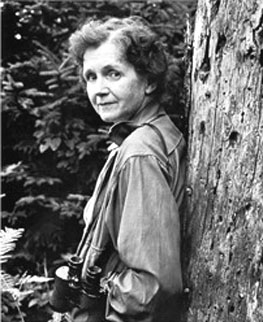
Throughout time, godparents have been an important, often undervalued resource in the raising of children, providing nurturing counsel and emotional sustenance to their charges. Maybe they didn’t grow us, but they provided strength, love, and an alternative point of view, the ally in our evolutionary corner, always ready to step in when needed. Even the Mother of us All could benefit from having one. Lucky for Her then that there was Rachel Carson, and lucky for us.
If Edward Abbey was the godfather of the modern environmental movement, then Rachel Carson was the godmother. When she penned Silent Spring, first published in 1962, Carson probably had no idea that it would be one of the most influential books of the modern environmental movement. Read More Here…
In his infinite wisdom, Chinese philosopher Lau Tzu coined the phrase “a journey of a thousand miles begins with a single step,” and it is a hard one with which to argue. However never being content to leave a great sage alone, I would add: “all the pages of a genius novel begin with a single compelling sentence.” The usual list of literary greats contains the (mostly) names dead white guys, but this is one for the girls. Herewith, a list of 15 brilliant first sentences and the novels from which they arise. By women.





 persephone's step-sisters