Charitable giving is always a good idea. According to one belief system we are all connected. If that’s true, giving to another is the same as giving to yourself.
Our sister site knows a thing or two about giving. Find out more here.


Charitable giving is always a good idea. According to one belief system we are all connected. If that’s true, giving to another is the same as giving to yourself.
Our sister site knows a thing or two about giving. Find out more here.
how would you feel if you could eat just one thing for the rest of your life?
yeah, check out our sister site and see why diversity has its advantages
How many times do you go about your business and then suddenly realize that you can’t remember the last ten minutes? That you had been on autopilot, with your body operating the family car, stopping at lights and pausing for pedestrians while your mind had zipped off to distant canyons and \ gullies of memory and illusion? You’ve arrived safely and no one was hurt thank goodness, but what would happen if you were fully embodied, fully present, each day of your life? Would you see the world differently?
My vote is yes. It’s a fact that we do not cultivate the practice of notice very well. We are bombarded by television, radio, the Internet, literally thousands of messages a day (the gist of which are of the most dire nature by the way, and another reason to unplug) and so it’s natural that we begin to shut down. In many cases, shutting down is a natural mechanism of survival. The trouble is, once you begin to shut out the ugly of the world, you inevitably begin to shut out the beautiful and remarkable and miraculous, too.
Almost no one I’ve ever talked to about it thought their story was interesting. But I’ll bet their story is remarkable. They just stopped noticing the details. They forgot that their life was miraculous in about a million ways. So here’s an idea, write about your life like you don’t own it.
Cultivate an appreciation for each Now that shows up. Now, I reach for my water bottle and the cool liquid slides down my throat. Now, my fingers pull away the skin of an orange. Now, call on inspiration, and she takes my hand and we walk.
As it turns out, the best way to get creative is to get out of your head. Simple? Yes. Easy? Maybe not so much . . .but totally worth it.
You wouldn’t bake a souffle without a recipe, what makes you think you can raise the capital to support your pet project without a fundraising strategy? It’s easy as ABC, baby, and our friend the strategist will the tell you how.

 Dear Water Bottle, We’ve had a beautiful romance, but I’m breaking up with you. It’s simple, really: I’ve learned that you’re a slow poison, and that just doesn’t work for me. In my quest to compost and recycle more I have been studying the various plastics in my life, which until now, I’ve considered a convenience. Well, an evil convenience, but still. Oh Plastic, you have made my life easier, but the fact remains that when the landfills are overloaded and when the Pacific Island of Trash manages finally to put us in a collective gasping choke-hold, I will have no one to blame but myself.
Here are five everyday plastics and why I need to rethink them:
#1 : The most commonly used plastic and can be found in microwavable food trays, water and juice bottles. This plastic absorbs bacteria and should not be reused.
#2: A stiff plastic used in toys, plastic lumber, picnic tables, detergent, household cleaner and shampoo bottles. This plastic is nearly neutral and can be recycled to make detergent bottles, floor tiles, pens.
#3: PVC is a soft, flexible plastic used to make teething rings, toys, cooking oil bottles clear food packaging, mouthwash bottles. Sometimes called “the poison plastic,” it contains phalates that interfere with hormonal development.
#6: Polystyrene is used to make disposable cups and plates, egg cartons, take-out containers. This material leaches styrene, a carcinogen, into food (especially when microwaved) and should be avoided.
#7: Polycarbonates are used to make baby bottles, sippy cups, three and five gallon water jugs. Contains bisphenol (BPA), which migrate especially if heated, and has been linked to heart disease. BPA, is a xenoestrogen, a known ednocrine disruptor.
So you see Water Bottle, it’s over. You and your extended family are simply toxic and I’m done with you. Now that I know, I will recycle your ilk whenever possible and avoid the worst of you when I can.
Ciao, baby.
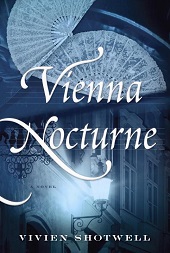
If you love Mozart and you love a good romance, you must read Vivien Shotwell’s Vienna Nocturne. Wait. What – romance? Yes. It’s summer –when thoughts turn to light, frothy literature, something to be consumed with lemonade poolside, or near the thundering shore. If you’re looking for a sweet, well-crafted historical romance and Mozart is your guy, this is the book for you. READ MORE HERE
A while back, I wrote about recycling, composting, and the ideas great and small that come of that kind of thinking. Well, I’m glad to report a kind of unexpected progress.
I got the counter-top compost bin I ordered, and have put it to good use; filling it and hauling it out to the green waste wagons at the curb. I continue to recycle what I can, even the smallest strips of plastic and unwanted paper. And guess what? The actual basket of trash that goes to the landfill has shrunk substantially. I mean Duh, right? And still. I didn’t expect it but there it is. The largest part of my household trash is either recycle- or compost-able. Yay!
I’ve reduced my personal carbon foot print by at least two-thirds, which I consider a personal best, and therefore pretty awesome. If I can do this kind of recycling on a weekly basis, I can redistribute my annual trash impact on the planet significantly, and that’s just crazy cool!
We firmly believe that the for-profit world needs the nonprofit world. For all the right reasons. Read about our latest venture in nonprofit-land here!



 persephone's step-sisters