inside the bear’s mouth

OIL IN WATER

Pam Lazos

Chapter Thirty-Three

Avery stood at Marty’s drafting table, pouring over drawings of the TDU, matching up the drawings with the real thing. At ground level, the outside of the TDU’s receiving station looked like a gigantic child’s play chest. Sliding metal doors opened and disappeared within the grated metal exterior framework – the classic European pocket door – to reveal a cavernous opening that funneled trash to the giant cylindrical tank housed below ground. With this design, Marty had been able to back his tractor right into the barn and utilizing the trailer’s hydraulic lift, pour the trash directly into the yawning mouth of the cylinder.

Marty’s TDU was a democratic machine, treating all trash equally as long as it was carbon based. Once inside, the trash was mixed with water to create a slurry, an insoluble, goopy mess. The slurry passed through a pipeline to a holding tank where it was heated under pressure until it reached a reaction temperature. Another pipeline, a third unit, also cylindrical – Marty Tirabi was fond of circles – ferried the slurry along to where it finished its initial reaction and was flashed again. Here the gaseous products were spun off, the pressure lowered, the liquids separated from the volatile chemicals. Marty built a series of interconnected pipelines placed one on top of the other, some at 90 degree angles of each other, a steel matrix within which to house the myriad and varied reactions occurring. Step five was another series of thinner cylinders, three in a row, tall and demure, sitting side-by-side like young girls at their first dance, waiting to be asked. But size was no indication of their strength. In these cylinders Marty heated the mixture, separating water from gas from light oils which led to the final stage, two large, squat holding tanks where Marty intended to store the gas and light oils. Even staggering the six stages of equipment at forty-five degree angles of each other, the prototype was huge and encompassed the entire back wall of the barn.

Avery sighed and flopped down at the drafting table. Marty had said there was a problem with water. Was it too much or too little? Avery couldn’t remember. Gil knew, but damn it, he wouldn’t help. Avery was on his own. And with at least two dozen blueprints, this was going to take a while. Maybe a little meditation was in order.

Avery practiced meditation in fits and starts. When he did, a wonderful clarity always ensued, imbibed with an acute awareness of being in the present. And the help always came with it, fecund and unbidden. From where it came, he really couldn’t say. Probably the universal mind, the brain trust, as he referred to it. From ions, or static or electricity. From nowhere and everywhere. He knew at times he’d tapped into the morphogenic field where ideas were traded like stocks on the NASDAQ, the theory being that if a monkey in Costa Rica learned to drive a car, a monkey on the Rock of Gibraltar could do the same without even meeting the Costa Rican monkey. Or perhaps he’d tapped into the Zero Point Field, that eerie, brave new world where discoveries were deposited in the cosmic bank account, waiting to be withdrawn by anyone holding a debit card. He’d read plenty on comparative religion, and had a few surreal experiences in his lifetime, enough to recognize the signs of a downloading from the One Mind when he felt it, which he rarely did. But Gil made regular withdrawals, engaged in constant conversation, slept with it under his pillow. For Gil, change and enlightenment were the same, immediate and visceral, played out physically each time he had a fit or an idea.

For the rest of the world struggling to catch up, the only acceptable change was a gradual climb up a low-grade mountain, the steps laborious and slow. And morphogenic field or not, it still took time for all the other monkeys to accept their new knowledge. Even if they could do it, did they want to do it? Even if he could fix this invention – something he didn’t have a whole lot of faith in at the present moment – Marty had said it would make the world stand on its head. Was the world ready for such a precarious position? Come to think of it, was he?

Avery needed Gil’s fertile mind where you could plant the seed and days or weeks later the answer sprung forth like Athena from Zeus’s head, in full warrior regalia, engaged and ready for battle. Gil’s epilepsy fueled his creativity; the disease forced him into the Zone where he was working out some serious past-life crap. Avery felt helpless at these times, but appeased himself with the thought that you can’t work someone’s karma out for them, a fact that at the tender age of ten, Gil completely understood.

“Gil.” Avery walked to the living room and shouted for his brother. “Gil!”

A muffled, “he’s in his room” wafted up from Kori’s corner of the basement. Avery nodded a thanks that she couldn’t see and went upstairs to find Gil.

He rapped on the door – the music was so loud the door handle was vibrating – and stepped into the room. Unless Gil was hiding under the bed, he wasn’t here. Avery checked the closet – sometimes Gil liked to hang out in the back of it with a flashlight and pretend he was a secret agent or something – then under the bed. He took a peek out Gil’s window. A light was on in the barn, even though it was broad daylight. Gil hard at work . He shut off the stereo and headed for the barn.

➣➣➣

The wind whipped across barren fields where only rolled bales of hay remained. The oak trees swayed and heaved in fits of laughter as the wind rose up, intertwined with their naked branches and whispered secrets only the oaks could understand. Avery took inventory. All healthy, thank God. A couple dozen were in striking distance of both the barn and house. He’d hate to see the damage one rotten tree could cause in a windstorm like this.

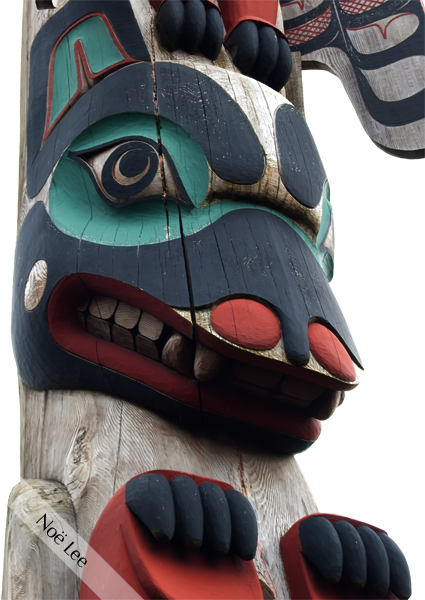
He touched the bear totem pole rooted to the ground, facing the barn. It was six feet high, a hundred feet from the barn’s entrance; its eyes saw all who moved through those doors. Marty had carved it out of a tree gone rotten at the base after Gil had noticed it swaying in a windstorm much like this one.

Marty relayed the information to Ruth who, noticing the swing set was in the probably trajectory of the tree should it fall, called a tree service. The tree service couldn’t come for two days. Ruth told Marty to leave the tree alone, that if it hadn’t fallen by now, it wasn’t going to fall in the next two days, and left on an errand.

But Marty couldn’t leave anything alone, especially a rogue tree, threatening him through his barn window. Ruth’s tire tracks weren’t even cooled before Marty got out the ropes and chain saw. The whir of power tools called the kids to the backyard, but Marty banished them to the deck, more than a safe distance away, until he was done with the felling. After that, it was all fun and games. The kids played happily on the fallen log while Marty used his chain saw on the part of the tree still in the ground and routed out the finer stuff. When he’d finished, Marty had transformed his enemy into a vigilant friend, the coolest totem pole the kids had ever seen. One paw rested on the bear’s stomach as if he’d just eaten lunch. His mouth was open, exposing healthy, yet deadly incisors; his eyes were wide as if he’d just spotted something. Marty let Kori paint the eyes and claws and big scary teeth all white, and when it was dry, he let the kids crawl all over it, something they still did years later whenever they hung out in the backyard. Avery smiled and rubbed his hand inside the bear’s mouth. For luck.

Avery tapped lightly on the barn window. Gil threw the dead bolt and waved him in. Avery dropped the roll of Marty’s drawings on the table and removed his coat while Gil closed and locked the door behind him.

“Toasty in here,” Avery said. Gil had the space heater cranked up and it felt like a kabillion degrees in the barn. “Why don’t you wear a sweater like most people do in cold weather and then you won’t need the heat to be so high?”

“Cause I wanted to wear my lizard shirt.” Gil looked down at his black t-shirt with the lizard face on it and smiled.

“What’cha got going on here?” Avery asked.

“Building something,” Gil said.

“I see that. But what is it?” To Avery, it looked like a souped up go-cart. He walked over and surveyed the frame and held a tentative hand out to touch it. The frame proved incredibly durable. “May I?”

Gil nodded and Avery stepped up on the floor board, testing the weight load by jumping up and down on it.

“Come here. I’ll show you.” Gil pushed Avery’s own drawings aside and peered over a stack already open on the drafting table.

Avery sifted through them, his excitement growing. “It’s a hybrid engine? Are you using technology that’s out there or is this something…?”

“New. Dad says you can’t talk about something until you finish or you lose the muse. So I can’t talk about it.”

“You have a muse? Who is it?”

“You know. A pretty lady. Sometimes she sings.”

“What’s her name?”

“She never said.”

“Is she real or you made her up?

“Real.”

“How do you know?”

“Because I just know. She comes at night. Sometimes she whispers ideas in my ear or if I’m stuck on something, she helps me solve it.” Gil looked down at his hands and turned them over, inspecting them. “Sometimes she just holds my hand. She says they’re soft.” Gil smiled sheepishly. Avery snickered, but turned away before Gil caught him.

“She helped me with that,” he said pointing to the ATV. “It’ll be more energy efficient than the others. Less fuel, less charging time, and the batteries’ll be smaller.”

“Hmmph,” Avery said, pondering the blueprints. “How long until you think you’ll be done?” Gil shrugged his shoulders and spun around on his stool. “Well, just let me know and I’ll get busy on the patent.” Avery flipped through the drawings. “Is there anything I can start on now?”

Gil unclamped the vice grips holding the drawings in place and rolled them up, a dismissal. Apparently, the conversation was for the present, concluded. Gil unrolled Avery’s drawings flat and used the vice-grip to clip the topsides to the edge of the drafting table. He reviewed them carefully for several minutes, unclamped the vice-grip, rolled the drawings back up and handed them to Avery. Then he walked over to the hammock where Max reclined.

How’d you get him up there?” Avery asked. Gil shrugged like it was no big deal and lay down next to Max who, startled from sleep, emitted a small yelp.

“I need your help,” Avery said. Gil nestled in close, warming himself against Max’s monstrous shape. The hammock moved in a rhythmic, rocking motion. He shook his head and buried it in Max’s face.

“Why not?”

Gil buried his face deeper into Max’s fur.

“Gil. Why the hell not?”

“I just don’t want to do it alone.”Avery detected a tremor in Gil’s voice and mistook it for fear.

“You won’t have to do it alone. I’ll help you.” Gil shook his head vehemently and Avery dropped his voice, low and soothing.

“Are you afraid? Don’t be afraid. The barn’s alarmed. And I swear I’ll keep you safe.”

“I’m not afraid,” Gil spat out. “I just…I can’t do it without Dad. It was his. Not mine. I can only do it if he says I can.”

“But, Gil. Dad’s dead.”

“I know that Avery!” Avery didn’t notice the tears gathering in Gil’s eyes and continued.

“Well, he’s not going to be saying anything again.”

“How do you know?” Gil shouted.

It was the first time Gil had shown such emotion and made Avery realize the unbearable angst Gil had been carrying since his father died. A sudden queasy feeling gripped Avery; it couldn’t have been worse if he’d been sucker punched.

“You don’t know anything.” Gil jumped off the hammock and ran for the door. Max tried to follow, but his foot got stuck in between the knots. He sat there whimpering, trying to disengage his paw. Gil unlocked the dead bolt and ran out failing to deactivate the silent alarm. Avery watched Gil run across the yard, unaware that downtown at the police station, another alarm screamed out a warning.

Max yelped in frustration.  Avery untangled his foot and lifted him out of the hammock. Max took off after Gil through the open door. Avery sat back on the hammock and rocked, listening to the howling of the wind.

“Now what?” Avery said to himself. He really didn’t expect an answer.

“Stuff envelopes,” a voice said. Avery landed on his hands and knees and scanned the space around him. The queasy feeling was back. He sucked at the ambient air.

“Mom?” He stood up and looked uneasily around the barn. As much as he would love to sit down and have a heart-to-heart conversation with his mother, the shock might be enough to kill him. He took several tentative steps, swiped the drawings off the drafting table and high-stepped it out of the barn, slamming the door behind him. He didn’t stop to lock it.

Two minutes later, he threw off his coat and sat down at the kitchen table. Stacks of paper and envelopes crowded the kitchen’s surface areas. He scanned the room. The project would take all day. Avery shivered and with a single glance back toward the barn, folded one of the sheets of paper in three and stuffed the first envelope. He looked again before stuffing another. Nothing was amiss. He began folding and stuffing in earnest and after several minutes, the repetitive motion of his task took the chill out of his spine.

to be continued. . .

to read what came before start here. . .

copyright 2012

trash into gold


OIL IN WATER

Pam Lazos

Chapter Thirty-Two

Weeks after Avery’s visit, a shiny silver oil tanker sat positioned to fill the underground holding tank at Cooper’s Service Station. Water droplets ran in impromptu lines down the windshield. The driver grabbed his clipboard, jumped down from the vehicle, and throwing his hood over his head, strode to the office through the misty fog. He burst through the door into the office, a futile move since he could see through the glass that no one was in there. He scanned the garage floor, his eyes settling on the closest mechanic, Tom Johnson, only three days on the job. The driver approached with long, unhurried steps that belied his impatience.

He wasted no time with niceties. “Cooper here?”

“He stepped out for a sandwich.”

“Business off or something?”

“No. I don’t think,” said Johnson.

“What d’ya’ mean, you don’t think?  I ain’t been here for two weeks. You should be bone dry, but you still got a lot left.”

“Got some yesterday,” Johnson said.

The driver furrowed his brows, annoyance creeping across his face. “Jesus Christ. How many times I have to tell that guy? Listen you. This is the third time I’ve been out here and the third time…” The driver doffed his hood revealing a pair of menacing eyes.

“Who is it? Exxon? Texaco?” He rubbed his hand over two days of stubble. “Chevron?”

“I have no idea what you’re talking about.”

The driver took a step forward. “I got better things to do than come here every week for no reason,” he said, looking like he might throttle Johnson, clipboard and all.

Johnson took a step back. He was suddenly and acutely aware of the sheer volume of sound at his back, the whir and hiss and clink of the body shop, all stations in use, Mr. Cooper’s half-dozen motor heads fully engaged in their work. This guy could pummel him to a bloody pulp and no one would notice or hear a thing until they stepped over him to get to the free coffee which was now feuding with the breakfast burrito in Johnson’s stomach.

“Look, I just started three days ago.” Johnson turned to the room at large looking for support, but every last man had his head in or under a hood, engine, or wheel base.

“Sunoco? Getty? Who is it? I at least have a right to know?”

“I don’t know his name…” The driver stepped so close that Johnson could smell the man’s coffee breath.

“I’ll ask it slow so you’re little pea-brain can register it. What – is – the – name – of – the – company – that – delivered – here – this – week?”

“There was no a company. It was a guy. And I told you, I don’t know.”

“Then who’s he work for?”

The driver’s eyes narrowed and he moved even closer. In addition to coffee, Johnson now identified the distinct smells of petrol and body odor. Johnson flinched, cleared his throat.

“He doesn’t work for anybody. He’s just a kid makes oil is all.” His voice cracked. The driver was too close.

The driver furrowed his brow, lost in thought.

Johnson caught a movement on the periphery of his vision and turned to see Jim Snyder, the Assistant Manager, speed-walking toward them.

“Can I help you?” Snyder asked the driver.

“You tell Cooper he’ll be hearing from Akanabi.” The driver turned on his heel and stomped out the door into the rain.

“What the heck was that about?” Snyder asked. Johnson demurred, shaken.

“You have no idea?”

“That kid that brings the gas and oil. Who is he?” Johnson asked.

“No one for you to worry about.” Snyder walked to the office and looked over the papers on the desk, shifting them around. He walked back onto the floor, empty-handed.

“Where’s the invoice?” Johnson said nothing.

“Did he even fill the tanks today?” Snyder asked, more harshly then Johnson thought appropriate.

Johnson nodded. “Yeah, but I guess not much.”

“Do you know why?”

“He said they didn’t take much.”

“What did you tell him?”

“Nothing. Just that some kid brings some gas and oil sometimes.”

Snyder’s face bloomed and he sputtered, “You told him about Avery?”

Tirabi. That was it. Johnson coughed. “What was I supposed to say?”

Snyder eyed him up. “All right,” Snyder said, as Mr. Cooper crossed the threshold to the shop. “Get back to work. I’ll take care of it.”

 ➣➣➣

Johnson returned to his station, trying to look busy – he was almost done retrofitting some new brake pads – but his eyes kept drifting to the scene in the office with Cooper gesticulating like crazy and Snyder alternating between grimacing and nodding his head. Mr. Cooper appeared more resigned than indignant. Perhaps he’d keep his job after all. The thought was quickly replaced by the next thing Johnson saw.

Avery Tirabi was pulling into the parking lot just as the giant tanker was pulling out. Apparently, the driver didn’t care that Avery had the right-of-way and pulled out across two lanes of traffic right in front of Ruth’s minivan. Both Avery and the driver slammed on their brakes, a near miss, and proceeded to yell and lean on their respective horns. After a full minute of this, with cars backing up behind Avery on the highway, the driver put it in reverse giving Avery enough room to squeeze into the parking lot. The driver flipped Avery the bird as he drove by and Avery responded in kind.

With the diligence of a worker bee, Johnson buried his head and shoulders beneath the wheel base, too nervous to even peek.

 ➣➣➣

“Hey, Mr. Cooper,” Avery said. The door rattled shut with a bang and a jingle.

“Avery!” Mr. Cooper looked up with a start. He hadn’t seen Avery coming, engrossed as he was in Snyder’s story, and felt like a kid with his hand caught in the cookie jar. He cleared his throat and ran a hand over his eyebrows, hoping to hide his embarrassment.

“You okay?” Avery asked. Cooper nodded and smiled.

“Fine. Fine. Bit of a headache is all. Glad you’re here, son,” he said, motioning to a chair. “Sit down.” Avery obliged, first extending a hand to Snyder in a show of both manners and adultness.

“Look, Avery, I’m gonna be honest with you. We may have a problem.” Mr. Cooper stopped, weighed his words, wondering if the kid’s self-possession could withstand this potential pitfall. “That Akanabi Oil guy that just left? He was pretty P.O.’d.”

“Why?”

“Not much of a delivery. He wanted to know who the new supplier was.” Mr. Cooper walked over and poured a cup of coffee which he handed to Avery. Avery shook his head at the tar-like substance so Cooper drank it himself.

“Did you tell them?” Avery’s voice quivered slightly.

“No. He talked to one of the guys on the floor. Snyder and I are the only ones with that information.” Cooper sighed and sat down. “Likely the driver’s gonna call dispatch and tell them it’s the third week in a row we had a sub-standard delivery. He’ll recommend canceling us because we got another supplier.”

“Do you?”

“No.”

“Well, we’re almost out,” Avery said.

Mr. Cooper stared out the window. The rain had stopped and the sky was clearing. A slow smile spread across his face. He looked blankly at Avery, took a sip of his coffee and cleared his throat. “Too damn hot,” he said to himself. He rolled his ailing tongue, massaging the burned spot, and sat down at his desk.

“Avery?” Cooper said, smiling again. “What if you supplied me?”

“Me?! I can’t. I told you, we’re almost out.”

“Well, how about making some more? I’d take all you had. I’m not the biggest station in town, but we’re busy enough.” Mr. Cooper looked out the window: six pumps out front, all with cars in front of them at the moment, one in back, just for shop use. He grabbed a sheet of paper and pencil, did some quick calculations and pushed the paper at Avery.

“This is how much you’d gross if you could supply me weekly. I don’t know what you’re overhead is or how much the raw materials cost, but even so, it’s a pretty number, eh?” Avery bent his head to look at the paper and his eyes grew wide. Mr. Cooper smiled. Apparently Avery thought the number very pretty as well.

“I don’t know, Mr. Cooper, I…”

“Look. I’ll take all of what you got left. And in the meantime, think about my offer.”

“But Akanabi…”

“Akanabi doesn’t know anything. They’re probably dropping us even as we speak.”

“But what if someone finds out we’re not a real company?”

“No one’s gonna find out. We can arrange pick up at night, after hours, whatever you want.”

Avery furrowed his eyebrows. “Well, I don’t know…”

Mr. Cooper continued. “Don’t worry. The guy that left here today thinks we got a new supplier, not some sixteen-year old kid who invented some damn machine turns trash into gold. He’s not gonna come lookin’ for you, I’m tellin’ ya’.”

“But somebody came looking for us. And they know where we live.”

“Avery. Your father’s been working on that machine for over twenty years. And he told a lot of people. Hell, I even knew about it.”

Avery took a deep breath and folded his hands on his lap.

“Just think about it. If the answer’s no, I can get a new supplier in a couple hours.”

“I’ll see what I can do,” Avery said. He shook Mr. Cooper’s hand before leaving. Cooper and Snyder watched him walk to the car.

“Do you think it’ll be okay?” Snyder asked.

“I hope to God, so,” Mr. Cooper said, as Ruth’s minivan pulled out of the parking lot and onto the road.

 to be continued. . .

to read what came before jump here. . .

copyright 2012

letting go at last

OIL IN WATER

Pam Lazos

Chapter Twenty-Nine

Kori rummaged through her purse, searching for spare change. Frustrated, she dumped the contents onto the bed. She picked two crumpled dollar bills and a few coins from the debris, turned to her night stand drawer and found four more coins inside.

She ran down to the basement and threw open the swinging doors to the little room where the washer and dryer sat. Perched above the machinery were two rows of six-foot long shelves which, in another incarnation, served as bleacher seats for the local high school football stadium. Marty had rescued them from the trash heap when the township had built a bigger stadium, whitewashed them and bolted them to the wall. Instead of pubescent derrieres, they now housed laundry detergents, dryer sheets and stain removing products, used sparingly since Ruth’s death.

Stepping over the mound of dirty clothes, Kori pulled a small box from the shelf, about the size of two decks of cards, and rifled through its contents. Three dozen coins, several buttons, a Sharpie magic marker, and a single ear plug – Kori had tossed the mate, mangled and melted beyond recognition — had survived the dryer, hapless travelers in an unplanned foray through the cotton cycle. She dumped the contents of the box into her hand and weeded out everything but the coins. She counted the money: $5.76. That plus the money she got from ravaging the rest of the house and she had about $13. Enough to buy a gallon of milk, some bread, peanut butter and jelly for Gil, a pack of hot dogs and buns, a head of lettuce, a few other miscellaneous items.

But what about tomorrow? They were out of fresh fruits and vegetables, the only thing left was canned goods: tuna, beans, corn and the like. She could live on the cans for a couple days, maybe even three or four, but after awhile the pallor of her skin indicated her body’s disapproval. She clenched her teeth and threw the money to the floor, scattering change to the four directions. Filled with regret, she slumped down after it, falling in a dejected heap on the floor. She sobbed for several minutes, the crescendo a high-pitched wail, and then, silence. She rolled over and lay on the floor, her breathing shallow, her eyes dazed and unseeing.

After several minutes she walked to her work area, flipped on the computer. Beyond the screen, the French doors of the walkout basement beckoned her eyes to the east, that place of peace and spiritual renewal, of new beginnings. Kori breathed in the pastoral setting, allowing the spiritual rejuvenation it afforded to settle in her bones. She took a deep breath and pulled up some client billing information.

The bill was sent two days ago. Her hand hovered above the keyboard a moment and then she began. She added a few hours to the labor, a few dollars to supplies, tweaking it here and there, enough to increase it by almost $200. Then she composed a letter of explanation.

Dear Sir or Madame,

It has come to our attention that the bill you received on 11/14 was in error. Enclosed please find a more accurate accounting of work performed on your behalf. We apologize for any inconvenience this may have caused.

Also, the billing cycle has been shortened. Please remit payment to the undersigned within the twenty (20) days of the date of this letter. Please be advised that failure to pay in a timely fashion will result in incurring late charges which will begin to accrue immediately at the close of the grace period. Prompt payment is therefore, requested.

Thank you for your attention to this matter.

Very truly yours,

“Whatcha’ doing?”

Kori jumped so high she banged her thighs on the bottom of the computer table and sent the mouse flying. She turned to glare at the interloper.

“Geez, Gil. Don’t sneak up on a person like that.”

“I didn’t sneak. I walked right down the stairs. It’s not my fault if you didn’t hear me.” Gil peered over Kori’s shoulder to read what was on the computer screen. Embarrassed, Kori closed the screen before Gil had the chance to figure out what she was up to. In an attempt to change the subject, Kori focused on Gil’s attire: pants that were two inches up from the ground and shirt sleeves that didn’t come anywhere near his wrists.

“Gil, what the heck are you wearing?”

“Clothes.”

“Very funny. I meant, why are you wearing clothes that are too small for you?”

“Because I can’t find anything else.” Kori glanced over toward the alcove that housed the washer and dryer. Even from here she could see several mounds of clothes behind the swinging doors threatening to overtake the little room. Kori sighed.

“You mean you only have a week’s worth of clothes?”

“Of clothes that fit.” Gil looked out the window transfixed.

“Kori. If you keep working on the computer, can we buy that farm?” Gil asked, looking out at the broad expanse of now slumbering fields.

“The farm?” Kori shook her head and laughed. “Well, if you want to buy the farm I suggest you get busy and invent something big because that farm’s gonna cost a lot more than I’ve got in the bank.

“I’m hungry,” Gil said. “And there’s no bread. Also almost no peanut butter.”

“All right,” she said, shutting the computer. “Help me pick up the money that’s all over the floor. Then we’ll go to the grocery store.”

 ➣➣➣

Kori stood at the kitchen table unpacking the groceries: white bread, generic peanut butter and laundry detergent and a three-pack of soap, a gallon of milk. Avery walked in the door, bundled against the wind, backpack flung over his shoulder. He dropped his pack on the table, shed his hat and coat and flopped down in a chair. His cheeks looked red and chapped.

“How was school?” Kori asked.

“Fine.” He sighed without looking and absent-mindedly poked at the loaf of bread. “I need $75 to go on the field trip to D.C. To the Holocaust Museum.” Kori removed the bread from his grasp before he did further damage. “If I don’t go, I’ll have to spend the day hanging out with the kids in detention. Not that I’d be in detention, per se. It’s just that there wouldn’t be any other place to put me.” He did look at her now and Kori saw him so close to tears that her own heart threatened an emphatic split in two.

“Okay.”

“Okay, what?”

She sat down beside Avery and took a deep breath. “Go ahead and sell it.”

Avery’s eyes grew wide.

“I can’t stand this hand-to-mouth living anymore. And I can’t for the life of me figure out what else to do.”

Avery smiled, and Kori noted his eyes had taken on a translucent quality facilitated, she figured, by the wateriness in her own.

“It’ll be okay, Kori,” Avery said. “I promise.”

 to be continued. . .

to read what came before leap here

copyright 2012

diving deep

OIL IN WATER

Pam Lazos

Chapter Twenty-Seven

The crane dropped Hart on deck sixteen minutes later, lugging his diving gear and sporting a big smile across his fine, chiseled features.

“What the hell happened to you?” Mahajan asked.

“Nothing,” Hart replied

“You look like the Cheshire cat,” Mahajan said.

Hart stared at a pile of dive rigs wound meticulously in concentric circles, a diver’s lifeline in deep waters. “I didn’t think you…. Never mind. It’s good to be back.”

Mahajan clapped Hart on the back. “Alright. Let’s do it.” Mahajan walked to the bow of the boat with Hart tight on his heels.

 ➣➣➣

“What are you looking for Boss?” said Smith, Hart’s radio man.

Hart stood in the middle of the boat in his underwear, looking over his shoulder. “Believe it or not, I was looking for a woman.”

A ripple of amusement ran through the men surrounding him.

“So do we just about every night,” said Tom, one of Hart’s two tenders who held Hart’s diving helmet.

“Yeah, you skanks in the T.V. room, watching the porn channel ‘til your eyes just about bleed. Think maybe you’d have something better to do,” said Nelson, the other tender who held Hart’s neoprene diving suit.

“Were you looking for a particular woman?” Ian asked. At twenty-one, Ian was the was the youngest guy on board and painfully shy, a fact the rest of the handlers did not fail to notice.

“Oh, I think anyone would do,” Tom said. The rest of the handlers guffawed to the point of breathlessness. Ian blushed crimson.

“Well, the nearest one’s a ten-hour boat ride from here,” said Tom, looking forlorn.

“Unless you’re thinking about flying one out,” interjected Nelson. “It’ll only cost you a few hundred bucks and your job tomorrow. Well, probably not you, Boss.”

“Never mind. I forgot where I was for a minute,” Hart said, whipping off his briefs. He twirled them overhead, like a stripper, and tossed them on deck.

“Better watch, Boss,” Tom said.. “Nelson sleepwalks. Might mistake you for a chickie some night he’s walking the decks with his eyes rolled back in his head.” Peals of laughter rolled out in all directions.

Mahajan appeared suddenly by Hart’s side and the laughter rippled into silence.

“All right, gentlemen. Let’s get serious. No matter how many times you’ve done this, things can always go wrong. This guy’s gonna be three hundred feet below sea level and not a one of you wants to be responsible if his gear’s not singing a happy tune when he goes under. Snap to it. I want everything checked and double-checked and checked again.”

As if preparing for battle, a naked Hart allowed the handlers to dress him. Had there been a woman within fifty miles of the platform it wouldn’t have mattered. On deck, modesty went out the window.

Tom held Hart’s neoprene diving suit open and Hart slid in a leg at a time feeling the cool second skin as the surreal fabric sprung to life. The neoprene fit snugly without strangling the occupant, making underwear a redundancy. A thrill shot through Hart’s solar plexus as he zipped the suit up the front.

In very cold waters, the tenders would pump warm water through a second umbilical attached directly to the suit, eliminating the risk of hypothermia. In the Gulf in October, though, the waters were still relatively warm. Still, at three hundred feet down where the sun didn’t shine and the currents were strong, it was better to be prepared. Speed and efficiency were paramount.

Tom wrapped a sixty-pound weight belt around Hart’s waist, adjusted the harness holding his mixed-gas tank and pronounced Hart dive-ready.

Lastly, Hart put his helmet on, all thirty-five pounds of it, and snapped it into place. He adjusted the regulator and the umbilical and tightened the valves on the helmet. He donned his gloves and stood, arms akimbo, looking at Mahajan and the rest of his handlers and smiling. He said something into his helmet that no one but Smith, his radio guy could hear.

“What did he say?” Mahajan asked.

“He said, ‘Ask Mahajan how I look?” Smith said smiling.

“Like Superman,” Mahajan replied. “Tell him whenever he’s ready.” He took off his own harness and handed it to Ian, the greenhorn.

“Mahajan says to fly whenever you’re ready, Superman,” Smith radioed into Hart’s helmet.

Hart flashed the thumbs up, stepped to the front of the railing and in one graceful movement he was over the side and beneath the surface of the sea.

 ➣➣➣

The first ten minutes in the water were always the worst. Water cascaded with an agonizing slowness down Hart’s back as it thoroughly soaked his dry wet suit. Hart swam, lazy at first, enjoying the feel of buoyancy despite the heavy gear. He made his way toward the small buoy that tethered a fifty-pound weight at the bottom of the three hundred foot line. He found the rope and used it to guide himself to the bottom. The first hundred feet were a cakewalk, but when Hart hit the one hundred and twenty foot mark, his vision started to crowd in on itself and for a minute he felt nauseated. Hart’s pride – and perhaps more than a bit of the arrogance indigenous to the commercial diving profession – kept him from asking Smith to switch over to mixed gas.

“Hey, Boss?” Smith barked into Hart’s helmet.

“Yo,” Hart replied.

“You’re cooing like a morning dove. You’re not going to pass out on me, are you?”

“Nah, I’m fine. I could go another fifty or sixty feet.”

“Well, just the same. A couple hundred bucks is not going to make Akanabi’s stock prices jump much. I’m switching you over. Hit your free flow valve and purge the umbilical. Let me know when you feel the gas.”

Despite the dark waters, Hart instinctively grabbed the valve. Images of Sonia and the baby floated in his mind’s eye, on the periphery, just slightly out of reach. Hart tried to focus on them, but they eluded him: chimeras in the dark. He cranked the valve hard. Cool air immediately washed over his face and out the exhaust ports under his chin and at his left cheek. Hart tried to mentally count, thirty, twenty-nine, twenty-eight, twenty-seven, but soon lost the thread and settled for mindless waiting. About twenty-five seconds later, the sound of incoming air shifted to a soft, higher-pitched squeal, indicating the change to mixed gas. Hart shut down the free flow valve and made a minor adjustment to his regulator, the dial-a-breath, or “dial-a-death” as the more cynical divers called it.

The mixed gas worked like a wonder drug and the cobwebs that had settled around his grey matter, clouding his synapses, floated farther away with each breath. His eyesight returned to normal. He saw Sonia’s smiling face float by his left eye before she disappeared.

“Boss. I don’t hear you,” Smith said in sing-song fashion. “D’ya find it okay?” Hart’s fingers made a final adjustment to his regulator.

“Yeah,” he croaked, and cleared his throat. “I’m good.”

“I knew you would be,” came Smith’s reply.

Hart’s hands grasped the line loosely as he allowed the sixty pound weight around his waist to pull him languorously to the bottom. By about a hundred and fifty feet there was no sunlight left to speak of, Hart’s headlamp being the only source of illumination in the murky, churning water.

“Pretty thick down here, Smithsteen,” Hart noted. “You can’t see past your ass.”

“Yeah, well, write when you get work. Meanwhile, I’m up here sweatin’ my balls off.”

“I don’t know if I’d consider chatting me up on the radio, working, Smithy,” Hart said, and thoroughly suffused with mixed gas, he continued his descent.

➣➣➣

Two hundred feet down the road, Stu fumbled with a change-out on a battered Christmas tree valve. A small amount of oil trickled from the barnacle-covered steel and Stu could faintly make out the area underneath where a valve on the back-flow preventor had worn thin, eroded over time by rust, saltwater and marine growth. He pulled a screwdriver from his harness and scraped at the barnacles and rust chunks, brushing them away with a gloved hand as he wrenched the tenacious little buggers free. He grabbed his waterblaster and blasted the crap out of them, removing maybe half. Oil squirted out in a steady, thin rivulet, momentarily suspended in time before it rose up and eloped with the current.

“I found it,” Stu said to Ted, his comms guy. “I got the leak. Valve on the back-flow preventor’s shot. I need to clean it off before I can change it out.” Stu scraped at the rust and barnacles revealing a number of cylindrical shapes above the offending valve. He counted them, then advised Ted. “Of course, it’s the last Goddamn valve on a series of four. And they all look like remnants of the Titanic.”

Stu frowned and scraped diligently at the marine growth and other aquatic debris covering the valves like a point guard. After twenty minutes, he’d only progressed halfway; the frustration meter was rising. He pulled out a wrench to loosen the first valves, but they were stuck fast so he gave them a few quick whacks. The pounding didn’t have the same force and effect as it would on dry land, but it made Stu feel better.

“Whoever put the cathode protection on this unit didn’t do such a good job,” he muttered, more to himself than Ted. The seeping oil floated up to his headlamp, obstructing his vision. Irritated, he swished his hand in front of his headlamp, but only a foggy illumination returned.

“Goddamn it!”

“Now what?” Ted crackled through the umbilical into Stu’s helmet.

“My Goddamn face plate’s all fogged up.” Stu opened the free flow valve on his helmet and a rush of air flowed through the exhaust port flaps, clearing Stu’s face plate as it went.

“Stu, you sound a little agitated this morning. Anything I can do?” Ted replied.

“Unless you can get me out of here by tonight, the answer to that would be Goddamn no!” Stu said with more emphasis than Ted had expected.

“What’s the problem, Boss? Too long away from the wife?” Ted asked, joking. The reverberation shot through the umbilical as Stu pounded on the recalcitrant valve.

“Tomorrow’s my daughter’s first birthday and I’m stuck on the ocean floor fixing a Goddamn backflow protector that should have had a shelf life of five to ten years, but because of some jerk off’s shoddy workmanship has rusted out in twelve months.”

“Oh,” was all Ted could manage.

 ➣➣➣

In contrast to the sheer blackness of the ocean bottom, on deck, the sky was wide and bright with patches of cumulus clouds interspersed for good measure. Mahajan stood next to Ted making notes on a clipboard. He had heard every word, and cracked a half-smile, without looking up from his work.

“Tell him, he fixes the leak and I chopper him out tonight,” Mahajan said.

“What about the rest of the inspection?”

“Hart and I’ll do it.”

“You supposed to be getting wet?” Ted asked. “Who’s gonna hold down the fort?”

“I don’t know yet. You maybe. I got another comms guy on board maybe can take your place at the radio.” He looked at Ted who smiled wide. “Hart said I’m too long out of water. That my reflexes are slow .” He said the last word as if it were floating through water. “I need to make sure he’s not right.” He jerked his head in the direction of the communications system and Ted returned to the task at hand.

“Yo, Stu. Boss says you fix the leak and you’ll be home in time to help her blow out the candles,” Ted relayed.

“Wit-woo!” Stu said, and Ted heard the pounding and banging efforts redoubled.

 ➣➣➣

Ten minutes later, Stu had the top two valves off and was working on removing the flow regulator, scraping at the bigger rust chunks and other aquatic debris with a screw driver. He tried loosening it with his wrench, but it wouldn’t budge. He shot it with the water blaster. Barnacles, rust and other debris swirled in a million directions. Stu waited until the water cleared, then, low on patience, he drew his arm back and hit the free flow with as much force as he could muster. The second before the wrench hit the valve, Stu knew it was the wrong thing to do. The shock severed the gas line which split wide open, spewing natural gas straight at him with the force of an oncoming freight train. Stu was propelled through sheer blackness some seventy-five feet from the Christmas tree. He landed with a thud in a pile of discarded metal cabling long since left to rust on the bottom.

 ➣➣➣

“What’s happening down there, man. Sounds like a demolition derby?” Jason asked, peering over the railing. Stu’s umbilical dangled languidly from his hand.

“The valves are stuck.” Ted said eyeballing Jason. “Stu’s trying to beat them into submission.”      He watched Jason staring wistfully out to sea.

“How long do you think it’ll be until I get down there?” Jason asked.

“A pretty damn long time, especially if you don’t keep your eye on that umbilical,” Ted replied.

Jason glanced down. The line had spiraled out and now looked like a slalom course on the surface of the sea. He pulled it in, dropping it onto the deck in concentric circles as he did, but couldn’t find the drag. He dropped the umbilical the moment it ripped through his hands.

“Jesus Christ,” he said, looking down. His hands were red as if burned.

Mahajan sprung to life. He looked over the side, but the line had gone slack again. He snapped his fingers at Ted who immediately radioed Stu while Mahajan pulled in the line.

“He’s offline,” Ted said. Mahajan had twenty-two years experience as a diver, five of them as the chief overseer of diving operations, and he’d seen just about everything: clogged umbilicals; hypothermia; faulty radio gear; emotional breakdowns, generally brought on by a sudden paronoid fear of being isolated several hundred feet below sea level; even a shark bite; all of which had reinforced his belief in the need to act purposefully and remain calm even in the most dire situations. There were myriad reasons why the signal might be lost. And an experienced diver like Stu should be able to fix the problem and be back on line for as long as he could hold his breath, which in Stu’s case was about two minutes.

“Stu. Do you copy? What the heck’s going on?” Ted’s voice quavered a little before he yelled into the radio. Mahajan checked his watch. “Stu. Stu!” Ted looked wide-eyed at Mahajan who snapped his fingers in Smith’s direction.

“Tell Hart we got a problem,” Mahajan said to Smith. But before Smith could open his mouth, Ted’s radio crackled to life.

 ➣➣➣

Stu laid there for several moments in utter darkness, stunned. He drew a deep breath and reached for his head lamp. Duct-taped to his helmet for hands-free operating, it had been knocked loose in the blast and now dangled from his helmet, secured by only the barest remnant of the sticky stuff. He fumbled for the switch which had been turned off in what, Stu wasn’t exactly sure.

He flicked on the light and it illuminated the immediate area, sending out light beams at a forty-five degree angle. Sight restored, Stu moved his arms, then his legs. Both appeared to be in working order. He raised himself on one elbow. Piles of metal coils, old cabling line, he presumed, lay beneath him covered with spiny oysters. The air in his helmet felt a little thick and he took a long pull trying to get a full breath.

“Jesus Christ!” Stu said. He maneuvered into a sitting position and rotated his shoulders and his neck. His body parts all seemed to be in working order, but he felt as though he’d been catapulted from a large sling shot and hurtled against a solid brick wall. He checked his harness. Still secure . He reached back and touched his mother pleaser. Thank God.

A voice crackled into his helmet, barely audible through the static.

“Stu. Stu! What’s going on? Do you copy? Over.” Stu could make out Ted’s voice, rife with static, a million light years away.

“I’m here…just lounging around,” Stu said, his breath coming in jagged bursts.

“What the hell happened?”

“The gas pipe blew. Farther than I’d care to guesstimate.” Stu groped in the dark, pulling at the umbilical that floated freely away from him, trying to reign it in. The radio snapped and popped as he did so.

“What the hell are you doing,” Ted shouted. “You’re killin’ me.”

“I’m pullin’ in my umbilical. It’s all over the place.” Stu pulled the umbilical slowly through his gloved hand until the line went taut. He took another jagged breath, ripped his flashlight from his helmet and swam along the line, pulling as he went until he got to the problem. The line had snagged in the same pile of cabling where Stu had landed. There was a small gash in the spot where it stuck. “Damn.” He took another raspy breath.

“What,” Ted replied.

“The umbilical’s severed. That’s why you sound like you’re transmitting from Venus.” He took a deep, unsatisfying breath and cranked his dial-a-breath out to keep up with the diminishing pressure. And why I’m having trouble breathing .

“There’s no way I’m gettin’ to the top with this line,” Stu said.

“Any idea where you are?”

“No. There’s a bunch of old cable line on the floor, is all.”

“All right, sit tight. We’re gonna raise Hart and get you another line. Try not to move that one too much. I don’t want to lose radio contact,” Ted said.

“How long, do you think?”

There was a pause before Ted’s voice crackled through. “Twenty, maybe twenty-five minutes.”

Stu took a labored breath and this time water seeped in through the free flow.

“Your tank’s full if you need it, right?” Ted asked. Stu didn’t respond. “Right?” Ted persisted.

The water level in Stu’s helmet was already to his Adams apple. “I got water seeping into my helmet.”

There was a long pause on the other end before Ted’s voice came through, tinny and strange as if from outer space.

“Mahajan wants to know if you got any duct tape from your flashlight.” Stu reached up and yanked free the last remaining piece of duct tape.

“Not much,” he replied.

“Well wrap what you got around the leak and see if you can slow it down. We gotta keep your radio on as long as possible.” Stu wrapped the duct tape around the hose. It slowed the leak, but not enough to give him comfort.

“Alright. But I’m still sucking pretty hard,” Stu said. “And it’s still spittin’ in here.”

“Hold on a minute,” Ted went offline and Stu was left with the curious feeling that he was the only man on earth. The crackling in his helmet signaled Ted’s return.

“Alright. You got the air in your tank. Hold out for as long as you can before you cut the cord just to buy an extra minute or two, then switch over. And Stu, I need to know the exact time you cut it so I can time it.”

Time how long I have left, you mean. Stu listened patiently as the water drip-dropped into his helmet, now just below his mouthpiece. He could feel the head liner getting soaked. Soon he would lose all communication with the outside world. Then the water would be up to his mouth and the amount of air in his helmet might be insufficient to support him. He’d have to turn his bottle on and blow the water out.

“You know that adage about not taking your helmet off underwater or it’ll be the last thing you do? Well, I’m gonna have to if I don’t cut this umbilical right now,” Stu said calmly as the water trickled in. He heard Ted sigh and go offline again. Stu’s head felt light as the available air in his helmet shrunk.

“Okay. Mahajan says switch over to your tank, but do not, I repeat, do not let the umbilical go. After ten minutes, start climbing your line. Remember to time it. Only one foot per second. And if you can manage, roll your flashlight up and back like a search light. Hart’ll meet you with a new umbilical.” Stu was feeling lightheaded from the lack of air. He nodded but did not respond, prompting Ted to yell.

“Stu!” The noise roused Stu from his reverie.

“Yeah,” he said, snapping to alertness. “Okay. I’m gonna cut it now.”

“Really, man. Don’t let go of the umbilical and swim straight up. You only got twenty guaranteed minutes!”

“Don’t worry, man. I’m not into playin’ hero today,” Stu replied. It was the last thing he said before radio communication went dead.

 ➣➣➣

“Shoot,” Smith said.

“What is it?” Hart’s reply came through the radio.

Up on the deck of the Poseidon , chaos loomed, threatening a coup, but Mahajan’s cool exterior and the combined experience of the handlers kept it safely off the bow – for the moment. Mahajan stood waiting patiently next to Smith as he radioed Hart his instructions. He looked at his watch as the second hand flew around the dial. A minute and a half had already elapsed.

We got a problem,” Smith barked into the phone. “Quit your descent and hold the position. I’ll be back in twenty seconds.”

Nelson and Tom materialized at Mahajan’s side with a backup umbilical.

“Tell him to come back up pronto,” Mahajan said to Smith. “Follow the tow line. Somebody’ll meet him at the surface with a new umbilical for Stu.” Mahajan stared at the umbilical as if making a decision. Smith pressed the button and called Hart.

“Wait,” Mahajan said. Cancel that last part. Tell him I’ll meet him at fifty feet with the umbilical,” Mahajan said. Smith’s eyebrows shot up and Mahajan responded to his unspoken query. “It’ll only take me a few minutes to meet him part way. Stu may need those minutes.”

“You gonna suit up?” Smith asked. Mahajan shook his head.

“Get me some goggles, fast” he said to Ian. “There’s some in the supply room.”

“Boss, are you sure? It’s only an extra couple minutes to the surface from fifty feet,” Smith said.

“Yeah, but Hart’ll pay for it later with the bends. Even if he’s only up here for a few minutes.”

Mahajan removed his shoes, adjusted his harness and walked over to Sam who stood calibrating the three-cylinder diesel backup compressor system to which he had just hooked the new umbilical. A second backup compressor sat next to it.

“I thought it would be cleaner than disengaging Stu’s original hose,” Sam said by way of explanation.

Mahajan glanced at the two nine-tank cascade systems which currently serviced Hart’s working hose and Stu’s severed one. The cascade systems, comprised of nine tanks each, had their own control valves that ultimately tied into a single manifold operation. Both systems had three rows of three tanks encased in a special frame. The tanks weighed over a hundred pounds each – with the frame, one system approached a thousand pounds – and was so weighty it could only be set on deck by crane or helicopter. The combined weight of the two cascade systems and the back up compressors which sat now, gleaming in the sun, was more than that of all of the handlers put together.

“If for some strange reason something happens, switch over to the cascade system servicing Stu’s severed hose, not the backup compressor.”

“Okay, Boss,” Sam replied.

Mahajan turned his back to Sam. “Check my tank one more time, would you?”

Sam checked the pressure gauge and opened the valve. A brief spurt of air whistled out before he closed it. “Good to go,” Sam said.

Ian ran up and handed Mahajan a pair of goggles which he took and adjusted to his face.

“Hart knows what’s going on?” he asked Smith.

Smith nodded. “He’s on his way up. He’ll meet you at the T-Bar.”

“Alright, gentlemen. Smith’s in charge. You’re on your own until I return. Make me proud,” he said, a wry, half-smile on his face. And clothed in nothing but Levi’s and a t-shirt, Andrew Mahajan stuck his umbilical in his mouth and jumped over the side of the bow, an emergency umbilical trailing behind him.

 ➣➣➣

Radio communication died abruptly and, as promised, remained out for the next sixty-three seconds. In the sensory deprived world of underwater diving, even ten seconds ticked on into eternity. Sonia’s smiling face floated in front of Hart’s retinas again, but this time he pushed her away. Not now , he whispered to her. He squeezed his gloved hands into balls and concentrated on his grip, squeezing and releasing while waiting for his instructions. When they came, Hart was focused and ready.

“Yo, Boss,” Smith’s voice was steady and in control.

“Smithsteen,” Hart replied. “I was beginning to think I’d been replaced on your dance card.” Hart said.

Smith chuckled. “Stu’s hose’s severed. There was a pipeline break and he went for a ride. He’s offline. Mahajan’s meeting you at the T-Bar with a spare hose.”

“Why’s he doing that?”

“Worried about the bends. And Stu’s not sure where he is right now so you gotta follow his umbilical down. Mahajan’ll have the new one at the T-Bar.”

“All right,” Hart said.

“Check your watch,” Smith said. Hart set his second hand. “In about seven minutes, Stu’s going to start climbing his hose. With some luck he’ll be meeting you halfway. Over.”       Hart immediately started his ascent. “Sonia used to say something about luck.”

“What’s that?”

“That next to love, it was the second most powerful force in the universe.” Hart pulled himself up the rope, hand over hand, using the umbilical. “Do you know me to be a lucky man, Smith?” Hart asked.

“Looking back on your history, I’d have to say yes, Boss. I know you to be a very lucky man.” He paused before continuing. “It’s the people around you that aren’t always so lucky.” Hart sniggered, but said nothing.

“One more thing, Boss. You realize you gotta do the change over in free float cause by then Stu should be a hundred or more feet off the bottom,” Smith continued. “You can handle that, right?”

“Smithy, who you talkin’ to?” Hart joked. But his stomach had a different thing to say and Hart felt it lurch down into the vicinity of his toes even as he climbed. He took a deep breath and soldiered on toward the T-Bar.

“Alright. Tell Mahajan I’ll see him at the bar.

“I would if he had a comms system on,” Smith said.

The air must be getting pretty thick up there, too . Hart gripped the tow line hard and pulled for all he was worth.

 ➣➣➣

When Hart arrived, Mahajan was lounging on the T-Bar at the marker buoy like a passenger on a cruise ship waiting on cocktails. He sat up when he saw Hart and spread his palms wide as if to say, what took you so long . Hart flipped him the bird, tough to do with such large gloves, and grabbed both the spare and severed hose from Mahajan. Mahajan grabbed the spare hose back and attached it to the snap shackle on Hart’s harness so he wouldn’t have to hold it.

Mahajan pointed to his watch and held up five fingers and a fist.

Five minutes left in Stu’s tank .

Mahajan removed his mouthpiece and mouthed the words “you alright?” Hart nodded. Mahajan gave him the thumbs up, slapped him on the back of his spare tank, and pushed him in the direction of the deep.

Hart moved off the T-Bar and gave Stu’s severed rope a little tug, but the rope was slack, suggesting the end floated unencumbered. Hart hoped that wasn’t the case as he dropped through the blackness, pulled down by the sixty pound belt weight around his waist, trying not to pull too hard on the severed umbilical lest he wrench it from Stu’s unsuspecting grip.

Other than his own breathing, Hart heard nothing. Occasionally he’d spot a fish, sleek and shimmery, its bulging eyes turning away to avoid the harsh headlight.

“Got anything yet,” Smith’s voice crackled to life in Hart’s helmet.

“Not unless you count a school of mackerel,” Hart replied.

“Stu’s gonna be rockin’ his light back and forth. Just in case he lost the….” Smith’s voice trailed off into oblivion.

“I’m on it, Smithy. Don’t worry about it.”

Hart checked his watch. Two minutes and fifty-five seconds elapsed. He redoubled his efforts, pulling harder on the rope, and this time the rope went taut with a slight tug from the other end. Hart stopped and gave the rope three jerks, a signal he and Stu had used on previous dives. The rope jerked back three times. Stu was at the other end.

“I got tension on the line,” Hart relayed to Smith. Hart gave another tug at the rope to let Stu know he was coming and lurched forward at full throttle.

“I can see a glow,” Hart said into his mouthpiece. The beam from Stu’s headlamp moved back and forth like a search light. “Almost there.”

The two men, both proficient swimmers, moved toward each other in a graceful, underwater ballet of brass, belts and tubing. Each pulled on the umbilical and kicked, moving closer together until their gloved hands grasped and they were intertwined. Hart held Stu in an awkward bear hug, as Stu collapsed against Hart in relief. They began to spin, then sink with the combined weight of their belts and gear. Hart let go of Stu and disengaged the new umbilical from his harness. The severed umbilical floated free.

“I got him,” Hart radioed to Smith. “You can pull the old dive rig in.” Almost immediately, the severed umbilical began rising to the surface.

“I’ll hold my congratulations, Boss. You don’t have much time for the change out,” Smith said.

Hart looked at his watch as Stu swam over to join him on the rope. A minute, fifty seconds . Hart pulled Stu closer and looked inside his helmet. The water had risen to just below Stu’s chin, but no further. Hart placed the forehead of his own helmet against Stu’s, locked his hands on the sides and looked into Stu’s eyes as if they were a pair of reunited lovers. Hart spoke loudly, the combination of voice and vibration making it possible for the men to hear each other through their helmets.

“How much air you got left in your bailout bottle?” Hart asked.

“About a thousand pounds,” Stu replied, confirming what Smith had alluded to.

“You know there’s no way for us to share air, right?” Hart asked. The words reverberated through their helmets, all choppy and tinny. Stu nodded. “Let me know when you’re getting down to the wire. Maybe there’s something else we can do,” Hart said.

Stu’s eyebrows shot up. “I’m not taking my helmet off,” Stu said emphatically.

Hart nodded. Stu could take his helmet off and suck air from Hart’s exhaust port all the way up, but chances were, if Stu took his helmet off he wouldn’t make it to the top.

“Can you still hold your breath for two minutes?” Hart asked. A broad smile lit Stu’s face.

“You bet your ass, ” Stu said.

“We gotta change you out right here,” he said, indicating Stu’s new umbilical. “Wrap your legs around my waist and hold tight to my harness.”

Stu complied. Hart grabbed the new umbilical back from Stu and wrapped it around both of them, tied a slipknot and clipped it to the quick release on his harness. They looked like underwater koala bears. Hart touched his helmet back to Stu’s.

“Keep one hand on the umbilical. We’ll probably going to spin a lot since we’re not anchored. Just keep your legs locked on me and we’ll get through this, okay?”

“Okay, Boss,” Stu said.

Hart patted Stu’s helmet. To Smith, Hart said: “I’m gonna loosen the compression fitting on the cut hose first. The tricky part’ll be getting the new one in.” He touched his helmet to Stu’s once again and said, “Hold on.” He checked his watch before setting to work. One minutes fifteen seconds .

Hart loosened the fitting holding the remnants of the severed umbilical, gave the hose a tug and set it free. It traveled past his face plate then beyond his periphery vision. He removed the stub of the schrader fitting – the check valve was the only thing keeping the water out – and inserted a new fitting. The movement caused them to spin like kids on a tire swing and the uncontrolled motion made Hart queasy. Forty-nine seconds. He touched his helmet to Stu’s.

“You alright?”

“A little dazed. Getting tough to breath.”

For the first time Hart noticed Stu’s labored breaths. The pressure gauge on Stu’s tank read zero. “I’m gonna hook the hose in now. Hold tight to my harness.”

Smith’s voice crackled to life in Hart’s helmet and Hart lifted his head. “What’s happening down there?”

“Hold on. I’m doing the new umbilical,” Hart said to Smith. He checked his watch. Thirty-five seconds. He touched his helmet to Stu’s.

“Take the biggest breath you can now. Dial your regulator all the way out and suck all the air out of that thing. Don’t leave a drop. And let’s hope you weren’t lying about that two minutes.” Hart smiled ruefully. “I’m moving as fast as I can.”

Stu shook his head and Hart could see the fear on his face.

“Go,” Hart said. He set his watch for two minutes as Stu sucked all the remaining air out of the tank and secured that few pounds of pressure in his lungs, the only thing standing between him and the rest of his life.

Hart’s fingers shook as he inserted the new umbilical into the schrader fitting. They started to spin and Stu locked his legs so tightly around Hart’s mid-section that Hart winced and dropped the wrench. Stu’s eyes flew open in horror. Holding tightly to the umbilical, Hart reached back and grabbed another wrench from his harness, but the umbilical, not yet fitted, popped out. The movement jarred them and they dangled like fish at the end of a taut line, the weight of their belts pulling them down. A minute, five seconds. Hart glanced at Stu. His eyes were closed and his lips were moving, but Hart couldn’t hear what he was saying through his helmet.

“Slack off the extra line,” Hart barked to Smith. “Just a little. Don’t pull in until I tell you.” In moments, the line went slack and Hart pulled it down and fitted it snugly into the empty space. He fumbled with tightening the connection until, in frustration, he pulled his gloves off and cast them aside. They floated away intertwined, hands without a body, and then down to the bottom of the sea. Twenty-five seconds.

Hands free, Hart worked fast now, tightening the schrader fitting on the umbilical. He could see Stu’s face straining with the lack of oxygen, crimson even by the light of Hart’s single bulb. He checked the connection once more and satisfied, threw open the free flow valve.

“She’s in. Tell ‘em to hit Stu’s gas.” In seconds, there was a squeal and a hiss as the life giving mixture of helium and nitrogen and the few remnants of water flooded Stu’s umbilical. Hart watched Stu’s face; he could almost feel the breeze as Stu opened his eyes in disbelief. Clearly he had made his peace with whatever divinity he worshiped and was shocked to realize it wasn’t his time after all. Recognition lit his face like a hundred-watt bulb and he winked at Hart.

Hart radioed Smith. “Ask Chewey Stuey if he’s got any dinner plans, would ya’?” Smith relayed the message to Ted who radioed Stu in a voice that Hart thought must sound like a choir of angels about now. Stu laughed and spoke into his mouthpiece. In a moment, Hart’s radio crackled to life.

“He said whatever Hart wants. As long as there’s a bottle of Dom to wash it down,” Smith said. “Hey, Boss,” Smith said. “I think Stu just asked you out on a date.”

Hart guffawed and gave Stu the underwater, version of a high-five. “Tell him I accept.”

 ➣➣➣

Thirty minutes later and still a little shaky from his ordeal, Stu climbed the rope ladder and hopped onto the deck of the Poseidon. Hart did a lazy backstroke awaiting his turn while crew members tended to Stu, clapping him on the back, removing his gear and ascertaining his general condition en route to the decompression chamber.

Anxious to redeem himself, Jason yanked Hart in before his leg had a chance to clear the railing, and Hart went sprawling, helmet first, a thunderous entrance onto the deck. The landing would have blind-sided a lesser man, but after a few moments Hart sat up, hurting, but lucid.

“Geez, oh my God, I’m so sorry,” Jason apologized.

Mahajan put Hart’s laughter down to the fact that the oxygen levels in his body had not reached equilibrium. Hart and Stu had just spent the last thirty minutes lounging on the T-Bar, decompressing at forty feet, and both of them still looked a little green. Hart sat up, wobbling.

“How about some help here,” Mahajan said. The tenders assisted Hart, removing his helmet, belt and harness.

“That’s quite a noggin you got,” Mahajan said, inspecting the damage. He looked at Jason who stood nearby and waved him over.

“Get this guy some ice. And for the next twenty-four hours, he says jump, you say how high. He asks for anything, you’re on it. You understand. Anything.” Jason nodded and left.

Mahajan held out a hand pulled Hart to his feet. “Nice work.” He flashed Hart a smile before continuing. “Did you have a backup plan?” Hart smiled back, nodding. “D’ya mind telling me what it was? Cause you know, air expands. He probably had enough to exhale all the way to the T-Bar.”

Hart held his hand up, silencing Mahajan. “We wouldn’t have made it.”

Mahajan nodded, accepting Hart’s assessment of the situation and checked his watched. “Jesus, we gotta get you in. You only have five minutes and four are gone.” Mahajan pushed Hart toward the door of the decompression chamber.

Jason came running over with a cell phone, holding it out to Hart, but he tripped over Hart’s discarded equipment and went hurtling through space. Acceleration halted when he contacted Hart’s inert mass and together they clattered to the ground, Jason still holding out the cell phone. Hart pushed Jason off and sat up, rubbing his head for the second time before accepting the phone.

“This is Hart.”

And that was the state Hart was in when Bicky Coleman summoned him with all due haste back to Akanabi’s corporate headquarters.

to be continued. . .

to read what came before press this

copyright 2012

wise + woman

Well, we’ve blushed again. Read it here . . .because you can.

lost in the details

Oil in Water

Pam Lazos

Chapter Twenty-One

Things happened fast after Sonia died. Hart had slept all night on top of his wife’s cold, dead body, holding the hand of the child he would never meet in life. Weaving in and out of consciousness, he recalled only fragments, dreams indistinguishable from reality. He landed in a dark, terrible place, blacker than the bottom of any ocean, a place that even the full light of day would be hard-pressed to illuminate. And there he saw Sonia and it terrified him, because she was dead, because an ocean of space and time now rippled between them.

But like most missives from the unconscious, unless you pull them to wakefulness, they languish in fallow ground, the seeds unplanted. If the key to Sonia’s death lay in Hart’s dreams, he’d be damned if he could piece together their meanings, and when the cold shock of morning came and the dream proved reality, Hart looked up to see the ashen face of his father-in-law standing above him while Hart lay prostrate, still strewn across two dead bodies.

For a moment he thought he might be accused. “I don’t know what happened.”

“It’s alright,” Bicky said, his voice surprising Hart with its tenderness. He pulled Hart to his feet, handed him a glass of water and a glass of scotch and sat him on the couch with both glasses and a tenuous hold on reality. Then Bicky attended to the details of clean up.

Hart was in an acute state of shock and asked precious few questions himself. By the time Bicky’s personal physician had administered Hart a healthy injection of morphine, “for the shock,” Hart was so confounded by pain and medication that he hadn’t the presence of mind to ask what in God’s name Bicky was doing there. He passed out just as the men in black from the funeral home carried the shroud-wrapped bodies from the house on a stretcher.

The physician’s face ebbed and flowed like the tide before Hart’s eyes. Hart wasn’t sure how long he lay between the worlds. Maybe hours, maybe days. He awoke from the sleep of the dead, ravenously hungry and with a headache that wouldn’t quit. Bicky’s physician offered him Valium, but Hart refused, choosing a blinding headache over just being blind. After a shower and a bit of lunch — apparently he’d been out for days and having eaten no food in that time, his stomach had shrunk – a car appeared driven by Bicky’s chauffeur, Manuel. The last thing Hart clearly remembered was Manuel driving him home that night.

“I’m sorry for you, Mr. Hart,” Manuel said into the rearview mirror, turning away before their eyes met. With over thirty years in, Manuel qualified for the list of people who spent most of their lifetime working for Bicky Coleman. Hart nodded, accepting the genuine grief Manuel offered, and turned to look out the window as his own tears gathered.

➣➣➣

Kitty insisted the wake be held at the Coleman estate in the rich suburbs of Houston. Overcome with grief, she lost herself in the details. It was a major undertaking, a wake of massive proportions, with over five hundred guests in attendance. Sonia was very active in the philanthropic community, a member of the Jr. League, and on several local boards, and everyone that worked for Bicky knew and loved Sonia in her own right. It seemed that all of Houston had turned out for her funeral and for that of the poor, unfortunate child.

As the day wound down, Hart sought refuge in Bicky’s study. Exhausted from a day of laughing, crying, and occasionally throwing up, he sat, hands clasped, staring at his feet. A fire had been lit against the fall chill and Hart breathed the subtle whiffs of wood smoke into his lungs. A murmured conversation was taking place in the hallway. He ignored the chatter at first, but something about the strangled urgency of the words made him perk up and listen as, through the doorway, the parties came into view. Bicky had Jerry Dixon by the lapel of his expertly tailored suit, the two men locked in a battle of wills, their voices low to maintain secrecy.

“You haven’t done a damn thing to figure this all out, have you?” Bicky asked. “I should have fired you a long time ago.”

“I should have quit a long time ago.” Jerry looked murderous. He grabbed Bicky’s wrist, forcing him to release the vice-grip he held on Jerry’s collar, and tossed the unwanted appendage aside like it were a slug.

Hart shifted and his chair creaked, calling their attention. Bicky noted Hart’s figure, silhouetted before the fire, and motioned to Jerry to leave.

He entered the room without saying a word, flopped into his overstuffed armchair and stared into the flame as if he were the only person on earth. After several minutes, he turned to Hart, eyes wet with tears. Hart narrowed his eyes at his father-in-law. He hadn’t formed words, or even the idea yet, but something in David’s heart knew. Bicky Coleman, practiced in the art of delusion, of bending people to his will, was hiding something. Hart involuntarily braced himself for Bicky’s onslaught which in his current state he knew he couldn’t defend. Bicky made a show of drying his eyes before speaking.

“I want you to go down to the Gulf of Mexico. There’s a rig that’s been waiting for repairs for a while now.”

Hart took a deep breath. Whatever he thought Bicky was going to say, it had nothing to do with work. He searched Bicky’s face, trying to divine his true motives, but as always, it was a blank sheet of paper.

“You’re telling me about work now?”

“Work’s the best thing for you right now,” Bicky said. He cleared his throat. “EPA inspected the rig while you were out.” There was a wryness in Bicky’s voice that made it sound as if Hart had been on vacation as opposed to mostly unconscious. “They say we’ve got some uncontrolled leakage. And we need a better SPCC Plan.”

Hart stared at the tongue in groove floor. Sonia had wanted him to lay a new one in their dining room – him, not a contractor, because of his skill with wood and intricate designs. A hexagon pattern. That’s what she’d wanted.

Hart looked up to find Bicky staring at him. “Spill Pollution Control and Countermeasures Plan,” he said, as if trying it remind himself. “It’s mandatory for anyone dealing with oil. And water.” He rubbed his hands together as if for warmth. “I’m just not sure that I’m going to go back. What with this…” he choked back the emotion and fell silent.

Bicky grunted. “Why? Because Sonia wanted you to quit?” He waved a hand in the air as if to sweep all of life’s little details away and wiped his eyes with the other. “Well, that hardly matters now.” He stood and walked over to the desk where a decanter and four glasses sat. Hart noted with satisfaction, Bicky’s hunched shoulders and slow, careful gate, a sure sign that his father-in-law was exhausted. The vivacious Bicky Coleman seemed to have aged overnight to reveal a chink in the armor of his unflappable demeanor. Bicky poured two glasses, measuring a couple jiggers in each, and tossed in some ice. The fire reflected off the dark amber liquid splashing and winking in the glass as Bicky crossed the room and handed a glass to Hart. “You have nothing left to you, my boy, but work. Join the club.” Bicky drained his glass and stood staring at his son-in-law.

“If you want to take some time off, you have plenty coming to you,” Bicky said.

Hart raised his glass to his lips and sniffed. He downed the whiskey in two gulps and handed it to Bicky. He swallowed the lump in his throat and swiped at his eyes.

Bicky poured two more glasses.

“The last time we talked about it I told her that by this time next year I’d be done with oil. I told her I needed to work it out with you, though. Didn’t want to leave you high and dry.”       Hart gripped the sides of the armchair as if at any minute it might take off. Bicky returned with another round, handed it to him, and sat down. The men sipped their drinks silently for several minutes.

“Now it really doesn’t really matter what I do. I just know I can’t stay in that house.” Hart hunched over his glass and stared at the fire.

“She sat right there, you know. The night she died. She came over for dinner. It was the best time we’d had in years.” Bicky rubbed his forehead and eyebrows; his drooping shoulders revealing his anguish, his tight, pinched face. A small moan emanated from his throat and he looked around as if startled by the noise.

“We didn’t get along that well, I know. But she was my daughter.” Bicky’s face was half in shadow, half illuminated by dancing fire light. Any doubts that Hart had as to Bicky’s true feelings were dispelled the instant he looked into Bicky’s eyes and saw the profundity of his sorrow.

Having shot his emotional wad over the course of the last few days, Hart’s initial impulse was to leave, but unseen forces had him rooted to the chair. He drained his glass, the alcohol working its magic on him, and stared at his shoes.

“Why don’t you stay here tonight?” Bicky asked. He grabbed the decanter and refilled both their glasses. Hart swished the whiskey around in his glass before draining it. He let his head loll against the high-backed leather chair, closed his eyes and waited for oblivion to find him.

 copyright 2012

to be continued. . .

to read what came before, click here

this stuff’s not normal

Oil in Water

Pam Lazos

Chapter Twenty

When they arrived home four hours later, Kori was pacing the kitchen, mad as a wasp and she circled them just as succinctly.

“Where the hell’ve you been?” she demanded of Avery. “And what the hell do you think you’re doing driving Mom’s car? With Gil in it, for God sakes.”

Avery didn’t answer. He walked to the side of the van and slid the door open to reveal the prone body of the newest Tirabi. Gil ran to Kori’s side, grabbing her hand and pulling her over to the van for a closer look. Kori’s face contorted when she glimpsed what was in the back seat.

“Oh, no. No way! We’ve got enough to take care of. She shook her head, refusing to look at the animal.

“Kori, please! Max’s hurt and he’s got nowhere to go.” Gil begged.

“Max! You’ve named him already?” Kori demanded. Gil nodded. Avery looked the other away. “Who’s gonna walk him? Feed him? Pick up his poop?” Kori asked.

“I will,” Gil responded.

“You? You can’t even take care of yourself.”

“Hey, shut up! What’s the matter with you?” Avery said. His eyes smoldered in Kori’s direction, but she met his gaze with equal force.

“We don’t need another dog. I’ve got more than I can handle now.”

“But we do,” Gil protested. “For protection and stuff.”

“No. What we need is for you to get this… thing out of here. Now.”

Gil stomped his foot like an angry colt and stared at his sister. “I hate you, Kori!” He ran to the house and turned, hand on the doorknob, eyes alight with a vortex of unexpressed emotions. “You killed ZiZi, and now you’re going to kill Max, you, you…dog-killer!

He stormed into the house slamming the door so hard the glass rattled in its pane. Avery snorted and shot her a look of disgust before striding into the house after Gil.

Kori stood immobile in the driveway, her breath coming in short quick bursts. Overwhelmed with the weight of her decisions and the lives that depended on them, she dropped to the ground, hung her head in her hands and cried, letting the panic of the last few months gush out like water from an open hydrant. Spent, she stood and braced herself, then walked over to Max who was licking his wounded hip. She sniffed the air and retreated. Max hadn’t had a bath in a while. She reached out a tentative hand and touched the matted fur. He ceased his ministrations and raised a cold nose to her hand which she grabbed reflexively.

“I can’t take care of you.” She tugged his nose and gave it a pat. “I’m sorry.”

A low, piercing moan emitted from Max’s larynx followed by one of a deeper and more menacing pitch through the living room window. Kori looked up in fear. She’d heard that sound before and it could only mean one thing.

“Oh, no.” She ran inside to find Gil on the living room floor, kicking and thrashing at his invisible demons. Avery, responding to the same guttural sounds, ran down the stairs, and seeing Gil’s violent explosion, sprung over the bannister and into the living room with one movement. A flailing Gil threw himself into the leg of the coffee table, banging his head with a whack. Kori stood watching, open-mouthed and helpless.

“Don’t just stand there,” Avery shouted. “Help me hold him.” Avery straddled Gil, restraining his shoulders and turning him on his side. He talked in the soothing tones reserved for a skittish animal. “It’s alright, buddy. You’re alright. Just relax.”

Gil was unresponsive and unwittingly tried to break free of Avery’s grasp, rolling his shoulders and kicking his feet. His eyes fluttered open for a brief instant, then closed to half-mast. He rocked and bucked while Avery sat astride him like a rodeo cowboy. Kori dropped to the floor, entranced by the spectacle.

“Noooooooo,” Gil yelled to the room. “Nooooooo.”

“Kori, Goddamn it. Help me get him on his side,” Avery shouted as Gil wrenched from his grip. “What the heck’s the matter with you.” Kori snapped to life and crawled to them. Gil threw his arced arm into the air and it hit Kori square in the head, knocking her to the ground and taking her breath away. She lay there stunned. Avery wrestled with Gil and spoke to Kori without turning.

“Are you alright?” Kori did not respond. Gil was getting the upper hand in the struggle and Avery couldn’t afford to stop and look at her. “Kori! Are you alright?”

“Yeah, I’m alright,” she said, rising to her knees. She rubbed her head and winced.

Avery had Gil on his side with Gil’s arms locked on either side by the sheer force of Avery’s leg strength. At each attempt to move, Avery clamped tighter. He turned to see Kori kneeling at Gil’s feet.

“Bend his upper leg,” Avery said. She looked up at him with pale, unseeing eyes so he explained. “For circulation.” She nodded, her usually sanguine complexion gone white.

“Get me a pillow,” said Avery. “And a towel.”

Kori threw him a couch pillow and ran to the kitchen for a dish towel. Avery wrapped the pillow in the towel and put it under Gil’s head. Gil had fallen asleep and was snoring. He choked, then coughed, interrupting the sonorous rhythm. Spittle mixed with phlegm ran out of the side of his mouth onto the dishtowel. After a few more cacophonous moments of coughing and throat clearing, he lapsed back into a deep sleep, the snoring marking his passage.

“Go call the doctor,” Avery whispered to Kori.

She didn’t move, but watched Gil sleep, his breathing in rhythm with her own. Avery snapped his fingers in her face. She stood and wobbled to the kitchen holding her head as if she were the one that just had a seizure.

Avery relaxed his leg grip. Gil snored and shifted positions, but did not wake. Avery rubbed Gil’s back in long, slow strokes and spoke softly to him. “It’s alright, buddy. I’m here.”

Kori returned after several minutes, more composed. “The doctor said if he’s sleeping, just let him be and to move anything he could bang his head on in case he has another attack.” Kori moved the coffee table, one end at a time, out of harm’s reach. “He’s sending an ambulance.” She grabbed a blanket off the couch and draped it over Gil. “Maybe he’ll sleep it off.”

She slumped down next to Gil and rubbed his head. “Did he take his meds today?” Avery nodded and Kori ran her hands tenderly through Gil’s hair.

“I’m sorry I was so useless. I never did this before.”

“What?! How is that possible when you live with an epileptic?” Avery asked, staring.

“Mom or Dad was always there,” she said. “They always told me to go away.”

“They never did that to me,” he said. “I think I was eight or nine the first time I saw him do it,” Avery said, no trace of malice.  He released his leg hold on Gil whose snoring had reached epic proportions, and sat, cross-legged behind his brother.  He grabbed a pillow off the couch and propped it behind Gil’s back, then laid down behind him.

“You can go. I’ll stay with him,” Avery said.

Kori shook her head. The whole episode had rattled her more than she cared to admit, but she sat down anyway. “I’ll stay, too.” She tucked the blanket under Gil’s chin.

“Avery, what were you thinking taking Mom’s car? And that…. ” she nodded in the direction of Max outside.

“I took a look at the checkbook. I know it’s not like you said. We need money, Kori.”

Kori folded her hands to hide the fact that they were trembling.

“Hey. It’s not your fault,” Avery said. “Just bad luck. I mean, how many kids our age have gone through half the stuff we’ve been through in the last two months. This stuff’s not normal.” He said the last bit with an air of authority that made Kori burst into giggles.

“What’s so funny?”

“I don’t know. Nothing. Everything.” She sighed and turned her neck from side to side, working the kinks out. “You’re right. We do need money. But you can’t work for it. You need a scholarship…”

“Stop, already. You’re not telling me something I don’t know. It’s just that if we starve to death, I’m not going to be able to make much use of a scholarship, will I?”

“Don’t be ridiculous. We’re not going to starve to death.”

“I know that. But we could lose our house. And maybe get split up. What would that do to Gil?” They looked in unison at their brother.

“The house is paid for. They bought it outright with money from one of Dad’s inventions. We’ll always have a place to live.”

“Yeah, but we’ll soon have taxes to pay. And then there’s everything else.”

“I’ve got some new clients. Robbie said he’d send money. And we should be getting the insurance money soon. As soon as they finish the investigation…”

“I wish they would have planned better,” Avery said.

“They probably thought there was time.” Kori said. “All Dad needed was one big invention….” She ran a finger up and down the carpet pile, a sad, strange look on her face.

“There’s thousands of dollars sitting out back,” Avery said. “It could hold us over.”

Kori walked to the window. The landfill sat off in the distance shrouded by trees. Patches of corn, grown in rotation to keep the soil healthy, dotted the landscape. A dozen dairy cows walked single file along a fence playing a game of follow the leader. “We can’t be sure that it’s not all connected, Avery. The porch. The oil. And if it is, we’ll put ourselves in danger again.” She stared out the window. Choice had immobilized her.

“No we won’t. I’ll limit my sales to one customer.”

“No,” she whispered, kneeling down next to him. Gil snorted, but did not wake.

“We’ll figure something else out.” Kori smiled, hoping she appeared confident. “We’ll wait. Something’ll come along. You’ll see.” She smiled and squeezed his hand.

“Alright,” he said. “But in the meantime, can I drive?

copyright 2012

to be continued. . ..

to read what came before click here

ashes, ashes, we all fall down

copyright 2012

OIL IN WATER

a novel by

PAM LAZOS

Chapter Twelve

Robbie, Gil, Kori and Avery piled into the late Ruth Tirabi’s Honda Odyssey . Thanks to Honda, Ruth hadn’t needed to substitute comfort for clean air simply because she had a large family. The Odyssey had accommodated her need to transport a husband, four kids, their dog and their gadgets without sacrificing low emissions, and it still got pretty  good gas mileage, two things American car manufacturers deigned unworthy of excess research funds.

“Where we going?” Kori asked, starting the engine.

“What about Jersey? We could go down to Cape May point?” Avery said, fiddling with the lid of the cardboard that contained his parents ashes. “This way they can look at the sun rising and setting all the time. I’m also thinking I should drive.”

“Forget it. I’m driving,” Kori said.

“Cut him a break once in a while, Kor, or are you too old to remember sixteen?” Robbie said with raised eyebrows. “Soon he won’t need your permission. But you’re still going to need a lawyer someday.”

“If you let me drive today I promise I won’t charge you,” Avery added.

“I’m thinking Chickies Rocks overlooking the Susquehanna. Mom and Dad loved that spot,” Kori said, ignoring both her brothers. “I’m also thinking you should both shut up and just be passengers.”

“Awwww, you said shut up,” Gil said in a sing-song voice.

“Yeah, and who you gonna tell?” Kori said. Gil turned to the window. Robbie shot Kori a sad look; Avery squeezed Gil’s thigh, but said nothing.

When Ruth and Marty died, Kori installed herself as the family matriarch despite her lack of any obvious mothering instincts.  She hated to cook, couldn’t stand the sight of blood, and her advice — which in no way resembled Ruth’s thoughtful and incisive rumination — sucked.  If Ruth’s words were like creamy hot fudge over vanilla ice cream, Kori’s were more like motor oil. There was a good flavor in there somewhere, but you’d be likely to throw up before you were finished.

The boys shouldered on even though most days they wanted to tell her to just shut up. But they held their tongues out of love and a sense that Kori’s assumption of Ruth’s role was the only thing keeping her from fracturing into a billion jagged shards. So the three brothers exchanged glances and suppressed smiles which Kori didn’t notice.

“Whatever, Kori. Let’s just go,” Avery said. An excellent judge of character, a skill that would serve him well throughout his life, Avery was the first to discover that going head-to-head with his sister rarely worked.

“We’ll let Gil decide,” Robbie suggested. All three siblings turned to Gil for a decision.

“Rocks,” he said, and Kori peeled out of the driveway.

“Hey, let’s get there in one piece, huh?”

“Hhmmmph,” was all Kori said in response.

Two hours later, they pulled up to the precipice at Chickies Rocks, a favored spot of the remote-controlled plane cognoscenti, a steep three hundred foot drop straight down a rocky ledge.  Four pairs of eyes looked upon the banks of the mighty Susquehanna River.

Robbie pulled Gil’s remote-controlled plane from the back hatch and Gil plopped down on the ground to fiddle with it, adjusting the tail, the landing gear, and anything else that moved.  ZiZi ran over to Gil and after a cursory sniff, licked Gil’s face several times.

“Down, Zi,” Robbie said.

Gil made no move to push ZiZi away while he scrounged through his toolbox, huffing and shoving the tools around. Robbie reached in and pulled out a small wrench. Gil snatched it and adjusted a few screws on the plane.

Although the weather was balmy, the force of the wind whipping up the sides of the cliff made it feel ten degrees cooler. Like an insistent child, it swiped at Kori’s hair as she stood, clutching the cardboard box to her chest.  She dropped to her knees, squeezing her eyes shut.  Moments later, she felt the gentle pressure of Robbie’s hands as he placed his baseball cap on her head and tucked her hair up underneath.  She leaned against his leg in gratitude.

In private, Kori had cried every day since her parents died, her body wracked and shuddering with silent tears, her shoulders aching with the weight of grief and new responsibilities, and the one thought that kept returning to her again and again – tinny and insistent – they were orphans.

Avery joined Kori on the precipice.  Gil handed Robbie the small wrench and stood back to remotely test the landing gear, driving the plane forward and back on its makeshift runway.

“Box, please,” Gil said to Robbie.

“He’s ready,” Robbie called over his shoulder.

Avery took the box from Kori and set it next to Gil’s plane, pulling out the contents: two thick plastic bags filled with charcoal grey ash and small white bits of bone.

“How are you going to keep the bags in the plane,” Robbie asked.

Gil’s imperturbable face grew wide-eyed and he looked to Avery for help.

“Don’t look at me, man. I just record the stuff,” Avery said.

Gil rummaged through his tool box, picking up each tool and throwing it down again. Robbie walked to the car and returned with a role of duct tape. He made a ring, sticky side out, and stuck it to the bottom of each bag before setting them in the plane.

“Good to go,” Robbie said. Avery put a hand on each bag, blinking away the water that flooded his eyelids. Kori shuffled her feet and folded her hands across her chest.

“Anyone want to say anything?” Robbie asked. Kori covered her mouth; Avery shook his head from side to side.

“I’m no good with words,” Robbie said, his voice cracking. “They know how we feel.”

Gil stepped forward, cleared his throat as if about to deliver an edict. “Mom, Dad, we love you very much. It sucks that you’re dead.”

Avery giggled, breaking the tension. Gil leaned over, his face touching the bags, containing the last mortal remains of Ruth and Marty Tirabi. He opened them and whispered something to each, then stood back and started the plane’s engine. It lurched forward, bucking under the additional weight, bumping over small sticks, and gradually picking up speed as it approached the end of the makeshift runway and the cliff’s edge.

“It doesn’t have enough speed, Gil,” Robbie said. “It’s gonna crash.”

Gil bopped his head slowly in time to a beat the rest of them were not privy to. At the exact moment when the plane would run out of ground, and gravity was about to have it’s way with her, Gil flipped a switch on the remote and a turbo thrust sent it hurtling out and up, clearing both rock and trees. It hung tenuously for several seconds, but Gil hit the turbo switch again and it took off like a shot arching up and away.

Gil sent the plane soaring over the cliffs of Chickies Rocks, swooping and sliding, in, out and around, but not upside down, edging closer each time to the banks of the Susquehanna. Bits of the plane’s contents were occasionally swept away by an errant gust of wind, but for the most part, Ruth and Marty’s ashes remained solidly ensconced inside the cockpit of the little plane.

“Mom’s going to get dizzy,” Kori said.  They watched the plane, now far across the river.  Handfuls of ash spilled out, whirling like mini-tornadoes before drifting to earth.

“Last chance. Anybody want to say anything?” Robbie said.  No one responded.

Avery’s speech was more akin to a whisper: “You are in our breath and in our bones. You are in the lights of our eyes, and the shapes of our hearts. As long as we live, we will think of you and remember, and we will never be a minute without you for it’s your blood mingled with ours, your life, the life you’ve given us.”

Gil sent the plane hundreds of feet into the air before bringing it back down to dive-bomb the river. At the last minute he pulled out and sent it up again, this time, though, instead of climbing straight, he performed a series of spirals which sent the plane up through a spinning vortex of ash. “Bye-bye, Mommy and Daddy,” he said, as ashes arced out and down to the river. When the wind scattered the last of them, Gil brought the plane in for a landing.

Robbie dried his eyes and removed the bags from the cockpit, turning them inside out; they were empty.

“What do we do with the bags?” he asked.

“Burn ‘em,” Kori said.

“You can’t burn them,” Avery said. “They’re plastic.”

Robbie gathered everything up, plane, plastic, remote control and placed it all in the backseat of the minivan. He pulled out an insulated backpack and a blanket and walked to a small clearing. From the backpack he procured a small feast: bread, cheese, pepperoni, olives, grapes, mangos, peanut butter, yogurt, a bottle of wine and some dog treats for ZiZi. He whistled low and ZiZi charged over, tail wagging. Robbie handed Gil, now smashed up against his brother, clutching his arms around himself as if he were cold, a yogurt and a spoon.

“Nice insulation,” Avery said. “Does it work?” Robbie nodded, and wrapped an arm around Gil who relaxed. He handed a knife to Avery to cut pieces of cheese, and pulled plastic glasses out of the pack along with a bottle of spring water.

“Geez, how much’ ya got in there?” Kori asked.

“Gil doesn’t make anything half-ass, sister,” Robbie said, accepting the half glass of water from Avery.  He topped it off with a sip of wine and handed it to Gil.

“You’re giving him wine?” Kori glared at Robbie, then Avery. “You’ve done this before, haven’t you?”

Gil giggled and cast his eyes downward. He sniffed the glass several times then put it under ZiZi’s nose and let her sniff. The dog shook her head to remove the scent from her nasal passages.

“We’re going to miss the heck out you, Mom and Dad,” Robbie said holding up his glass. They clinked plastic: Robbie and Avery threw theirs back; Kori and Gil sipped theirs.

“That was nice, what you said earlier?” Kori said.

“Thanks. Well, thank Mom for all the poetry she made me read.”

“I miss Daddy’s laugh,” Gil said. “And Mommy’s smell. Like bread and flowers,” Gil devoured a small sandwich of bread, cheese and pepperoni. The corner of Kori’s mouth crooked up watching him eat.

“I miss Mom’s cooking. And her stories. And Dad’s stupid jokes. And his crazy inventions.” Kori sipped her wine. “You don’t suppose that those people might come back, do you, looking for some of Dad’s other things?”

“I hope they do.” Robbie said. He downed the rest of his glass, and Gil and Avery did the same. Kori bit her thumbnail and cast a worried glance out across the river.

to be continued. . .

to read what came before, click here. . .

deadly circumstances

copyright 2012

art by gregory colbert

OIL IN WATER

a novel by

PAM LAZOS

Chapter Eleven

Manuel slid the Rolls Royce into the Hart’s driveway on wheels silent as death.  “Here you are, Mr. Hartos.”  Manuel got out and opened Hart’s door.  Hart stepped out and shook Manuel’s hand.

“Thanks, Manuel.  You’re a lifesaver.”  Manuel returned the gesture, but didn’t make eye contact.  Apparently, Bicky Coleman never shook Manuel’s hand.

“Anytime, Mr. Hartos.  Give Mrs. Hartos my best.”  The car pulled out as silently as it came.  Tired and disheveled, Hart watched Manuel leave before heading up the walk.

The front door of the house was slightly ajar.  Hart stared at it then back over the expanse of the lawn.  His heartbeat quickened yet his hands were steady as he opened the door in infinitesimal increments so as not to wake, or alert, anyone inside.

He saw no one in the foyer and swung the door open wide, his eyes adjusting to the darkness.  He peered into the silent study and saw a single ray from the streetlight, the only illumination.  Nothing appeared amiss.  He looked across the hall at the formal sitting room, useless space they never set foot in.  Even with just the paltry single streetlight to illuminate it, one could attest to the pristine condition of this room.  The couch cushions, plush, white and fluffed to capacity were offset by the deep red, hand-stitched Moroccan pillows, an attempt to convey reckless indulgence, except they were exactly where they always were.  Sonia couldn’t go to bed at night until the magazines were in the rack, the recycling in its bin, and all errant glassware stashed neatly in the dishwasher, as if a careful regulation of her home before bed would afford her an ordered night’s sleep.  When she couldn’t sleep, she sorted tupperware.

Hart continued down the hallway past the stairs.  The kitchen was dark so he turned back to the stairs and crept slowly up to the landing.  The effect was comical and he suppressed the urge to laugh.  Just who in the hell am I sneaking up on?  Sonia was probably asleep, and Hart’s overtired, overactive imagination stressed beyond endurance.  The light from their bedroom spilled into the far end of the hall.  Hart inhaled deeply and let out a sigh of relief as he strode toward the bedroom door, the monotonous drone of the television growing louder with each step.

“Geez, you had me so worried,” he said, crossing the threshold.  The bed was empty, but a light from the bathroom escaped from under the door.  “Why didn’t you pick up the phone?” he shouted to the door, shutting the television  and crossing the room.  “Sonia?”

Hart turned the handle, pushed open the bathroom door and pulled back the bathtub curtain.  He found the tub filled to capacity, the water cold.  Small rivulets of water cascaded over the side.  “Jesus.”  He reached in and shut the dripping faucet.  “Sonia?”  He turned and ran out of the bathroom, fear spilling out of him like the bathtub water.

“Sonia?  If this is a game, it isn’t funny,” he said loudly.  A growing terror gripped him as he tore down the hallway and hit the stairs, taking them two at a time.  “Sonia?”

He rounded the steps at the bottom and ran back into each of the rooms he had already inspected, flipping on the lights and scanning their perimeters in urgent, yet methodical fashion, opening closet doors and checking behind furniture.  The rooms were as empty in the light as they were in the dark.

“SONIA!”  After a brief glance outside, Hart bounded down the hallway and into the kitchen.  He reached for the light and tripped over something solid and inert. He half fell, half flew headlong across it.  He crashed with a loud thump, his head hitting first, and lay sprawled on the floor.

“Jesus Christ.”  He rubbed his head and sat up, looking back at the source of his precipitous fall.  Sonia’s prone body stretched in front of the kitchen door, as if in sleep.  “Sonia?!”

Hart scrambled over to her and put his fingers to her neck, checking for a pulse.  He recoiled in horror as his fingers touched her cooling skin.  He wavered, dizzy and gulping air to keep from passing out.  He shook his head, trying to regain his dwindling presence of mind.  He tried CPR, a rotation of pumping the chest followed by mouth-to-mouth resuscitation, cringing each time his warm, twitching lips touched her cool, lifeless ones.  She made no move to breathe on her own.  His large rough hands, the same hands that stroked her gently during their afternoon lovemaking, now shook her gently at first, and then, as realization dawned, more violently.

“Sonia!  Wake UP.”  Gripping her by the arms, he shook her again and again, her hair, wet and sticky, flipping back and forth around her face with each surge.  Her neck jerked and bobbed like a rag doll’s until Hart heard a snap that brought him round and he abruptly stopped shaking her.  He looked at her face, illuminated by the night light in the corner, her eyes closed, her mouth agape.  He laid her back on the floor, smoothed the hair back from her face and kissed her cool lips tenderly.

“Sonia.  Please.  Wake up.”  His voice, contorted by fear and sorrow, seemed to hover above them, alien and disengaged.  His fingers reached again for her soft, white neck.  There was no pulse to enliven that hardening, dead body.

As if he just remembered something, Hart’s head jerked toward her belly and his eyes grew wide.  In that moment he tasted eternity for time stood still.  One second, and then a million passed as he held his breath and looked –  not with the detachment of an ascended master, but the calm of one in a state of shock –  at what should have been his son.  His eyes observed the splayed legs of his wife’s body, her twisted arm, the displacement and slight concavity of her stomach as a result of the partial delivery.  And then….

Hart shuddered a pervasive, body-wrenching shudder that cascaded from the top of his head to the very soles of his feet.  He was back, lucid and substantial, with full awareness of the surreal snapshot lying before him.  He made no move to turn on the light, perhaps to hide her visage for a moment longer from the pain that would surely color her face and stay with him for a lifetime.

He inhaled raggedly and gripped his hands together to stop their shaking.  Sonia’s robe, her only garment, hung loosely around her body.  Unwilling to look on the child just yet, he steeled himself and began an examination of his wife.  He inspected her body inch by inch looking for signs of injury, using his powers of analysis, long honed in the field, all the while trying to maintain a clinical, dispassionate attitude.  If he thought for a moment that this was his wife, the woman whom hours before had been alive and vibrant in his arms, he would surely crumble on the spot.

Hart noted no bruising around her neck.  No large hands held her, squeezing the tender blood vessels beneath the surface until they were pinched and bruised and dying.  He took another deep breath and ran his hands through her hair starting at the face and coming around to the back where his fingers intertwined in something sticky.  His heart jumped and he raised her head to find a large welt and a small cut at the base of her skull, misleading because of the amount of blood in her hair and on the floor.  Head injuries bled profusely, but this bump didn’t cause her death.

He continued his foray downward, slowly, haltingly, stalling the inevitable.  His fingers probed her belly, still plush, although somewhat less than round now that its occupant was only partially home.  He steeled himself for the final examination, letting his glance fall between her legs.  Tears welled in his eyes and he turned away, his body shaken by paroxysms of vomiting.

After several minutes, he stopped, wiped his mouth and looked again at the gruesome scene.  Protruding from his wife’s vagina, approximately half a foot into the world, lay the legs and torso of his dead baby.  Hart touched the curled, little legs, clammy with the blood of childbirth, noted the fingers of one hand protruding from Sonia’s body.  He tried pulling the baby the rest of the way out, but he was stuck.  Rigor mortis was already starting to set in for both mother and child.  Even without the rigor mortis, Hart knew from the parenting classes he and Sonia had attended, that breech births were the most difficult and delicate and that the baby was likely not coming out without assistance.

Whether it was the need to know, to see his child at least once, or to set him free in the world even if only in death, Hart couldn’t say for sure.  But he began pulling and prodding and adjusting until he had managed to wedge the chest out.  He continued wiggling the baby back and forth until he heard a crack.  He reached in and pulled out a tiny arm, broken now from all the jostling. And still he pulled until he reached the neck and only the head remained inside.

The neck was wrapped tightly with the umbilical cord, three times around, leaving no more give in the line.  Hart stood and walked calmly to the counter and pulled a large pair of scissors, used for cutting meat, out of the knife rack.  He took a deep breath and began cutting the cord, still slightly warm to the touch, the tendency toward life the last thing to go.  He worked one piece at a time until he’d cut it thrice, then pushed it away.  He pulled again and this time the baby emerged with a pop, his lackluster, unblinking eyes fixed on his father.

Hart cradled the head, a halo of blood forming beneath it.  He leaned over and kissed the tiny cheeks, touching the faintest line of the small eyebrow and ran his finger over the little nose and then the whole face, the color of a midnight blue sky.  He closed the baby’s eyes and laid him on his wife’s belly.  He stared at them for several minutes, tears spilling down his cheeks, anointing their bodies like holy water.  He wiped his eyes and clawed at his face, the blood and ooze of the afterbirth smearing it, a warrior preparing for battle.

The scream started as a low moan, growing in intensity and fury, building and climbing toward the crescendo, a high-pitched wail which ended when Hart was out of breath and fallen, left with his only remaining partner, the shadow of grief, lying prostrate across his past and future.

to be continued. . .

to read what came before, click here. . .

love and deception

copyright 2011/all rights reserved


OIL IN WATER

a novel by

PAM LAZOS

CHAPTER NINE (b)

They window-shopped along the streets of Houston in a haze of love and Hart admired his wife’s reflection in every storefront they passed.

When Sonia’s feet were so swollen they seemed to spill out of her shoes, she finally called the game.  “How about a decaf cappuccino?  There’s a little outdoor café a couple doors up.”

Hart carried a giggling Sonia the last three hundred feet and they sat down at a corner table with an umbrella for shade.  The waiter materialized, took their order, disappeared.  Hart placed Sonia’s feet on his lap and began to massage them.  She groaned with delight.

“So what’s in the envelope?”

“Nothing.”

“You are the worst liar.”

Sonia’s blushed and tried to remove her feet from Hart’s lap but he held firm.

“Why do you have to be so nosey?”

“Just trying to keep you out of trouble, is all.”  He tweaked a baby toe.

“Ooowww.”

“Spill.”

Sonia appraised her husband with narrowed eyes, the broad shoulders and chiseled arms, the blue eyes and wavy brown hair, the air of confidence that surrounded him, the gentle look he reserved only for her.  With him, she was safe.  She drew a breath.

“I was at Dad’s office.  There was a report sitting on his desk written for that coalition of oil companies.  So I looked through it.”

“And…?”

“And, I borrowed it.  I wanted to read the rest.”

“When was that?”

“Yesterday.  Bicky told me that if I didn’t give it back I’d be in danger.  And if I told you about it, you’d be in danger, too.”

Hart guffawed.  “He said danger, not trouble?  And you believed him?”

“It says we don’t have much oil left,” Sonia said in a whisper.

A light flashed in Hart’s eyes and he snickered.

“What?”

“It’s only dangerous for the oil companies because it’s overt admission.  A smoking gun.  If they didn’t write the report themselves they could dismiss it as rubbish.  But to be caught red-handed with the information and do nothing to rectify the problem.  It’s a time bomb, even to a largely self-regulated industry.”

“But Dad really believed…”

“Well, he may be right.  But more than that, I think he senses a possible corruption of his power base and he’s trying to cover his tracks.  He doesn’t know that you won’t do something stupid like give it to the newspaper.  Not just the altruistic are passionate about causes, Sonia.  I’m sure Hitler believed his own hype.”

“Are you comparing Bicky to Hitler?”

“No.  Bicky’s got a better schtick.  But there are one or two people that can still dwarf him in the power broker department.  And he doesn’t want to piss any of them off.  Sonia rubbed her head as if the whole conversation were giving her a headache.

“Why didn’t you just give it back to him last night?”

“I don’t know.  I was thinking of using it to force his hand.”

“To do what?”

“To get you a job closer to home.”

Hart placed Sonia’s feet on the floor, leaned over and kissed her.  “Well, I am home.  For good.”

“What do you mean, for good?” Sonia asked.

“I mean, that was it.  The last job for your Dad.  Time to do something for us.”

Hart smiled and massaged Sonia’s fingers.  Sonia stared at her husband for several moments before dropping her head back to smile at the sun.

&&&

Hart roused Sonia from a half-sleep as they pulled into the driveway sometime around 7 o’clock.  He had plied her with all kinds of hot sauces at dinner because he’d heard they bring on contractions.  Sonia had appeased him until her mouth couldn’t stand anymore.  Hart laid a hand on Sonia’s belly, the only part of her not sleeping, when Sonia stirred.

“I think he’s doing backstroke,” he whispered.  “C’mon.  Let’s get you both inside.”

“Just take me with you.  I’ll stay in the car.”

“And what?  I go inside and drink cognac with your father?  How’s that going to look?”

“It’s going to look like you can’t stand to leave me.”  Sonia smiled and pouted at once.  “Pleeeaaaase.  Take me with you.”

“No.  You need to rest.  We’ve been going all day.”

“I’ll sleep in the car.  I promise.”

“What if something happens.  What if your water breaks?  You’ll be in the car.”

“Helloooo.”  Sonia pulled out her cell phone and jiggled it in Hart’s face.

“Alright, Miss Smart-Ass.  Get your butt inside or I’ll kick it from here to Broad Street.”

“What if the boogy man gets me?”

“Sonia, c’mon.  The longer we do this, the longer it is until I’m lying in bed with you.”

Sonia gripped the dashboard.

“Have it your way.”  He ran around to the passenger side and hoisted his wife out of the car.  She flailed and Hart buckled under the weight which got Sonia’s attention.  She wrapped her arms around his neck and pantomimed the part of the damsel in distress.  He staggered into the house and after several false starts because of mutual bouts of laughter, managed to navigate the stairs without mishap.  He ceremoniously draped her across the bed, covered her with a hand-woven quilt and handed her the remote.

“There’s nothing I can say to make you change your mind?” she asked.

“It’s 7 o’clock now.  I’ll be home by 9.  Promise.”

“Enough of your promises, David Hartos.  Call me later and let me know how late you’re going to be.”  She smiled, tight-lipped and sad, and he brushed a lock of hair back from her eyes.

“Hey,” he said.  “What’s wrong?”

“I missed your face.”

“After tonight you can look at it as much as you want.  All day in fact.”  The corner of her mouth suggested a smile.  He stroked her belly gently in response, slowly moving his hand lower.  Sonia moaned, rising to his touch.

“Based on field research, conducted today, I’d have to say that it’s not true what they say about pregnant women?”

“At least not this pregnant woman,” she replied, kissing him.

“Maybe I should just tell Bicky I’ll see him tomorrow.”

She grabbed his hand and kissed it.  “I can wait.  But hurry home.”  He kissed her hard and turned to go, hesitating at the door to look at her.

“What?”

“It only takes seven seconds to imprint an image in the mind forever.  I’m fixing you in mine.

“Who told you that?” Sonia asked, smiling.

“My high school art teacher.”

“Well get going, Rembrandt.  I’ll have use for you later.”   She tossed a pillow at his head.  He dodged it and headed down the hall, whistling.

Hart stood at the base of the stairs in the foyer and called up.  “I’ll take the envelope for Bicky,” he yelled.  From their bedroom on the second floor came Sonia’s muffled assent.

&&&

Sonia watched from their bedroom window as Hart’s car pulled out of the driveway.  When he was gone she switched off the T.V., and reached in between the mattress and box spring, her hands coming to rest on a manila envelope.  She pried the coffee-stained report free, made herself comfortable and began to read.


to be continued. . . .

to read more scroll down. . .