Link

TerryTempestWilliam2_Credit_Debra_Anderson310

“I pray to the birds. I pray to the birds because I believe they will carry the messages of my heart upward. I pray to them because I believe in their existence, the way their songs begin and end each day—the invocations and benedictions of Earth. I pray to the birds because they remind me of what I love rather than what I fear. And at the end of my prayers, they teach me how to listen.”
― Terry Tempest Williams, Refuge: An Unnatural History of Family and Place Read more

earth day (c)

rachel-carson-3-sized

     Throughout time, godparents have been an important, often undervalued resource in the raising of children, providing nurturing counsel and emotional sustenance to their charges. Maybe they didn’t grow us, but they provided strength, love, and an alternative point of view, the ally in our evolutionary corner, always ready to step in when needed. Even the Mother of us All could benefit from having one.  Lucky for Her then that there was Rachel Carson, and lucky for us.

If Edward Abbey was the godfather of the modern environmental movement, then Rachel Carson was the godmother. When she penned Silent Spring, first published in 1962, Carson probably had no idea that it would be one of the most influential books of the modern environmental movement.  Read More Here…

earth + sky

Climate change a myth? Oh, honey.

You’ll want to read this.

PA from the train

little Einstein

roosterOIL IN WATER

Pam Lazos

Chapter Seventy-Four

Gil, Max and Kori sat in the back seat of Bicky’s Lexis so Avery could sit up front and “talk business.” Bicky set the cruise control and the car glided north on I-95 at seventy-two miles per hour.

“Why seventy-two if the speed limit is sixty-five?” Avery asked.

“The police don’t stop you for a five-mile transgression,” Bicky said. “I like to push it the extra mile or two.”

“Guess you get a lot of tickets.”

“I haven’t had a ticket since I was twenty-five.”

“Guess you’re lucky, then.”

Bicky raised an eyebrow and smiled wryly.

“So. Have you figured out the parameters of the deal you’re offering or are you waiting to see how sophisticated we are? The ‘Louisiana Purchase’ comes to mind.”

“I’m not trying to bilk you with a handful of beads, I assure you. My money’s as good as the next guy’s. I just have more of it.”

Avery checked off a note made on a small legal pad. “If we made a deal, we wouldn’t be interested in a lump sum payment. We’d want royalties. And if the stock goes public, we’d want dividends. We’d also want to retain a large portion of the interest. The controlling interest.”

“I’m confident I can meet all your needs,” Bicky’s eyes didn’t leave the road.

“Max, knock it off,” Kori snipped from the back seat. Max flipped his giant fluff of a tail in Kori’s face, his hair snaking its way into her mouth and nose. She pushed his tail aside and rubbed the itch from her nose.

“What about the requirement that Hart still be involved?” Avery asked.

“I told you, Hart works for me. He’s my Chief Engineer right now. Perhaps I could move him up to Chief of Operations for this project. Let him work solely on this.”

“You ever going to give this dog a bath?” Kori asked Gil.

“Let’s see how it sounds to Hart before we make any decisions,” Avery said.

“Because he stinks,” Kori said.

“He doesn’t stink,” Gil said. “He just needs a biscuit for his breath. He had garlic last night.”

Kori shoved Max’s tail out of her face again. “Get that dog’s tail out of my face, before I cut it off,” she snapped. As if in response, Max wacked her in the face again. She sneezed. “Gil, I swear to God…”

“Your sister sounds annoyed,” Bicky said.

“She broke up with her boyfriend this morning,” Avery said.

Bicky nodded slowly as if all had been revealed. “I know a little about that.”

“Come here, Max,” Gil said, pulling Max down to him with one hand. The other hand gripped an open package of Pop Tarts which Gil bit into two at a time. He broke off a piece and handed it to Max who inhaled it, swallowing without even chewing. Gil then stuffed Max’s tail underneath his body. Thus, both chastised and sated, Max put his head on Gil’s lap and went to sleep. Gil took another pass at the twin pop tarts. “I’m thirsty,” he said with a mouth full of wild berry.

“You should have brought a bottle of water with you,” Avery said.

“But I didn’t.”

“We’re on I-95,” Kori said. “Not a Wa-Wa for miles. Guess you’re just going to have to suffer.” Kori flashed a smug smile and turned to the window to watch the industrialized landscape glide serenely by. Gil flashed his food-laden tongue at her, but she didn’t see it.

“I can’t wait, Avery,” Gil said. Avery turned around and gave Gil a sympathetic shrug.  Bicky watched Gil in the rear view mirror, clutching his pop tarts and looking retched. He grabbed his own bottle of Perrier, sitting in between the console, and handed it back to Gil.

“Thanks,” Gil said with a full mouth. He took a swig and handed it back to Bicky. Bicky took one look at the minute traces of Pop Tart, swirling around in the bottle, suspended in crystal plastic and shook his head.

“You keep it,” Bicky said.

Gil nodded and smiled. When he finished the last bite, he said to Bicky, “Do you know that bottled water is responsible for an increase in tooth decay?”

“Well it’s a good thing you didn’t bring any more with you. We wouldn’t want your teeth rotting on the way,” Bicky said.

Avery chortled. Even Kori smiled at Bicky’s quick retort.

“Did you know that in 1990, a little over two billion gallons of bottled water were sold in the U.S and that it’s going to hit over seven billion gallons by the end of 2005?” Gil asked. “And that retailers sell more bottled water than coffee or milk or even soda?”

“That’s a lot of water,” Bicky said.

“Yeah, and you know where it comes from?”

“From natural springs?”

“Yep. From natural springs fed by groundwater that belongs to everybody,” Gil said. “Did you know you were paying for water that already belongs to you?”

“How’s that make you feel?” Avery asked.

“Cheated,” Bicky replied.

“That ground water that used to be going somewhere else, like to somebody’s well, or to feed a wetland is now being diverted to a little plastic bottle that sells for $1.19 in WaWa.” Gil held up the bottle by way of demonstration. Pieces of pop tart floated in silence.

“Who ever came up with that name anyway? WaWa?” Bicky asked.

“I think it’s the name of a type of Canadian Goose,” Avery said.

“Still, what’s that have to do with a convenience store?” Bicky said.

“Don’t you even care that you’re paying $1.19 for somebody else’s groundwater, and that that somebody isn’t even getting the money?” Gil asked. “Instead some multinational corporation is.”

Bicky turned to Avery. “Is he always like this?”

“He’s just getting warmed up,” Avery said.

“Fascinating,” Bicky said. “Maybe there’s a way we can bottle him.”

“What kind of water do you prefer, Mr. Bicky?” Gil asked. “This?” Gil held up the Perrier bottle.

“It’s true. I confess. I’m a Perrier man.”

“Did you know that Perrier has been sued by citizens of several different states? People are mad because they say Perrier’s using up all their groundwater. Perrier says that doesn’t make good business sense – to use up all of the resource that they’re selling – isn’t that what the oil people do?” Gil mused. “They sell fifteen different brands of water, you know, and pump it from like seventy-five different spring-fed locations. They sell more bottled water than anyone else in the country which means they pump more water, in some cases as much as five hundred gallons per minute from their sources – taxpayer owned sources.”

“Do you know who owns Perrier?” Avery asked.

Bicky shook his head.

“Nestle. The largest food company in the world. A multinational megacompany.”

Bicky looked at Avery as if he’d just thrown up a hair ball. “What is wrong with you people? You’re children for Godsakes. Children don’t behave like this. They talk about things like baseball and the latest creature feature at the cineplex.”

“You don’t have to dry up the entire aquifer in order to dry up your neighbor’s well,” Avery added.

“Did you know that after a certain point an aquifer loses the ability to recharge itself?” Gil said. “Do you think it’s possible Nestle knows what that point is?”

Bicky glanced in the mirror to find Gil looking at him with large owl eyes, unblinking and full of certainty, the way Bicky envisioned owl’s must look before they’re about to pounce on a tasty bit of prey. For the first time in years, Bicky thought, he might be out of his league.

“The thing is, if you watch a water commercial, they’re selling health. Health, health, health,” Avery said. “Pure, crystal-clear, uncorrupted health.”

“Did you know one company pulled water from a well in a parking lot adjacent to an industrial facility that had traces of hazardous chemicals in it?” Gil asked.

“Oh, come on. Now, you’re making this up,” Bicky said.

“Am not,” Gil replied.

“I’m sure there are water quality standards,” Bicky said.

“Huh! You wish,” Avery said.  “The EPA regulates tap water which, except for a very few places, is really safe. But it doesn’t regulate bottled water. The companies regulate themselves. “Get it?” Gil said.                   

Bicky saw Gil wink at him in the rearview mirror, an action so exaggerated it looked like his whole face was winking.

“The FDA’s supposed to regulate bottled water, but they don’t interpret the regs the same way and even worse, they don’t even have a full-time staffer dedicated to overseeing the whole bottled water craze,” Avery said. “EPA employs hundreds of people whose job it is to regulate tap water. Do you see a dichotomy there?” Avery pointed a finger at Bicky. “On any given day a water authority has to give you a list of what’s in the tap water you’re tied into. It’s required by law. Not so for the bottlers. They don’t even have to answer your letters. And tap water isn’t allowed to contain even traces of e. coli, where bottled water has a limit.”

“Oh, this is ridiculous. You’re telling me that bottled water contains e. coli,” Bicky said.

“I’m telling you it may contain traces, and it wouldn’t be prohibited by law,” Avery said. “The National Resources Defense Counsel, that’s the NRDC, they tested a hundred and four brands of bottled water over a four-year period and found about a third of them contained things like arsenic and other carcinogenic compounds. Odds are, tap water is safer than bottled, but people don’t find it as appealing.”

“It’s because the water authorities don’t advertise,” Kori said.

“Another country heard from,” Bicky replied, glancing in the rearview mirror at Kori who didn’t take her eyes from the window.      

“She’s sort of in advertising,” Avery said. Bicky shook his head and huffed.

“They say that if bottled water sits on your shelf for more than a year, it might go bad. Whoever heard of water going bad?” Avery asked. “I think it’s the plastic leaching.”

“Do you know the worst part?” Gil asked.

“No, but somehow I think you’re going to tell me,” Bicky answered.

“The worse part is that thirty million bottles a day go to landfill. Only one out of ten bottles is recycled. Did you know that it takes a thousand years for plastic to break down?”

“Enough. I get it. You’ve managed to depress me sufficiently to last for the rest of the millennium. So can we talk about something else?”

“Sure,” Gil said. Name a topic.”

➣➣➣

By the time they arrived at the Akanabi refinery, Bicky was more thoroughly drained than a kitchen sink after a visit from the Roto-Rooter man. The car ride with an adolescent, a teenager, and, from what he could tell, a scorned and scornful young woman had left him jittery and out of sorts. Hart was right. These weren’t normal kids. Perhaps he’d need to turn to contingency plan B before the sister – the putative leader of the group got bored and called the whole thing off. Bicky felt his blood quicken as he stepped out of the car. His mouth was dry, his tongue felt thick and spongy, and he wished for about the third time in the last half hour that he hadn’t given his bottle of Perrier away even if the little Einstein was right and the bottle, because of its very existence, would smother the earth’s surface. Who the hell cared? We may be unearthing and chopping down our collective resources at unprecedented rates, but he’d be dead by the time we managed to pave over the entirety of the Eden we called the United States.

Bicky parked and checked the rearview mirror. Kori was asleep, her head resting against the window, her eyebrows furrowed in concentration. On the opposite side, Gil stared wide-eyed at the tank farm directly across from the parking lot. Bicky cut the engine, but made no move to get out, just continued watching the sleeping Kori and insatiable Gil.

“We ready?” Avery asked.

Bicky turned to the third of the triumvirate. “You know what? Since your sister’s asleep, let’s drive the tour route. You can stop me whenever you see something you might want to investigate further.”

“Okay,” Avery said. “Vamanos.”

to be continued

read what came before here

copyright 2013

fun with food

we’ve done it again. . .and now our food is blush-worthy, too!

read all about it here.

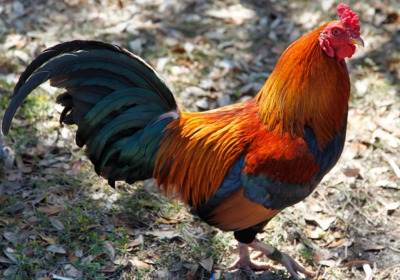
chx

ten feet of water

OIL IN WATER

Pam Lazos

Chapter Thirty-Nine

Three hours later, the Sea Witch’s belly had gone from four to fifteen feet below the water line as a result of its recently acquired load while the Ryujin sat that much higher. The deck hands fastening the fendering back to her side looked to Captain Reed to be no bigger than children. The Sea Witch was off, already moving upriver, while Captain Reed paced the deck, waiting impatiently for the arrival of the river pilot who would steer the Ryujin up the Delaware to the Marcus Hook refinery. The pilot was late and lateness was something Reed could not tolerate.

“Company, sir,” the first mate called.

A small water taxi, likely bearing the river pilot, was arriving. Captain Reed didn’t think much of river pilots on the whole, thought them a lazy lot, their navigational skills gone slack from disuse as a result of gliding back and forth on the same body of water – the epitome of a big fish in a little pond – but the law said that only the river pilots could take a ship upriver. The company that serviced the Delaware was run by an old codger named Lars Andersen. He was smooth and weathered like driftwood back when Reed met him fifteen years ago and despite his prejudices, Reed had come to like the man over time.

Captain Reed ceased his pacing to watch the water taxi’s approach. It pulled up close and tight to the Ryujin and a young man of about twenty-five reached for the rope ladder hanging down her side. Reed frowned and moved in to get a closer look.

➣➣➣

The water taxi bobbed on the water while Pilot Christian Anderson stood watching the swell of the waves, looking for an opportunity. The Ryujin rocked and jumped with the swell of the rising tide. The taxi was at optimal height and Anderson had a split second to decide: he grabbed for a middle rung of the rope ladder, Jacob’s ladder, and pulled hard. He threw one leg around the outside rope and hooked his foot inside a square. He grabbed another rung with his free hand just as the sea tossed the water taxi and the deck fell away. Anderson held on with ease, suspended along the side of the Ryujin , his strong, well-tuned muscles tensing and flexing under his own weight as he climbed the thirty-odd feet to the top. He swung over the side of the supertanker, dropping effortlessly onto the deck, and looked into the face of mocking disapproval.

“Who are you?” Captain Reed barked.

“Pilot Christian Anderson. At your service, sir.” He bowed his head slightly.

“Christian Anderson? Where’s Lars?”

“Dead,” Anderson said, watching Reed’s face. The eyes changed, but the face did not. No way of telling whether the Captain was friend or foe of his father since the man had equal amounts of both – one either loved or hated him – or whether he knew Lars even had a son. “Any other questions?” Anderson asked. Reed took a step back to better appraise Anderson.

Christian Anderson had been a pilot for about thirty-three seconds. Actually it had been three years, but only three weeks since his father died and he took over the family business. So far, he hadn’t been able to lose that sick feeling in his stomach that sometimes came with the weight of being in charge. He’d played the prodigal son for so long that he couldn’t get used to this new appellation. Still, that wasn’t information he was about to be offering up, especially not to this dickbag standing in front of him looking all smug and holier than thou. He’d had a hard enough time convincing the other half a dozen pilots his father employed that he was up to the task of running the business, and not into the ground , as he had heard them prognosticate under their collective breaths. This business would flourish in ways his father never had the foresight to allow. They’d see. They’d all see. Then he’d have something to flaunt. He gave Reed his own forthright appraisal, looking him over like a prized heifer. Reed’s icy glare forced Anderson to turn his own face away as if stung.

Anderson pulled out a small brown leather case and flashed his pilot’s badge, then shoved it back in his pocket; Reed put a hand on his arm to stop him. Anderson narrowed his eyes at the Captain, but pulled it out again, handing it to Reed for examination. Reed examined the license then the man himself before handing it back.

“He was your father then?”

Anderson searched Reed’s eyes for some glint of emotion, and finding none, figured it was simple curiosity that asked the question. Anderson nodded.

“When did he die?”

“Three weeks ago.”

Captain Reed made a small gesture, a slight nod of the head, turned on his heel and walked away. Whether it was meant as an offer of sympathy Anderson couldn’t tell. He stared after Reed in mute astonishment, his delicate, Swedish features turning momentarily to granite. And as the Captain turned the corner, Anderson decided it prudent to follow and sprinted after Reed.

➣➣➣

Hours later, the moon rose above the horizon at what might be considered warp speed in moon terms, bulging and engorged, a result of the last rays of the sun’s refracted light. As she climbed, she lost that overstuffed pancake look, shrunk down to normal size and simply became the moon once again, that giant, floating orb of light and beauty that possessed the mystical ability to control tides and sway men’s hearts.

Anderson, his hands set tightly on the joy stick, cast a glance up at the sky and relaxed his grip. To his right and behind stood Captain Reed, so close to Anderson’s shoulder that he could hear the man breathing although to Anderson it sounded more like a wheeze. The noise and Reed’s sheer proximity were unnerving.

“You know, you should have that looked at,” Anderson said.

“Pardon me?”

“Your lungs. It sounds like your breathing underwater.”

“I’d thank you to mind your own business .” Reed emphasized the word business and Anderson’s shoulders tightened. He couldn’t stop thinking about the messy state his father had left it in.

“I’m going down on deck for a few minutes. Try not to hit anything,” Reed said and left.

“Dickbag,” Anderson muttered. It was only a hundred and two-mile stretch of river from the Bay to the Marcus Hook refinery, but already Anderson knew it was going to be the longest hundred miles he’d ever traveled. And by night, no less. The thought sent a shiver up his spine.

Had he been given his way, the Ryujin would have waited until morning to depart, but the tide had reached high water mark and was on the way down and the Sea Witch had already taken off upriver. Reed had wanted the Ryujin to follow as soon behind as the Coast Guard would allow to take advantage of the extra draft room the high tide would provide. He was pissed, that bastard, that Anderson hadn’t taken off right away, but Anderson was adamant about inspecting the ship, acquainting himself with all her innermost workings. With so few solo trips under his belt and a business on the line, he couldn’t afford any screw ups. Mostly so he wouldn’t appear lackadaisical and just to shut Reed up, he agreed to leave when his inspection was complete. Unfortunately, by that time it was twilight.

Anderson came from a long line of sailors and sea captains, a nepotistic bunch of Swedes, brothers, uncles, and cousins who were all active in the business Anderson’s father had inherited from his own father. During early childhood, he spent many nights curled up in a sleeping bag at his father’s feet as his Dad piloted a ship upriver, listening to the low rumbling vibration of the boat, the last lines of his father’s bedtime story resonating in his ears. Except that those stories were much worse than the usual macabre of the Brothers Grimm or Hans Christian Anderson. His father’s stories were of sailors lost at sea; of monsters with terrible fangs and breath like fire; of mermaids that grabbed unsuspecting sailors off their ships and bore them down to their watery graves; of the sirens, lovely creatures that lured men too near the rocks with their songs and laughed as the waves bashed their ships against them, leaving the hapless sailors to drown in the melee. The stories had delighted and enchanted him and Anderson would look up to catch a last glimpse of his father standing behind the wheel, smiling at him as his child’s eyes became heavy with sleep.

Anderson’s head bobbed, touching his chest. He opened his eyes and for an instant, he was a boy again. He came to full consciousness, shocked with the realization that he had fallen asleep at the helm. There was no telling if it had been seconds or minutes. He blinked and rubbed his eyes, then shook himself like a wet dog, dispensing the sleepiness that had settled on him like drops of water. It had been three weeks since he’d had a good night’s sleep, haunted as he was by visions of the giant of a man he’d loved so in life.

He felt a hand on his arm and turned, half-expecting to see his father. He saw Captain Reed instead. Reed said nothing, the scoundrel, just turned and stood off to the side, staring out into the blackness in front of him, his hands clasped behind his back, the picture of urbanity. Anderson cleared his throat to break the silence and cast a glance back at Reed, the asinine bastard. He saw the Captain’s face out of the corner of his eye, baleful and unwelcoming. He glanced at the radar screen. The next three channel markers were well lit.

“So how long have you been a Captain?” Anderson asked. Safe ground.

“Longer than you’ve been alive,” Reed retorted.

Anderson rolled his eyes and puckered his lips, blowing air out slow and silent. The air in the control deck felt thick and clogged in sharp contrast to the breezy conditions on the river. Anderson moved his head from side to side, stretching the muscles in his neck. As the silent minutes ticked by, his mind drifted to his father’s last months when the Alzheimer’s had him fully in its grasp. How time must have blended together for him; his stubborn refusal to retire, even in his lucid moments. Was time really not linear, as the physicists said, and even more absurd, all happening at once? That one would wreak havoc on the history books.

Reed spoke, but Anderson missed what he said so Reed cleared his throat.

“Excuse me?” Anderson said.

“I said how long? Until we drop our load. How long?”

“What, you got a date?”

Reed didn’t even crack a smile, just gave Anderson a stultifying glare.

Anderson harrumphed. “A few hours give or take. It’s slower going at night.”

“I notice you don’t use the radar much,” Reed said.

“I use it as backup.”

Reed’s eyebrows shot up in query.

Anderson gave Reed a half-smile. “I’ve been traveling this river since I was a boy. I can tell you where every rock and shoal lies.”

Reed made a small grunting noise that originated in the back of his throat, and strode over to the radar screen. A light blipped on and off signaling the presence of something buried well below the surface out of the path of the Ryujin . He grabbed the weems plotter, a fat ruler with wheels, placed it on a line and rolled it down making a compass angle.

Anderson laughed.

“You think using a chart is funny?”

“Just laughing at the hardware.”

Reed raised his eyebrows, scanned the desk chart and then at the blinking radar screen.       “What do you think that is?”

“Nothing to be alarmed about?”

“How do you know?”

“The GPS says we’re right where we need to be,” Anderson said. “There’s nothing at that particular juncture big enough to cause injury to his boat.”

Reed snorted. His voice was so sedate that a small shiver ran up Anderson’s spine. “When was the last time you were on this river?”

“Three weeks ago.” Three weeks ago, Anderson’s father had died suddenly while at the wheel of a ship very similar to this, leaving his son to sort through the mess.

“If you know anything about rivers,” Reed said curtly, “you’ll know the last thing they are is static. Things change. How do you know that a boulder hasn’t rolled, or wasn’t just missed in the plotting, or a school bus didn’t drive off the side of the road and is now parked in our path, waiting to tear a large, gaping hole into the hull?”

Anderson sighed. “I don’t. But regardless of that nice little speech you just gave, river bottoms don’t change all that drastically. Besides, the Army Corps is always dredging this part of the river to keep the silt down so the channel stays open.”

A wry smile formed in the corner of Reed’s mouth; he turned back to the chart. “Under the Coast Guard regs, you might be temporarily in charge of this ship, but remember this, son,” Reed said. “I’m the Captain. Before, and long after you’re gone.” Reed eyed the blinking radar screen. “What’s that?”

Andersen checked the screen and scanned the dark horizon. He saw nothing. “A small speed boat, maybe? Or a fisherman still out on the water.” Thanks to Reed, he was growing a little nervous himself. The blip on the radar screen moved erratically, not a stagnant boulder half-buried in the sea bottom, that was for Goddamn sure, but something, and admitting it to this truculent son-of-a-bitch made him queasy.

“There’s been nothing reported in the last week,” Anderson said, trying to maintain an air of calm about him. “As far as the Coast Guard and the Corps are concerned, we’ve got ten feet of water between us and the bottom of the river. We’re riding anything but light. But we’ve still got the residual benefit of the flood tide even though it’s turned.” He glanced out the window at the bank of the Delaware and gave silent thanks for the red buoys. Red right returning . As long as the buoys were on the right, they were safely in the channel. He shook his head, trying to cast off the vibes of impending doom that Reed was scattering about the cabin like wildflower seeds and stole a glance at the imperial jackass as he moved the weems plotter over the nautical charts, its wheels squeaking like baby mice.

“Man, would you knock it off? You’re creeping me out.”

Reed gasped. Anderson turned in time to see Reed lunge at him. Reed tossed Anderson aside and wrenched the joy stick from his grip, and with it, the direction of the ship, slowly altering its course by forty-five degrees. But before Anderson could react, they heard it. The sound started out low, like a hum, and grew in volume until it became identifiable. A small water craft. The speed boat raced by and they both looked out the window in time to see the stern of the motor boat disappearing from view; the laughter of its occupants left behind, floating on the breeze.

“Goddamn kids,” Reed said.

A feeling of de ja vu overtook Anderson and he entered a place where time was no longer linear. He knew more than a few seconds had passed because the sound of laughter, mingled with the small boat’s engine, had receded into silence, yet he couldn’t say how long that took or what had transpired in the interim. He regained his presence of mind and looked to the river for reorientation. The buoys were on the left!

“Jesus Christ.” By instinct Anderson grabbed the joy stick, shoving Reed aside, and cut it hard, aiming the ship back into the channel. She turned slowly on her axis, a planet caught in the gravitational pull of her own sun. She spun slowly, a giant arcing whale, then resumed her forward motion, course righted. Anderson breathed a sigh as they passed the buoys on their way back into the channel. But relief was short-lived.

It was no more than a slight jolt, what one might feel when riding on a train whose tracks needed tamping.

“What the hell was that?” Reed demanded.

Anderson looked out at the river as they were clearing the buoys, then to the radar screen. Something was blinking, and he had just run over it, or through it, depending on what the hell it was. He rubbed his eyes, but the blip was still there. The two men eyeballed each other.

Anderson cleared his throat. “Why don’t you go check the water off the stern and see if we’re dragging anything,” he said. “The moon’s almost full. Should help you to see.”

“What the hell would we be dragging?” Reed sneered, his voice rising. “You hit something.”

“You mean we don’t you.” The palms of Anderson’s hands were beginning to sweat on the wheel, but he retained his outward demeanor.

“No, I mean you. You’re the pilot of this ship and…”

“And if you hadn’t thrown us out of the channel…”

“…if I hadn’t steered us out of the channel, we would have had a head on collision with a motor boat,” Reed bellowed, spitting as he did. His face had taken on a crimson hue and his eyes were bulging giving him a toad-like appearance. “And somebody would have probably died you stupid, idiotic…”

“That boat,” Anderson said, “was playing chicken with us, and you know it. A bunch of kids out joyriding. They knew enough not to take on a thousand foot ship. Trust me. They would’ve blinked.” Anderson was sweating now from the rush of adrenaline and sheer nerves.

“Go check the stern, dammit,” he barked at Reed.

Reed hesitated momentarily before scrambling out the door giving Anderson time to collect his thoughts. He reviewed the charts and saw what he was dreading. There, just outside the channel, was the topside protrusion of a large boulder that had likely been in that exact same position since the dawn of time, the kind that originated somewhere around the core of the earth and kept twisting and rising until it reached the top with just its tip peeking out. The sneaky kind. The kind that sunk the Titanic.

A shiver of fear ran down Anderson’s spine. It’s nothing. A small jolt is all. We bounced right off her. He gripped the joy stick tightly and clenched his teeth. He knew what a “small” jolt meant to a ship of this size and the kind of damage a boulder could do to a single-hulled vessel. The Ryujin was well past her prime, and although she paid lip service to the Coast Guard regulations, her body worked and reworked a dozen times trying to keep her up to the current safety standards, she stayed afloat not because of strict compliance with the law, but because of some damn grandfather clause. It was the lawmaker’s fault. A single-hulled ship had no business carrying millions of gallons of oil, yet it was done all the time since, the ship owners said, the cost to retire her and build a new doubled-hulled ship outweighed any potential environmental damage that a spill would cause. And the law said that until 2015, ship owners could continue to sail single-hulled ships no matter how many dead fish floated to the surface covered in oil.

➣➣➣

Captain Reed appeared half an hour later, looking flushed from exertion, but otherwise in good spirits, his normal dour countenance having momentarily shed its pinched expression. Anderson took this as a good sign.

“What d’ya find out?”

“Nothing,” Reed said. The briefest of smiles crossed his lips. “There is no damage to this ship.”

“You’re sure?” Anderson watched the man’s face carefully. After all, he didn’t know Reed from Adam, and now Reed held Anderson’s career between his two damn fingers.

Reed nodded. “Engines are all in working order, we’re not dragging anything, and we’re not leaking anything.”

“No sheen on the water? You looked?” Anderson asked. Reed nodded again. “How many times?”

“Three,” Reed replied. “Once at the beginning of my inspection and once at the end. And once in between. The oil is safely in the hold.”

Anderson nodded, uncertain. Whatever Reed may be, it was obvious he was a Captain foremost. He would not take kindly to any untoward incidents on the Ryujin while under his command although Anderson dimly suspected that Reed might be more concerned with the integrity of his ship than that of the Delaware River. Still, Reed’s environmental ethic was not Anderson’s concern right now. He sighed and looked out over the bow and beyond to the horizon hidden by night. Nothing much he could do but take the man’s word for it.

“Alright. Let’s get this baby to bed before she suffers another nightmare,” Anderson said. and bent to the task.

➣➣➣

The full moon was all but eclipsed by the stratus clouds that stretched out, in full battle regalia, across a winter sky. An occasional break in their ranks gave the casual observer the tiniest peek at the moon’s frothy demeanor, but the blaze of light she heretofore sent streaming down river before the Stratus’s moved into the neighborhood was gone, gone, gone. Too bad, too, for the fish, birds, flora, fauna, and various species of plankton that thrived in the river because they were about to get a rude awakening. Thirty feet below sea level, a ten-inch gash ripped through the hull of the Ryujin by an errant boulder had begun to widen, resulting in the unfortunate release of the contents of the ship’s hold into the river. The seemingly small quantity of oil leaking out at any given moment would, hours later, add up to one of the worst environmental disasters ever experienced on the Delaware.

On deck, the crew, Captain and Pilot of the Ryujin were oblivious to the danger. As they headed north, the oil headed south and without the moon to light her stern-side, the crew would not see so much as a flicker of a sheen on the black night waters.

Of course, the Stratus’s did not move into town alone. They brought with them the North Wind and He, coupled with the outbound tide, pushed that pure, Arabian crude down, down, down toward the Bay, catching the whole hundred-mile stretch of that beautiful river unaware.

 to be continued.  . .

to get up to speed with what happened before start here

copyright 2012

enough to poison

OIL IN WATER

Pam Lazos

Chapter Thirty-Four

Kori sat at the computer feeding labels to the printer. Gil ran down the stairs, Max fast on his heels. The basement air which filled the room like a cumulous cloud parted, making room for their testosterone-laden, electro-energy. Gil bounded over to Kori and peered over her shoulder.

“Whatcha’ doing?

“Making address labels.”

“It looks like the letters are marrying.”

“What do you know about marriage?”

“Mom and Dad were married.” Kori reached out and grabbed Gil around his waist, pulling him in close for a hug.

“I’m bored.” Gil said.

“Why don’t you guys go outside and play?”

Gil sighed and Max yawned exposing a full and threatening set of teeth.

“Guess not,” Kori said. “I know. Why don’t you invent something.”

Gil looked to Max for approval. Max yawned again and sprawled on the carpet. Gil shook his head at Kori, dismissing the plan. “What else?”

Kori scrunched her nose in contemplation. “Why don’t you go outside and help Jack,” she said, smiling to herself. Gil looked at Max who wagged his tail at the mention of Jack’s name, but made no sign to go.

“Okay,” Gil said, and Kori released him. “C’mon, boy.” Gil snapped his finger at Max and the pair ran up the stairs, disappearing over the horizon of the top stair.

 ➣➣➣

Jack lay on a creeper under Kori’s car, his feet sticking out the side. At least under here, the infernal wind wasn’t so bad. He’d already replaced the rotor cups and pads, and was moving on to an oil change, a simple enough job, but for the below freezing temperatures. He rubbed his hands together to warm them before loosening the nut on the oil pan.

“Hey, Jack. Whatcha’ doin’?

Startled, Jack clunked his head on the oil pan. He rolled out to find Gil, squatting at the front tire. Dressed in a down parka and wearing a hat with little jingly bells hanging from three triangular flaps, Gil looked like an elf. Max sat beside him wearing a pair of reindeer antlers.

“Don’t you know not to sneak up on people like that?” Jack rubbed his head where metal had hit flesh.

“I wasn’t sneaking. Sneaking is when you tiptoe and go shhhhh, shhhhh, shhhhh. ” Gil demonstrated, putting his index finger to his lips.

“Kori told me to come out and help you,” he said, finger still at his lips.

“If Kori wants her car finished this century, you better do something else.”

Jack pursed his lips in irritation and rolled back under the car. Gil squinted after Jack’s dark form, still pleading his case.

“But you said I could try it,” he whined. “You said the next time you worked on the car I could go under with you.”

“In a minute, Gil. Just let me get this — oh, man.” Wheels on macadam followed a sloshing sound and the glug, glug, glug of oil being loosed. Moments later the oil pan clanked to the ground. Jack emerged, sliding past a still squatting Gil.

Gil giggled and covered his mouth.

“Shut up. If you say one word I swear to God…”

Gil handed Jack a rag lying on top of Jack’s tool box. Jack grabbed it out of his hands and began to swab at least a cup of oil out of his viscous, gleaming hair. He laughed despite himself.

“Did you know that a single quart of oil is enough to cause a two-acre sized oil slick on the surface of the water? Do you know how big an acre is? A little more than 43,000 square feet. So that would be 86,000 square feet worth of oil slick.” Jack listened with half an ear while he rubbed, trying to absorb the clingy liquid.

“And as you are currently demonstrating, oil is not easily removed from hair, let alone say cormorant feathers or seal fur. And not only that. It kills the aquatic organisms that the fish live on. You know how? It chokes ‘em. Binds up the oxygen and then they can’t breath.”

“If you’re referring to the oil I just spilled, let me assure you of two things. One – most of the spilled oil is in my hair. The rest is safely in the oil pan. And two – I don’t think there are any cormorants or seals for some miles from here.”

“But it’s not just that. Did you know that a single gallon of oil is enough to poison a million gallons of freshwater? Do you know what a million gallons of freshwater is? It’s a supply big enough for fifty people to drink and bathe and cook with for a whole year.”

Jack grimaced and poked a corner of the rag in his ear, soaking up drips of oil.

“And even though much of the earth is covered with water, only one percent of it’s potable. You know what potable means, right?” Gil said.

Jack nodded and rolled his eyes. The oil in his ear was slick and evasive, covering his skin like it was a second one.

“And even though we only need to drink about two to two and a half quarts of water a day, we each use about a hundred and twenty-five to a hundred and fifty gallons a day for all the other stuff. Very wasteful. About forty percent more than necessary, I think.” Gil stared at him, wide-eyed. “I’d be willing to give up baths to save water, you know.”

Jack rubbed the oil-stained rag roughly over his head and gave up. “What are you, the Encyclopedia Britannica?” He threw the towel to the ground and sighed. “Let’s take a break. Get a drink while we’re waiting for the last of it to drain. So we can be quite certain I’m not further contaminating our precious water supply.”

“Yeah, because fragments of those little spilled oil spots on driveways and roads can also end up in our water supply. When it rains it gets washed into the storm drains, and when it rains really hard, into the combined sewer outfalls which empty into the river. You know what that means, right? Sewer and rainwater together. That’s really gross.”

“Are you done now?”

Gil stood up, extending his hand to Jack. Jack grabbed the proffered appendage and allowed Gil to pull him to his feet. He rubbed his greased stained hands on his pants and together they walked inside.

 to be continued. . .

to read before, make a wish and click here

copyright 2012

trash into gold


OIL IN WATER

Pam Lazos

Chapter Thirty-Two

Weeks after Avery’s visit, a shiny silver oil tanker sat positioned to fill the underground holding tank at Cooper’s Service Station. Water droplets ran in impromptu lines down the windshield. The driver grabbed his clipboard, jumped down from the vehicle, and throwing his hood over his head, strode to the office through the misty fog. He burst through the door into the office, a futile move since he could see through the glass that no one was in there. He scanned the garage floor, his eyes settling on the closest mechanic, Tom Johnson, only three days on the job. The driver approached with long, unhurried steps that belied his impatience.

He wasted no time with niceties. “Cooper here?”

“He stepped out for a sandwich.”

“Business off or something?”

“No. I don’t think,” said Johnson.

“What d’ya’ mean, you don’t think?  I ain’t been here for two weeks. You should be bone dry, but you still got a lot left.”

“Got some yesterday,” Johnson said.

The driver furrowed his brows, annoyance creeping across his face. “Jesus Christ. How many times I have to tell that guy? Listen you. This is the third time I’ve been out here and the third time…” The driver doffed his hood revealing a pair of menacing eyes.

“Who is it? Exxon? Texaco?” He rubbed his hand over two days of stubble. “Chevron?”

“I have no idea what you’re talking about.”

The driver took a step forward. “I got better things to do than come here every week for no reason,” he said, looking like he might throttle Johnson, clipboard and all.

Johnson took a step back. He was suddenly and acutely aware of the sheer volume of sound at his back, the whir and hiss and clink of the body shop, all stations in use, Mr. Cooper’s half-dozen motor heads fully engaged in their work. This guy could pummel him to a bloody pulp and no one would notice or hear a thing until they stepped over him to get to the free coffee which was now feuding with the breakfast burrito in Johnson’s stomach.

“Look, I just started three days ago.” Johnson turned to the room at large looking for support, but every last man had his head in or under a hood, engine, or wheel base.

“Sunoco? Getty? Who is it? I at least have a right to know?”

“I don’t know his name…” The driver stepped so close that Johnson could smell the man’s coffee breath.

“I’ll ask it slow so you’re little pea-brain can register it. What – is – the – name – of – the – company – that – delivered – here – this – week?”

“There was no a company. It was a guy. And I told you, I don’t know.”

“Then who’s he work for?”

The driver’s eyes narrowed and he moved even closer. In addition to coffee, Johnson now identified the distinct smells of petrol and body odor. Johnson flinched, cleared his throat.

“He doesn’t work for anybody. He’s just a kid makes oil is all.” His voice cracked. The driver was too close.

The driver furrowed his brow, lost in thought.

Johnson caught a movement on the periphery of his vision and turned to see Jim Snyder, the Assistant Manager, speed-walking toward them.

“Can I help you?” Snyder asked the driver.

“You tell Cooper he’ll be hearing from Akanabi.” The driver turned on his heel and stomped out the door into the rain.

“What the heck was that about?” Snyder asked. Johnson demurred, shaken.

“You have no idea?”

“That kid that brings the gas and oil. Who is he?” Johnson asked.

“No one for you to worry about.” Snyder walked to the office and looked over the papers on the desk, shifting them around. He walked back onto the floor, empty-handed.

“Where’s the invoice?” Johnson said nothing.

“Did he even fill the tanks today?” Snyder asked, more harshly then Johnson thought appropriate.

Johnson nodded. “Yeah, but I guess not much.”

“Do you know why?”

“He said they didn’t take much.”

“What did you tell him?”

“Nothing. Just that some kid brings some gas and oil sometimes.”

Snyder’s face bloomed and he sputtered, “You told him about Avery?”

Tirabi. That was it. Johnson coughed. “What was I supposed to say?”

Snyder eyed him up. “All right,” Snyder said, as Mr. Cooper crossed the threshold to the shop. “Get back to work. I’ll take care of it.”

 ➣➣➣

Johnson returned to his station, trying to look busy – he was almost done retrofitting some new brake pads – but his eyes kept drifting to the scene in the office with Cooper gesticulating like crazy and Snyder alternating between grimacing and nodding his head. Mr. Cooper appeared more resigned than indignant. Perhaps he’d keep his job after all. The thought was quickly replaced by the next thing Johnson saw.

Avery Tirabi was pulling into the parking lot just as the giant tanker was pulling out. Apparently, the driver didn’t care that Avery had the right-of-way and pulled out across two lanes of traffic right in front of Ruth’s minivan. Both Avery and the driver slammed on their brakes, a near miss, and proceeded to yell and lean on their respective horns. After a full minute of this, with cars backing up behind Avery on the highway, the driver put it in reverse giving Avery enough room to squeeze into the parking lot. The driver flipped Avery the bird as he drove by and Avery responded in kind.

With the diligence of a worker bee, Johnson buried his head and shoulders beneath the wheel base, too nervous to even peek.

 ➣➣➣

“Hey, Mr. Cooper,” Avery said. The door rattled shut with a bang and a jingle.

“Avery!” Mr. Cooper looked up with a start. He hadn’t seen Avery coming, engrossed as he was in Snyder’s story, and felt like a kid with his hand caught in the cookie jar. He cleared his throat and ran a hand over his eyebrows, hoping to hide his embarrassment.

“You okay?” Avery asked. Cooper nodded and smiled.

“Fine. Fine. Bit of a headache is all. Glad you’re here, son,” he said, motioning to a chair. “Sit down.” Avery obliged, first extending a hand to Snyder in a show of both manners and adultness.

“Look, Avery, I’m gonna be honest with you. We may have a problem.” Mr. Cooper stopped, weighed his words, wondering if the kid’s self-possession could withstand this potential pitfall. “That Akanabi Oil guy that just left? He was pretty P.O.’d.”

“Why?”

“Not much of a delivery. He wanted to know who the new supplier was.” Mr. Cooper walked over and poured a cup of coffee which he handed to Avery. Avery shook his head at the tar-like substance so Cooper drank it himself.

“Did you tell them?” Avery’s voice quivered slightly.

“No. He talked to one of the guys on the floor. Snyder and I are the only ones with that information.” Cooper sighed and sat down. “Likely the driver’s gonna call dispatch and tell them it’s the third week in a row we had a sub-standard delivery. He’ll recommend canceling us because we got another supplier.”

“Do you?”

“No.”

“Well, we’re almost out,” Avery said.

Mr. Cooper stared out the window. The rain had stopped and the sky was clearing. A slow smile spread across his face. He looked blankly at Avery, took a sip of his coffee and cleared his throat. “Too damn hot,” he said to himself. He rolled his ailing tongue, massaging the burned spot, and sat down at his desk.

“Avery?” Cooper said, smiling again. “What if you supplied me?”

“Me?! I can’t. I told you, we’re almost out.”

“Well, how about making some more? I’d take all you had. I’m not the biggest station in town, but we’re busy enough.” Mr. Cooper looked out the window: six pumps out front, all with cars in front of them at the moment, one in back, just for shop use. He grabbed a sheet of paper and pencil, did some quick calculations and pushed the paper at Avery.

“This is how much you’d gross if you could supply me weekly. I don’t know what you’re overhead is or how much the raw materials cost, but even so, it’s a pretty number, eh?” Avery bent his head to look at the paper and his eyes grew wide. Mr. Cooper smiled. Apparently Avery thought the number very pretty as well.

“I don’t know, Mr. Cooper, I…”

“Look. I’ll take all of what you got left. And in the meantime, think about my offer.”

“But Akanabi…”

“Akanabi doesn’t know anything. They’re probably dropping us even as we speak.”

“But what if someone finds out we’re not a real company?”

“No one’s gonna find out. We can arrange pick up at night, after hours, whatever you want.”

Avery furrowed his eyebrows. “Well, I don’t know…”

Mr. Cooper continued. “Don’t worry. The guy that left here today thinks we got a new supplier, not some sixteen-year old kid who invented some damn machine turns trash into gold. He’s not gonna come lookin’ for you, I’m tellin’ ya’.”

“But somebody came looking for us. And they know where we live.”

“Avery. Your father’s been working on that machine for over twenty years. And he told a lot of people. Hell, I even knew about it.”

Avery took a deep breath and folded his hands on his lap.

“Just think about it. If the answer’s no, I can get a new supplier in a couple hours.”

“I’ll see what I can do,” Avery said. He shook Mr. Cooper’s hand before leaving. Cooper and Snyder watched him walk to the car.

“Do you think it’ll be okay?” Snyder asked.

“I hope to God, so,” Mr. Cooper said, as Ruth’s minivan pulled out of the parking lot and onto the road.

 to be continued. . .

to read what came before jump here. . .

copyright 2012

like war orphans

OIL IN WATER

Pam Lazos

Chapter Twenty-Four

On the eve of Robbie’s departure, the party at the Tirabis’ had been seven days in the making and it showed. There were kids everywhere, the youngest, a ten-year old girl named Arianna who lived across the street, and had snuck out of her bedroom window to see Gil, her secret crush. They’d been palling around all night, hanging together on the tire swing and talking about “stuff.” Gil tolerated her attentions with more than the modicum of interest he reserved for family members and appeared to be enjoying himself until Arianna tried to hold his hand. Rattled, he mumbled something about forgetting to feed the fish, ran inside and locked himself in his room for the duration of the evening. Robbie checked on him around 10 o’clock, picking the lock with a dexterity indigenous to burglars and jewel thieves, and found him lying on his bed, fully clothed and dead asleep. No amount of nudging would rouse him so Robbie removed Gil’s shoes and turned off the light.

For her part, Aunt Stella sat in the kitchen like a sentry on her watch, guarding the troops, restocking and rearranging the platters of food, and looking for signs of unruly visitors. When the cops came, drawn by complaining neighbors, Aunt Stella sent them packing, a meatball sandwich in one hand and a baggie full of her homemade goodies in the other.  She and Avery had spent every day after school huddled together in her kitchen, churning out cookies by the hundreds, along with appetizers, salads and sides, tireless kitchen warriors armed only with whisks, spatulas and carving knives.

But now, at 11 o’clock, Aunt Stella was feeling the pull as she wearily collected the night’s refuse.

Robbie burst in as if escaping. “All this talking and hugging and girls crying. I’m starving. Anything left?” He peered under the lids of the various crock pots lining the counter, savoring the aromas in each. “I haven’t eaten a thing since lunchtime,” he said, spearing a meatball with a plastic fork. He popped it in his mouth and slumped against the counter, eyes closed, chewing.

“What do you want? Pork, chicken, or meatball sandwich?” Aunt Stella asked.

“One of each,” he said. He grabbed her around her substantial mid-section, picked her up and squeezed her.

Aunt Stella blushed, at a loss for words. “Oh my.”

Robbie set her down and kissed her on both cheeks.

“You’re the best, Aunt Stella. Thanks,” he said, waving a hand over the mounds of food still crowding the counter. He grabbed a plate and made a sandwich. “For everything.”

“What about this plastic ware?” she asked, holding up a grimy spoon. “Shall I wash it?”

“Nah. What for?”

“I was thinking of your mother and how that would probably be something that would happen in Ruth’s kitchen,” Stella answered.

Robbie’s face changed, but he kept chewing. “Fair enough,” he said, mouth full to capacity. “In honor of Ruth.” He stuck a used plastic fork in the dishwasher.

Aunt Stella loaded the cache of utensils awaiting dispensation from the sink into the dishwasher. “In honor of Ruth,” she said. She closed it, turning her attention to the disarray of the dessert tray on the table, less to restore order than to avert her watery eyes from Robbie’s careful gaze. When she had regained her composure, she said. “This is your two-hour warning. At one o’clock, the entire lot of them in the backyard are going to turn into pumpkins. That means I want to see them getting in their cars and heading home. Those that can’t drive can sleep down there,” she said, indicating the basement. “And if anyone thinks there’s going to be any funny business, they better think again. Cause Aunt Stella’s on patrol.”

She smacked Robbie’s arm and shuffled off to the living room to catch the 11 o’clock news and a catnap before her next shift began.

➣➣➣

The next morning, Robbie rose at four so he could shower and collect his thoughts before his ride arrived. At six a.m., a car horn beeped. They were all sitting in the kitchen again, drinking warm beverages to fight the chill of the coming loss. Robbie gathered his brothers and sisters to him, one by one, enveloping them in his large, bear-like arms before collecting his things.

He climbed in the back seat, rolled down the window and patted his heart twice while the rest of the Tirabi’s stood on the front porch, waving, holding each other like war orphans. Robbie watched them watching him as the view diminished and the space between them stretched out into infinity.

copyright 2012

to be continued. . .

to read what came before jump here

this stuff’s not normal

Oil in Water

Pam Lazos

Chapter Twenty

When they arrived home four hours later, Kori was pacing the kitchen, mad as a wasp and she circled them just as succinctly.

“Where the hell’ve you been?” she demanded of Avery. “And what the hell do you think you’re doing driving Mom’s car? With Gil in it, for God sakes.”

Avery didn’t answer. He walked to the side of the van and slid the door open to reveal the prone body of the newest Tirabi. Gil ran to Kori’s side, grabbing her hand and pulling her over to the van for a closer look. Kori’s face contorted when she glimpsed what was in the back seat.

“Oh, no. No way! We’ve got enough to take care of. She shook her head, refusing to look at the animal.

“Kori, please! Max’s hurt and he’s got nowhere to go.” Gil begged.

“Max! You’ve named him already?” Kori demanded. Gil nodded. Avery looked the other away. “Who’s gonna walk him? Feed him? Pick up his poop?” Kori asked.

“I will,” Gil responded.

“You? You can’t even take care of yourself.”

“Hey, shut up! What’s the matter with you?” Avery said. His eyes smoldered in Kori’s direction, but she met his gaze with equal force.

“We don’t need another dog. I’ve got more than I can handle now.”

“But we do,” Gil protested. “For protection and stuff.”

“No. What we need is for you to get this… thing out of here. Now.”

Gil stomped his foot like an angry colt and stared at his sister. “I hate you, Kori!” He ran to the house and turned, hand on the doorknob, eyes alight with a vortex of unexpressed emotions. “You killed ZiZi, and now you’re going to kill Max, you, you…dog-killer!

He stormed into the house slamming the door so hard the glass rattled in its pane. Avery snorted and shot her a look of disgust before striding into the house after Gil.

Kori stood immobile in the driveway, her breath coming in short quick bursts. Overwhelmed with the weight of her decisions and the lives that depended on them, she dropped to the ground, hung her head in her hands and cried, letting the panic of the last few months gush out like water from an open hydrant. Spent, she stood and braced herself, then walked over to Max who was licking his wounded hip. She sniffed the air and retreated. Max hadn’t had a bath in a while. She reached out a tentative hand and touched the matted fur. He ceased his ministrations and raised a cold nose to her hand which she grabbed reflexively.

“I can’t take care of you.” She tugged his nose and gave it a pat. “I’m sorry.”

A low, piercing moan emitted from Max’s larynx followed by one of a deeper and more menacing pitch through the living room window. Kori looked up in fear. She’d heard that sound before and it could only mean one thing.

“Oh, no.” She ran inside to find Gil on the living room floor, kicking and thrashing at his invisible demons. Avery, responding to the same guttural sounds, ran down the stairs, and seeing Gil’s violent explosion, sprung over the bannister and into the living room with one movement. A flailing Gil threw himself into the leg of the coffee table, banging his head with a whack. Kori stood watching, open-mouthed and helpless.

“Don’t just stand there,” Avery shouted. “Help me hold him.” Avery straddled Gil, restraining his shoulders and turning him on his side. He talked in the soothing tones reserved for a skittish animal. “It’s alright, buddy. You’re alright. Just relax.”

Gil was unresponsive and unwittingly tried to break free of Avery’s grasp, rolling his shoulders and kicking his feet. His eyes fluttered open for a brief instant, then closed to half-mast. He rocked and bucked while Avery sat astride him like a rodeo cowboy. Kori dropped to the floor, entranced by the spectacle.

“Noooooooo,” Gil yelled to the room. “Nooooooo.”

“Kori, Goddamn it. Help me get him on his side,” Avery shouted as Gil wrenched from his grip. “What the heck’s the matter with you.” Kori snapped to life and crawled to them. Gil threw his arced arm into the air and it hit Kori square in the head, knocking her to the ground and taking her breath away. She lay there stunned. Avery wrestled with Gil and spoke to Kori without turning.

“Are you alright?” Kori did not respond. Gil was getting the upper hand in the struggle and Avery couldn’t afford to stop and look at her. “Kori! Are you alright?”

“Yeah, I’m alright,” she said, rising to her knees. She rubbed her head and winced.

Avery had Gil on his side with Gil’s arms locked on either side by the sheer force of Avery’s leg strength. At each attempt to move, Avery clamped tighter. He turned to see Kori kneeling at Gil’s feet.

“Bend his upper leg,” Avery said. She looked up at him with pale, unseeing eyes so he explained. “For circulation.” She nodded, her usually sanguine complexion gone white.

“Get me a pillow,” said Avery. “And a towel.”

Kori threw him a couch pillow and ran to the kitchen for a dish towel. Avery wrapped the pillow in the towel and put it under Gil’s head. Gil had fallen asleep and was snoring. He choked, then coughed, interrupting the sonorous rhythm. Spittle mixed with phlegm ran out of the side of his mouth onto the dishtowel. After a few more cacophonous moments of coughing and throat clearing, he lapsed back into a deep sleep, the snoring marking his passage.

“Go call the doctor,” Avery whispered to Kori.

She didn’t move, but watched Gil sleep, his breathing in rhythm with her own. Avery snapped his fingers in her face. She stood and wobbled to the kitchen holding her head as if she were the one that just had a seizure.

Avery relaxed his leg grip. Gil snored and shifted positions, but did not wake. Avery rubbed Gil’s back in long, slow strokes and spoke softly to him. “It’s alright, buddy. I’m here.”

Kori returned after several minutes, more composed. “The doctor said if he’s sleeping, just let him be and to move anything he could bang his head on in case he has another attack.” Kori moved the coffee table, one end at a time, out of harm’s reach. “He’s sending an ambulance.” She grabbed a blanket off the couch and draped it over Gil. “Maybe he’ll sleep it off.”

She slumped down next to Gil and rubbed his head. “Did he take his meds today?” Avery nodded and Kori ran her hands tenderly through Gil’s hair.

“I’m sorry I was so useless. I never did this before.”

“What?! How is that possible when you live with an epileptic?” Avery asked, staring.

“Mom or Dad was always there,” she said. “They always told me to go away.”

“They never did that to me,” he said. “I think I was eight or nine the first time I saw him do it,” Avery said, no trace of malice.  He released his leg hold on Gil whose snoring had reached epic proportions, and sat, cross-legged behind his brother.  He grabbed a pillow off the couch and propped it behind Gil’s back, then laid down behind him.

“You can go. I’ll stay with him,” Avery said.

Kori shook her head. The whole episode had rattled her more than she cared to admit, but she sat down anyway. “I’ll stay, too.” She tucked the blanket under Gil’s chin.

“Avery, what were you thinking taking Mom’s car? And that…. ” she nodded in the direction of Max outside.

“I took a look at the checkbook. I know it’s not like you said. We need money, Kori.”

Kori folded her hands to hide the fact that they were trembling.

“Hey. It’s not your fault,” Avery said. “Just bad luck. I mean, how many kids our age have gone through half the stuff we’ve been through in the last two months. This stuff’s not normal.” He said the last bit with an air of authority that made Kori burst into giggles.

“What’s so funny?”

“I don’t know. Nothing. Everything.” She sighed and turned her neck from side to side, working the kinks out. “You’re right. We do need money. But you can’t work for it. You need a scholarship…”

“Stop, already. You’re not telling me something I don’t know. It’s just that if we starve to death, I’m not going to be able to make much use of a scholarship, will I?”

“Don’t be ridiculous. We’re not going to starve to death.”

“I know that. But we could lose our house. And maybe get split up. What would that do to Gil?” They looked in unison at their brother.

“The house is paid for. They bought it outright with money from one of Dad’s inventions. We’ll always have a place to live.”

“Yeah, but we’ll soon have taxes to pay. And then there’s everything else.”

“I’ve got some new clients. Robbie said he’d send money. And we should be getting the insurance money soon. As soon as they finish the investigation…”

“I wish they would have planned better,” Avery said.

“They probably thought there was time.” Kori said. “All Dad needed was one big invention….” She ran a finger up and down the carpet pile, a sad, strange look on her face.

“There’s thousands of dollars sitting out back,” Avery said. “It could hold us over.”

Kori walked to the window. The landfill sat off in the distance shrouded by trees. Patches of corn, grown in rotation to keep the soil healthy, dotted the landscape. A dozen dairy cows walked single file along a fence playing a game of follow the leader. “We can’t be sure that it’s not all connected, Avery. The porch. The oil. And if it is, we’ll put ourselves in danger again.” She stared out the window. Choice had immobilized her.

“No we won’t. I’ll limit my sales to one customer.”

“No,” she whispered, kneeling down next to him. Gil snorted, but did not wake.

“We’ll figure something else out.” Kori smiled, hoping she appeared confident. “We’ll wait. Something’ll come along. You’ll see.” She smiled and squeezed his hand.

“Alright,” he said. “But in the meantime, can I drive?

copyright 2012

to be continued. . ..

to read what came before click here