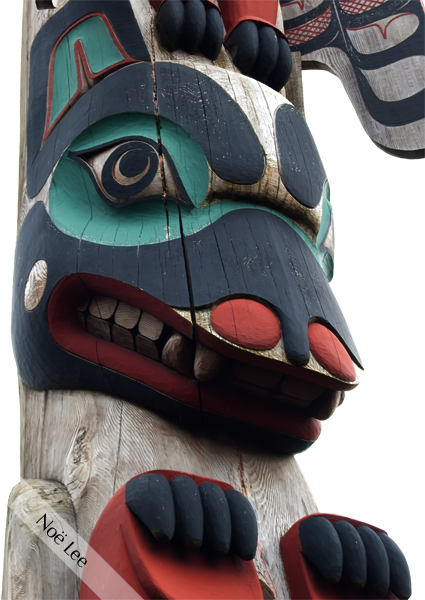
inside the bear’s mouth

OIL IN WATER

Pam Lazos

Chapter Thirty-Three

Avery stood at Marty’s drafting table, pouring over drawings of the TDU, matching up the drawings with the real thing. At ground level, the outside of the TDU’s receiving station looked like a gigantic child’s play chest. Sliding metal doors opened and disappeared within the grated metal exterior framework – the classic European pocket door – to reveal a cavernous opening that funneled trash to the giant cylindrical tank housed below ground. With this design, Marty had been able to back his tractor right into the barn and utilizing the trailer’s hydraulic lift, pour the trash directly into the yawning mouth of the cylinder.

Marty’s TDU was a democratic machine, treating all trash equally as long as it was carbon based. Once inside, the trash was mixed with water to create a slurry, an insoluble, goopy mess. The slurry passed through a pipeline to a holding tank where it was heated under pressure until it reached a reaction temperature. Another pipeline, a third unit, also cylindrical – Marty Tirabi was fond of circles – ferried the slurry along to where it finished its initial reaction and was flashed again. Here the gaseous products were spun off, the pressure lowered, the liquids separated from the volatile chemicals. Marty built a series of interconnected pipelines placed one on top of the other, some at 90 degree angles of each other, a steel matrix within which to house the myriad and varied reactions occurring. Step five was another series of thinner cylinders, three in a row, tall and demure, sitting side-by-side like young girls at their first dance, waiting to be asked. But size was no indication of their strength. In these cylinders Marty heated the mixture, separating water from gas from light oils which led to the final stage, two large, squat holding tanks where Marty intended to store the gas and light oils. Even staggering the six stages of equipment at forty-five degree angles of each other, the prototype was huge and encompassed the entire back wall of the barn.

Avery sighed and flopped down at the drafting table. Marty had said there was a problem with water. Was it too much or too little? Avery couldn’t remember. Gil knew, but damn it, he wouldn’t help. Avery was on his own. And with at least two dozen blueprints, this was going to take a while. Maybe a little meditation was in order.

Avery practiced meditation in fits and starts. When he did, a wonderful clarity always ensued, imbibed with an acute awareness of being in the present. And the help always came with it, fecund and unbidden. From where it came, he really couldn’t say. Probably the universal mind, the brain trust, as he referred to it. From ions, or static or electricity. From nowhere and everywhere. He knew at times he’d tapped into the morphogenic field where ideas were traded like stocks on the NASDAQ, the theory being that if a monkey in Costa Rica learned to drive a car, a monkey on the Rock of Gibraltar could do the same without even meeting the Costa Rican monkey. Or perhaps he’d tapped into the Zero Point Field, that eerie, brave new world where discoveries were deposited in the cosmic bank account, waiting to be withdrawn by anyone holding a debit card. He’d read plenty on comparative religion, and had a few surreal experiences in his lifetime, enough to recognize the signs of a downloading from the One Mind when he felt it, which he rarely did. But Gil made regular withdrawals, engaged in constant conversation, slept with it under his pillow. For Gil, change and enlightenment were the same, immediate and visceral, played out physically each time he had a fit or an idea.

For the rest of the world struggling to catch up, the only acceptable change was a gradual climb up a low-grade mountain, the steps laborious and slow. And morphogenic field or not, it still took time for all the other monkeys to accept their new knowledge. Even if they could do it, did they want to do it? Even if he could fix this invention – something he didn’t have a whole lot of faith in at the present moment – Marty had said it would make the world stand on its head. Was the world ready for such a precarious position? Come to think of it, was he?

Avery needed Gil’s fertile mind where you could plant the seed and days or weeks later the answer sprung forth like Athena from Zeus’s head, in full warrior regalia, engaged and ready for battle. Gil’s epilepsy fueled his creativity; the disease forced him into the Zone where he was working out some serious past-life crap. Avery felt helpless at these times, but appeased himself with the thought that you can’t work someone’s karma out for them, a fact that at the tender age of ten, Gil completely understood.

“Gil.” Avery walked to the living room and shouted for his brother. “Gil!”

A muffled, “he’s in his room” wafted up from Kori’s corner of the basement. Avery nodded a thanks that she couldn’t see and went upstairs to find Gil.

He rapped on the door – the music was so loud the door handle was vibrating – and stepped into the room. Unless Gil was hiding under the bed, he wasn’t here. Avery checked the closet – sometimes Gil liked to hang out in the back of it with a flashlight and pretend he was a secret agent or something – then under the bed. He took a peek out Gil’s window. A light was on in the barn, even though it was broad daylight. Gil hard at work . He shut off the stereo and headed for the barn.

➣➣➣

The wind whipped across barren fields where only rolled bales of hay remained. The oak trees swayed and heaved in fits of laughter as the wind rose up, intertwined with their naked branches and whispered secrets only the oaks could understand. Avery took inventory. All healthy, thank God. A couple dozen were in striking distance of both the barn and house. He’d hate to see the damage one rotten tree could cause in a windstorm like this.

He touched the bear totem pole rooted to the ground, facing the barn. It was six feet high, a hundred feet from the barn’s entrance; its eyes saw all who moved through those doors. Marty had carved it out of a tree gone rotten at the base after Gil had noticed it swaying in a windstorm much like this one.

Marty relayed the information to Ruth who, noticing the swing set was in the probably trajectory of the tree should it fall, called a tree service. The tree service couldn’t come for two days. Ruth told Marty to leave the tree alone, that if it hadn’t fallen by now, it wasn’t going to fall in the next two days, and left on an errand.

But Marty couldn’t leave anything alone, especially a rogue tree, threatening him through his barn window. Ruth’s tire tracks weren’t even cooled before Marty got out the ropes and chain saw. The whir of power tools called the kids to the backyard, but Marty banished them to the deck, more than a safe distance away, until he was done with the felling. After that, it was all fun and games. The kids played happily on the fallen log while Marty used his chain saw on the part of the tree still in the ground and routed out the finer stuff. When he’d finished, Marty had transformed his enemy into a vigilant friend, the coolest totem pole the kids had ever seen. One paw rested on the bear’s stomach as if he’d just eaten lunch. His mouth was open, exposing healthy, yet deadly incisors; his eyes were wide as if he’d just spotted something. Marty let Kori paint the eyes and claws and big scary teeth all white, and when it was dry, he let the kids crawl all over it, something they still did years later whenever they hung out in the backyard. Avery smiled and rubbed his hand inside the bear’s mouth. For luck.

Avery tapped lightly on the barn window. Gil threw the dead bolt and waved him in. Avery dropped the roll of Marty’s drawings on the table and removed his coat while Gil closed and locked the door behind him.

“Toasty in here,” Avery said. Gil had the space heater cranked up and it felt like a kabillion degrees in the barn. “Why don’t you wear a sweater like most people do in cold weather and then you won’t need the heat to be so high?”

“Cause I wanted to wear my lizard shirt.” Gil looked down at his black t-shirt with the lizard face on it and smiled.

“What’cha got going on here?” Avery asked.

“Building something,” Gil said.

“I see that. But what is it?” To Avery, it looked like a souped up go-cart. He walked over and surveyed the frame and held a tentative hand out to touch it. The frame proved incredibly durable. “May I?”

Gil nodded and Avery stepped up on the floor board, testing the weight load by jumping up and down on it.

“Come here. I’ll show you.” Gil pushed Avery’s own drawings aside and peered over a stack already open on the drafting table.

Avery sifted through them, his excitement growing. “It’s a hybrid engine? Are you using technology that’s out there or is this something…?”

“New. Dad says you can’t talk about something until you finish or you lose the muse. So I can’t talk about it.”

“You have a muse? Who is it?”

“You know. A pretty lady. Sometimes she sings.”

“What’s her name?”

“She never said.”

“Is she real or you made her up?

“Real.”

“How do you know?”

“Because I just know. She comes at night. Sometimes she whispers ideas in my ear or if I’m stuck on something, she helps me solve it.” Gil looked down at his hands and turned them over, inspecting them. “Sometimes she just holds my hand. She says they’re soft.” Gil smiled sheepishly. Avery snickered, but turned away before Gil caught him.

“She helped me with that,” he said pointing to the ATV. “It’ll be more energy efficient than the others. Less fuel, less charging time, and the batteries’ll be smaller.”

“Hmmph,” Avery said, pondering the blueprints. “How long until you think you’ll be done?” Gil shrugged his shoulders and spun around on his stool. “Well, just let me know and I’ll get busy on the patent.” Avery flipped through the drawings. “Is there anything I can start on now?”

Gil unclamped the vice grips holding the drawings in place and rolled them up, a dismissal. Apparently, the conversation was for the present, concluded. Gil unrolled Avery’s drawings flat and used the vice-grip to clip the topsides to the edge of the drafting table. He reviewed them carefully for several minutes, unclamped the vice-grip, rolled the drawings back up and handed them to Avery. Then he walked over to the hammock where Max reclined.

How’d you get him up there?” Avery asked. Gil shrugged like it was no big deal and lay down next to Max who, startled from sleep, emitted a small yelp.

“I need your help,” Avery said. Gil nestled in close, warming himself against Max’s monstrous shape. The hammock moved in a rhythmic, rocking motion. He shook his head and buried it in Max’s face.

“Why not?”

Gil buried his face deeper into Max’s fur.

“Gil. Why the hell not?”

“I just don’t want to do it alone.”Avery detected a tremor in Gil’s voice and mistook it for fear.

“You won’t have to do it alone. I’ll help you.” Gil shook his head vehemently and Avery dropped his voice, low and soothing.

“Are you afraid? Don’t be afraid. The barn’s alarmed. And I swear I’ll keep you safe.”

“I’m not afraid,” Gil spat out. “I just…I can’t do it without Dad. It was his. Not mine. I can only do it if he says I can.”

“But, Gil. Dad’s dead.”

“I know that Avery!” Avery didn’t notice the tears gathering in Gil’s eyes and continued.

“Well, he’s not going to be saying anything again.”

“How do you know?” Gil shouted.

It was the first time Gil had shown such emotion and made Avery realize the unbearable angst Gil had been carrying since his father died. A sudden queasy feeling gripped Avery; it couldn’t have been worse if he’d been sucker punched.

“You don’t know anything.” Gil jumped off the hammock and ran for the door. Max tried to follow, but his foot got stuck in between the knots. He sat there whimpering, trying to disengage his paw. Gil unlocked the dead bolt and ran out failing to deactivate the silent alarm. Avery watched Gil run across the yard, unaware that downtown at the police station, another alarm screamed out a warning.

Max yelped in frustration.  Avery untangled his foot and lifted him out of the hammock. Max took off after Gil through the open door. Avery sat back on the hammock and rocked, listening to the howling of the wind.

“Now what?” Avery said to himself. He really didn’t expect an answer.

“Stuff envelopes,” a voice said. Avery landed on his hands and knees and scanned the space around him. The queasy feeling was back. He sucked at the ambient air.

“Mom?” He stood up and looked uneasily around the barn. As much as he would love to sit down and have a heart-to-heart conversation with his mother, the shock might be enough to kill him. He took several tentative steps, swiped the drawings off the drafting table and high-stepped it out of the barn, slamming the door behind him. He didn’t stop to lock it.

Two minutes later, he threw off his coat and sat down at the kitchen table. Stacks of paper and envelopes crowded the kitchen’s surface areas. He scanned the room. The project would take all day. Avery shivered and with a single glance back toward the barn, folded one of the sheets of paper in three and stuffed the first envelope. He looked again before stuffing another. Nothing was amiss. He began folding and stuffing in earnest and after several minutes, the repetitive motion of his task took the chill out of his spine.

to be continued. . .

to read what came before start here. . .

copyright 2012

fire and water

there is a time to write and a time to blush. we have both here.

literature is a verb

sunning at the shore? bumming at the beach?

wherever you go, make sure you get your summer read on.

trash into gold


OIL IN WATER

Pam Lazos

Chapter Thirty-Two

Weeks after Avery’s visit, a shiny silver oil tanker sat positioned to fill the underground holding tank at Cooper’s Service Station. Water droplets ran in impromptu lines down the windshield. The driver grabbed his clipboard, jumped down from the vehicle, and throwing his hood over his head, strode to the office through the misty fog. He burst through the door into the office, a futile move since he could see through the glass that no one was in there. He scanned the garage floor, his eyes settling on the closest mechanic, Tom Johnson, only three days on the job. The driver approached with long, unhurried steps that belied his impatience.

He wasted no time with niceties. “Cooper here?”

“He stepped out for a sandwich.”

“Business off or something?”

“No. I don’t think,” said Johnson.

“What d’ya’ mean, you don’t think?  I ain’t been here for two weeks. You should be bone dry, but you still got a lot left.”

“Got some yesterday,” Johnson said.

The driver furrowed his brows, annoyance creeping across his face. “Jesus Christ. How many times I have to tell that guy? Listen you. This is the third time I’ve been out here and the third time…” The driver doffed his hood revealing a pair of menacing eyes.

“Who is it? Exxon? Texaco?” He rubbed his hand over two days of stubble. “Chevron?”

“I have no idea what you’re talking about.”

The driver took a step forward. “I got better things to do than come here every week for no reason,” he said, looking like he might throttle Johnson, clipboard and all.

Johnson took a step back. He was suddenly and acutely aware of the sheer volume of sound at his back, the whir and hiss and clink of the body shop, all stations in use, Mr. Cooper’s half-dozen motor heads fully engaged in their work. This guy could pummel him to a bloody pulp and no one would notice or hear a thing until they stepped over him to get to the free coffee which was now feuding with the breakfast burrito in Johnson’s stomach.

“Look, I just started three days ago.” Johnson turned to the room at large looking for support, but every last man had his head in or under a hood, engine, or wheel base.

“Sunoco? Getty? Who is it? I at least have a right to know?”

“I don’t know his name…” The driver stepped so close that Johnson could smell the man’s coffee breath.

“I’ll ask it slow so you’re little pea-brain can register it. What – is – the – name – of – the – company – that – delivered – here – this – week?”

“There was no a company. It was a guy. And I told you, I don’t know.”

“Then who’s he work for?”

The driver’s eyes narrowed and he moved even closer. In addition to coffee, Johnson now identified the distinct smells of petrol and body odor. Johnson flinched, cleared his throat.

“He doesn’t work for anybody. He’s just a kid makes oil is all.” His voice cracked. The driver was too close.

The driver furrowed his brow, lost in thought.

Johnson caught a movement on the periphery of his vision and turned to see Jim Snyder, the Assistant Manager, speed-walking toward them.

“Can I help you?” Snyder asked the driver.

“You tell Cooper he’ll be hearing from Akanabi.” The driver turned on his heel and stomped out the door into the rain.

“What the heck was that about?” Snyder asked. Johnson demurred, shaken.

“You have no idea?”

“That kid that brings the gas and oil. Who is he?” Johnson asked.

“No one for you to worry about.” Snyder walked to the office and looked over the papers on the desk, shifting them around. He walked back onto the floor, empty-handed.

“Where’s the invoice?” Johnson said nothing.

“Did he even fill the tanks today?” Snyder asked, more harshly then Johnson thought appropriate.

Johnson nodded. “Yeah, but I guess not much.”

“Do you know why?”

“He said they didn’t take much.”

“What did you tell him?”

“Nothing. Just that some kid brings some gas and oil sometimes.”

Snyder’s face bloomed and he sputtered, “You told him about Avery?”

Tirabi. That was it. Johnson coughed. “What was I supposed to say?”

Snyder eyed him up. “All right,” Snyder said, as Mr. Cooper crossed the threshold to the shop. “Get back to work. I’ll take care of it.”

 ➣➣➣

Johnson returned to his station, trying to look busy – he was almost done retrofitting some new brake pads – but his eyes kept drifting to the scene in the office with Cooper gesticulating like crazy and Snyder alternating between grimacing and nodding his head. Mr. Cooper appeared more resigned than indignant. Perhaps he’d keep his job after all. The thought was quickly replaced by the next thing Johnson saw.

Avery Tirabi was pulling into the parking lot just as the giant tanker was pulling out. Apparently, the driver didn’t care that Avery had the right-of-way and pulled out across two lanes of traffic right in front of Ruth’s minivan. Both Avery and the driver slammed on their brakes, a near miss, and proceeded to yell and lean on their respective horns. After a full minute of this, with cars backing up behind Avery on the highway, the driver put it in reverse giving Avery enough room to squeeze into the parking lot. The driver flipped Avery the bird as he drove by and Avery responded in kind.

With the diligence of a worker bee, Johnson buried his head and shoulders beneath the wheel base, too nervous to even peek.

 ➣➣➣

“Hey, Mr. Cooper,” Avery said. The door rattled shut with a bang and a jingle.

“Avery!” Mr. Cooper looked up with a start. He hadn’t seen Avery coming, engrossed as he was in Snyder’s story, and felt like a kid with his hand caught in the cookie jar. He cleared his throat and ran a hand over his eyebrows, hoping to hide his embarrassment.

“You okay?” Avery asked. Cooper nodded and smiled.

“Fine. Fine. Bit of a headache is all. Glad you’re here, son,” he said, motioning to a chair. “Sit down.” Avery obliged, first extending a hand to Snyder in a show of both manners and adultness.

“Look, Avery, I’m gonna be honest with you. We may have a problem.” Mr. Cooper stopped, weighed his words, wondering if the kid’s self-possession could withstand this potential pitfall. “That Akanabi Oil guy that just left? He was pretty P.O.’d.”

“Why?”

“Not much of a delivery. He wanted to know who the new supplier was.” Mr. Cooper walked over and poured a cup of coffee which he handed to Avery. Avery shook his head at the tar-like substance so Cooper drank it himself.

“Did you tell them?” Avery’s voice quivered slightly.

“No. He talked to one of the guys on the floor. Snyder and I are the only ones with that information.” Cooper sighed and sat down. “Likely the driver’s gonna call dispatch and tell them it’s the third week in a row we had a sub-standard delivery. He’ll recommend canceling us because we got another supplier.”

“Do you?”

“No.”

“Well, we’re almost out,” Avery said.

Mr. Cooper stared out the window. The rain had stopped and the sky was clearing. A slow smile spread across his face. He looked blankly at Avery, took a sip of his coffee and cleared his throat. “Too damn hot,” he said to himself. He rolled his ailing tongue, massaging the burned spot, and sat down at his desk.

“Avery?” Cooper said, smiling again. “What if you supplied me?”

“Me?! I can’t. I told you, we’re almost out.”

“Well, how about making some more? I’d take all you had. I’m not the biggest station in town, but we’re busy enough.” Mr. Cooper looked out the window: six pumps out front, all with cars in front of them at the moment, one in back, just for shop use. He grabbed a sheet of paper and pencil, did some quick calculations and pushed the paper at Avery.

“This is how much you’d gross if you could supply me weekly. I don’t know what you’re overhead is or how much the raw materials cost, but even so, it’s a pretty number, eh?” Avery bent his head to look at the paper and his eyes grew wide. Mr. Cooper smiled. Apparently Avery thought the number very pretty as well.

“I don’t know, Mr. Cooper, I…”

“Look. I’ll take all of what you got left. And in the meantime, think about my offer.”

“But Akanabi…”

“Akanabi doesn’t know anything. They’re probably dropping us even as we speak.”

“But what if someone finds out we’re not a real company?”

“No one’s gonna find out. We can arrange pick up at night, after hours, whatever you want.”

Avery furrowed his eyebrows. “Well, I don’t know…”

Mr. Cooper continued. “Don’t worry. The guy that left here today thinks we got a new supplier, not some sixteen-year old kid who invented some damn machine turns trash into gold. He’s not gonna come lookin’ for you, I’m tellin’ ya’.”

“But somebody came looking for us. And they know where we live.”

“Avery. Your father’s been working on that machine for over twenty years. And he told a lot of people. Hell, I even knew about it.”

Avery took a deep breath and folded his hands on his lap.

“Just think about it. If the answer’s no, I can get a new supplier in a couple hours.”

“I’ll see what I can do,” Avery said. He shook Mr. Cooper’s hand before leaving. Cooper and Snyder watched him walk to the car.

“Do you think it’ll be okay?” Snyder asked.

“I hope to God, so,” Mr. Cooper said, as Ruth’s minivan pulled out of the parking lot and onto the road.

 to be continued. . .

to read what came before jump here. . .

copyright 2012

Let’s Have A Town Meeting

OIL IN WATER

Pam Lazos

Chapter Thirty-One

Kori, Avery and Gil poured out of Ruth’s minivan and staggered toward the house, drunk with the success of their mission to Cooper’s Service Station. Kori hung back watching while Avery lectured Gil about the finer points of backwards butt-kicking.

“No, it’s like this,” Avery said. “You walk next to the person and then you take your outside leg, the leg that’s farthest from them, and you swing it around and up and you kick ‘em in the butt without even breaking stride. If you can help it, you don’t even look at them, but it’s really hard not to laugh.” Avery demonstrated, giving Gil a good swift one. Gil pitched forward, but caught himself before falling, laughing at his own clumsiness.

“My turn,” Gil said. “Just pretend you don’t know I’m going to do it,” he said. Together he and Avery walked up the few steps to the back door and once on the landing, Gil swung his leg around and kicked Avery so hard he sent him hurtling head first into the back door. Avery caught himself and grimaced at Gil.

“How’d I do,” Gil asked, beaming. Avery narrowed his eyes.

“Remind me not to teach you anything anymore,” he hissed, holding the door for them.

Avery sat down at the kitchen table and began counting the bills. “Two hundred and eighty-six dollars. That should hold us for awhile, Kor.”

“Well, it won’t pay the taxes, but it’ll buy groceries for a couple weeks.” She walked to the counter and retrieved two glasses and then to the fridge for the milk. “Although the way you guys eat, it probably won’t even last that long. She handed glasses to Avery and Gil and snatched the money out of Avery’s hands while he was in mid-gulp. She stuffed the bulk of the money in a jar in the cabinet, a few bills in her wallet and handed Avery $90.

“For the field trip. And some walking-around money.” She smiled and looked at him in earnest. “I’m still a little worried, but. . . .”

“But nothing,” Avery shrugged, and polished off the rest of the milk. “We’re hot wired right into the police station, remember. As long as Einstein over here doesn’t hit the alarm by accident, we’re A-okay.” Gil ignored them, drained his glass and left the room. They heard the T.V. click on and soon the soundtrack to Holes was coming through the surround sound.

Avery leafed through the mail haphazardly separating bills, advertisements and solicitations from anything that looked like real mail. One piece caught his eye because of the address label. He shoved it across the table at Kori who turned it over again and again, considering it with reverence like it were a holy icon. Finally she opened her hands and let it drop to the table, staring after it as if it might open itself.

“Maybe we should write ‘return to sender’ on it, or ‘no longer at this address’” Kori suggested. Avery reached over and picked it up, studying the return address.

“United States Environmental Protection Agency,” he said. “It’s official.” He handed the letter back to Kori, but she didn’t reach for it. “Open it.”

“It’s Mom’s.”

“Kori . I hardly think that matters now,” Avery said, raising his eyebrows at her. She still wouldn’t take it.

Avery tore the letter open. “It’s a notice of a public meeting.” Avery’s eyes scanned the page. “Hey, there’s also a federal register notice soliciting public comment on EPA’s Record of Decision for the Stahl’s landfill.” He flipped back to the notice in the local paper, scanned it quickly and slid both across the table to Kori. “Looks like EPA’s going to have a town meeting about the farm.”

“The Stahl’s property?”

“Yeah.” Avery pulled the papers back and read something again. “It says they just completed the Record of Decision, the ROD, and they want to inform the public about the remedy they’ve chosen and give us a chance to ask questions.”

“What do you mean, us?”

“Well, I’m going. It’s only over at the high school. It’s close.”

“How you gonna get there?”

“Kori! We need to be interested in this stuff. It’s in our backyard.”

Kori shrugged in response. “That was Mom’s thing. Not mine.”

Avery rubbed hard at his temples. “It’s everyone in this house’s thing. It’s the whole planet’s thing.” Avery grabbed the envelope. The return address said U.S. EPA, but there was no name associated with the organization. “I wonder who in EPA sent this,” he said, and tossed the envelope on the table. “You know, Mom was the chairman of the citizen’s group that followed this stuff.”

“Mom was the chairman of every group that followed anything like this,” Kori said. Her face wore a blase expression.

“We gotta call somebody and tell them,” Avery said.

“Oh, no. You just turn that optimistic gaze in another direction, brother.”

“Somebody’s gotta get copies made, buy envelopes and stamps and mail this notice out to the neighbors. That’s what Mom used to do. The EPA obviously doesn’t know she’s dead.”

“How would they?” Kori snapped.

“Look, my point is, if these notices don’t go out, how’s anyone going to know about the meeting?”

“Maybe they read the paper.”

“And probably they didn’t.”

“So send them out.”

“You gotta help me. I can’t do it alone.”

“No way. I don’t have the time or the inclination. And I don’t want to get involved.”

“But you are involved.” Avery waved toward the window and beyond. “We’re all involved. Our aquifer’s contaminated. Do you realize that if Dad hadn’t built a water purification system for our well, odds are one in four of getting cancer? And that’s after drinking the water for only five years. That’s how bad the contamination is. We’ve been using that aquifer for twenty-five!” Avery opened his hands as if Kori were stupid not to see his point. “One in four, Kori. One in four people in the Hickory Hills development has contracted cancer. Which one of us do you think it would have been?” Kori mumbled something under her breath, but Avery continued.

“You know what we’d be drinking right now, if our water came straight through from the well. The components that make up gasoline, for starters. Same stuff that’s in those barrels out back.” Avery jerked a thumb in the direction of the shed. “That aquifer will take decades to fix even if it ever clears up. And until everyone wakes up and realizes that we all live downstream….”

Kori laughed out loud, walked to the fridge and poured herself a glass of water.

“You sound like an ad for the EPA. Wasn’t that one of their television spots?”

“They don’t do T.V. spots. They’re a part of the U.S. federal government. They can’t advertise. Pity, too,” Avery said, as if struck by a thought. He rubbed his hairless chin in contemplation. “Advertising,” he said mostly to himself.

Kori took a drink and stood, staring out the window. She leaned against the sink and sighed. “I’ve got paper and envelopes. Use whatever you want. I even have labels downstairs and I’m pretty sure I know where to find Mom’s mailing list on the computer. But just keep me out of it, okay?”

“Kor, just…”

“No, Avery. I can’t. Don’t you see?” She folded her arms across her chest, more of a hugging motion than an acrimonious gesture. “It’ll bring her so close, but without breaking the surface. It won’t bring her back. Nothing can.”

Kori hadn’t told Avery about the terrible nightmares she’d had following Ruth and Marty’s death. Visions of her blood-spattered parents being chased by a monster with hell in his eyes and arms that shot fire from their fingertips. They wrenched her from sleep, leaving her gasping for air, shaking and sweating, so unnerved she didn’t dare roll. Kori’s chest tightened at the thought.

“Why don’t you call the lawyer? What’s that guy’s name? Bill Gallighan? His law office would probably do all of this for you. He’s an advisor to the citizens’ group. You could at least get him to pay for postage.”

Avery shook his head and ran a hand through his hair. “He does this pro bono. His law office doesn’t give him a dime. Plus he’s gotta maintain two hundred and twenty billable hours a month or they won’t let him work on the case anymore. They’re real bastards. The firm gets all this credit and name recognition and Bill’s the one doing all the work.” Avery folded his hands and crossed his legs as if in consultation with himself.

“Well, he has more money than we do. He can pay for stamps. Maybe even copies.”

“Actually, the law firm will pay for copies. And envelopes. Not stamps though.”

“What’s the difference between paper and stamps. It all costs money.”

“They want the stuff to go out on their letterhead because it’s free advertising and then everyone thinks they’re nice guys. But they don’t want to be out of pocket for the postage.”

“How do you know that?”

“Mom told me,” Avery said. He picked up the letter again and stared at it for several moments as if he could conjure Ruth simply by holding it. “She did so much.” Avery’s voice was wistful. “Stuff we’ll never even find out about.”

“She didn’t tell me much about that.”

“You had to ask her.” Avery sighed and ran his hands over his face. The conversation had brought him down.

“Why don’t you go watch T.V.,” Kori offered.

Avery nodded and left the room.

Kori stared at mounds of mail, but made no move toward it. Outside, the rain clouds gathered.

to be continued. . .

to read what came before count your lucky stars then click here

copyright 2012

summer reading now!

poolside or lakeside, bring a good book with you. it’s practically required.

memorial weekend fun

girls just want to have fun. . .and we blush. no seriously, do not miss this episode!

journal this

Journal THAT

a guide to writing

Cynthia Gregory

Photography is amazing to me, something bordering on magical.  Imagine freezing a moment in time on a small square of paper (or on the viewing panel of a telephone), to slide into your pocket and carry with you wherever you go. There is something mythic about a photograph. I like nothing better than to wander through antique fairs and spend long moments flipping through boxes and boxes of photographs.  There’s nothing like it.  On my first trip to Paris, I found the famous Montmartre flea market and was in ecstasy to find vendors with bins and bins of dusty old photos, studying the faces in those pictures, imagining the lives that were lived beyond, before, after, the images were captured and through magic and alchemy, printed in sepia tones on thick paper. Oh, I understand  the chemical process of photography well enough; I still consider it borderline magic.

I once taught a writing workshop and asked participants to bring with them photographs or postcards of  sentimental  value, something to write from. Everyone seemed excited by this idea – then their excitement faded to dismay and then marginal alarm when I asked  them to retrieve and exchange them with their fellow workshoppers.

“I brought this picture of little LuLu and I was going to writer about her birthday.”

“But this is Barney, my dog. No one else knows him like I do; I want to write about him.”

I’m sure my darling protégées thought it a nasty trick to switch them up like that, but I had my reasons. What I was aiming at was to get them to write about the feelings that were evoked from someone else’s photo, not to write from the matched luggage of associations, memories, delights, and dark secrets that led them to choose their specific photos and postcards in the first place. I wanted them to reach back to the archetypes that we’re all hard-wired with. I wanted them to find the promise that backs every fairy tale and myth and operatic legend that we consider imaginary and yet give our lives meaning.

Things are charged with the emotions we attach to them. You might think this is a radical idea, or sounds a little too close to the far edge of woo-woo for your taste, but think about it. Words are charged with emotional impact. For instance, the words beard, tea cup, and mandolin evoke feelings, which give rise to meaning, which stirs up emotions based on memories you associate with these items. We attach words to things so we know what to call them – otherwise we’d say, “pass the tangy little granules of crystalized sea water” instead of “pass the salt.” So the words we attach to things have an emotional charge, too. Especially things that have to do with deep emotion, like family.

I would venture that an old black and white photo of your father as a young bot sitting on a pony wearing chaps and a cowboy hat, peering into the camera, stirs up a whole score of emotions for you. Of course it does. There are stories, lifetimes, imaginings, family legends, tragedies, celebrations attached to everything we own – or that owns us – and this is as it should be.

Journaling from this stew of material is easy. And, I’m sorry to say, somewhat predictable. But if you’re aiming for a family chronicle, go for it! Distribute  photographs to everyone in the family, and ask them to write about what a particular photo means to them.  While you’re at it, ask them to throw in a family recipe, too. If you cast your net wide enough, you will amass a collected family history, suitable to finding for an epic family album.

But what you get when you write from someone else’s photographs is access to a collective memory, a collective pool of archetypes that belong to our extended family – the human race. After all, we most of us have mothers, fathers, ancestors, siblings, children. We most of us have lived in a series of varied family homes, have traveled some, gone to church, gone to school, fallen in love, borne great tragedy, been moved to tears by a beautiful object, failed at something trivial, thrived at something meaningful, eaten strange food, dipped our feet in a mountain stream, watched a shooting star on a summer’s night, confided in a stranger, given something to someone who needed it more than we did, discovered the searing pain of betrayal, held a child’s hand, believed a lie, broke a rule, floated in absolute joy; in other words, have lived a slice of life. We all have this in common.

So when you look at a photograph of people you do not know, or you study a postcard that was not addressed to you, you have the potential to access a deeper story, sensations and passions buried more deeply than you ever thought possible. This in interesting territory.  I am always enchanted by the cryptic messages on the backs of old postcards – were they in St. Louis ever again, after that trip? How was the train ride? Did they ever find love in that lifetime?  Stories spin out of my imagination and I envision children and pets and automobiles long since grown or gone.

You obviously can’t write from a literal perspective by this method, but your journaling can become enriched by the subtle meanings telegraphed to your ancestral brain, where memories are stored, where legends are kept, fables are cataloged for future reference. These are jumping off places. Write from photographs – someone else’s, and stir memories you didn’t even know you had.

no one can know

OIL IN WATER

Pam Lazos

Chapter Thirty

Avery pulled Ruth’s van into Cooper’s gas station. Kori sat in the passenger seat; Gil and Max were in the back reading comic books. Kori slunk down in her seat, pulled her hat low over her brow and bit her nails.

“You guys wait here, okay?” Avery said.

“All right, already. Just hurry up,” Kori snipped.

Avery blew out of the car as if he’d been sand-blasted, rolling down to the pavement and out of sight before Kori had a chance to change her mind. Max’s ears pricked up, but Gil made no move to indicate he was even listening.

 ➣➣➣

Avery crossed the parking lot as if he owned the place, a walk he’d been practicing for weeks in anticipation of this meeting. He could see Mr. Cooper’s bald head through the window, bent in concentration over a stack of papers. When he got to the door, though, Avery wavered, and rather than boldly stepping into his future, he knocked lightly, the little bell over the door tinkling as he entered. Mr. Cooper didn’t look up, but continued reviewing the stack of papers before him, initialing them one at a time as he placed them into the “completed” pile.

“Lazy bastards,” Mr. Cooper said, not quite under his breath.

“Excuse me,” Avery said, half-turning to leave. Not the welcome he expected.

Mr. Cooper’s head, gleaming like a cue ball in the florescent light, popped up to greet him. “Oh for Chrissakes. Avery Tirabi. I thought you were one of my employees in here for another cup of coffee.” He stood and offered his hand, recently washed, but still bearing the grimy remnants of what looked to be a mid-morning oil change. Avery gave him a firm shake and Mr. Cooper’s round belly, stretched over the limit’s of his size forty-two pants, jiggled in greeting.

“Sit down. Have a cup of coffee.” Mr. Cooper motioned toward the “Mr. Coffee,” formerly white plastic, now oil-stained from years of dirty, grease-stained hands. A few stacks of Styrofoam cups and a shaker of sugar sat next to the pot. Avery looked at the whole ensemble and grimaced.

“Oh, no thanks, Mr. Cooper. Don’t drink the stuff,” he lied. When he did drink coffee, Avery needed tons of sugar and milk, the latter of which was no where in sight. Instead there was a liquid plastic known as “non-dairy creamer”on the table. Avery never understand the American penchant for creating fake substitutes when the real thing was so readily available.

“So what’s up? Did you come to sell me some more of that lovely gas and oil?”

Avery brightened. Mr. Cooper was interested before he’d even opened his mouth. “Actually, I did. I’ve got a few fifty-five gallon drums outside.”

Mr. Cooper raised an eyebrow. “How’d you get them in the car? They’re monsters.”

Avery shrugged his shoulders. “I rigged a ramp.” Avery waved a hand in dismissal as if the feat were no big deal. “Car was dragging a bit on the way over though. Hell on the suspension.” Avery felt like an adult, using the word “hell” without coming off like someone who regularly used vulgarity. Mr. Cooper tried to suppress a smile, but Avery caught it. Right where I want him . “So, Mr. Cooper, you said before you’d take all the gas and oil I could deliver. Are you still thinking that way?”

“Absolutely. Finest product I’ve come across in all my thirty years of running a service station. Your father made a fine product.” A shadow crept across Mr. Cooper’s face. “Tragedy,” he said, shaking his head. “Terrible tragedy.”

Mr. Cooper shot Avery a half-smile, half-grimace, walked over and clapped him on the back. “What are we waiting for, my boy. Let’s go unload. Same price as before, I presume?”

“Actually, Mr. Cooper, I need to raise the price about 10%,” Avery said. “Overhead.”

Mr. Cooper assessed Avery for a few moments. “Anything I can do to help old Marty. Cold as he may be personally, his legacy lives on.” He squeezed Avery’s shoulder. “Your father’d be proud of you boy. Well. Why am I saying, boy? You’re not a boy. You’re a man. And a heck of a fine one, too, I might add.” Mr. Cooper opened the door and held it for Avery who was still seated.

“Mr. Cooper. There’s one more thing.”

Mr. Cooper closed the door and stood, hand on the doorknob.

“No one can know where you got this stuff.”

Mr. Cooper raised himself to his full height of five feet, nine inches and sidled up close to Avery, whispering. “What’s happened? Something else?”

Avery shook his head. “No. It’s just my sister’s still freaked out about the porch. She thinks it’s all tied together. So if anybody comes around….”

“I’ll just tell them that I’ve started buying from a competitor who wishes to remain anonymous.”

“You think that’ll do it?”

Mr. Cooper rubbed the stubble of his unshaven face, deep in thought. “Don’t worry about it. I’ll handle them. Haven’t been in business for thirty years without some savvy of my own, eh?”

“Thanks, Mr. Cooper.” Avery stood and they shook hands.

“Okay, let’s walk. We’ll talk turkey on the way.”

Avery stepped into the garage, abuzz with the whir of motors and power tools, and thought of Robbie’s penchant for mechanics. He should be home running a place like this. Maybe if I sold enough oil….

They walked out into the parking lot where the noise level dropped substantially. Mr. Cooper’s step was quick and light for a man with so much girth, and Avery had to walk fast to keep up with him.

“So how much more of this you got, and more importantly, can you make some more?” Avery was about to answer, but Mr. Cooper continued. “Frankly, I’d be happy to tell all these oil guys to go to hell. They’ve been gouging me for years. Government’s no help. Let’s ‘em get away with murdering, thieving and stealing from the American public. They say they’re a unified front to help with the foreign competition, but I call it price-fixing.” He poked Avery in the ribs. “You know what I predict? I predict it’ll come back to bite ‘em in the ass someday. I just hope I’m around to see it.” He chuckled, then laughed full out, exposing a mouthful of metal. Now standing at the back of Ruth’s minivan, Mr. Cooper lifted the hatch without waiting for a signal from Avery.

Mad Max greeted him exactly like Cerberus would have had someone tried to breach the gates of hell, green eyes ablaze and barking for all he was worth. His singular head moved so fast that he very well could have had three. Mr. Cooper jumped back a quarter mile.

“Gil! Get him under control!” Avery shouted.

Gil’s eyes peered out, an iridescent green gleaming between the barrels. He grabbed Max by the collar and pulled him down to the sit. “It’s okay, boy,” he said sweetly, rubbing Max’s ears. Max settled his head onto Gil’s lap, calmer, but still growling. The sound rolled around in his massive jowls before ricocheting off the front seat and out to Mr. Cooper who stood immobile and at a safe distance away.

“It’s all right. Gil’s got him.”

“I hate dogs,” Mr. Cooper said. “Scared to death of ‘em.”

Max barked once as if to say you should be , but Gil tugged at his collar and he relaxed again.

Mr. Cooper signaled for one of his employees to bring the hand cart. Gil gave Max an ear rub so thorough that he could do little more than roll over when Mr. Cooper’s guys unloaded the van.

 to be continued. . .

jump here to read what came before. . .

copyright 2012

give me magic

we don’t apologize. we don’t stammer. we blush.