the first attempt

abu-dhabi-liwa-desert-sands_29506_600x450OIL IN WATER

Pam Lazos

Chapter Sixty-Eight

Some saw it coming, although they couldn’t have predicted its speed. Both Syria and Turkey, and to a lesser extent Iraq, began dam building projects in the 1950’s diverting the Marsh Arabs water for their own agricultural projects. Their water, along with a five-thousand-year old way of life, had begun drying up. It would have happened eventually, but Saddam Hussein helped it come like lightening.

For five thousand years, the Marsh Arabs were a self-governing people, managing to fly below the radar, breaching their own dams and flooding their homes, retreating to the marshes when the many conquering armies came through the region. But in 1980, following the revolution in Iran, many of the Shiite leaders sought refuge in the marshes. And the Marsh Arabs, themselves Shiites, took in and hid these refugees. Afraid that a similar revolution would sprout among the Shiite population in Iraq, Saddam started a systematic campaign of arrests and executions removing the male heads of families and forcing the expulsion into Iran of the women and children left behind. That was his first attempt. The second was in 1991 and it was clearly more insidious, aimed not just at dismantling their families, but the way of life of an entire region.

At one time there were as many as five hundred thousand Marsh Arabs living in the marshes, today less than forty thousand.  Commissioning four drainage canals, several dams and a third “river” he called “The Mother of All Canals,” Saddam redirected quadrillions of gallons of water that fed the marshes, dumping them uselessly into the Persian Gulf. He claimed that the redirected water was to be used for agricultural purposes, but not a single project was initiated as a result.

It was really a campaign of genocide against the Marsh Arabs for their part in the 1991 Shiite uprising, a three-week insurrection prompted by the Americans and the British following Desert Storm. The Shiite Muslims answered the American call, but when Saddam turned on them, so did the Americans. They were left stranded in the desert, and without their water which was being diverted to the Persian Gulf, they had no place to hide. Many were imprisoned, many others assassinated, and still others packed off to refugee camps in Iran where they still live today.

to be continued. . .

read more here

 copyright 2013

zero gravity

?????????????????????????Laws of Attraction

I understood then
the burden of gravity
parallel lines, parallel destinies
never meant to converge
in the space-time
continuum of love

gravity brought you to me
a collision of souls
ending in a single point
a beginning and
an ending

With you, I was
free-falling, weightless
lighter than air
zero gravity
unrestrained

but all objects fall
at the same rate
regardless of
their mass

what goes up
must come down
gravitational pull
surface tension
the unseen forces
of natural law

inevitable, predictable
a formula for pain
an apple dropped
my heart sank
you left and
I hit the ground hard

Kelly Mason
2012

a way out

gateOIL IN WATER

Pam Lazos

Chapter Sixty-Seven

Robbie and Amara lay on a tightly woven reed mat beneath an open window, the spare light of the crescent moon casting the faintest of shadows. His arm rested protectively on her belly. The thin blanket that had covered them lay crumpled on the floor, thrown off in the dead of night and heat. A cool, light breeze blew off the water through the open window, washing over their sleeping bodies in an undulating rhythm that kept time with the passing centuries. Waves lapped against the quonset hut’s foundation.

Robbie drew a deep, choking breath as one coming up for air after too long underwater. He coughed and it woke him. He bolted upright in bed and Amara woke, too.

“What is it?” Amara put a hand on his back and felt through the well-toned muscle and bone the panic that lay buried inside. “Your heart is beating very fast.”

Robbie took several breaths in rapid succession then pulled her to him.

“You’re cold,” Robbie said.

“So are you.” Amara grabbed the blanket and pulled it up over them. Robbie relaxed and they both lay down on the reed mat again. A rustle just below the hut refocused Robbie’s attention and he was out of bed in an instant.

“It’s only a mouse,” Amara said.

“We’re surrounded by water.”

“Not everywhere is water. Much is just mud. The water is high now because of the spring rains.”

“Well, how will he get out?”

“There’s always a way out,” Amara said. “Besides, mice are excellent swimmers. Please.” She held the blanket up, an invitation for him to join her.

Robbie lay down next to her. “Sorry. Just a little jumpy.”

“It is because no one has been here for so long. You do not see this well because we come in the middle of the night. I’m sure it is very dirty in here.”

“I thought you said it was a little fishing hut.”

“Yes. It belonged to my grandfather’s father. Of course, when he left he had no more use for it, but my uncles still came here.” Amara’s voice stumbled. “Now there is no one to use it.” Robbie hugged her closed and smoothed her hair.

She nestled in. “Tell me about your dream.”

“I dreamt that American troops were driving their jeeps through the marshes. They were coming from Baghdad on their way to Basra and the most direct route was straight through the middle. The jeeps had these pontoons on them that kept them afloat when the water got deep. There was a place in the water where it rose about six inches like it was going over something massive below. The lead jeep got stuck on it. It turned out to be a remnant of one of Saddam’s dams. Everyone had to get out and figure another way across. They unloaded their mashufs and troops started fanning out across the marshes in their canoes. I was watching from the reeds. Somebody came up behind me and grabbed me by the throat. I started choking.  That”s when I woke up.” Robbie rubbed Amara’s arm and gazed into her penetrating eyes.

Amara placed her hand over his heart. “You are safe now. They will not find you until you are ready to be found.”

Robbie kissed the top of her head. She kissed his lips.

“Dawn will soon come,” Amara said. “Let us sleep until it does.”

“Then you can show me where we are.”

➣➣➣

At dawn, Robbie and Amara climbed into the mashuf they had borrowed from her uncle, a boat builder whose shop sat at the tip of what remained of the Al Hariz marsh. A mullet, small and bony by any standard, rose to the surface in search of breakfast. Robbie jumped at the splash that signaled its return to safe water.

“It is just a fish,” Amara said, handing Robbie a paddle. “And a small one at that. They are returning now that the dam has been destroyed.”

“Well, that’s good, isn’t it? I mean, about the dam.” Robbie started to paddle in time with Amara.

“Yes, it is very good. But it is not enough. The Minister of Irrigation estimates that when the dam was breached over one hundred and fifty quadrillion gallons of water flooded back into the channels. This was only enough to return the water to the two closest villages. At one time, there were hundreds of these villages. At this rate it will take a thousand years.”

“Well, can’t they just open another dam?”

“They have opened all the dams. The water is no longer here.”

“Where is it?”

“Still in Syria, and Turkey, being diverted for many types of projects. Agricultural, hydroelectric. Who knows what else? Saddam gave them this water. He stole it from his own people.”

“We’ll get it back.”

“It is much more complicated than that. Here people fight over the right to use the water. It is not so in your country. But still you see the beginnings of it in your American west. I think that one day, people in America will fight over water just as we do.”

The marshes were silent but for the lapping of the water on the shore and the slight rustle of the bulrushes. A fog had settled over the marshes and Robbie wiped at the drops of water that collected on his face. A bullfrog croaked. Robbie jumped, then relaxed.

Amara smiled and turned briefly to look at him. “You never fully get used to the noises that the marshes make. To live here is to constantly be on alert. So my grandfather has told me.”

They rowed together in silence until Amara directed the mashuf through vegetation so dense and intertwined that Robbie felt they were inside a tunnel. When they emerged on the other side, the first rays of the day had filtered through the reeds, creating a mosaic pattern across the surface of the water. A blue heron caught breakfast and retreated to safer ground, flying directly overhead.

“A most beneficent sign,” Amara said, bunching her fingers together and touching them first to her heart, then her lips and finally her forehead. She stopped paddling momentarily and squeezed Robbie’s leg. “There it is. The house of my uncle, Sayyid. We will be safe here.”

➣➣➣

Robbie and Amara docked their boat on the small island where another hut stood.

“Who’s there?” said a voice groggy with sleep. Inside the occupants of the house stirred, the first rustling of the day. Amara tied the canoe and grabbed Robbie’s arm just as Sayyid Sahain appeared in the doorway wearing the conventional robe and turban, but no sandals. In the misty morning light, Amara couldn’t clearly see the face of her uncle, still pressed with sleep, his hastily donned turban slightly askew, but she recognized the proud and encompassing stance of her father, and for a moment she believed he walked among them again. The sound of her uncle’s voice, so like her own father’s, did nothing to lessen her joy.

“Who is there?”

“It is me, uncle. Amara.”

“Amara! Is it you? I had word, but I did not dare hope…. God be praised.” Amara’s uncle scrambled down to the dock and grabbed Amara by both elbows before crushing her to his chest in a warm embrace. “God has blessed me once again,” Sayyid said. He held her at arm’s length. “To look at you is to look again upon my brother’s face.” He wrapped an avuncular arm around her and patted her back before releasing her, then turned to Robbie, a question in his eyes.       “And who is it that assures your safe travel?” he asked, sizing Robbie up.

“This is my friend, Robbie, Uncle. He is an American. He wishes to help our people. But first, Uncle, we must assure his safety. He has left his captain without permission.” Sayyid raised his eyebrows in disapproval.

Amara continued. “The Americans believe he is dead. There was a car bombing and…. they did not find him.” Amara bowed her head and clasped her hands together. “I’m sorry, Uncle. I do not mean to bring you trouble.” Sayyid studied Robbie’s face then looked to his niece’s bowed head.

“Amara. You could not bring more trouble than that devil, Saddam, has brought to his own people. Every day I ask God why he has allowed this. But God has turned his face away from us.” He lifted Amara’s chin that she might look him directly in the eyes. “You were always the impetuous one. By the grace of Mohammed, had you been born a boy I believe you would have stopped the devil himself.”

Amara smiled at her uncle and he stroked her cheek.

“Time has taught me many things,” Sayyid continued. “For the memory of your father, but more important, for you, I swear I will keep your friend safe among us until the time he chooses to leave.”

Sayyid turned to Robbie. “Welcome, sahib.” He took Robbie’s hand in one of his and with the other clapped him on the back. “You are safe here.”

“Thank you. . .”

“Call me Uncle as my niece does,” Sayyid said.

“Uncle,” Robbie repeated. Following Amara’s lead, he bowed his head slightly to indicate his respect.

“Come, come,” Sayyid said. “Let us go inside. You will be hungry, yes? We will take a meal together and you will tell me of your plans.”

➣➣➣

Inside Sayyid’s wife, Fawzia, was already grinding coffee. Sayyid made the introductions and Amara embraced her uncle’s new wife before the woman retreated to the hearth to prepare a meal worthy of visitors.

“Fawzia is a good woman,” Sayyid said. He directed them to several cushions scattered around a small round table barely a foot off the floor.

“I am sorry for you, Uncle. For my aunt. We had heard, but were unable to make the trip.”

“Thank you, niece.” Sayyid bowed his head and touched his bunched fingers to his heart, mouth and forehead. “She was a very good woman, dead now these five years.”

“How did she die?” Robbie asked.

“From Saddam’s poison water.”

“Saddam poisoned the water? But why is everything not dead?”

“He is the devil,” Sayyid said.

“I thought it was because of the dams,” Robbie said. “I didn’t know he used poison, too.

“He did not poison it with chemicals, but with ideas,” Sayyid said. “And revenge. Revenge for the part my people played in the Shiite uprising in Iran. We are Shiite Muslims. Saddam is Sunni. So he tries to kill us by taking away our water. When the water is not fresh, it dies.”

“You mean it becomes stagnant?” Robbie asked.

“Yes. Stagnant. This water breeds cholera. We have no cure for this disease.” Sayyid’s voice assumed a distant quality.

“When I see the problem, I take her by tarrada.” Sayyid turned to Robbie. “This is my large canoe, much bigger than my mashuf. It is more than thirty-feet. I have six people paddling while I hold her head in my lap. But it is not enough. By the time I see the doctor, he can do nothing. I am too late.” Sayyid wiped at his eyes as if he had an itch. Robbie looked at Amara who put her hands in her lap and bowed her head.

“Saddam made this. He killed my beloved wife when he stops the water with his dams. With his evilness. If he is not the devil himself then he has made a deal with him. This I know.” Sayyid adjusted his turban and straightened his robe. “My people lived here from the beginning of time. Now they live in refugee camps on the borders in Iran.”

“That’s why we’ve come, uncle,” Amara said.

Fawzia appeared with a tray containing three demitasse cups, sugar, spoons, and an ebriki, a small brass pot with a long handle, used to cook the coffee directly over the stove. Steam wafted from the narrow opening of the pot. Fawzia set the tray down and smiled at Amara and Robbie.

“You are hungry?” She brought her fingers to her lips to indicate eating with one’s hands. “You eat now?”

Amara nodded and smiled. Fawzia squeezed Amara’s hand and left.

“She speaks only a little bit English, my wife,” Sayyid explained to Robbie.

Robbie nodded. “I’m sure we’ll manage.”

 to be continued. . .

start with this and we how we got here

copyright 2012

she might catch fire

icebergOIL IN WATER

Pam Lazos

Chapter Sixty-Six

The will had been on file in Kitty’s attorney’s office for years and Bicky had full knowledge of it. He was well aware of the provisions it contained and had pestered Kitty relentlessly after Sonia’s death for her to update the document. Otherwise, he’d argued, the disposition of more than a fortune would be left to the vagaries of Sonia’s will. Bicky was reasonably sure that Sonia’s will left everything to Hart, but he saw no reason to take the chance. Besides, Hart wasn’t blood, and the events of the last few weeks had born that out in crystalline form. Unfortunately for Bicky, Kitty had ignored him, or so he thought, and soon after became sick and since his suggestions angered her so, he ultimately let the whole matter drop. At the time Bicky reasoned that with a little finagling he could fund a buyout of PGWI’s stock using his own assets as collateral and thereby retain ultimate control of Akanabi. But now? The stakes were a good deal higher and though he hated to admit it, there may not be a way to do this deal.

Bicky’s father, that bastard, had set it up so Sonia and Kitty, operating together, could overrule Bicky’s business decisions. Knowing Bicky’s relationship with his wife and what the senior Coleman perceived to be Bicky’s indifference toward his daughter, Bicky’s father made it impossible for him to leave his wife and child without risking the loss of everything. For some reason, Sonia and Kitty never took advantage of their monopoly. Even more amazing, they stayed with him all those years when, had the tables been turned, Bicky would have taken his fifty-one percent and left.

Bicky ran a hand over his stubbled chin and rubbed his bloodshot eyes. The codicil was executed three months after Sonia died. Since Kitty possessed all her faculties up until the end, it would be difficult to argue that Jerry had put her up to it.

“Christ, there’s got to be a way around this mess,” he said out loud. He punched the intercom for Phyllis.

“Yes?”

“Can you come here, please?”

“Certainly.” Phyllis was in the door in moments. “What’s up?”

“I don’t know.” He eyed Phyllis for a moment. “I think I need help.” Bicky slumped back in his seat looking older than Methuselah.

“Do you want me to call your doctor.”

“No. Not that kind of help.” Bicky dropped his head to his hands and rubbed his face. His voice cracked. “I just need a friend, is all.”

“Do you have any friends?” Phyllis asked, smiling. Bicky didn’t return the gesture.

“Do you know anything about Kitty and Jerry?”

“You mean, for instance, Kitty was your wife and Jerry has worked for you for about as long as I’ve worked for you, but now he doesn’t?”

“How did you know?” Bicky asked. His face had assumed its mask-like qualities.

Phyllis’s eyes grew wide, but if she had a quip, she kept it to herself, limiting her retort to the obvious. “With so much cabling in this place word travels fast.”

Bicky tossed a copy of Kitty’s will across the desk. “Did you already read this?”

Phyllis stepped forward, reviewed it quickly, and nodded. It was her turn to put on the mask.

“Did you know?” Bicky asked.

“Know what?”

“That they were having an affair?”

“Well, if the question is have I ever see them hiding behind the water cooler, locked in an embrace, then no, I didn’t.”

“C’mon, Phyllis. Cut the sarcasm,” Bicky replied.

“What’s it matter now, Bicky? Kitty’s gone. What would you do with the information?” Phyllis picked at a loose thread on her suit jacket.

“I just want to know, is all.”

“Well, you’re going to have to draw your own conclusions.” She looked at him with an expression that relayed it to be her final word on the matter and stood to go.

“I just want your opinion.” There was a remote quality to his voice, as if he were speaking into a fierce wind that blew all around him,  sending his words to far off places. “Do you know you are the only person in my entire life that’s never judged me,” Bicky said. “Or at least if you did, you kept it to yourself. If I’ve never thanked you before, I’m doing so now.” The words had the desired effect. Phyllis sat down.

“Why did you torture her so much?”

Bicky responded in a voice that belied years of unrequited love. “Because she didn’t love me. And I was too proud to show her why she should. And now, well, all that crap about it being too late would be appropriate here.” Bicky coughed and rubbed his eyes dry. When he spoke again, his voice was level.

“This could ruin me, you know. A hostile take-over. I’ve not made many friends in this industry. I’d be out on my ass faster than stink. And if Jerry and Hart got together….”

“Ah, the truth comes out,” Phyllis said. “Maybe it’s time to take early retirement.” The sarcasm was notably absent.

“Maybe. Just let go of it all.” He traced his finger over the beautiful mahogany desktop. “That’s been my problem all along, you know. Ever since my mother died, I spent my life with my arms wrapped tight around everything I owned, squeezing the air out of it. Even my own wife.”

Phyllis reached across the desk and patted Bicky’s hand.

“I know I wasted a lot of time. Time I can’t get back.” He pulled his hand free and walked to the window. He stared out across Houston’s skyline for several minutes before continuing. “But what am I supposed to do? Roll over and die? Do you really think anyone will remember me?” Bicky slumped back in his chair looking frail and pathetic. Phyllis spoke softly, with tenderness.

“You have resources. Plenty of friends. People with fat checkbooks.”

“Is that supposed to make me feel better?” Bicky snapped. Phyllis recoiled as if stung, all the goodwill of the last moments evaporating with a word.

Phyllis stood up and said in ice blue tones: “It’s just an observation.”

“Yeah, well keep your observations to yourself.” Phyllis focused on the back of Bicky’s head.

“I could fight this for years, but he’s still going to win. He’ll bring on witness after witness that says my wife was of sound mind and body when she executed that codicil. Witnesses that will say I was a lousy husband. Hundreds of pages of briefs will be filed and they’ll have life expectancy charts and police testimony and psychological exams. My life will be on complete display for the gossip columnist and at the end of the day, he still wins.”

Bicky rested his forehead against the cool glass and stood as if cast in bronze.

“Well if you have nothing else to say, I have something,” Phyllis said. Bicky didn’t bother to turn around. “I’m tendering my resignation. As of today. I’m giving you two weeks notice.”

Bicky was stricken, a look Phyllis couldn’t see. “Why?” he croaked.

The standard line.  “I want to spend more time with my family.”

He wanted to say to say something to change her mind, tell a joke, rehash the past, anything, but words had abandoned him. He felt the weight of Phyllis’ stare, but the profundity of his misfortunes rooted him to the spot: he couldn’t even turn around. Finally, Phyllis left.

And for the first time in over thirty years, Bicky Coleman was suddenly and completely alone.

 ➣➣➣

Phyllis sat in front of the computer reading her email when Jerry walked into the office, looking drawn. She smiled, stood and walked around to the front of her desk. They hugged, a bit stiff, like old friends who had served in the same war, but hadn’t seen each other since experiencing all the pain and suffering they had learned to forget. When they pulled away, they both looked sad. Jerry nodded toward “the big door,” but Phyllis shook her head.

Jerry walked back out into the hall and returned with a cardboard box filled with keys. “My instructions were to leave these with you.” He set the box on the desk and backed away as if it were something extremely fragile. “Guess that’s it. Thirty years of loyal service,” Jerry said in a voice redolent with sarcasm. He laughed, a dry mirthless sound emanating from his throat, and stared at the box to see if some part of those years would replay before him.

Phyllis touched him on the shoulder and he stared at her so intently she thought she might catch fire. She bristled and looked away, breaking the connection. Jerry laughed, at first a small chuckle which grew into a giggle and then a full-fledged belly laugh, ultimately careening into complete hysteria. Phyllis stared at him in mute horror, then turned and walked to the other side of her desk, her hand on the hidden button underneath. Jerry’s laughter died down until he, too, became silent. If he noticed Phyllis’ hand on the button, he didn’t say.

“I guess you heard about Kitty’s will,” he asked.

Phyllis nodded.

“I didn’t ask her to do that, you know. I never asked her for anything. Except to just leave with me.” Jerry stared at his well-manicured nails, his tone flat and even. “She couldn’t do it. Never could bring herself to leave that son-of-a-bitch. Now she’s gone and left us both.” He looked up at Phyllis without emotion.

“I’m sorry for you.”

“You think I was wrong, don’t you? To love her like that.”

“It’s not for me to say, Jerry. Everybody has to live by the dictates of their own conscience. Otherwise you’re not living, just going through the motions. But since you asked, no, I don’t think you were wrong. Love is never wrong.”

“Maybe if I would have tried harder to convince her.” Jerry shook his head. “It was always because of Sonia, you know. That she would never leave. She didn’t want Sonia to lose out on what Kitty thought was rightfully hers and if the truth came out that…” Jerry stopped, his mouth still open, the unspoken words still on his lips.

“What?”

“Nothing.” Jerry dropped into a chair as if he were suddenly very tired. “Right now it feels as if my whole life’s been one giant lie.”

“So make it right.”

Jerry nodded, leaving Phyllis with the impression that the words were reaching him only after covering a great distance.

“How do I do that?” he finally said.

Phyllis shrugged. She’d said her peace.

After a minute, Jerry turned to stare at Bicky’s door. “You’re right.” He sighed and heaved himself up. The young, virile man was gone. An old, regretful man had taken his place.

“Thanks.”

“For?”

“Always being an ally in the war against tyranny.”

“You’re welcome.”

 ➣➣➣

Hours later, Bicky sat in front of the fire, stone-drunk. He paced the room like a caged animal, wringing his hands in despair. He wailed, a deep, mournful, bellowing sound that started in the pit of his stomach and ascended, higher and higher, until it reached a screeching pitch that even he couldn’t abide. He fell to the floor, covering his own ears, thrashing and hissing at the unseen demons that surrounded him, a man possessed. He banged his head on the floor, a rapid succession of syncopated rhythm. He pulled his body in close and fell over on his side into the fetal position, wrapped his arms around his knees and began to rock like a baby. He cried, using the tears he’d stockpiled for the last thirty years, until he’d drained enough of the agony from his body that he no longer felt like throwing up. Hopelessness was quick to fill the void, however, and he succumbed to the fresh onslaught.

When his body grew tired, he sat up, dried his eyes and cast an appraising glance around a room that for years had been shrouded in egotism and greed. He walked over to the side table and picked up a framed photograph of himself and Kitty on their honeymoon. The tears were back and he was about to scratch them out with his own fingers, but rubbed his eyes sharply instead, and with so much pressure that he experienced a stab of pain, causing him to stumble backwards. He shook his head to clear his vision and Hatred, Anger’s nimble first cousin, flew in, replacing the light. He screamed, raised the photo above his head and threw the picture into the fire. The glass in the metal frame shattered when it landed. Bicky stared after it, momentarily stunned, ready to accuse the perpetrator.

“Aaaaahhhhh,” he yelled, and ran to the fire. The edges of the photograph had begun to singe and without thinking, Bicky reached into the fire with his bare hand, his skin melding with the hot metal. He screamed again, this time from the burns, but he wouldn’t let go of her, never let go . The skin on his fingers began to melt so he dropped the frame. It clattered as it landed on the hardwood floor. He grabbed a pillow from the couch and blotted at the photo. His raw hand had already started to blister. He looked at the appendage as if it belonged to someone else, shook it twice then knelt down, hovering over the photo. He pushed aside the remaining pieces of broken glass with a pen from his pocket and pried the picture free, shoving the ruined frame away with his good hand. He knelt down on the floor, his chest to his legs and leaned in to kiss Kitty’s face. He traced her body with his good fingers, the lovely creme taffeta dress flowing around her like a breeze, and kissed her now browned visage before starting to cry again.

 ➣➣➣

At his apartment, Jerry packed one suitcase with winter clothes and a second one with shorts, T-shirts, suntan lotion and other summer weather sundries. He walked over to the bookshelf and took down a dozen of his favorite titles along with a few he hadn’t read yet and tossed them in the “warm” suitcase. He glanced around the room. Other than the floor-to-ceiling book case that lined one entire wall of his bedroom, there was nothing in this room he wanted.

He sat down on the bed and called Kitty’s lawyer giving him instructions to sell half the Akanabi stock Kitty had left him once the will was probated and to put that money in trust that named PGWI as the recipient. The fund was to be placed under the direction of David C. Hartos with specific instructions to invest the money in either a private or publicly traded company as long as Hart had an affiliation with it. Each year, the dividends earned on such a phenomenal amount of money were to be turned over to PGWI, used to drill wells and build wastewater treatment plants in developing countries all in memory of Kitty Coleman and Jerry Dixon. Should the principal devalue in any given year, the dividend was to be reinvested, thus assuring the principal remained intact.

What to do with the rest of the Akanabi stock was the more difficult question and one he’d have to deal with Bicky directly on. For now he’d instructed the lawyer to hold the stock certificates and gave him power of attorney so Jerry could access the revenue, should it be necessary, from anywhere in the world. Jerry himself had no use for the money. He’d lived a Spartan existence all these years and saved a ton of his own money, because if nothing else, Bicky paid well. And other than the gobs of money he spent on books, Jerry had no real hobbies. For him to get this kind of money now in his life meant nothing. Had he had it when she was alive, well, it may have made a difference. He shook his head. It didn’t help to think about it.

He placed two firearms in the “cool” suitcase. He’d have to notify airport security and show them his permit. Likely it would be no problem as long as the guns were stowed in the cargo hold. He snapped the suitcases shut. Leather bound and heavy, they once belonged to his father. He knew today’s models didn’t take much in the way of coordination to carry and many came on wheels, but he like the weight of them, the feel of the strength in his arms as he hefted them off the bed. He set one down, took a last look around the room, shut the light and headed out to put things right.

 to be continued. . .

start with this and move on

copyright 2012

dangerous beasts

finches audobonOIL IN WATER

Pam Lazos

Chapter Sixty-Four

He had spent every afternoon of the last two weeks brainstorming with Gil and Avery, reviewing plans, dreaming of possibilities, discussing permutations. Pizza and Chinese take-out had been the dinners of choice for the majority of those nights, but on the evening of the thirteenth day, Avery decided to cook. He made a fabulous dinner of moussaka, spanikopita, and Greek salad. They topped it off with a healthy helping of Aunt Stella’s baklava – Aunt Stella adored Hart – and by the end of the night, it seemed that he and Avery had discovered simultaneously what Gil had known all along: Hart was their man.

Back at the hotel, Hart grabbed a Sam Adams from the small refrigerator and sat down at the elegant desk. He drew a crude sketch of the TDU on the small Sheraton notepad, then did some calculations regarding the square footage needed to house the machine. In order to bring investors to the table, he’d have to sell the complete package, not just the conversion from trash to oil, but on to refined oil and gas. The problem was going to be with the refining.

Refineries were dangerous beasts. To convince investors to ante up for the revolutionary TDU was one thing. There were more than a handful of nouveau riche with not only the collateral, but the common sense to invest in such ground-breaking technology. But would those same people also wish to invest in the construction of an oil refinery to complement the TDU.  The reduction in air quality, the potential for spills and explosions, the astronomical construction costs, and the staggering cost of liability insurance were all good reasons not to build a new facility. The last new refinery built in the U.S. was in 1976 in Louisiana. Would anyone really want to start again now?

Hart stared out at the shimmering city lights, his mind ticking through a list of possibilities when a broad smile crossed his lips.

“Of course.”

Hart took his Sam Adams and the newspaper article about Gil and the TDU and headed down to the front desk in his bare feet. He handed the paper to the concierge and wrote down a fax number.

“Would you fax this for me? Now if possible.”

“Certainly, sir.” The concierge retreated to the back room. Hart stood at the counter and drank his beer, tapping his foot nervously. The concierge returned in a few minutes and handed Hart the newspaper article along with a confirmation sheet.

“Thanks,” he said and returned to the bank of elevators.

 ➣➣➣

Minutes later, back in his room, Hart telephoned Houston. Bicky picked up on the fourth ring.

“Hello,” Bicky croaked.

“Am I waking you up?” Hart belatedly checked the clock. It was 2 AM.

“No, I’m generally up at this hour,” Bicky replied, his voice thick with sarcasm.

“Did you check your fax?”

“As is my habit in the middle of the night. What’s up?”

“Well, I’ve been officially on sabbatical for two weeks and I’ve already found what will take us to the next level, economically, and environmentally. Want to hear about it?”

“Do I have a choice?”

“Everybody’s got a choice.” Hart said. Bicky took so long to reply that Hart thought he’d fallen back to sleep.

Finally, Bicky sighed. “Go ahead.”

“How about this? A machine that converts trash into oil.”

Bicky began a hack so violent, Hart had the hold the phone away from his ear.

“Hey, man, are you all right? Drink some water or something,” Hart said. He heard the phone drop onto the night stand as the cough receded into the background. After several minutes, Bicky returned.

“What the hell did you say?”

“I said, how about a machine that converts trash, you know, from a landfill, into petrol? Would you invest in that? And before you say another word, believe me, this is for real. I saw it with my own eyes.”

“How? Where are you?”

“In Philadelphia?”

“I thought that machine was south of the city, out in Delaware County?”

“Huh? You heard of it before?”

“Ah – something about it, but I’m not sure from who.”

Hart’s eyes narrowed and his nose twitched involuntarily, probably because his body smelled a rat, but his brain couldn’t make the connection.

“You saw this machine?” Bicky asked.

“I did.”

“You talked to the inventor?”

“Yep. Been hanging out with them for the last two weeks. Well, the actual inventor is dead. A tragedy in every sense of the word.”

“How’d you find out about it?” Bicky’s voice was coarse with sleep, which served to obfuscate his impatience so Hart didn’t notice.

“I read a newspaper article on the plane. It was luck, I think. Something weird.” Hart squinted into the past, trying to piece the events of that first day in Philly together, but like fragments of a dream, they scattered, leaving nothing but their fuzzy imprints.

“Bicky, I know you need time to think about it, but the implications…. This is beyond breakthrough.”

“I think you’re cracking up. You better come back to work before you go over the edge.”

“Listen. This machine eats trash. We install machines like this across the country and not only are our landfill problems eradicated, we are no longer dependent on foreign oil. And I’m not talking about in situ burning that releases harmful carcinogens into the air. And not trash to steam. We’re not replacing one problem with another. We’re solving two problems at once. It even helps with greenhouse gasses since that trash won’t be sitting in the landfill breaking down for a million years.”

“Yeah, yeah. You said this was in the paper?”

“Yes.”

“Which paper?”

“The Philadelphia Inquirer. Go check your fax machine.”

“That means a lot of people know about it already.”

“It doesn’t matter. This kid wants to work with me. We. . .bonded.”

“Oh, Christ. Now I see where this is going. You don’t have any kids of your own so you’re out looking for some without parents.”

“That’s not it,” Hart said. “I got the feeling that he chose me, but how, I’d be hard-pressed to say.” Hart took another swig of his second Sam Adams and sat back in his chair. “If you think about it, you really can’t write a check fast enough.”

“Did you try buying him out? The board will want complete ownership.”

“We can’t buy him out, Bicky. He’s only ten.”

“Ten! Does the phrase ‘candy from a baby’ mean anything to you?”

“His father invented the machine.”

“So you said.”

“I did? I didn’t think I said that.”

Bicky started coughing again, so Hart waited until he finished.

“The kid idolized his father. He’s tweaked this machine to maximum efficiency.  It’s . . . well it’s a beautiful thing.”

Bicky sighed. Hart could sense the conversation was winding down.

“We don’t need any investments. We’re making enough money on the product we have.”

“You’re being short-sighted. What happens when your supply dries up?”

“It’s not going to dry up anytime soon. The Middle East has plenty of oil.”

“It’s going to dry up, Bicky. Maybe not in your lifetime, but probably in mine, and definitely by the next generation.”

Bicky was silent for a minute. “I don’t have any grandkids. What the hell’s it matter about the next generation?”

Hart felt the barb in the pit of his stomach. “Kids or grandkids, we have a moral obligation.”

“Hey, maybe we’ll find a cure for AIDS while we’re at it,” Bicky snarled.

Hart almost hung up the phone, but tried one more time. “Just think about it. From where we sit, with our dwindling resources, this invention rivals the Internet.”

“Shut up, already. You’re sounding like a National Geographic article. When are you going to stop worrying about everyone else and start worrying about yourself?”

“When you stop worrying about yourself and start worrying about everyone else.”

“Very funny.” Bicky coughed again. “I’ll send somebody down to look at it.”

“Don’t send somebody down. I’m already down.”

“You quit.”

“I’m on sabbatical, remember?”

“Did you even ask him about selling?”

“They’re not selling.”

“I just want to know if you asked.”

“Someone needs to help these kids, Bicky. Both their parents are gone.”

“So are mine, but you don’t see me crying.”

“Oh, Jesus,” Hart said, utterly exasperated.

“All right. Truth be told, I’m not interested. Now can I go back to sleep?”

Hart’s anger rifled through the phone like machine gun fire. “Just so we’re clear. I’m going to get this thing built, with or without you, and when it’s done, my company’s stock is gonna shoot so high you’ll need a telescope to see me in the night sky.” Hart could hear Bicky breathing into the phone, but no words were forthcoming. “Whatever. Go back to sleep. You always have been anyway.”

“Goddamn it!” Bicky barked. “What are you going to do? Flood the market with Akanabi?”

Hart hoped his silence conveyed the fact that he was smiling.

“Go ahead, you little prick. I can withstand your assault, you stupid. . . .”

Hart held the phone away from his ear so he didn’t hear Bicky’s last insult.

“You hear me, Hart?” Bicky screamed. Hart caught the echo.

He balanced the receiver on his index finger and watched it sway back and forth like the scales of justice. He could hear Bicky’s disembodied voice yelling after him, his tirade continuing unabated. With his free hand, Hart lifted the phone and dropped it in its cradle. He sighed, like a man who has just taken his last bite of a memorable meal, sat back and folded his hands over his stomach. After allowing several seconds for it to disconnect, he took the receiver off the hook, and laid it on the table. A minute later his cell phone started ringing. He switched the ringer to mute and opened another beer.

to be continued. . .

read the rest starting here

copyright 2012

support the arts::buy the book

We love this book so much, we ache. Now, that’s some literary grit.

Read all about it here.

orchardist

not for long

honeycombOIL IN WATER

Pam Lazos

Chapter Sixty-Three

Gil sat cross-legged on the floor watching The Jerry Springer Show . Today’s episode centered around mothers who dated their daughter’s boyfriends.

“Maybe we could get on the show,” Gil said.

“For what?” Avery asked from his position on the couch.

Gil shrugged. “I don’t know.”

“Well they’re not going to pay you to just sit there. They want something sensational.”

“Well maybe we could just sit in the audience.”

“Kori would bust a gut if we told her we wanted to see Springer. And she’d bust me for sure if she knew I let you watch this.” Avery jerked his head toward the doorway, suddenly afraid Kori might be standing in it.

“How much do you think they pay them to fight like that?” Avery asked. One of the daughters on the show swung a fist at her mother’s head, making contact. The mother went down. A younger daughter, also on the show, went for the older sister’s face and prime time fisticuffs ensued. Gil’s eyes opened wide and he covered his mouth in shock.

“What do you mean?” Gil asked, his hand still over his mouth.

“I mean to keep the act going.”

“It’s not an act, Avery. It’s real. Those people are really upset.” Gil turned to look at Avery, but didn’t remove his hand.

“Gil. This crap is not for real. It’s made up for television.”

“Why would they make something like that up?”

“Makes everybody else feel like they’re not as bad off as they thought, maybe.”

Gil stood up and flicked off the television, then walked to the door and threw it open, still holding the remote.

“Hey, you little turd. Why’d you shut off the T.V.?”

“He’s almost here.”

“Who?”

“The man who’s going to help us.”

Avery walked over to Gil and looked down the street. All quiet. A cold gust of February wind blustered in, overpowering the warmer vapors lingering there. Avery shuddered and moved to close the door.

“No,” Gil said and put a hand up to stop him. “Just wait.”

Avery rolled his eyes, turned the T.V. on manually and returned to his reclining position on the couch. Gil stood at the door, refusing to move. After a minute, Avery covered himself with a blanket. After several minutes, he yelled.

“Gil! Close the door!”

In response, a car door slammed.

Hart was halfway up the drive before he noticed Gil standing in the open doorway. He stopped several steps away.

“Are you waiting for someone?” Hart asked.

“You,” Gil said.

“Me?! How’d you know I was coming?”

Gil shrugged. “Aunt Stella told me.”

“Who’s Aunt Stella?”

Avery appeared in the doorway wrapped like a pig in a blanket. Gil held out his hand and Hart stepped forward to shake it.

“Gil,” Avery said, pulling him back.

Hart introduced himself. “David Hartos. Akanabi Oil.” He held a hand out to Avery who ignored it.

“The oil spill in the Delaware?” Avery asked. “So what are you doing here?”

“I saw your picture in the paper,” Gil said.

“And I saw yours.”

“I give your performance of the last month two and a half stars,” Gil said.

“What’s that mean?”

“He’s got a rating system,” Avery said. “Like the movies. Only he’s much tougher.”

“Actually, on the performance itself I’d go as high as three and a half, but you did spill the oil in the first place and so you get an immediate deduction for error.”

Hart stared at the old creature in front of him until another gust of wind blew by and he shuddered. “Hey, do you mind if I come in? I’m from Houston and not really used to this East Coast cold.”

Gil stepped back, but Avery blocked Hart’s entry. They eyed each other a moment until Avery moved, just enough for Hart to squeeze by him. The three stood in a tight circle in the foyer, Hart waiting while the boys stared at him, Avery still wrapped in a blanket, Gil still holding the remote.

“So what do you want?” Avery asked.

“I read where you discovered a way to change trash into oil.”

Avery narrowed his eyes and bit his lip. Hart raised his eyebrows and gave Avery a tentative smile.

“Did you know that even a quarter-sized spot of oil on a bird’s feathers is enough to kill it over time?” Gil asked Hart.

“Actually, I did know that. I spent a long morning at a de-oiling station.”

“Yep. It breaks down their insulation and they can die from hypothermia. And it doesn’t just happen in the winter. But you know what? I think it’s cause they can’t stand that one oily spot. It makes them crazy. They keep trying to get it off and it won’t come off. It’s like Ophelia in Hamlet . You know the one with Mel Gibson? ‘Out, out, damn spot.’”

Hart stared at Gil, both incredulous and wary. The kid was serious and Hart wasn’t sure whether to run away or hug the crap out of him. Hands at his sides and feet rooted to the floor, he did neither. Instead, he said to Avery: “You’ve got a smart brother.”

Avery ignored the remark. “Do you have any credentials?”

Hart pulled out his Akanabi ID and handed it to Avery who looked it over cooly.

“Do you want some milk?” Gil asked.

“Love some,” Hart replied. “If it’s all right with your brother.”

Avery gave Hart the hairy eyeball. “So you’re the Chief of Engineering? What’s that about?”

“It’s about taking a lot of flak,” Hart said, accepting his credentials back.

“How’d you know about the TDU? I mean, the Thermo Depolymerization Unit? Did somebody from Cooper’s tell you? Or maybe it was your driver…”

Hart shook his head and reached into his back pocket. Avery took a step back and pulled Gil with him. Hart handed Avery the Inquirer article. In addition to the head shot, there was a photo of Gil, standing in front of the TDU.

“No way,” Avery said.

“Let me see,” Gil said, peering over the top to see his own face smiling back at him. “I hate that picture.”

“Did you know about this?” Avery asked Gil.

Gil nodded. “But I didn’t know when it was coming out. It doesn’t matter though, right? Since he’s here?”

“Who’s he ?” Avery asked. “Don’t you understand, Gil? This was in the business section of the Philadelphia Inquirer . The Sunday paper. Not Monday, not Tuesday, freaking Sunday. The whole world’s got our number now. He is just the first of many.” Avery sighed and rubbed his brow. The blanket fell to the ground. “What was she thinking?”

“Look, if this is a problem, I can come back another time.” Hart said.

“Good idea,” Avery said, grabbing Gil’s arm.

“No!” Gil grabbed Hart’s arm and held fast. “It’s okay, Avery,” Gil said. “He’s going to help us build it.”

“Gil. You can’t know that.”

“It’s him, Avery. I can feel it.”

“Build it?” Hart asked. Now it was his turn to raise his brows.

“You’re a trouble-shooter, right?” Gil asked. “Isn’t that part of your job description?”

“Yeah, but…”

“Well, we need some trouble shot. So you can do that. Plus you can help us build a bigger machine, something really big that will save the world from being buried under a gigantic trash pile. Plus, if we make our own oil, people won’t blow each other up for what’s left.”

Gil took a step forward and looked Hart directly in the eye. “My brother may be dead because of oil, but we’re not sure because my father says we can’t believe everything the government tells us. Plus, I don’t think my brother would leave us yet because we really need him.”

“Gil. Enough.” Avery wrapped the fallen blanket around Gil’s shoulders and knelt down to eye level with Gil. “How did you know he was coming?”

Gil shrugged. “I just knew.”

“Knew who was coming? Me?” Hart asked.

Gil just stared at him.

“Christ, I’m going to kill Kori.”

“Who’s Kori?”

“Our sister. She likes this guy from the newspaper and she told him all about the TDU even though Avery told her not to tell. So he’s mad at her.”

“Gil!”

“But this is a fantastic discovery. It should be made public. I mean, what if Alexander Graham Bell kept the telephone idea to himself? What you need is someone to buy the technology from you…”

“Somebody already tried to steal it from us. Twice. Once they blew up our porch and the other time they almost killed our dog. And our parents…” Gil stopped abruptly and looked at his brother.

Avery sighed and rubbed his temples as if he’d just developed a headache. He rose slowly, aging a hundred years in an instant, and, still holding Gil’s arm, turned to Hart.

“You have to leave. We can’t talk about this anymore. Not to you or anybody else.” He started shoving Hart to the door, but Gil intercepted, still holding Hart’s arm.

“No, Avery. He’s the good guys.”

“Gil. His company just spilled three hundred and fifty thousand gallons of crude in the Delaware River because they were using a forty-year old ship that, were it not for some medieval grandfather clause, would not pass half the safety requirements being imposed on today’s vessels. He is most definitely not one of the good guys. He works for Akanabi.”

“Not for long,” Gil said, certain.

Hart felt an electric jolt shoot through him at this proclamation, but shook it off, still pondering something Gil had said.

“Wait a minute. You said someone blew up your porch looking for this machine?” Something about Gil’s proclamation jarred his memory, but he wasn’t sure why.

“Yeah. They took the drawings, but they got the wrong ones,” Avery said. “Gil saw to that.” Avery smiled at his brother.

“C’mon,” Gil said. He led Hart out of the foyer while dragging Avery who was still holding fast to Gil’s arm.

“What are you doing?” Avery asked.

“He wants some milk. We’re going to the kitchen.”

“Gil…”

“We have some cookies, too,” Gil said. “Aunt Stella made them. She’s an excellent baker.” Avery shook his head and sighed, but protested no more as he followed them into the kitchen.


➣➣➣

Gil bustled about readying their snack. He served Hart himself – the first time he ever served anyone – and his pride and satisfaction wafted through the room like the aroma of breads baking, so much so, that even Avery’s heart warmed. After much probing and prodding from both Gil and Avery, Hart recounted his own unfortunate events. By the time he’d finished, the trio felt as if they’d known each other forever, or, at least, for half of this lifetime.

That’s when a profound silence seeped in like radon gas and settled over the kitchen. Gil’s discomfort with it prompted him to action. “Let’s go,” he said, and pushed them out the back door.

Gil gave Hart the tour of the barn where he explained the TDU in depth and encouraged Hart’s examination of it. By the time Gil had finished, Hart was convinced that Marty Tirabi was a genius and that Gil was no slacker either. According to Avery, the actual breakthrough on the machine’s salability came as a result of Gil’s dream about oil and water. From the start, Hart sensed something otherworldly about Gil and that information solidified his conceptions. It wasn’t just the machine either: Gil himself stretched the boundaries of the human imagination.

After the barn, they drove Hart across the fields to Trash Mountain, as they’d taken to calling it, the primary feedstock for the TDU. It was a monstrous pile, even by landfill standards, but what impressed Hart even more was the means by which they arrived there: an ATV that pulled a series of connected trailers coupled like railroad cars and built by none other than Gil Tirabi. Was there no end to this child’s inventiveness?

In the beginning of the day, if someone would have told him, as Gil tried, that Hart would be the one to help these boys raise the money to build the TDU on a grand scale, he would have laughed. Hart knew nothing about fund raising, that was more Bicky’s bailiwick, and had his doubts about a partnership with anyone. But by the end of the day, the little genius had sold him the farm, as it were, lock, stock and two technological barrels. Maybe he was going crazy, or maybe his alter ego, his “hero” persona as Sonia called it, was kicking in, but he really wanted to help these kids.

He was astonished with the ease at which Gil had taken to him and of Gil’s certainty that Hart was their man.  Avery was older and more measured than Gil and Hart could sense his reticence. Whereas Gil was a full on green light, Avery was a blinking yellow.  Hart felt Avery was right. It could be that they were a perfect match, but what they needed was a little time to get to know each other.  It was early evening when Hart finally left with a promise to return the following afternoon for more discussion.

to be continued. . .

read this next

copyright 2012

trickle down theory

as blushing guardians of Gaia we could do better. . .and that’s a hard pill to swallow.

pass a glass of water, would you?

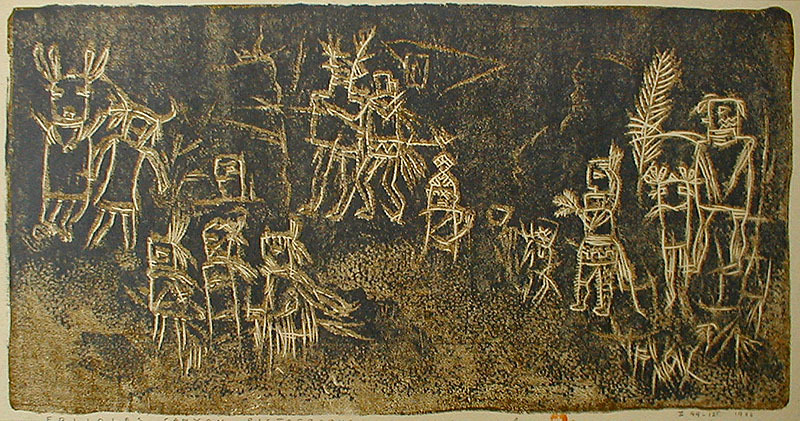
Frijoles-Canyon-Pictographs-by-Gustave-Baumann

a flicker of time

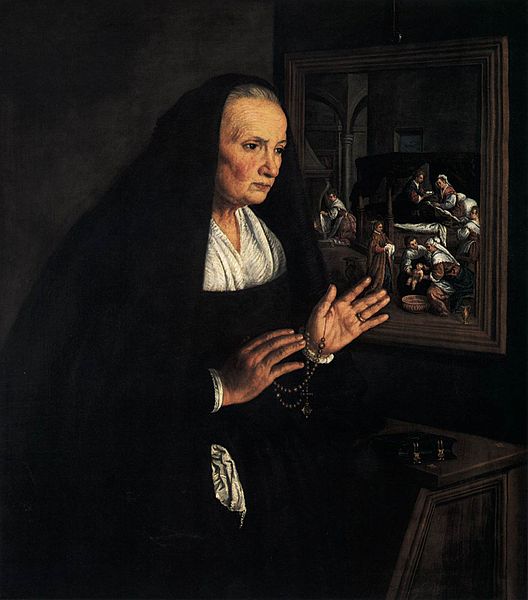
widow

Wilfred 

He was proud of his blue tick hounds, his

sixty acres of hills, hollows, creeks filled

with copperheads and cottonmouths;

nights utterly still except when a smell or sound

riled the hounds from their sleep

to bay like old mourners.

My uncle read aloud Sunday mornings

from the Book of Job in a nasal voice, 

about hating the night and waiting for day

only to find in the day that one wished for night,

about how we are here for a flicker of time

then reflected in no one’s eye.

My aunt had the custom of hill people of keeping

framed photographs of dead relatives in their coffins.

When my uncle died she got rid of his hounds, his

jew’s harp, said she was through with men

and their ways, but she kept his death photo displayed

on a lace doily in her living room.

Sandra Giedeman


the name of things

zaca-lakeZaca Lake

A white-bellied carp breaks the water’s

surface, crickets chirp a background chorus.

Bats fly a crazy trajectory, then

fold like origami, cling to the eaves.

A great horned owl swoops, glides

above an old man who fills mason jars

with what he calls sacred mud of the healing lake. 

In the lobby of faded sun, I pass row after row

of pinned butterflies under glass.  

Memento Mori of old hotel, long-gone guests;

of Anise Swallowtail

Mournful Duskywing

Cabbage White.

Days of green and summer’s

sulphurous heat that bursts cocoons.

Fragile speckled wings that someone felt

the need to pin down.

You’re awake as a child until they teach you

the names of things.

Sandra Giedeman