devils at the door

lucifer1OIL IN WATER

Pam Lazos

Chapter Seventy-Three

As Gil’s slippered feet hit the carpeted stairs, Kori was opening the front door. Gil froze. Sunlight blazed in through the door obliterating the man’s visage, but Gil could see the silhouette looming and spreading across the space between the door frame. Kori exchanged pleasantries which Gil didn’t catch because his ears were buzzing. She gestured toward Gil on the stairs and the large man in the Armani suit stood in the middle of the living room moving his mouth, but with no sound coming out. The man smiled his giant toothy smile, waiting for Gil to say something, Gil was sure. Kori slammed the door behind the man and Gil ducked at the sound. The man had one foot on the second stair now. Gil’s throat emitted a strange noise, even by his standards, as the man held out his hand for a shake. Gil grabbed Max by the collar, ran upstairs and locked himself in his room.

➣➣➣

Bicky stood with his foot on the stair, his hand outstretched in the gesture of greeting. He watched Gil’s lithe body retreat until he crested the top of the stairs and disappeared. Bicky turned to look at Kori, his arm still outstretched.

“Was it something I said?”

“He gets like that. He’s really smart. It comes out in weird ways.” She ran a hand through her hair and looked Bicky over, the Armani suit, the soft hands with nails more expertly manicured than her own. “Maybe you want to come back after breakfast? He’s usually pretty communicative after a meal.”

Bicky’s face contorted into something that had the capacity to be a smile, but fell short somehow.

“How about I talk to you for awhile?” Bicky said.

Kori shrugged. “I guess that’s okay.”

“Maybe your other brother, too. Is he home?”

Kori narrowed her eyes and opened her mouth as if to speak.

“The newspaper article,” Bicky said, intercepting her query.

“Oh. Okay.” She turned and led him to the kitchen. Avery looked up from reading his magazine, but his expression did not change.

“Avery, this is Mr. Coleman. He owns Akanabi Oil. He wants to talk to us about the TDU.” Bicky held out his hand for a shake, but Avery ignored it. Instead, he stood, coming eye-to-eye with Bicky, and sneezed.

“Excuse me,” Avery said, and walked around Bicky holding a hand over his nose to hide the runny mucus. He sneezed again, grabbed a few tissues and blew out a noseful of snot. He tossed the tissues in the trash can, then held out his hand to Bicky who dropped his own hand to his side. Avery sneezed again, but it was only the first in a continuing series.

Kori counted ten sneezes before she said, “Why don’t we go sit in the living room and wait until Avery’s done.” Bicky nodded and retreated. Kori glanced back over her shoulder to see Avery pulling out the tissues three and four at a time.

➣➣➣

Bicky settled himself in an armchair as Avery continued sneezing in the kitchen. Neither Bicky nor Kori noticed Gil sitting in the shadows at the top stairs, peering through the banister.

“So, I read about you kids in the newspaper. I understand you’ve invented an amazing new piece of equipment.”

“Actually, we didn’t. My father did.”

“Yes. I’m sorry about your father,” Bicky said with as much emotion as he could muster.      Kori nodded, sighed and drew a deep breath. “We don’t know what we’re going to do with it yet.”

Bicky kept the emotion in his voice well-checked, and continued. “Perhaps I’ve come along just in time.”

“In time for what?” Avery walked into the living room holding a box of tissues.

“You done now?” Kori asked. Avery nodded.

“Sorry. It’s like I breathed in something toxic.” He looked directly at Bicky’s impassive mask.

“You sound all stuffy now,” Kori said.

“I feel like someone sprayed caulk up my nose.” Avery said. Gil giggled from his spot on the stairs and covered his mouth. Bicky turned toward the sound, but said nothing.

“So, Mr. Coleman,” Avery said. “I’m sure that as the head of Akanabi Oil you’re acquainted with one David Hartos.

“Yes, I know one David Hartos,” Bicky said, struggling against the dozens of facial muscles tugging valiantly at the corners of his mouth, pulling them toward a full-fledged smile. “He works for me.”

“It was my understanding that he’s currently on sabbatical from the oil industry so technically speaking, he is not working for you at all, but rather, for himself at present.”

“You sound like every lawyer I’ve ever hired.”

Avery held his smile in check with a stern, tight-lipped countenance. “Kori, can I see you in the kitchen for a minute?” Kori gave her brother a weird look, but rose to go.

“Excuse us, Mr. Coleman,” Avery said. “We’ll be back shortly.

As soon as Avery and Kori had left, Bicky smiled, his first genuine, uncoached smile in years.

➣➣➣

Avery pulled Kori out the back door onto the deck, leaving the door ajar.

“What is wrong with you?” Kori asked. “First the gnarly sneezing and now you’re being so rude. This guy’s the head of a big oil company. He probably wants to buy the TDU and if that’s the case, I say good riddance for all the trouble it’s caused.”

“What about Hart? We told him we’d work with him.”

“You didn’t sign anything, did you?”

“Listen to you!”

“No, listen to you, Mr. Lawyer. If you didn’t sign anything, where’s your obligation?

“We made a deal to work with him, me and Gil. Gil thinks the guy walks on water. And I think we can trust him. He’s out looking for financing, right now. I’m not going to call him up and tell him the deal’s off.”

“Spare me the drama.”

“I’m serious.”

“So am I. If the TDU is so fantastic, investors will be pounding down our door.”

“Well it looks like that parade might have just started.” Avery poked his head in the door and strained his ear toward the living room. He could hear nothing.

“He might be about to offer us some serious money, Avery. And I think we should take it. Wouldn’t it be nice to be out of debt for a change? I mean, this morning…”

“We can’t do that, Kori. I don’t like him. And I don’t trust him.”

“You don’t even know him.”

“I know I’m having an allergic reaction to him.”

Kori rolled her eyes. “That is the dumbest thing I ever heard. You’re not going to take his money because of a few sneezes?”

Avery blushed.

“Give me one good reason why we shouldn’t work with him, Avery.”

“Dad.” Avery said. “Dad would never sell out.”

Kori stared at her brother and when she spoke, her voice was quiet, reluctant. “Well, Dad isn’t here to provide for us anymore, Avery. And we need to pay our bills and keep food on the table and all those other things that parents do for their kids, but we now have to do for ourselves.” Kori turned to go inside, but Avery grabbed her wrist.

Avery drew a deep breath. “All right. We’ll listen to what he has to say. But no decisions until we talk to Hart. Okay?”

“All right.” She sighed, squeezing Avery’s arm. “Let’s get back in there.”

➣➣➣

Gil strolled down the steps with Max. Bicky heard them coming, but acted surprised when they entered the room. Holding Max by the collar, Gil took a seat on the couch and stared at Bicky until even the unflappable Coleman became a bit unhinged.

“What?” Bicky finally said.

“What?” Gil replied.

“What are you looking at?”

“What are you looking at?”

“I asked you first.”

“I asked you first.”

“Is this some kind of joke?” Bicky shifted in his chair, annoyed.

“Is this some kind of joke?”

“You’re not one of those idiot savants, are you?”

“You’re not one of those…”

“Oh shut up, already. I get the game.” Bicky huffed as if the very idea was ridiculous to him. “My own daughter used to play it all the time. I didn’t like it then and I…”

“What happened to your hand?” Bicky covered his bandaged hand with his free hand in response.

“What are you doing here?” Gil asked.

Bicky looked Gil over, the piercing, intelligent eyes, the purposeful posture, the fact that he had his own hand resting lightly on the neck of a seventy-five pound ferocious looking dog with a mean set of teeth. In that instant he knew this child, for that was what he was, could not be trifled with, and moreover that it was more than intellect working in that compact, graceful body. He decided instantly, subconsciously, that truth was the best course of action.

“Well, I’m not here to help, obviously. I’m a businessman and businessmen do not become successful by helping,” Bicky said. True confessions.

Gil nodded, a beneficent king waiting for his subject to continue.

“But I’m not here to steal anything from you either. I’m willing to pay the fair market value for the product you’ve invented, and should that not be possible given the scope and reach of the product, then I’m willing to bring you in as a partner, to a limited extent, of course, given that I’m taking all the financial risks, and to make sure your family receives money from the development and sale of this product for years to come. You’ll never have to worry about money again, that’s for sure.”

“I’m ten. I don’t worry about money now. That’s for Kori and Avery to worry about.”

“Well, what do I have that would interest you? I’m sure there’s something I can give you to make this deal not just acceptable, but attractive to you.”

Gil shook his head slowly back and forth. “We don’t need you. We have Hart.”

Bicky smiled slightly, relishing the delivery of this news. “Hart works for me.”

“I know that. But he’s not doing this with you. He’s doing this with us.”

“Hart can’t give you what I can give you.”

“He can get as much money as we need to build a factory.”

“Hart’s a very rich man and I’m sure he’ll be true to his word. But have you thought about the expense of not only developing your machine, but building, staffing and maintaining an oil refinery? It’s not just the cost, but the labor that’s very intensive. The insurance alone on a facility like that’ll kill you. I can offer you a fully functional, completely operational facility. Already built and running and only a scant thirty or so miles from here.”

“We already have one in the backyard,” Gil said.

Bicky’s raised his eyebrows, but he didn’t say anything.

“They’re not hard to make if you know what you’re doing.”

“Surely you don’t think you’re going to build something of this magnitude in your backyard?”

“I told you. I’m only ten. That part’s up to Avery.” As if on cue, the backdoor slammed and Bicky heard strangled whispers and two sets of footsteps approaching. And given the four seconds he’d spent in the presence of the sixteen-year old – for Chrissakes was everyone in this family a prodigy? – Bicky knew he needed to make his move now or lose his chance forever.

“The plant will be a monument to your father. I’ll even rename the refinery after him. By the time we’re finished, not just the U.S., but all the world will know how great he was. We can even market some of his other inventions. I mean, he didn’t create something like this in a vacuum. The man was obviously a genius.” Bicky paused for effect. “Of course, I’ll leave it up to you whether you’d like to pursue those other avenues.”

“Hey, Gil,” Avery said, coming into the room. “I see you’ve met Mr. Coleman. He…”

“He’s taking us on a tour of his oil refinery this morning,” Gil said, before turning to Kori. “Do we have any pop tarts? Me and Max are starving.”

“Ah. Okay,” Bicky said. “Shall we take breakfast on the road?”

 to be continued. . .

read what came before

copyright 2013

let’s make a deal

Starfish1OIL IN WATER

Pam Lazos

Chapter Seventy-Two

“Do you have any collateral, Mr. Hartos?”

“As a matter of fact, I do.” Hart opened his briefcase and displayed stock certificates for tens of thousands of shares of Akanabi Oil. The banker raised his eyebrows and picked up one of the certificates, analyzing it for authenticity.

“So what do you need me for?” the banker asked, setting down the certificate and folding his hands across his ample belly.

“I don’t, actually,” Hart said wryly. “Not if I sell that.” He nodded toward the briefcase. “But I don’t want to sell. Not yet.” Hart opened Sonia’s brown leather backpack and pulled out a thick business plan.

“I’ve been working on this all week,” he said, pushing it across the table toward the banker. “I’m prepared to give you a twenty percent return on your money for the first five years in exchange for an unlimited line of credit.”

The banker pitched forward in his chair and laid hands upon the document.

“Uhh uhh,” Hart said, shaking his head. “Not before we make a deal.”

“How can I make a deal if I can’t examine the business plan?”

Hart pulled a confidentiality agreement from Sonia’s backpack and placed it in front of the banker who read it.

“It bars you from even speaking about this matter to anyone who is not intimately involved in the release of funds and then it’s only on a need-to-know basis. After you read the plan, you’ll understand the paranoia. This is revolutionary technology. The urge to steal it will be strong.”

“This bank is not interested in anything illegal or immoral, Mr. Hart.”

“It’s nothing like that. But it will be the greatest invention since the advent of the industrial revolution. And you have the opportunity to be a part of it.”

“What’s the catch?”

“No catch. I need a line of credit. You’re in business to make money.”

“But why not do it yourself?” the banker asked, motioning toward the stock certificates.

Hart smiled and leaned back in his chair. “Once the first plant is built, that won’t be enough to cover the cost of expansion. It’s gonna spread like the wildfire, I guarantee you. Cities, states, municipalities – they’ll all be clamoring for it.

Interest piqued, the banker signed the confidentiality agreement and opened the business plan. Hart watched his face change as he read the one-page introduction.

“Either you’re crazy or a genius, I’m not sure. But if it’s true, I take your point. There’s no telling how big this could get.”

“So, we have a deal?”

“I need to look this over in detail, but my preliminary response would be yes, we most certainly have a deal.” The two men shook hands.

“I’ll call you later . . .”

“Absolutely not.”

“Hmmm?”

“I’ll sit and wait until you’ve finished reading.”

“Mr. Hartos, a line of credit of this magnitude will require the acquiescence of the bank’s Board of Directors. And it’s not going to be granted on a verbal request.”

“That’s fine. After everyone signs the confidentiality agreement, you get a copy of the business plan.”

“Okay, well I’ve signed, so I’ll keep this copy.”

“Not until you’ve approved the line of credit.”

“But I just told you…”

“Look. I don’t know how you’re going to do it, but until I get everybody’s signatures . . .”

The banker shook his head. “We just don’t do business that way.”

“There are plenty of banks on this street. Someone’s going to lend me the money.”

“Not without the proper paperwork.”

“Suit yourself.” Hart collected his papers and stuffed them in Sonia’s backpack. “Remember. You signed an agreement. Not a word. Because if I hear one, I’ll own this bank.”

Hart smiled broadly. “Good day.”

 to be continued. . .

catch up here

copyright 2013

safety of the marshes

Cattails

OIL IN WATER

Pam Lazos

Chapter Sixty-Nine

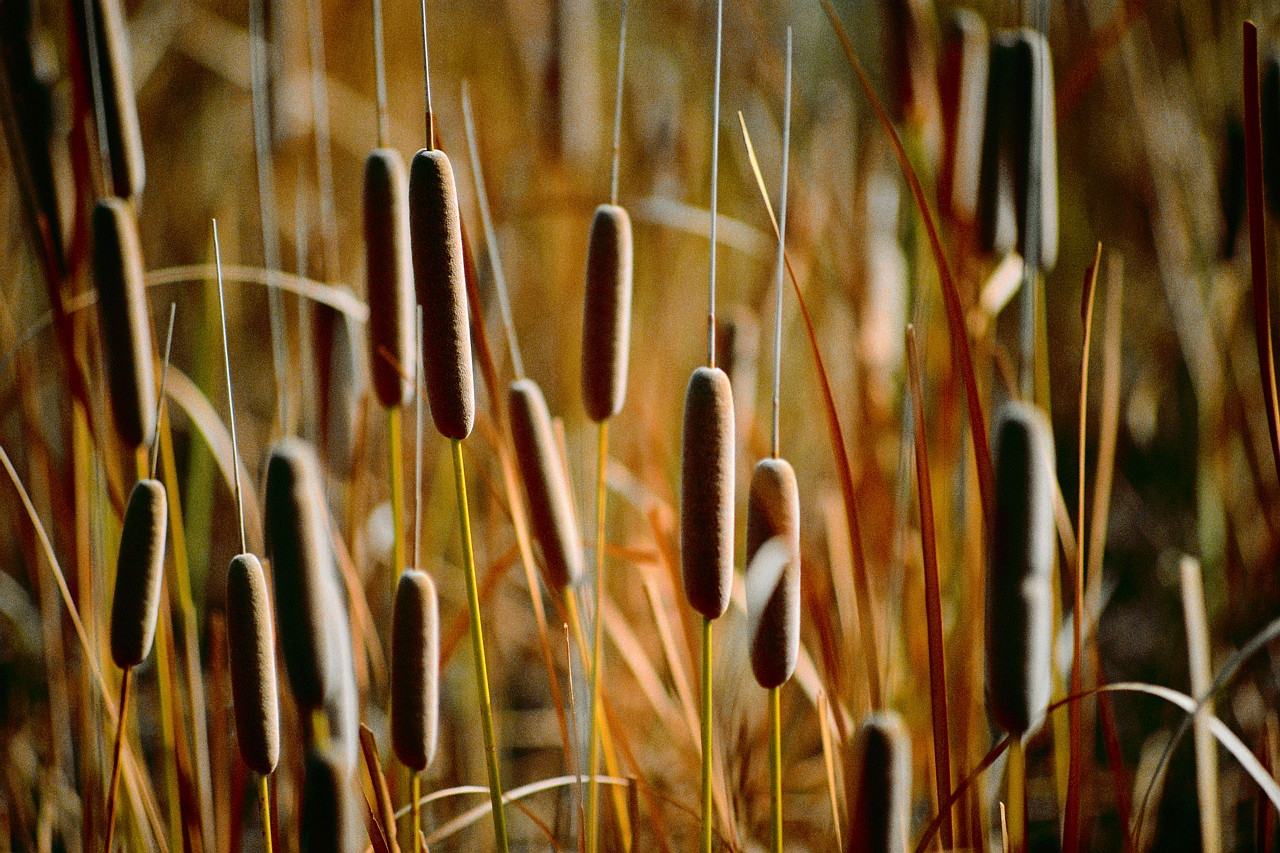
After a breakfast of rice with buttermilk, chicken soup, flat bread and strong, bitter coffee, Robbie and Amara boarded Sayyid’s flat boat and with Sayyid at the helm, set out on a journey to look at the recently refreshed marsh towns. Sayyid poled the boat through the water, skimming past huge clumps of papyrus and cattails.

Robbie watched the scenery change, enchanted by his surroundings. The fear that had sat in the pit of his stomach during their midnight exodus from Baghdad and which caused the bile to rise to his throat with every human encounter had hung an “out to lunch” sign on his esophagus, but given that the sun had barely crept above the giant forests of reeds, an “out to breakfast” sign would have been more apropos.

Robbie had cloaked himself in the customary robe and turban of the Iraqis and upon Amara’s urging, had remained silent the entire trip. Amara told the various drivers that she was taking her mute brother to Al Huwayr, a boat building town near the junction of the Tigris and Euphrates rivers where they intended to buy a mashuf and return to Zayad, their recently reflooded ancestral home. Already, Amara said, their uncle and aunt and three children had returned. The ruse had worked and here among the bulrushes and papyrus, Robbie rubbed elbows with the ghosts of the last five millennium along with a way of life he hoped wasn’t dead, but merely on life support, and like the reflooded marsh town of Zayad, could be resurrected and helped to thrive again.

“These are the biggest reeds I’ve ever seen,” Robbie said.

“It is called qasab. It is a phragmites, like you see at your American bays. But these plants have been allowed to grow undisturbed, and without pollution,” Amara said. “They can grow as large as twenty-five feet. We use them for many things, our mashufs, our huts. Too, we build our mudhifs from them. These are large building where many people can gather. Like your community center.”

“This portion of the Al Hawizeh marsh is all that’s really left of twenty thousand square kilometers of fresh water marshes,” Sayyid said. “You know this measurement? It is the maybe seven hundred miles. My people lived here for centuries,” Sayyid said. “We believed we were comfortable. We believed we were safe.”

“Here they raise cow and oxen and water buffalo and spend much time in prayer,” Amara said.

“Water buffalo?” Robbie said. “I don’t think I’ve ever seen a real one.”

“The water buffalo are very important to our way of life,” said Sayyid. “Early each morning the young boys take them to the feeding grounds. They do not return until the evening. All day they spend with the water buffalo.”

Amara laughed. “My grandfather told me a story that once he was up all night with a sick buffalo. He covered it with a blanket and nursed it back to health with a bottle and songs.”

“He sang to a buffalo?” Robbie asked.

“Yes. It is not uncommon. The Ma’adan depend greatly on the buffalo for their existence. He gives milk, among a great many other things and they thank God for this by treating the animals like family. It is not like America.”

“How do Americans treat their buffalo?” Sayyid asked

“I won’t tell you what happened to our buffalo,” Robbie said. “But I guess the modern-day equivalent would be the cow. We have two kinds, dairy and meat. The dairy cows have a cushy life compared to the meat cows, but nobody sings to them. At least not that I know of. Although I did hear once about a farmer who played music to his watermelons.”

Sayyid laughed, then grew quiet as he poled the boat through the water. “These marshes are all that is left. The Al Hammar and Central marshes are gone. Vanished. Like my people who inhabited them.”

“They will come back, Uncle. When the water returns, they will come back.”

“If God shall be willing,” Sayyid said. “You know this group? Assisting Marsh Arab Refugees? The AMAR Foundation they call themselves.”

“Yes. And I have read about another group,” Amara said, “called Eden Again. The head of this group is an American, born in Iraq. They seek to return the water, to bring back the fish to the marshes. It is this group we come to work with. To offer our assistance,” Amara turned to Robbie and squeezed his hand, “at great personal risk.”

“How do you plan to help?” Sayyid asked. “No doubt you will use your schooling that was so important to my brother.”

“Yes, uncle. I am sure they will need another biologist. And Robbie knows something about…” she turned to him for assistance.

“Environmental science. Back home I’m working on a degree,” Robbie said. “For the first time I have a good reason for it.”

“Uncle, may I?” Amara reached for the pole and Sayyid relinquished it with a smile, exchanging places with Amara in the boat.

“I know who you wish to find. Tomorrow I will take you to them. But today, we tour Al Hawizeh. It will be something for you to see,” Sayyid said, turning to Robbie. “This place is like nowhere else in the world. What Saddam has done is a crime against God and nature. He seeks to destroy the Ma’adan by destroying their way of life. But my people have inhabited these waters since the beginning. This is the Cradle of Civilization where the world began. Saddam thought to make history. And what has he done?” Sayyid spread his hands wide to emphasis his point.

“Not just genocide, but ecocide, uncle,” Amara said.

“Yes.” Sayyid turned to Robbie. “History will not be kind to him. But you have caught him. Now there is hope.” Sayyid returned his hands to his lap and gazed out over the water. “I am not a naive man. I do not dream that it all will be returned.” Sayyid gazed after the reeds and bulrushes as the boat glided past. Robbie noted the comely, proud profile.

“Do you find it strange that they should take your name?” Sayyid asked Amara.

“Who, Uncle?”

The AMAR Foundation. Do you find it strange?” The marsh narrowed and Amara directed the boat toward a dense forest of reeds. “They say a man’s name predicts his future.” Sayyid raised his eyebrows in speculation. “Perhaps this is your destiny, Amara. To save your ancestors. To restore their lands.” Sayyid stood and took the pole.

“I can do it,” Amara said, but he motioned for her to sit down so she did.

“So much like my brother,” he mused. Amara smiled, trailing her fingers in the water.

The flap of wings, the sounds of fish surfacing and retreating, the smell of dense, wet vegetation, and a million hues of green, fanning out across the landscape all formed a backdrop to the peace rising up in Robbie’s soul. He felt the adrenaline and terror ebbing away with each rhythmic pull of Sayyid’s pole and that, coupled with a full belly, conspired to put him in a state of calm, the likes of which he had not experienced since he came to Iraq. A turtle jumped off the marsh and into the water. Amara pointed and turned to see if Robbie had noticed it, but like the baby Moses adrift in a bed of papyrus, Robbie now lay hidden and in the safety of the marshes, he slept.

to be continued. . .

read what came before here

copyright 2013

a way out

gateOIL IN WATER

Pam Lazos

Chapter Sixty-Seven

Robbie and Amara lay on a tightly woven reed mat beneath an open window, the spare light of the crescent moon casting the faintest of shadows. His arm rested protectively on her belly. The thin blanket that had covered them lay crumpled on the floor, thrown off in the dead of night and heat. A cool, light breeze blew off the water through the open window, washing over their sleeping bodies in an undulating rhythm that kept time with the passing centuries. Waves lapped against the quonset hut’s foundation.

Robbie drew a deep, choking breath as one coming up for air after too long underwater. He coughed and it woke him. He bolted upright in bed and Amara woke, too.

“What is it?” Amara put a hand on his back and felt through the well-toned muscle and bone the panic that lay buried inside. “Your heart is beating very fast.”

Robbie took several breaths in rapid succession then pulled her to him.

“You’re cold,” Robbie said.

“So are you.” Amara grabbed the blanket and pulled it up over them. Robbie relaxed and they both lay down on the reed mat again. A rustle just below the hut refocused Robbie’s attention and he was out of bed in an instant.

“It’s only a mouse,” Amara said.

“We’re surrounded by water.”

“Not everywhere is water. Much is just mud. The water is high now because of the spring rains.”

“Well, how will he get out?”

“There’s always a way out,” Amara said. “Besides, mice are excellent swimmers. Please.” She held the blanket up, an invitation for him to join her.

Robbie lay down next to her. “Sorry. Just a little jumpy.”

“It is because no one has been here for so long. You do not see this well because we come in the middle of the night. I’m sure it is very dirty in here.”

“I thought you said it was a little fishing hut.”

“Yes. It belonged to my grandfather’s father. Of course, when he left he had no more use for it, but my uncles still came here.” Amara’s voice stumbled. “Now there is no one to use it.” Robbie hugged her closed and smoothed her hair.

She nestled in. “Tell me about your dream.”

“I dreamt that American troops were driving their jeeps through the marshes. They were coming from Baghdad on their way to Basra and the most direct route was straight through the middle. The jeeps had these pontoons on them that kept them afloat when the water got deep. There was a place in the water where it rose about six inches like it was going over something massive below. The lead jeep got stuck on it. It turned out to be a remnant of one of Saddam’s dams. Everyone had to get out and figure another way across. They unloaded their mashufs and troops started fanning out across the marshes in their canoes. I was watching from the reeds. Somebody came up behind me and grabbed me by the throat. I started choking.  That”s when I woke up.” Robbie rubbed Amara’s arm and gazed into her penetrating eyes.

Amara placed her hand over his heart. “You are safe now. They will not find you until you are ready to be found.”

Robbie kissed the top of her head. She kissed his lips.

“Dawn will soon come,” Amara said. “Let us sleep until it does.”

“Then you can show me where we are.”

➣➣➣

At dawn, Robbie and Amara climbed into the mashuf they had borrowed from her uncle, a boat builder whose shop sat at the tip of what remained of the Al Hariz marsh. A mullet, small and bony by any standard, rose to the surface in search of breakfast. Robbie jumped at the splash that signaled its return to safe water.

“It is just a fish,” Amara said, handing Robbie a paddle. “And a small one at that. They are returning now that the dam has been destroyed.”

“Well, that’s good, isn’t it? I mean, about the dam.” Robbie started to paddle in time with Amara.

“Yes, it is very good. But it is not enough. The Minister of Irrigation estimates that when the dam was breached over one hundred and fifty quadrillion gallons of water flooded back into the channels. This was only enough to return the water to the two closest villages. At one time, there were hundreds of these villages. At this rate it will take a thousand years.”

“Well, can’t they just open another dam?”

“They have opened all the dams. The water is no longer here.”

“Where is it?”

“Still in Syria, and Turkey, being diverted for many types of projects. Agricultural, hydroelectric. Who knows what else? Saddam gave them this water. He stole it from his own people.”

“We’ll get it back.”

“It is much more complicated than that. Here people fight over the right to use the water. It is not so in your country. But still you see the beginnings of it in your American west. I think that one day, people in America will fight over water just as we do.”

The marshes were silent but for the lapping of the water on the shore and the slight rustle of the bulrushes. A fog had settled over the marshes and Robbie wiped at the drops of water that collected on his face. A bullfrog croaked. Robbie jumped, then relaxed.

Amara smiled and turned briefly to look at him. “You never fully get used to the noises that the marshes make. To live here is to constantly be on alert. So my grandfather has told me.”

They rowed together in silence until Amara directed the mashuf through vegetation so dense and intertwined that Robbie felt they were inside a tunnel. When they emerged on the other side, the first rays of the day had filtered through the reeds, creating a mosaic pattern across the surface of the water. A blue heron caught breakfast and retreated to safer ground, flying directly overhead.

“A most beneficent sign,” Amara said, bunching her fingers together and touching them first to her heart, then her lips and finally her forehead. She stopped paddling momentarily and squeezed Robbie’s leg. “There it is. The house of my uncle, Sayyid. We will be safe here.”

➣➣➣

Robbie and Amara docked their boat on the small island where another hut stood.

“Who’s there?” said a voice groggy with sleep. Inside the occupants of the house stirred, the first rustling of the day. Amara tied the canoe and grabbed Robbie’s arm just as Sayyid Sahain appeared in the doorway wearing the conventional robe and turban, but no sandals. In the misty morning light, Amara couldn’t clearly see the face of her uncle, still pressed with sleep, his hastily donned turban slightly askew, but she recognized the proud and encompassing stance of her father, and for a moment she believed he walked among them again. The sound of her uncle’s voice, so like her own father’s, did nothing to lessen her joy.

“Who is there?”

“It is me, uncle. Amara.”

“Amara! Is it you? I had word, but I did not dare hope…. God be praised.” Amara’s uncle scrambled down to the dock and grabbed Amara by both elbows before crushing her to his chest in a warm embrace. “God has blessed me once again,” Sayyid said. He held her at arm’s length. “To look at you is to look again upon my brother’s face.” He wrapped an avuncular arm around her and patted her back before releasing her, then turned to Robbie, a question in his eyes.       “And who is it that assures your safe travel?” he asked, sizing Robbie up.

“This is my friend, Robbie, Uncle. He is an American. He wishes to help our people. But first, Uncle, we must assure his safety. He has left his captain without permission.” Sayyid raised his eyebrows in disapproval.

Amara continued. “The Americans believe he is dead. There was a car bombing and…. they did not find him.” Amara bowed her head and clasped her hands together. “I’m sorry, Uncle. I do not mean to bring you trouble.” Sayyid studied Robbie’s face then looked to his niece’s bowed head.

“Amara. You could not bring more trouble than that devil, Saddam, has brought to his own people. Every day I ask God why he has allowed this. But God has turned his face away from us.” He lifted Amara’s chin that she might look him directly in the eyes. “You were always the impetuous one. By the grace of Mohammed, had you been born a boy I believe you would have stopped the devil himself.”

Amara smiled at her uncle and he stroked her cheek.

“Time has taught me many things,” Sayyid continued. “For the memory of your father, but more important, for you, I swear I will keep your friend safe among us until the time he chooses to leave.”

Sayyid turned to Robbie. “Welcome, sahib.” He took Robbie’s hand in one of his and with the other clapped him on the back. “You are safe here.”

“Thank you. . .”

“Call me Uncle as my niece does,” Sayyid said.

“Uncle,” Robbie repeated. Following Amara’s lead, he bowed his head slightly to indicate his respect.

“Come, come,” Sayyid said. “Let us go inside. You will be hungry, yes? We will take a meal together and you will tell me of your plans.”

➣➣➣

Inside Sayyid’s wife, Fawzia, was already grinding coffee. Sayyid made the introductions and Amara embraced her uncle’s new wife before the woman retreated to the hearth to prepare a meal worthy of visitors.

“Fawzia is a good woman,” Sayyid said. He directed them to several cushions scattered around a small round table barely a foot off the floor.

“I am sorry for you, Uncle. For my aunt. We had heard, but were unable to make the trip.”

“Thank you, niece.” Sayyid bowed his head and touched his bunched fingers to his heart, mouth and forehead. “She was a very good woman, dead now these five years.”

“How did she die?” Robbie asked.

“From Saddam’s poison water.”

“Saddam poisoned the water? But why is everything not dead?”

“He is the devil,” Sayyid said.

“I thought it was because of the dams,” Robbie said. “I didn’t know he used poison, too.

“He did not poison it with chemicals, but with ideas,” Sayyid said. “And revenge. Revenge for the part my people played in the Shiite uprising in Iran. We are Shiite Muslims. Saddam is Sunni. So he tries to kill us by taking away our water. When the water is not fresh, it dies.”

“You mean it becomes stagnant?” Robbie asked.

“Yes. Stagnant. This water breeds cholera. We have no cure for this disease.” Sayyid’s voice assumed a distant quality.

“When I see the problem, I take her by tarrada.” Sayyid turned to Robbie. “This is my large canoe, much bigger than my mashuf. It is more than thirty-feet. I have six people paddling while I hold her head in my lap. But it is not enough. By the time I see the doctor, he can do nothing. I am too late.” Sayyid wiped at his eyes as if he had an itch. Robbie looked at Amara who put her hands in her lap and bowed her head.

“Saddam made this. He killed my beloved wife when he stops the water with his dams. With his evilness. If he is not the devil himself then he has made a deal with him. This I know.” Sayyid adjusted his turban and straightened his robe. “My people lived here from the beginning of time. Now they live in refugee camps on the borders in Iran.”

“That’s why we’ve come, uncle,” Amara said.

Fawzia appeared with a tray containing three demitasse cups, sugar, spoons, and an ebriki, a small brass pot with a long handle, used to cook the coffee directly over the stove. Steam wafted from the narrow opening of the pot. Fawzia set the tray down and smiled at Amara and Robbie.

“You are hungry?” She brought her fingers to her lips to indicate eating with one’s hands. “You eat now?”

Amara nodded and smiled. Fawzia squeezed Amara’s hand and left.

“She speaks only a little bit English, my wife,” Sayyid explained to Robbie.

Robbie nodded. “I’m sure we’ll manage.”

 to be continued. . .

start with this and we how we got here

copyright 2012

keep the birds warm

OIL IN WATER

Pam Lazos

Chapter Forty-Five

The Wildlife Rescue Center in northeastern Maryland, a one-stop emergency room for oiled birds and other mammals, was brimming to capacity. Trained staff and volunteers littered the aisles like road debris, working as quickly as possible to address the backlog. The temperature was set to a balmy eighty degrees to keep the birds warm, a temperature which worked quite well outside, especially with a nice crosswind, but not inside a building packed with so many CO2 breathing mammals. People were sweating profusely; a few of the workers looked like they just took a dip in the river.

The Wildlife Rescue Center was a coalition of the local SPCA, the Friends of Waterfowl, a local, well-known, bird conservancy, as well as federal, state and local government partners. The building itself was huge, about fourteen thousand square feet in the shape of an open rectangle, cordoned off with moveable walls to accommodate the varying resource needs. The largest area was set aside as the trauma center. The building sat, idle yet prepared, to be used only in the event of an oil spill. It was the coalition’s greatest hope that the money they’d invested in this building would go to waste and that the facility and its equipment would sit and collect dust. Unfortunately, today that hope was not realized as dozens of veterinarians and trained volunteers worked side-by-side, attempting to undue what might not be capable of being undone.

Doctor Alyssa Morgan, a veterinarian and Director of the Wildlife Rescue Center, was on the phone in a small walled office at the back of the room, gesticulating animatedly. Lapsley and Hart walked into the middle of the trauma center and looked around, lost children waiting for direction. Dr. Morgan caught sight of Lapsley through her office window and waved, the scowl on her face softening. Lapsley took that as a good sign.

By the time they reached the door, she hung up the phone and ushered them into the office. The office was a mere eight by twelve feet and harbored a desk with a phone, a couch which at present was a catch-all for a miscellaneous reports and papers, and a credenza with a coffee pot. Two more people could fit, but only if they took turns breathing. Realizing rather belatedly the ridiculousness of this arrangement, she hustled them out.

“Vic,” Dr. Morgan said, extending a hand. “Long time.”

“Hey, Alyssa.” Lapsley took her hand, holding it a few seconds longer than necessary. Dr. Morgan blushed.

“This is David Hartos. Chief of Engineering for Akanabi Oil.” Hart extended a hand which Dr. Morgan accepted, but the bloom faded from her face, replaced with a cold, hard stare.

“Lyss, he didn’t go out and dump the oil himself,” Lapsley said. One side of his mouth quirked in a wry smile. The joke worked.

“So what’s going on?” Lapsley said.

“You’re looking at it,” Dr. Morgan said, extending an arm in a wide arc.

“You look like hell,”Lapsley said, his gaze fixed on her face.

“Thanks. You look pretty lousy yourself.”

“You know what I mean,” Lapsley said.

Dr. Morgan nodded. “I was up most of the night cleaning oiled birds. They’re still coming in. And it’s not just the Rescue Team. Fishermen are bringing them in now. It doesn’t look like it’s going to slow down anytime soon.” She gazed around the room and back to Lapsley. “We need backup.”

A lock of hair fell into her eyes. Lapsley resisted the urge to brush it back.

“Why don’t you just put out a couple radio ads? Akanabi’ll pay for it.” Lapsley looked at Hart to make sure this was, in fact, true. Hart confirmed.

“I’m sure plenty of people would be willing to volunteer,” Hart said.

“First time at a Rescue Center, Mr. Hart?” Dr. Morgan asked. Lapsley detected the note of satisfaction in her voice and suppressed the urge to smile.

“Actually, I usually repair the leak before it gets to this stage so this is a bit out of my range, I’ll admit,” Hart said. “But I’d be happy to help.”

“You can’t. You’re not trained. All our volunteers have had a two-day intensive training. To allow you to work on these birds without the proper training would rise to the level of malpractice.”

“There’s got to be something we can do,” Lapsley said.

Dr. Morgan scanned the room. About fifteen de-oiling stations had been set up, all but one presently occupied.

“Check each of the stations and make sure they have sufficient quantities of Dawn dishwashing detergent, rags and trashbags.” Dr. Morgan said.

“I guess that means you want us to hang for awhile?” Lapsley asked.

“For awhile. You mind?”

Lapsley shook his head and smiled at her.

“When did you last take the training?” Dr. Morgan asked Lapsley.

“Probably ten years ago,” he replied. She sighed.

“Alright, you better stick close to me.” Lapsley looked at Hart and winked. He could think of nothing better he’d like to do this morning.

to be continued. . .

to read how this came to pass jump here

copyright 2012

jackets required

copyright 2011/all rights reserved

OIL IN WATER

a novel by

PAM LAZOS

CHAPTER NINE (c)

Hart walked into the Union Club –  an oxymoron since union workers were the last people that this particular club would ever admit –  wearing a polo shirt and a pair of dockers and carrying his worn but stylish leather briefcase.  The maitre d’, a tall man, about fifty, with jet black hair and eyes as warm as the inside of a root cellar, scanned Hart’s periphery, a distasteful job if his twitching mouth was any indication.  He asked Hart between pinched lips whether he had a jacket, perhaps in the car.

Hart shook his head.  “No jacket.  Bicky Coleman, please.”  Hart scanned the room and spotted his father-in-law holding court at the far end of the room with four expertly-tailored gentlemen.  It was hard to tell one tanned face and Armani suit from the next.  Hart sidestepped the maitre d’ who protested until he saw Mr. Coleman coming toward them.

“About time,” Bicky said gripping Hart’s hand in a firm, as opposed to bone crushing, hand shake.  “Where the hell’ve you been?”

“I told you I was going to spend the day with…”

“Leave your Goddamn cell phone on next time.”  The corners of Bicky’s mouth quivered as he attempted a smile.  Hart struggled not to laugh.  Bicky wrapped what might be termed an affectionate arm around Hart’s shoulder and led him to a pair of leather arm chairs set in a private alcove.  A waiter materialized and asked if the gentlemen would prefer a cocktail.  Bicky ordered Chivas, Hart a Jamieson, both with rocks.  Hart noticed that some of the thick, brocade curtains were closed.  Apparently, the rooms could get pretty cozy.  Maybe I could take Sonia here sometime….

“Did your wife give you a package for me?” Bicky asked nonchalantly.

Hart opened his briefcase as the waiter set two whiskeys before them.  Bicky looked at his watch and took a sip.  He swirled the ice in his glass, transfixed by the beverage.

“Is this a bad time?” Hart asked.  Bicky took another drink, a swig this time.

“I’m scheduled to talk to Graighton at 7:30.”

“Bill Graighton?” Hart asked.  “About what?”  Hart followed Bicky’s glance at a shadowy figure sitting alone in an alcove across the room, talking on the phone.

Bicky snapped his fingers and held out his palm.  Hart’s remorse for Sonia’s hasty actions was replaced by a protective annoyance.  Hart pulled the report from his briefcase and slapped it into Bicky’s outstretched hand.  Bicky gazed at his daughter’s handwriting before opening the envelope.  He scanned the cover and shoved it back in the envelope.  Hart thought he caught a grimace on Bicky’s face, but the man couldn’t smile to save his life, so he wasn’t sure.  Bicky nodded once, an almost imperceptible nod, and the figure in the alcove rose, closing the curtain.

Bicky turned to Hart:  “I shouldn’t be more than half an hour.  Go have a drink.  Talk.  It’s time you started making these people your own.”

Hart was about to protest, but Bicky was already standing.  Hart grabbed his drink and briefcase and did the same.

“Just leave the briefcase.  I’ll be back in half an hour.”

Hart looked at his watch.  The image of crawling in bed next to Sonia was already dimming, but if the cloak and dagger stuff had something to do with the report, he’d better oblige Bicky for Sonia’s sake.  Hart waited until Bicky entered the alcove, and headed to the bar.

to be continued. . .

to read what came before, scroll down. . . 

Eureka

copyright 2011/all rights reserved


OIL IN WATER

PAM LAZOS

Chapter One

Marty Tirabi sat on a stool aside his drafting table, an aluminum pie plate in each hand.  His eyes were closed, his spine erect, his breathing slow and regular, his conscious mind sitting on the pinnacle of present awareness.  At the exact moment Marty’s consciousness shifted, sliding across the threshold from beta to alpha to delta like a single-base hitter stealing home, Marty’s grip slackened and the pie plates clattered to the floor.  He woke with a start and stared, wide-eyed, at the back wall of the barn where It sat, all the while scanning his interior databases for a revelation that refused to be retrieved.

Marty rubbed his forehead.  This was how Thomas Edison did it, mining the gem-rich ground of his subconscious by bringing himself to the brink of sleep, then pulling back with a start for a third-party observer’s view.  The result of Edison’s efforts was the light bulb and one thousand and ninety-two other patented inventions, but Marty’d be damned if he could get Edison’s process to work.  For him, it was just there, a vision that sometimes crept, sometimes hurtled from unconscious to conscious awareness – claircognizance some called it, a simple knowing – and suddenly Marty would know how to pull it all together.

But not tonight.  Frustrated, Marty spun his stool around, laid the pie plates and his overtired brain on the drafting table, and stared at his father’s oil lamp, its soft, incandescent glow casting ectoplasmic shadows on the blueprints beneath his head.  He started to fall – no aluminum to stop him this time – but was halted at the threshold again.

A faint hum jarred him back, a soft, deliberate noise like the whir of a refrigerator motor or the patter of a soft rain.  He felt it in his feet first.  It climbed up his legs as it grew in intensity, settled in his heart, and then shot up to his forehead.  His head vibrated.  Marty rose slowly so as not to disturb the hum’s cadence and strolled across the barn floor toward the back wall, convinced that a nonchalant attitude was imperative to the hum’s survival.  He tried not to smile, tried not to look directly at It until he had stopped in front of the thousands of pounds of steel assembled in six distinct units.  He sniffed the air.  Dozens of smells slid past the cilia in his nose and traveled along his olfactory nerve, stopping at the cerebral cortex to register:  methane, plastic, burning rubber, decay, ash.  Even in a closed-looped system, the vapors, like his dreams, always escaped.

And then, suspended in the air like dust motes lollygagging in a single ray of sun, the smell of oil, sharp, sweet and slightly acrid, knocked on the registrar’s door, tap, tap, tap, piercing Marty’s nasal cavity and shattering his equilibrium.

“Hahahahaaaaaaaaaaaa!”

Marty clapped his hands and because he was half-Greek, did the only dance he felt comfortable doing, a little hop/skip combo that was the backbone of most traditional ethnic dances.  He repeated the steps over and over until he came full circle.  He added a little jump to his combination.  The word Eureka came to mind.

to be continued. . .