a hundred years from Monday

budbreakOIL IN WATER

Pam Lazos

Chapter Fifty-Five

A few days later, Kori was pulling out in Ruth’s minivan when Jack cruised up the driveway, forcing her to slam on the breaks to avoid a head-on collision. He stepped out of his car, an impish smile on his face, and walked over to the driver’s side. She looked beautiful.

“Better watch where you’re going,” Jack said. “You could hit somebody.”

“Better you than me.”

“Nice to see you, too.” Kori stared straight ahead, ignoring him.

“How come you haven’t returned my calls?”

“You called?”

“Very funny, Kori. What the hell’s going on?”

“Nothing. Why do you ask?”

“I’ve been calling you all week, is why I ask, and I know you haven’t been home because I’ve driven by a dozen times. Then last night one of my buddies says he saw you and some flunky out having dinner.”

“We’re just friends.”

“Oh yeah? When was the last time you lip-locked a friend?”

Kori shrugged.

“Answer me, dammit.”

Kori stared at the woods to the side of the house. Jack yanked open the driver’s side door and pulled her out by the arm.

“Ow….”

“Oh, now I have your attention….”

Kori shook loose from his grip and stalked off across the lawn. Jack ran ahead, hampering further progress.

“What in God’s name has gotten into you? Why are you so angry?”

“Because you’re a self-centered bastard. You waste your time watching sports when you could read a book. You prefer a night of drinking with your friends to the movies with me. You have no interest in my work. But most of all, because you wouldn’t go to the Goddamn public meeting with me!” She said the last with such venom that Jack thought she was going to strike him to hammer the point home, but she just turned on her heel and walked back toward the car. He stared after her, dumbfounded, before running to catch up.

“I’m sorry. If I’d have known it meant so much I would’ve gone with you.”

“You did know.”

“I didn’t. I swear. Come here.” Jack pulled Kori in and hugged her to his chest. “I miss you. Please don’t do this.”

Kori raised her face to him.

“Besides. Robbie told me to take care of you.”

Kori grimaced and shoved Jack as hard as she could. He lost his balance and fell backwards.

“And Robbie told me to watch out for you,” she said, “but not the way you think. Anyway, Robbie’s dead. Gone. Just like you. Just like everybody.”

Jack jumped up and grabbed the back of her neck. He pushed her chin up and kissed her gruffly. “It would be a shame to lose what we have.” He wound his arms around her and whispered in her ear. “To walk away just so you can be the first to leave is a horrible waste of time. Sometimes there are things bigger and more satisfying than an indulgence of your pride.”

“Like what?

“Like happiness.”

“Oh, pull-ease”

Jack released his grip and took a step back, putting air between them. “Are you afraid to be happy with me?”

“I was happy with you until I saw what an egotistical prick you are.”

“C’mon, Kori. This is stupid.” He kissed her again and this time she responded with her mouth and her body. After a minute, she released him. He was electrified.

“Alright. You win.” She reached out and gave his dick a little squeeze. He shivered at the touch. “Call me, say, a hundred years from Monday. That should put us squarely in the next lifetime.” She strode to the van, slamming the door after her.

Jack watched as she put the transmission into all wheel drive and drove through the small forested grove to the side of the driveway, pulling out onto the road before he even registered what happened.

➣➣➣

Jack walked around to the back of the house and, hearing music, followed it to the barn. He banged on the door, but Gil didn’t hear him over the bass. He peeked in the window and saw Gil holding Max up by his front paws and dancing to the Bacon Brothers, Philadelphia Chickens. Jack knocked on the window and when Gil saw him, he screamed and dropped Max to the ground.

Gil lowered the volume on the stereo and opened the door. “You can’t sneak up on a person.”

Jack laughed. “It’s not like it was hard.”

“Where’ve you been?” Gil demanded.

“Home. At work. Out. You want a list?”

“Why not here?”

“Your sister’s not talking to me.”

“So what? I’m talking to you.”

Jack tilted his head, shrugged his shoulders and gave Gil a lopsided smile. “Gilly.”

Gil looked askance at Jack, set his lips in a grim straight line, and closed the door.

“Gil, come on,” Jack said, knocking again.

Gil locked the door and turned up the music.

to be continued. . .

to get caught up start here

copyright 2012

long way home

snow mandallaOIL IN WATER

Pam Lazos

Chapter Forty-Nine

Snow blanketed the fields, barren, but for the odd bale of rolled hay. The wind whistled through the leafless branches, and left them creaking and moaning with its passing. With only a week until the winter solstice, the mornings rose dark and still and laden with the musings of Morpheus, still lost in the labyrinth of the dreamy night. Today, the lingering full moon cast just enough light on the earth for a trail to be visible. A lone cross-country skier glided across the top of the hill at the horizon, dipped down below on the opposite side, then resurfaced.

Avery stood at the back door watching Gil ski up and over the top, disappearing only to intermittently reappear, a small, barely distinguishable figure in the shadowy dawn. Gil wore Marty’s headlight and Avery watched the light shine and recede, shine and recede.

Avery wore his ski pants and an unzipped jacket. His gloves dangled at his side, his ski boots propped in the corner. His stockinged feet curled at the sudden gust of wind that shot through the door.

“Either in or out, huh?” Kori shuffled in, still crunchy from sleep, and clutched her robe tightly to her chest, an impenetrable shield against the wintry gust. She headed straight for the coffee pot. She had a long crease down her right cheek where the side of her face had lain, smashed into a rumpled pillow for too long.  Avery closed the door and watched out the window.

“How’d you sleep,” Kori asked, her own eyes red and swollen.

“I don’t think I did.” He turned his haggard face to her. “Or if I did, I don’t remember.”

“How long’s he been out there?”

“Since about four this morning.”

“Are you going out?” she asked. Avery shrugged, but didn’t answer.  Kori stood and grabbed a mug from the cabinet. “It’s pretty hard core to go out into below freezing weather at 6:30 in the morning just to get an hour of skiing in.”

“Gil’s out there.”

“If he’s been out since 4 o’clock, it’s not exactly like he needs you.” She sat down at the table and fiddled with a stray napkin, rolling it up and unwinding it again and again. “Why’d you let him go out so early? It’s so dark.”

Avery watched the horizon where his brother had just reappeared on the surface of the world. “It’s not like I have complete control over him, Kor. He went out before I got up. I heard him clanging around in the garage trying to get the skis down, is all.” He turned back to her. “He left mine on the deck.” Avery sighed, zipped up his jacket and grabbed his boots. “Did you know we were supposed to get snow?”

Kori yawned and covered her mouth, nodding her head. “School’s canceled. I saw it on the news.”

Avery laced up his boots and stood. “Bonus.” He drew a deep breath before asking his next question. “Do you think it’s true?” Concern had etched lines in his face that weren’t there the day before. He knew Kori didn’t know, that it was pointless to ask, but she was older, and therefore, wiser and Avery was looking for confirmation or consolation, anything but resignation.

Kori picked up the dog tags that were lying in the middle of the kitchen table, pulled the chain out to its full length and rested her fingers upon them. She closed her eyes as if divination could be had by mere touch. She shook her head, slowly at first, and then with more vehemence.

“Me either,” Avery said. “I just have this feeling. I hope I’m not making it up.” He put on his gloves, pulled his hat down over his ears and eyebrows, and opened the door.

Avery?” Kori walked over and stood behind her brother.

“Did Gil have any dreams?” She shrunk and inch into herself as if bracing for a blow.

Avery touched Kori’s shoulder and smiled. “I guess I’ll find out now,” he said, grabbed his skis and was gone.

Kori watched until he vanished over the hill.

➣➣➣

The moon, low in the sky and paling more with each creeping minute of dawn, looked like a magnificent deity bestowing blessings upon all who gazed at her. The last of her beneficence left a light touch, a shimmering wake across the snow-covered fields. Even the landfill looked beautiful: a white, proud mountain of refuse. Avery caught up to Gil as he approached the backside of it. They skied together in silence for the last hundred yards until Gil stopped at the foot of the landfill’s fence, flicked off his headlamp and jammed his poles into the ground. He stared at the mound of trash, deftly hidden beneath a cloud of white, and began to hum.

“Only you could hum while looking at garbage,” Avery said.  He stuck his own poles in the ground and watched the trash pile intently, waiting for something to shatter the tranquility.

“I was thinking about Daddy.” Gil said.

“Really? About Dad? Not about Robbie?”

Gil shook his head, slow and deliberate, like a metronome.

“Well, what about Dad?” Gil turned Marty’s headlamp on again and focused it on a specific spot in the center of a frozen mound.

Avery followed the light and thought he could see a computer monitor, but he was only guessing. He looked at Gil’s nose, dripping profusely. Gil didn’t seem to notice. Avery grabbed a clean, but crumpled tissue from his coat pocket and pushed it toward his brother who ignored the gesture. Avery held the tissue up to Gil’s nose and Gil blew, releasing more than a single tissue full of his own goopy refuse. Avery fumbled for another tissue while still holding the first to Gil’s nose and brought it to the aid of the first. He wiped Gil’s nose and grimacing slightly, jammed the soggy remnants back into his own pocket  “Anything else I can do for you?” he asked.

“He wouldn’t answer me when I asked about Robbie. I kept asking, ‘Daddy, where’s Robbie? Is he okay?’ and he just kept smiling at me. Then he took me into the barn and showed me the TDU. He fiddled around and made a few adjustments….” The trash pile still showed no signs of movement. “I think he wants me to finish it.”

Avery’s eyebrows shot up. “Did he say that?”

“He didn’t say anything. But I just thought that was what he wanted.” Gil pulled a single pole out of the snow and drove it back into the ground. “Do you think maybe Dad doesn’t know about Robbie? Like maybe, if Robbie’s alive that he can’t see him very well or something?” Gil looked at his brother. “Or maybe Robbie doesn’t want to be seen. Like maybe he’s hiding.”

Avery had contemplated this same theory, but had not voiced it. His brother was canny, knew how to live in the woods off of nuts and berries and roots and other queer stuff, knew how to build a fire from two tiny little sticks, a veritable boy scout geekazoid. He would be a great guy to have around in an apocalyptic, end-of-the-world kind of event. But disappearing without a trace from a crowded market in the middle of a suicide bombing attempt leaving nothing behind but a set of dog tags, well, things seemed a little convoluted, even for Robbie. Still it was a relief to hear Gil voice the opinion.

“I don’t know. If he is still alive, he’ll be in touch soon.”

Gil nodded. “Will you help me?”

“Absolutely. With what?”

“With the TDU?”

“I thought you didn’t want to work on that anymore?”

“Well, I don’t because of Dad, you know. But I think…” Gil’s words tumbled out in a jumbled, yet coherent flurry. “I really don’t, but what if that’s what he wants, Dad, I mean, and if I didn’t do it well then he might be mad at me and maybe he wouldn’t visit me anymore so I really should do it but it really gives me the creeps I mean what if those creepy bad guys come back so I need some back up which is why I’m asking if I did would you help me? I’d need, you know, to get the TDU up and running and help get the feedstock from the landfill and…. I guess, well maybe it’s okay, cause I think Dad wanted it….actually, I don’t know what he wanted, but he kept showing me the drawings, and some newer ones that he’d worked on for the refining part. I don’t know what he was saying since I never really looked at the refining drawings – I was more interested in the TDU – so we didn’t talk much about it, but….why do you think he just didn’t come out and say what he wanted?” Gil said finally, frustrated.

Gil’s nose was running again and this time he ran his gloved hand underneath it catching most of the watery mucus. Avery grimaced and made a mental note to wash Gil’s gloves. He stamped his ski-shod feet on the ground to tamp down the cold creeping up his legs, cold to which Gil seemed impervious.

“I don’t know. It’s near Christmas time. Maybe he was trying to be the ghost of Christmas future.”

“The one with George C. Scott?” Gil smiled. “That one was my favorite.”

“C’mon. Let’s get moving before my legs freeze off.”

“Let’s go this way,” Gil said, turning toward the woods, the long way home.

 to be continued. . .

to read what came before jump here

copyright 2012

anything’s possible

OIL IN WATER

Pam Lazos

Chapter Thirty-Six

That night, Kori and Jack sat huddled together on one corner of the couch and Avery at the other end. Gil and Max sat in rocking chairs, one behind the other, watching Santa Claus 2. A pizza box lay open on the coffee table with one slice left.

Gil held a toy with small tube-like arms sticking out from a colorful base. At the end of each of the four tubes was a little plastic disc that lit up in different colors. At the push of a button, the arms spiraled around and around like a propeller.

“By rights, it’s mine,” Kori said. “You guys all had two pieces.”

“What is that thing?” Jack asked, ignoring her.

“A whirligig, I think,” Avery said. “Or if not, it should be.”

“Don’t change the subject,” Kori said, pinching Jack’s side. “Technically, it’s mine.”

“Yeah, but I worked this morning. And I changed the oil in your car today and replaced your rotor cups, all in freezing cold weather. I think I should have it.” He leaned in and kissed her, but she wasn’t budging.

“Where’d you work?”

“Something went wrong with the home brain at the Callahan’s. The lights on the deck were flicking on and off and they couldn’t regulate the temperature in the hot tub. I rewired one of the circuit boards which fixed the problem, but I’m still not sure what happened.” He scrunched his eyebrows in thought.

Kori raised her own eyebrows like she wasn’t impressed.

“What?” Jack said. “You wanted me to tell them to wait until Monday?”

“It’s your business,” Kori said. “You could have.”

“Not if I want to stay in business.”

“I’m still hungry,” Gil whined. Kori looked at Jack and laughed.

“Here, Gil,” she said, offering him the last slice. “Guess you lose,” she whispered to Jack. Meticulously, Gil gnawed the edges of his slice, then up and down each side, all the while rocking and whirligigging. Not a spot remained untouched. He ripped a piece from the crust and tossed it to Max who caught and consumed it in one motion.

“Guess we need two pizzas next time,” Jack said, pulling Kori back toward him.

“Yooooohooooo,” Aunt Stella’s voice along with the smell of pastries wafted from the back door straight to Gil’s nose in the living room. He sniffed the air and tossed the rest of the slice of pizza to Max.  When Aunt Stella walked into the living room, Gil jumped up, allowed her to kiss him, then took his seat while he waited for her to remove her coat and scarf.

She grabbed Gil’s chin and pulled it up so she could look in his eyes. “No worse for the wear,” she said, and tousled his hair. “You’re a tough one.” She held the basket out to him. “Go ahead then. A little bit of sweet is the answer to all life’s ailments, I say.” Aunt Stella’s belly shook as she laughed, demonstrating she took her own advice.

Gil didn’t wait for further prompting, but dug out two pieces of baklava, a square of banana-pecan coffee cake, and a napkin to catch it all. Max, still in his chair, waited for his share of the booty. Gil’s toy whirled and lighted as he chomped on his banana cake

“What, pray tell, are you doing, Gilly?” Aunt Stella said.

Gil’s mouth was full, so Kori explained for him. “They’re playing airplane. Gil’s the pilot. We’re not sure if Max is a member of the crew or all of the passengers.” Gil nodded and gave no further comment. Max circled the seat of his chair adroitly, still trying to find a position of comfort, but the chair was too small for all seventy pounds of him. He gave up and sat down, hind legs squarely on the seat, front paws on the floor.

“He looks like he has motion sickness. I wonder if they’re experiencing some turbulence?” Kori asked.

“How the hell does he get that dog to do that?” Jack said.

Avery got up, making room for Aunt Stella on the couch. She closed the pizza box with a “tsk-tsk,” muttering to herself about poor nutrition, and put the basket on top.

“Dessert,” she announced, as if it were necessary.

“Thanks, Aunt Stella,” Avery said grabbing a piece of baklava and a seat on the floor. Jack wiggled his eyebrows at Kori and she passed the basket to him just as the doorbell rang. Kori looked at her watch. It was almost eight. Max barked, jumped off his chair and ran to stand in front of the door.

“Now if we could just teach him to open it,” Jack said with a full mouth.

“If that’s one of your lame friends here to collect you so you can go out drinking…”

Jack raised his hands, palms up, as if to say “no contest.”

No one moved, but everyone looked at Avery who was propping himself up on pillows at his spot on the floor.

“No way. I just sat down. It’s Gil’s turn.”

Gil tried to ignore them, but the pressure was too great. With a sigh, he got up to answer the door.

➣➣➣

Captain Russell turned his collar up against the inexorable wind and waited. He smashed his hat down more firmly on his head and looked out over the neighboring farm fields illuminated by the light of the full moon. Frost reflected the light back, giving the appearance of a light dusting of snow. Captain Russell shivered. He’d been dreading this visit since he got the call two nights ago. Army Protocol dictates that the family should have been told immediately, but he had waited, hoping the ongoing investigation would yield some evidence that the officers had at first failed to uncover. Unfortunately, the most damning evidence arrived by courier earlier this evening, and he couldn’t put it off any longer.

Russell left his office around eight and went to the Japanese Restaurant in the strip mall purportedly for a quick dinner. He left his plate of sushi untouched, but had several shots of saki. Now the courage gained from his liquid dinner was dissipating, replaced by a smoldering hole you could drive an army jeep through. He fingered the contents of his pocket again and swallowed the rising bile. It had been a long time since he had to do this and he wished to God he was standing elsewhere. His stomach gurgled. It was a bad idea not to eat.

 ➣➣➣

Gil opened the door a crack, more to keep out the wind than the man standing on the other side of it, but once he got a look, the latter was closer to the truth. Something was wrong with the picture, but Gil wasn’t sure what. The man was dressed respectably in an overcoat and hat, but he looked sad. Bad news .

“Evening. Is this the Tirabi residence?” Gil nodded, but made no move to open the door. Max stood next to him, wagging his tail and trying to poke his snout through the narrow opening.

Captain Russell extended his hand. “Captain Jack Russell. May I come in? It’s wicked cold out here.”

Gil threw open the door and Captain Russell jumped in. At the sudden movement, Max began barking like crazy and Captain Russell jumped right out again. He stood on the front step, rubbing his hands together and grimacing.

Kori ran over and grabbed Max’s collar. “Take Max, please. To the living room.” Gil and Max retreated and Kori opened the door.

“Can I help you?”

“Captain Jack Russell. I’m at the recruiting station down at the Park Plaza Shopping Mall. I signed your brother, Robbie up.”

Kori stiffened. Aunt Stella appeared in the foyer behind her.

“Well child, let the man in. He’s not going to steal your television.” Aunt Stella smiled. “Come in, come in. Give me your coat and hat.”

Captain Russell stepped into the foyer for the second time that evening. “If you don’t mind, I’ll keep them. Give me a chance to warm up.”

“It’s warm inside,” Aunt Stella said, doting on Captain Russell as if he were a baby chick that lost its momma. She steered him from the foyer to the living room where everyone appeared to be watching television; the only indication that they were not was the undercurrent of motion traveling across the room. Gil rocked obsessively in his chair, Avery fluffed his pillows unable to get comfortable, and Kori kept looking at Jack as if she thought he might vanish into thin air at any minute. Captain Russell cleared his throat and Kori grabbed Jack’s hand.

“How about a nice cup of coffee or tea?” Aunt Stella asked.

“No thank you, Ma’am. I’m really sorry to intrude this evening and wouldn’t have come if it wasn’t of the utmost…”

A low wail broke from Gil’s throat and Max walked over and put his face in Gil’s lap. Avery got up and checked his brother’s eyes. Kori jumped up and did the same. She looked at Avery for confirmation.

“Couldn’t happen twice in one day, could it?

“I guess anything’s possible.” Avery checked Gil’s pulse. “You feelin’ alright, Gil?” Gil nodded. Avery let go of his wrist, less than satisfied.

“Is there anything I can do?” Captain Russell asked. Kori shook her head.

“You can tell us why you came,” Avery said, shutting off the television.

Captain Russell nodded, reached in his pocket and pulled out a set of dog tags which he placed on the table in front of them.

“Tell me that’s not what I think it is,” Kori said. She squeezed Jack’s hand so tightly his bones crackled.

“It’s my duty and my pain to tell you that we presume your brother, Robert James Tirabi, aged twenty-three, to be dead.” Kori gasped and buried her head in Jack’s shoulder. Aunt Stella coughed and put a hand to her throat. Avery fingered the dog tags, and Gil rocked furiously, eyes fixed on the blank television screen.

“Surely you’re joking,” Aunt Stella said. “We just got a letter from him yesterday.”

“That letter could have been written more than two weeks ago. The mail takes time.”

“But…how?” Kori’s voice quivered.

“Suicide car bomber. Robbie was in Khan Bani Saad. It’s a market town not far from Baghdad. A man drove a car loaded with explosives directly into an open air market. Twenty-three people were killed.”

“Where’s the body? Avery asked.

“We haven’t been able to identify it. We believe he might have been standing near the car when the bomb detonated. We found those,” Russell said, pointing to the dog tags.

“Well how do you know he’s dead?” Avery asked. “Maybe he was just wounded.”

“The wounded were all treated at the hospital. Your brother was not among them.”

“Well, how did his dog tags come off?” Kori asked.

“It wasn’t your typical explosive. It had amazing incendiary capabilities. Most things within a twenty-five yard radius were ashes when it was all done.”

“That doesn’t make any sense.” Avery said. “You’re still looking, right?” Captain Russell shook his head.

“So that’s it. You come here and you give us these lousy . . . things,” Kori picked up the dog tags as if they were a used Kleenex, “and you tell us he’s gone and you walk out the door. You don’t even know my brother.” Kori’s voice caught and Jack pulled her to his chest.

“What about his personal stuff?” Jack asked.

“It’s being shipped. You should be getting it within the week.”

A profound silence filled the room.

“Liar!” Gil jumped up from his seat, grabbed the dog tags, put them around his neck and ran from the room. He stomped up the stairs and slammed the door to his room.

“I’ll go,” Aunt Stella said, but Avery put a hand on her arm to stop her.

“If there’s anything else I can do . . .” Captain Russell’s sincere, but ineffectual offer froze in mid-air.

After several more moments of silence, Captain Russell stood to leave. “Feel free to call me if you have any questions or if you need anything at all.” He handed Aunt Stella his card. “I’m truly sorry for your loss.” Aunt Stella rose to show him to the door.

“It’s okay,” Russell said. “I can find my way out.”

They heard the door close behind him, heard his car engine engage, heard him pull out of the driveway, and then nothing more, but their own moist breathing and the ticking of the clock. The room was eerily quiet, like the last moments before dawn.

Avery traced a finger around the empty space where the dog tags had lain. “Shall I go up after him?” he asked. The question hung in the air like mist.


to be continued. . .

get up to speed & read what came before: hit this link

copyright 2012

inside the bear’s mouth

OIL IN WATER

Pam Lazos

Chapter Thirty-Three

Avery stood at Marty’s drafting table, pouring over drawings of the TDU, matching up the drawings with the real thing. At ground level, the outside of the TDU’s receiving station looked like a gigantic child’s play chest. Sliding metal doors opened and disappeared within the grated metal exterior framework – the classic European pocket door – to reveal a cavernous opening that funneled trash to the giant cylindrical tank housed below ground. With this design, Marty had been able to back his tractor right into the barn and utilizing the trailer’s hydraulic lift, pour the trash directly into the yawning mouth of the cylinder.

Marty’s TDU was a democratic machine, treating all trash equally as long as it was carbon based. Once inside, the trash was mixed with water to create a slurry, an insoluble, goopy mess. The slurry passed through a pipeline to a holding tank where it was heated under pressure until it reached a reaction temperature. Another pipeline, a third unit, also cylindrical – Marty Tirabi was fond of circles – ferried the slurry along to where it finished its initial reaction and was flashed again. Here the gaseous products were spun off, the pressure lowered, the liquids separated from the volatile chemicals. Marty built a series of interconnected pipelines placed one on top of the other, some at 90 degree angles of each other, a steel matrix within which to house the myriad and varied reactions occurring. Step five was another series of thinner cylinders, three in a row, tall and demure, sitting side-by-side like young girls at their first dance, waiting to be asked. But size was no indication of their strength. In these cylinders Marty heated the mixture, separating water from gas from light oils which led to the final stage, two large, squat holding tanks where Marty intended to store the gas and light oils. Even staggering the six stages of equipment at forty-five degree angles of each other, the prototype was huge and encompassed the entire back wall of the barn.

Avery sighed and flopped down at the drafting table. Marty had said there was a problem with water. Was it too much or too little? Avery couldn’t remember. Gil knew, but damn it, he wouldn’t help. Avery was on his own. And with at least two dozen blueprints, this was going to take a while. Maybe a little meditation was in order.

Avery practiced meditation in fits and starts. When he did, a wonderful clarity always ensued, imbibed with an acute awareness of being in the present. And the help always came with it, fecund and unbidden. From where it came, he really couldn’t say. Probably the universal mind, the brain trust, as he referred to it. From ions, or static or electricity. From nowhere and everywhere. He knew at times he’d tapped into the morphogenic field where ideas were traded like stocks on the NASDAQ, the theory being that if a monkey in Costa Rica learned to drive a car, a monkey on the Rock of Gibraltar could do the same without even meeting the Costa Rican monkey. Or perhaps he’d tapped into the Zero Point Field, that eerie, brave new world where discoveries were deposited in the cosmic bank account, waiting to be withdrawn by anyone holding a debit card. He’d read plenty on comparative religion, and had a few surreal experiences in his lifetime, enough to recognize the signs of a downloading from the One Mind when he felt it, which he rarely did. But Gil made regular withdrawals, engaged in constant conversation, slept with it under his pillow. For Gil, change and enlightenment were the same, immediate and visceral, played out physically each time he had a fit or an idea.

For the rest of the world struggling to catch up, the only acceptable change was a gradual climb up a low-grade mountain, the steps laborious and slow. And morphogenic field or not, it still took time for all the other monkeys to accept their new knowledge. Even if they could do it, did they want to do it? Even if he could fix this invention – something he didn’t have a whole lot of faith in at the present moment – Marty had said it would make the world stand on its head. Was the world ready for such a precarious position? Come to think of it, was he?

Avery needed Gil’s fertile mind where you could plant the seed and days or weeks later the answer sprung forth like Athena from Zeus’s head, in full warrior regalia, engaged and ready for battle. Gil’s epilepsy fueled his creativity; the disease forced him into the Zone where he was working out some serious past-life crap. Avery felt helpless at these times, but appeased himself with the thought that you can’t work someone’s karma out for them, a fact that at the tender age of ten, Gil completely understood.

“Gil.” Avery walked to the living room and shouted for his brother. “Gil!”

A muffled, “he’s in his room” wafted up from Kori’s corner of the basement. Avery nodded a thanks that she couldn’t see and went upstairs to find Gil.

He rapped on the door – the music was so loud the door handle was vibrating – and stepped into the room. Unless Gil was hiding under the bed, he wasn’t here. Avery checked the closet – sometimes Gil liked to hang out in the back of it with a flashlight and pretend he was a secret agent or something – then under the bed. He took a peek out Gil’s window. A light was on in the barn, even though it was broad daylight. Gil hard at work . He shut off the stereo and headed for the barn.

➣➣➣

The wind whipped across barren fields where only rolled bales of hay remained. The oak trees swayed and heaved in fits of laughter as the wind rose up, intertwined with their naked branches and whispered secrets only the oaks could understand. Avery took inventory. All healthy, thank God. A couple dozen were in striking distance of both the barn and house. He’d hate to see the damage one rotten tree could cause in a windstorm like this.

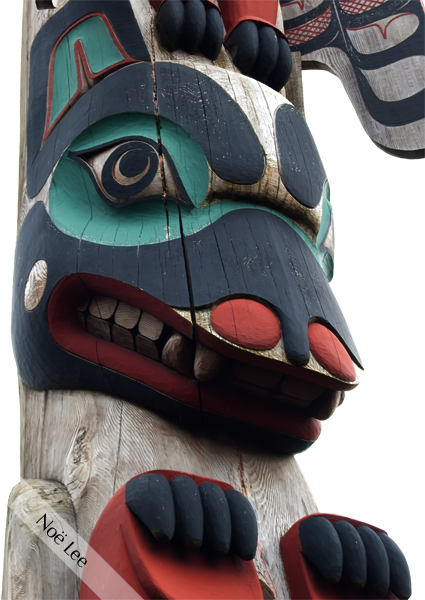
He touched the bear totem pole rooted to the ground, facing the barn. It was six feet high, a hundred feet from the barn’s entrance; its eyes saw all who moved through those doors. Marty had carved it out of a tree gone rotten at the base after Gil had noticed it swaying in a windstorm much like this one.

Marty relayed the information to Ruth who, noticing the swing set was in the probably trajectory of the tree should it fall, called a tree service. The tree service couldn’t come for two days. Ruth told Marty to leave the tree alone, that if it hadn’t fallen by now, it wasn’t going to fall in the next two days, and left on an errand.

But Marty couldn’t leave anything alone, especially a rogue tree, threatening him through his barn window. Ruth’s tire tracks weren’t even cooled before Marty got out the ropes and chain saw. The whir of power tools called the kids to the backyard, but Marty banished them to the deck, more than a safe distance away, until he was done with the felling. After that, it was all fun and games. The kids played happily on the fallen log while Marty used his chain saw on the part of the tree still in the ground and routed out the finer stuff. When he’d finished, Marty had transformed his enemy into a vigilant friend, the coolest totem pole the kids had ever seen. One paw rested on the bear’s stomach as if he’d just eaten lunch. His mouth was open, exposing healthy, yet deadly incisors; his eyes were wide as if he’d just spotted something. Marty let Kori paint the eyes and claws and big scary teeth all white, and when it was dry, he let the kids crawl all over it, something they still did years later whenever they hung out in the backyard. Avery smiled and rubbed his hand inside the bear’s mouth. For luck.

Avery tapped lightly on the barn window. Gil threw the dead bolt and waved him in. Avery dropped the roll of Marty’s drawings on the table and removed his coat while Gil closed and locked the door behind him.

“Toasty in here,” Avery said. Gil had the space heater cranked up and it felt like a kabillion degrees in the barn. “Why don’t you wear a sweater like most people do in cold weather and then you won’t need the heat to be so high?”

“Cause I wanted to wear my lizard shirt.” Gil looked down at his black t-shirt with the lizard face on it and smiled.

“What’cha got going on here?” Avery asked.

“Building something,” Gil said.

“I see that. But what is it?” To Avery, it looked like a souped up go-cart. He walked over and surveyed the frame and held a tentative hand out to touch it. The frame proved incredibly durable. “May I?”

Gil nodded and Avery stepped up on the floor board, testing the weight load by jumping up and down on it.

“Come here. I’ll show you.” Gil pushed Avery’s own drawings aside and peered over a stack already open on the drafting table.

Avery sifted through them, his excitement growing. “It’s a hybrid engine? Are you using technology that’s out there or is this something…?”

“New. Dad says you can’t talk about something until you finish or you lose the muse. So I can’t talk about it.”

“You have a muse? Who is it?”

“You know. A pretty lady. Sometimes she sings.”

“What’s her name?”

“She never said.”

“Is she real or you made her up?

“Real.”

“How do you know?”

“Because I just know. She comes at night. Sometimes she whispers ideas in my ear or if I’m stuck on something, she helps me solve it.” Gil looked down at his hands and turned them over, inspecting them. “Sometimes she just holds my hand. She says they’re soft.” Gil smiled sheepishly. Avery snickered, but turned away before Gil caught him.

“She helped me with that,” he said pointing to the ATV. “It’ll be more energy efficient than the others. Less fuel, less charging time, and the batteries’ll be smaller.”

“Hmmph,” Avery said, pondering the blueprints. “How long until you think you’ll be done?” Gil shrugged his shoulders and spun around on his stool. “Well, just let me know and I’ll get busy on the patent.” Avery flipped through the drawings. “Is there anything I can start on now?”

Gil unclamped the vice grips holding the drawings in place and rolled them up, a dismissal. Apparently, the conversation was for the present, concluded. Gil unrolled Avery’s drawings flat and used the vice-grip to clip the topsides to the edge of the drafting table. He reviewed them carefully for several minutes, unclamped the vice-grip, rolled the drawings back up and handed them to Avery. Then he walked over to the hammock where Max reclined.

How’d you get him up there?” Avery asked. Gil shrugged like it was no big deal and lay down next to Max who, startled from sleep, emitted a small yelp.

“I need your help,” Avery said. Gil nestled in close, warming himself against Max’s monstrous shape. The hammock moved in a rhythmic, rocking motion. He shook his head and buried it in Max’s face.

“Why not?”

Gil buried his face deeper into Max’s fur.

“Gil. Why the hell not?”

“I just don’t want to do it alone.”Avery detected a tremor in Gil’s voice and mistook it for fear.

“You won’t have to do it alone. I’ll help you.” Gil shook his head vehemently and Avery dropped his voice, low and soothing.

“Are you afraid? Don’t be afraid. The barn’s alarmed. And I swear I’ll keep you safe.”

“I’m not afraid,” Gil spat out. “I just…I can’t do it without Dad. It was his. Not mine. I can only do it if he says I can.”

“But, Gil. Dad’s dead.”

“I know that Avery!” Avery didn’t notice the tears gathering in Gil’s eyes and continued.

“Well, he’s not going to be saying anything again.”

“How do you know?” Gil shouted.

It was the first time Gil had shown such emotion and made Avery realize the unbearable angst Gil had been carrying since his father died. A sudden queasy feeling gripped Avery; it couldn’t have been worse if he’d been sucker punched.

“You don’t know anything.” Gil jumped off the hammock and ran for the door. Max tried to follow, but his foot got stuck in between the knots. He sat there whimpering, trying to disengage his paw. Gil unlocked the dead bolt and ran out failing to deactivate the silent alarm. Avery watched Gil run across the yard, unaware that downtown at the police station, another alarm screamed out a warning.

Max yelped in frustration.  Avery untangled his foot and lifted him out of the hammock. Max took off after Gil through the open door. Avery sat back on the hammock and rocked, listening to the howling of the wind.

“Now what?” Avery said to himself. He really didn’t expect an answer.

“Stuff envelopes,” a voice said. Avery landed on his hands and knees and scanned the space around him. The queasy feeling was back. He sucked at the ambient air.

“Mom?” He stood up and looked uneasily around the barn. As much as he would love to sit down and have a heart-to-heart conversation with his mother, the shock might be enough to kill him. He took several tentative steps, swiped the drawings off the drafting table and high-stepped it out of the barn, slamming the door behind him. He didn’t stop to lock it.

Two minutes later, he threw off his coat and sat down at the kitchen table. Stacks of paper and envelopes crowded the kitchen’s surface areas. He scanned the room. The project would take all day. Avery shivered and with a single glance back toward the barn, folded one of the sheets of paper in three and stuffed the first envelope. He looked again before stuffing another. Nothing was amiss. He began folding and stuffing in earnest and after several minutes, the repetitive motion of his task took the chill out of his spine.

to be continued. . .

to read what came before start here. . .

copyright 2012

Let’s Have A Town Meeting

OIL IN WATER

Pam Lazos

Chapter Thirty-One

Kori, Avery and Gil poured out of Ruth’s minivan and staggered toward the house, drunk with the success of their mission to Cooper’s Service Station. Kori hung back watching while Avery lectured Gil about the finer points of backwards butt-kicking.

“No, it’s like this,” Avery said. “You walk next to the person and then you take your outside leg, the leg that’s farthest from them, and you swing it around and up and you kick ‘em in the butt without even breaking stride. If you can help it, you don’t even look at them, but it’s really hard not to laugh.” Avery demonstrated, giving Gil a good swift one. Gil pitched forward, but caught himself before falling, laughing at his own clumsiness.

“My turn,” Gil said. “Just pretend you don’t know I’m going to do it,” he said. Together he and Avery walked up the few steps to the back door and once on the landing, Gil swung his leg around and kicked Avery so hard he sent him hurtling head first into the back door. Avery caught himself and grimaced at Gil.

“How’d I do,” Gil asked, beaming. Avery narrowed his eyes.

“Remind me not to teach you anything anymore,” he hissed, holding the door for them.

Avery sat down at the kitchen table and began counting the bills. “Two hundred and eighty-six dollars. That should hold us for awhile, Kor.”

“Well, it won’t pay the taxes, but it’ll buy groceries for a couple weeks.” She walked to the counter and retrieved two glasses and then to the fridge for the milk. “Although the way you guys eat, it probably won’t even last that long. She handed glasses to Avery and Gil and snatched the money out of Avery’s hands while he was in mid-gulp. She stuffed the bulk of the money in a jar in the cabinet, a few bills in her wallet and handed Avery $90.

“For the field trip. And some walking-around money.” She smiled and looked at him in earnest. “I’m still a little worried, but. . . .”

“But nothing,” Avery shrugged, and polished off the rest of the milk. “We’re hot wired right into the police station, remember. As long as Einstein over here doesn’t hit the alarm by accident, we’re A-okay.” Gil ignored them, drained his glass and left the room. They heard the T.V. click on and soon the soundtrack to Holes was coming through the surround sound.

Avery leafed through the mail haphazardly separating bills, advertisements and solicitations from anything that looked like real mail. One piece caught his eye because of the address label. He shoved it across the table at Kori who turned it over again and again, considering it with reverence like it were a holy icon. Finally she opened her hands and let it drop to the table, staring after it as if it might open itself.

“Maybe we should write ‘return to sender’ on it, or ‘no longer at this address’” Kori suggested. Avery reached over and picked it up, studying the return address.

“United States Environmental Protection Agency,” he said. “It’s official.” He handed the letter back to Kori, but she didn’t reach for it. “Open it.”

“It’s Mom’s.”

“Kori . I hardly think that matters now,” Avery said, raising his eyebrows at her. She still wouldn’t take it.

Avery tore the letter open. “It’s a notice of a public meeting.” Avery’s eyes scanned the page. “Hey, there’s also a federal register notice soliciting public comment on EPA’s Record of Decision for the Stahl’s landfill.” He flipped back to the notice in the local paper, scanned it quickly and slid both across the table to Kori. “Looks like EPA’s going to have a town meeting about the farm.”

“The Stahl’s property?”

“Yeah.” Avery pulled the papers back and read something again. “It says they just completed the Record of Decision, the ROD, and they want to inform the public about the remedy they’ve chosen and give us a chance to ask questions.”

“What do you mean, us?”

“Well, I’m going. It’s only over at the high school. It’s close.”

“How you gonna get there?”

“Kori! We need to be interested in this stuff. It’s in our backyard.”

Kori shrugged in response. “That was Mom’s thing. Not mine.”

Avery rubbed hard at his temples. “It’s everyone in this house’s thing. It’s the whole planet’s thing.” Avery grabbed the envelope. The return address said U.S. EPA, but there was no name associated with the organization. “I wonder who in EPA sent this,” he said, and tossed the envelope on the table. “You know, Mom was the chairman of the citizen’s group that followed this stuff.”

“Mom was the chairman of every group that followed anything like this,” Kori said. Her face wore a blase expression.

“We gotta call somebody and tell them,” Avery said.

“Oh, no. You just turn that optimistic gaze in another direction, brother.”

“Somebody’s gotta get copies made, buy envelopes and stamps and mail this notice out to the neighbors. That’s what Mom used to do. The EPA obviously doesn’t know she’s dead.”

“How would they?” Kori snapped.

“Look, my point is, if these notices don’t go out, how’s anyone going to know about the meeting?”

“Maybe they read the paper.”

“And probably they didn’t.”

“So send them out.”

“You gotta help me. I can’t do it alone.”

“No way. I don’t have the time or the inclination. And I don’t want to get involved.”

“But you are involved.” Avery waved toward the window and beyond. “We’re all involved. Our aquifer’s contaminated. Do you realize that if Dad hadn’t built a water purification system for our well, odds are one in four of getting cancer? And that’s after drinking the water for only five years. That’s how bad the contamination is. We’ve been using that aquifer for twenty-five!” Avery opened his hands as if Kori were stupid not to see his point. “One in four, Kori. One in four people in the Hickory Hills development has contracted cancer. Which one of us do you think it would have been?” Kori mumbled something under her breath, but Avery continued.

“You know what we’d be drinking right now, if our water came straight through from the well. The components that make up gasoline, for starters. Same stuff that’s in those barrels out back.” Avery jerked a thumb in the direction of the shed. “That aquifer will take decades to fix even if it ever clears up. And until everyone wakes up and realizes that we all live downstream….”

Kori laughed out loud, walked to the fridge and poured herself a glass of water.

“You sound like an ad for the EPA. Wasn’t that one of their television spots?”

“They don’t do T.V. spots. They’re a part of the U.S. federal government. They can’t advertise. Pity, too,” Avery said, as if struck by a thought. He rubbed his hairless chin in contemplation. “Advertising,” he said mostly to himself.

Kori took a drink and stood, staring out the window. She leaned against the sink and sighed. “I’ve got paper and envelopes. Use whatever you want. I even have labels downstairs and I’m pretty sure I know where to find Mom’s mailing list on the computer. But just keep me out of it, okay?”

“Kor, just…”

“No, Avery. I can’t. Don’t you see?” She folded her arms across her chest, more of a hugging motion than an acrimonious gesture. “It’ll bring her so close, but without breaking the surface. It won’t bring her back. Nothing can.”

Kori hadn’t told Avery about the terrible nightmares she’d had following Ruth and Marty’s death. Visions of her blood-spattered parents being chased by a monster with hell in his eyes and arms that shot fire from their fingertips. They wrenched her from sleep, leaving her gasping for air, shaking and sweating, so unnerved she didn’t dare roll. Kori’s chest tightened at the thought.

“Why don’t you call the lawyer? What’s that guy’s name? Bill Gallighan? His law office would probably do all of this for you. He’s an advisor to the citizens’ group. You could at least get him to pay for postage.”

Avery shook his head and ran a hand through his hair. “He does this pro bono. His law office doesn’t give him a dime. Plus he’s gotta maintain two hundred and twenty billable hours a month or they won’t let him work on the case anymore. They’re real bastards. The firm gets all this credit and name recognition and Bill’s the one doing all the work.” Avery folded his hands and crossed his legs as if in consultation with himself.

“Well, he has more money than we do. He can pay for stamps. Maybe even copies.”

“Actually, the law firm will pay for copies. And envelopes. Not stamps though.”

“What’s the difference between paper and stamps. It all costs money.”

“They want the stuff to go out on their letterhead because it’s free advertising and then everyone thinks they’re nice guys. But they don’t want to be out of pocket for the postage.”

“How do you know that?”

“Mom told me,” Avery said. He picked up the letter again and stared at it for several moments as if he could conjure Ruth simply by holding it. “She did so much.” Avery’s voice was wistful. “Stuff we’ll never even find out about.”

“She didn’t tell me much about that.”

“You had to ask her.” Avery sighed and ran his hands over his face. The conversation had brought him down.

“Why don’t you go watch T.V.,” Kori offered.

Avery nodded and left the room.

Kori stared at mounds of mail, but made no move toward it. Outside, the rain clouds gathered.

to be continued. . .

to read what came before count your lucky stars then click here

copyright 2012

letting go at last

OIL IN WATER

Pam Lazos

Chapter Twenty-Nine

Kori rummaged through her purse, searching for spare change. Frustrated, she dumped the contents onto the bed. She picked two crumpled dollar bills and a few coins from the debris, turned to her night stand drawer and found four more coins inside.

She ran down to the basement and threw open the swinging doors to the little room where the washer and dryer sat. Perched above the machinery were two rows of six-foot long shelves which, in another incarnation, served as bleacher seats for the local high school football stadium. Marty had rescued them from the trash heap when the township had built a bigger stadium, whitewashed them and bolted them to the wall. Instead of pubescent derrieres, they now housed laundry detergents, dryer sheets and stain removing products, used sparingly since Ruth’s death.

Stepping over the mound of dirty clothes, Kori pulled a small box from the shelf, about the size of two decks of cards, and rifled through its contents. Three dozen coins, several buttons, a Sharpie magic marker, and a single ear plug – Kori had tossed the mate, mangled and melted beyond recognition — had survived the dryer, hapless travelers in an unplanned foray through the cotton cycle. She dumped the contents of the box into her hand and weeded out everything but the coins. She counted the money: $5.76. That plus the money she got from ravaging the rest of the house and she had about $13. Enough to buy a gallon of milk, some bread, peanut butter and jelly for Gil, a pack of hot dogs and buns, a head of lettuce, a few other miscellaneous items.

But what about tomorrow? They were out of fresh fruits and vegetables, the only thing left was canned goods: tuna, beans, corn and the like. She could live on the cans for a couple days, maybe even three or four, but after awhile the pallor of her skin indicated her body’s disapproval. She clenched her teeth and threw the money to the floor, scattering change to the four directions. Filled with regret, she slumped down after it, falling in a dejected heap on the floor. She sobbed for several minutes, the crescendo a high-pitched wail, and then, silence. She rolled over and lay on the floor, her breathing shallow, her eyes dazed and unseeing.

After several minutes she walked to her work area, flipped on the computer. Beyond the screen, the French doors of the walkout basement beckoned her eyes to the east, that place of peace and spiritual renewal, of new beginnings. Kori breathed in the pastoral setting, allowing the spiritual rejuvenation it afforded to settle in her bones. She took a deep breath and pulled up some client billing information.

The bill was sent two days ago. Her hand hovered above the keyboard a moment and then she began. She added a few hours to the labor, a few dollars to supplies, tweaking it here and there, enough to increase it by almost $200. Then she composed a letter of explanation.

Dear Sir or Madame,

It has come to our attention that the bill you received on 11/14 was in error. Enclosed please find a more accurate accounting of work performed on your behalf. We apologize for any inconvenience this may have caused.

Also, the billing cycle has been shortened. Please remit payment to the undersigned within the twenty (20) days of the date of this letter. Please be advised that failure to pay in a timely fashion will result in incurring late charges which will begin to accrue immediately at the close of the grace period. Prompt payment is therefore, requested.

Thank you for your attention to this matter.

Very truly yours,

“Whatcha’ doing?”

Kori jumped so high she banged her thighs on the bottom of the computer table and sent the mouse flying. She turned to glare at the interloper.

“Geez, Gil. Don’t sneak up on a person like that.”

“I didn’t sneak. I walked right down the stairs. It’s not my fault if you didn’t hear me.” Gil peered over Kori’s shoulder to read what was on the computer screen. Embarrassed, Kori closed the screen before Gil had the chance to figure out what she was up to. In an attempt to change the subject, Kori focused on Gil’s attire: pants that were two inches up from the ground and shirt sleeves that didn’t come anywhere near his wrists.

“Gil, what the heck are you wearing?”

“Clothes.”

“Very funny. I meant, why are you wearing clothes that are too small for you?”

“Because I can’t find anything else.” Kori glanced over toward the alcove that housed the washer and dryer. Even from here she could see several mounds of clothes behind the swinging doors threatening to overtake the little room. Kori sighed.

“You mean you only have a week’s worth of clothes?”

“Of clothes that fit.” Gil looked out the window transfixed.

“Kori. If you keep working on the computer, can we buy that farm?” Gil asked, looking out at the broad expanse of now slumbering fields.

“The farm?” Kori shook her head and laughed. “Well, if you want to buy the farm I suggest you get busy and invent something big because that farm’s gonna cost a lot more than I’ve got in the bank.

“I’m hungry,” Gil said. “And there’s no bread. Also almost no peanut butter.”

“All right,” she said, shutting the computer. “Help me pick up the money that’s all over the floor. Then we’ll go to the grocery store.”

 ➣➣➣

Kori stood at the kitchen table unpacking the groceries: white bread, generic peanut butter and laundry detergent and a three-pack of soap, a gallon of milk. Avery walked in the door, bundled against the wind, backpack flung over his shoulder. He dropped his pack on the table, shed his hat and coat and flopped down in a chair. His cheeks looked red and chapped.

“How was school?” Kori asked.

“Fine.” He sighed without looking and absent-mindedly poked at the loaf of bread. “I need $75 to go on the field trip to D.C. To the Holocaust Museum.” Kori removed the bread from his grasp before he did further damage. “If I don’t go, I’ll have to spend the day hanging out with the kids in detention. Not that I’d be in detention, per se. It’s just that there wouldn’t be any other place to put me.” He did look at her now and Kori saw him so close to tears that her own heart threatened an emphatic split in two.

“Okay.”

“Okay, what?”

She sat down beside Avery and took a deep breath. “Go ahead and sell it.”

Avery’s eyes grew wide.

“I can’t stand this hand-to-mouth living anymore. And I can’t for the life of me figure out what else to do.”

Avery smiled, and Kori noted his eyes had taken on a translucent quality facilitated, she figured, by the wateriness in her own.

“It’ll be okay, Kori,” Avery said. “I promise.”

 to be continued. . .

to read what came before leap here

copyright 2012