we have a new post @ first blush. click here to read it now.

we have a new post @ first blush. click here to read it now.
We have a new post @ first blush. You can read it here.

Journal THAT
A Guide to Writing
cynthia gregory
Once upon a time I belonged to an amazing clutch of writers who met every week to explore writing through timed exercises. It was one of the best writing experiences I ever had, and it did more to develop my skills as a writer than almost anything I’ve done since. Twenty years later, I still miss meeting with that group of women. We shared a very important time, you might even say a sacred time, two hours each week, supporting one another and learning to develop our writing voices. Few things were allowed to interfere with our commitment to meet. We gathered faithfully each Friday at an outdoor table at the Bear Street Café in Orange County, California. We parked our individual cares at the door in order to be fully present and nakedly honest during our journaling session. We wrote furiously, read aloud with quaking voices, listened respectfully, and grew as writers.
Now that I live in another state, I maintain virtual relationships with several of these fabulous women, and we see each other when our travels coincide. But the thing that remains one of the greatest gifts of my life is that even though what we mainly have in common is our passion for writing – no matter what, we support each other. We celebrate each other’s success, and provide insightful comments to help make each other’s work the best it can be. Writing groups are an excellent way to develop as a writer. You can find or form a group by taking classes, getting to know other writers, and then meeting outside of the classroom setting to give yourself more honest writing time.
Back in the day when we met at Bear Street, we maintained a strict routine that goes like this: write nouns or phrases on a slip of paper, and drop them in a cup. One by one, the words are extracted from the cup, and the group collectively writes a timed exercise based on the prompt. After the time is up, we go around the table and read our work. At first, it isn’t easy. But in the right group you soon learn that it is a safe place to expose your heart. Writing is like a slice of your soul, a trickle of blood. You put it out there and your bravery is rewarded a million times over. One unbreakable rule is that no one is allowed to comment on anything anyone reads. Ever. This is not about opinions or feedback; it is about expression. But I will tell you one thing: our writing got stronger and better and more deeply creative by just listening to each other.
I think we secretly tried to out-compose each other, but the result was that we pushed each other to spiraling heights of creativity without so much as one critical word. It was amazing and illuminating and a huge lesson in the art of paying attention.
The exercises were sometimes fun; and just as often downright grueling. But the important thing was that it pushed us to write beyond “inspiration.” If you wait to write until you’re inspired, you’re not a writer, you’re a waiter. By pushing yourself to write for a set amount of time about a set subject you learn to write beyond the boundaries of comfort and the results can be profound. Sometimes, as we filled out those slips of paper, one of us would throw in a ringer and add the words “one sentence.” This meant that when we wrote our journal entry, it has to be all one sentence.
This might sound about as hard as a second slice of your favorite chocolate cake, but it’s more challenging than that. To jettison periods flies in the face of every eighth grade grammar drill you ever sweated through. It’s right up there with cutting your own hair – or wearing your painting pants to church. It’s simply not done, my dear. But oh, the freedom! You can’t even know . Have you ever been hiking on a deserted mountain trail and taken off your shirt to expose your skin to all that pure alpine air? The freedom is exhilarating. . .it feels like skinny dipping in a pond of oxygen.
This is what eschewing periods can do for you: it can open a door into your essence that you didn’t know existed.
Now you are probably afraid that if you drop the period out of your writing it will be pure gibberish, but this simply isn’t true and in fact, I suggest it will open you up to possibilities or maybe an indulgence like a dirty little secret, oh say, like those grapes you sample before you buy them because you want to know if they’re really sweet even though you’re paying for them by the pound but it’s a big grocery store anyway not like that wonderful little farmers market where they hand out samples of pastry and cheese and rich, ripe strawberries, and oh the onions were so beautiful today that I almost bought a pound of them and put them in a vase they were just that purple and shiny with skin so tight you just wanted to lick it and I really really need to plan my grocery shopping a little better so that I can come to the farmers market and listen to the man playing the guitar and think about the million little ways we are connected and what really matters and a meal prepared with love is better than sex and if you don’t believe me just go out and rent Chocolat one more time and imagine what it would have all meant without a little slice of mango and chipotle and bitter, bitter chocolate.
See? Writing is about pushing borders and you will never get to where you want to be as a writer if you don’t do something you have never done before, at least once, the end.
 Journal THAT
A Guide to Writing
cynthia gregory
One way to journal is to forget everything you know about the place where you live. You learn to look at the world as if you just popped through a worm hole from some other verdant, vividly lush and distant planet. Instead of going about your regular routines, I bet you would begin to really see the world you inhabit.
How many times do you go about your business and then suddenly realize that you can’t remember the last ten minutes? That you had been on autopilot, with your body operating the family car, stopping at lights and pausing for pedestrians while your mind had zipped off to distant canyons and gullies of memory and illusion? You’ve arrived safely and no one was hurt, thank goodness, but what would happen if you were fully embodied, fully present, each day of your life? Would you see the world differently? My vote is yes.
It’s a fact that we do not cultivate the practice of notice very well. We are bombarded by television, radio, the Internet, literally thousands of messages a day and so it’s natural that we begin to shut down. In many cases, shutting down is a natural mechanism of survival. The trouble is, once you begin to shut out the ugly of the world, you inevitably begin to shut out the beautiful and remarkable and miraculous, too.
In Eastern traditions people are taught to breathe mindfully. They are taught to sit quietly and focus on their breath for five, ten, fifteen minutes or more. They are taught to let their thoughts go, like confetti in a balloon, to just float away. If minutes pass and you realize that you have got caught up in your thoughts again you simply put those thoughts in a balloon, release them, and return to focusing on your breath. This is a powerful practice, one I heartily advocate not only because it inevitably brings you to a state of poise and charm, but because when you then turn your attention to the world around you again, it looks fresh and clean and lit from within. This is an excellent perspective to bring to your journaling.
So instead of tuning the world out, set the dial on high and tune it in. Begin to notice things like what is the sound of your breath entering and exiting your body? Is it a soft hush or is it a turgid gasp? Listen to your breath for five minutes and then begin to notice the other sounds you’ve been filtering out. Do you hear the sound of warm air blowing through the vents to heat the room? The ticking of the mantle clock in the den? Can you distinguish between the sound of a car going by outside and a truck? Does the lamp you’re writing under emit a faint buzzing noise?
Put yourself on a notice diet: but notice more, not less. Go for a walk and pay attention. How many varieties of garden sculpture do your neighbor’s exhibit? What kinds of flowers are in bloom just now? Have you noticed the faces of the people waiting at the bus stop just as someone who has a story that is probably quite interesting if you had a chance to ask?
Almost no one I’ve ever talked to about it thought their story was interesting. But I’m telling you, their story is remarkable. They just stopped noticing the details. They forgot that their life was miraculous in about a million ways.
So where’s an idea: write about your life like you don’t own it. Write about last Christmas like you’re a staff writer at a big agency and you’re creating a storyboard for a movie that will be seen around the world and sent into space by powerful satellites and viewed by people who have no idea what Santa is about, and why people decorate trees with shiny glass orbs. Explain what your house looks like as if you were describing it to a blind person. Paint a picture with words to describe your dog to a boy who has never seen a dog in his life. Illustrate a journal entry about last night’s dinner with words so smoky and succulent that your nostrils twitch and your stomach yowls. Visit your local grocery store like you’re a tourist from Hungary. Have you ever noticed, really noticed how many different brands of bread there are? How many varieties of potato chips are sold? Go to your local Chamber of Commerce and ask for a directory of its members and marvel that people do the kinds of jobs they do. Lick the inside of your wrist and then sniff it to see what your breath smells like.
Stop living on auto-pilot. Cultivate an appreciation for each Now that shows up. Now, I reach for my water bottle and the cool liquid slides down my throat. Now, my fingers pull away the skin of an orange. Now, I call on inspiration and she takes my hand and we walk.
copyright 2011/all rights reserved.
 Journal THAT
A Guide to Writing
cynthia gregory
The practice of becoming a writing geek will show huge rewards almost immediately. If you have mastered the rock concert, the dinner in a five star eatery, the transcontinental journey – utterly and completely alone, there will be rewards, there just won’t be as much contrast because you already know what it’s like to push the far edge of discovery, to test your parts.
You can’t write a journal or anything else if you aren’t ready to go out on your own. It’s true that writing is a solitary act, but you must take your act on the road because there just ain’t enough material hidden away in the attic. You must get out, you must. If you need fortitude, and this is so delicious, grab a book. Going out alone is easy, if you carry a book with you. With a book you can go anywhere. A book is a passport. You can go anywhere with any book and you will be assumed a) intelligent, or b) important. Once you begin to carry a journal and a novel around with you as backup for solo social adventures, you become a writing geek. You have earned your membership card, and are almost a candidate for the secret geek decoder ring.
As a writing geek, I am imminently qualified to offer the warning signs that you too, are becoming a writing geek. These traits are not listed in any particular order of importance; your characteristics may have a remarkable quality all their own.
So get out there you geek, you, and be a secret agent for journaling. Be a reporter, a spy, a great, groovy Kerouac of a rebel, and write publicly, proudly. People may think you’re important. People may think you’re sent by the government to record their covert movements. People may worship you as a pagan goddess sent to illuminate their meager lives. More likely, they will take no notice of you; being too preoccupied with their own epic lives. That’s okay. You’ve become one of the proud and prolific, you are: The Writing Geek.
 JOURNAL THAT
a guide to writing
cynthia gregory
Journaling isn’t, as they say, rocket science. You don’t have to be especially creative or hold an advanced degree to do it.. The barest minimum skill you must own to successfully journal is to be an unrepentant voyeur. Oh sure, you can go at it with purpose, review your day and record your thoughts, deeds, wishes, regrets, passions, traffic backups, lunchroom gossip, career conundrums, or epic visions. This is all very useful but as you can see, you are limited to one specific experience: your own.
Have you ever run across a photo album at an antique or thrift store? I adore old photos; especially the black and white ones with the little scalloped edges. I love to study the faces, wonder what their lives were like, who they loved, what they cared about. Photos are so wonderful because they record a single, simple moment in time. There is a girl in a light-colored dress. There is a dog. A clapboard house. A black car. There are no add-ons. There are no subtractions. The camera capturing a scene is emotionally blank, it just records the picture that appears in the lens. The best journaling does this too.
What you can also do – and actually what I whole heartedly recommend that you try – is to observe the world you inhabit not as if you were the master of it, but as if you are a camera. No feelings of good or bad, right or wrong, but impersonally. It’s good practice to have a regular place to write, but it’s also good to mix it up a bit. If you’re not in the habit of eating alone, go to a restaurant and bring your journal. Is there a waterfront park that you are especially drawn to? Book yourself out for half a day and take your journal along for the ride. Take a ferry boat across the water, park yourself on a bench at the mall, tuck into a table at the newest, hippest coffee house, and bring your journal as your sole companion. Draw it out with a flourish. Observe your surroundings. Dip your head. Listen to your heartbeat for a minute, and then write. Write about the rich detail of the scene around you. No aspect is too small to notice, not one so big you can’t break it into pieces and focus on a part of it. Who is sitting around you? What are they eating, and how do they approach their food? Do they savor each flavor or do they shovel it in with gusto? Is that nanny with the toddler a gentle grandma, or is she a young immigrant with an interesting accent? Details.
We live in a voyeur culture. Strictly speaking, we’re not talking voyeur here in a lurid, creepy way. It used to be that a voyeur was a guy who skulked around and peered into ladies’ bedroom windows. Now everyone is famous, and everyone has a Facebook page. Privacy and solitude have become quaint ideas – artifacts of another century. In the age of reality shows, underwear models, celebrity wannabes, and You Tube, the very idea of privacy is an antique notion. It’s all about the details, baby! Not that I’m suggesting you sink so low as to reveal all. Not at all. I’m just saying look around. Notice the world around you. It’s bright, it’s wired, it’s delivered to you in dazzling color.
So become a literary voyeur. One who observes the delicious soup of life in order to enrich art. Become a human surveillance camera. You think that geezer who peers in through a strangers’ is looking for generalizations? Not close, my friend. He’s looking for the distinguishing marks: the moles, the birthmarks, the ear hairs. They – you – me, we’re looking for those details that are not-me. She is not me – in a hundred ways. You know the love poem even Bugs Bunny could recite: “how do I love thee, let me count the ways”? Don’t let that be an idle promise. List those 100 ways and make every one of them sweet and juicy and poignant.
Don’t just write from the surface, dive in. Write about what is remarkable in the world around you, like an unblinking camera. Go deep and observe acutely. Nothing is good or bad, it just is. Look, and really see. Let go of who you are; who you think you are. Let go of the photographer; be the camera. Allow the photograph.
a guide to writing
cynthia gregory
Have you ever noticed that something you love to do takes very little effort and time seems to evaporate before you like mirage waves on the desert? Meanwhile, tasks that you’re not so eager about drag on and on and eternally on, like the distance between your body scraping across the desert and that oasis on the horizon?
But when it’s good, it’s hypnotic. Its almost like falling in love; and who doesn’t love love, for goodness sake? It feels good, it lowers your blood pressure, makes you feel lithe and alive, and boosts your endorphin levels. You love your writing, and oh, my stars and garters, your writing loves you back! It’s a total adoration fest. The words flow. Your descriptions sing. Your hand is a conduit for a genius stream of words as they spill and tumble through your mind, down your arm, to the very tips of the fingers that push your pen across the page. Each brilliant thought is a nebulous cloud of interstellar dust from which dozens of giant, dazzling stars are born. There has never been a journaler in the history of this whole watery planet who has managed to capture the essence of your subject the way you have, just now, and forever more, amen.
But when you don’t feel ‘on’ and there are pages to fill? That, mon amie, is the desert of the soul. Some might call it writer’s block, but I don’t believe in writer’s block. The only time you have said affliction is when you’re not writing.
Conversely, if you’re writing, you’re not blocked. Period. You just do it. You may not do it with enthusiasm, but just try going through the motions and before you know it, you’re not minding it so much, in fact you find that you’re actually enjoying yourself and if you let yourself be totally honest, you’re glad you forced yourself in to the fulfilling the journaling promise: just write. That’s all that’s I ask of you: just put a little effort into it.
I’ve had a painting project hanging over me for awhile now. The majority of the project is completed; now it’s just the detail work. Most people hate the painting chore; I don’t mind it. I actually find it to be a very relaxing activity that occupies my body and allows my wind to wander. At any rate, I had been putting off putting the finishing touches on my project, and finally decided to do it. I gave myself an hour to paint, “even if I don’t finish the job entirely.” I gave myself into it. I taped off the edges, stirred the paint, picked up the brush, and surrendered to the project. Before long, the hour was up, I was humming a happy little tune, and I continued to paint for a little while longer. I wrapped the project up for the day, put my tools away, and can I just tell you about the sense of satisfaction that I get each time I pass by the newly painted hall? It’s not a masterpiece, but it pleasures me to know that I create a little piece of beauty by not letting my resistance get the better of me, talk me out of doing something I promised myself that I’d do.
What do you do when you are obligated to journal and don’t much feel like it? Well, you can adjust your journaling goals and motivations, or you can break the project into bite size pieces. You don’t feel like writing? Write for ten minutes. Just write one page (I double-dog-dare you). Write about anything meaningless; what you ate, who was on the commuter train, the ten musical instruments that can make the sound of rain. If you can’t write about the big things, write about the small ones.
Write until you remember why you wanted to write in the first place and fall in love with the process. Because you never really get to that place you’re going. There is no absolute there, there – at least, no destination you can find on a map. Allow yourself to get lost in writing and let the writing remind you of who you are. Just give in to it, immerse yourself in it, let go of all the edges that you know, that you cling to, just let yourself get lost in it. I offer a double your genius back guarantee: you’ll fall in love with the place it takes you.
cg

JOURNAL THAT
a guide to writing
cynthia gregory
Have you ever been to the inner sanctum of a beauty salon? I mean, seriously in? The beauty salon is the modern equivalent of the Acropolis, a center of culture in ancient Greece. A symbol of the formerly glorious apex that still stands is the temple dedicated to Athena, warrior goddess, who is said to have been born fully formed from her daddy’s head. That would be Zeus, propagating some kind of mad magic, birthing an idea like that femme fatale.
Beauty is its own wisdom, and to enter the beauty salon is to enter as a clean vessel and to leave equipped with what a warrior goddess needs: beauty and a dose of attitude. What goes on in there, you wonder? Here’s a clue: it isn’t about hair. A salon is where women share their magic. It is the adult version of the Saturday night sleepover, where we braided each others’ locks and dreamed of traveling to exotic places. It is a church where wisdom is currency, and where every woman is a goddess.
My friend Sedona is a hair styling genius. She’s also a princess, as in “I don’t do windows, and I don’t do floors” kind of girl. She is exceptional at the art of alchemical science, and she allows other people to be good at what they do, too, especially if those things hold no appeal for her. Sedona is a big believer in the service trade. “Just let them in,” she advises. “You contract with a helper, and then when you need them, they have permission to enter.” Just let them in, she says, and they fix what needs fixin’.
The idea of ‘permission to enter’ also lives behind the idea of setting up a special place in your home to write. It is also behind the discipline of setting aside a certain amount of time each day, ideally at the same hour, to do nothing but write. By doing this, you give your subconscious ‘permission to enter’ – and then you stand back and let the gods whisper in your ear, give you enough luscious lexicon to fill pages and pages.
You can go so far as to set aside an entire room, decorate it with art that you love, art that inspires you to write. Fill it with flowers and music and artifacts like an ancient Remington typewriter, and fountain pens, and framed manuscripts, first edition books. And then when you enter that room, that sacred space, that temple of contextual creation, you have given yourself permission to enter. It’s just a logical next step to open your journal, gaze out the window, allow your thoughts to unfocus for a minute, fire up your unconscious, give your creative self permission to enter.
Or not. Not everyone has a whole room that has no other purpose than to provide a gorgeous backdrop for journaling. An entire room isn’t necessary. Sit on the bed or an old wooden bench at on the back porch. Write with pencil, write with crayon, an old eyeliner stick. It doesn’t matter. What is significant is that you make an appointment with yourself, and you do your best to show up. Reliability doesn’t guarantee genius, but it doesn’t diminish it, either. It isn’t your job to judge your work to be genius or whatev. Your job is to show up and write. Really, it’s that simple. You just show up and write and let the gods take care of the rest.
This is the best advice I can offer: show up, pay attention, and give your highest creative self permission to enter. See what kinds of ideas your head can give birth to. Find out how many kinds of love your heart knows how to express. Write with your body, write from your soul. Make a date with your highest, deepest self, and see what kinds of genies spring fully formed from your godhead. Give genius permission to enter and then sit down and get ready to write. You may not get thunder bolts and crashing seas, but you might get shopping lists, thank you notes, rampages of appreciation. It’s a good start.
The creative gods are unpredictable, but one thing is for sure. If you show up, they will too. Give them permission to enter.
to be continued. . .

JOURNAL THAT
a guide to writing
cynthia gregory
Have you given yourself over to a brand new, never-been-done project? It’s tricky business. A couple of years ago, I decided that I was going to knit a sweater. I could see it in my head, the seafoam green color, the nubby texture. When I told a friend of my intention, she asked if I was an accomplished knitter. “No,” I replied. “I’ve never done it.” She gave me a funny smile. Then she said, “Well, maybe you should start with a scarf.” First I was offended, but then I took her advice and shopped for a pair of needles, an instruction book, and some beautiful skeins of yarn, then went on to knit a series of fabulous scarves, which I then gave away as Christmas gifts. The first ones were something only I would wear, but they got better with time and effort.
Oh, I know what you’re thinking: knitting is not writing. But you know, maybe it is. You start where you start, and each time you do it, it become a bit easier, a little less freakish. Keep at it long enough, you become adept, and your new passion will give you a glow. Look at a hand-knitted sweater closely; it will reveal a story to you. Was the hand that made it loose and confident, or was it tense and fighting the yarn? Knit one, purl two.
There is always a learning curve, whether you’re knitting or writing or making paella. Don’t beat yourself up. Start at the beginning. Make an effort. Take a giant leap of faith. You may not be accomplished in the beginning, but make an honest effort. Become a channel of the spirit of the thing and eventually, with enough practice, your hand will relax and the yarn will flow.
There may be times when you’ll look at your journal and be tempted to pull a string and unravel the whole mess. It isn’t what you thought it would be. The words fall heavily on the page, tight as turds. It isn’t the beautiful creation you intended. But you cannot judge these things. What would a teacher say about your knitting, your journaling? She would be gentle, she would be kind. She would say, “That’s very nice, this here. You see where you did this so beautifully? And here – you can do better than this. Pay attention. Practice.”
At lunch one day, my friend Kate told me that she has kept a journal for twenty years, consistently, except for one year. “What happened,” I asked, curious about that empty year. “I had a room mate,” she replied. “I found out that when I wasn’t home, she ready my journal without my permission.” This was a violation of the worst kind. I sympathized. Journals are not something to share randomly; they are an intensely private affair. Kate’s roommate had found a string, pulled it, and unraveled a precious creation.
In a way, it is easy to understand the temptation of the roommate. There is something pure and delicious and overwhelmingly seductive about the discovery of uncensored thoughts. When we’re small, we’re programmed to not say certain things, not to even think them. So we exile such thoughts to an underground of sorts, in order to gain acceptance from the people who have the power to dole out or withhold love. But the years trickle by and as adults, the thoughts don’t just evaporate, they go underground. Therapy is one route to release them, journaling is another. Journaling can become an outlet for the millions of thoughts jumbled in our heads. We may not wish to acknowledge them, but the thoughts are there nevertheless, and it feels good to get them down on paper. Very good. Soon, if you give yourself permission to get used to creating a personal narrative, journaling become s a delicious habit.
Once you get used to writing in your journal, you may find that you want to keep that sacred text with you at all times. You carry it around in your purse, your bag, your car, the way little grannies carry around their tapestry bag of knitting needles and yarn. When you are waiting on line at the DMV, lunching on a park bench, sitting on a bus; you’ll pull your journal out and look around for a moment and then move the pen across the page, knitting words, narratives, belief, into something lasting. You may even find yourself arriving early to appointments, just to give yourself that space of time to sit quietly, to write.
After Kate and the intrusive roommate were no longer sharing a living space, she began to journal again. You see, the evil roommate couldn’t stop my friend from keeping a journal, for the desire to write was too strong and the satisfaction from having written was too sweet. Now, as if confessing, she tells me that she doesn’t record her thoughts every day, but still, she journals. “Some journals are a single year,” she says. “Some journals contain two years.” She journals for the peace it gives her, the gifts she will one day make of this deep art to her children.
Kate doesn’t journal daily, but she writes often, and keeps her journal on the table beside her bed so that before she sleeps, she can place her thoughts where she can see them, touch them, keep them in a safe place. She, and you, and me, we create something when we journal.
Knit one, purl two.
to be continued. . .
JOURNAL THAT
a guide to writing
cynthia gregory
Sometimes, it feels like that are too many words in the wide world to squeeze down to the size of a journal page. At other times, it feels as if all of the words have turned to smoke and there is literally nothing left to say. The universe is eternally creative; you just have to remember that when you approach the blaring, blazing, empty white page of your journal. Emptiness is an illusion. This is always more.
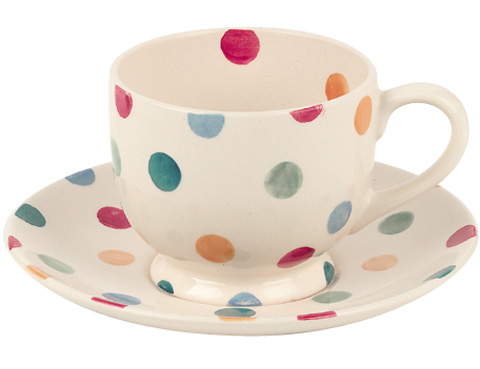
There is a wonderful parable that I think about when the emptiness arrives. This is a story of a teacher and a student. A new student comes to a teacher one day and begins to tell the teacher all the places he has studied, and all the wonderful teachers he has had. The master listens patiently and then begins to make tea. When the tea is ready, she pours the tea into the student’s cup until it begins to overflow and run across the floor. The student watches the chaos of the overflowing teacup and shouts, “Stop, stop! The cup is full; you can’t get any more in.”
The teacher stops pouring and says very calmly, “You are like this cup; you are full of ideas about knowledge and skill. You come and ask for teaching, but your cup is full; I can’t put anything in. Before I can teach you, you’ll have to empty your cup.”
Periodically, you have to forget everything you know about a subject. You may have studied writing for years. Or, maybe not. At the very least, you were forced to sit through years of grammar and composition training in school where you were taught how to spell, craft a sentence. As a writing teacher, I’ve often told my students to quit trying so hard to sound like a smarty pants. Somewhere along the line, we developed the idea that to write well, we must adopt the voice of an expert with a PhD in microeconomics or some such thing. In fact, the opposite is true.
Have you ever read A. A. Milne? He is best known for his books about a bear named Pooh who is much beloved by a boy called Christopher Robbin. Milne also wrote some astonishing poetry, and he had a penchant for writing everything in lowercase. Sometimes without punctuation. The trick to his writing is that it seems so simply and elementary. In fact, its complexity is brilliant. His work seems to be written for an audience of five year olds, but if you look closely, the beauty of his prose staggers.
Pablo Picasso said that every child is an artist. It’s true, isn’t it? A child is completely open to the creative process, she resides wholly and completely in the Now moment. She does not project her thoughts to tomorrow, or think critically about how to shape a hand or what color to paint the sun. She lives completely and utterly Now, and is willing to put it all out there without filters, without revisions, without guile. You must approach your journal with the same integrity.
Empty your mind and release all expectations. Forget what you wrote yesterday, don’t give a nanosecond of thought about what you might fill your page with tomorrow. Just show up and use whatever material is at hand. Look at it, find the shape of it, bounce it around in your mind for a moment and then put it on the page. Don’t think about what it means about you; that is none of your business. Don’t worry about what someone might think if they snoop in your very private, very personal journal. Don’t wonder if the Nobel Prize committee will publish your journals in their entirety when you are dead and gone, dazzled by your genius.
Empty your mind, pour every drop out of your cup. What is your cup so full of that it crowds out the possibility of an original thought?
We all have incredibly complex lives. Sometimes it is astonishing when you consider what it requires to navigate through a single day. All of our busy lives and the lives of those we love requires thinking, and organizing and planning. Add to the responsibilities of a single day, a lifetime of memories, or worries great and small, anticipation of future events, future plans, all the might-haves and could-be’s. There is so much crowded in our cups!
But then, we have moments of clarity. We empty our cups and we just are. Have you noticed that when you’re completely absorbed by a project, whether its painting the fence or writing a letter or playing a Bach prelude, that time falls away? That you are no longer aware of sounds outside of the room, of the pattern of your breathing in and breathing out, of anything but the melody? You can lose hours and gain lifetimes of pleasure by simply being present to the creative process. This is the paradox: only when you empty your cup, are you open to the possibility of filling it.
Each time you approach your journal take a moment to empty your mind to all but the intention to write. Let the words come. Trust that they will. A bit like magic, it works.
to be continued. . .

 persephone's step-sisters