oil in the river

OIL IN WATER

Pam Lazos

Chapter Forty-Six

The day dawned bright and balmy in Houston. Bicky Coleman sat behind his antique mahogany desk, smoking a cigar and reading The Philadelphia Inquirer. Akanabi was taking less of a beating in the newspapers now that Hart was on the scene, commissioning overflights and vacuum boats, throwing all kinds of money at the situation. Maybe it would help them later when the feds and everyone else sued Akanabi out the wazoo for penalties the company didn’t deserve. After all, it had been an accident.

When Hart had called last night he babbled on and on about retiring all of Akanabi’s single-hulled ships. Bicky had humored him, but knew that suggestion would end up in the circular file.

“You want me to retire all the single-hulled ships?” Bicky had asked Hart.

“At least let’s phase them out. Fifteen to twenty percent a year.”

“Hart, my son, are you sure hypothermia hasn’t set in and affected that brain of yours?”

“It’s gonna hit you where it hurts, Bicky, but it’s the right thing to do. The river’s black like you’ve never seen. Just avoiding the devastation to wildlife should be cause enough.”

“Give me a memo. We’ll talk about it when you get back.”

Bicky had said that to shut Hart up; he had absolutely no intention of following through.      Building new ships was an expensive proposition. More than half of Akanabi’s supertanker fleet were single-hulled ships, purchased in the heyday of oil drilling. To replace them all at once, even over a period of five years would cost hundreds of billions of dollars. And Bicky was loathe to spend that kind of money.  Legislation would eventually force his hand, but why rush things?

The intercom buzzed and Phyllis’s voice jarred him to awareness.

“Jerry’s here.”

“Send him in.”

➣➣➣

Jerry Dixon walked in, looking grim, but impeccable. Bicky’s face was stuck in the paper so Jerry waited. Bicky had several personalities that didn’t always talk to each other, and Jerry thought it best to see which one was in residence.

Bicky looked up and smirked. “How many of those suits do you have?”

“I don’t know. How many do you have?” Jerry said, indicating Bicky’s Armani.

“You know what I mean. Do you spend the whole day ironing or change suits every ten minutes? Cause you know I’m paying you good money to keep things secure around here, so if you’re ironing….” Bicky’s smirk turned to a smile.

Jerry relaxed and sat down. “How’s Hart doing with the spill?”

Bicky studied his buffed fingernails. “Apparently something a little better than damage control. Seems he’s making friends.”

“What are the odds on the cleanup?”

“The river will survive. It’s rebounded before, as have countless of her brethren. It will do so again,” said Bicky, sounding like a Sunday morning TV evangelist.

Jerry scowled, a reflex. Akanabi could dump ten million gallons of oil in the river and Bicky would insist it was nothing.

“You have no faith, Jerry,” Bicky continued. “I’m not even sure if there’s a limit to how far you can go.”

Here we go, Jerry thought.

“Mother Nature is infinitely capable of rejuvenating herself.”

“Yeah, well, she’s not doing such a good job with the ozone layer,” Jerry replied. “I got a spot on my nose here that the doc says is pre-cancerous. Too many hours spent outside in an ozone-lite environment,” he said, rubbing his proboscis. “I’m getting it removed tomorrow.”

Bicky rubbed his own nose absently. His face bore a healthy, radiant glow that smacked of hours spent on a tanning bed. Jerry knew he kept one in an office down the hall. Some people used makeup. Bicky used processed UV light. Jerry wondered just how many of those “freckles” on Bicky’s face had their own story to tell and when they’d decide to start talking.

“Spare me the details,” Bicky said. He stood and stared out the window. “You don’t have any information yet, do you?”

Jerry shook his head, watched his boss, looking for clues.

“No. I’ve made discreet inquiries. No one saw anything.” Bicky flashed Jerry an angry look.

“The coroner says it was an accident, Bicky. Why don’t you believe that?”

“Graighton’s the only other one who knew Sonia had the report. He was at the Union Club that night. It’s only a couple miles to Sonia’s house….”

“You’re saying Graighton left the Union Club, killed Sonia and returned without the report?’ Jerry asked.

“Of course not. Graighton didn’t go himself. One of his lackeys did. You remember where we found the report? Whoever killed Sonia didn’t find what he was looking for. Maybe that’s what angered him in the first place.”

“But what would Graighton gain by killing Sonia and stealing a report he already had a copy of?”

“He was trying to get to me. Put me in my place.” Bicky sat down. “Even that doesn’t make sense.” His head fell against his chair. “Just keep looking.”

“Yeah, sure,” Jerry said.

“One more thing,” Bicky reached into the top drawer. “I want you in Philadelphia.”

“For….?”

“I got another tip.” He handed Jerry a piece of paper. “Recognize the address?” Jerry’s eyebrows shot up, but he said nothing.

“Don’t botch it this time. No commando missions. Nothing getting blown up. No one dying. Just bring me back the technology. You got it?”

Jerry nodded, a face set in stone.

“You’re sure you found out nothing else…about Sonia?” Bicky asked.

“You think I’m not doing my job, old man?” Jerry’s face remained cool and impassive.

“I think, that you’re too quick to accept the opinion of other’s. What’s that jackass coroner know?”

“She had an accident. She died. Accidents happen.”

“Accidents don’t just happen. Not to us. You should know that better than anyone, Mr. Chief of Security.”

“You’re wrong. They do. But what precipitated it? That’s the question. Perhaps she was depressed, worried about her husband, flustered. Or maybe something spooked her. Or someone.” Jerry placed his hands on the front of Bicky’s desk and leaned into it. “Came around hassling her for something she wasn’t inclined to give. She spills her drink. The floor’s wet. She takes a step. She slips. She falls. A body in motion stays in motion. She can’t stop herself from falling. She bangs her head and, is out like a light. And if the baby didn’t decide to come out at that moment, if he didn’t decide to come out upside down, what do they call it, breach? Maybe she’d be alive today. The fact is, unless you were there,” Jerry looked Bicky directly in the eye with malicious intent, “you’re never going to know.”

Bicky shuddered. After several seconds, Jerry stood up and backed away from the desk. He massaged his eyes and forehead with one hand, trying to squeeze the images out of them.

“I loved Sonia like she was my own kid. That she’s dead pains me – like you can’t even believe,” Jerry said. He turned and was gone, an exit as quick and silent as death.

Bicky let out the breath he’d been holding and pulled a silk handkerchief from his breast pocket. He wiped his face and dabbed at the moisture forming in the corner of his eyes.

So far, it had been a hell of an afternoon. He walked to the wet bar, poured himself a scotch and soda and stood at the window sipping it. The world below soothed him. He could control it simply by pulling the blind. When he finally turned away, he pulled out the bottom desk drawer. Below a stack of papers, tucked in the bottom drawer, lay the coffee-stained report.  Satisfied, Bicky closed the drawer and thumbed through a stack of mail in his in-box. Phyllis had opened everything, laying it in a pile for his review except for one letter, marked personal and confidential. He ripped the envelope open and pulled out a small stack of papers.

It was a letter from Kitty’s lawyer, a Complaint for Divorce and a Postnuptial Agreement with which she proposed to divest herself of everything just to be rid of the marriage. Bicky sipped his scotch for five minutes before pulling a yellow sticky pad out of a side drawer. He placed one on top of the lawyer’s letter, wrote Forget It! in bold, black ink, and stuffed the papers back into the envelope. Then he buzzed Phyllis.

“Is Jerry still here?

“He just went down.”

“Catch him, will you, and tell him to come back up. I want him to deliver something for me. To my wife.”

 to be continued. . .

to read how we got to this state of affairs jump here

copyright 2012

keep the birds warm

OIL IN WATER

Pam Lazos

Chapter Forty-Five

The Wildlife Rescue Center in northeastern Maryland, a one-stop emergency room for oiled birds and other mammals, was brimming to capacity. Trained staff and volunteers littered the aisles like road debris, working as quickly as possible to address the backlog. The temperature was set to a balmy eighty degrees to keep the birds warm, a temperature which worked quite well outside, especially with a nice crosswind, but not inside a building packed with so many CO2 breathing mammals. People were sweating profusely; a few of the workers looked like they just took a dip in the river.

The Wildlife Rescue Center was a coalition of the local SPCA, the Friends of Waterfowl, a local, well-known, bird conservancy, as well as federal, state and local government partners. The building itself was huge, about fourteen thousand square feet in the shape of an open rectangle, cordoned off with moveable walls to accommodate the varying resource needs. The largest area was set aside as the trauma center. The building sat, idle yet prepared, to be used only in the event of an oil spill. It was the coalition’s greatest hope that the money they’d invested in this building would go to waste and that the facility and its equipment would sit and collect dust. Unfortunately, today that hope was not realized as dozens of veterinarians and trained volunteers worked side-by-side, attempting to undue what might not be capable of being undone.

Doctor Alyssa Morgan, a veterinarian and Director of the Wildlife Rescue Center, was on the phone in a small walled office at the back of the room, gesticulating animatedly. Lapsley and Hart walked into the middle of the trauma center and looked around, lost children waiting for direction. Dr. Morgan caught sight of Lapsley through her office window and waved, the scowl on her face softening. Lapsley took that as a good sign.

By the time they reached the door, she hung up the phone and ushered them into the office. The office was a mere eight by twelve feet and harbored a desk with a phone, a couch which at present was a catch-all for a miscellaneous reports and papers, and a credenza with a coffee pot. Two more people could fit, but only if they took turns breathing. Realizing rather belatedly the ridiculousness of this arrangement, she hustled them out.

“Vic,” Dr. Morgan said, extending a hand. “Long time.”

“Hey, Alyssa.” Lapsley took her hand, holding it a few seconds longer than necessary. Dr. Morgan blushed.

“This is David Hartos. Chief of Engineering for Akanabi Oil.” Hart extended a hand which Dr. Morgan accepted, but the bloom faded from her face, replaced with a cold, hard stare.

“Lyss, he didn’t go out and dump the oil himself,” Lapsley said. One side of his mouth quirked in a wry smile. The joke worked.

“So what’s going on?” Lapsley said.

“You’re looking at it,” Dr. Morgan said, extending an arm in a wide arc.

“You look like hell,”Lapsley said, his gaze fixed on her face.

“Thanks. You look pretty lousy yourself.”

“You know what I mean,” Lapsley said.

Dr. Morgan nodded. “I was up most of the night cleaning oiled birds. They’re still coming in. And it’s not just the Rescue Team. Fishermen are bringing them in now. It doesn’t look like it’s going to slow down anytime soon.” She gazed around the room and back to Lapsley. “We need backup.”

A lock of hair fell into her eyes. Lapsley resisted the urge to brush it back.

“Why don’t you just put out a couple radio ads? Akanabi’ll pay for it.” Lapsley looked at Hart to make sure this was, in fact, true. Hart confirmed.

“I’m sure plenty of people would be willing to volunteer,” Hart said.

“First time at a Rescue Center, Mr. Hart?” Dr. Morgan asked. Lapsley detected the note of satisfaction in her voice and suppressed the urge to smile.

“Actually, I usually repair the leak before it gets to this stage so this is a bit out of my range, I’ll admit,” Hart said. “But I’d be happy to help.”

“You can’t. You’re not trained. All our volunteers have had a two-day intensive training. To allow you to work on these birds without the proper training would rise to the level of malpractice.”

“There’s got to be something we can do,” Lapsley said.

Dr. Morgan scanned the room. About fifteen de-oiling stations had been set up, all but one presently occupied.

“Check each of the stations and make sure they have sufficient quantities of Dawn dishwashing detergent, rags and trashbags.” Dr. Morgan said.

“I guess that means you want us to hang for awhile?” Lapsley asked.

“For awhile. You mind?”

Lapsley shook his head and smiled at her.

“When did you last take the training?” Dr. Morgan asked Lapsley.

“Probably ten years ago,” he replied. She sighed.

“Alright, you better stick close to me.” Lapsley looked at Hart and winked. He could think of nothing better he’d like to do this morning.

to be continued. . .

to read how this came to pass jump here

copyright 2012

crashing cliches

Journal THAT

a guide to writing

Cynthia Gregory

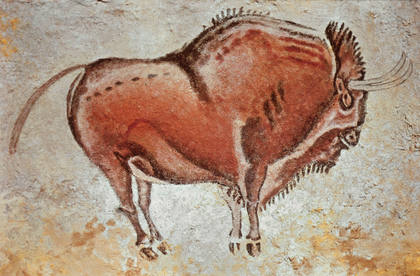
Like photographs, clichés are the shorthand of communication. If a picture truly is ‘worth a thousand words’ (a pretty cliché) it’s because its cash value rests on the fact that the ancient part of the brain, the primitive lizard brain, the dreaming brain, communicates with pictures. I mean seriously, think about it. Before written language, our ancestors drew pictures of actual horses to represent “animal” or “the hunt” or “wild and free” before there were actually spoken or written words to convey the ideas. Now, however, we are wildly sophisticated and have a language (or two) that we can manipulate to communicate otherwise free form ideas floating inside our cabezas.

Storytelling served as a history lesson before written language, and storytelling today is as popular around the campfire, board room table, or cafe four-top as ever. Stories are innately wired into us and as humans, we crave and respond to the story. The stories of our lives, our novels, movies, television and cable news, are a series of pictures – both visual and virtual. Actual photographs and pictures  illustrate a narrative we may tell, as in “see? I was in Paris – here’s the Eiffel Tower,” or “here’s a photo of little Sophie Soo, ten years old.” In each case you may be telling a story, constructing a narrative and sharing information about your travels and your dog, backing your verbal story up with photographic evidence. So yes, pictures are worth thousands and thousands of words.

And if all those wonderful words at our fingertips were colors, original ideas are bright, clear fountains of rich hues, and clichés are dull as dirt.

The trouble with clichés is that they are so infused into our daily language, we hardly recognize them for their trite, frayed selves. Advertisers know this. They know that people are put off by formal language, fancy words, words that stand up straight and march with a snap in their step, so they dumb down marketing messages, intentionally inserting clichés so that their uber-sophisticated messages sound “down to earth” (cliché!) and “right as rain” (cliché!). Television programmer know this too, and make sure our televised stories don’t get too smarty pants, else run the risk of losing viewers –although because of the trance-like fog I fall into when I tune into a program I happen to enjoy, “viewing” isn’t exactly what I’d say I was doing. I’d bet a nickel that not one filter remains intact with all that bad, cliché loaded language comes washing over me. While some programs are brilliantly written, most programming I’ve observed seems to be no more than 30 minutes of tired ideas strung together. So when you think about all the hours of programming and bad language we’re exposed to, it’s no wonder we’re up to our eyeballs in clichés.

So, if everybody is guilty of crimes of language abuse, then it must be okay, right? In the words of mothers everywhere, “just because all the kids are doing something doesn’t’ make it right.” Clichés have their place, which is definitely not between the covers of your journal. You want your journal to be clear, concise, absolutely fecund with the rich details of your life, so absolutely pitch-perfect that with even a quick glance, you inspire yourself to write. Even. More.

So, once in a while work your language muscle a little harder. Avoid the flabby turns of phrase. Jettison the flaccid prose that comes so easily. Instead, read an amazingly genius writer and then journal. Turn the TV off, and journal. Instead of taking the easy way out and dropping in an over-worked and sad sad sad cliché and reach for something original. You may just surprise yourself with your own genius.

chalky clouds and purple prose

Journal THAT

a guide to writing

Cynthia Gregory

There are good adjectives and bad adjectives. There are the regular, hard-working-show-up-in-the-middle-of-the-night-but-go-unnoticed adjectives and then there are what I call the 25 cent adjectives. You know the kind, all flashy and shiny and bright, the kind you notice more than the noun that they’re describing. They’re like fast food; they temporarily distract you from the fact that there is nothing of substance behind them, they are the literary equivalent of a plate of whipped cream.

I know a lot about these razzle-dazzle kinds of describers, these peacocks of poetry. I used to scatter them around liberally, clever as I was. But what happened when I really got rolling, is that the point I was trying to make got totally buried under my ponderous prose. My meaning sagged under the weight of all that reckless description. My language got so pearly and polished that everything I wrote began to sound like a steaming, verdant jungle, packed with all the lush pomegranates, mangoes and papayas of meaning I could wedge in. I mean seriously, an old pair of scruffed sneakers with one broken lace is a perfectly respectable sort of description. But when I got done with it, those Keds sounded like Ritz Carlton glass slippers.

What happened when I began to excavate the core of my message, the humble meaning of my narrative began to emerge as I sliced away one fabulous phrase after another. Everyone knows by now the famous story of what Michaelango said when someone asked how he knew how to carve the statue of David – he said, “oh, I just got rid of what didn’t belong.” You need to do the same with your descriptive language. Pare it down, pare it the hell down. Make it lean and mean and dense. Never use a twenty-five cent word when a nickel will do.

Many people mistakenly think that a short story is easier to write than a novel, because it’s more compact. They think that a poem is even easier, because there are fewer words yet. But the exact opposite is true. Did you know that? The shorter the piece, the harder it is to write. This is  because with fewer words, every one has to count. There is no room for extra padding, no place to hide. There are no long stretches of narrative, expeditions into expostulation. You have to say exactly what you mean. Every word, every verb, has to carry the weight of the sentence on its meager back, so it must be strong, and it must be absolutely true. The shorter the writing, the denser it becomes. Not dese heavy, just dense: full of meaning; ripe as a summer peach, juicy and succulent.

It’s easy to see why people fall in love with a flush of flabby, fatuous descriptions; because they mean nothing. We’re a TV culture after all, we’re used to that. Flamboyant descriptors are like a magician’s trick, a sleight of hand. Honest writing, writing from the heart, strips you naked. It’s much easier to hide your fragile heart behind a veil of words. But that takes no courage. If you want to journal, you must be brave. You must go into the room you’re afraid to enter and stay there until you have emptied yourself out. And the next day, you must go in there again. You can never completely empty yourself through journaling. There is always something more, something deeper, something rich and rare and precious because it comes from within you. It comes from a place beyond the glittery surface. It comes slick and dark and wet and you must love it. You must stay with it until your heart stops quaking in your chest and you must put it on the page, make it authentic. This is real courage. This is what true love is made of: entering into that place that terrifies you and staying there, listening, writing, watching, recording it all, until the quiet enters and the writing is complete.

Sometimes you will flow with a million thoughts, like droplets of water over Niagara Falls, and there is nothing wrong with that. I would like to suggest however, that there is a balance. If you can practice both ends of this particular writing scale, you will become a better writer. When you sit down to write, think simply. Don’t think you have to impress anyone, to show off. You have an audience of one, and its you.

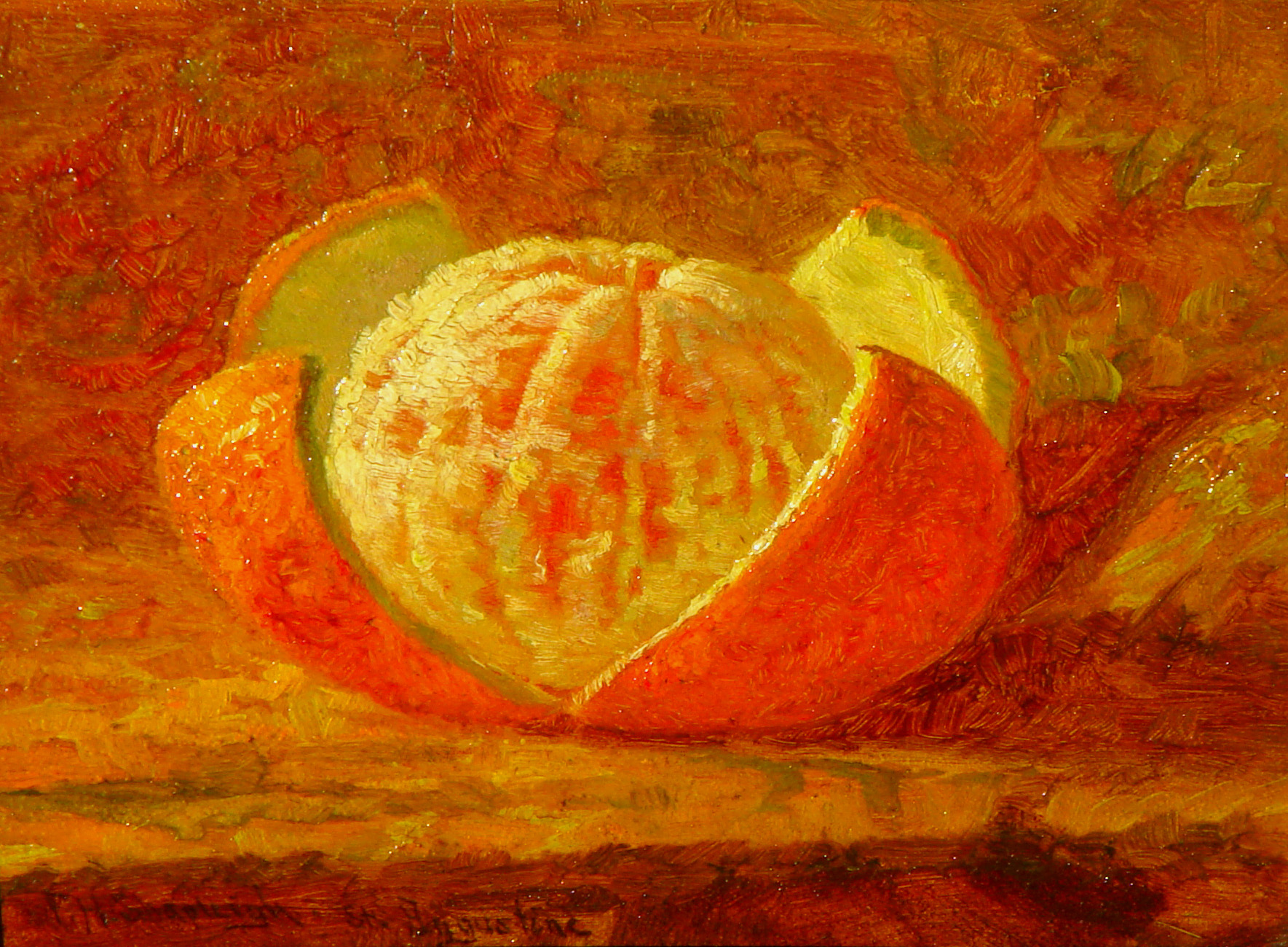
Here is an exercise that will illustrate what I’m getting at. Sit with your journal and an orange, in a quiet place. Write for fifteen minutes describing the dimpled orb of fruit without using the word orange more than once. Go into that room and stay there. You can riff on the orange if you want, start with the fruit, talk about the blossom or the orchard, or the hands that harvested the one you hold in your hand, but Don’t use the word orange more than once in your description. You can use another fruit if you wish, but the same rules apply. So chose a plum, but don’t use purple. Or choose an apple, but don’t use red or green. You get the point. Hold yourself apart from using the descriptor that is most obvious, and what you get in return is a whole new way to relate to description in general.

Be objective, be a journalist. Pick up the newspaper and read an article about an event. Journalists use the fewest adjectives than just about any writer, and most of those are worth a nickel. They don’t say  “it was a stunningly sunny day with chalky clouds dotting the horizon.”  No, they say, “the day was warm, with scattered clouds.” Period. There is an elegance in that kind of simplicity. Practice being a journal-ist. Practice simplicity with your journal. And be patient with yourself. This stuff takes practice.

we heart books oh yes we do

we couldn’t make it any easier for you so please just read it now.

read::write::repeat

we are not kidding:: lit geeks rock.see why here

strangers in the night

Oil in Water

Pam Lazos

Chapter Sixteen

A full moon glowed, casting an iridescent light over the farm-cum-landfill that loomed in the far distant corner of Kori’s bedroom window. The first inkling of the sun’s rays wouldn’t be seen for more than an hour on this chilly late October morning. Gil tiptoed into the room, hovering above the bed where Kori and Jack lay sleeping. He pinched his fingers around Jack’s nose, cutting off Jack’s oxygen supply. After several moments, Jack inhaled a frantic pull of air through his mouth and his eyes flew open to see Gil looming above.

“What?” Jack hissed, shoving Gil’s fingers away to rub the appendage.

“Are you awake?” Gil asked.

“I am now you, little jerk.” Face-to-face with Gil, watching his salamander eyes hold his own, Jack smiled in spite of himself. Gil could stare, unblinking, for well over ten minutes. Jack loved Gil like a brother and even with the little cretin’s exasperating habits, Jack would do anything for him.

“What time is it?” Jack asked, discouraged by the murky darkness still clinging to the curtains.

“Five o’clock.” Gil said. “C’mon. I want to show you something.” Intuiting that there would be no more sleep for him this morning, Jack allowed Gil to pull him to his feet.

“Hhhhmmmph. Briefs. I wear briefs, too,” Gil said approvingly.

Jack scrambled into his jeans, pulled a tee shirt over his head and a sweatshirt over top. He looked over at his boots and opted for bare feet. He took one more longing look at the bed, sighed and headed toward the door.

“I gotta take a whiz,” Jack announced, stopping at the bathroom. Gil tried to follow him, but Jack barred the way. Gil leaned against the closed door, tapping his foot in exaggerated fashion for the minute it took Jack to emerge, disheveled and still half asleep.

“Let’s go.”  Gil led. A light clicked on in Robbie’s room as they walked by, but the door didn’t open. Gil put his finger to his lips and tiptoed down the stairs, Jack trailing him.

Once outside, Gil took off running across the lawn to the shed. Determined not to be outdone by a ten-ear old, Jack sprinted the hundred yards to the barn, but bare feet and the fact that Gil was more awake at this regrettable hour put him at a disadvantage, about fifty paces behind, he’d later estimate.

At the barn door, Gil found the lock laying on the ground, the door swung wide. “Huh?”  A shadowy figure rooted through the drawers, a roll of drawings under one arm.

“Hey! What are you doing?” Gil demanded.

The figure ran, knocking Gil to the ground and whacking Jack in the face with the drawings in his bolt to the woods. The impact caused stars to jump before Jack’s eyes and he staggered, holding his nose.

“Hey! Come back here,” Gil yelled, and before Jack could clear his head, Gil took off running after the intruder. Jack ran after Gil, grabbing his arm moments before he disappeared behind the copse.

“Whoa, man. That wouldn’t be a good thing,” Jack said. Gil struggled, but Jack’s grip was firm.

“Jack. Let Go! He took something — some drawings.” Gil pried Jack’s hand off his arm and yanking free of his grip, dove to the ground. Jack grabbed his collar and pulled him back, surprised to hear his own heavy breathing. After a few deep breaths, Jack knelt down beside Gil and wrapped an arm around his waist.

“We can’t go, Gil. It’s too dangerous.”

“But he’s getting away,” Gil said.

“We want him to get away. Then he won’t hurt us.” Jack squeezed Gil’s arm gently.

“This isn’t a movie, buddy. It’s real life. And somebody really wanted something bad out here. Bad enough to break in.” Jack searched Gil’s eyes for understanding.

Gil grimaced at his besmirched barn and turned to see Robbie running toward them dressed only his underwear.

“What going on?” Robbie asked.

Jack pulled himself up to his full height. Despite their differences, at this moment they behaved as if nothing had ever come between them.

Gil darted over to Robbie and jumped in his arms, sniffling. “He took some drawings.”

Robbie ran his hands up and down Gil’s body, turning him around, checking for injuries.

Jack shook his head, reviving the dull ache in his own face. He raised his hand to his eye and probed delicately.

“He wasn’t expecting us,” Jack said. He winced as he touched his nose.

Satisfied that Gil was injury free, Robbie set him down and turned to Jack. “Did he hit you?” Robbie asked.

Jack shook his head. “Only by accident. The drawings caught me in the face when he was making his getaway. You know when people say they see stars, you always think like, ‘yeah, right.’ Well….” Jack rubbed his nose again, then his eyes. “Little brother here’s lucky he stepped aside. I think that guy was taking no prisoners.”

“Did he have a gun?”

“I don’t know. It’s so dark out here. It’s the middle of the night, for Chrissakes.”

“Yeah, so what are you doing out here?” Robbie asked.

Jack smiled and tilted his head in Gil’s direction. “The salamander woke me up.”

Gil toed the dirt in response. Jack scanned the treeline, but the light was still too dim to see anything clearly. In the opposite direction, the sun’s first rays whooped and hollered, mad streaks of reds and oranges overtaking the horizon like a five-star general.

“He’s long gone by now,” Jack said. Robbie nodded in agreement, folded his hands across his chest and rubbed his arms.

“Let’s go inside. It’s freakin’ cold out here,” Robbie said. Jack nodded and they hoofed it back to the house, pausing once to glance back over their collective shoulders.

The light clicked on as they entered the kitchen. Kori stood in the doorway wearing a revealing nightgown and suppressing a yawn. Jack shot her an approving glance which dissolved the camaraderie of the last few minutes when Robbie intercepted it.

“What are you doing? Don’t tell me you’re hunting? Why do you have Gil with you if you’re hunting,” she said to the room at large. “And why are you in your underwear?” she said to Robbie in particular.

“I heard a noise.” Robbie brushed past her on his way to the stairs.

“Where are you going?” Kori called after him.

“To put some clothes on, Kori,” he replied. “ I suggest you do the same.” Kori and Jack exchanged glances. Jack tightened his mouth so as not to smile in front of Gil and nodded in the direction of the stairs. Kori spun on her heel, leaving Jack and Gil alone.

“How about some breakfast, Salamander?” Jack asked, grabbing the coffee pot and filling it with water. “Sleuthing always makes me hungry.”

Gil said nothing, but walked out of the kitchen and to the hallway closet. He climbed way in the back in between bulky winter jackets, past umbrellas and over hiking boots. Jack heard an occasional grunt followed by several more minutes of rooting around and Gil emerged victorious, the precious bundle in hand.

He returned to the kitchen, the bundle of drawings hooked under his arm, and took a seat at the table waiting for Jack to serve him. Although already ten, up until now he had led the life of the pampered: there was very little Gilliam William Tirabi did for himself. Jack poured a bowl full of cereal, added some milk and set it before Gil.

“So they didn’t get what they were looking for?” Jack said.

Gil shook his head, set the drawings on the table and scooped up a heaping spoonful of Cheerios. His cheeks bulged and his words were drowning in milk and wheat. “After breakfast will you and Robbie help me find someplace safe to hide them?” Gil asked.

Jack nodded. “Sure.”

He pushed Gil’s hair back and sat down next to him to wait for his coffee. “Better eat up. My guess is the Spanish Inquisition’s comin’ down the stairs any minute now.”

copyright 2012

to be continued. . .

to read what came before, click here. . .

going, going, gone

copyright 2011

OIL IN WATER

a novel by

PAM LAZOS

Chapter Thirteen

Several weeks later after all porch repairs had been completed, Gil sat in a darkened room, ZiZi at his feet, watching Mad Max, Beyond Thunderdome. He held a fistful of popcorn halfway to his mouth, eyes wide with fear and excitement. The music swelled as the crowds called for the great showdown. Kori came up from the basement wearing a pair of overalls doused in paint, several brushes sticking out the top front pocket, the paint still on them.

Gil was so engrossed in the movie he didn’t hear her enter. She surveyed the scene, strolled casually to the coffee table, picked up the remote and pressed the off button. The T.V. went blank and Gil went ballistic.  With a grunt he threw a handful of popcorn at her face with more emotion than force.

“Turn it back ON!” he shouted, reaching for the remote. Taller by a head, Kori was able to withstand this onslaught with little effort. Gil clutched and yanked and tried to knock it from her hands. “KOREEEE. TURN IT ON!”

“No.” She pulled away and walked to the window, throwing back the curtains. Sunlight blasted in, temporarily blinding him. He blinked in reptilian fashion until his eyes adjusted to the glare. Kori pulled back the rest of the curtains, flooding the room with light, and pointed to the door. On her signal, Gil’s accomplice moved to the front door where he stood, head erect, tail wagging, more than ready to take the punishment with his master.

“It’s 11 o’clock. In the morning! It’s Saturday. Go outside.”

Gil took a deep breath and blew it out in a huff before turning toward the door.

“C’mon, Zi.” He grabbed a baseball cap off the coat rack, carefully pushed his bangs to the side, and held the door open for Zizi who barked once and bounded out into the brilliant sunlight. Gil stuck his tongue out at Kori and was gone. Kori watched from the window as they played fetch the stick. She smiled, and headed back to the basement.

She was halfway down the stairs when she heard Gil’s high-pitched wail.

“Zi, Zi, no! Come, Zi! Now!

She took the stairs two at a time and threw open the front door. Gil sat in the middle of the street, ZiZi’s head on his lap. He rubbed her ears and spoke softly to the inert figure. A boy of about eighteen hovered in the background, his car door still open, radio blaring, looking on helplessly. Kori sprinted across the wide front yard to the road and dropped to her knees.

Gil was rubbing one hand softly over ZiZi’s body while the other hand scratched instinctively at her favorite spot behind her ear. There was very little blood, but one look at her and it was clear the internal injuries were tremendous. She was panting, each attempt at breath wracking her body. Kori placed her hand on ZiZi’s ribs and the dog whimpered before paroxysms of coughing began.

“Take your hands off of her,” Gil said, throwing Kori’s hand back at her as if it were diseased. “This is your fault.”

Kori opened her mouth to protest; her voice caught in her throat.

“Broken,” Gil said.  ZiZi’s body looked to be shrinking. She shivered and Gil covered her with his arms. Kori touched ZiZi’s nose; it was warm.

“She’s broken and she can’t be fixed,” Gil said, rocking, his eyes locked on the dog.

Kori touched Gil’s arm. It was cold, like ZiZi’s body, and his face had turned a preternatural white. He scratched ZiZi’s ears and murmured, soft clucking noises meant to soothe. ZiZi took a deep breath and shuddered again.

“Do you have a cell phone?” Kori asked the young kid pacing behind them. The boy nodded. He looked too young to have a license. “Can you call a vet? Tell them it’s an emergency.” He nodded and ran to his car.

Gil continued his quiet incantations, alternating between stroking ZiZi’s head and scratching her ears. They were like two lovers who know the end was imminent, but continued making plans for the future.

“And after lunch, we’ll go down to the creek and look for baby minnows,” he whispered, his voice straining with the effort. “And maybe we’ll take a nap under the Willow tree.” ZiZi thumped her tail once and whimpered. She raised her face to Gil with considerable effort and licked his nose. Gil stroked her head and rubbed his face in her fur.

“What do you want for lunch, girl?” Gil asked. “How about a melted ham and cheese sandwich?” ZiZi wagged her tail twice, winced and stopped. Gil rubbed her tail. “Maybe a few chips, too, huh?” Gil rubbed his nose in the nape of her neck and she moved her head to nuzzle him.

“The vet’s tech is on his way.” The young driver was back, pleased with himself that he was able to make the arrangements, but his face fell after seeing ZiZi’s condition.

Her breath came in short bursts and recognition lit in Gil’s eyes. He’d seen this before in movies and shuddered at the thought of what was coming next. Gil had watched them all. The hurt, the hunted, the hapless, their last breaths coming in fits of fury or lackluster sighs. Gil had watched people die so often that he thought he’d become immune to it. When his Mom and Dad died, he reacted in stalwart fashion, just like the heroes on T.V., dry-eyed and tight-lipped. Now he clenched his teeth, but it couldn’t stop the tears which were pouring out of the corners of his eyes like molten lava.

“Please don’t go, Zi,” he murmured. He rested his head on ZiZi’s and she raised her nose an inch to meet him then dropped to the ground, her last breath escaping in one small sigh. Gil tightened his grip, trying to hold on even as he felt her spirit go. Gil began to cry, a low, crazy moan that sounded like death itself.

“I’m so sorry,” the young driver said. “She ran right out in the road. I didn’t see her until she was right in front of my car.” Kori nodded, but Gil had no room to hear him above the sound of everything ZiZi’d ever told him.

to be continued. . .

to read what came before, please scroll down. . .

write here, write now

Journal THAT

A Guide to Writing

cynthia gregory

Once upon a time I belonged to an amazing clutch of writers who met every week to explore writing through timed exercises. It was one of the best writing experiences I ever had, and it did more to develop my skills as a writer than almost anything I’ve done since. Twenty years later, I still miss meeting with that group of women. We shared a very important time, you might even say a sacred time, two hours each week, supporting one another and learning to develop our writing voices. Few things were allowed to interfere with our commitment to meet. We gathered faithfully each Friday at an outdoor table at the Bear Street Café in Orange County, California. We parked our individual cares at the door in order to be fully present and nakedly honest during our journaling session. We wrote furiously, read aloud with quaking voices, listened respectfully, and grew as writers.

Now that I live in another state, I maintain virtual relationships with several of these fabulous women, and we see each other when our travels coincide. But the thing that remains one of the greatest gifts of my life is that even though what we mainly have in common is our passion for writing – no matter what, we support each other. We celebrate each other’s success, and provide insightful comments to help make each other’s work the best it can be. Writing groups are an excellent way to develop as a writer. You can find or form  a group by taking classes, getting to know other writers, and then meeting outside of the classroom setting to give yourself more honest writing time.

Back in the day when we met at Bear Street, we maintained a strict routine that goes like this: write nouns or phrases on a slip of paper, and drop them in a cup. One by one, the words are extracted from the cup, and the group collectively writes a timed exercise based on the prompt. After the time is up, we go around the table and read our work. At first, it isn’t easy. But in the right group you soon learn that it is a safe place to expose your heart. Writing is like a slice of your soul, a trickle of blood. You put it out there and your bravery is rewarded a million times over. One unbreakable rule is that no one is allowed to comment on anything anyone reads. Ever. This is not about opinions or feedback; it is about expression. But I will tell you one thing: our writing got stronger and better and more deeply creative by just listening to each other.

I think we secretly tried to out-compose each other, but the result was that we pushed each other to spiraling heights of creativity without so much as one critical word. It was amazing and illuminating and a huge lesson in the art of paying attention.

The exercises were sometimes fun; and just as often downright grueling.  But the important thing was that it pushed us to write beyond “inspiration.” If you wait to write until you’re inspired, you’re not a writer, you’re a waiter. By pushing yourself to write for a set amount of time about a set subject you learn to write beyond the boundaries of comfort and the results can be profound. Sometimes, as we filled out those slips of paper, one of us would throw in a ringer and add the words “one sentence.” This meant that when we wrote our journal entry, it has to be all one sentence.

This might sound about as hard as a second slice of your favorite chocolate cake, but it’s more challenging than that. To jettison periods flies in the face of every eighth grade grammar drill you ever sweated through. It’s right up there with cutting your own hair – or wearing your painting pants to church. It’s simply not done, my dear. But oh, the freedom! You can’t even know .  Have you ever been hiking on a deserted mountain trail and taken off your shirt to expose your skin to all that pure alpine air? The freedom is exhilarating. . .it feels like skinny dipping in a pond of oxygen.

This is what eschewing periods can do for you: it can open a door into your essence that you didn’t know existed.

Now you are probably afraid that if you drop the period out of your writing it will be pure gibberish, but this simply isn’t true and in fact, I suggest it  will open you up to possibilities or maybe an indulgence like a dirty little secret, oh say, like those grapes you sample before you buy them because you want to know if they’re really sweet even though you’re paying for them by the pound but it’s a big grocery store anyway not like that wonderful little farmers market where they hand out samples of pastry and cheese and rich, ripe strawberries, and oh the onions were so beautiful today that I almost bought a pound of them and put them in a vase they were just that purple and shiny with skin so tight you just wanted to lick it and I really really need to plan my grocery shopping a little better so that I can come to the farmers market and listen to the man playing the guitar and think about the million little ways we are connected and what really matters and a meal prepared with love is better than sex and if you don’t believe me just go out and rent Chocolat one more time and imagine what it would have all meant without a little slice of mango and chipotle and bitter, bitter chocolate.

See? Writing is about pushing borders and you will never get to where you want to be as a writer if you don’t do something you have never done before, at least once, the end.

ashes, ashes, we all fall down

copyright 2012

OIL IN WATER

a novel by

PAM LAZOS

Chapter Twelve

Robbie, Gil, Kori and Avery piled into the late Ruth Tirabi’s Honda Odyssey . Thanks to Honda, Ruth hadn’t needed to substitute comfort for clean air simply because she had a large family. The Odyssey had accommodated her need to transport a husband, four kids, their dog and their gadgets without sacrificing low emissions, and it still got pretty  good gas mileage, two things American car manufacturers deigned unworthy of excess research funds.

“Where we going?” Kori asked, starting the engine.

“What about Jersey? We could go down to Cape May point?” Avery said, fiddling with the lid of the cardboard that contained his parents ashes. “This way they can look at the sun rising and setting all the time. I’m also thinking I should drive.”

“Forget it. I’m driving,” Kori said.

“Cut him a break once in a while, Kor, or are you too old to remember sixteen?” Robbie said with raised eyebrows. “Soon he won’t need your permission. But you’re still going to need a lawyer someday.”

“If you let me drive today I promise I won’t charge you,” Avery added.

“I’m thinking Chickies Rocks overlooking the Susquehanna. Mom and Dad loved that spot,” Kori said, ignoring both her brothers. “I’m also thinking you should both shut up and just be passengers.”

“Awwww, you said shut up,” Gil said in a sing-song voice.

“Yeah, and who you gonna tell?” Kori said. Gil turned to the window. Robbie shot Kori a sad look; Avery squeezed Gil’s thigh, but said nothing.

When Ruth and Marty died, Kori installed herself as the family matriarch despite her lack of any obvious mothering instincts.  She hated to cook, couldn’t stand the sight of blood, and her advice — which in no way resembled Ruth’s thoughtful and incisive rumination — sucked.  If Ruth’s words were like creamy hot fudge over vanilla ice cream, Kori’s were more like motor oil. There was a good flavor in there somewhere, but you’d be likely to throw up before you were finished.

The boys shouldered on even though most days they wanted to tell her to just shut up. But they held their tongues out of love and a sense that Kori’s assumption of Ruth’s role was the only thing keeping her from fracturing into a billion jagged shards. So the three brothers exchanged glances and suppressed smiles which Kori didn’t notice.

“Whatever, Kori. Let’s just go,” Avery said. An excellent judge of character, a skill that would serve him well throughout his life, Avery was the first to discover that going head-to-head with his sister rarely worked.

“We’ll let Gil decide,” Robbie suggested. All three siblings turned to Gil for a decision.

“Rocks,” he said, and Kori peeled out of the driveway.

“Hey, let’s get there in one piece, huh?”

“Hhmmmph,” was all Kori said in response.

Two hours later, they pulled up to the precipice at Chickies Rocks, a favored spot of the remote-controlled plane cognoscenti, a steep three hundred foot drop straight down a rocky ledge.  Four pairs of eyes looked upon the banks of the mighty Susquehanna River.

Robbie pulled Gil’s remote-controlled plane from the back hatch and Gil plopped down on the ground to fiddle with it, adjusting the tail, the landing gear, and anything else that moved.  ZiZi ran over to Gil and after a cursory sniff, licked Gil’s face several times.

“Down, Zi,” Robbie said.

Gil made no move to push ZiZi away while he scrounged through his toolbox, huffing and shoving the tools around. Robbie reached in and pulled out a small wrench. Gil snatched it and adjusted a few screws on the plane.

Although the weather was balmy, the force of the wind whipping up the sides of the cliff made it feel ten degrees cooler. Like an insistent child, it swiped at Kori’s hair as she stood, clutching the cardboard box to her chest.  She dropped to her knees, squeezing her eyes shut.  Moments later, she felt the gentle pressure of Robbie’s hands as he placed his baseball cap on her head and tucked her hair up underneath.  She leaned against his leg in gratitude.

In private, Kori had cried every day since her parents died, her body wracked and shuddering with silent tears, her shoulders aching with the weight of grief and new responsibilities, and the one thought that kept returning to her again and again – tinny and insistent – they were orphans.

Avery joined Kori on the precipice.  Gil handed Robbie the small wrench and stood back to remotely test the landing gear, driving the plane forward and back on its makeshift runway.

“Box, please,” Gil said to Robbie.

“He’s ready,” Robbie called over his shoulder.

Avery took the box from Kori and set it next to Gil’s plane, pulling out the contents: two thick plastic bags filled with charcoal grey ash and small white bits of bone.

“How are you going to keep the bags in the plane,” Robbie asked.

Gil’s imperturbable face grew wide-eyed and he looked to Avery for help.

“Don’t look at me, man. I just record the stuff,” Avery said.

Gil rummaged through his tool box, picking up each tool and throwing it down again. Robbie walked to the car and returned with a role of duct tape. He made a ring, sticky side out, and stuck it to the bottom of each bag before setting them in the plane.

“Good to go,” Robbie said. Avery put a hand on each bag, blinking away the water that flooded his eyelids. Kori shuffled her feet and folded her hands across her chest.

“Anyone want to say anything?” Robbie asked. Kori covered her mouth; Avery shook his head from side to side.

“I’m no good with words,” Robbie said, his voice cracking. “They know how we feel.”

Gil stepped forward, cleared his throat as if about to deliver an edict. “Mom, Dad, we love you very much. It sucks that you’re dead.”

Avery giggled, breaking the tension. Gil leaned over, his face touching the bags, containing the last mortal remains of Ruth and Marty Tirabi. He opened them and whispered something to each, then stood back and started the plane’s engine. It lurched forward, bucking under the additional weight, bumping over small sticks, and gradually picking up speed as it approached the end of the makeshift runway and the cliff’s edge.

“It doesn’t have enough speed, Gil,” Robbie said. “It’s gonna crash.”

Gil bopped his head slowly in time to a beat the rest of them were not privy to. At the exact moment when the plane would run out of ground, and gravity was about to have it’s way with her, Gil flipped a switch on the remote and a turbo thrust sent it hurtling out and up, clearing both rock and trees. It hung tenuously for several seconds, but Gil hit the turbo switch again and it took off like a shot arching up and away.

Gil sent the plane soaring over the cliffs of Chickies Rocks, swooping and sliding, in, out and around, but not upside down, edging closer each time to the banks of the Susquehanna. Bits of the plane’s contents were occasionally swept away by an errant gust of wind, but for the most part, Ruth and Marty’s ashes remained solidly ensconced inside the cockpit of the little plane.

“Mom’s going to get dizzy,” Kori said.  They watched the plane, now far across the river.  Handfuls of ash spilled out, whirling like mini-tornadoes before drifting to earth.

“Last chance. Anybody want to say anything?” Robbie said.  No one responded.

Avery’s speech was more akin to a whisper: “You are in our breath and in our bones. You are in the lights of our eyes, and the shapes of our hearts. As long as we live, we will think of you and remember, and we will never be a minute without you for it’s your blood mingled with ours, your life, the life you’ve given us.”

Gil sent the plane hundreds of feet into the air before bringing it back down to dive-bomb the river. At the last minute he pulled out and sent it up again, this time, though, instead of climbing straight, he performed a series of spirals which sent the plane up through a spinning vortex of ash. “Bye-bye, Mommy and Daddy,” he said, as ashes arced out and down to the river. When the wind scattered the last of them, Gil brought the plane in for a landing.

Robbie dried his eyes and removed the bags from the cockpit, turning them inside out; they were empty.

“What do we do with the bags?” he asked.

“Burn ‘em,” Kori said.

“You can’t burn them,” Avery said. “They’re plastic.”

Robbie gathered everything up, plane, plastic, remote control and placed it all in the backseat of the minivan. He pulled out an insulated backpack and a blanket and walked to a small clearing. From the backpack he procured a small feast: bread, cheese, pepperoni, olives, grapes, mangos, peanut butter, yogurt, a bottle of wine and some dog treats for ZiZi. He whistled low and ZiZi charged over, tail wagging. Robbie handed Gil, now smashed up against his brother, clutching his arms around himself as if he were cold, a yogurt and a spoon.

“Nice insulation,” Avery said. “Does it work?” Robbie nodded, and wrapped an arm around Gil who relaxed. He handed a knife to Avery to cut pieces of cheese, and pulled plastic glasses out of the pack along with a bottle of spring water.

“Geez, how much’ ya got in there?” Kori asked.

“Gil doesn’t make anything half-ass, sister,” Robbie said, accepting the half glass of water from Avery.  He topped it off with a sip of wine and handed it to Gil.

“You’re giving him wine?” Kori glared at Robbie, then Avery. “You’ve done this before, haven’t you?”

Gil giggled and cast his eyes downward. He sniffed the glass several times then put it under ZiZi’s nose and let her sniff. The dog shook her head to remove the scent from her nasal passages.

“We’re going to miss the heck out you, Mom and Dad,” Robbie said holding up his glass. They clinked plastic: Robbie and Avery threw theirs back; Kori and Gil sipped theirs.

“That was nice, what you said earlier?” Kori said.

“Thanks. Well, thank Mom for all the poetry she made me read.”

“I miss Daddy’s laugh,” Gil said. “And Mommy’s smell. Like bread and flowers,” Gil devoured a small sandwich of bread, cheese and pepperoni. The corner of Kori’s mouth crooked up watching him eat.

“I miss Mom’s cooking. And her stories. And Dad’s stupid jokes. And his crazy inventions.” Kori sipped her wine. “You don’t suppose that those people might come back, do you, looking for some of Dad’s other things?”

“I hope they do.” Robbie said. He downed the rest of his glass, and Gil and Avery did the same. Kori bit her thumbnail and cast a worried glance out across the river.

to be continued. . .

to read what came before, click here. . .