beauty shop wisdom

JOURNAL THAT

a guide to writing

cynthia gregory

Have you ever been to the inner sanctum of a beauty salon? I mean, seriously in? The beauty salon is the modern equivalent of the Acropolis, a center of culture in ancient Greece. A symbol of the formerly glorious apex that still stands is the temple dedicated to Athena, warrior goddess, who is said to have been born fully formed from her daddy’s head. That would be Zeus, propagating some kind of mad magic, birthing an idea like that femme fatale.

Beauty is its own wisdom, and to enter the beauty salon is to enter as a clean vessel and to leave equipped with what a warrior goddess needs: beauty and a dose of attitude.  What goes on in there, you wonder? Here’s a clue: it isn’t about hair. A salon is where women share their magic. It is the adult version of the Saturday night sleepover, where we braided each others’ locks and dreamed of traveling to exotic places. It is a church where wisdom is currency, and where every woman is a goddess.

My friend Sedona is a hair styling genius. She’s also a princess, as in “I don’t do windows, and I don’t do floors” kind of girl. She is exceptional at the art of alchemical science, and she allows other people to be good at what they do, too, especially if those things hold no appeal for her. Sedona is a big believer in the service trade. “Just let them in,” she advises. “You contract with a helper, and then when you need them, they have permission to enter.” Just let them in, she says, and they fix what needs fixin’.

The idea of ‘permission to enter’ also lives behind the idea of setting up a special place in your home to write. It is also behind the discipline of setting aside a certain amount of time each day, ideally at the same hour, to do nothing but write. By doing this, you give your subconscious ‘permission to enter’ – and then you stand back and let the gods whisper in your ear, give you enough luscious lexicon to fill pages and pages.

You can go so far as to set aside an entire room, decorate it with art that you love, art that inspires you to write. Fill it with flowers and music and artifacts like an ancient Remington typewriter, and fountain pens, and framed manuscripts, first edition books. And then when you enter that room, that sacred space, that temple of contextual creation, you have given yourself permission to enter. It’s just a logical next step to open your journal, gaze out the window, allow your thoughts to unfocus for a minute, fire up your unconscious, give your creative self permission to enter.

Or not. Not everyone has a whole room that has no other purpose than to provide a gorgeous backdrop for journaling. An entire room isn’t necessary. Sit on the bed or an old wooden bench at on the back porch. Write with pencil, write with crayon, an old eyeliner stick. It doesn’t matter. What is significant is that you make an appointment with yourself, and you do your best to show up. Reliability doesn’t guarantee genius, but it doesn’t diminish it, either. It isn’t your job to judge your work to be genius or whatev. Your job is to show up and write. Really, it’s that simple. You just show up and write and let the gods take care of the rest.

This is the best advice I can offer: show up, pay attention, and give your highest creative self permission to enter. See what kinds of ideas your head can give birth to. Find out how many kinds of love your heart knows how to express. Write with your body, write from your soul. Make a date with your highest, deepest self, and see what kinds of genies spring fully formed from your godhead. Give genius permission to enter and then sit down and get ready to write. You may not get thunder bolts and crashing seas, but you might get shopping lists, thank you notes, rampages of appreciation. It’s a good start.

The creative gods are unpredictable, but one thing is for sure. If you show up, they will too. Give them permission to enter.

to be continued. . .

knit this: words, dreams, stories

JOURNAL THAT

a guide to writing

cynthia gregory

Have you given yourself over to a brand new, never-been-done project? It’s tricky business. A couple of years ago, I decided that I was going to knit a sweater. I could see it in my head, the seafoam green color, the nubby texture. When I told a friend of my intention, she asked if I was an accomplished knitter. “No,” I replied. “I’ve never done it.” She gave me a funny smile. Then she said, “Well, maybe you should start with a scarf.”  First I was offended, but then I took her advice and shopped for a pair of needles, an instruction book, and some beautiful skeins of yarn, then went on to knit a series of fabulous scarves, which I then gave away as Christmas gifts. The first ones were something only I would wear, but they got better with time and effort.

Oh, I know what you’re thinking: knitting is not writing. But you know, maybe it is. You start where you start, and each time you do it, it become a bit easier, a little less freakish. Keep at it long enough, you become adept, and your new passion will give you a glow. Look at a hand-knitted sweater closely; it will reveal a story to you. Was the hand that made it loose and confident, or was it tense and fighting the yarn? Knit one, purl two.

There is always a learning curve, whether you’re knitting or writing or making paella. Don’t beat yourself up. Start at the beginning. Make an effort. Take a giant leap of faith. You may not be accomplished in the beginning, but make an honest effort. Become a channel of the spirit of the thing and eventually, with enough practice, your hand will relax and the yarn will flow.

There may be times when you’ll look at your journal and be tempted to pull a string and unravel the whole mess. It isn’t what you thought it would be. The words fall heavily on the page, tight as turds. It isn’t the beautiful creation you intended. But you cannot judge these things. What would a teacher say about your knitting, your journaling? She would be gentle, she would be kind. She would say, “That’s very nice, this here. You see where you did this so beautifully? And here – you can do better than this. Pay attention. Practice.”

At lunch one day, my friend Kate told me that she has kept a journal for twenty years, consistently, except for one year. “What happened,” I asked, curious about that empty year. “I had a room mate,” she replied. “I found out that when I wasn’t home, she ready my journal without my permission.” This was a violation of the worst kind. I sympathized. Journals are not something to share randomly; they are an intensely private affair. Kate’s roommate had found a string, pulled it, and unraveled a precious creation.

In a way, it is easy to understand the temptation of the roommate. There is something pure and delicious and overwhelmingly seductive about the discovery of uncensored thoughts. When we’re small, we’re programmed to not say certain things, not to even think them. So we exile such thoughts to an underground of sorts, in order to gain acceptance from the people who have the power to dole out or withhold love. But the years trickle by and as adults, the thoughts don’t just evaporate, they go underground. Therapy is one route to release them, journaling is another. Journaling can become an outlet for the millions of thoughts jumbled in our heads. We may not wish to acknowledge them, but the thoughts are there nevertheless, and it feels good to get them down on paper. Very good. Soon, if you give yourself permission to get used to creating a personal narrative, journaling become s a delicious habit.

Once you get used to writing in your journal, you may find that you want to keep that sacred text with you at all times. You carry it around in your purse, your bag, your car, the way little grannies carry around their tapestry bag of knitting needles and yarn. When you are waiting on line at the DMV, lunching on a park bench, sitting on a bus; you’ll pull your journal out and look around for a moment and then move the pen across the page, knitting words, narratives, belief, into something lasting. You may even find yourself arriving early to appointments, just to give yourself that space of time to sit quietly, to write.

After Kate and the intrusive roommate were no longer sharing a living space, she began to journal again. You see, the evil roommate couldn’t stop my friend from keeping a journal, for the desire to write was too strong and the satisfaction from having written was too sweet. Now, as if confessing, she tells me that she doesn’t record her thoughts every day, but still, she journals. “Some journals are a single year,” she says. “Some journals contain two years.” She journals for the peace it gives her, the gifts she will one day make of this deep art to her children.

Kate doesn’t journal daily, but she writes often, and keeps her journal on the table beside her bed so that before she sleeps, she can place her thoughts where she can see them, touch them, keep them in a safe place. She, and you, and me, we create something when we journal.

Knit one, purl two.

to be continued. . .

empty your mind

JOURNAL THAT

a guide to writing

cynthia gregory

Sometimes, it feels like that are too many words in the wide world to squeeze down to the size of a journal page. At other times, it feels as if all of the words have turned to smoke and there is literally nothing left to say. The universe is eternally creative; you just have to remember that when you approach the blaring, blazing, empty white page of your journal. Emptiness is an illusion. This is always more.

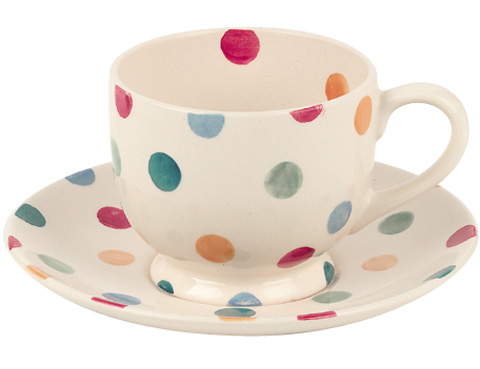
There is a wonderful parable that I think about when the emptiness arrives. This is a story of a teacher and a student. A new student comes to a teacher one day and begins to tell the teacher all the places he has studied, and all the wonderful teachers he has had. The master listens patiently and then begins to make tea. When the tea is ready, she pours the tea into the student’s cup until it begins to overflow and run across the floor. The student watches the chaos of the overflowing teacup and shouts, “Stop, stop! The cup is full; you can’t get any more in.”

The teacher stops pouring and says very calmly, “You are like this cup; you are full of ideas about knowledge and skill. You come and ask for teaching, but your cup is full; I can’t put anything in. Before I can teach you, you’ll have to empty your cup.”

Periodically, you have to forget everything you know about a subject. You may have studied writing for years. Or, maybe not.  At the very least, you were forced to sit through years of grammar and composition training in school where you were taught how to spell, craft a sentence. As a writing teacher, I’ve often told my students to quit trying so hard to sound like a smarty pants.  Somewhere along the line,  we developed the idea that to write well, we must adopt the voice of an expert with a PhD in microeconomics or some such thing. In fact, the opposite is true.

Have you ever read A. A. Milne? He is best known for his books about a bear named Pooh who is much beloved by a boy called Christopher Robbin. Milne also wrote some astonishing poetry, and he had a penchant for writing everything in lowercase. Sometimes without punctuation. The trick to his writing is that it seems so simply and elementary. In fact, its complexity is brilliant. His work seems to be written for an audience of five year olds, but if you look closely, the beauty of his prose staggers.

Pablo Picasso said that every child is an artist. It’s true, isn’t it? A child is completely open to the creative process, she resides wholly and completely in the Now moment. She does not project her thoughts to tomorrow, or think critically about how to shape a hand or what color to paint the sun. She lives completely and utterly Now, and is willing to put it all out there without filters, without revisions, without guile. You must approach your journal with the same integrity.

Empty your mind and release all expectations. Forget what you wrote yesterday, don’t give a nanosecond of thought about what you might fill your page with tomorrow. Just show up and use whatever material is at hand. Look at it, find the shape of it, bounce it around in your mind for a moment and then put it on the page. Don’t think about what it means about you; that is none of your business. Don’t worry about what someone might think if they snoop in your very private, very personal journal. Don’t wonder if the Nobel Prize committee will publish your journals in their entirety when you are dead and gone, dazzled by your genius.

Empty your mind, pour every drop out of your cup. What is your cup so full of that it crowds out the possibility of an original thought?

We all have incredibly complex lives. Sometimes it is astonishing when you consider what it requires to navigate through a single day. All of our busy lives and the lives of those we love requires thinking, and organizing and planning. Add to the responsibilities of a single day, a lifetime of memories, or worries great and small, anticipation of future events, future plans, all the might-haves and could-be’s. There is so much crowded in our cups!

But then, we have moments of clarity. We empty our cups and we just are. Have you noticed  that when you’re completely absorbed by a project, whether its painting the fence or writing a letter or playing a Bach prelude, that time falls away? That you are no longer aware of sounds outside of the room, of the pattern of your breathing in and breathing out, of anything but the melody? You can lose hours and gain lifetimes of pleasure by simply being present to the creative process. This is the paradox: only when you empty your cup, are you open to the possibility of filling it.

Each time you approach your journal take a moment to empty your mind to all but the intention to write. Let the words come. Trust that they will. A bit like magic, it works.

 to be continued. . .

having written

JOURNAL THAT

a guide to writing

cynthia gregory

Everyone has heard the old chestnut to “write what you know about.” But, cherished friend, it ain’t that easy. We’ve also been told to “write like you talk” – and that’s just foolish. This kind of advice just leads to unrealistic expectations, not to mention bad syntax, sloppy verb conjugation, and mangled grammar. This is not to say that you should worry about any of these in your journal because journaling ought to be at the very least an exercise in jumping into the stream of consciousness with both feet and an inner tube.

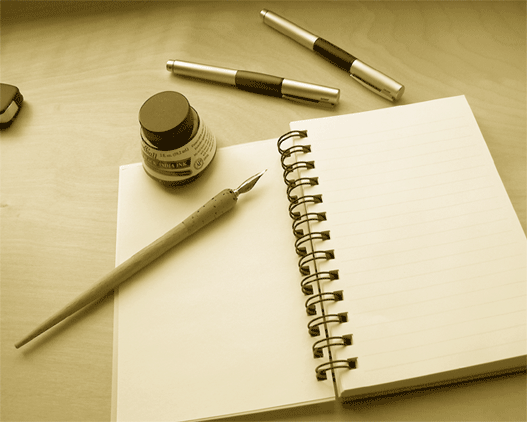
Journaling is not for sissies.  You have to really want it with a desire born so deep only a seismographer can find its source. You have to do it; you just do. And you don’t have to explain or justify it any more than you have to justify breathing. Great genius is born of desire. And once the desire to write is established, the next most important part is means; and the method of true genius is to journal by hand. You know, the old fashioned way. Pen. Paper. Good lighting, a comfortable chair. Not too comfortable, just saying.

Why, you may well ask, is it important to write by hand when its so much easier to tap away on three rows of electronic buttons? Isn’t that why God invented Steven Jobs? The answer is that true writing is a tactile experience and because you think differently when you have to push a pen over a rough sheet of reconstituted tree pulp and because the process of writing is refined – just a little – when you have to make the words exact and legible and pretty on the page with nerves and tissues and with the fine muscles of your fingers. Writing becomes a whole body experience when you do it by hand. Transcribe your thoughts later if you must, but start first with an unblemished  piece of paper and fill it with observations, feelings, and a million details. Write. By. Hand.

Writing by hand is visceral and it connects with the most primitive parts of the brain; also the most elevated and elegant parts of the thinking apparatus. However, don’t think too much: just write. A mentor once said to me, “Don’t worry about how it all comes together. Just write. The story will take care of itself.”

So I pass this along to you: write. Just, write. And I really insist: by hand. So, you get cramps in your fingers; so what. You’ll get over it. And when you do, you will have written – and you feel like you climbed Kilimanjaro.

to be continued. . .